
Connecting the Dots A Practical Approach to Integrating
- Slides: 14
Connecting the Dots A Practical Approach to Integrating Compliance, Risk and Quality Jody Ann Noon RN, JD Partner Health Care Regulatory Practice
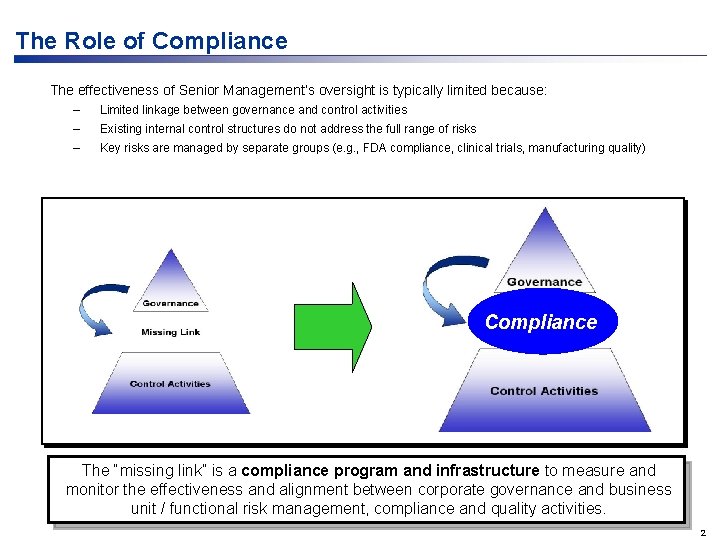
The Role of Compliance The effectiveness of Senior Management’s oversight is typically limited because: – – – Limited linkage between governance and control activities Existing internal control structures do not address the full range of risks Key risks are managed by separate groups (e. g. , FDA compliance, clinical trials, manufacturing quality) Compliance The “missing link” is a compliance program and infrastructure to measure and monitor the effectiveness and alignment between corporate governance and business unit / functional risk management, compliance and quality activities. 2
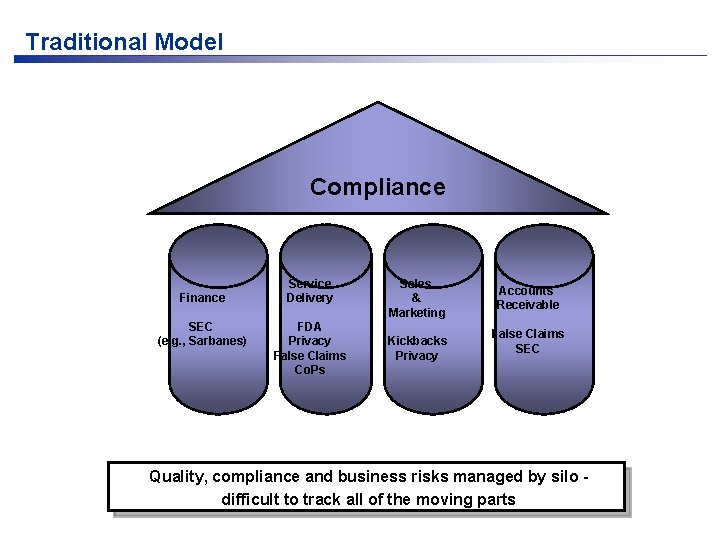
Traditional Model Compliance Finance SEC (e. g. , Sarbanes) Service Delivery FDA Privacy False Claims Co. Ps Sales & Marketing Kickbacks Privacy Accounts Receivable False Claims SEC Quality, compliance and business risks managed by silo difficult to track all of the moving parts
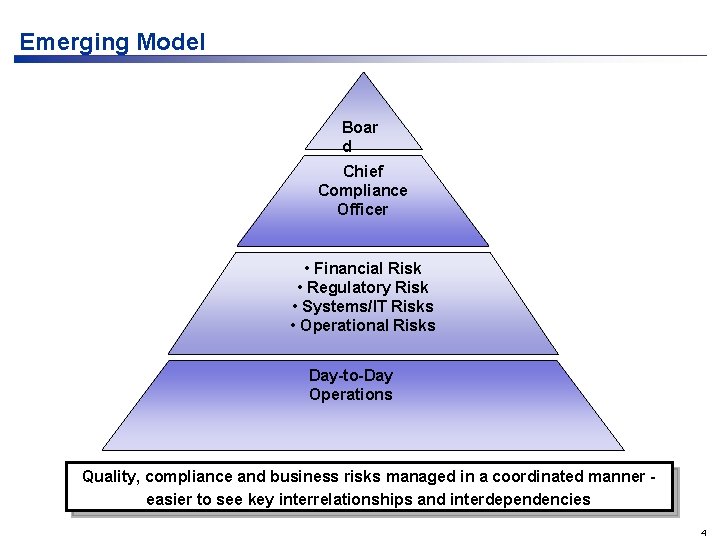
Emerging Model Boar d Chief Compliance Officer • Financial Risk • Regulatory Risk • Systems/IT Risks • Operational Risks Day-to-Day Operations Quality, compliance and business risks managed in a coordinated manner easier to see key interrelationships and interdependencies 4
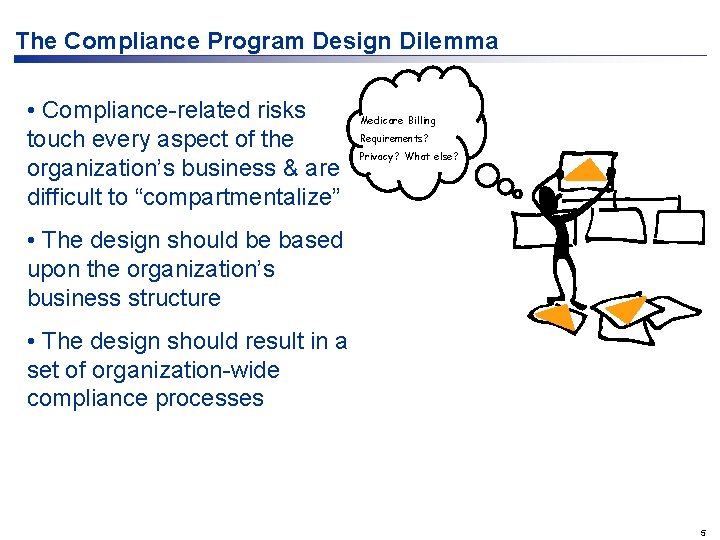
The Compliance Program Design Dilemma • Compliance-related risks touch every aspect of the organization’s business & are difficult to “compartmentalize” Medicare Billing Requirements? Privacy? What else? • The design should be based upon the organization’s business structure • The design should result in a set of organization-wide compliance processes 5
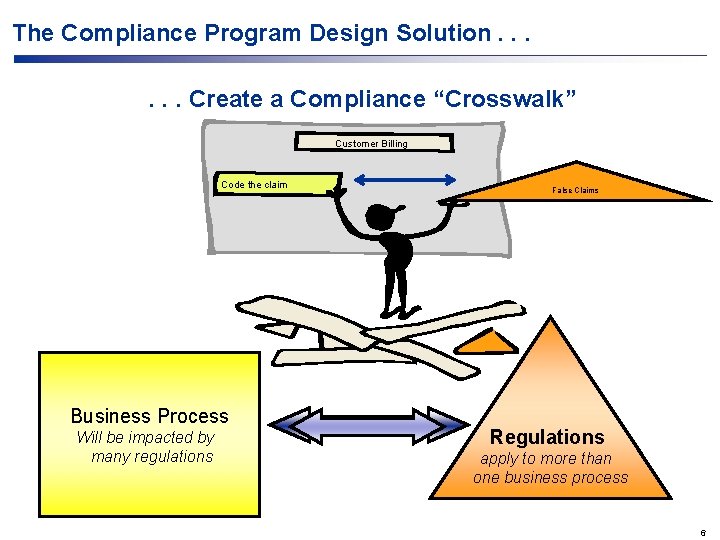
The Compliance Program Design Solution. . . Create a Compliance “Crosswalk” Customer Billing Code the claim Business Process Will be impacted by many regulations False Claims Regulations apply to more than one business process 6
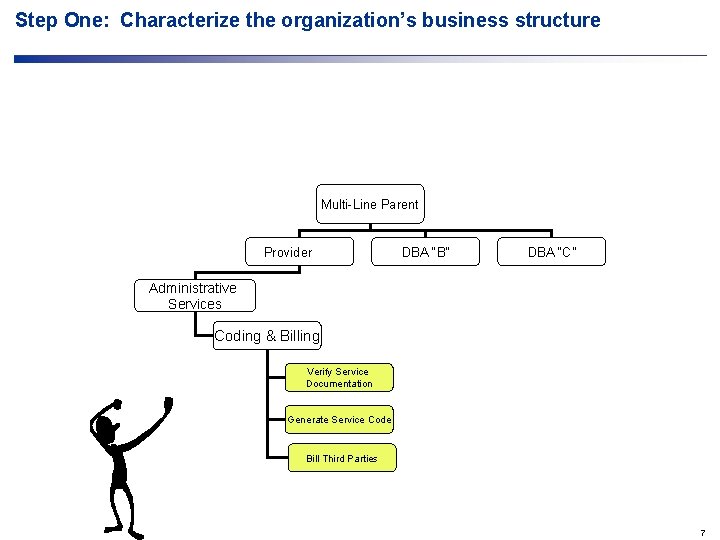
Step One: Characterize the organization’s business structure Multi-Line Parent Provider DBA “B” DBA “C” Administrative Services Coding & Billing Verify Service Documentation Generate Service Code Bill Third Parties 7
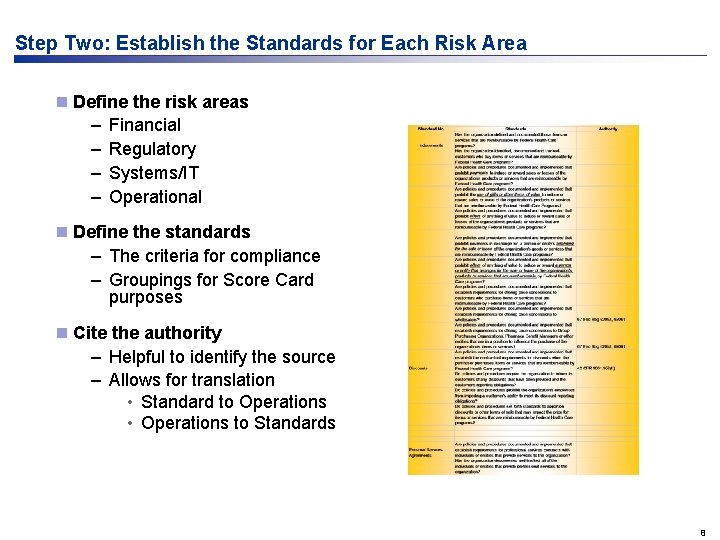
Step Two: Establish the Standards for Each Risk Area n Define the risk areas – Financial – Regulatory – Systems/IT – Operational n Define the standards – The criteria for compliance – Groupings for Score Card purposes n Cite the authority – Helpful to identify the source – Allows for translation • Standard to Operations • Operations to Standards 8
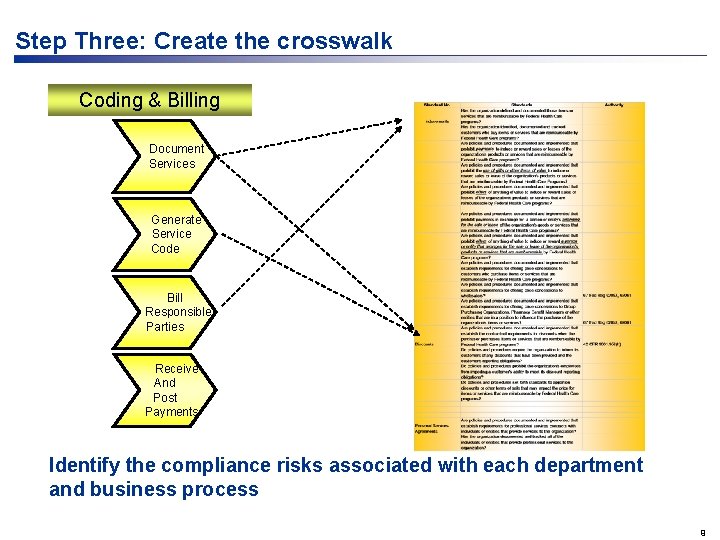
Step Three: Create the crosswalk Coding & Billing Document Services Generate Service Code Bill Responsible Parties Receive And Post Payments Identify the compliance risks associated with each department and business process 9
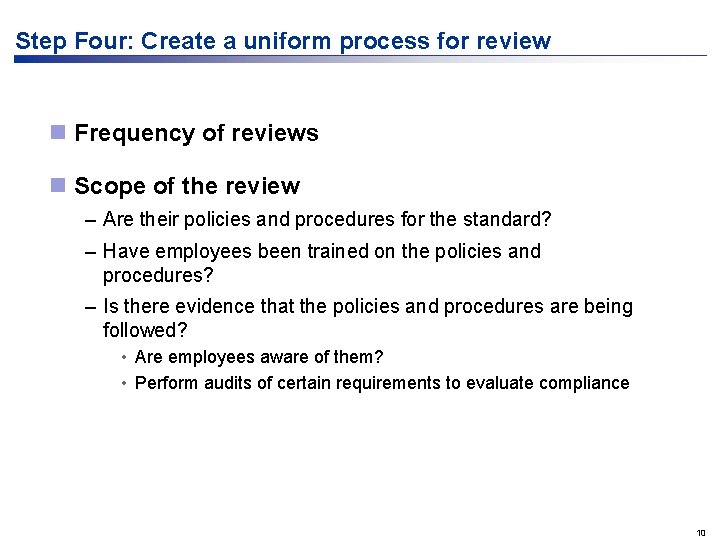
Step Four: Create a uniform process for review n Frequency of reviews n Scope of the review – Are their policies and procedures for the standard? – Have employees been trained on the policies and procedures? – Is there evidence that the policies and procedures are being followed? • Are employees aware of them? • Perform audits of certain requirements to evaluate compliance 10
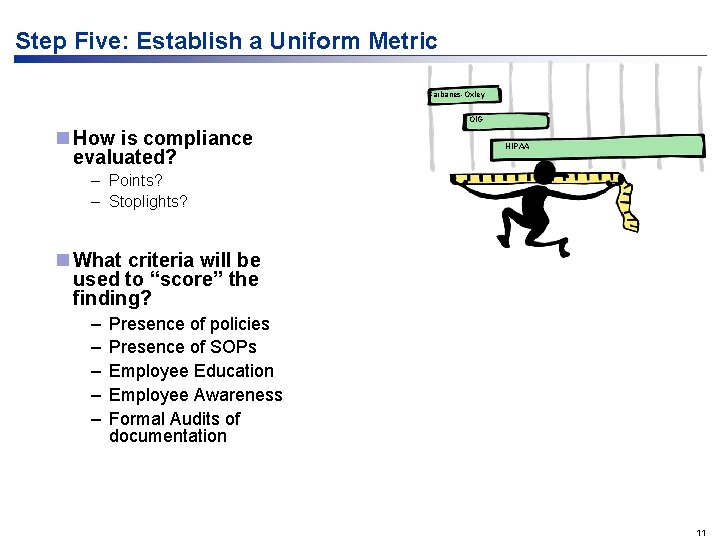
Step Five: Establish a Uniform Metric Sarbanes-Oxley OIG n How is compliance evaluated? HIPAA – Points? – Stoplights? n What criteria will be used to “score” the finding? – – – Presence of policies Presence of SOPs Employee Education Employee Awareness Formal Audits of documentation 11
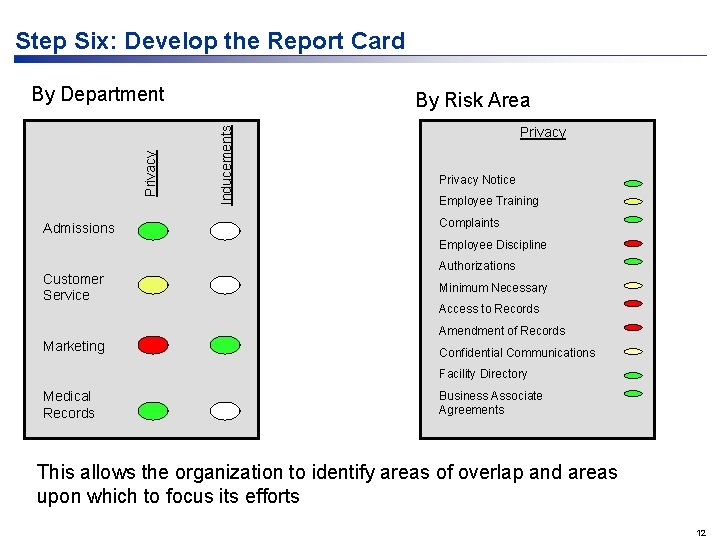
Step Six: Develop the Report Card Admissions By Risk Area Inducements Privacy By Department Privacy Notice Employee Training Complaints Employee Discipline Customer Service Authorizations Minimum Necessary Access to Records Amendment of Records Marketing Confidential Communications Facility Directory Medical Records Business Associate Agreements This allows the organization to identify areas of overlap and areas upon which to focus its efforts 12
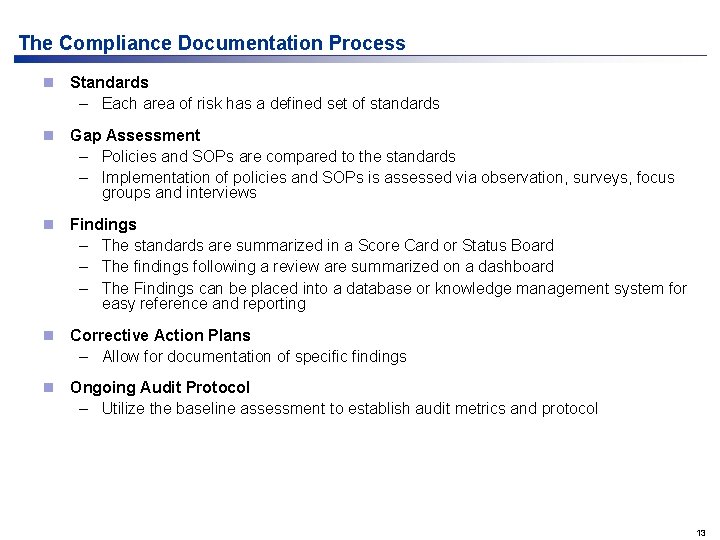
The Compliance Documentation Process n Standards – Each area of risk has a defined set of standards n Gap Assessment – Policies and SOPs are compared to the standards – Implementation of policies and SOPs is assessed via observation, surveys, focus groups and interviews n Findings – The standards are summarized in a Score Card or Status Board – The findings following a review are summarized on a dashboard – The Findings can be placed into a database or knowledge management system for easy reference and reporting n Corrective Action Plans – Allow for documentation of specific findings n Ongoing Audit Protocol – Utilize the baseline assessment to establish audit metrics and protocol 13
The Key to Compliance is. . . Taking reasonable steps to comply with the regulations. Reasonable compliance can be demonstrated through a thoughtful and well-organized compliance program. 14