
Connecting the dots A Family Care model that
- Slides: 34
Connecting the dots: A Family Care model that protects children
Welcome! My name is Antonio Kasote
CRS IMPACT Program
IMPACT’s Approach to Child Protection 1. The development of a Family Care Volunteer model 2. The innovative use of Child Status Index as an advocacy tool and 3. The development of Case Management teams to deal with Child Protection challenges.
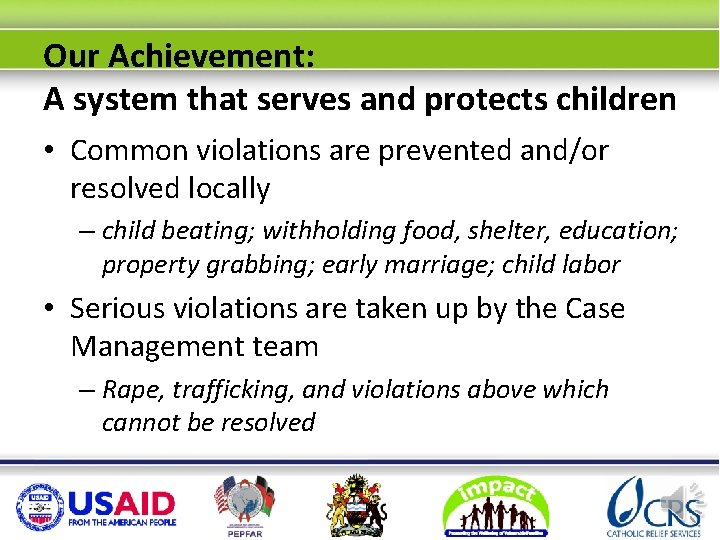
Our Achievement: A system that serves and protects children • Common violations are prevented and/or resolved locally – child beating; withholding food, shelter, education; property grabbing; early marriage; child labor • Serious violations are taken up by the Case Management team – Rape, trafficking, and violations above which cannot be resolved
A systems approach “How can we better utilize those who are already committed to working with children? ” “What tools do they need to assess rights violations and make the right intervention? ” “What structural support will be needed to sustain them? ”
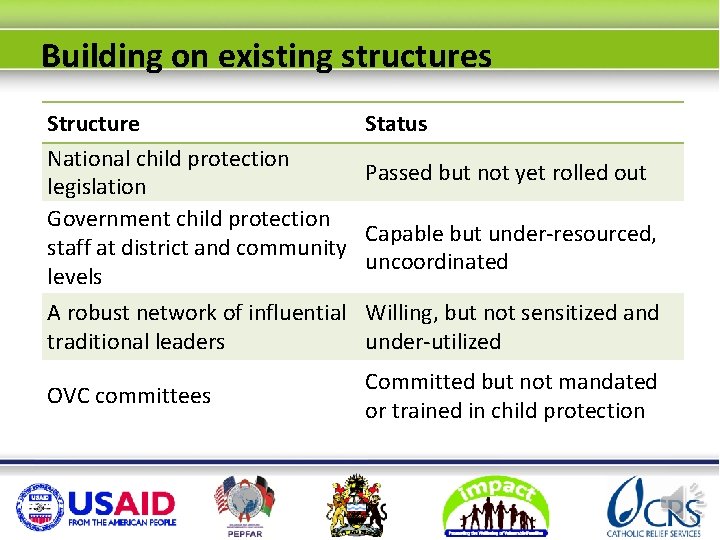
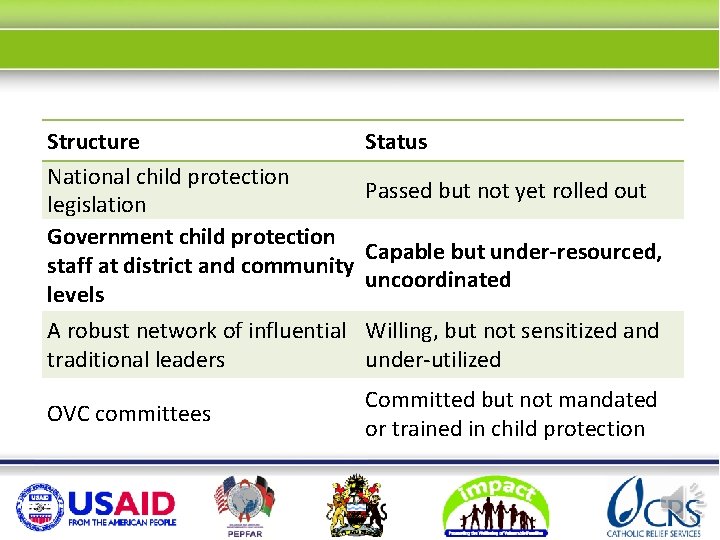
Building on existing structures Structure National child protection legislation Government child protection staff at district and community levels Status Passed but not yet rolled out Capable but under-resourced, uncoordinated A robust network of influential Willing, but not sensitized and traditional leaders under-utilized OVC committees Committed but not mandated or trained in child protection
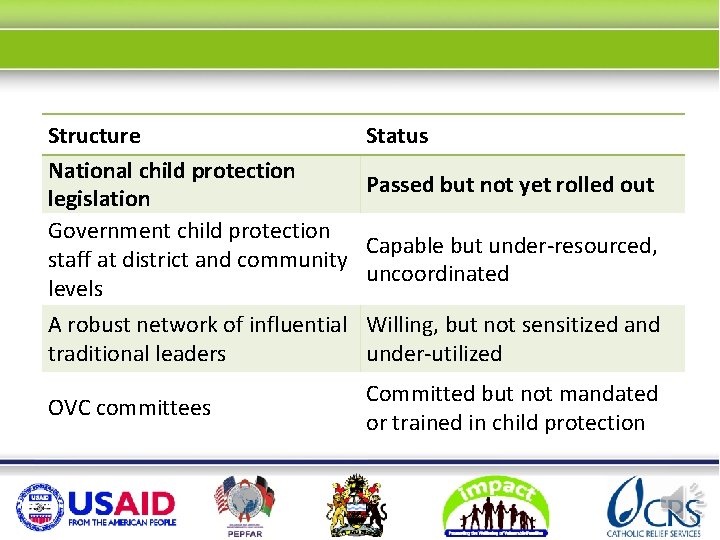
Structure National child protection legislation Government child protection staff at district and community levels Status Passed but not yet rolled out Capable but under-resourced, uncoordinated A robust network of influential Willing, but not sensitized and traditional leaders under-utilized OVC committees Committed but not mandated or trained in child protection
Structure National child protection legislation Government child protection staff at district and community levels Status Passed but not yet rolled out Capable but under-resourced, uncoordinated A robust network of influential Willing, but not sensitized and traditional leaders under-utilized OVC committees Committed but not mandated or trained in child protection
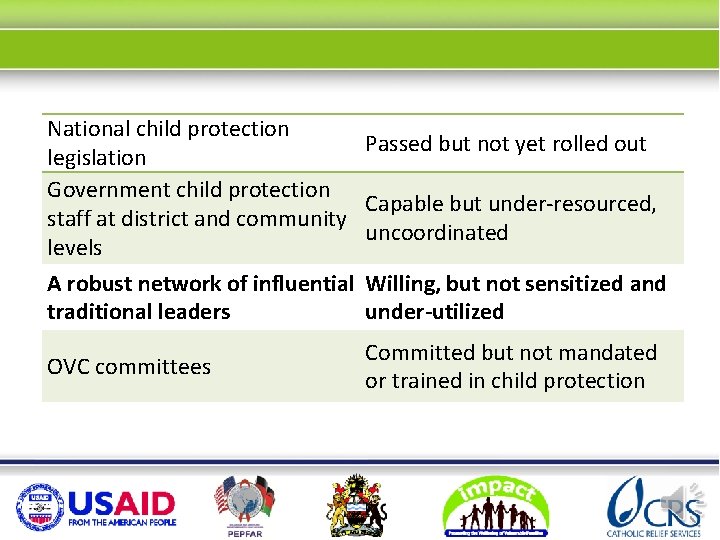
National child protection Passed but not yet rolled out legislation Government child protection Capable but under-resourced, staff at district and community uncoordinated levels A robust network of influential Willing, but not sensitized and traditional leaders under-utilized OVC committees Committed but not mandated or trained in child protection
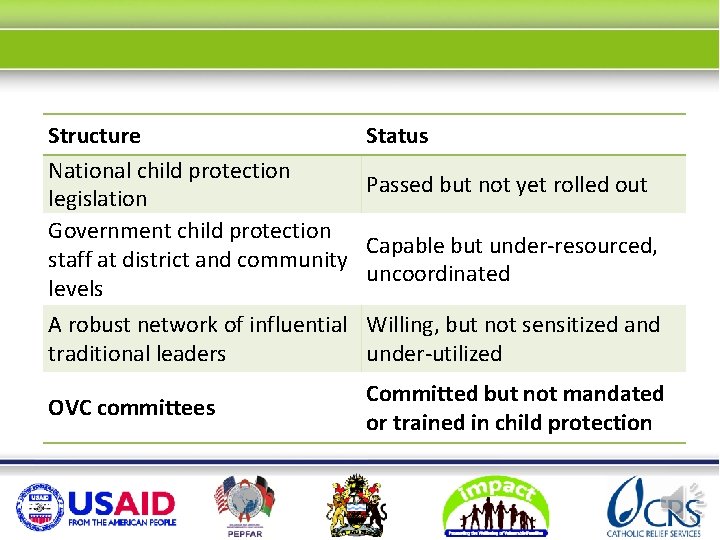
Structure National child protection legislation Government child protection staff at district and community levels Status Passed but not yet rolled out Capable but under-resourced, uncoordinated A robust network of influential Willing, but not sensitized and traditional leaders under-utilized OVC committees Committed but not mandated or trained in child protection
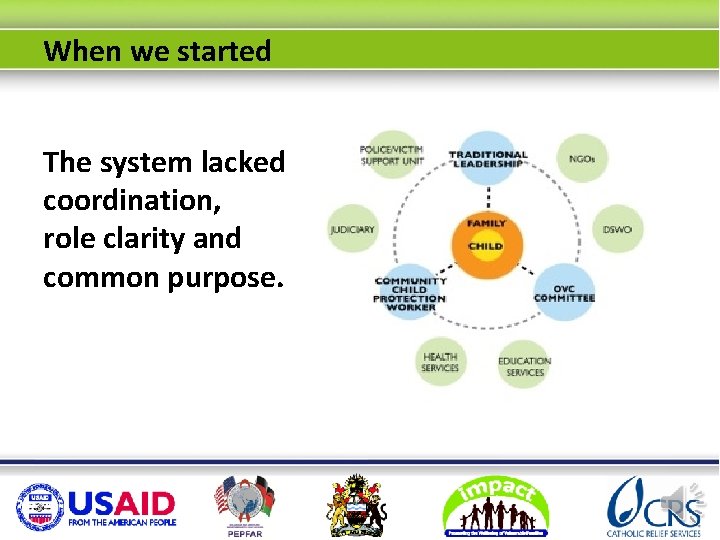
When we started The system lacked coordination, role clarity and common purpose.
To function, the system needed: • An organizing structure to bring all service providers together • A trained, clearly mandated workforce at all levels and across sectors • A tool to identify and quantify rights abuses • An accountable, responsive referral and case management mechanism
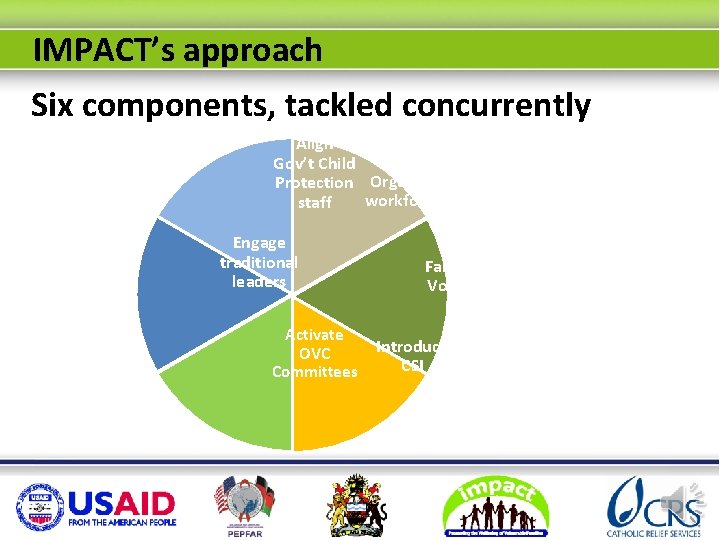
IMPACT’s approach Six components, tackled concurrently Align Gov’t Child Protection Organize workforce staff Engage traditional leaders Activate OVC Committees Train Family Care Volunteers Introduce CSI
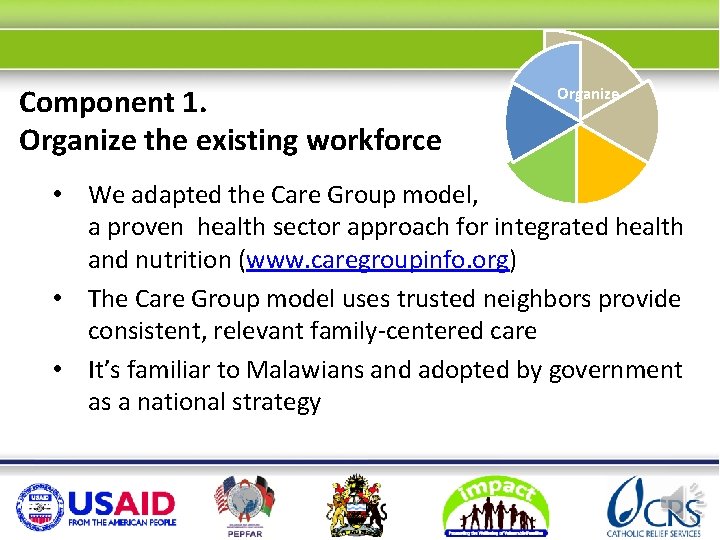
Component 1. Organize the existing workforce Organize • We adapted the Care Group model, a proven health sector approach for integrated health and nutrition (www. caregroupinfo. org) • The Care Group model uses trusted neighbors provide consistent, relevant family-centered care • It’s familiar to Malawians and adopted by government as a national strategy
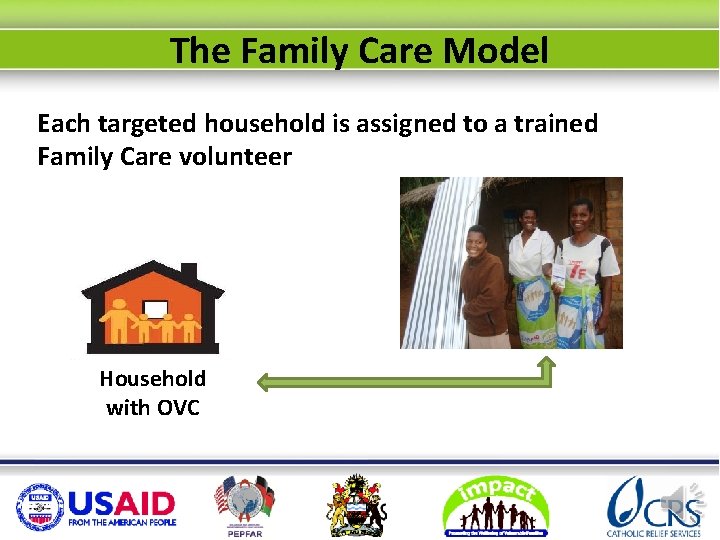
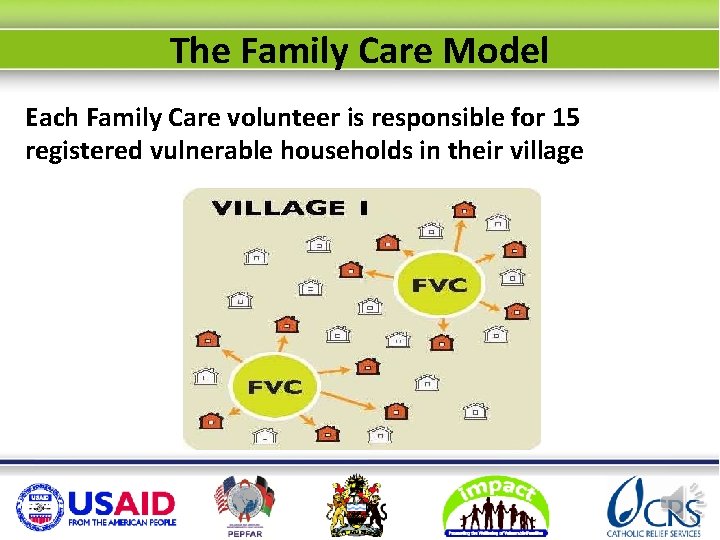
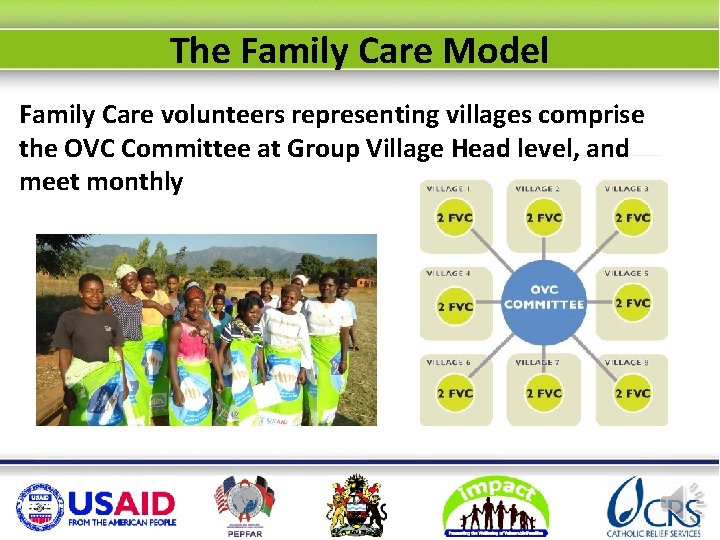
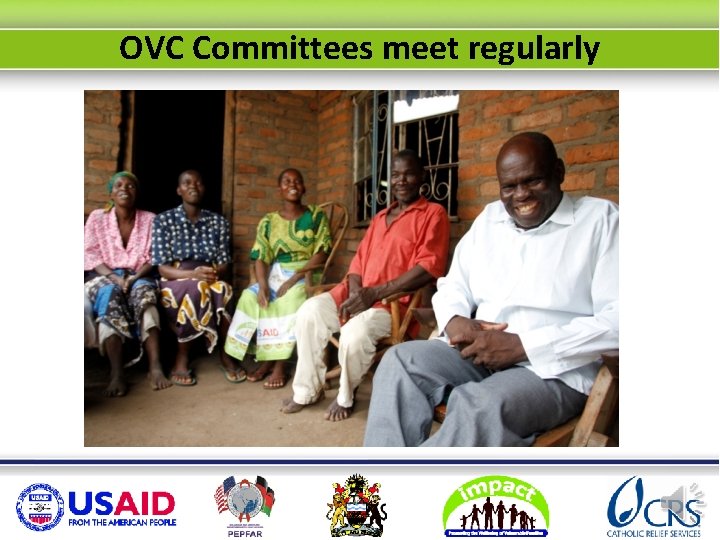
How does the Family Care model work? • OVC Committee members serve as Family Care volunteers (FCVs) • Each FCV serves a specific number of targeted households • FCVs make regular home visits to conduct assessments, deliver key messages and make referrals as necessary • FCVs form OVC Committees and meet regularly to reinforce messaging and backstop individual efforts
The Family Care Model Each targeted household is assigned to a trained Family Care volunteer Household with OVC
The Family Care Model Each Family Care volunteer is responsible for 15 registered vulnerable households in their village
The Family Care Model Family Care volunteers representing villages comprise the OVC Committee at Group Village Head level, and meet monthly
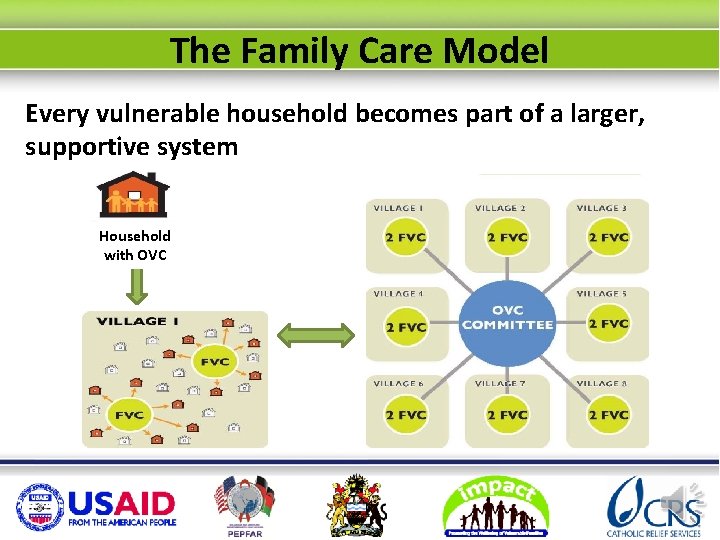
The Family Care Model Every vulnerable household becomes part of a larger, supportive system Household with OVC
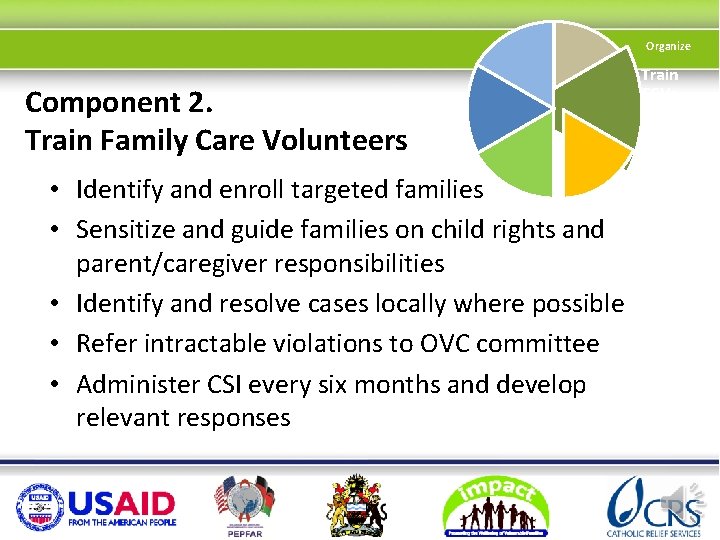
Organize Component 2. Train Family Care Volunteers • Identify and enroll targeted families • Sensitize and guide families on child rights and parent/caregiver responsibilities • Identify and resolve cases locally where possible • Refer intractable violations to OVC committee • Administer CSI every six months and develop relevant responses Train FCVs
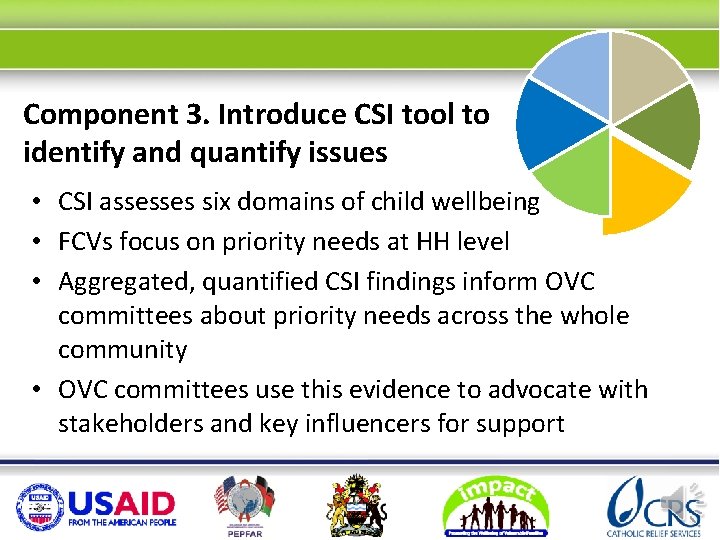
Component 3. Introduce CSI tool to identify and quantify issues • CSI assesses six domains of child wellbeing • FCVs focus on priority needs at HH level • Aggregated, quantified CSI findings inform OVC committees about priority needs across the whole community • OVC committees use this evidence to advocate with stakeholders and key influencers for support I
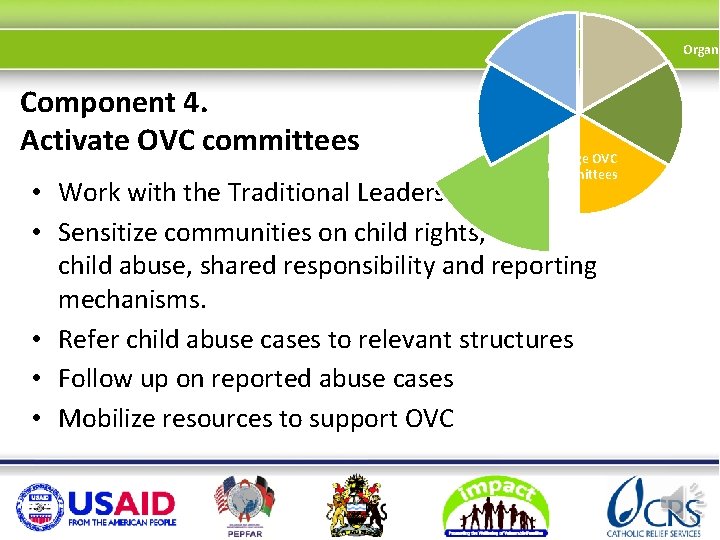
Organi Component 4. Activate OVC committees T Engage OVC Committees • Work with the Traditional Leaders • Sensitize communities on child rights, child abuse, shared responsibility and reporting mechanisms. • Refer child abuse cases to relevant structures • Follow up on reported abuse cases • Mobilize resources to support OVC CSI
OVC Committees meet regularly
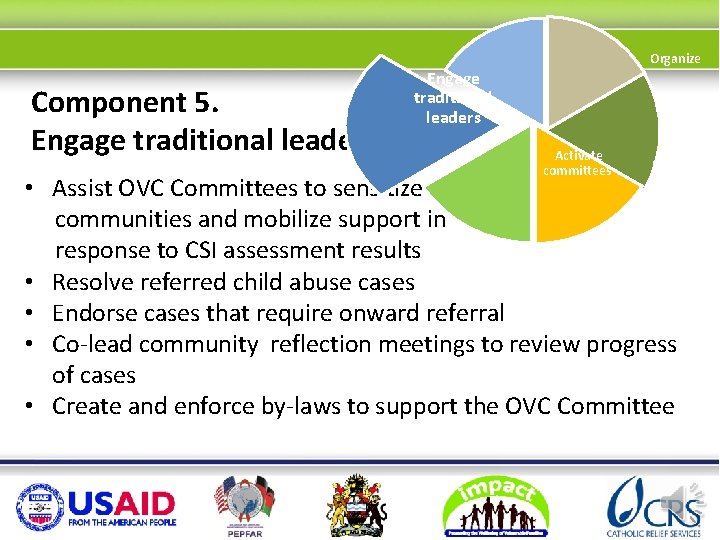
Organize Component 5. Engage traditional leaders Train Activate committees CSI • Assist OVC Committees to sensitize communities and mobilize support in response to CSI assessment results • Resolve referred child abuse cases • Endorse cases that require onward referral • Co-lead community reflection meetings to review progress of cases • Create and enforce by-laws to support the OVC Committee
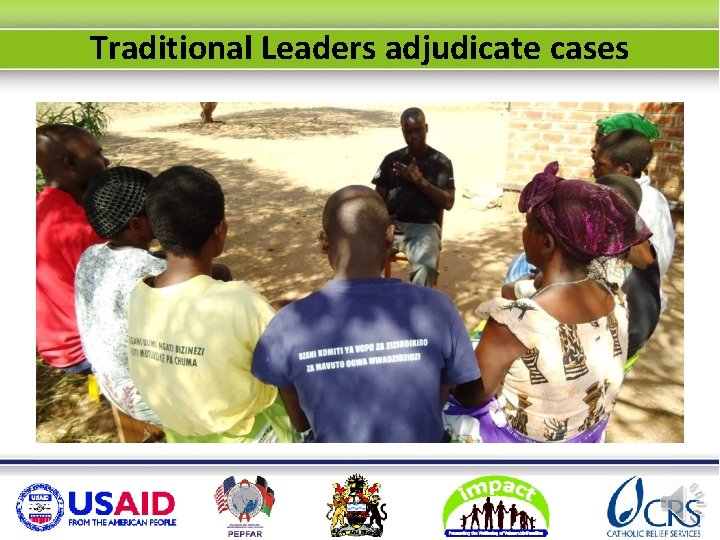
Traditional Leaders adjudicate cases
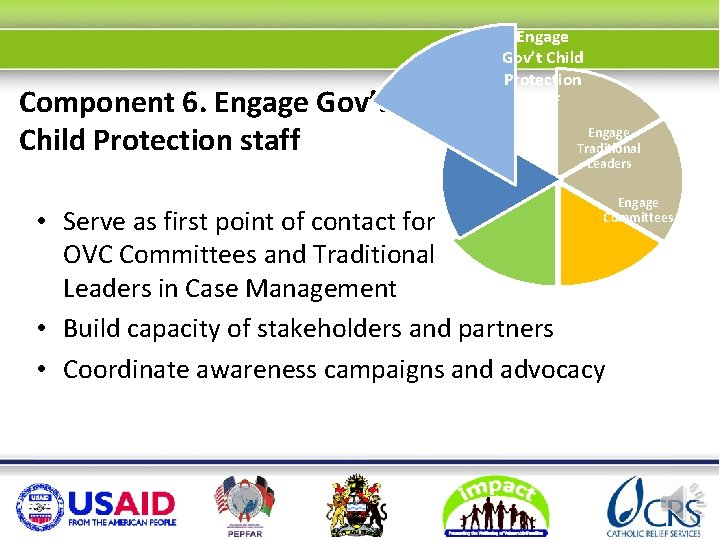
Component 6. Engage Gov’t Child Protection staff Organi Engage Traditional Leaders Engage Committees • Serve as first point of contact for OVC Committees and Traditional Leaders in Case Management • Build capacity of stakeholders and partners • Coordinate awareness campaigns and advocacy C
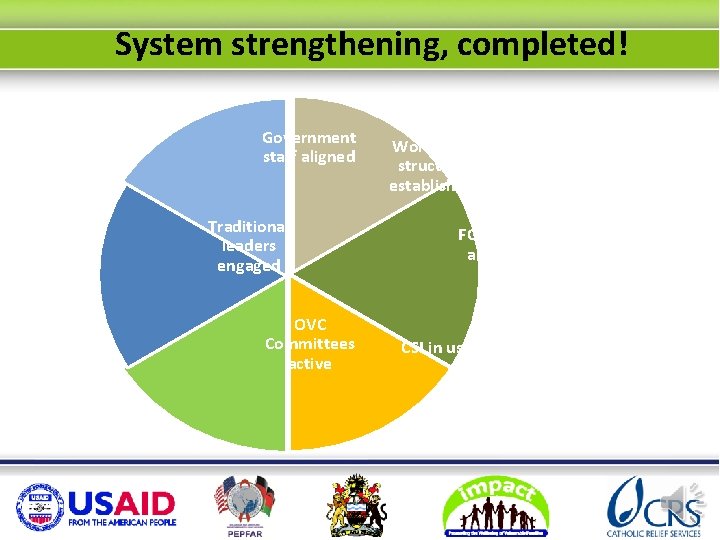
System strengthening, completed! Government staff aligned Traditional leaders engaged OVC Committees active Workforce structure established FCVs trained and active CSI in use
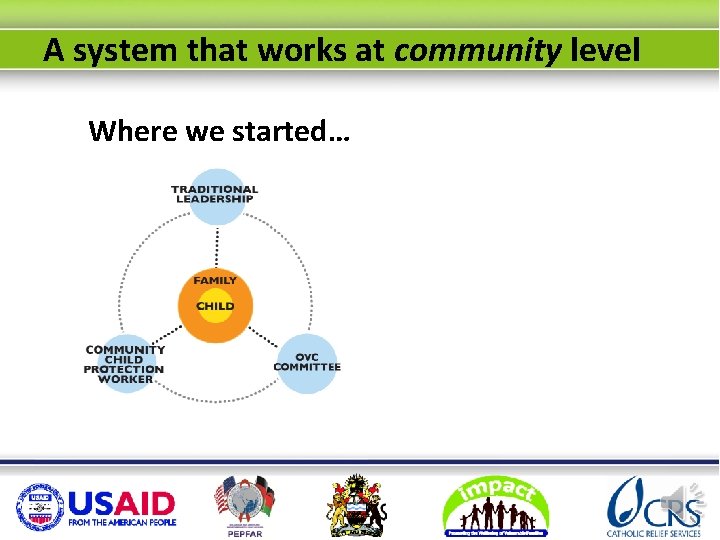
A system that works at community level Where we started…
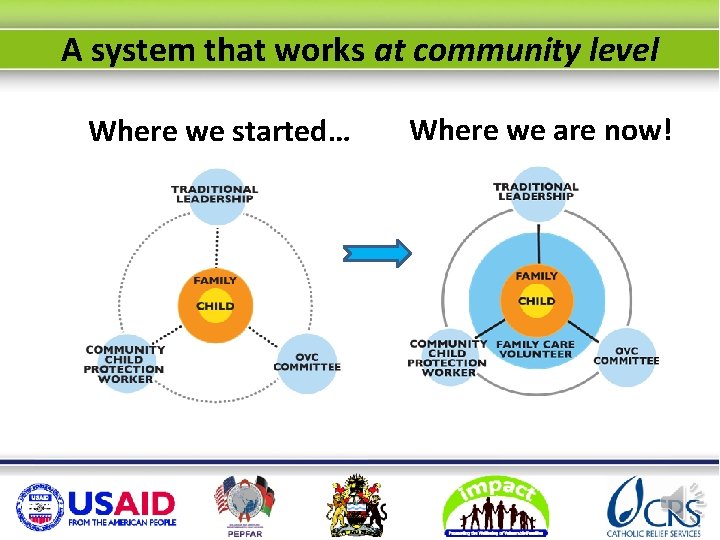
A system that works at community level Where we started… Where we are now!
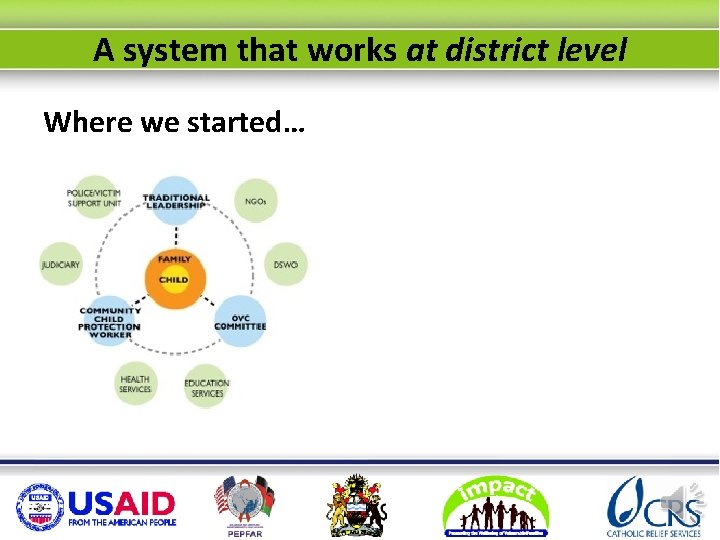
A system that works at district level Where we started…
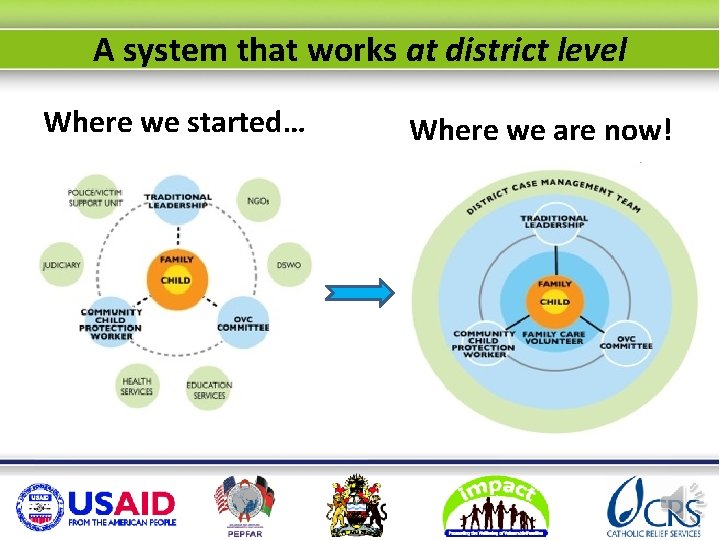
A system that works at district level Where we started… Where we are now!
Challenges • Many abuses are entrenched in traditional practices • Traditional leaders themselves are in conflict • The most serious abuse cases can be mishandled by judiciary, undermining the credibility of the entire intervention