
Connecting Cellular Respiration and Photosynthesis Living cells require
- Slides: 15
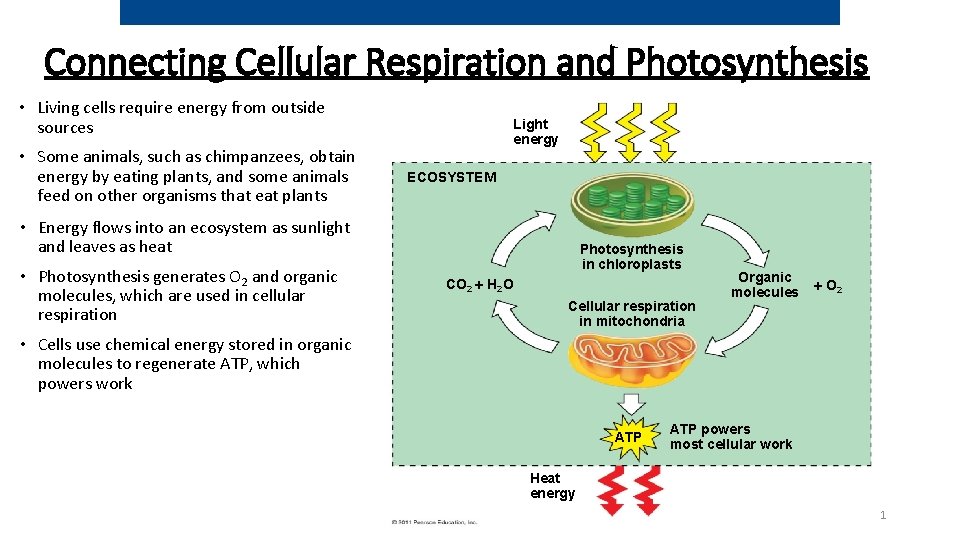
Connecting Cellular Respiration and Photosynthesis • Living cells require energy from outside sources • Some animals, such as chimpanzees, obtain energy by eating plants, and some animals feed on other organisms that eat plants Light energy ECOSYSTEM • Energy flows into an ecosystem as sunlight and leaves as heat • Photosynthesis generates O 2 and organic molecules, which are used in cellular respiration Photosynthesis in chloroplasts CO 2 H 2 O Cellular respiration in mitochondria Organic molecules O 2 • Cells use chemical energy stored in organic molecules to regenerate ATP, which powers work ATP powers most cellular work Heat energy 1
Catabolic Pathways and Production of ATP Cellular Respiration • Several processes are central to cellular respiration and related pathways • The breakdown of organic molecules releases energy • Fermentation is a partial degradation of sugars that occurs without O 2 • Aerobic respiration consumes organic molecules and O 2 and yields ATP • Although carbohydrates, fats, and proteins are all consumed as fuel, it is helpful to trace cellular respiration with the sugar glucose Redox Reactions: Oxidation and Reduction • The transfer of electrons during chemical reactions releases energy stored in organic molecules • This released energy is ultimately used to synthesize ATP • Chemical reactions that transfer electrons between reactants are called oxidation-reduction reactions, or redox reactions • In oxidation, a substance loses electrons, or is oxidized • In reduction, a substance gains electrons, or is reduced (the amount of positive charge is reduced) 2
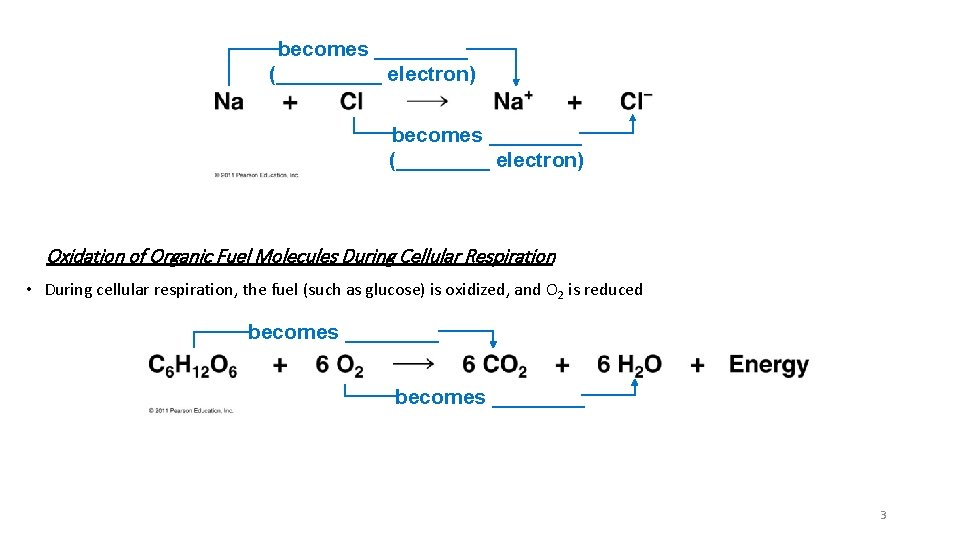
becomes ____ (_____ electron) becomes ____ (____ electron) Oxidation of Organic Fuel Molecules During Cellular Respiration • During cellular respiration, the fuel (such as glucose) is oxidized, and O 2 is reduced becomes ________ 3
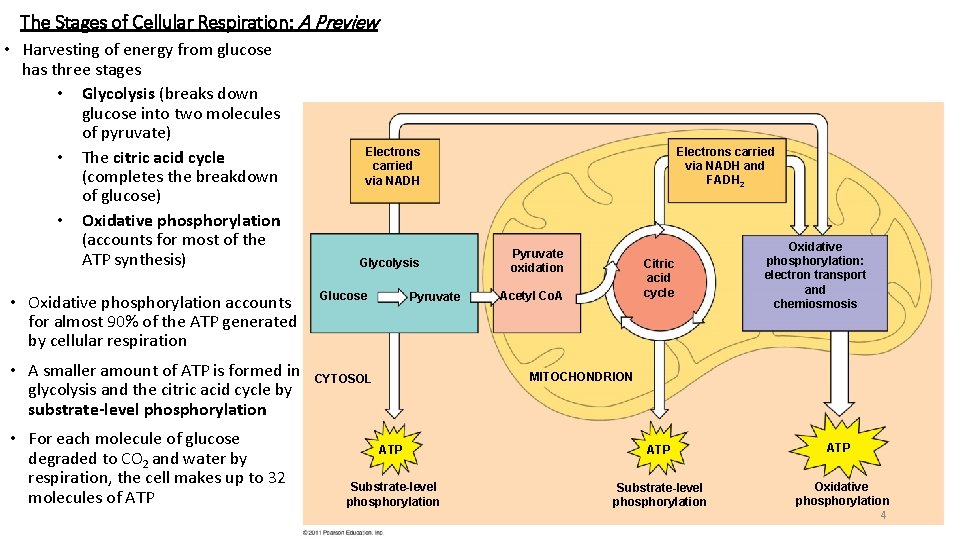
The Stages of Cellular Respiration: A Preview • Harvesting of energy from glucose has three stages • Glycolysis (breaks down glucose into two molecules of pyruvate) • The citric acid cycle (completes the breakdown of glucose) • Oxidative phosphorylation (accounts for most of the ATP synthesis) • Oxidative phosphorylation accounts for almost 90% of the ATP generated by cellular respiration • A smaller amount of ATP is formed in glycolysis and the citric acid cycle by substrate-level phosphorylation • For each molecule of glucose degraded to CO 2 and water by respiration, the cell makes up to 32 molecules of ATP Electrons carried via NADH and FADH 2 Electrons carried via NADH Glycolysis Glucose Pyruvate oxidation Citric acid cycle Acetyl Co. A Oxidative phosphorylation: electron transport and chemiosmosis MITOCHONDRION CYTOSOL ATP Substrate-level phosphorylation ATP Oxidative phosphorylation 4
Bio. Flix: Cellular Respiration Right-clickslide/ select”Play” 5
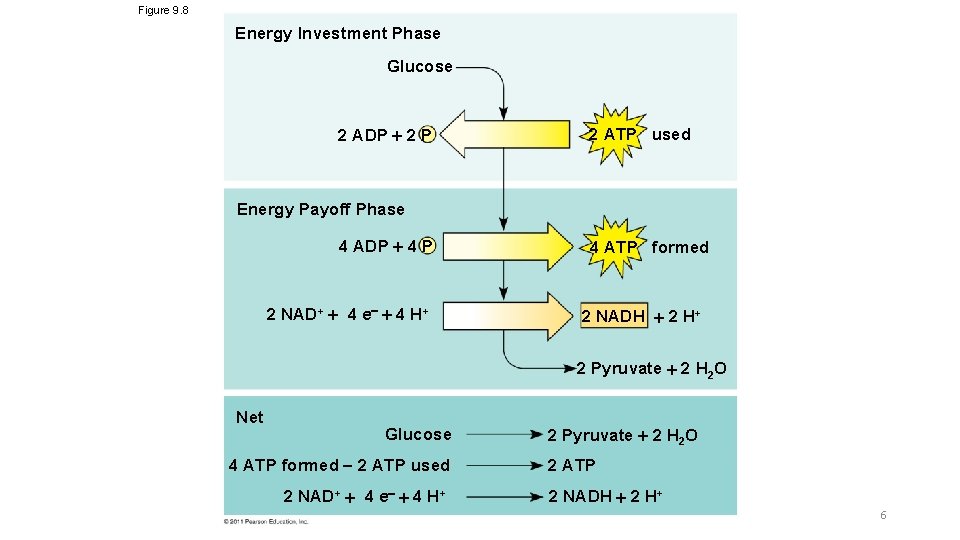
Figure 9. 8 Energy Investment Phase Glucose 2 ADP 2 P 2 ATP used Energy Payoff Phase 4 ADP 4 P 2 NAD+ 4 e 4 H+ 4 ATP formed 2 NADH 2 H+ 2 Pyruvate 2 H 2 O Net Glucose 4 ATP formed 2 ATP used 2 NAD+ 4 e 4 H+ 2 Pyruvate 2 H 2 O 2 ATP 2 NADH 2 H+ 6
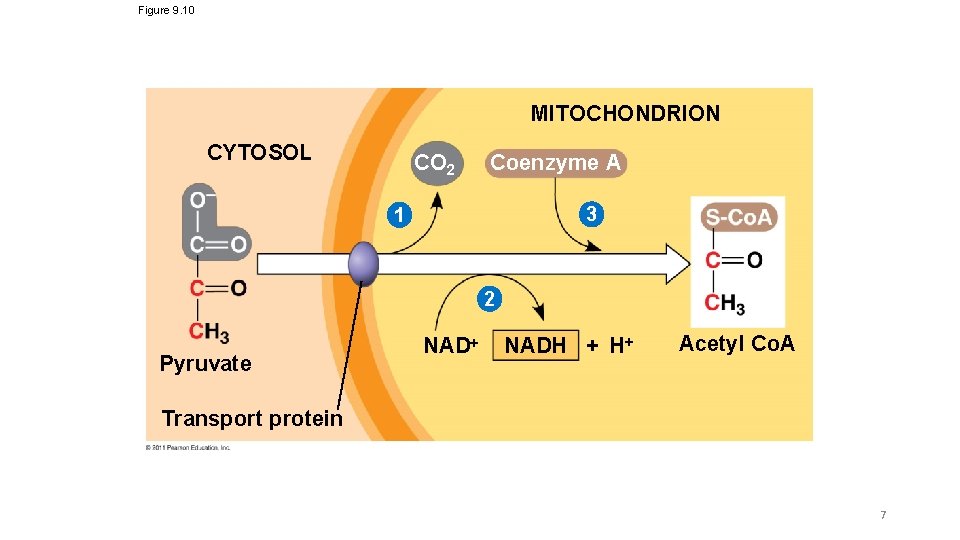
Figure 9. 10 MITOCHONDRION CYTOSOL CO 2 Coenzyme A 3 1 2 Pyruvate NADH + H Acetyl Co. A Transport protein 7
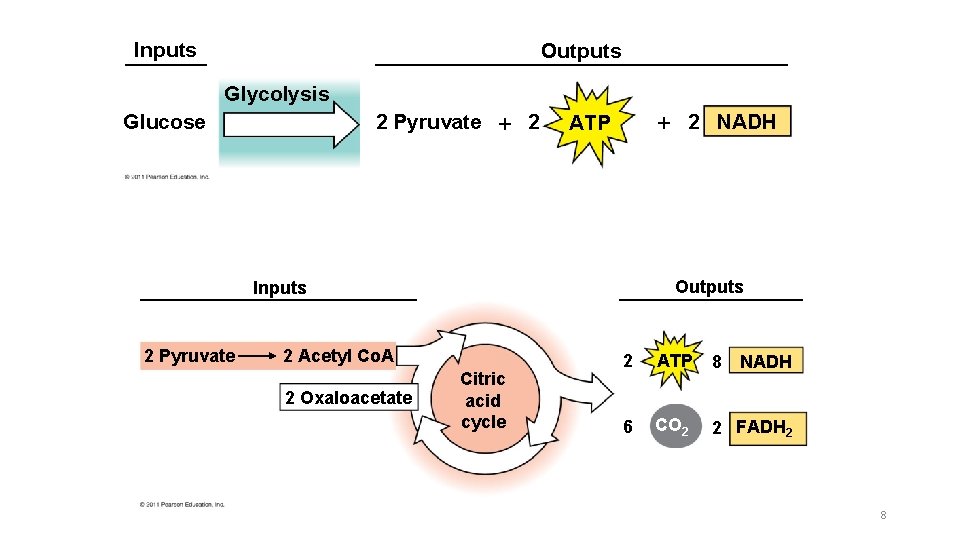
Inputs Outputs Glycolysis 2 Pyruvate 2 Glucose 2 NADH ATP Outputs Inputs 2 Pyruvate 2 Acetyl Co. A 2 Oxaloacetate Citric acid cycle 2 ATP 8 NADH 6 CO 2 2 FADH 2 8
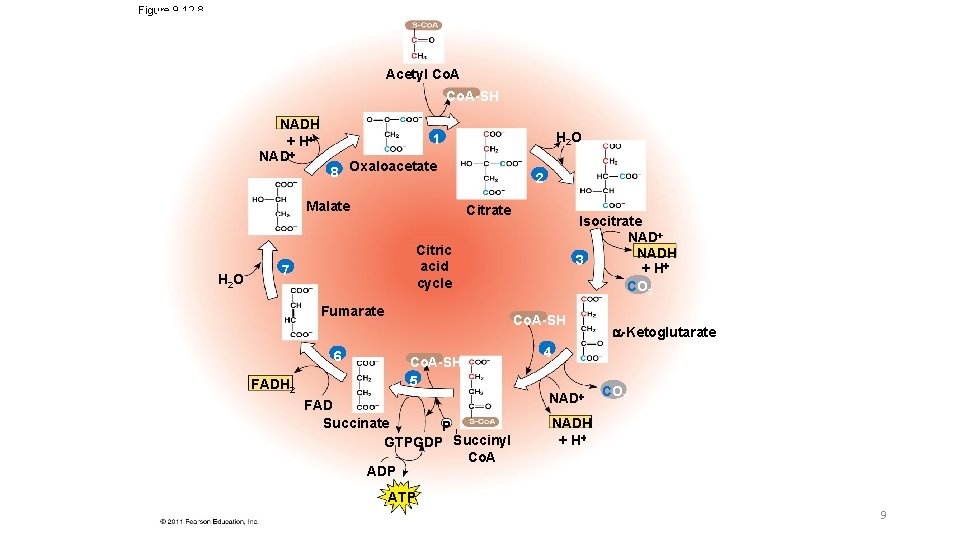
Figure 9. 12 -8 Acetyl Co. A-SH NADH + H NAD 8 Oxaloacetate Malate H 2 O 1 2 Citrate Citric acid cycle 7 Fumarate 6 FADH 2 Isocitrate NADH 3 + H CO 2 Co. A-SH 5 FAD Succinate Pi GTPGDP Succinyl Co. A ADP -Ketoglutarate 4 NAD CO 2 NADH + H ATP 9
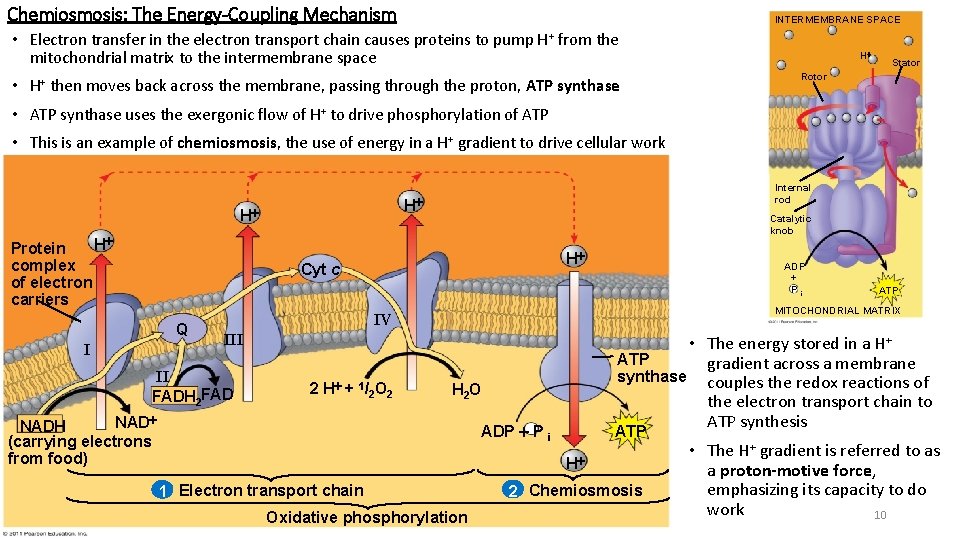
Chemiosmosis: The Energy-Coupling Mechanism INTERMEMBRANE SPACE • Electron transfer in the electron transport chain causes proteins to pump H + from the mitochondrial matrix to the intermembrane space • H+ then moves back across the membrane, passing through the proton, ATP synthase H Stator Rotor • ATP synthase uses the exergonic flow of H+ to drive phosphorylation of ATP • This is an example of chemiosmosis, the use of energy in a H+ gradient to drive cellular work H H H Protein complex of electron carriers Internal rod Catalytic knob H Cyt c Q I ADP + Pi MITOCHONDRIAL MATRIX IV III II FADH 2 FAD 2 H + 1/ 2 O 2 ATP • The energy stored in a H+ ATP gradient across a membrane synthase couples the redox reactions of the electron transport chain to ATP synthesis H 2 O NADH (carrying electrons from food) ADP P i ATP H 1 Electron transport chain Oxidative phosphorylation 2 Chemiosmosis • The H+ gradient is referred to as a proton-motive force, emphasizing its capacity to do work 10
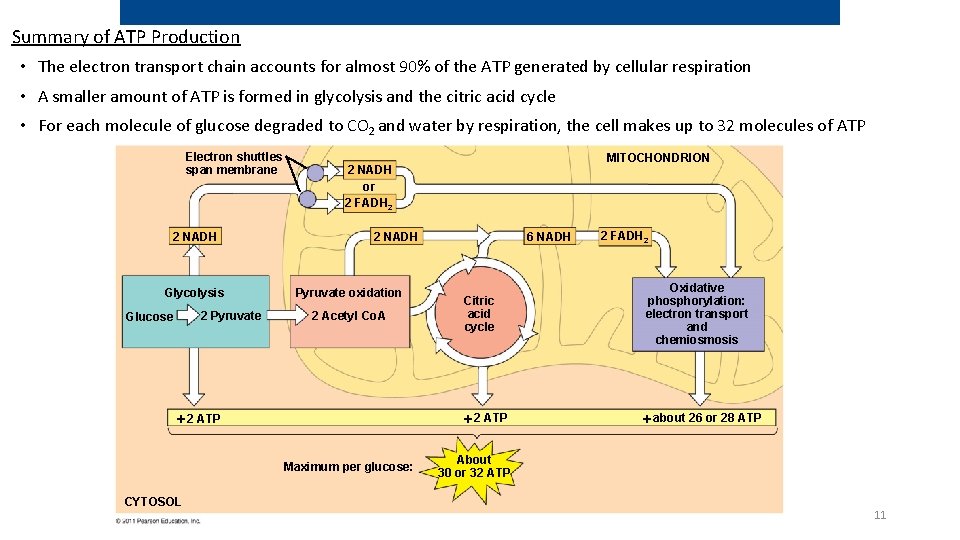
Summary of ATP Production • The electron transport chain accounts for almost 90% of the ATP generated by cellular respiration • A smaller amount of ATP is formed in glycolysis and the citric acid cycle • For each molecule of glucose degraded to CO 2 and water by respiration, the cell makes up to 32 molecules of ATP Electron shuttles span membrane 2 NADH Glycolysis 2 Pyruvate Glucose 2 NADH Pyruvate oxidation 2 Acetyl Co. A 2 ATP Maximum per glucose: CYTOSOL MITOCHONDRION 2 NADH or 2 FADH 2 6 NADH 2 FADH 2 Citric acid cycle Oxidative phosphorylation: electron transport and chemiosmosis 2 ATP about 26 or 28 ATP About 30 or 32 ATP 11
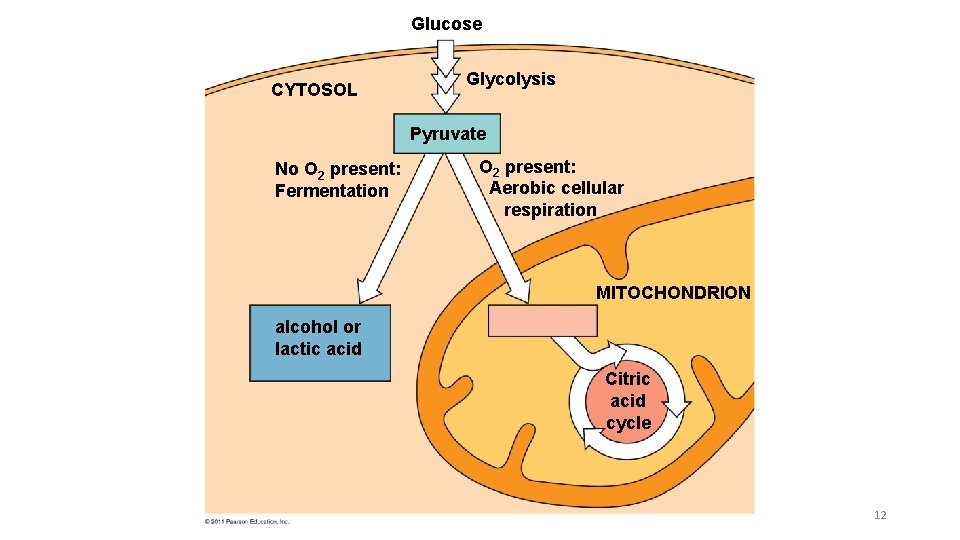
Glucose CYTOSOL Glycolysis Pyruvate No O 2 present: Fermentation O 2 present: Aerobic cellular respiration MITOCHONDRION alcohol or lactic acid Citric acid cycle 12
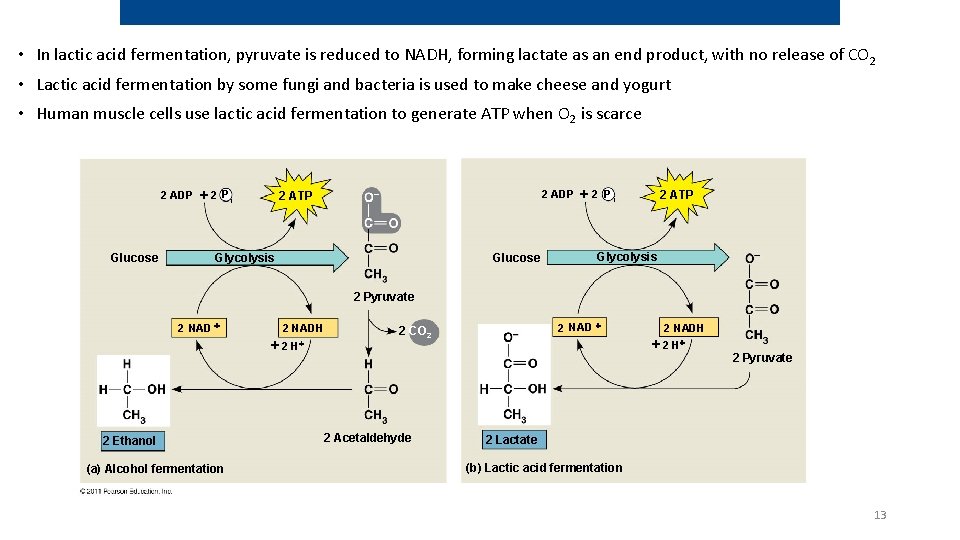
• In lactic acid fermentation, pyruvate is reduced to NADH, forming lactate as an end product, with no release of CO 2 • Lactic acid fermentation by some fungi and bacteria is used to make cheese and yogurt • Human muscle cells use lactic acid fermentation to generate ATP when O 2 is scarce 2 ADP 2 P i Glucose 2 ADP 2 P i 2 ATP Glycolysis Glucose 2 Pyruvate 2 NADH 2 Ethanol (a) Alcohol fermentation 2 NAD 2 CO 2 2 NADH 2 Pyruvate 2 Acetaldehyde 2 Lactate (b) Lactic acid fermentation 13
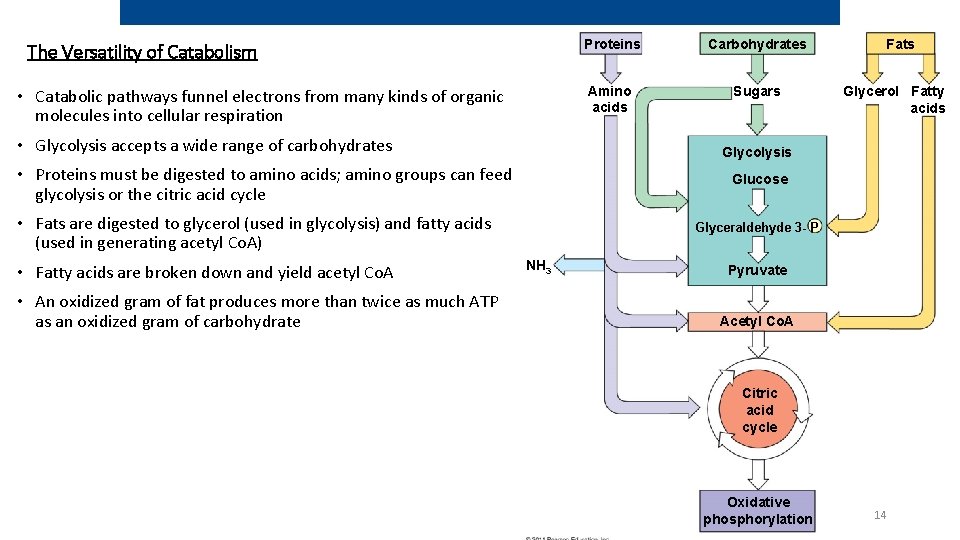
The Versatility of Catabolism • Catabolic pathways funnel electrons from many kinds of organic molecules into cellular respiration • Glycolysis accepts a wide range of carbohydrates Amino acids Sugars Fats Glycerol Fatty acids Glucose • Fats are digested to glycerol (used in glycolysis) and fatty acids (used in generating acetyl Co. A) • An oxidized gram of fat produces more than twice as much ATP as an oxidized gram of carbohydrate Carbohydrates Glycolysis • Proteins must be digested to amino acids; amino groups can feed glycolysis or the citric acid cycle • Fatty acids are broken down and yield acetyl Co. A Proteins Glyceraldehyde 3 - P NH 3 Pyruvate Acetyl Co. A Citric acid cycle Oxidative phosphorylation 14
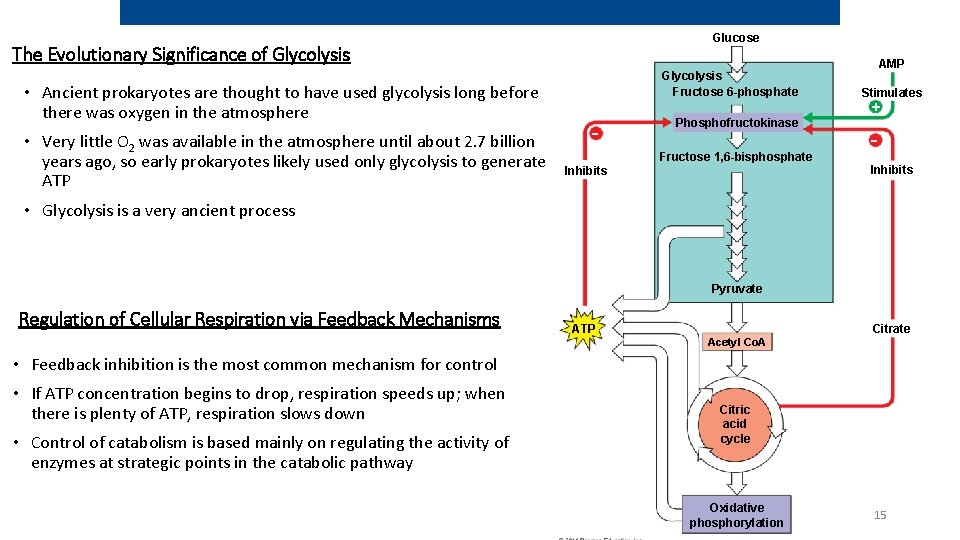
Glucose The Evolutionary Significance of Glycolysis Fructose 6 -phosphate • Ancient prokaryotes are thought to have used glycolysis long before there was oxygen in the atmosphere • Very little O 2 was available in the atmosphere until about 2. 7 billion years ago, so early prokaryotes likely used only glycolysis to generate ATP AMP Stimulates Phosphofructokinase Fructose 1, 6 -bisphosphate Inhibits • Glycolysis is a very ancient process Pyruvate Regulation of Cellular Respiration via Feedback Mechanisms ATP Citrate Acetyl Co. A • Feedback inhibition is the most common mechanism for control • If ATP concentration begins to drop, respiration speeds up; when there is plenty of ATP, respiration slows down • Control of catabolism is based mainly on regulating the activity of enzymes at strategic points in the catabolic pathway Citric acid cycle Oxidative phosphorylation 15