
Conjunctionguided selection in visual search Igor S Utochkin




- Slides: 10
Conjunction-guided selection in visual search Igor S. Utochkin The National Research University “Higher School of Economics”, Russia
Guided Search (Wolfe, 1994, 1996; 2006): Features can be used to guide visual search What about conjunctions?
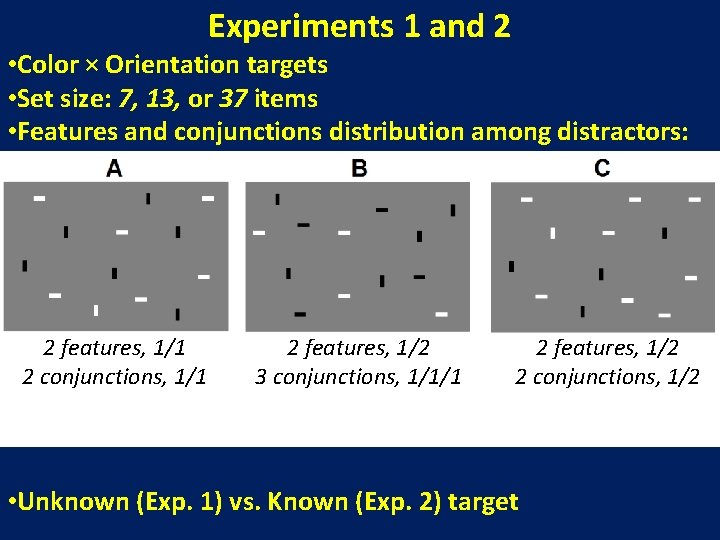
Experiments 1 and 2 • Color × Orientation targets • Set size: 7, 13, or 37 items • Features and conjunctions distribution among distractors: 2 features, 1/1 2 conjunctions, 1/1 2 features, 1/2 3 conjunctions, 1/1/1 2 features, 1/2 2 conjunctions, 1/2 • Unknown (Exp. 1) vs. Known (Exp. 2) target
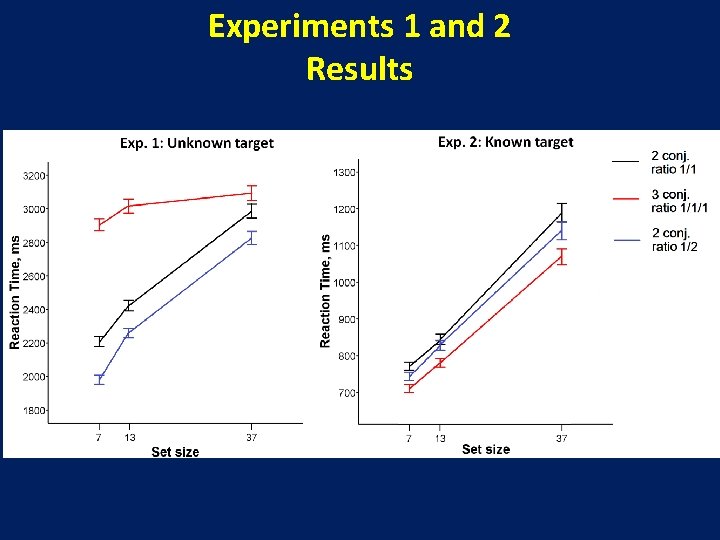
Experiments 1 and 2 Results
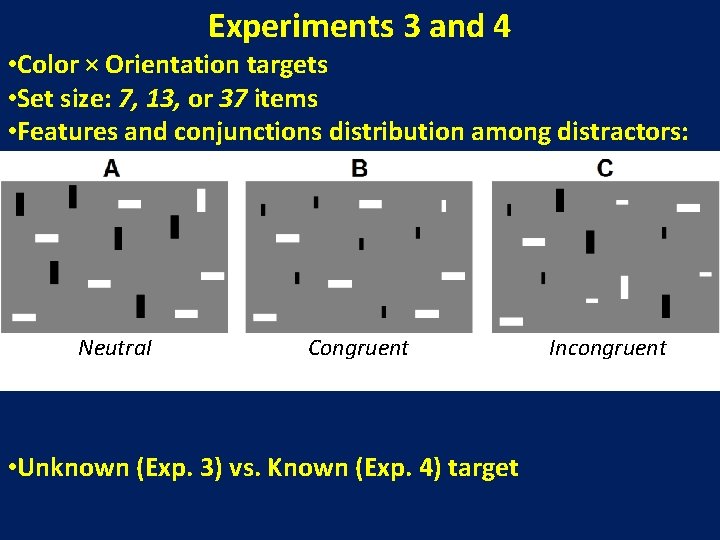
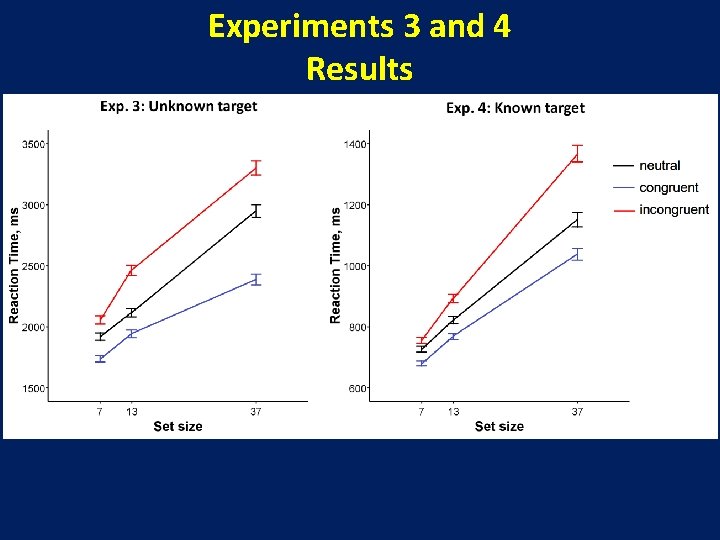
Experiments 3 and 4 • Color × Orientation targets • Set size: 7, 13, or 37 items • Features and conjunctions distribution among distractors: Neutral Congruent • Unknown (Exp. 3) vs. Known (Exp. 4) target Incongruent
Experiments 3 and 4 Results
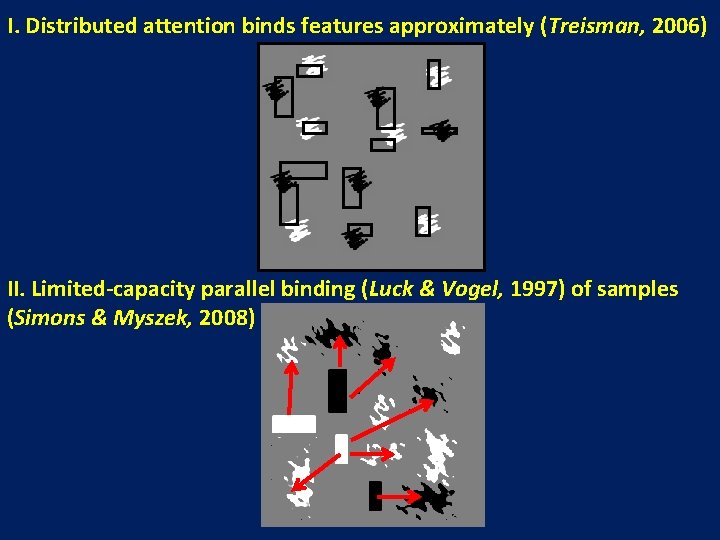
A “tentative binding” hypothesis • Approximate, imprecise but not accidental; • Requires some global attentional processing prior to focusing on individuals;
I. Distributed attention binds features approximately (Treisman, 2006) II. Limited-capacity parallel binding (Luck & Vogel, 1997) of samples (Simons & Myszek, 2008)
A “tentative binding” hypothesis • Approximate, imprecise but not accidental; • Requires some global attentional processing prior to focusing on individuals; • Primes subsequent allocation of focused attention
Thank you for attention! Acknowledgements: Yulia Stakina Anna Rakova The study was conducted within the Program for basic research of the Higher School of Economics in 2012