
Congress All You Ever wanted to Know Bill
Congress All You Ever wanted to Know….
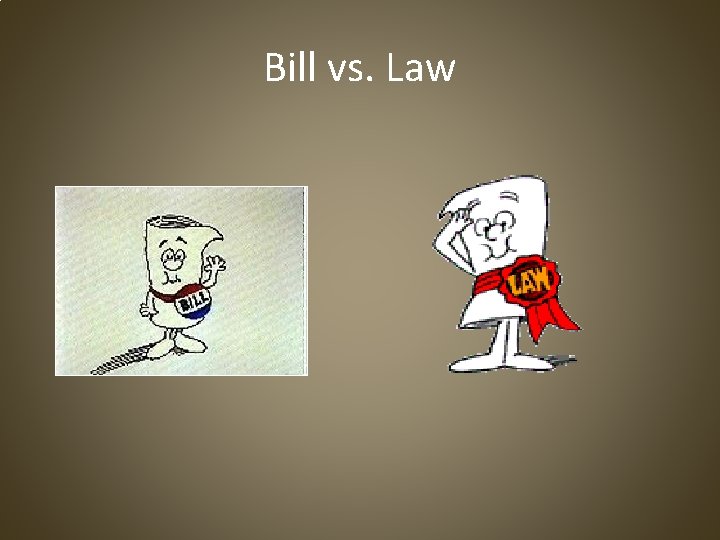
Bill vs. Law
Types of Bills • public bill – proposed legislative bill that deals with matters of general concern and application • private bill – a proposed legislative bill that deals with specific private, personal, or local matters rather than general affairs • appropriation bill – legislative motion authorizing the government to spend money
Types of Resolutions • resolution - a measure expressing opinions on policies or issues • simple resolution – measure dealing with “housekeeping” or procedural matters that only affect one house • joint resolution – measure when approved by both houses and the president carries the force of law • concurrent resolution – legislative motion that must be approved by both houses, but does not have the force of law
Navigating the Legislative Obstacle Course
Step 1: An Idea for a Bill • Sources: • Private Citizens Governors Congress members • Interest Groups • Federal Agencies Mayors
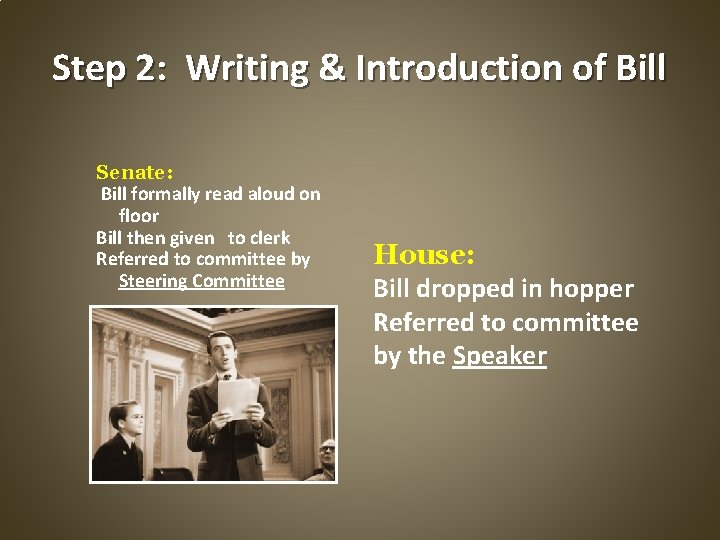
Step 2: Writing & Introduction of Bill Senate: Bill formally read aloud on floor Bill then given to clerk Referred to committee by Steering Committee House: Bill dropped in hopper Referred to committee by the Speaker
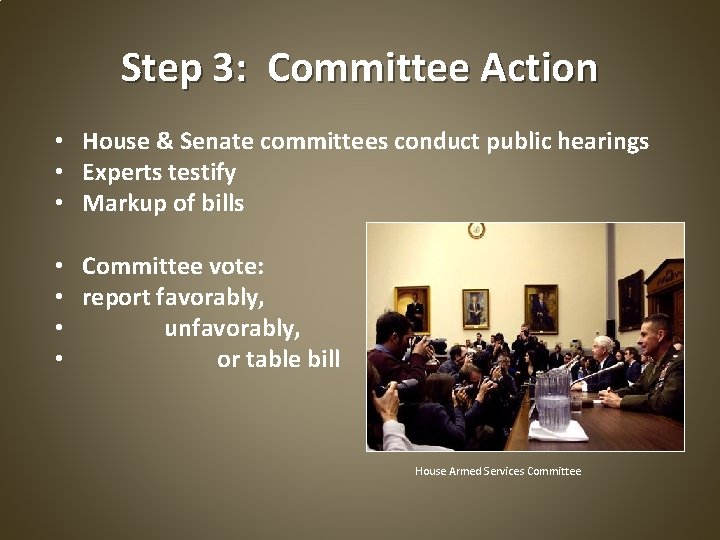
Step 3: Committee Action • House & Senate committees conduct public hearings • Experts testify • Markup of bills • Committee vote: • report favorably, • unfavorably, • or table bill House Armed Services Committee
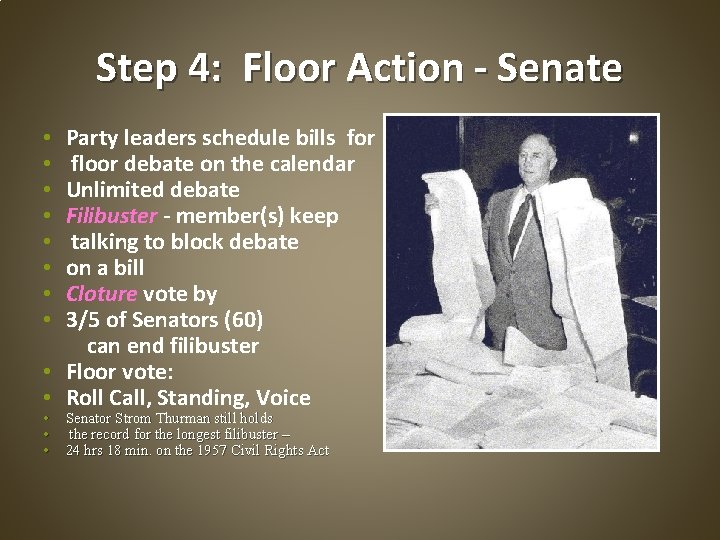
Step 4: Floor Action - Senate Party leaders schedule bills for floor debate on the calendar Unlimited debate Filibuster - member(s) keep talking to block debate on a bill Cloture vote by 3/5 of Senators (60) can end filibuster • Floor vote: • Roll Call, Standing, Voice • • • Senator Strom Thurman still holds the record for the longest filibuster – 24 hrs 18 min. on the 1957 Civil Rights Act
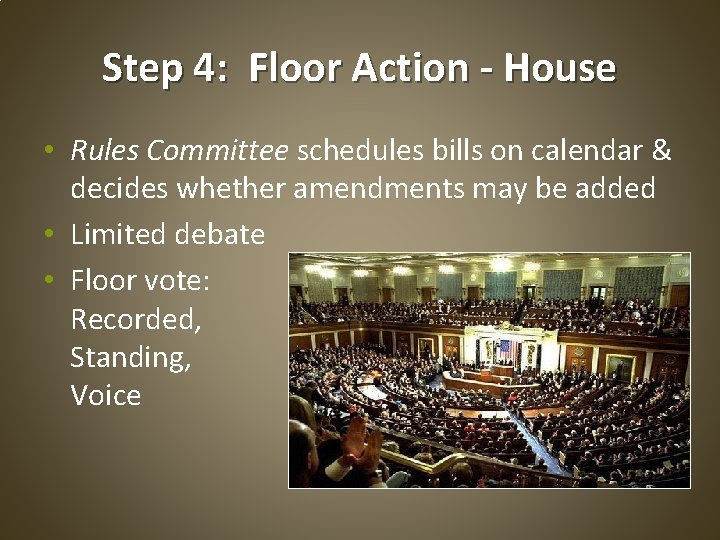
Step 4: Floor Action - House • Rules Committee schedules bills on calendar & decides whether amendments may be added • Limited debate • Floor vote: Recorded, Standing, Voice
Step 5: Approved Bill Crosses Over to Other House • Approved bill must pass each chamber by a simple majority
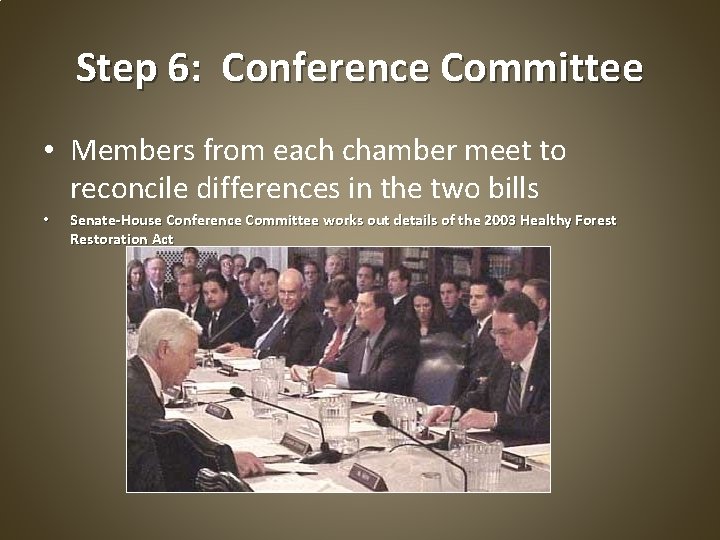
Step 6: Conference Committee • Members from each chamber meet to reconcile differences in the two bills • Senate-House Conference Committee works out details of the 2003 Healthy Forest Restoration Act
Step 7: Both Chambers Vote on Final Version of the Bill
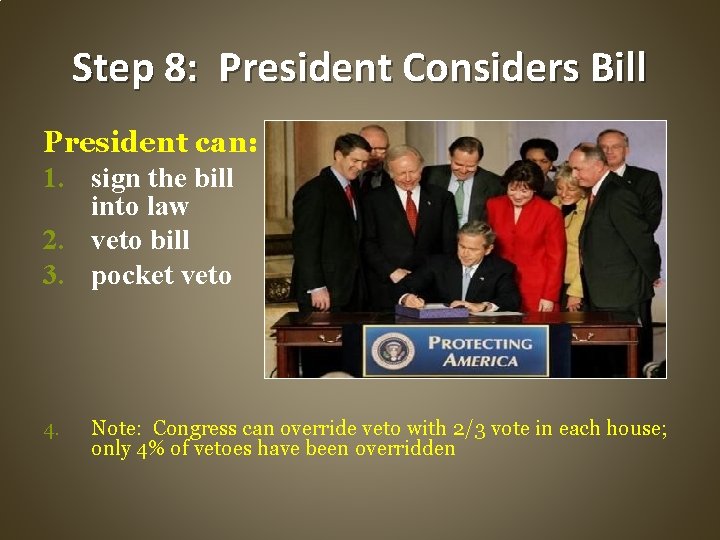
Step 8: President Considers Bill President can: 1. sign the bill into law 2. veto bill 3. pocket veto 4. Note: Congress can override veto with 2/3 vote in each house; only 4% of vetoes have been overridden
Critical Thinking: • Fact: Around 5, 000 bills are introduced in Congress every year (10, 000 per two-year span), but only about 150 are signed into law. 1. Explain why so few bills become law. 2. Is that a good thing or a bad thing? 3. Should the legislative process in Congress be reformed? If yes, what changes would you recommend? If not, why not?
Structure, Organization, & Legislative Process Congress in session is Congress on public exhibition, whilst Congress in its committee -rooms is Congress at work. ”
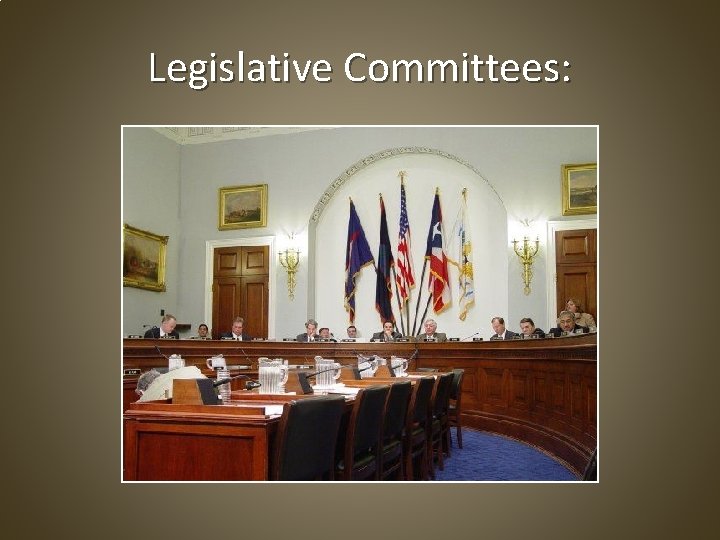
Legislative Committees:
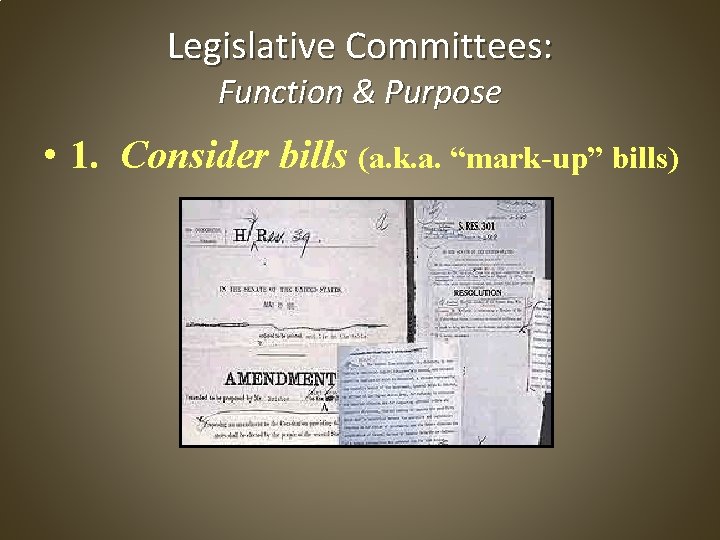
Legislative Committees: Function & Purpose • 1. Consider bills (a. k. a. “mark-up” bills)
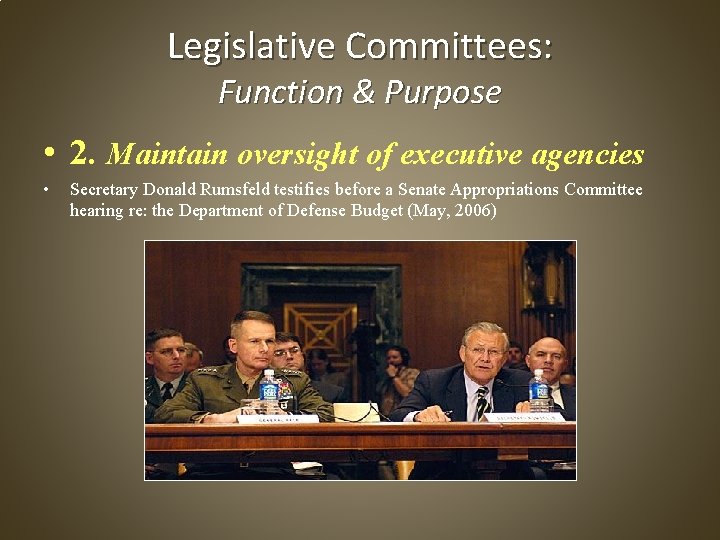
Legislative Committees: Function & Purpose • 2. Maintain oversight of executive agencies • Secretary Donald Rumsfeld testifies before a Senate Appropriations Committee hearing re: the Department of Defense Budget (May, 2006)
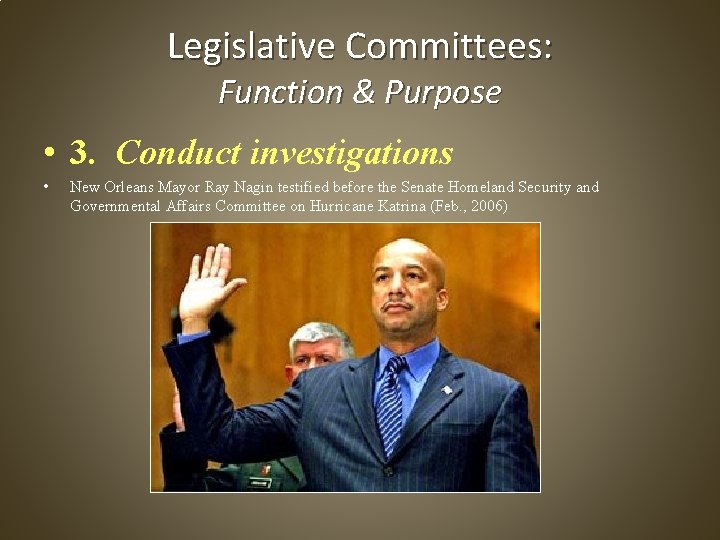
Legislative Committees: Function & Purpose • 3. Conduct investigations • New Orleans Mayor Ray Nagin testified before the Senate Homeland Security and Governmental Affairs Committee on Hurricane Katrina (Feb. , 2006)
Types of Committees Ø Standing Committees - permanent panel with full legislative functions and oversight responsibilities – Subcommittees –tackle very specific tasks within the jurisdiction of the full committees Ø Select or Special Committees - groups appointed for a limited purpose and limited duration Ø Joint Committees - includes members of both chambers to conduct studies or perform housekeeping tasks Ø Conference Committee - includes members of House & Senate to work out differences between similar bills
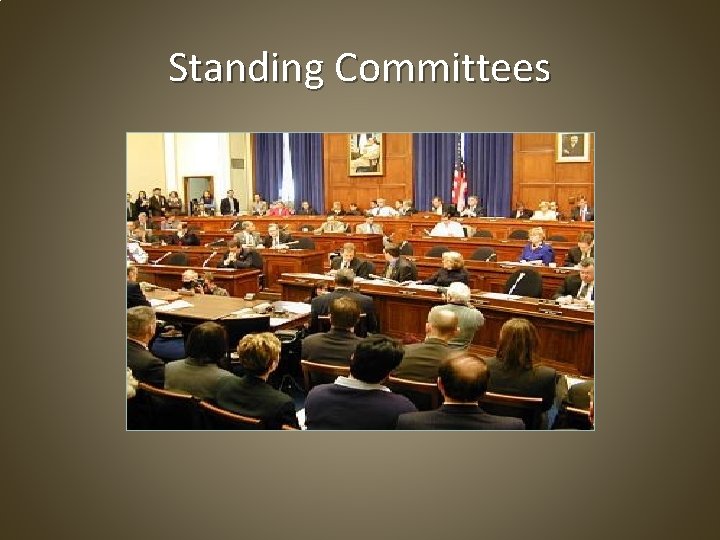
Standing Committees
Senate Standing Committees Agriculture, Nutrition, & Forestry Appropriations Armed Services Banking, Housing, & Urban Affairs Budget Commerce, Science, Transportation Energy & Natural Resources Environment and Public Works
House Standing Committees Judiciary Resources Rules Science Small Business Standards of Official Conduct Transportation & Infrastructure Veterans Affairs Ways & Means
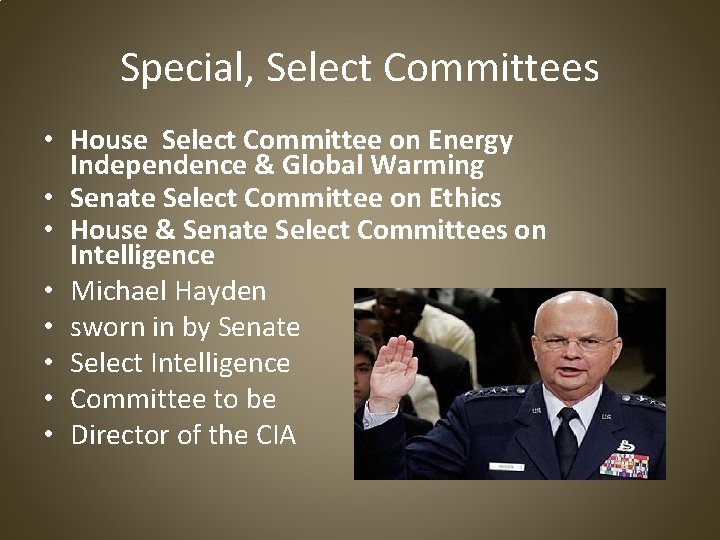
Special, Select Committees • House Select Committee on Energy Independence & Global Warming • Senate Select Committee on Ethics • House & Senate Select Committees on Intelligence • Michael Hayden • sworn in by Senate • Select Intelligence • Committee to be • Director of the CIA
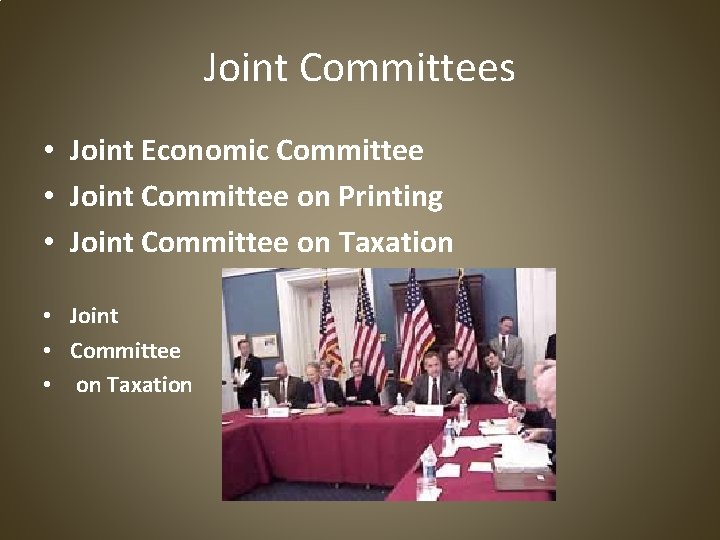
Joint Committees • Joint Economic Committee • Joint Committee on Printing • Joint Committee on Taxation • Joint • Committee • on Taxation
What kind of committee is currently trying to avert the “fiscal cliff”?
- Slides: 27