
Congenital Upper Extremity Anomalies Thomas Sitzman MD MPH
- Slides: 29
Congenital Upper Extremity Anomalies Thomas Sitzman, MD, MPH, FAAP Phoenix Children’s Medical Group Division of Plastic Surgery
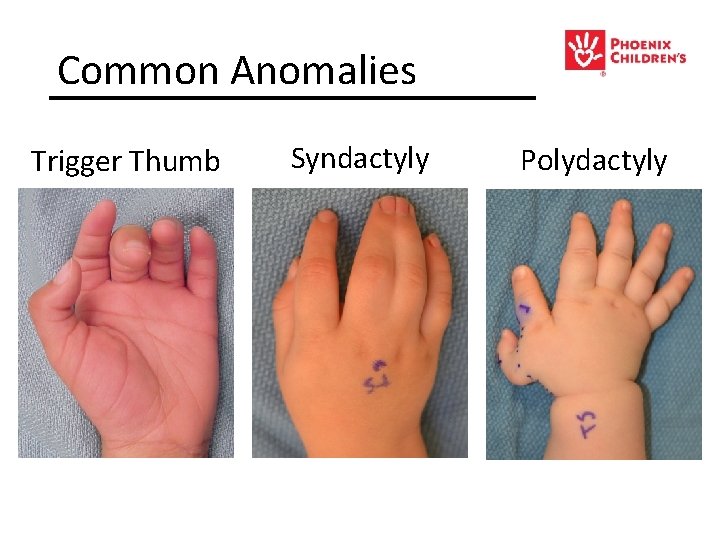
Purpose • Examination of the upper extremity in children with congenital anomalies • Management of common anomalies − Trigger thumb − Syndactyly − Polydactyly
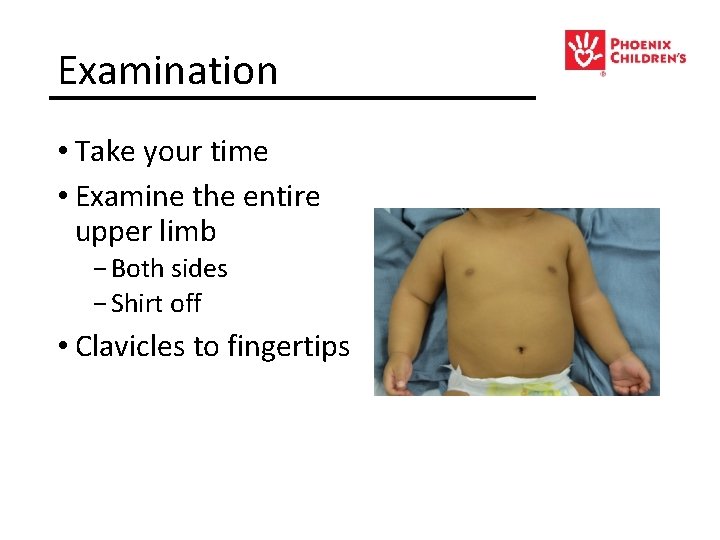
Examination • Take your time • Examine the entire upper limb − Both sides − Shirt off • Clavicles to fingertips
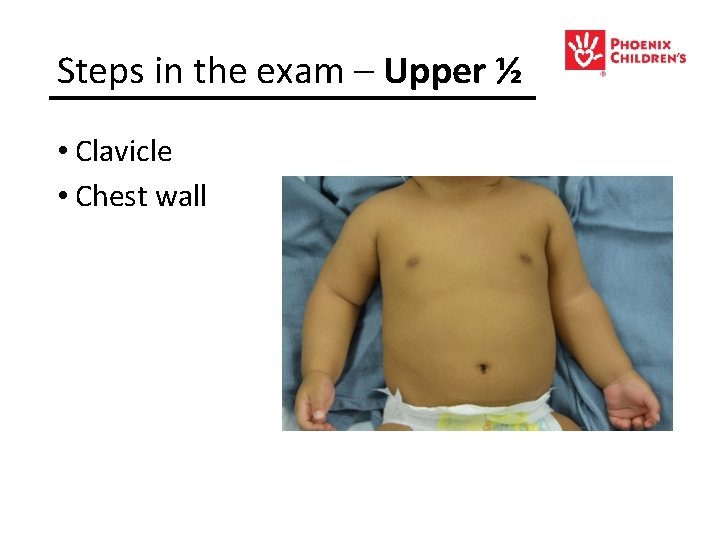
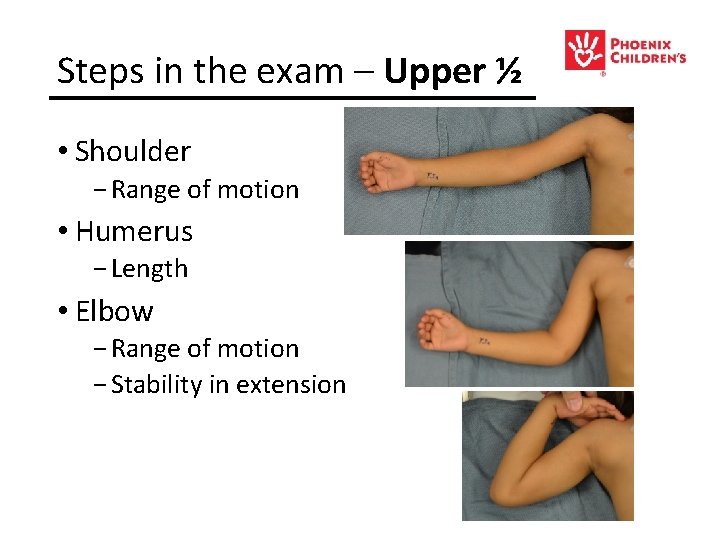
Steps in the exam – Upper ½ • Clavicle • Chest wall
Steps in the exam – Upper ½ • Shoulder − Range of motion • Humerus − Length • Elbow − Range of motion − Stability in extension
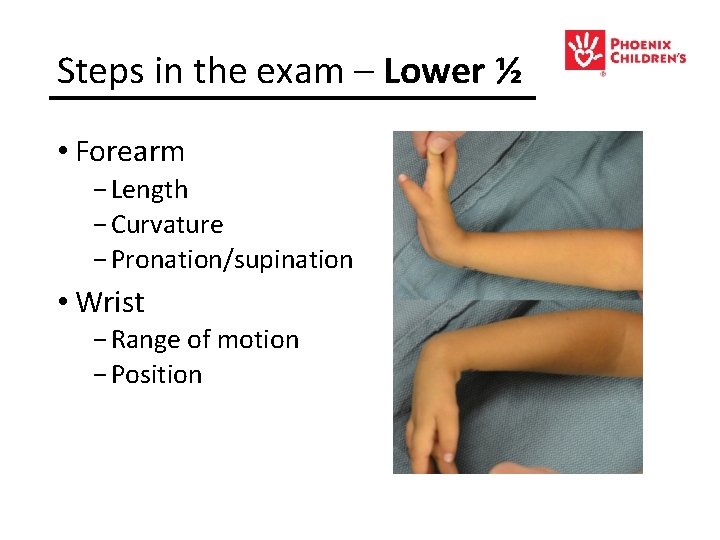
Steps in the exam – Lower ½ • Forearm − Length − Curvature − Pronation/supination • Wrist − Range of motion − Position
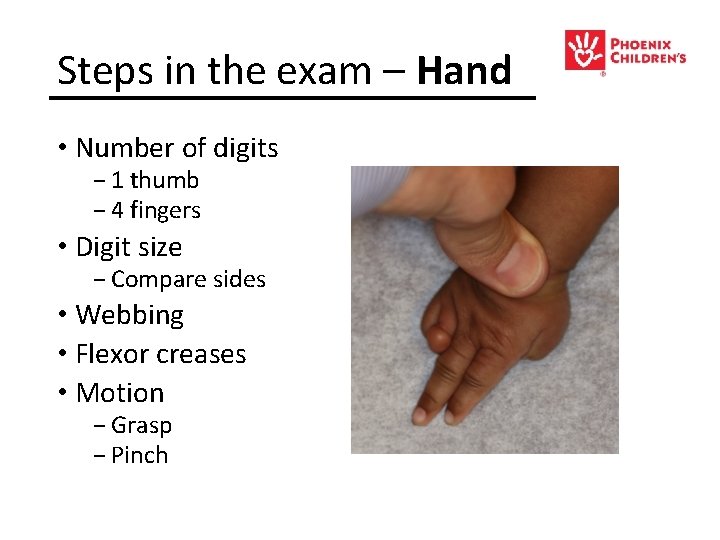
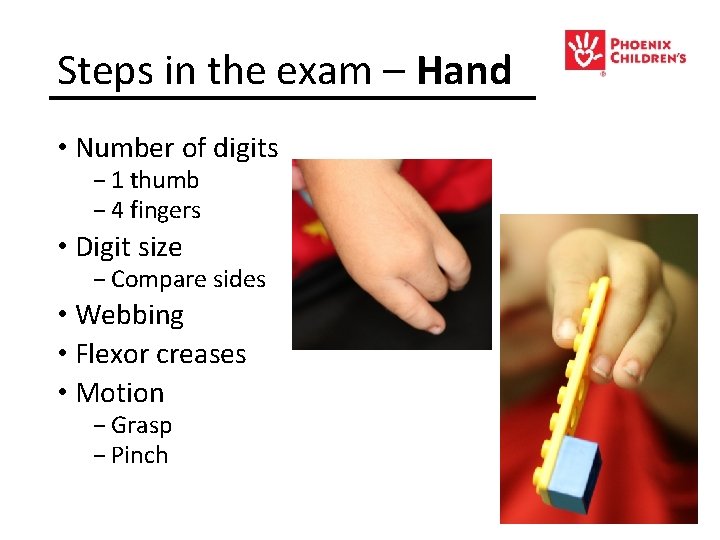
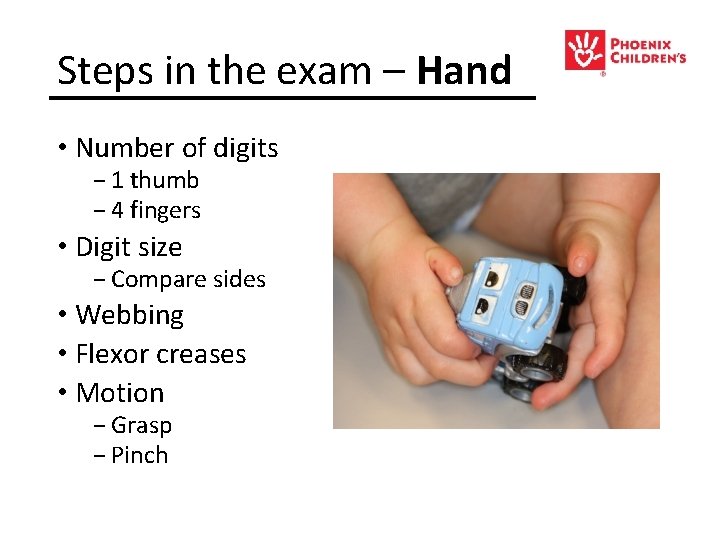
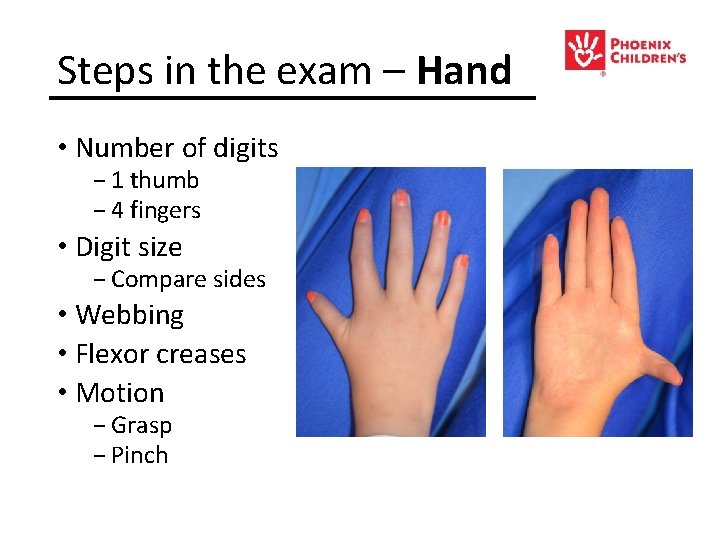
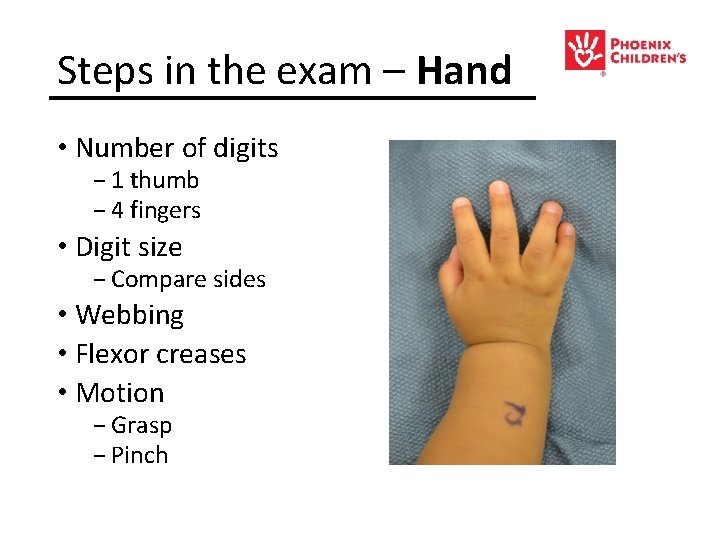
Steps in the exam – Hand • Number of digits − 1 thumb − 4 fingers • Digit size − Compare sides • Webbing • Flexor creases • Motion − Grasp − Pinch
Steps in the exam – Hand • Number of digits − 1 thumb − 4 fingers • Digit size − Compare sides • Webbing • Flexor creases • Motion − Grasp − Pinch
Steps in the exam – Hand • Number of digits − 1 thumb − 4 fingers • Digit size − Compare sides • Webbing • Flexor creases • Motion − Grasp − Pinch
Steps in the exam – Hand • Number of digits − 1 thumb − 4 fingers • Digit size − Compare sides • Webbing • Flexor creases • Motion − Grasp − Pinch
Steps in the exam – Hand • Number of digits − 1 thumb − 4 fingers • Digit size − Compare sides • Webbing • Flexor creases • Motion − Grasp − Pinch
Documentation • Where is the anomaly? • What is involved? • What is the loss/limitation?
Common Anomalies Trigger Thumb Syndactyly Polydactyly
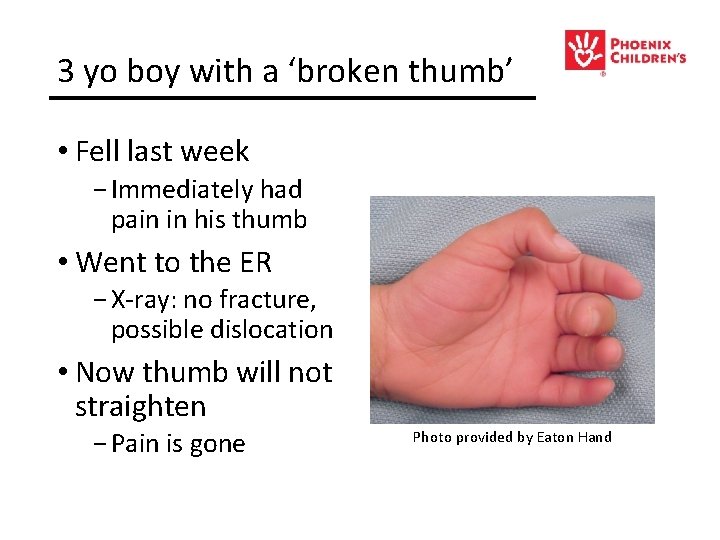
3 yo boy with a ‘broken thumb’ • Fell last week − Immediately had pain in his thumb • Went to the ER − X-ray: no fracture, possible dislocation • Now thumb will not straighten − Pain is gone Photo provided by Eaton Hand
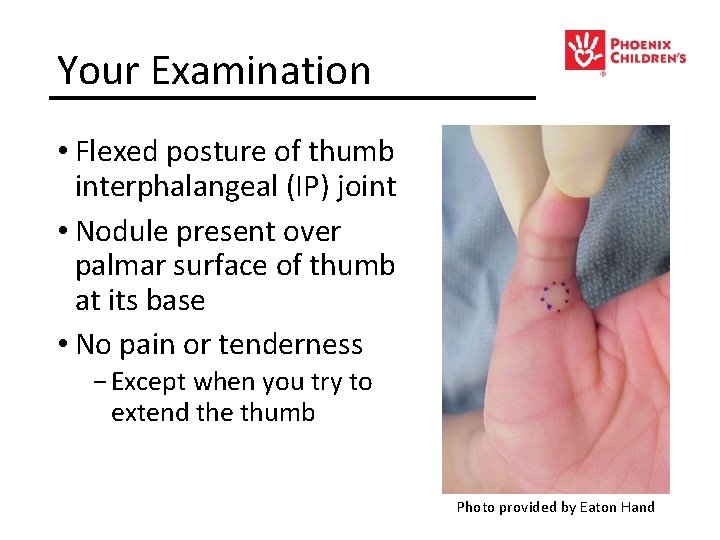
Your Examination • Flexed posture of thumb interphalangeal (IP) joint • Nodule present over palmar surface of thumb at its base • No pain or tenderness − Except when you try to extend the thumb Photo provided by Eaton Hand
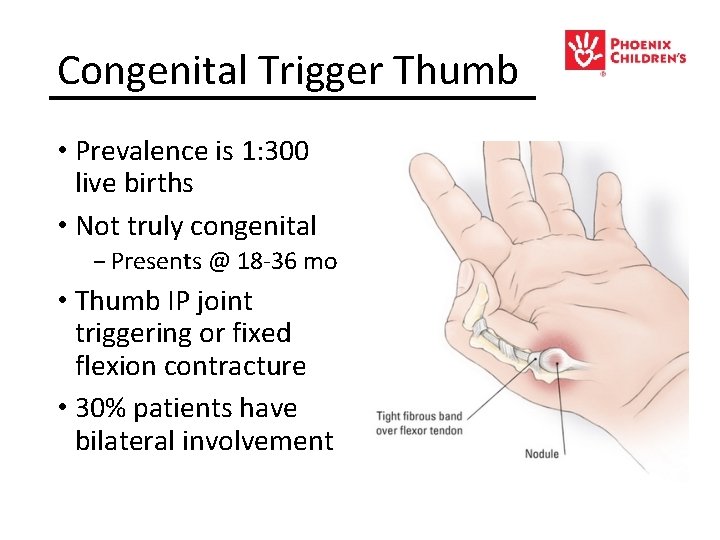
Congenital Trigger Thumb • Prevalence is 1: 300 live births • Not truly congenital − Presents @ 18 -36 mo • Thumb IP joint triggering or fixed flexion contracture • 30% patients have bilateral involvement
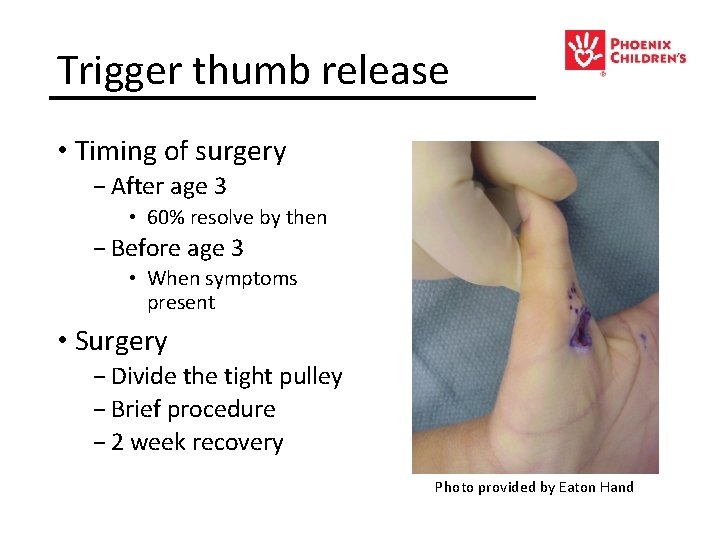
Trigger thumb release • Timing of surgery − After age 3 • 60% resolve by then − Before age 3 • When symptoms present • Surgery − Divide the tight pulley − Brief procedure − 2 week recovery Photo provided by Eaton Hand
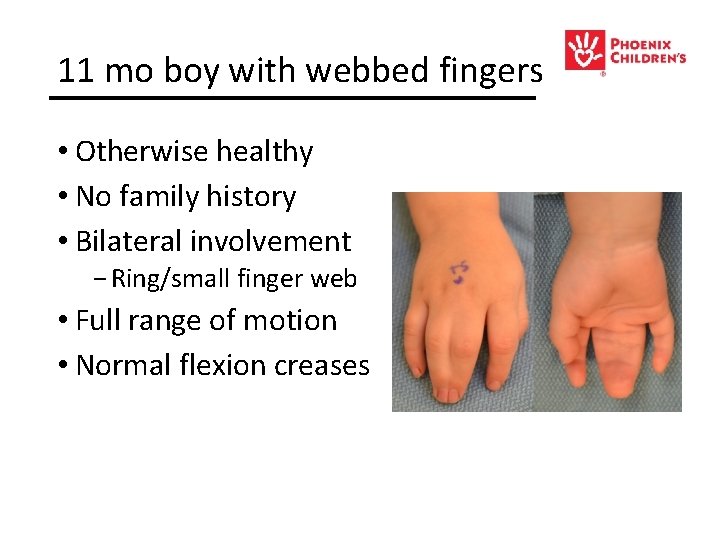
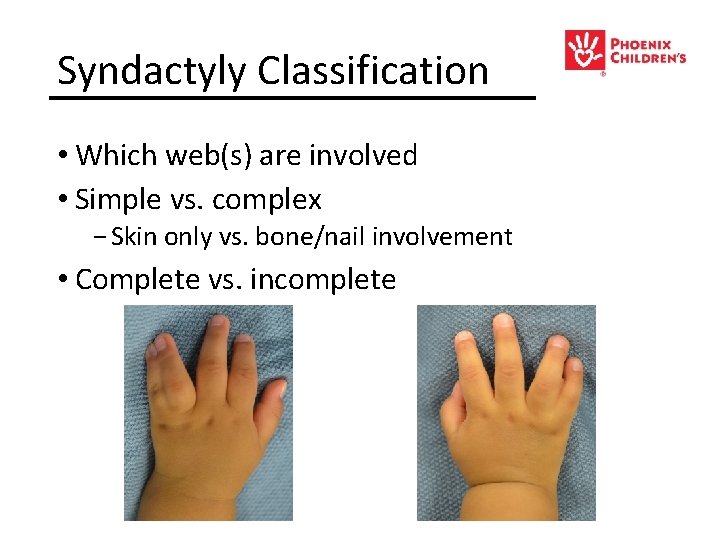
11 mo boy with webbed fingers • Otherwise healthy • No family history • Bilateral involvement − Ring/small finger web • Full range of motion • Normal flexion creases
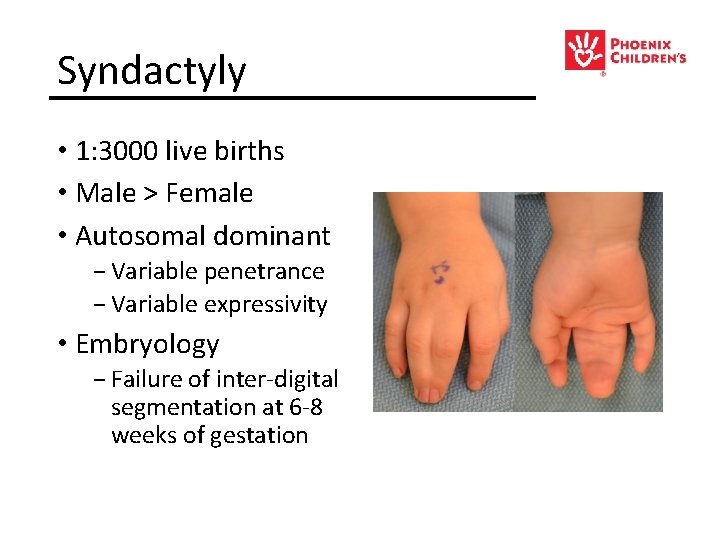
Syndactyly • 1: 3000 live births • Male > Female • Autosomal dominant − Variable penetrance − Variable expressivity • Embryology − Failure of inter-digital segmentation at 6 -8 weeks of gestation
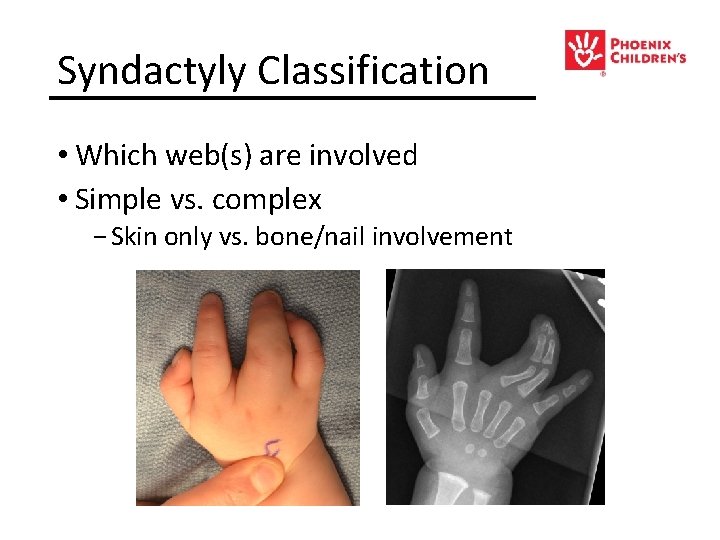
Syndactyly Classification • Which web(s) are involved • Simple vs. complex − Skin only vs. bone/nail involvement
Syndactyly Classification • Which web(s) are involved • Simple vs. complex − Skin only vs. bone/nail involvement • Complete vs. incomplete
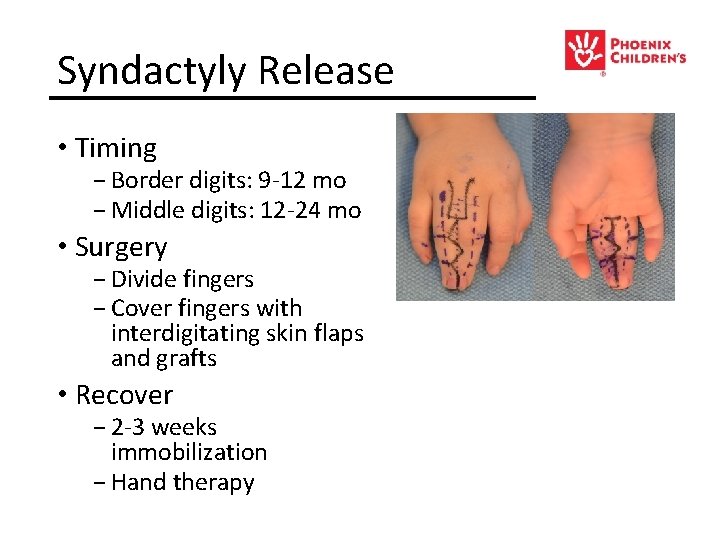
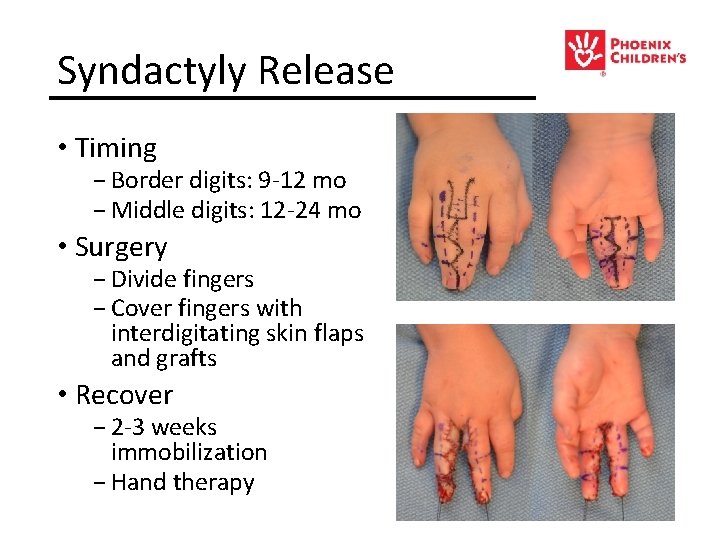
Syndactyly Release • Timing − Border digits: 9 -12 mo − Middle digits: 12 -24 mo • Surgery − Divide fingers − Cover fingers with interdigitating skin flaps and grafts • Recover − 2 -3 weeks immobilization − Hand therapy
Syndactyly Release • Timing − Border digits: 9 -12 mo − Middle digits: 12 -24 mo • Surgery − Divide fingers − Cover fingers with interdigitating skin flaps and grafts • Recover − 2 -3 weeks immobilization − Hand therapy
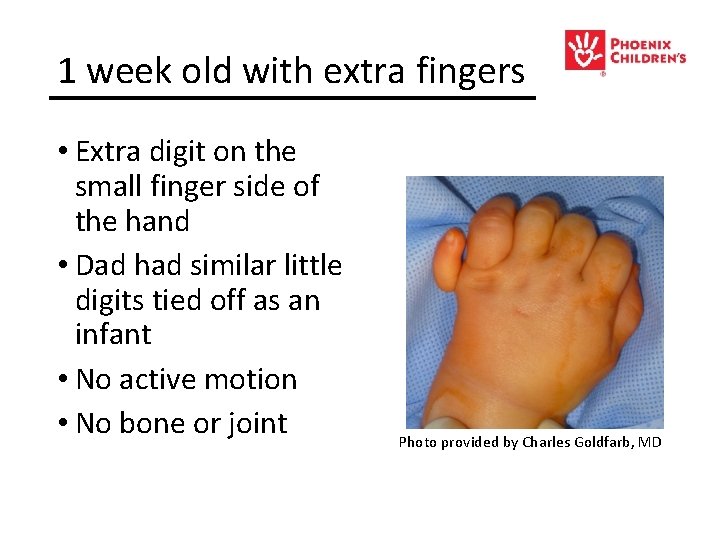
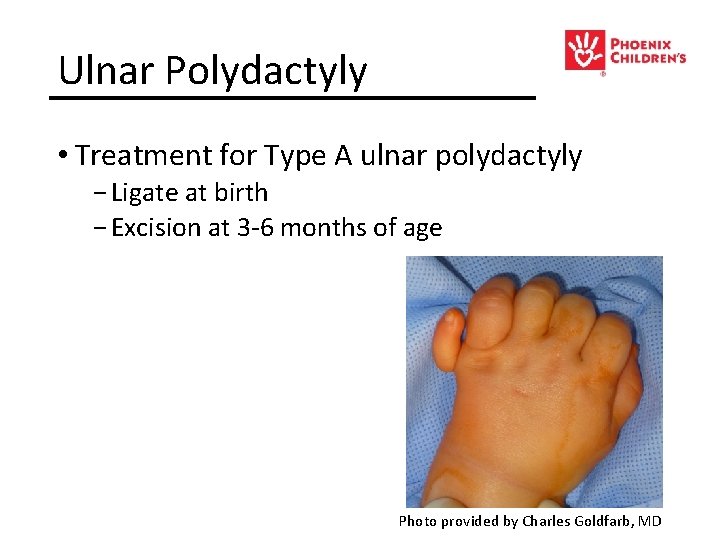
1 week old with extra fingers • Extra digit on the small finger side of the hand • Dad had similar little digits tied off as an infant • No active motion • No bone or joint Photo provided by Charles Goldfarb, MD
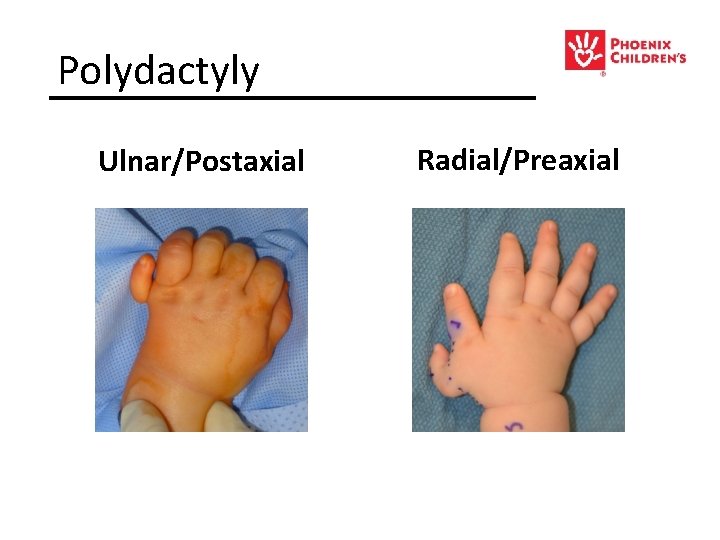
Polydactyly Ulnar/Postaxial Radial/Preaxial
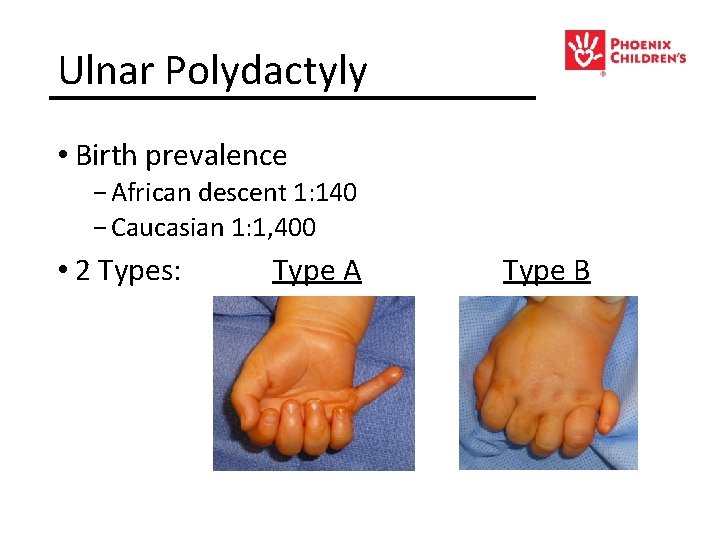
Ulnar Polydactyly • Birth prevalence − African descent 1: 140 − Caucasian 1: 1, 400 • 2 Types: Type A Type B
Ulnar Polydactyly • Treatment for Type A ulnar polydactyly − Ligate at birth − Excision at 3 -6 months of age Photo provided by Charles Goldfarb, MD
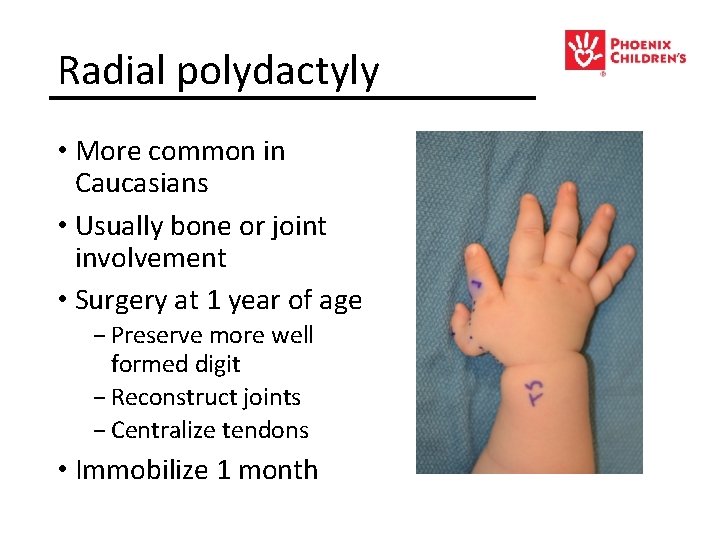
Radial polydactyly • More common in Caucasians • Usually bone or joint involvement • Surgery at 1 year of age − Preserve more well formed digit − Reconstruct joints − Centralize tendons • Immobilize 1 month
Summary • Congenital upper extremity anomalies are common − Approximately 1: 100 children • Examine the entire upper limb in children with any congenital anomaly • Management of most congenital anomalies involves a single, well-tolerated, reliable operation