
Congenital LVOT Obstruction Seoul National University Hospital Department
Congenital LVOT Obstruction Seoul National University Hospital Department of Thoracic & Cardiovascular Surgery
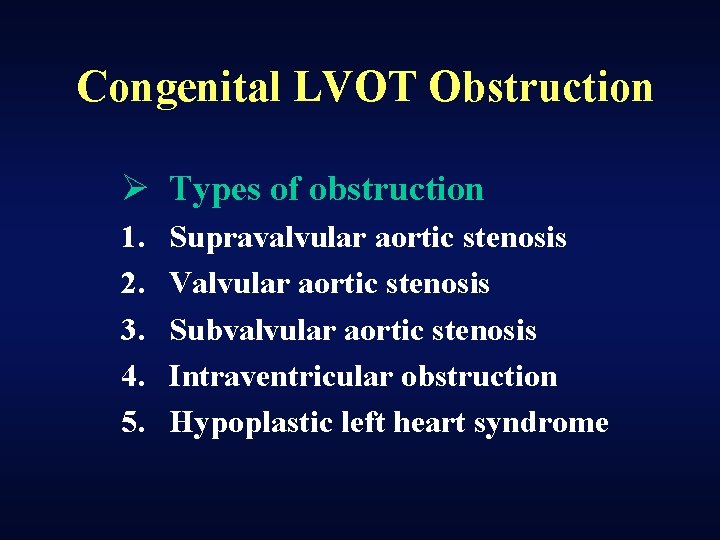
Congenital LVOT Obstruction Ø Types of obstruction 1. 2. 3. 4. 5. Supravalvular aortic stenosis Valvular aortic stenosis Subvalvular aortic stenosis Intraventricular obstruction Hypoplastic left heart syndrome
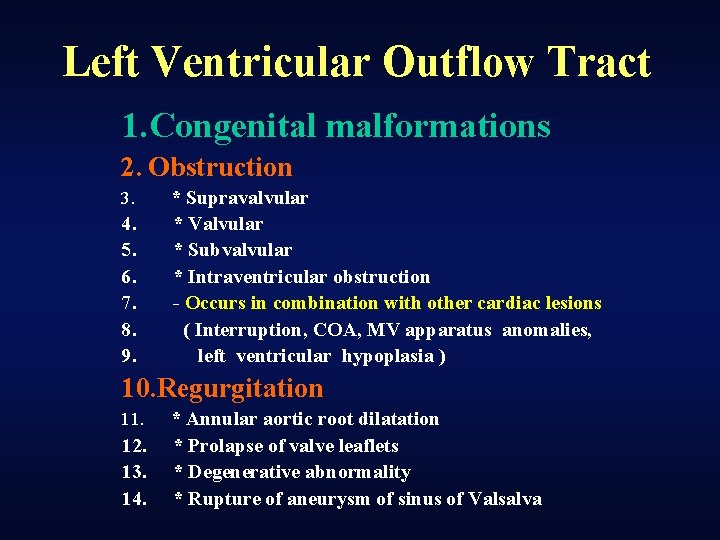
Left Ventricular Outflow Tract 1. Congenital malformations 2. Obstruction 3. 4. 5. 6. 7. 8. 9. * Supravalvular * Valvular * Subvalvular * Intraventricular obstruction - Occurs in combination with other cardiac lesions ( Interruption, COA, MV apparatus anomalies, left ventricular hypoplasia ) 10. Regurgitation 11. 12. 13. 14. * Annular aortic root dilatation * Prolapse of valve leaflets * Degenerative abnormality * Rupture of aneurysm of sinus of Valsalva

LVOT Obstruction Ø Pathophysiology q Left ventricular outflow tract obstruction(LVOTO ) leads to left ventricular hypertrophy, ischemia, and ventricular dysfunction. q The obstruction is at the valvar , subvavar, or supravalvar level.
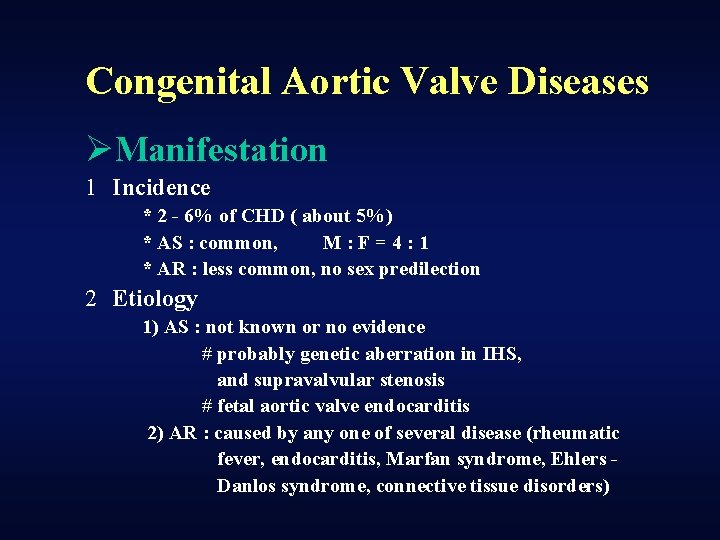
Congenital Aortic Valve Diseases ØManifestation 1 Incidence * 2 - 6% of CHD ( about 5%) * AS : common, M: F=4: 1 * AR : less common, no sex predilection 2 Etiology 1) AS : not known or no evidence # probably genetic aberration in IHS, and supravalvular stenosis # fetal aortic valve endocarditis 2) AR : caused by any one of several disease (rheumatic fever, endocarditis, Marfan syndrome, Ehlers Danlos syndrome, connective tissue disorders)
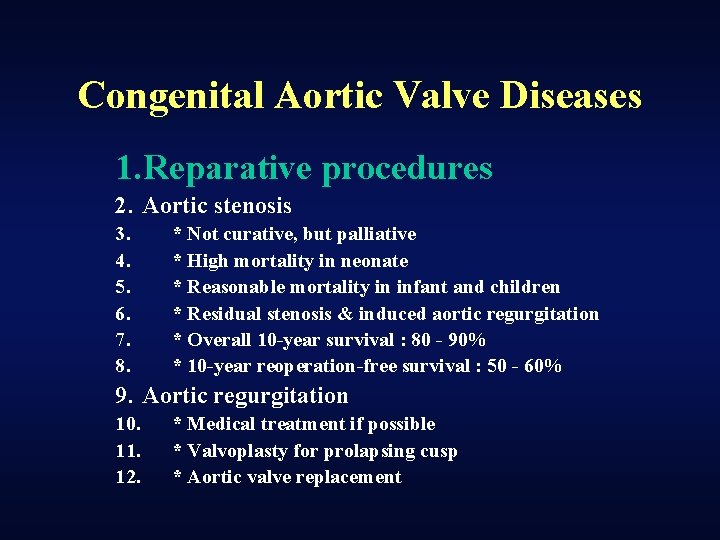
Congenital Aortic Valve Diseases 1. Reparative procedures 2. Aortic stenosis 3. 4. 5. 6. 7. 8. * Not curative, but palliative * High mortality in neonate * Reasonable mortality in infant and children * Residual stenosis & induced aortic regurgitation * Overall 10 -year survival : 80 - 90% * 10 -year reoperation-free survival : 50 - 60% 9. Aortic regurgitation 10. 11. 12. * Medical treatment if possible * Valvoplasty for prolapsing cusp * Aortic valve replacement
Congenital Aortic Stenosis ØDefinition • A cardiac anomaly in which narrowing at valvar, subvalvar, supravalvar, or combined levels results in a systolic pressure gradient between the inflow portion of left ventricle & aorta beyond obstruction. • Classification refers to the predominant area of obstruction in the left ventricular outflow tract, inevitably, these groups sometimes overlap because of the complexity of pathologic changes
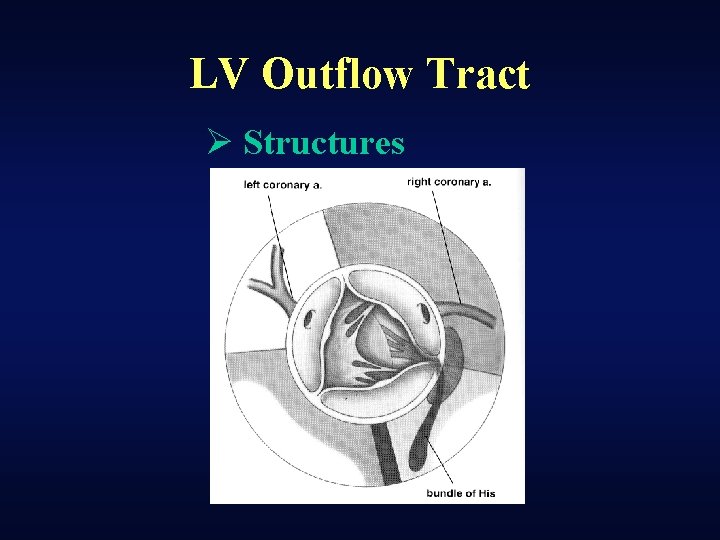
LV Outflow Tract Ø Structures
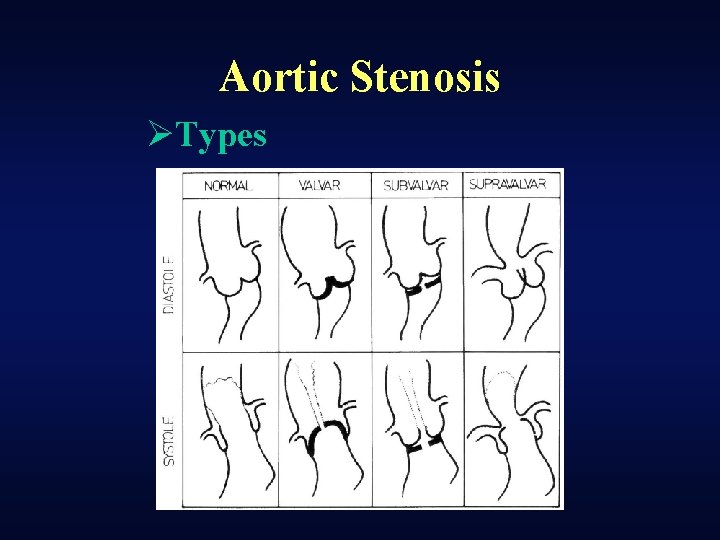
Aortic Stenosis ØTypes
Aortic Outflow Obstruction ØClinical features 1 Infantile 1) Usually appears within the 1 st. month of life 2) Presentation in later infancy according to the severity and growth 3) Untreated mortality ; 23% in the 1 st. year 2 Childhood 1) Progressive with growth, rare in early childhood 2) If left ventricular failure develops, rapidly deteriorate 3) Sudden death : 1 -19%, but rare in low pressure gradient * Consequence of low aortic pressure (coronary insufficiency) * Arrhythmia * Frequent when resting pressure gradient more than 50 mm. Hg 4) Untreated mortality * 60% at 40 years * Mean age of death : 35 years
Aortic Outflow Obstruction ØOperation 1 Indications 1) Critical AS in neonate ; urgent 2) Infant and children * Pressure gradient over 70 mm. Hg * Sx. of angina, syncope, exercise intolerance, LVH, with pr. gradient over 50 mm. Hg and valve area less than 0. 5 square cm/BSA * Pressure gradient over 40 mm. Hg in subvalvular lesion 2 Methods 1) Valvotomy * Open & closed technique (hypothermia) * Balloon valvotomy 2) Resection of subvalvular tissue & myocardium 3) Aortoplasty of supravalvular stenosis 4) Aortoventriculoplasty in tunnel stenosis 5) Valve replacement
Congenital Valvar Aortic Stenosis ØDefinition An obstruction at valve level caused by imperfect cusp development with leaflet thickening and fusion • History Marquis, Logan : Surgical treatment by dilator in 1955 Swan, Lewis : Open valvotomy in 1956 Spencer : Valvotomy through OHS in 1958
Congenital Valvar Aortic Stenosis ØManifestation 1 Etiology : unknown * Malabsorption of conal element ( leaflet dysplasia as in PS) * Histologic disorganization of aortic media and dysplasia in left ventricular septum (Somerville) & hypoplasia of annulus rarely 2 Incidence : 3~6% of all CHD, 60 - 70% of AS 3 Anatomy * Hypoplasia of annulus : rare * Abnormally formed valve leaflets : majority Bicuspid ; 70% (left and right) Unicuspid Thick and dysplastic valve - Commonly associated with COA, MV abnormalities, sub or supravalvar stenosis, hypoplastic ventricle -
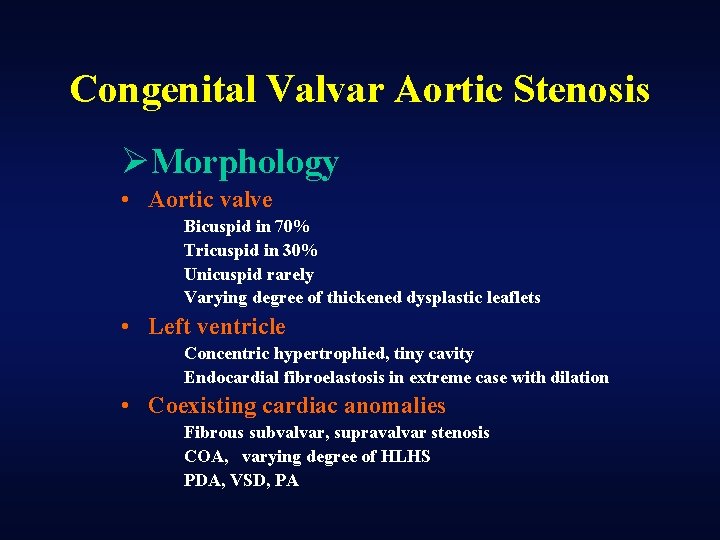
Congenital Valvar Aortic Stenosis ØMorphology • Aortic valve Bicuspid in 70% Tricuspid in 30% Unicuspid rarely Varying degree of thickened dysplastic leaflets • Left ventricle Concentric hypertrophied, tiny cavity Endocardial fibroelastosis in extreme case with dilation • Coexisting cardiac anomalies Fibrous subvalvar, supravalvar stenosis COA, varying degree of HLHS PDA, VSD, PA
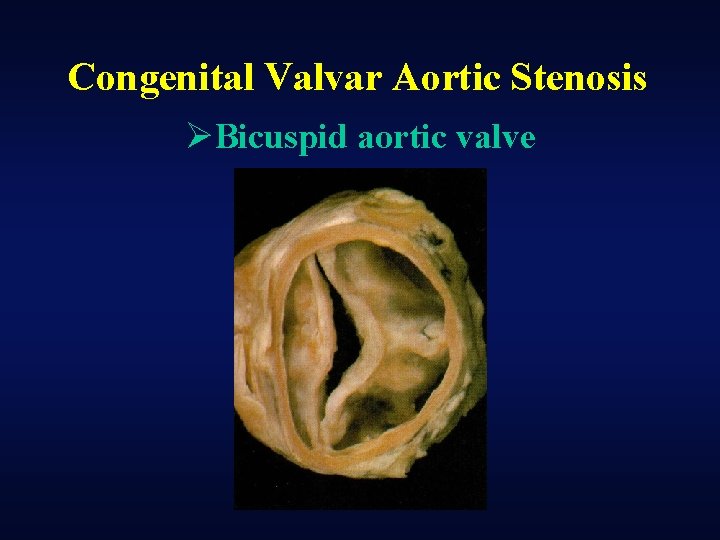
Congenital Valvar Aortic Stenosis ØBicuspid aortic valve
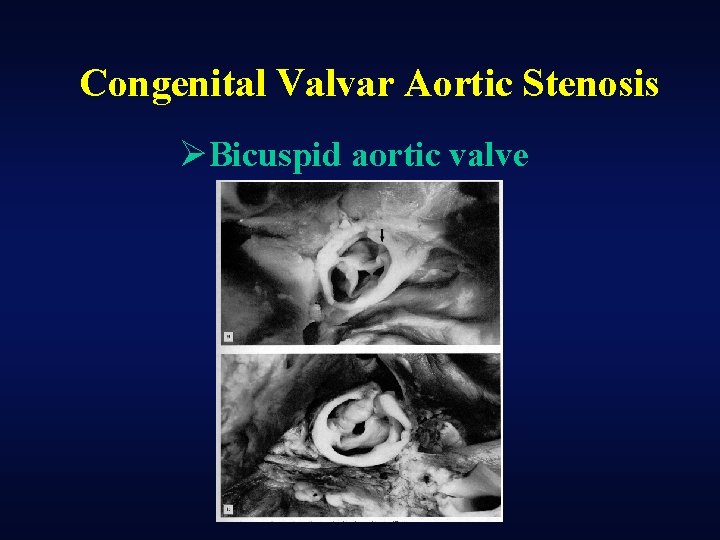
Congenital Valvar Aortic Stenosis ØBicuspid aortic valve
Congenital Valvar Aortic Stenosis ØPatterns of presentation • Presentation in infancy Almost always severe, rapidly progressive CHF Untreated mortality : 23% in 1 st year • Presentation in childhood Beyond 1 year of age, heart failure is rare. Sudden death varies between 1 -19%. Develop progressive ultimately important stenosis Bacterial endocarditis
Bicuspid Aortic Valve ØNatural history 1. 2. 3. 4. Incidence approximately 1~2% of population Rarely becomes stenotic or incompetence in early life Sclerosis begins in the second decade of life. Aortic stenosis develops in 72% by the fifth & sixth decades of life. 5. Endocarditis occurs in 10% of these patients. 6. Incompetence independent of endocarditis occurs in 5 - 39% of these patients. 7. Bicuspid aortic valve have been noted in 25 -40% with supravalvar & 9 -20% with subvalvular aortic stenosis.
Bicuspid Aortic Valve ØDevelopment • Bicuspid aortic valve, the most common congenital cardiac malformation, is caused by fusion of valve cushions at the onset of valvulogenesis. • At the beginning of valvulogenesis, a population of cells called neural crest cells migrate away from the neural fold and spread throughout the embryo. • These cells seem to play a crucial role in normal development of cardiac outflow tract &semilunar valves • The basic helix-loop-helix transcription factor d. HAND is essential for survival of cells in neural crest–derived ventricular structures and aortic arch arteries
Congenital Valvar Aortic Stenosis ØTechniques of operation • Percutaneous balloon valvotomy • Valvotomy in neonates & critically ill infants • Valvotomy in older infants, children & adults • Aortic valve replacement
Congenital Valvar Aortic Stenosis ØOpen techniques • Precise commissurotomy • Shaving of thickened leaflets • Excision of obstructive myxomatous nodularities • Mobilization of leaflets • These procedures can be performed with a low surgical risk & 85% freedom from reoperation at 5 years
Bicuspid Valvar Aortic Stenosis ØTricuspidization with cusp extension • Criteria for TCE included an aortic orifice that is equal to or greater than normal (normalized for body surface area) after commissurotomy and division of the raphe, adequate mobility of all cusps at the hinge point, absence of cusp dysplasia involving the belly of the cusps, commissures that are free of calcification or exuberant fibrosis, and normal location of the coronary ostia. • When these criteria were met, TCE was the procedure of choice.
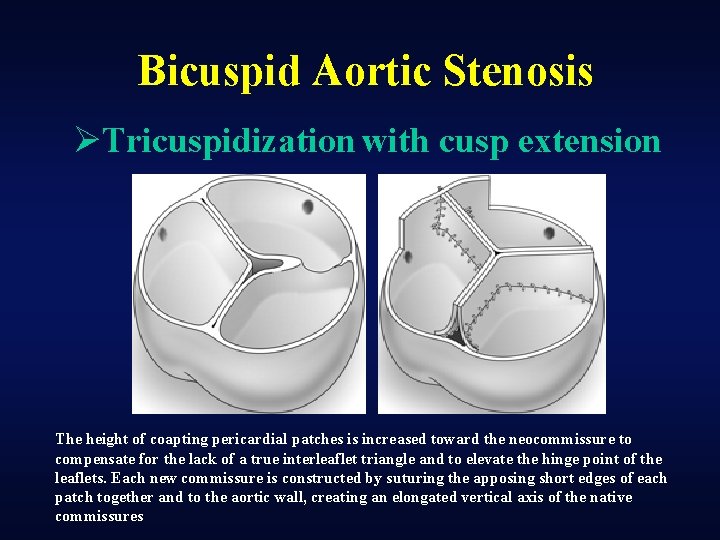
Bicuspid Aortic Stenosis ØTricuspidization with cusp extension The height of coapting pericardial patches is increased toward the neocommissure to compensate for the lack of a true interleaflet triangle and to elevate the hinge point of the leaflets. Each new commissure is constructed by suturing the apposing short edges of each patch together and to the aortic wall, creating an elongated vertical axis of the native commissures
Critical Aortic Stenosis ØOptimal management • In fact, if percutaneous balloon valvotomy usually causes rupture along lines of least resistance, either along underdeveloped commissures or into leaflet tissue. • Surgical valvotomy allows direct inspection of the valve, more fashioning of commissurotomies, and debridement of any excess tissue on the leaflets. • When small aortic annulus and depressed ventricular function are associated, surgical or therapeutic options other than surgical commissurotomy could be considered, including balloon dilation as a bridge to surgery, neonatal Ross operation, Norwood operation, or possibly neonatal double switch operation.
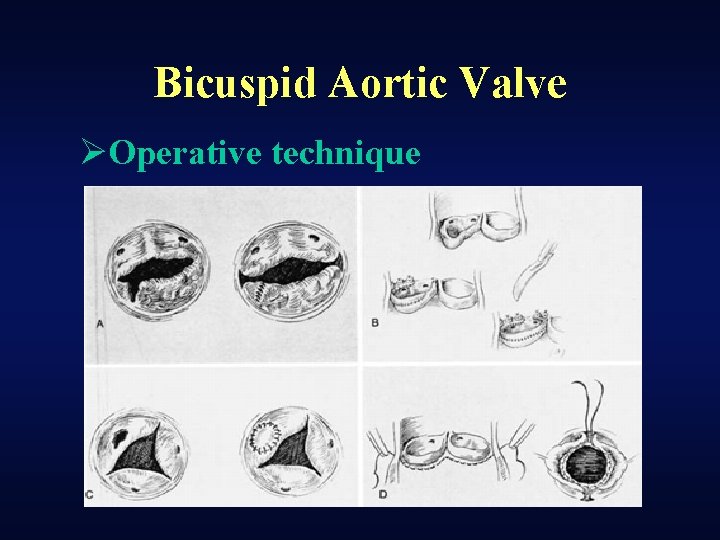
Bicuspid Aortic Valve ØOperative technique
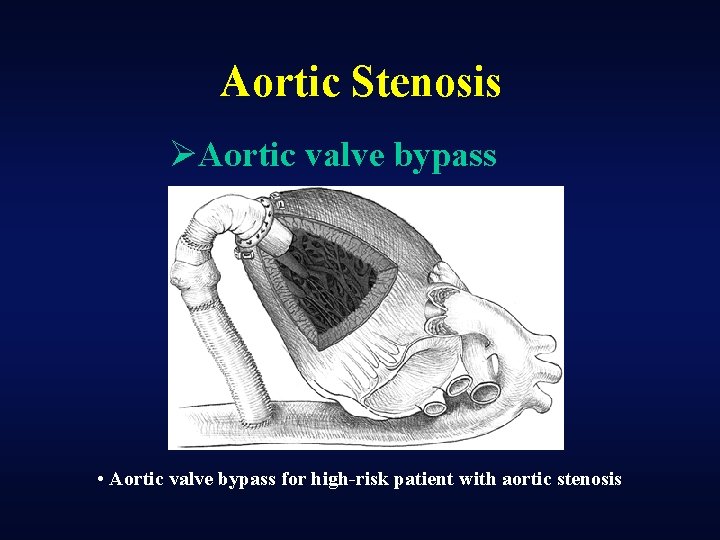
Aortic Stenosis ØAortic valve bypass • Aortic valve bypass for high-risk patient with aortic stenosis
Aortic Stenosis ØAortic valve bypass surgery • Ideal candidates for this type of approach could include patients with ascending aortic calcification, patients who require complex reoperations, and patients with a small annulus • Potential problems include pseudoaneurysm as described in their article, bleeding due to lack of control of the left ventricular (LV) apex, difficulty with the aortic anastomosis in the descending aorta due to extensive calcification of the descending aorta, kinking of the conduit, and theoretical dislodgement of an LV apical thrombus and nonphysiologic flow from the LV
Valvar Aortic Stenosis ØResults of operation 1. Survival Early deaths Time-related survival 2. Modes of death Acute cardiac failure Sudden death, residual stenosis, incompetence 3. Incremental risk factors for premature death 1) Left-sided cardiac anomalies 2) Preoperative functional class 3) Type of valvar stenosis 4) Young age 4. Functional status 5. EKG changes 6. LV structure and function 7. Residual or restenosis 8. Aortic valve incompetence 9. Bacterial endocarditis 10. Reintervention
Valvar Aortic Stenosis ØIndications for operation 1. Original valvotomy 1) Neonates and young infants Treatment on emergency basis 2) Older infants and children EKG shows severe hypertrophy Pressure gradient more than 50 mm. Hg Symptoms of angina or syncope 2. Reoperation Symptoms develop with moderate stenosis
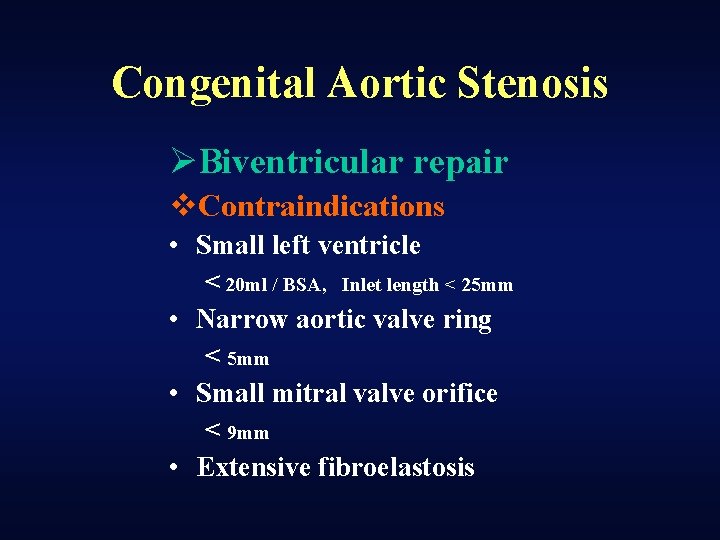
Congenital Aortic Stenosis ØBiventricular repair v. Contraindications • Small left ventricle < 20 ml / BSA, Inlet length < 25 mm • Narrow aortic valve ring < 5 mm • Small mitral valve orifice < 9 mm • Extensive fibroelastosis
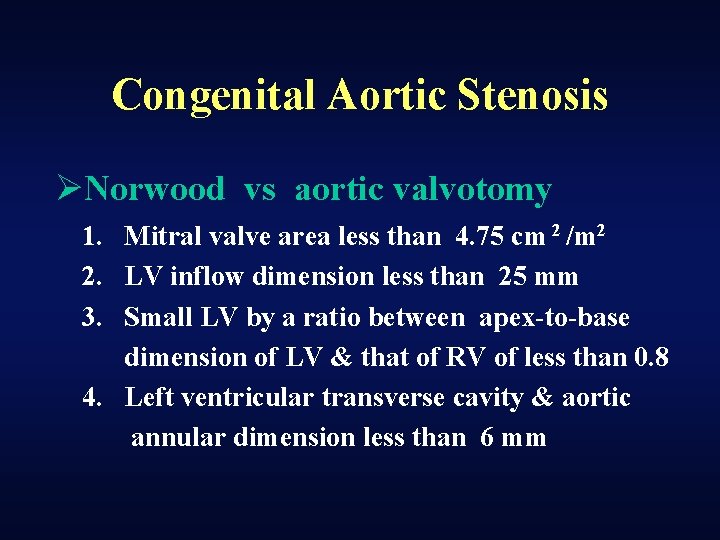
Congenital Aortic Stenosis ØNorwood vs aortic valvotomy 1. Mitral valve area less than 4. 75 cm 2 /m 2 2. LV inflow dimension less than 25 mm 3. Small LV by a ratio between apex-to-base dimension of LV & that of RV of less than 0. 8 4. Left ventricular transverse cavity & aortic annular dimension less than 6 mm
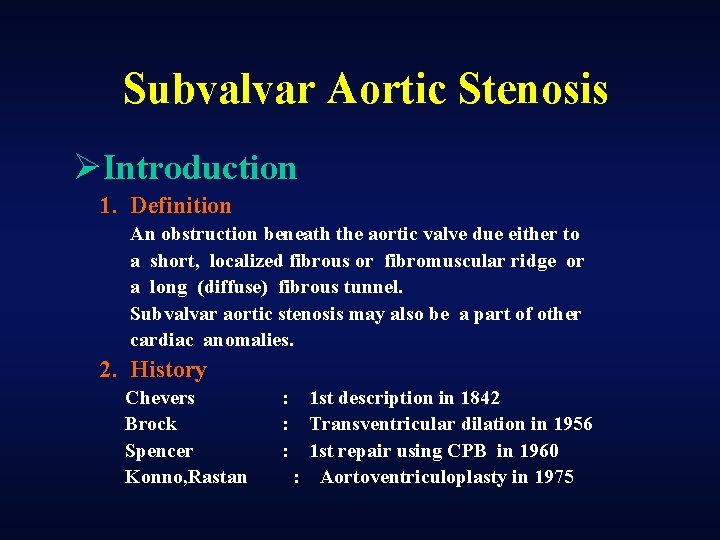
Subvalvar Aortic Stenosis ØIntroduction 1. Definition An obstruction beneath the aortic valve due either to a short, localized fibrous or fibromuscular ridge or a long (diffuse) fibrous tunnel. Subvalvar aortic stenosis may also be a part of other cardiac anomalies. 2. History Chevers Brock Spencer Konno, Rastan : 1 st description in 1842 : Transventricular dilation in 1956 : 1 st repair using CPB in 1960 : Aortoventriculoplasty in 1975
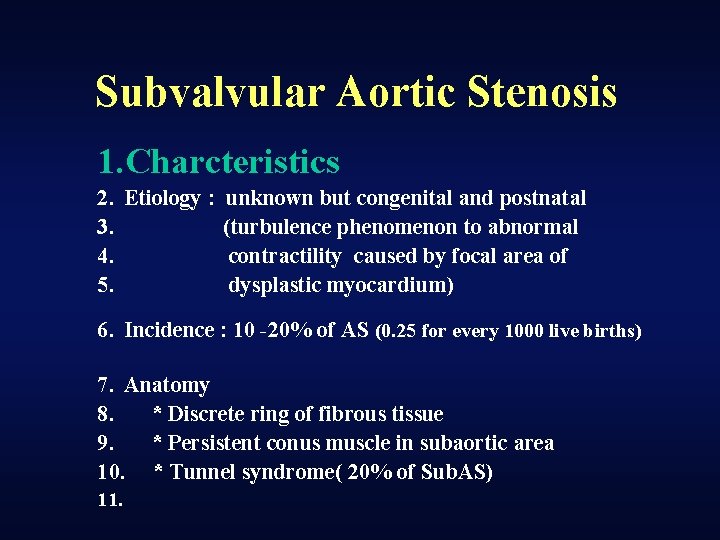
Subvalvular Aortic Stenosis 1. Charcteristics 2. Etiology : unknown but congenital and postnatal 3. (turbulence phenomenon to abnormal 4. contractility caused by focal area of 5. dysplastic myocardium) 6. Incidence : 10 -20% of AS (0. 25 for every 1000 live births) 7. Anatomy 8. * Discrete ring of fibrous tissue 9. * Persistent conus muscle in subaortic area 10. * Tunnel syndrome( 20% of Sub. AS) 11.
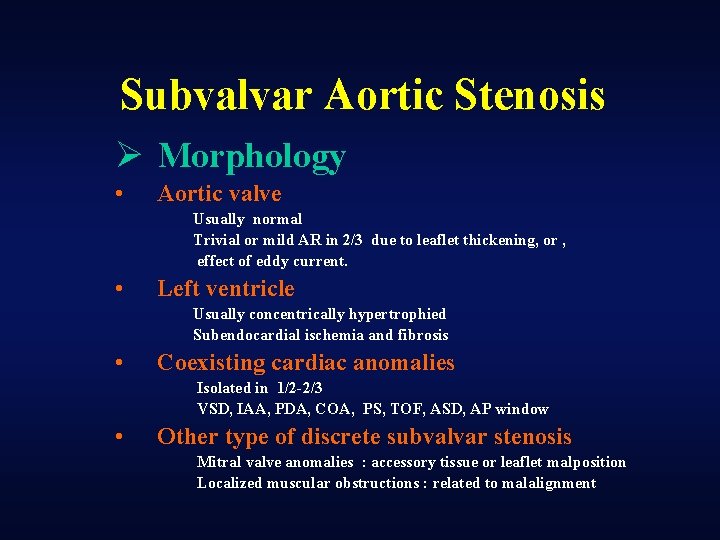
Subvalvar Aortic Stenosis Ø Morphology • Aortic valve Usually normal Trivial or mild AR in 2/3 due to leaflet thickening, or , effect of eddy current. • Left ventricle Usually concentrically hypertrophied Subendocardial ischemia and fibrosis • Coexisting cardiac anomalies Isolated in 1/2 -2/3 VSD, IAA, PDA, COA, PS, TOF, ASD, AP window • Other type of discrete subvalvar stenosis Mitral valve anomalies : accessory tissue or leaflet malposition Localized muscular obstructions : related to malalignment
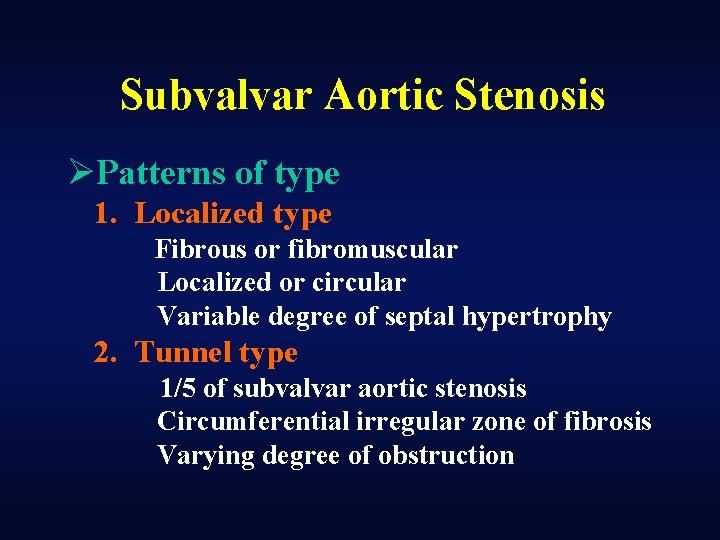
Subvalvar Aortic Stenosis ØPatterns of type 1. Localized type Fibrous or fibromuscular Localized or circular Variable degree of septal hypertrophy 2. Tunnel type 1/5 of subvalvar aortic stenosis Circumferential irregular zone of fibrosis Varying degree of obstruction
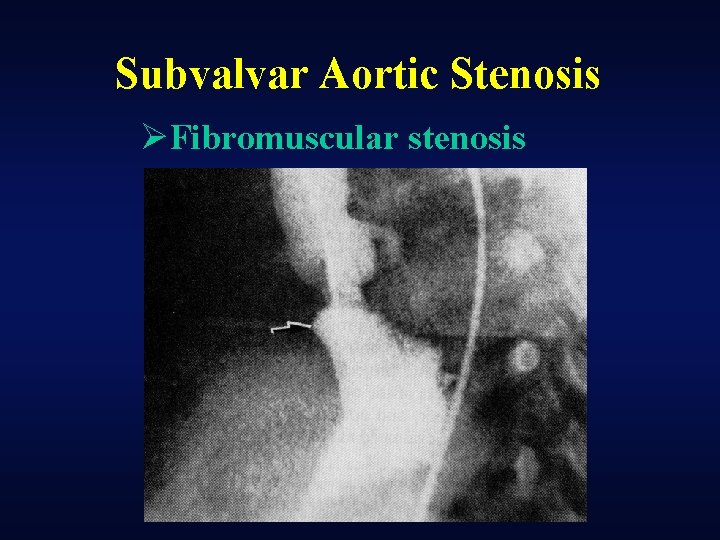
Subvalvar Aortic Stenosis ØFibromuscular stenosis
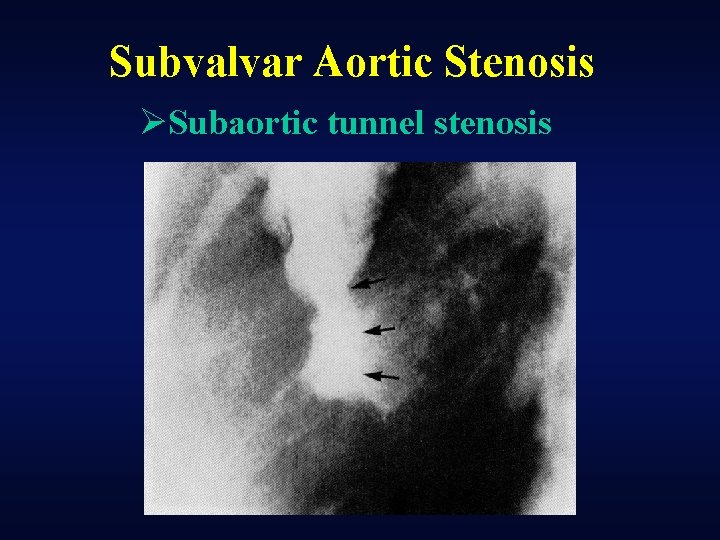
Subvalvar Aortic Stenosis ØSubaortic tunnel stenosis
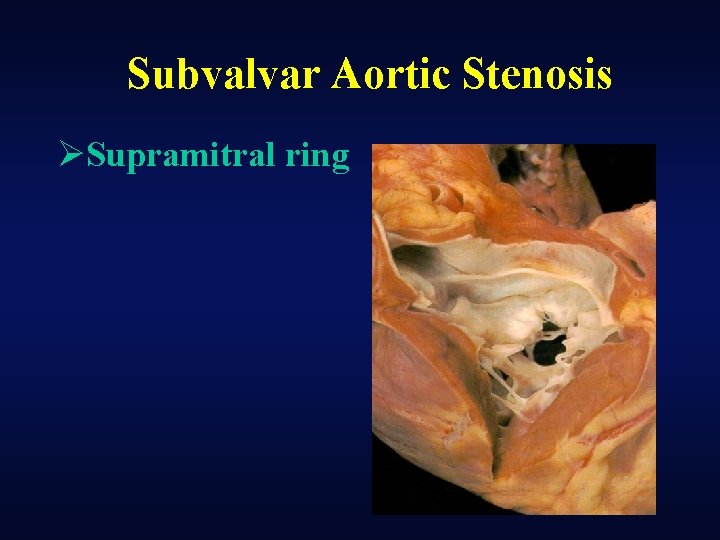
Subvalvar Aortic Stenosis ØSupramitral ring
Subvalvar Aortic Stenosis ØClinical features & diagnosis 1. Incidence 10 -20% of AS 2. Symptoms and signs 25% requiring operation are asymptomatic. Systolic murmur, diastolic murmur in 65% Pulse is slow rising. 3. Chest X-Ray, EKG 4. Echocardiography 5. Cardiac catheterization and cineangiography
Subvalvar Aortic Stenosis 1. Natural history 2. 10 -30% of congenital LVOT obstruction 3. Rarely important obstruction in infancy 4. Evident and progressive with age probably more rapidly than valvar stenosis 1. Aortic incompetence is a progressive lesion secondary to leaflet thickening.
Subaortic Stenosis ØDevelopment & progression 1. Acquired nature of this lesion 2. Rarely in neonate and young children 3. Rheologic theory Morphologic abnormalities in left ventricular - aorta junction, such as steeper aortoseptal angle results in altered septal shear stress and triggers a genetic predisposition leading to cell proliferation and structure in LVOT. 4. Uncertainty about rapidity of progression
Subaortic Stenosis ØDevelopment 1. Subaortic constraint at the entry of the tunnel and the sinus shape of the letter lead to turbulent flow, resulting in muscle hypertrophy, or deposition of fibrous material. 2. Growth of heart without concomitant increase in the size of VSD, and tunnel 3. Excessive decrease of LV diameter and the increase in wall thickness after biventricular repair, causes the diminution of the VSD orifice and the augmentation of the malalignment. 4. Other possible causes are kinking of the baffle, shrinkage of the baffle with time 5. Chronic flow disturbance caused by a somewhat narrowed and elongated LVOT
Discrete Fibrous Ring ØHistology v In the subaortic region, the progression of discrete fibrous obstruction results in a gross appearance & histology with similarity to vascular lesions by Rodbard. The typical fibrous ring has distinct five layers. • Endothelial layer • Mucopolysaccharide-rich subendothelial layer • Fibroelastic layer • Smooth muscle layer • Central fibrous layer
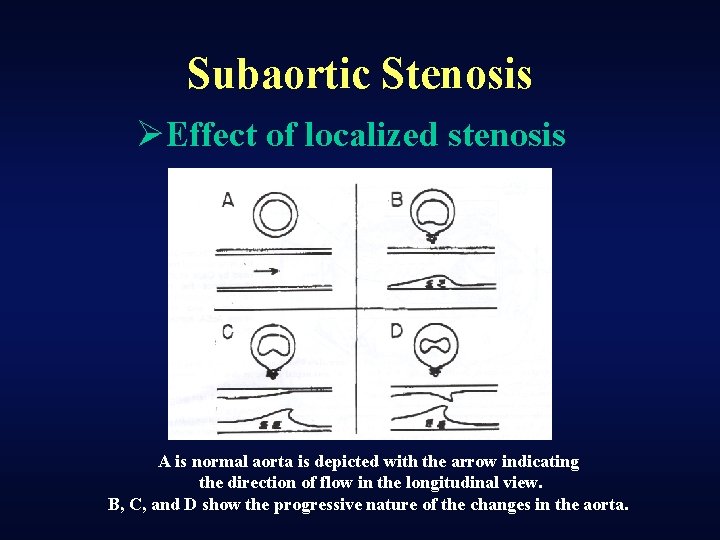
Subaortic Stenosis ØEffect of localized stenosis A is normal aorta is depicted with the arrow indicating the direction of flow in the longitudinal view. B, C, and D show the progressive nature of the changes in the aorta.
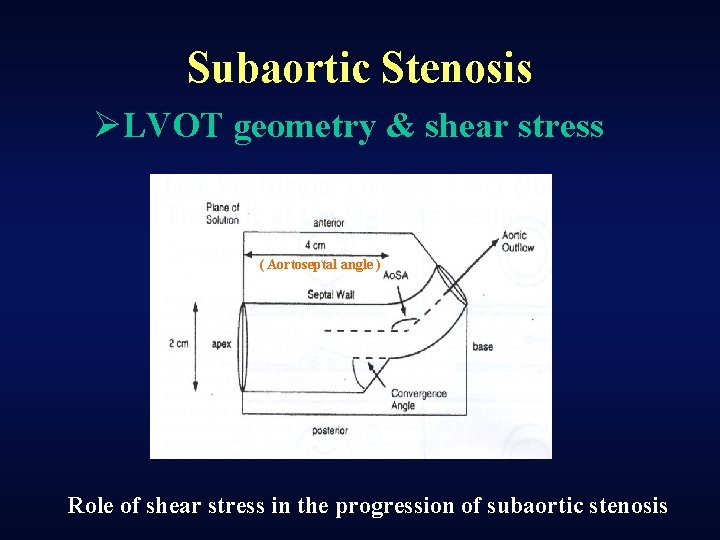
Subaortic Stenosis ØLVOT geometry & shear stress ( Aortoseptal angle ) Role of shear stress in the progression of subaortic stenosis
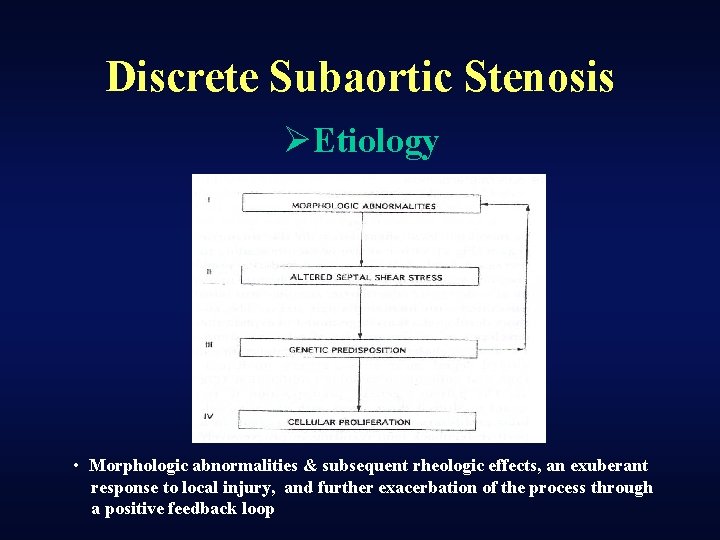
Discrete Subaortic Stenosis ØEtiology • Morphologic abnormalities & subsequent rheologic effects, an exuberant response to local injury, and further exacerbation of the process through a positive feedback loop
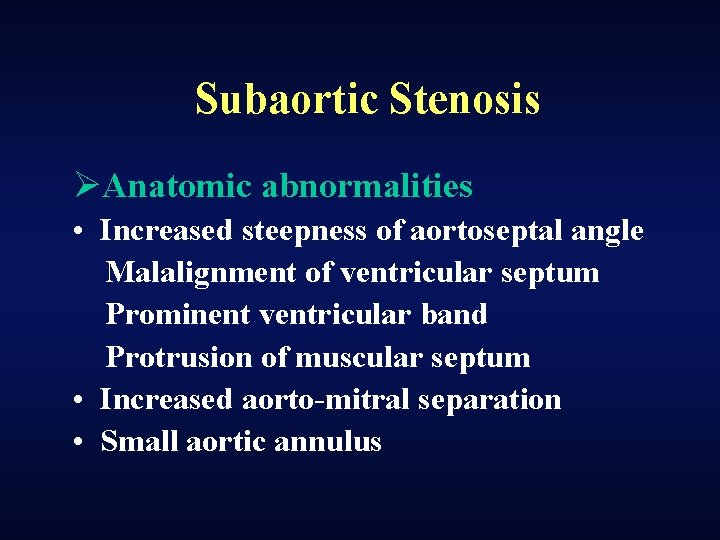
Subaortic Stenosis ØAnatomic abnormalities • Increased steepness of aortoseptal angle Malalignment of ventricular septum Prominent ventricular band Protrusion of muscular septum • Increased aorto-mitral separation • Small aortic annulus
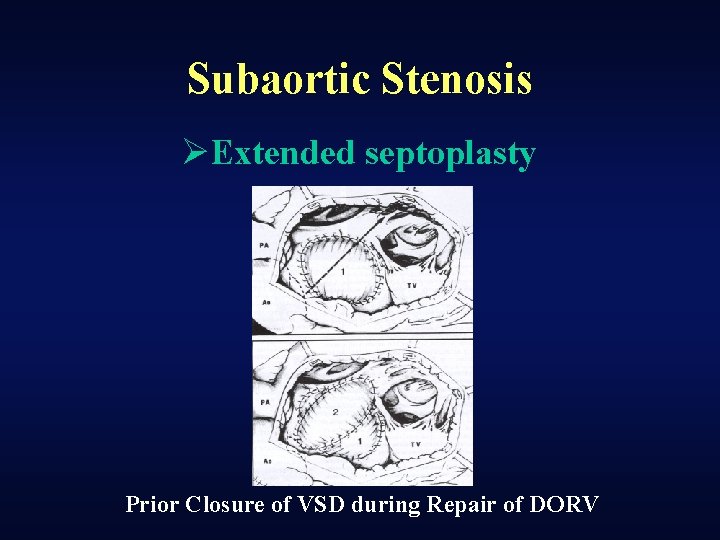
Subaortic Stenosis ØExtended septoplasty Prior Closure of VSD during Repair of DORV
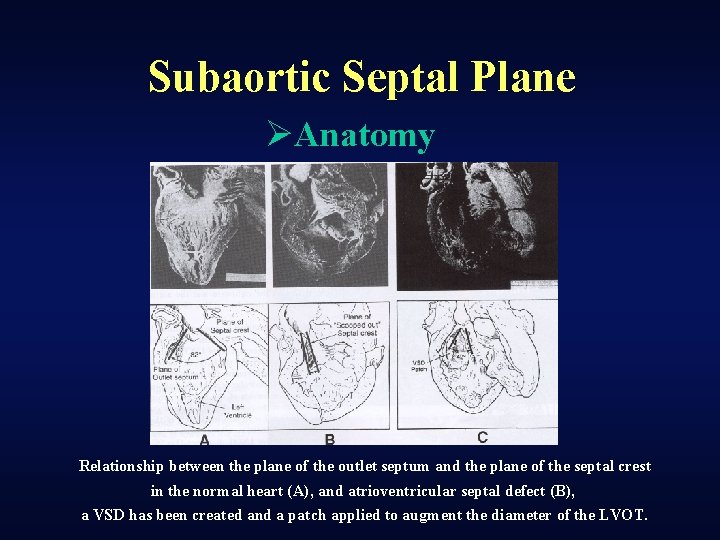
Subaortic Septal Plane ØAnatomy Relationship between the plane of the outlet septum and the plane of the septal crest in the normal heart (A), and atrioventricular septal defect (B), a VSD has been created and a patch applied to augment the diameter of the LVOT.
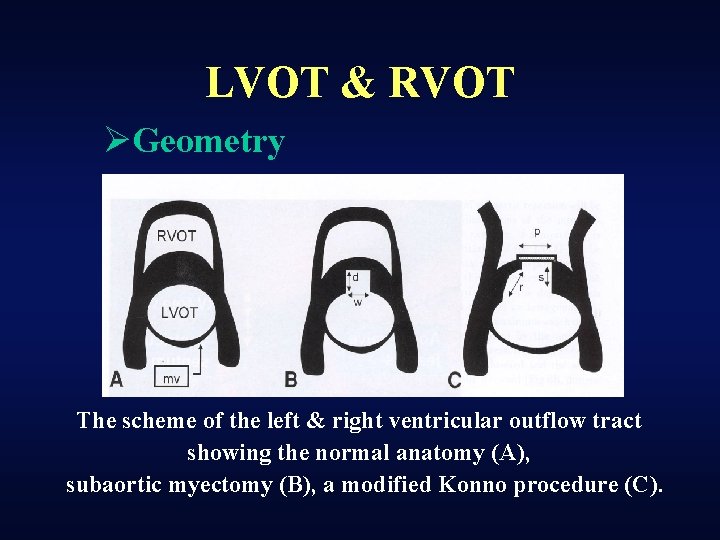
LVOT & RVOT ØGeometry The scheme of the left & right ventricular outflow tract showing the normal anatomy (A), subaortic myectomy (B), a modified Konno procedure (C).
Muscular Subaortic Obstruction ØClinical characteristics 1 Etiology * Genetic basis * Secondary hypertrophy. Idiopathic hypertrophic subaortic stenosis. Hypertrophic obstructive cardiomyopathy. Asymmetrical septal hypertrophy 2 Incidence : rare in infant & childhood 3 Pathology * Microscopic finding : Irregular arrangement of sarcomere and myofibrils ( possibility of hamartoma, and of inappropriate development of primitive myocardial cell)
Subaortic Stenosis 1. Techniques of operation 2. 1. Resection of localized subvalvar aortic stenosis 3. 2. Repair of tunnel stenosis by aortoventriculoplasty 4. 3. Aortoventriculoplasty by mini root replacement 5. Autograft 6. Homograft 7. 4. Modified Konno operation.
Subaortic Stenosis ØPrinciples of surgical treatment • Surgery must be aimed at the removal of all the structures causing flow turbulence in the LVOT in order to reduce the incidence of these complications • Aggressive surgical approaches have been proposed other than "simple" excision of the fibrous ring, including early operation before appearance of severe left ventricle hypertrophy, extended and circumferential myectomy, and mobilization of the left & right fibrous trigones.
Subaortic Stenosis ØLVOT Anomalies • The association between discrete subaortic stenosis & other left ventricular outflow tract anomalies such as • Anomalous mitral valve insertion • Accessory mitral valve tissue • Abnormal mitral papillary muscle • Anomalous muscular bands within the LVOT • Posterior displacement of infundibular septum without VSD
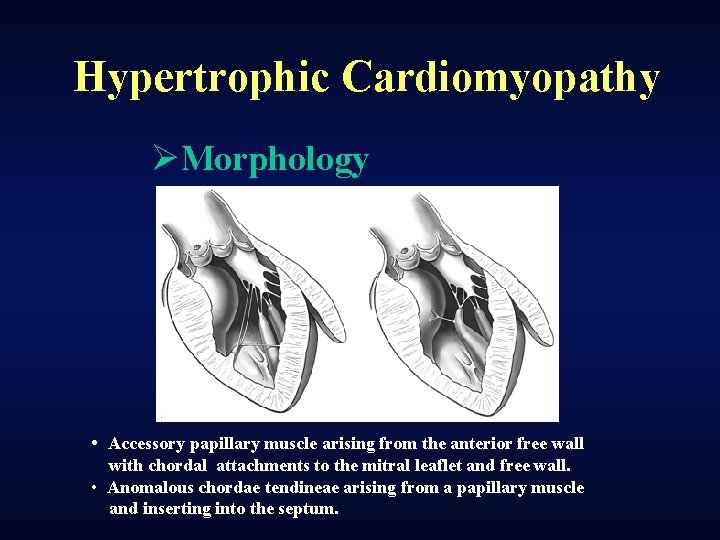
Hypertrophic Cardiomyopathy ØMorphology • Accessory papillary muscle arising from the anterior free wall with chordal attachments to the mitral leaflet and free wall. • Anomalous chordae tendineae arising from a papillary muscle and inserting into the septum.
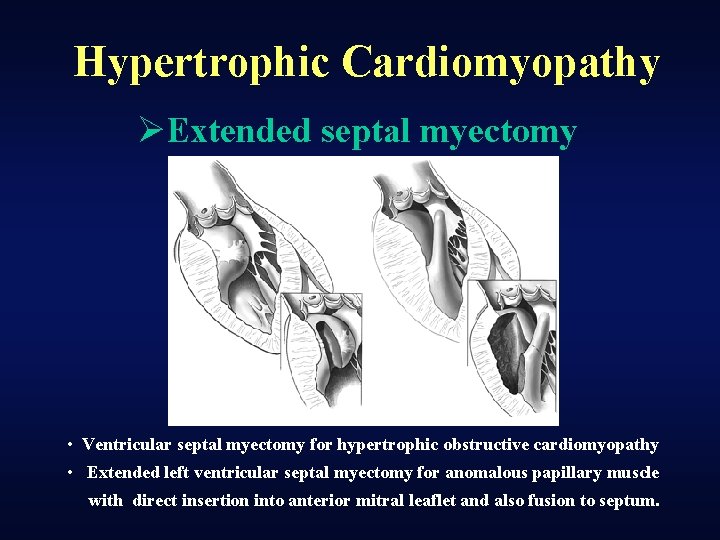
Hypertrophic Cardiomyopathy ØExtended septal myectomy • Ventricular septal myectomy for hypertrophic obstructive cardiomyopathy • Extended left ventricular septal myectomy for anomalous papillary muscle with direct insertion into anterior mitral leaflet and also fusion to septum.
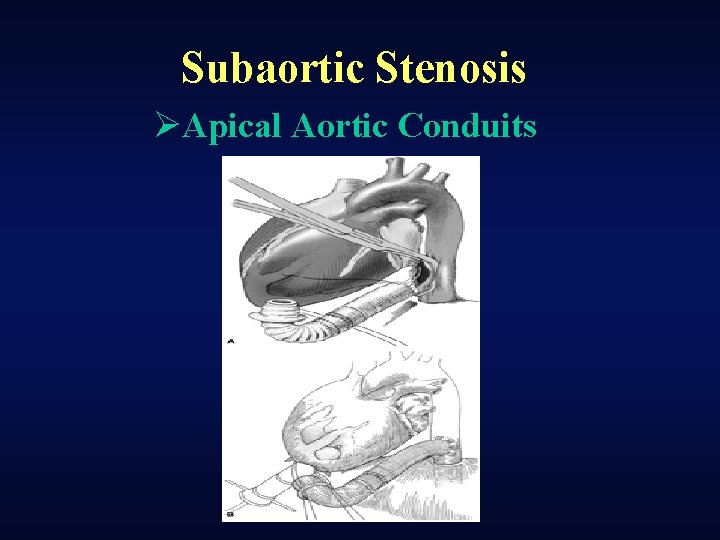
Subaortic Stenosis ØApical Aortic Conduits
Apical Aortic Conduits ØComplications • The reported late complications of AACs are LV pseudoaneurysm, erosion of the conduit into the esophagus or stomach when placed to the abdominal aorta, systemic emboli, and tissue valve dysfunction • The major drawback of currently available AACs appears to be the limited durability of the porcine and AH valves in children.
Recurrent Obstruction 1. Mechanisms • • • Limited resection at the initial operation Midventricular obstruction Anomalies of the papillary muscles Ventricular remodeling, especially in pediatric patients Repeat myectomy can be performed with excellent outcomes and need for reoperation may be reduced with a more extended resection of the midventricular septum, relief of papillary muscle anomalies, and use of TEE
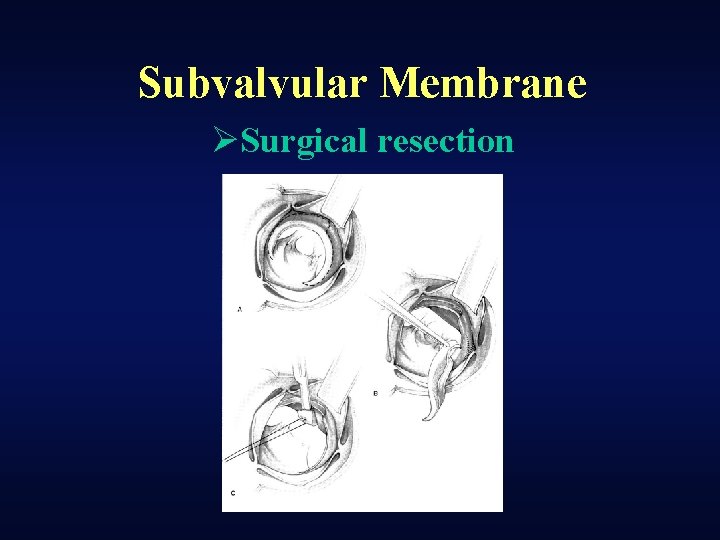
Subvalvular Membrane ØSurgical resection
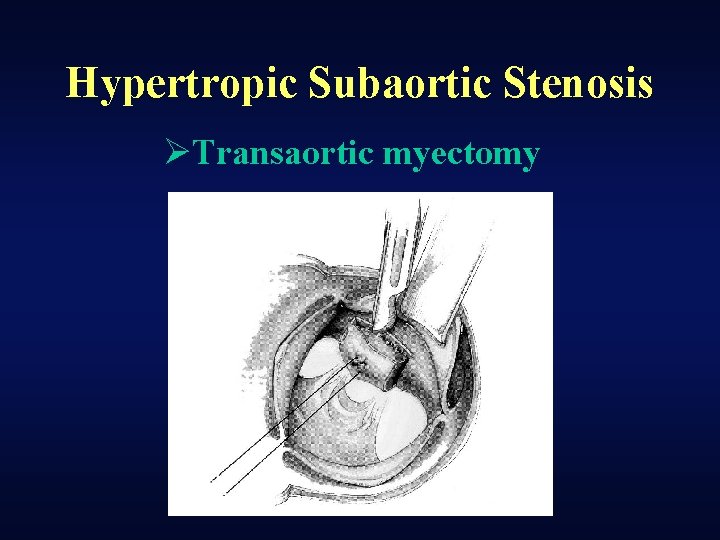
Hypertropic Subaortic Stenosis ØTransaortic myectomy
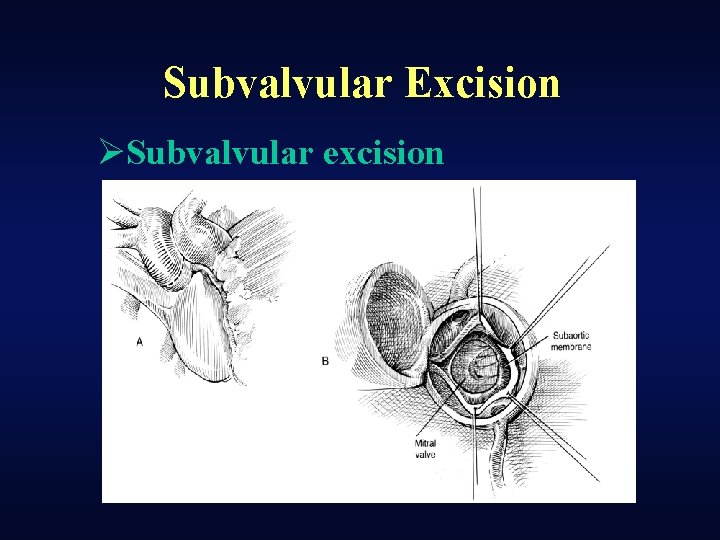
Subvalvular Excision ØSubvalvular excision
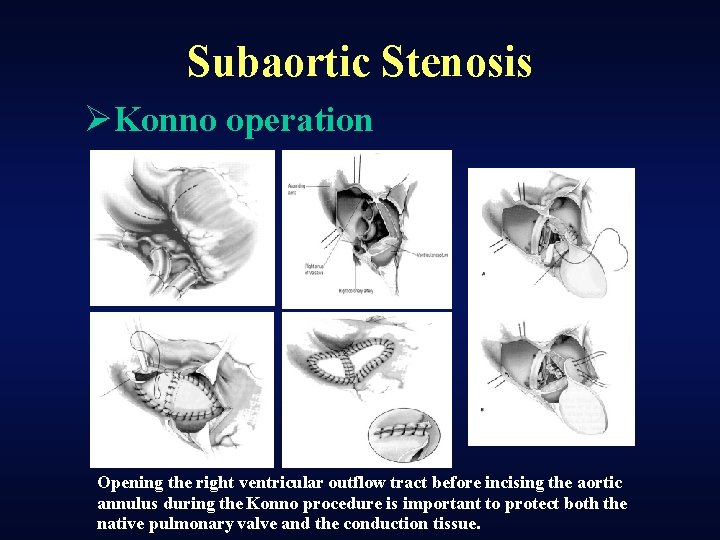
Subaortic Stenosis ØKonno operation Opening the right ventricular outflow tract before incising the aortic annulus during the Konno procedure is important to protect both the native pulmonary valve and the conduction tissue.
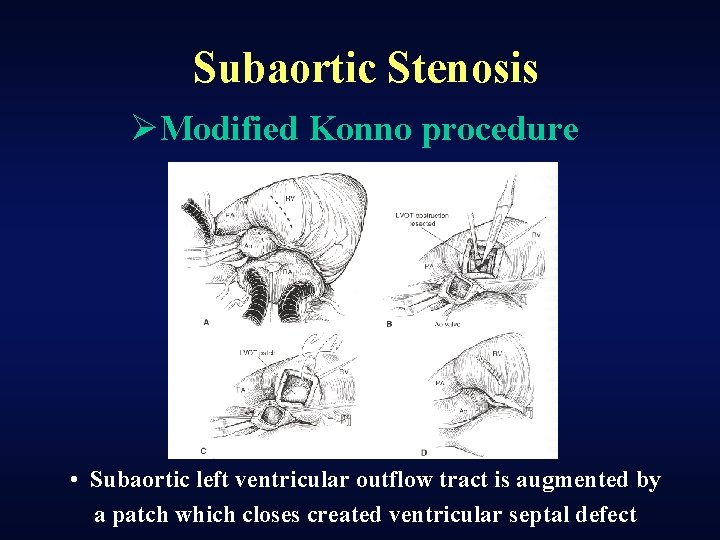
Subaortic Stenosis ØModified Konno procedure • Subaortic left ventricular outflow tract is augmented by a patch which closes created ventricular septal defect
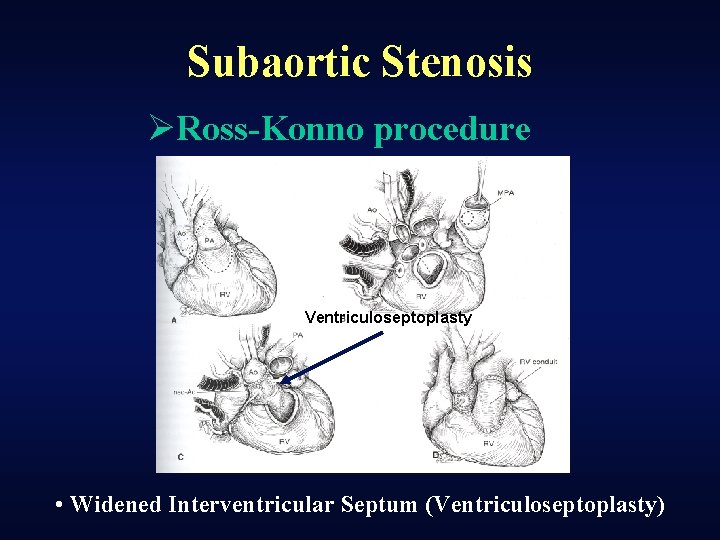
Subaortic Stenosis ØRoss-Konno procedure Ventriculoseptoplasty • Widened Interventricular Septum (Ventriculoseptoplasty)
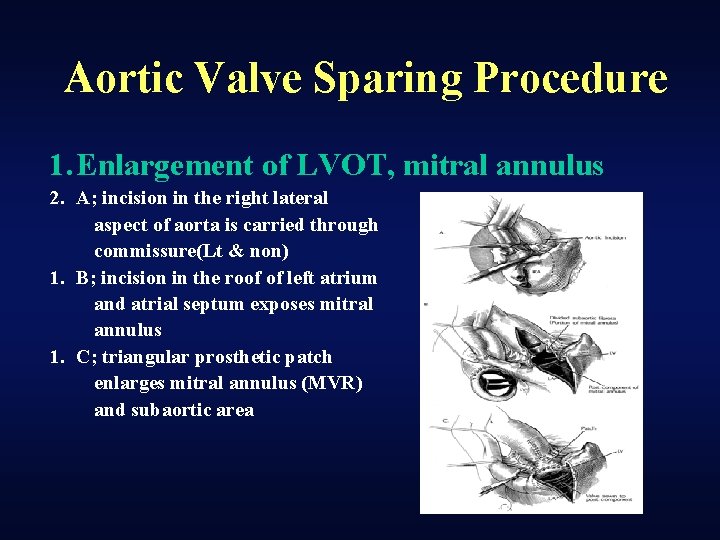
Aortic Valve Sparing Procedure 1. Enlargement of LVOT, mitral annulus 2. A; incision in the right lateral aspect of aorta is carried through commissure(Lt & non) 1. B; incision in the roof of left atrium and atrial septum exposes mitral annulus 1. C; triangular prosthetic patch enlarges mitral annulus (MVR) and subaortic area
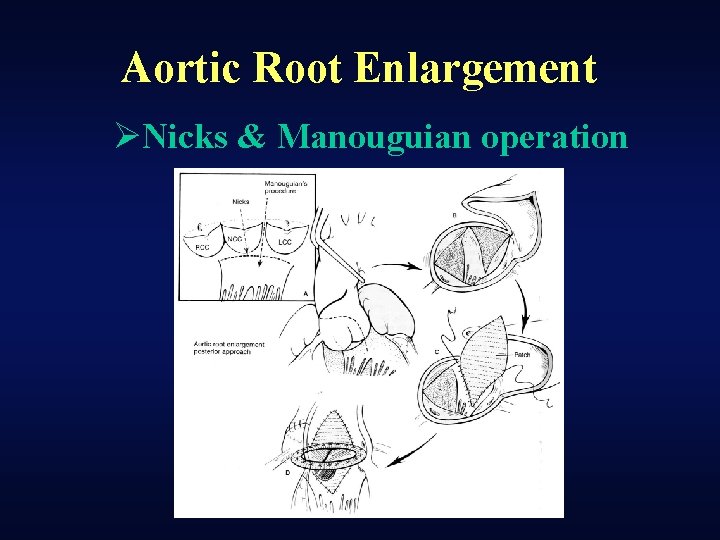
Aortic Root Enlargement ØNicks & Manouguian operation
Subaortic Stenosis ØResults of operation 1. Survival Early death ; very low Time-related survival ; related with residual stenosis or endocarditis 2. Incremental risk factors for premature death Small aortic annulus Extensive operation(tunnel form) Persistent stenosis or restenosis : 10% recur 3. Complications Complete heart block Iatrogenic VSD 4. Functional status, hemodynamic state 5. Recurrence of discrete subvalvar stenosis 6. Aortic incompetence
Subaortic Stenosis 1. Indications for Operation 2. Operation is advisable whenever stenosis is moderate. (more than 50 mm. Hg pressure gradient) 3. When obstruction is mild, reevaluation is indicated every 6 months as rapid progression can occur. 4. When multiple levels of LVOTO, or associated 5. cardiac anomalies, general indications pertain.
Redo-aortic Valve Replacement ØEtiology • Although surgical and catheter-based techniques for preserving the aortic valve in children with aortic valve disease have improved, there a certain number of children in whom successful aortic valve salvage cannot be accomplished and therefore will need aortic valve replacement • As times goes on, some of these children will require repeat AVR (redo-AVR) due to a variety of reasons such as outgrowth of the valve, deterioration of a bioprosthetic or homograft valve, endocarditis, or pannus formation.
Supravalvar Aortic Stenosis 1. Introduction 2. 1. Definition 3. 4. 5. An obstruction caused by localized or diffuse narrowing of aortic lumen commencing immediately above the aortic valve. 6. 2. History 7. 8. 9. Mencarelli : 1 st description in 1930 Mayo Clinic : 1 st operation in 1956 Hara : Excision & anastomosis in 1960

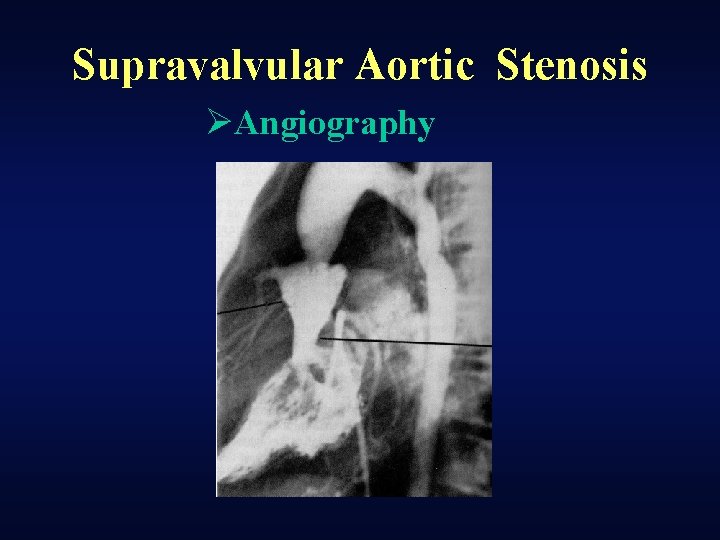
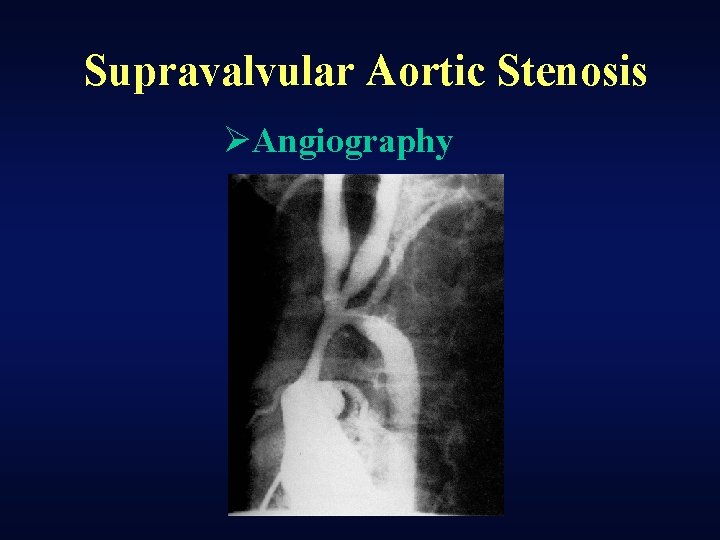
Supravalvar Aortic Stenosis ØCharacteristics 1 Etiology : undefined, but genetically determined * Hypercalcemia * Williams’ syndrome 2 Incidence : 10 - 20% of AS 3 Anatomy * Localized diaphragm * Localized hour-glass narrowing * Diffuse narrowing 4 Type * A : SVAS occurring as part of this syndrome * B : SVAS familiar without other abnormalities * C : SVAS occurring as purely isolated case
Supravalvar Aortic Stenosis ØMorphology 1. Supravalvar stenosis Localized or diffuse Variable intimal thickening 4. Less often diffuse extending 2. Associated aortic stenosis Valve thickening in 1/3 Occasional hypoplastic anulus Subvalvar stenosis is uncommon. 3. Coronary arteries Obstructing coronary flow, more common in left sinus. Dilation, tortuosity, medial hypertrophy. Associated anomalies Multiple peripheral PS Thickening fibromuscular dysplasia in both PA Stenosis of brachiocephalic branches COA, VSD rarely
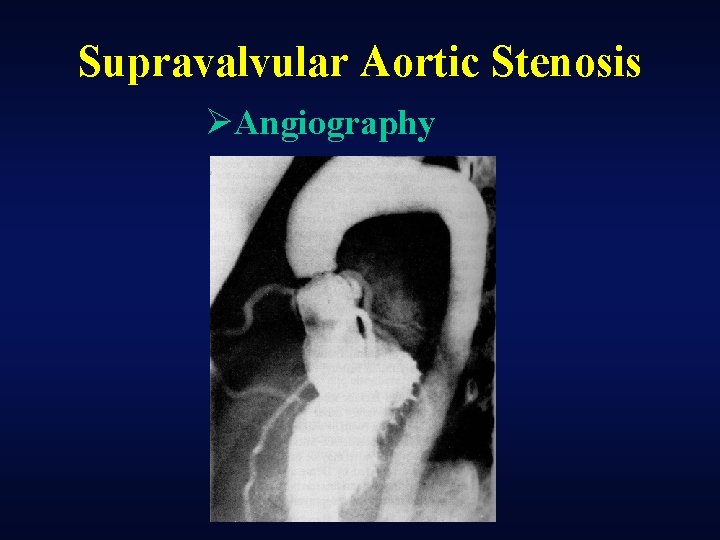
Supravalvular Aortic Stenosis ØAngiography
Supravalvular Aortic Stenosis ØAngiography
Supravalvular Aortic Stenosis ØAngiography
Supravalvular Aortic Stenosis 1. Clinical features & diagnosis 2. 1. Symptoms and signs 3. Rarely develop in infancy 4. Appear as late as 2 nd or 3 rd decade 5. Murmur and thrill sited higher 6. Elfin faces, reduced IQ, failure to thrive 7. Hypercalcemia in less than 5% 8. 2. Echocardiography 9. 3. Cardiac catheterization and angiocardiography
Supravalvar Aortic Stenosis ØNatural history • • • Least common type of congenital aortic stenosis Infants with elfin face, sudden death is common. Progression of surpravalvar stenosis documented. Untreated patients die before reaching adult life. Decrease of peripheral PS occurs as patients age.
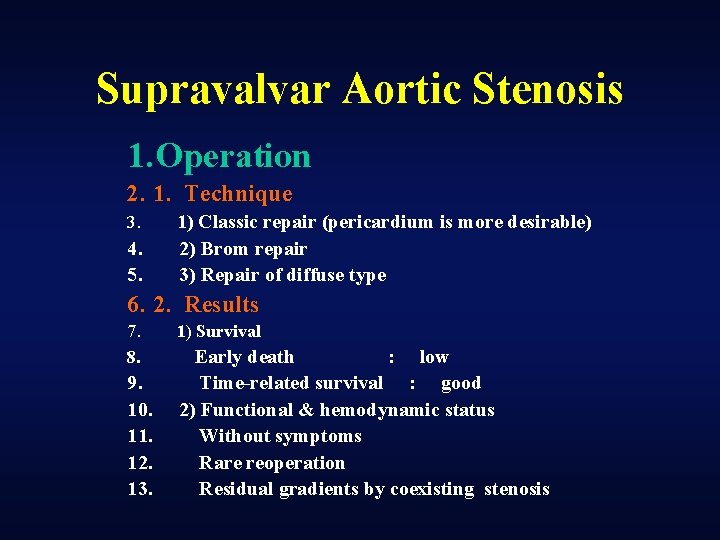
Supravalvar Aortic Stenosis 1. Operation 2. 1. Technique 3. 4. 5. 1) Classic repair (pericardium is more desirable) 2) Brom repair 3) Repair of diffuse type 6. 2. Results 7. 8. 9. 10. 11. 12. 13. 1) Survival Early death : low Time-related survival : good 2) Functional & hemodynamic status Without symptoms Rare reoperation Residual gradients by coexisting stenosis
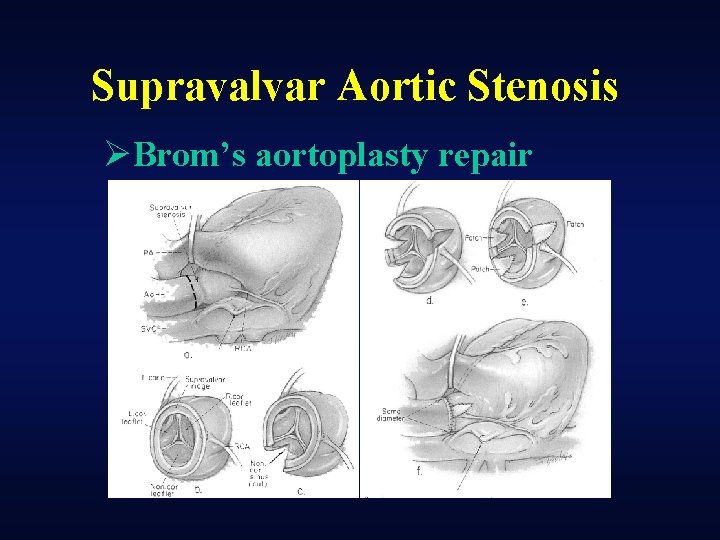
Supravalvar Aortic Stenosis ØBrom’s aortoplasty repair
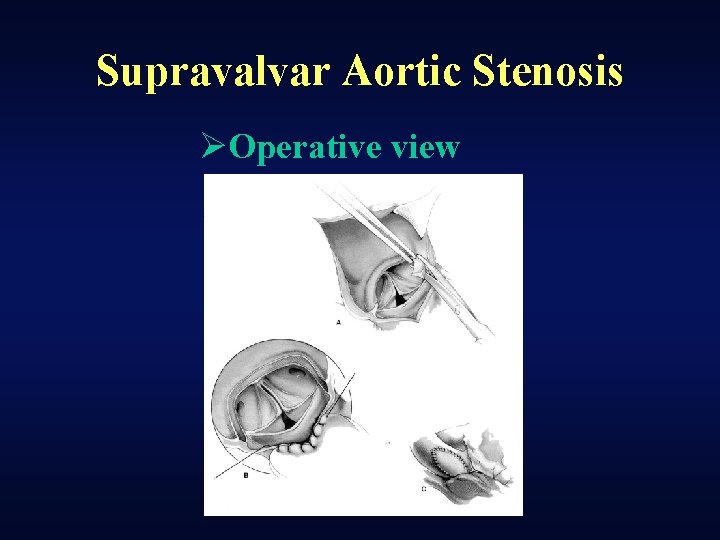
Supravalvar Aortic Stenosis ØOperative view
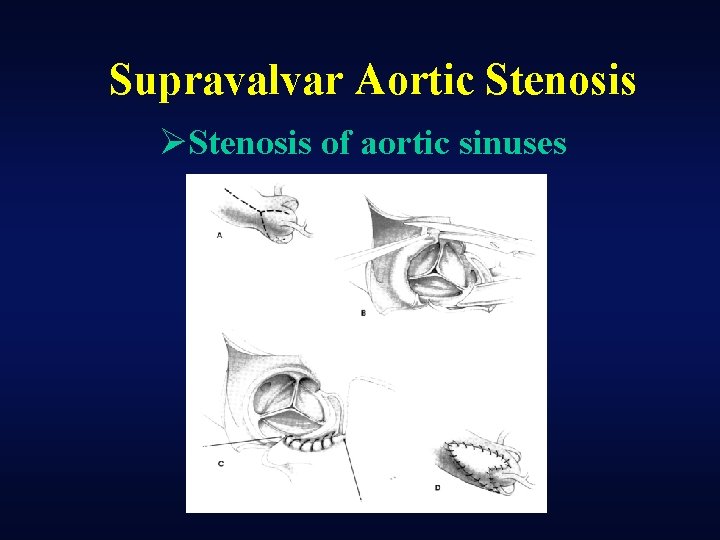
Supravalvar Aortic Stenosis ØStenosis of aortic sinuses
Supravalvar Aortic Stenosis ØIndications for operation • Operation is advisable when pressure gradient more than 50 mm. Hg at whatever age in view of progressive nature. • Presence of pulmonary artery stenosis should not be a contraindication to surgical relief of supravalvar aortic stenosis.
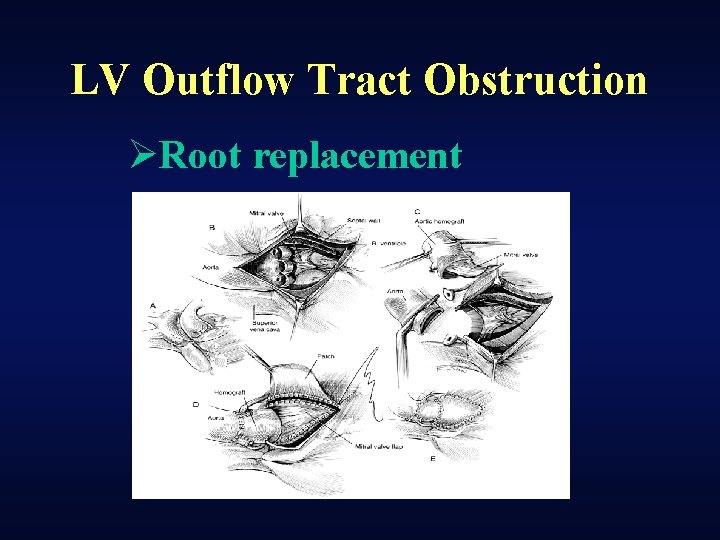
LV Outflow Tract Obstruction ØRoot replacement
- Slides: 84