
Congenital Heart Disease Initial evaluation and stabilization Priscilla
Congenital Heart Disease Initial evaluation and stabilization Priscilla Joe, MD Children’s Hospital and Research Center Oakland
Initial evaluation § History § Physical exam with 4 extremity blood pressures § Pre-ductal and post-ductal oxygen saturations § Hyperoxia test § CXR § EKG § ECHO 2
Indications for fetal echocardiography Fetal risk factors associated with CHD: § Trisomies, Turner’s syndrome, abnormal karyotype § Congenital malformations: duodenal atresia, TEF, omphalocele, diaphragmatic hernia, renal dysgenesis, and hydrocephalus § Fetal arrhythmias § IUGR § Nonimmune hydrops 3
Maternal metabolic disorders or infection § § § Diabetes mellitus PKU Hyperthyroidism Lupus, collagen vascular disease Rubella, CMV, Coxsackie, HIV 4
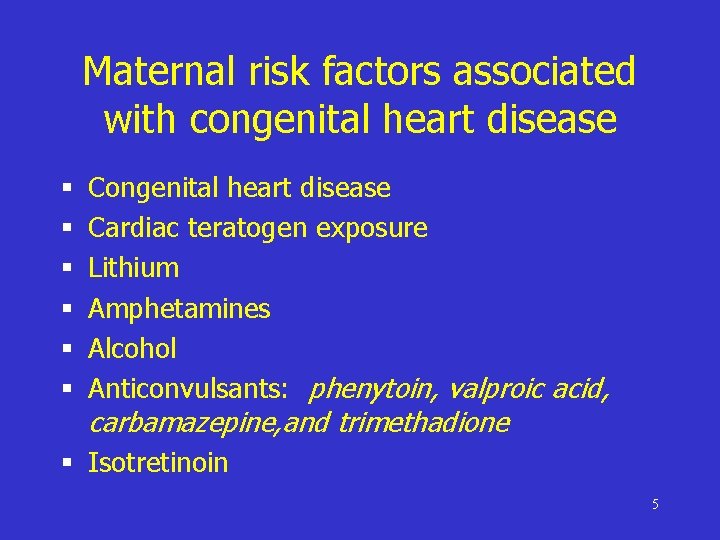
Maternal risk factors associated with congenital heart disease § § § Congenital heart disease Cardiac teratogen exposure Lithium Amphetamines Alcohol Anticonvulsants: phenytoin, valproic acid, carbamazepine, and trimethadione § Isotretinoin 5
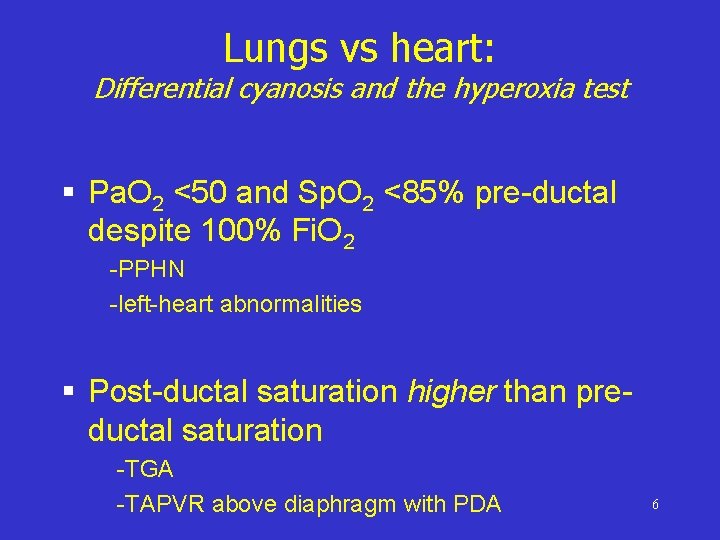
Lungs vs heart: Differential cyanosis and the hyperoxia test § Pa. O 2 <50 and Sp. O 2 <85% pre-ductal despite 100% Fi. O 2 -PPHN -left-heart abnormalities § Post-ductal saturation higher than preductal saturation -TGA -TAPVR above diaphragm with PDA 6

7

Neonatal Heart Disease § Ductal dependent lesions § Congestive heart failure § § Right heart obstructive lesions Left heart obstructive lesions Mixing lesions Inadequate gas exchange 8
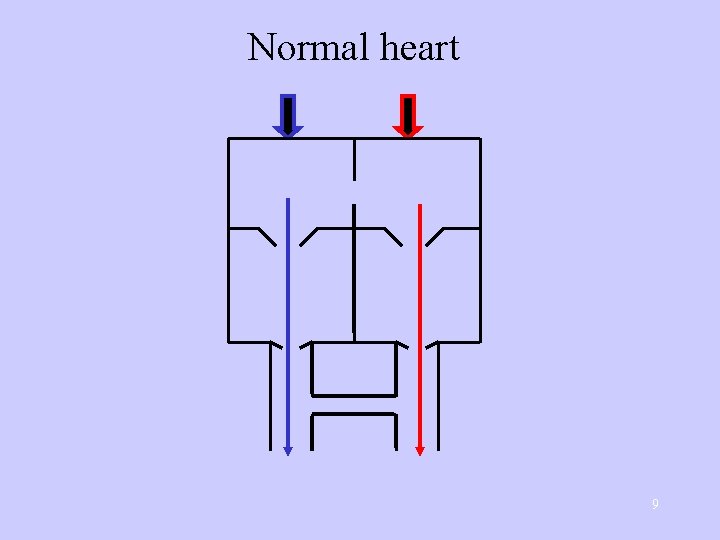
Normal heart 9
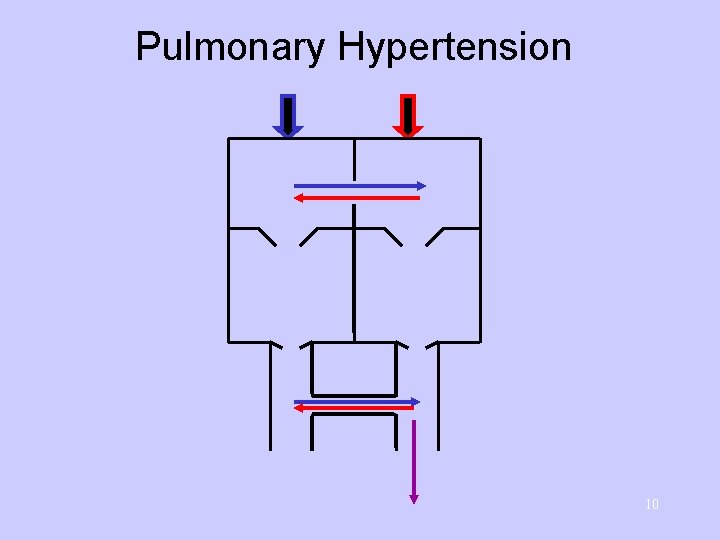
Pulmonary Hypertension 10
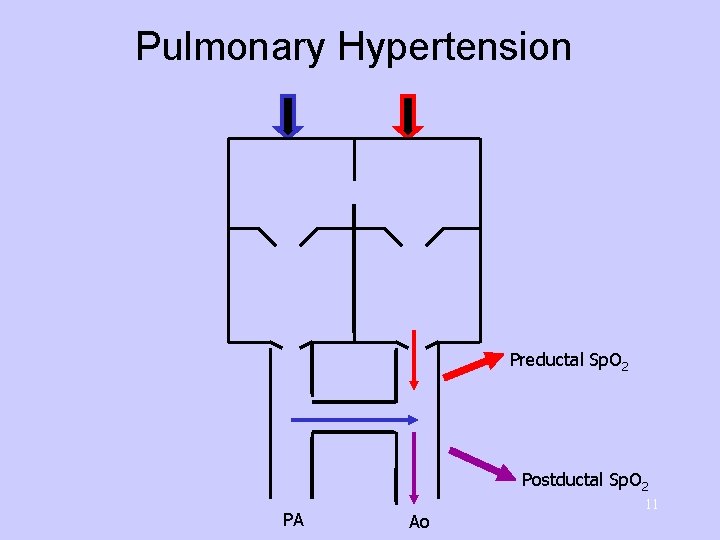
Pulmonary Hypertension Preductal Sp. O 2 Postductal Sp. O 2 PA Ao 11
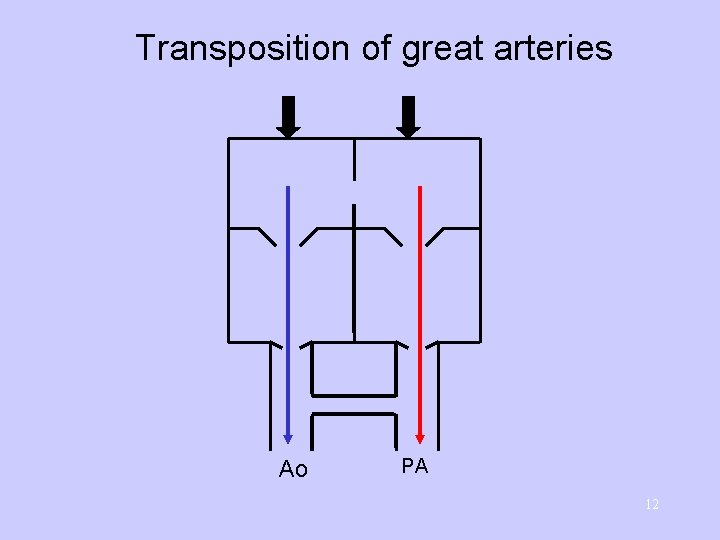
Transposition of great arteries Ao PA 12
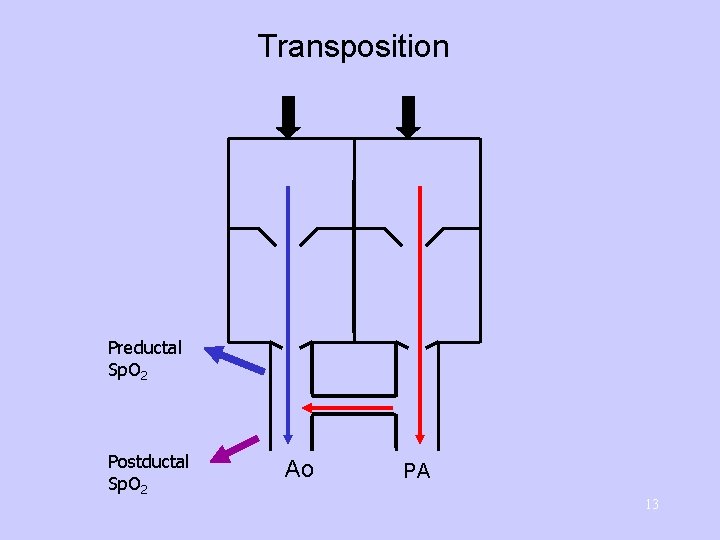
Transposition Preductal Sp. O 2 Postductal Sp. O 2 Ao PA 13
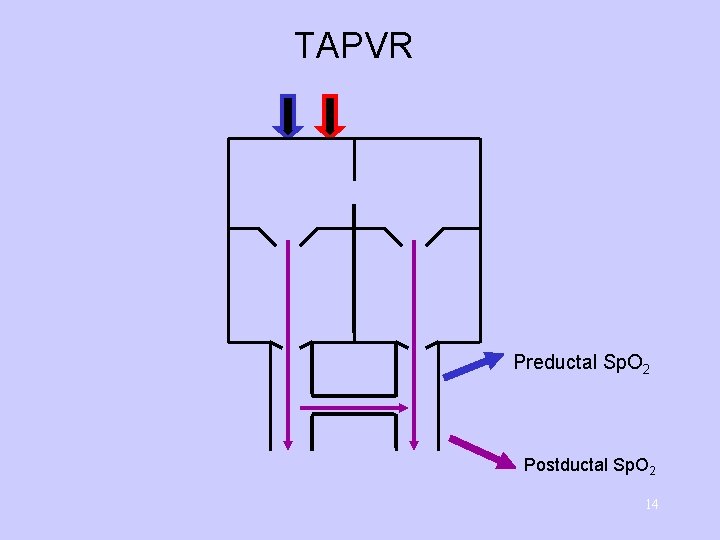
TAPVR Preductal Sp. O 2 Postductal Sp. O 2 14
CXR § Heart size § Pulmonary blood flow § Cardiac position 15
16
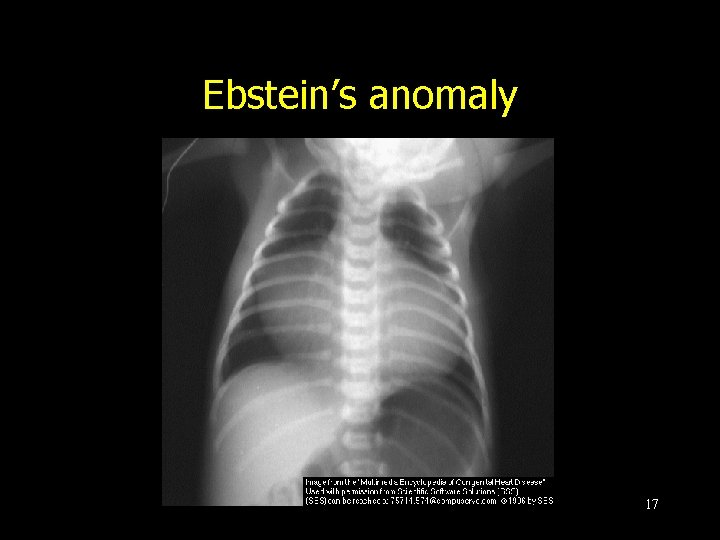
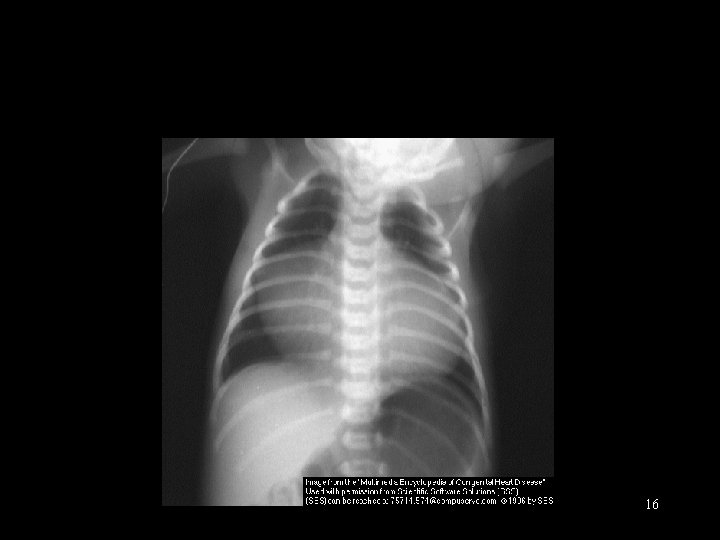
Ebstein’s anomaly 17
Cyanotic with decreased pulmonary blood flow 18
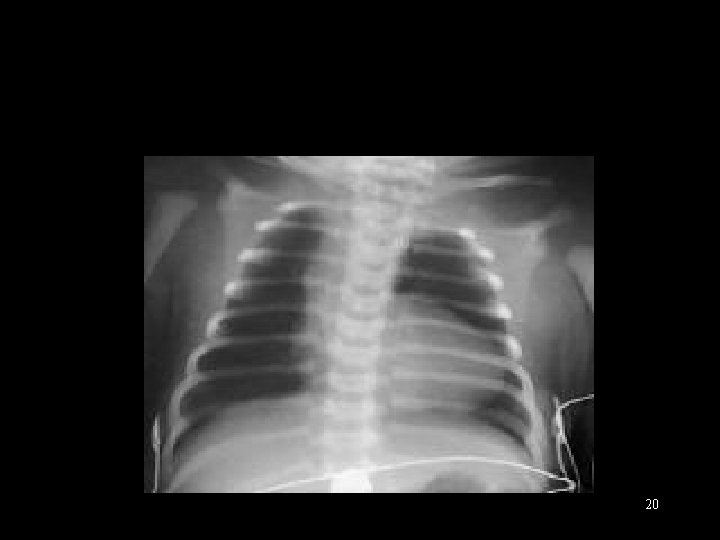
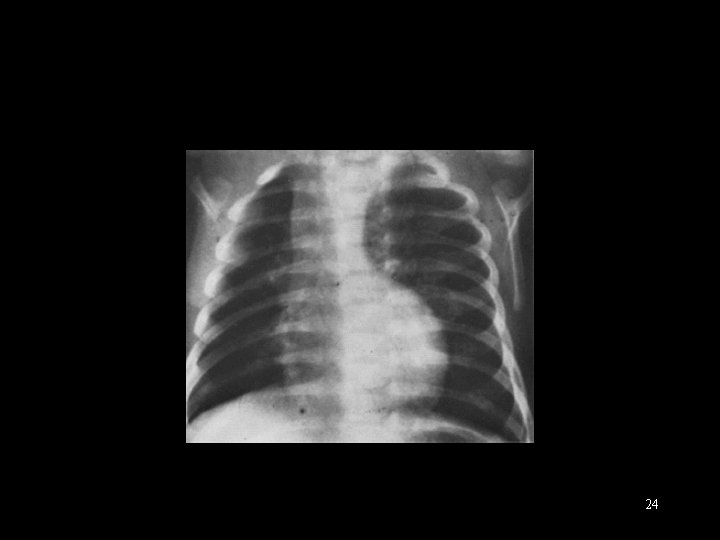
Right Sided Obstructive Lesions. Blue, but comfortable § § Cyanosis No respiratory distress Normal pulses and perfusion Single second heart sound (no closing sound from abnormal pulm valve) § Murmur § Moderate to marked hypoxemia § CXR: normal to large sized heart, decreased PBF 19
20
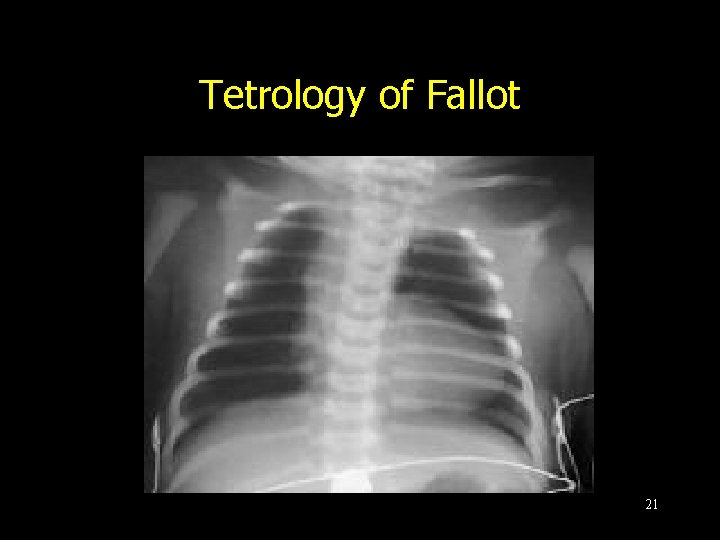
Tetrology of Fallot 21
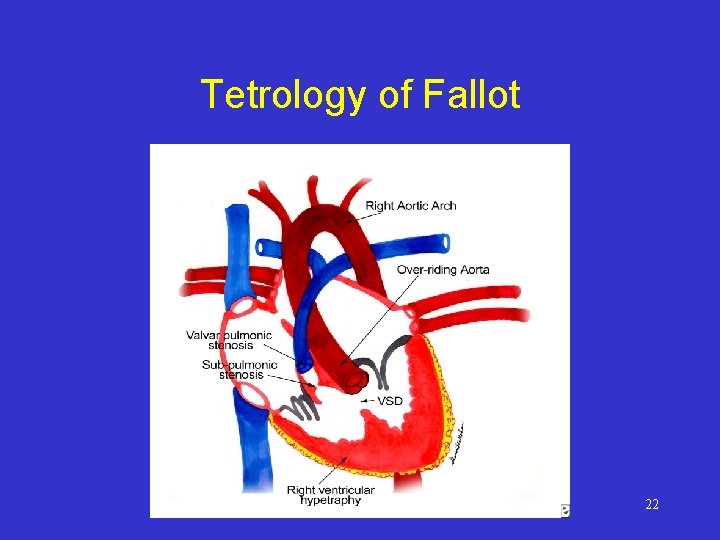
Tetrology of Fallot 22
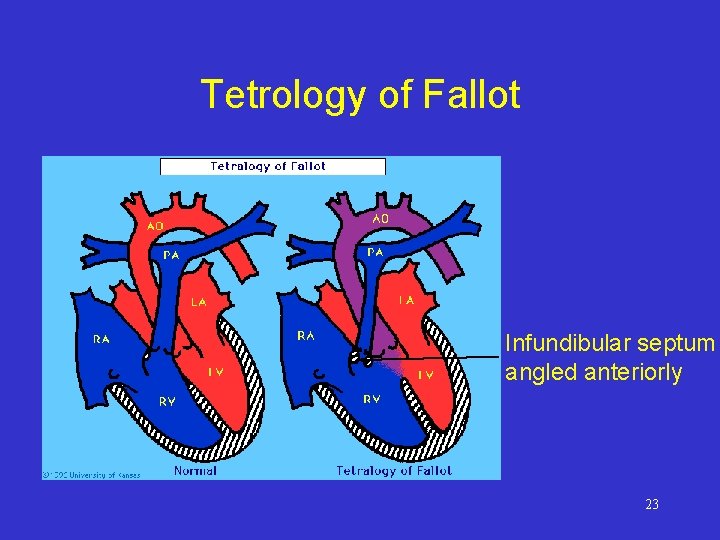
Tetrology of Fallot Infundibular septum angled anteriorly 23
24

Tricuspid Atresia 25

Tricuspid Atresia 26
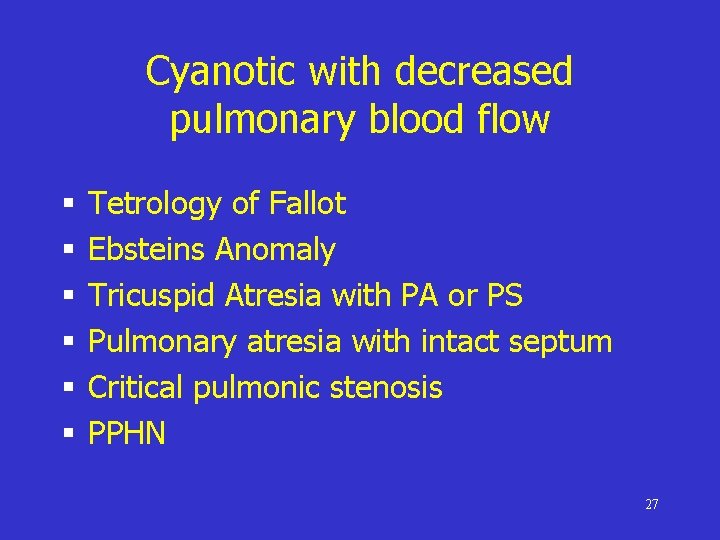
Cyanotic with decreased pulmonary blood flow § § § Tetrology of Fallot Ebsteins Anomaly Tricuspid Atresia with PA or PS Pulmonary atresia with intact septum Critical pulmonic stenosis PPHN 27
Management right sided obstructive lesions § PGE § Supplemental O 2 is OK (may slightly improve pulmonary vasodilatation) § Surgical intervention 28

Left sided obstructive lesions Acute shock
Left sided obstructive lesions § § § § § Grey or ashen color (may not be blue) Tachypnea Poor perfusion Decreased pulses/differential pulses Single second heart sound Murmur + gallop Hepatomegaly ABG: metabolic acidosis CXR: cardiomegaly with increased PBF 30
Left sided obstructive lesions § Coarctation of aorta, interrupted aortic arch § Hypoplastic left heart syndrome § Aortic stenosis § Mitral stenosis § Total anomalous pulmonary venous return, below diaphragm 31
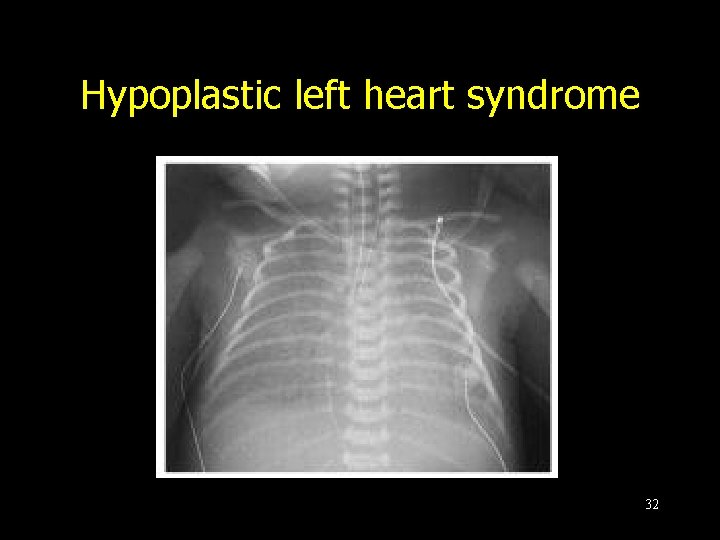
Hypoplastic left heart syndrome 32
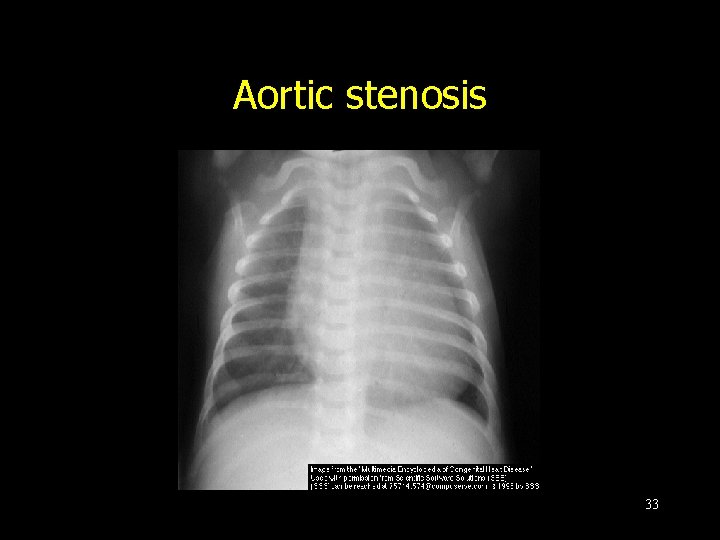
Aortic stenosis 33
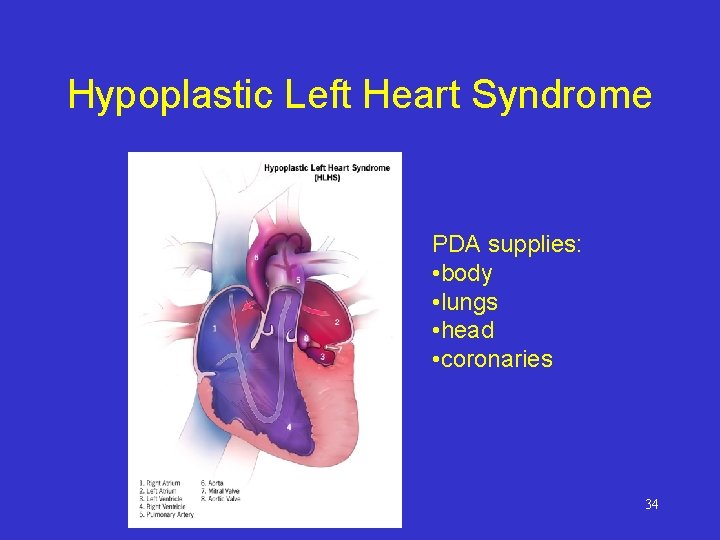
Hypoplastic Left Heart Syndrome PDA supplies: • body • lungs • head • coronaries 34
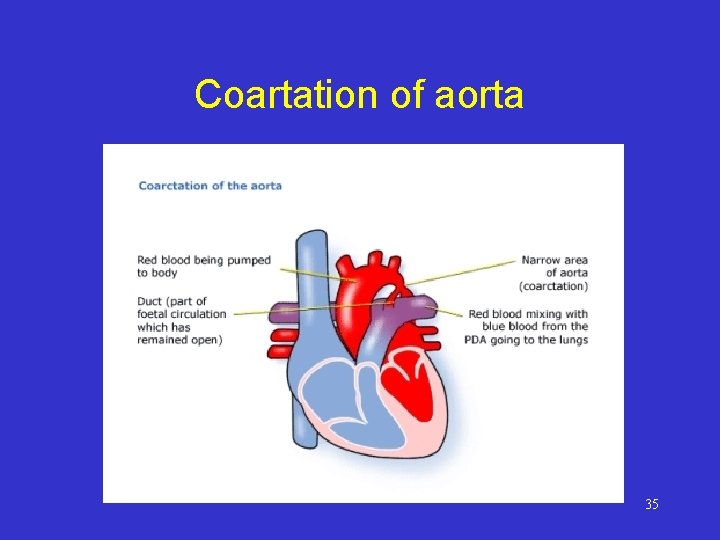
Coartation of aorta 35
HLHS Treatment § § § § Fetal diagnosis is vital to prevent end organ failure PGE Balance perfusion to body/coronaries/head vs lungs Avoid oxygen, hyperventilation, pressors to limit PBF Control ventilation; paralyze and hypoventilate Blend in nitrogen to raise PVR and limit PBF Surgical intervention
Cyanotic with increased pulmonary blood flow Inadequate mixing 37
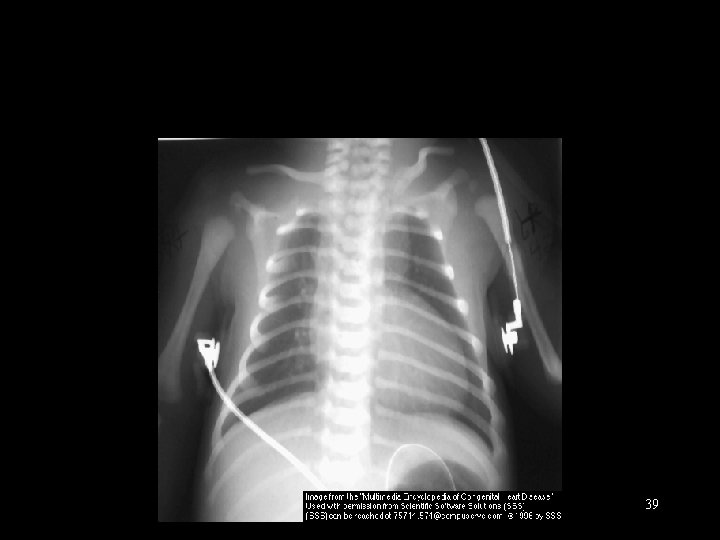
Inadequate Mixing Lesions § § § § Cyanosis, often profound Mild tachypnea Normal pulses Single heart sound Murmur ABG: marked hypoxemia, + acidosis CXR: cardiomegaly, normal or increased PBF 38
39
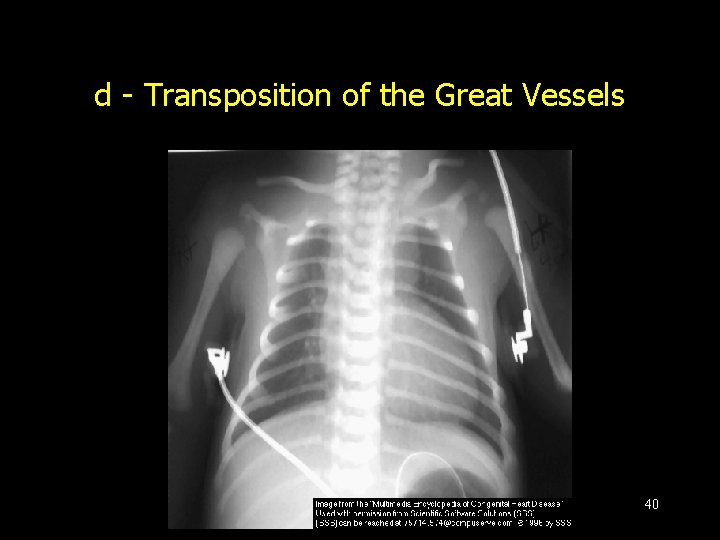
d - Transposition of the Great Vessels 40
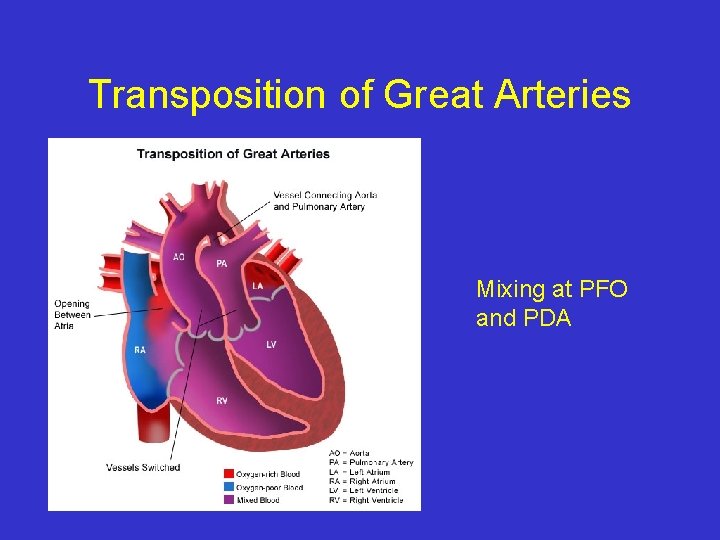
Transposition of Great Arteries Mixing at PFO and PDA
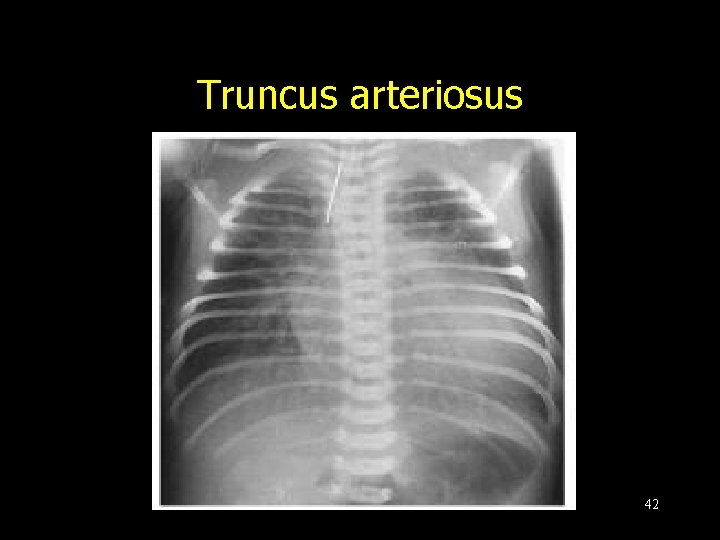
Truncus arteriosus 42
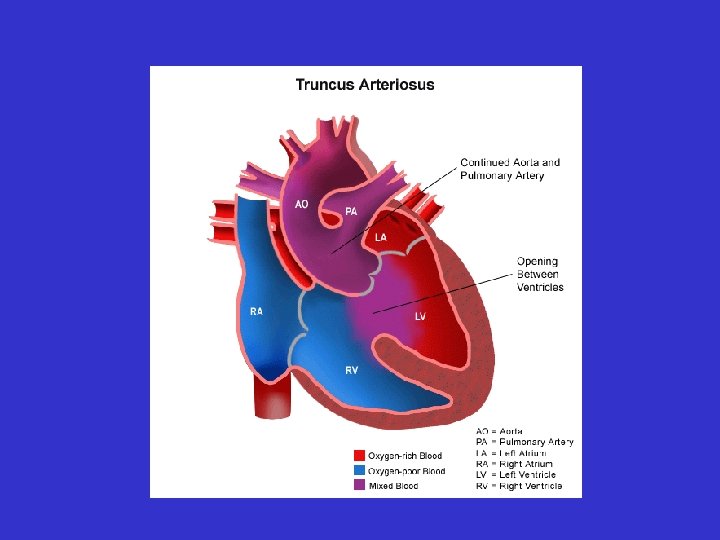

Truncus arteriosus
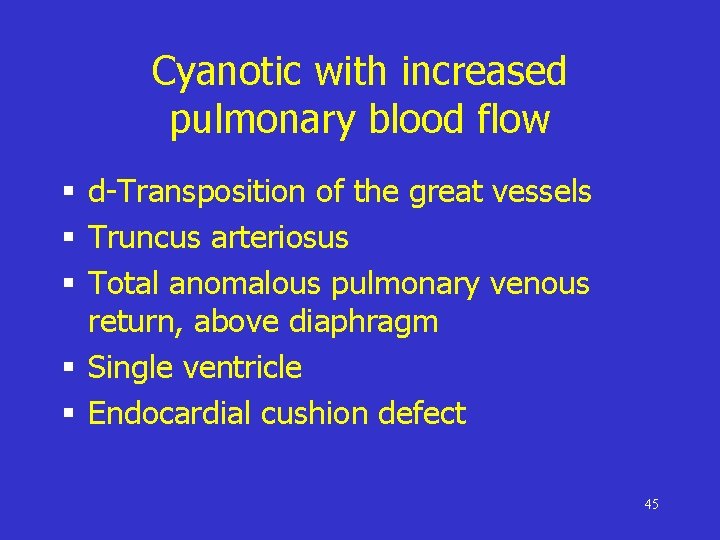
Cyanotic with increased pulmonary blood flow § d-Transposition of the great vessels § Truncus arteriosus § Total anomalous pulmonary venous return, above diaphragm § Single ventricle § Endocardial cushion defect 45
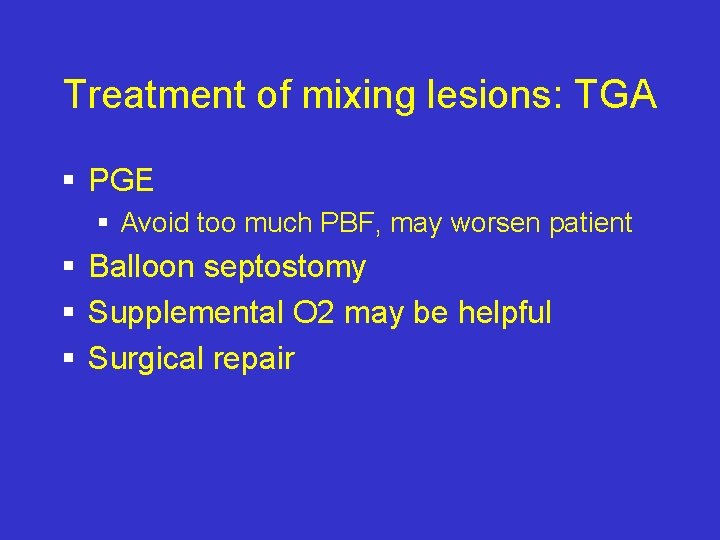
Treatment of mixing lesions: TGA § PGE § Avoid too much PBF, may worsen patient § Balloon septostomy § Supplemental O 2 may be helpful § Surgical repair

Lesions with poor gas exchange
Lesions with poor gas exchange § Cyanosis § Marked tachypnea (difficult to differentiate from GBS pneumonia/MAS § Perfusion fair, pulses normal § Second heart sound may be single § May or may not have a murmur § CXR: normal heart size, pulmonary congestion
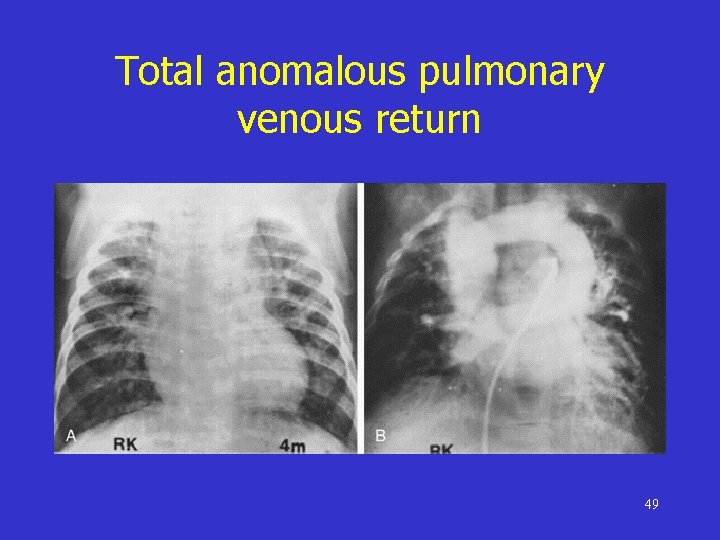
Total anomalous pulmonary venous return 49
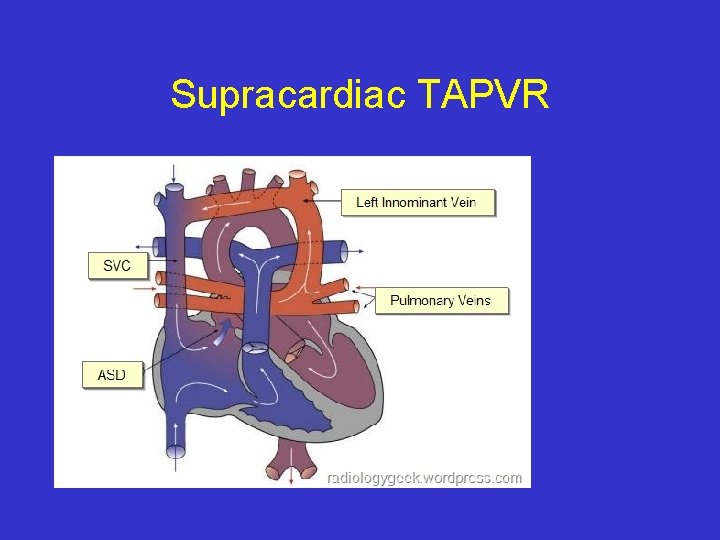
Supracardiac TAPVR
Management TAPVR § § § Ventilation with PEEP Diuretics PGE may worsen patient i. NO will worsen patient Surgical intervention
Initial stabilization § Airway management: use of neuromuscular blockade § Titrate Fi 02 to keep Sp 02 80%85%. § Use of PGE 1 (0. 02 to 0. 05 mcg/kg/min) 52
Prostaglandin E 1 § Failure to respond: diagnosis incorrect, older infant with unresponsive ductus, ductus absent, obstructed pulmonary venous return § Clinical deterioration after PGE 1: obstructed blood flow out of pulmonary veins or left atrium; HLHS with restrictive FO, TGA with intact ventricular septum and restrictive FO, obstructed TAPVR, mitral atresia with restrictive FO) 53
PGE 1 - side effects § Common: Apnea, fever, leukocytosis, cutaneous flushing, and bradycardia. § Uncommon: seizures, hypoventilation, hypotension, tachycardia, cardiac arrest, sepsis, diarrhea, DIC, fever § Rare: urticaria, bronchospasm, hemorrhage*, hypoglycemia, and hypocalcemia *inhibits platelet aggregation 54
Stabilization for transport Reliable vascular access Intubation if on PGE 1 Oxygen delivery, Sp 02 Monitor HR, tissue perfusion, blood pressure, and acid-base status § Calcium and glucose status § § 55


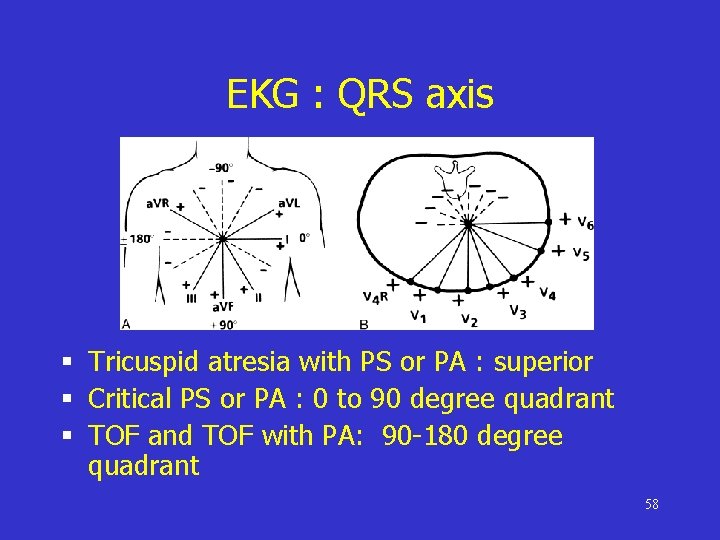
EKG : QRS axis § Tricuspid atresia with PS or PA : superior § Critical PS or PA : 0 to 90 degree quadrant § TOF and TOF with PA: 90 -180 degree quadrant 58
Acyanotic with increased pulmonary blood flow § § VSD ASD PDA Endocardial cushion defect 59
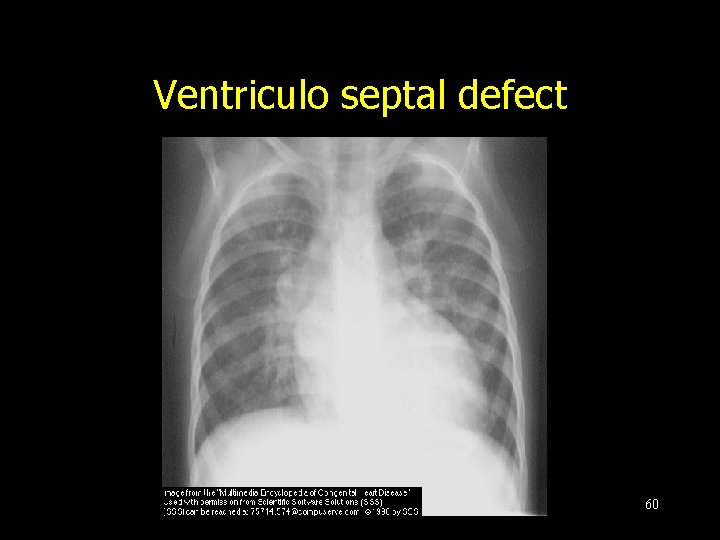
Ventriculo septal defect 60
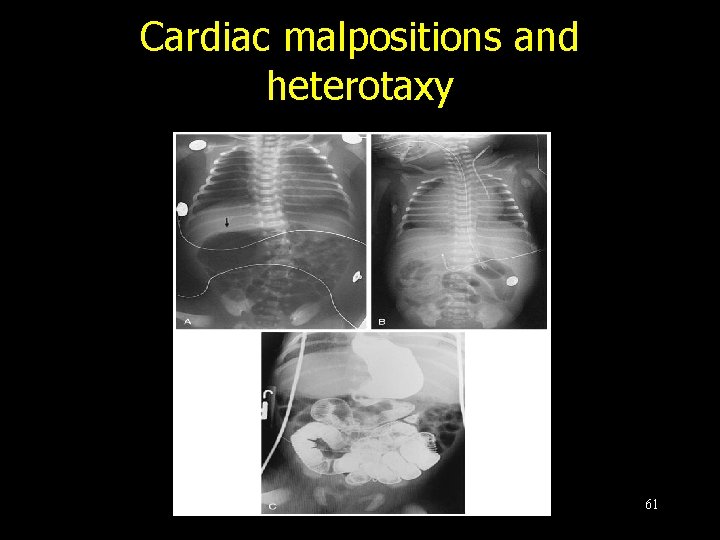
Cardiac malpositions and heterotaxy 61
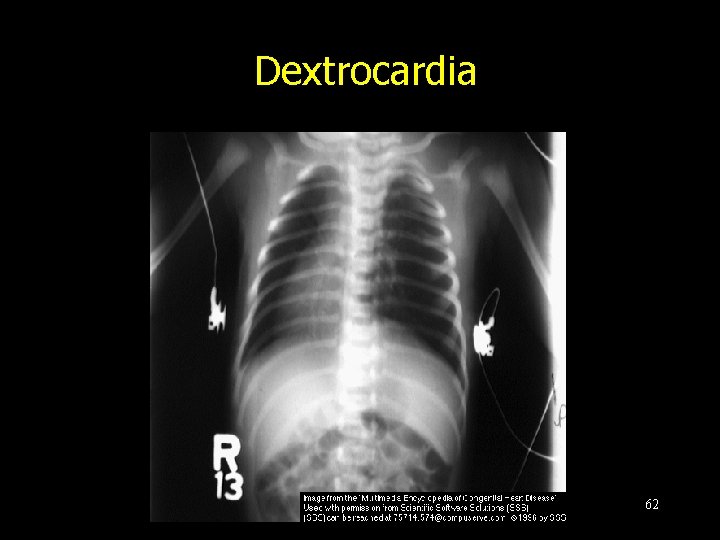
Dextrocardia 62
- Slides: 62