
CONGENITAL CATARACT 1 Important facts 2 Classification 3
- Slides: 13
CONGENITAL CATARACT 1. Important facts 2. Classification 3. Causes • In healthy neonates • In unwell neonates
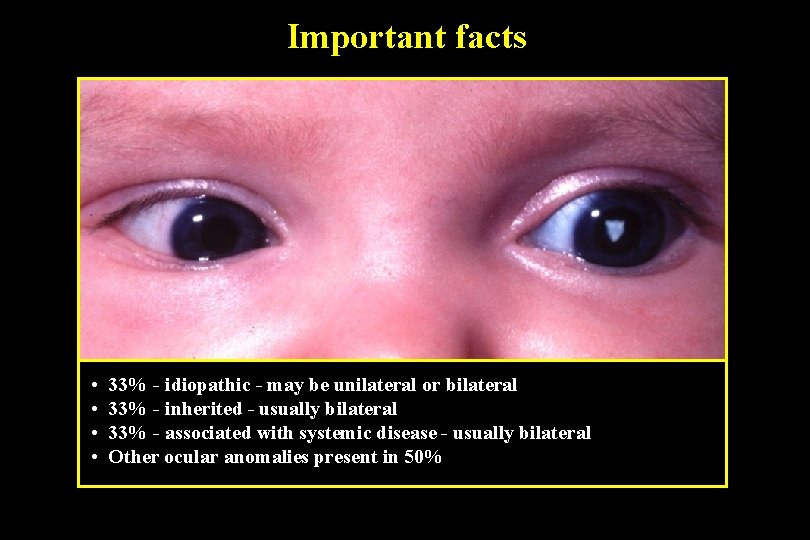
Important facts • • 33% - idiopathic - may be unilateral or bilateral 33% - inherited - usually bilateral 33% - associated with systemic disease - usually bilateral Other ocular anomalies present in 50%
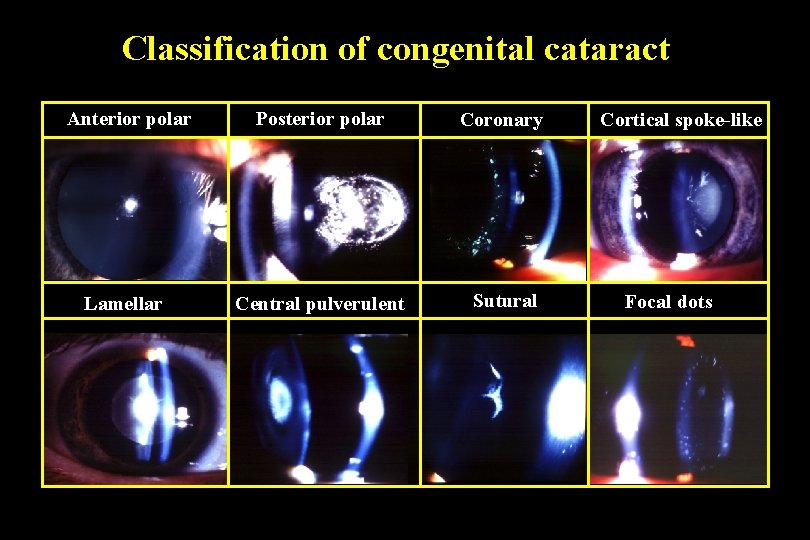
Classification of congenital cataract Anterior polar Posterior polar Coronary Lamellar Central pulverulent Sutural Cortical spoke-like Focal dots
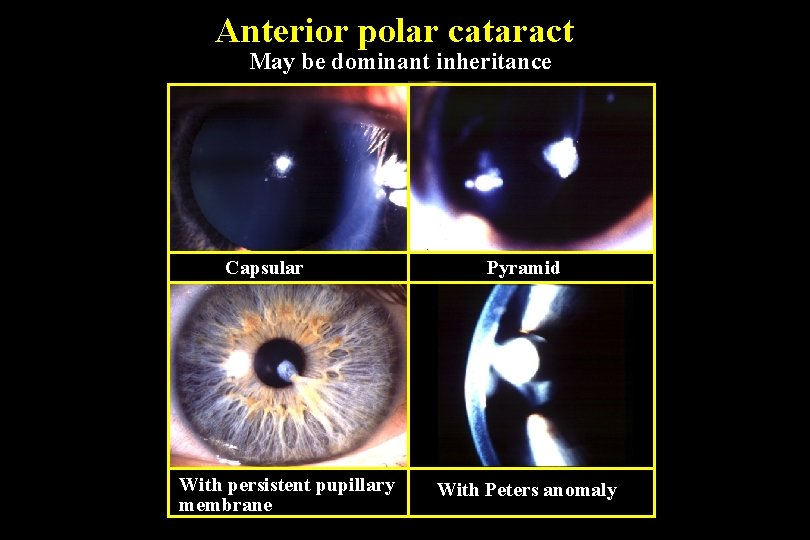
Anterior polar cataract May be dominant inheritance Capsular With persistent pupillary membrane Pyramid With Peters anomaly
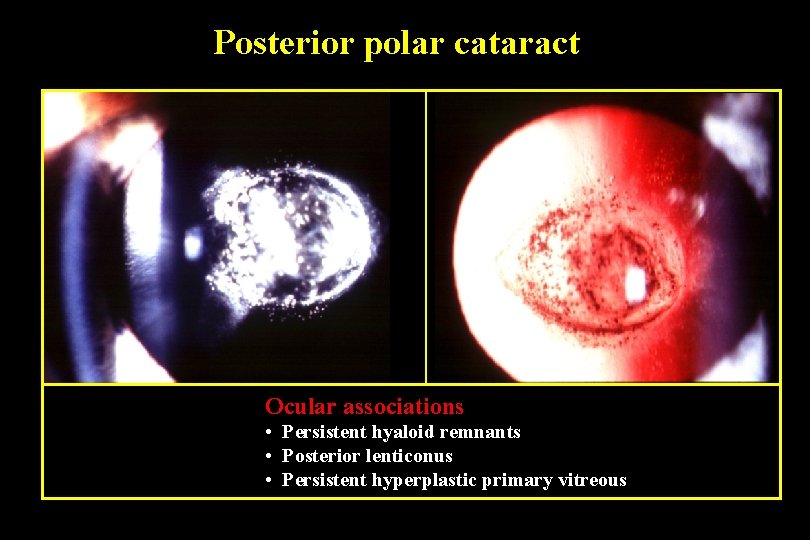
Posterior polar cataract Ocular associations • Persistent hyaloid remnants • Posterior lenticonus • Persistent hyperplastic primary vitreous
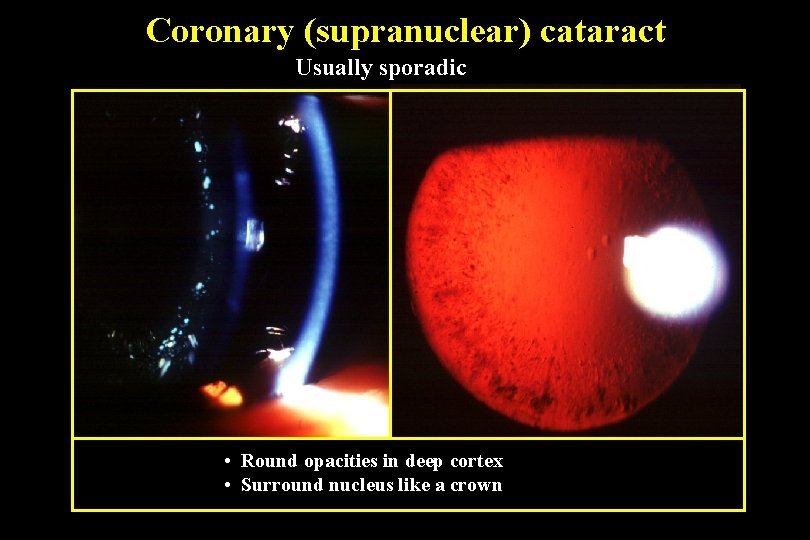
Coronary (supranuclear) cataract Usually sporadic • Round opacities in deep cortex • Surround nucleus like a crown
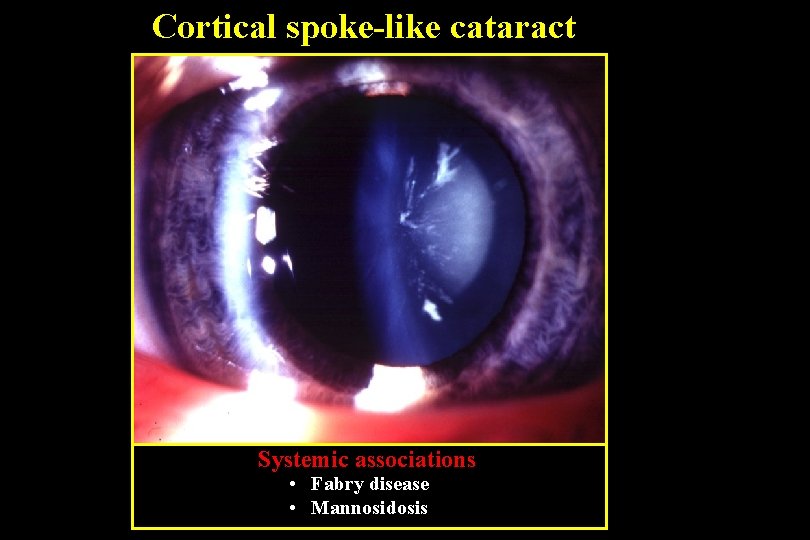
Cortical spoke-like cataract Systemic associations • Fabry disease • Mannosidosis
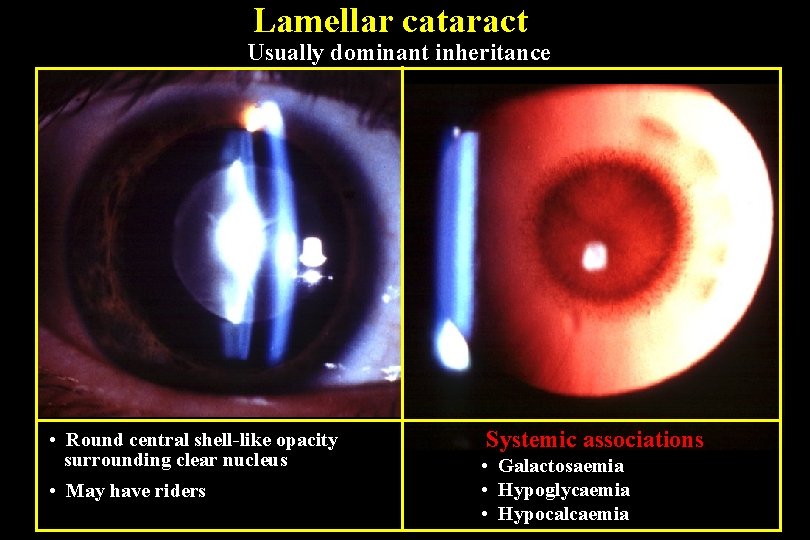
Lamellar cataract Usually dominant inheritance • Round central shell-like opacity surrounding clear nucleus • May have riders Systemic associations • Galactosaemia • Hypoglycaemia • Hypocalcaemia
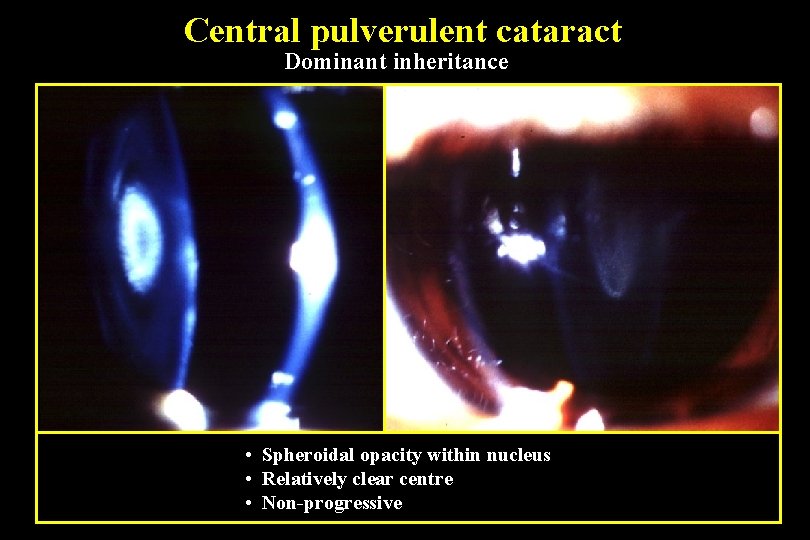
Central pulverulent cataract Dominant inheritance • Spheroidal opacity within nucleus • Relatively clear centre • Non-progressive
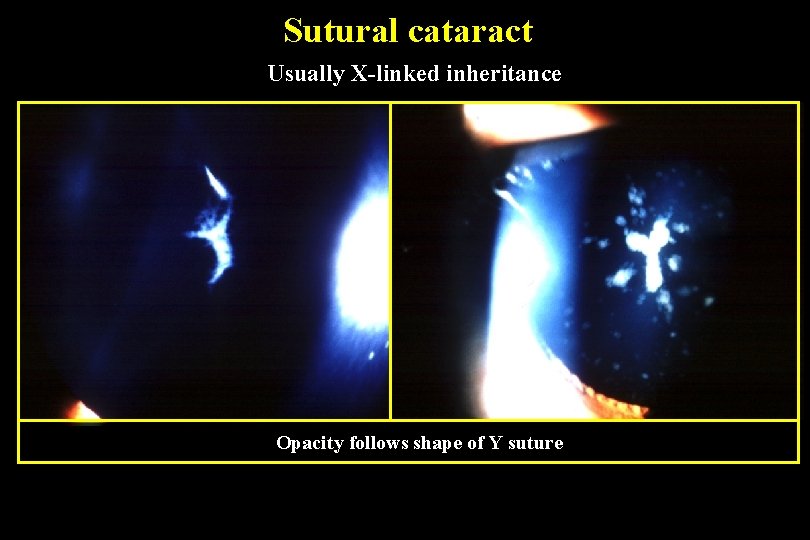
Sutural cataract Usually X-linked inheritance Opacity follows shape of Y suture
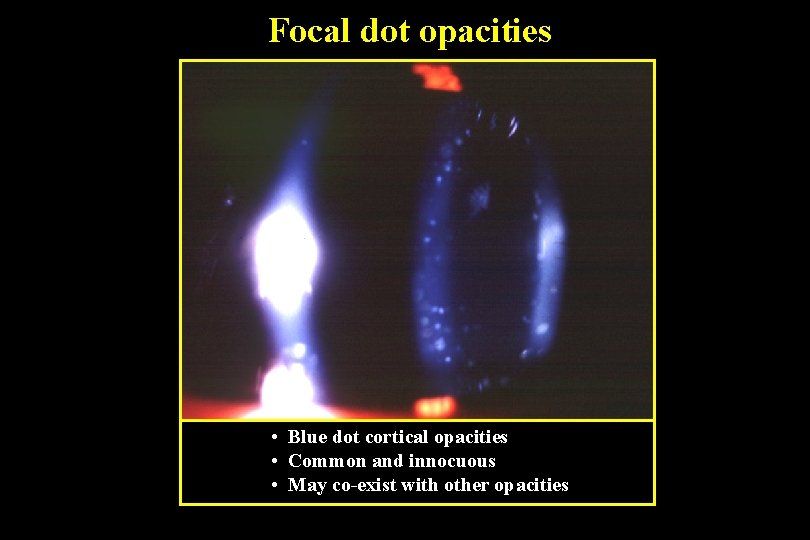
Focal dot opacities • Blue dot cortical opacities • Common and innocuous • May co-exist with other opacities
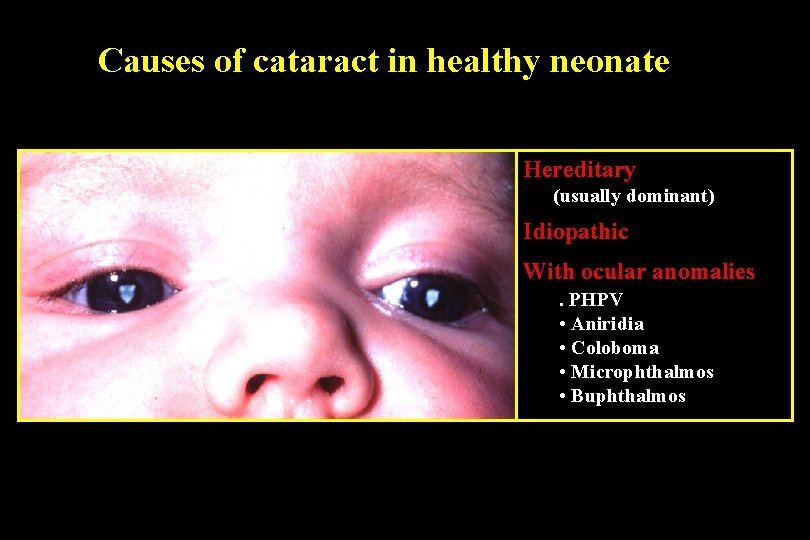
Causes of cataract in healthy neonate Hereditary (usually dominant) Idiopathic With ocular anomalies. PHPV • Aniridia • Coloboma • Microphthalmos • Buphthalmos
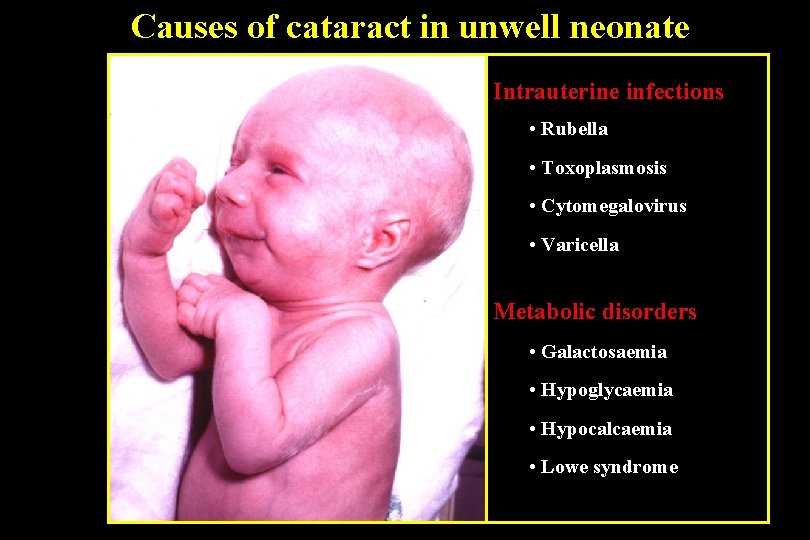
Causes of cataract in unwell neonate Intrauterine infections • Rubella • Toxoplasmosis • Cytomegalovirus • Varicella Metabolic disorders • Galactosaemia • Hypoglycaemia • Hypocalcaemia • Lowe syndrome