
Congenital Adrenal Hyperplasia Tariq Rabaya MD July 2019
Congenital Adrenal Hyperplasia Tariq Rabaya, MD July 2019
Outlines • • • Introduction Pathophysiology Epidemiology Signs and symptoms Diagnosis Management Further Outpatient Care Patient Education Prevention Complications Prognosis
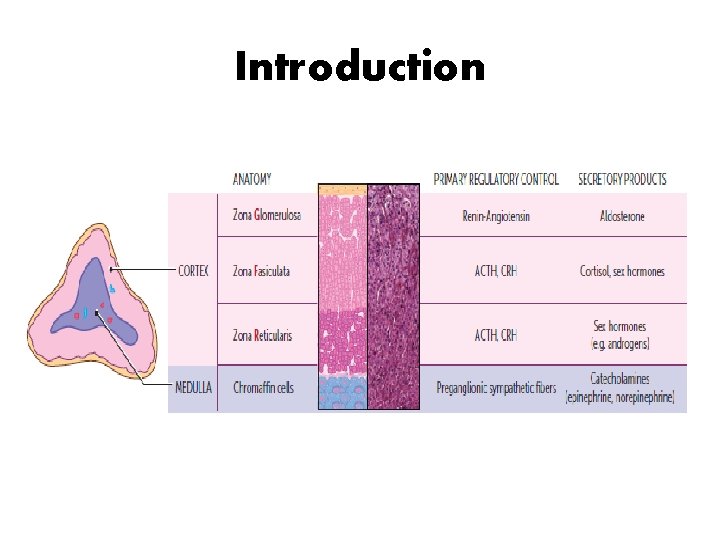
Introduction
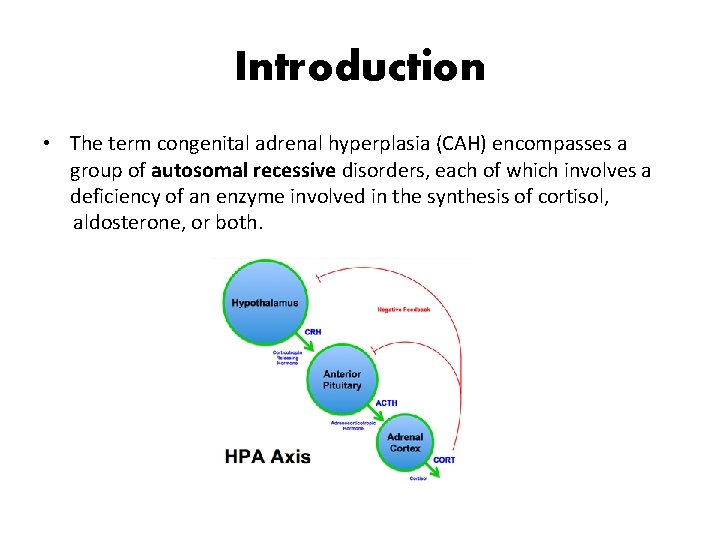
Introduction • The term congenital adrenal hyperplasia (CAH) encompasses a group of autosomal recessive disorders, each of which involves a deficiency of an enzyme involved in the synthesis of cortisol, aldosterone, or both.
Pathophysiology • The clinical manifestations of each form of congenital adrenal hyperplasia are related to the degree of cortisol deficiency and/or the degree of aldosterone deficiency. • In some cases, these manifestations reflect the accumulation of precursor adrenocortical hormones: – When present in supraphysiologic concentrations, these precursors lead to excess androgen production with resultant virilization. or – because of mineralocorticoid properties in some rare types, cause sodium retention and hypertension.
• The phenotype depends on the degree or type of gene deletion or mutation and the resultant deficiency of the steroidogenic enzyme. • Two copies of an abnormal gene are required for disease to occur. • Not all mutations and partial deletions result in disease. • The phenotype can vary from clinically inapparent disease (occult or cryptic adrenal hyperplasia) to a mild form of disease that is expressed in adolescence or adulthood (nonclassic adrenal hyperplasia) to severe disease that results in adrenal insufficiency in infancy with or without virilization and salt wasting (classic adrenal hyperplasia).
Epidemiology • Race – Congenital adrenal hyperplasia occurs among people of all races. • Sex – Because all forms of congenital adrenal hyperplasia are autosomal recessive disorders, both sexes are affected with equal frequency. . • Age – Classic congenital adrenal hyperplasia is generally recognized at birth or in early childhood because of ambiguous genitalia, salt wasting, or early virilization. – Nonclassic adrenal hyperplasia is generally recognized at or after puberty because of oligomenorrhea or virilizing signs in females.

Deficiency of 21 -hydroxylase • Resulting from mutations or deletions of CYP 21 A. • Is the most common form of CAH, accounting for more than 90% of cases. • Clinically divided into 3 phenotypes: – Classic salt wasting 70% – Classic simple virilizing 30% – Nonclassic 0. 1 %
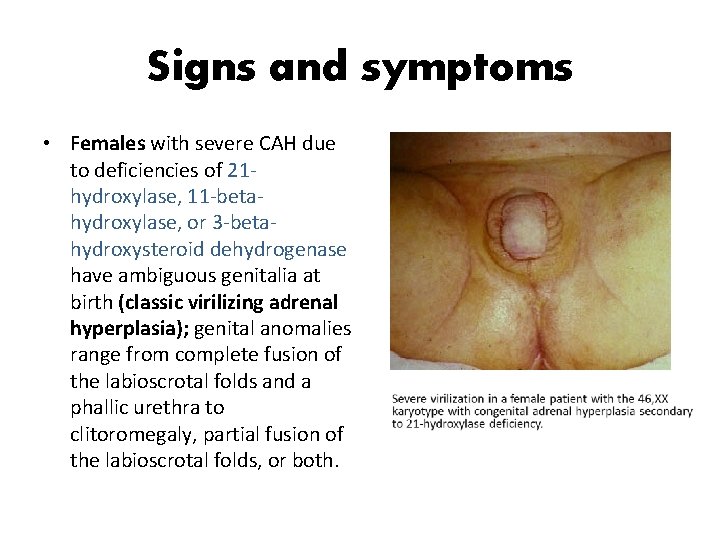
Signs and symptoms • Females with severe CAH due to deficiencies of 21 hydroxylase, 11 -betahydroxylase, or 3 -betahydroxysteroid dehydrogenase have ambiguous genitalia at birth (classic virilizing adrenal hyperplasia); genital anomalies range from complete fusion of the labioscrotal folds and a phallic urethra to clitoromegaly, partial fusion of the labioscrotal folds, or both.
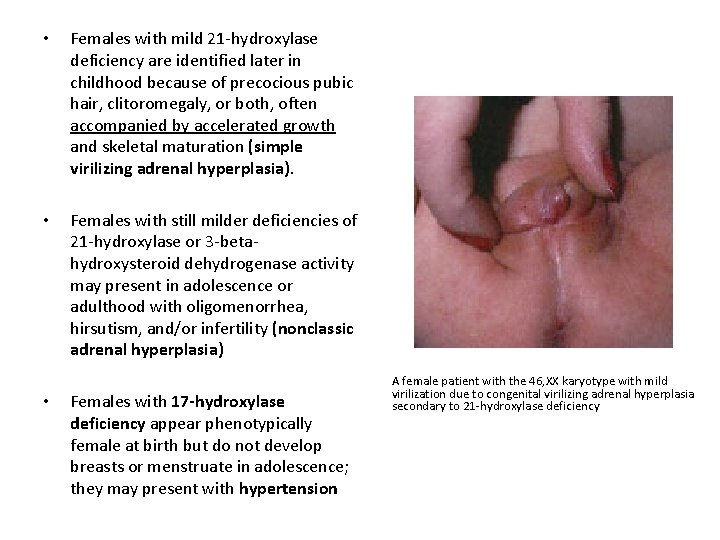
• Females with mild 21 -hydroxylase deficiency are identified later in childhood because of precocious pubic hair, clitoromegaly, or both, often accompanied by accelerated growth and skeletal maturation (simple virilizing adrenal hyperplasia). • Females with still milder deficiencies of 21 -hydroxylase or 3 -betahydroxysteroid dehydrogenase activity may present in adolescence or adulthood with oligomenorrhea, hirsutism, and/or infertility (nonclassic adrenal hyperplasia) • Females with 17 -hydroxylase deficiency appear phenotypically female at birth but do not develop breasts or menstruate in adolescence; they may present with hypertension A female patient with the 46, XX karyotype with mild virilization due to congenital virilizing adrenal hyperplasia secondary to 21 -hydroxylase deficiency
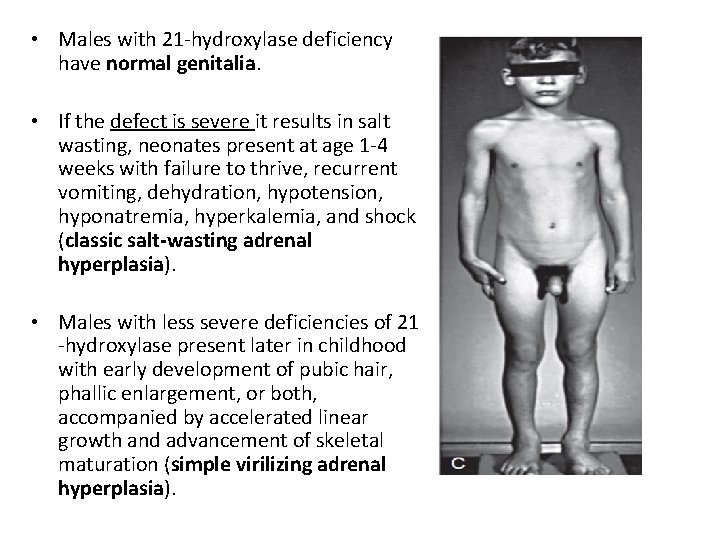
• Males with 21 -hydroxylase deficiency have normal genitalia. • If the defect is severe it results in salt wasting, neonates present at age 1 -4 weeks with failure to thrive, recurrent vomiting, dehydration, hypotension, hyponatremia, hyperkalemia, and shock (classic salt-wasting adrenal hyperplasia). • Males with less severe deficiencies of 21 -hydroxylase present later in childhood with early development of pubic hair, phallic enlargement, or both, accompanied by accelerated linear growth and advancement of skeletal maturation (simple virilizing adrenal hyperplasia).
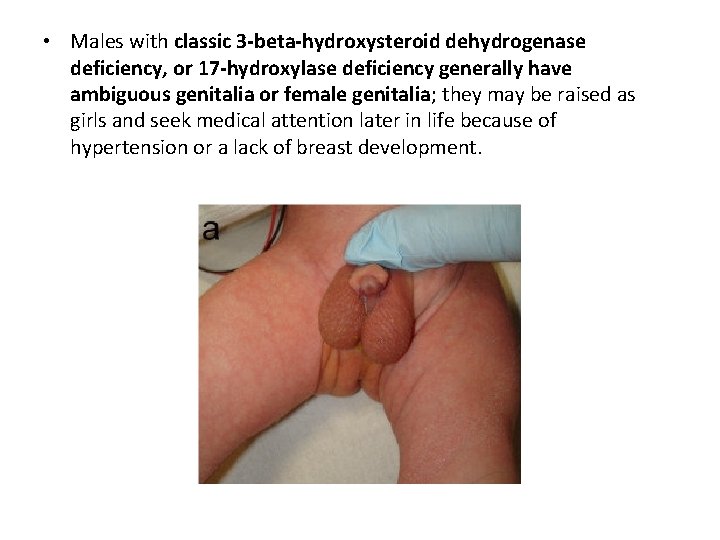
• Males with classic 3 -beta-hydroxysteroid dehydrogenase deficiency, or 17 -hydroxylase deficiency generally have ambiguous genitalia or female genitalia; they may be raised as girls and seek medical attention later in life because of hypertension or a lack of breast development.
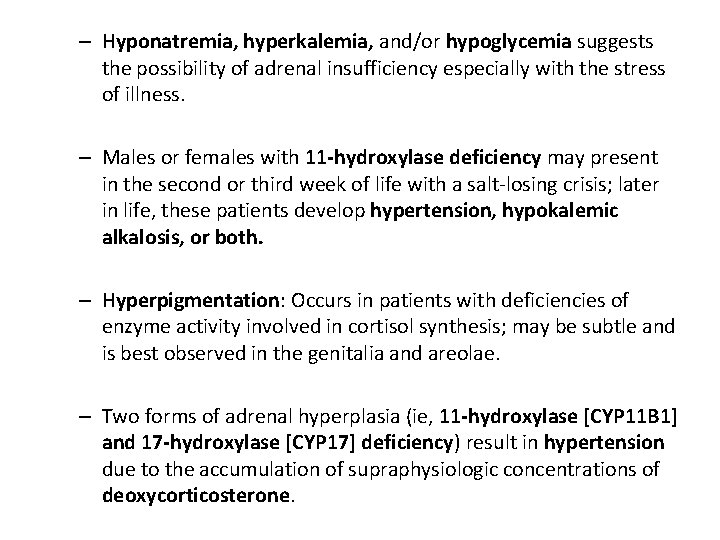
– Hyponatremia, hyperkalemia, and/or hypoglycemia suggests the possibility of adrenal insufficiency especially with the stress of illness. – Males or females with 11 -hydroxylase deficiency may present in the second or third week of life with a salt-losing crisis; later in life, these patients develop hypertension, hypokalemic alkalosis, or both. – Hyperpigmentation: Occurs in patients with deficiencies of enzyme activity involved in cortisol synthesis; may be subtle and is best observed in the genitalia and areolae. – Two forms of adrenal hyperplasia (ie, 11 -hydroxylase [CYP 11 B 1] and 17 -hydroxylase [CYP 17] deficiency) result in hypertension due to the accumulation of supraphysiologic concentrations of deoxycorticosterone.

CAH Types – Salt-wasting forms of CAH: • Low serum aldosterone concentrations, hyponatremia, hyperkalemia, and elevated plasma renin activity (PRA), indicating hypovolemia – Hypertensive forms of adrenal hyperplasia: • (i. e. , 11 -beta-hydroxylase deficiency and 17 -alphahydroxylase deficiency) are associated with suppressed PRA and, often, hypokalemia
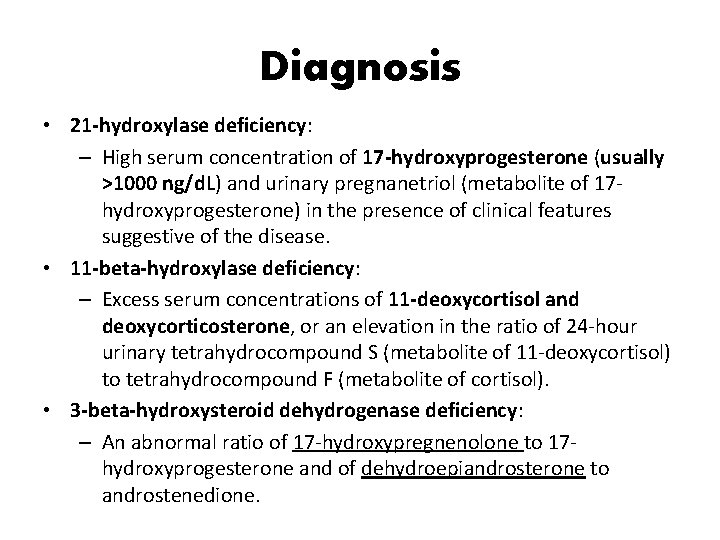
Diagnosis • 21 -hydroxylase deficiency: – High serum concentration of 17 -hydroxyprogesterone (usually >1000 ng/d. L) and urinary pregnanetriol (metabolite of 17 hydroxyprogesterone) in the presence of clinical features suggestive of the disease. • 11 -beta-hydroxylase deficiency: – Excess serum concentrations of 11 -deoxycortisol and deoxycorticosterone, or an elevation in the ratio of 24 -hour urinary tetrahydrocompound S (metabolite of 11 -deoxycortisol) to tetrahydrocompound F (metabolite of cortisol). • 3 -beta-hydroxysteroid dehydrogenase deficiency: – An abnormal ratio of 17 -hydroxypregnenolone to 17 hydroxyprogesterone and of dehydroepiandrosterone to androstenedione.
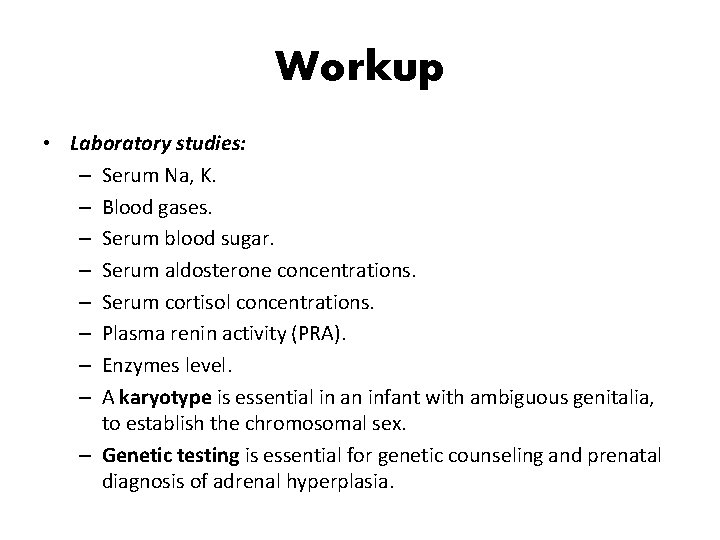
Workup • Laboratory studies: – Serum Na, K. – Blood gases. – Serum blood sugar. – Serum aldosterone concentrations. – Serum cortisol concentrations. – Plasma renin activity (PRA). – Enzymes level. – A karyotype is essential in an infant with ambiguous genitalia, to establish the chromosomal sex. – Genetic testing is essential for genetic counseling and prenatal diagnosis of adrenal hyperplasia.
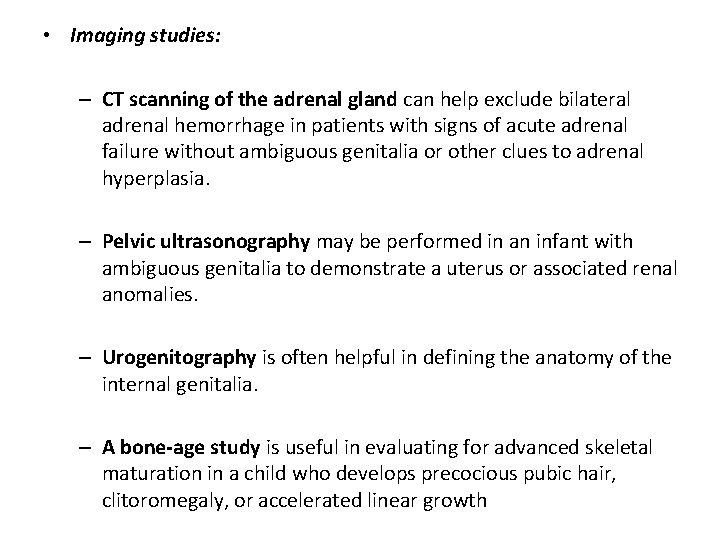
• Imaging studies: – CT scanning of the adrenal gland can help exclude bilateral adrenal hemorrhage in patients with signs of acute adrenal failure without ambiguous genitalia or other clues to adrenal hyperplasia. – Pelvic ultrasonography may be performed in an infant with ambiguous genitalia to demonstrate a uterus or associated renal anomalies. – Urogenitography is often helpful in defining the anatomy of the internal genitalia. – A bone-age study is useful in evaluating for advanced skeletal maturation in a child who develops precocious pubic hair, clitoromegaly, or accelerated linear growth
Management • Newborns with ambiguous genitalia should be closely observed for symptoms and signs of salt wasting while a diagnosis is being established. • Clinical clues include abnormal weight loss or lack of expected weight gain. Electrolyte abnormalities generally take from a few days to 3 weeks to appear, but in mild forms of salt-wasting adrenal hyperplasia, salt wasting may not become apparent until an illness stresses the child.
• Short-term medical therapy: – Patients with dehydration, hyponatremia, or hyperkalemia should receive an IV bolus of isotonic sodium chloride solution (20 m. L/kg) over the first hour, as needed, this may be repeated if the blood pressure remains low. This is followed by a continuous IV infusion. – If the patient is hypoglycemic, 2 -4 ml of dextrose 10% in water (D 10 W) should be administered to increase the blood sugar, followed by a continuous infusion of dextrose 5% in water (D 5 W). If the patient is not hypoglycemic, D 5 W should be administered to prevent hypoglycemia. – Patients with 11 -hydroxylase and 17 -alpha-hydroxylase deficiency may be hypokalemic and may require potassium. – In patients who are sick and who have signs of adrenal insufficiency, therapy should consist of stress dosages of hydrocortisone (50 -100 mg/m 2 or 1 -2 mg/kg IV administered as an initial dose), followed by 50 -100 mg/m 2/d IV divided every 6 hours.
• Long-term medical therapy: • The goal of therapy for adrenal hyperplasia is the replacement of glucocorticoid (Hydrocortisone) and mineralocorticoid (Fludrocortisone) to: – Prevent the accumulation of precursor hormones that cause virilization. – Prevent excessive concentrations of ACTH from stimulating the adrenal glands to produce abnormal concentrations of adrenal androgens that result in further virilization. – Prevent symptoms of adrenal insufficiency while still allowing the child to grow at a normal rate. • Surgical care: – Infants with ambiguous genitalia require surgical evaluation and, if needed, plans for corrective surgery.
Further Outpatient Care & Complications • Closely monitor patients with adrenal hyperplasia for adequacy of dosing of glucocorticoids, mineralocorticoids, or both. – Too little glucocorticoid results in symptoms of adrenal insufficiency (eg, anorexia, nausea, vomiting, abdominal pain, asthenia) and progressive virilization and advancement of skeletal maturation in virilizing forms. – Too much glucocorticoid results in excess weight gain, Cushingoid features, hypertension, hyperglycemia, cataracts, and growth failure. – excess mineralocorticoid administration include hypertension and hypokalemia
• Growth failure is one of the more sensitive indicators of excess exposure to glucocorticoids. Short stature in adulthood is frequently the outcome in virilizing forms of adrenal hyperplasia because of the effect of uncontrolled adrenal androgens on skeletal maturation or the effects of excess glucocorticoid administration on growth. • Some patients develop precocious puberty, perhaps secondary to the advanced growth and skeletal maturation that occurs with androgen exposure. This may be treated with Gn. RH analogue therapy.
Prevention • Prenatal testing using amniocentesis or chorionic villus sampling has been successful in diagnosing congenital adrenal hyperplasia secondary to 21 -hydroxylase deficiency and 11 -beta-hydroxylase deficiency if a sibling had a known mutation or deletion in a previous pregnancy. • Prenatal treatment of congenital adrenal hyperplasia appears to be somewhat successful in preventing the virilization due to 21 -hydroxylase deficiency in a female fetus. The mother is treated with 20 mcg/kg/d of dexamethasone divided into 3 doses as soon as the pregnancy is recognized to suppress fetal ACTH secretion and to prevent the fetal adrenal gland from overproducing adrenal androgens.

THANK YOU
- Slides: 25