
Congenital Adrenal Hyperplasia Shedding Light on an Ambiguous
Congenital Adrenal Hyperplasia: Shedding Light on an Ambiguous Subject Grand Rounds: September 25, 2015 Stephanie Gibson, MD PGY-3 Lisa Knight, MD Assistant Professor of Clinical Pediatrics USC Pediatric Endocrinology

The most common form of Congenital Adrenal Hyperplasia (CAH) results from a deficiency of which of the following? 1. 2. 3. 4. 11 -β-hydroxylase 17 -OH progesterone 17 -α- hydroxylase 21 -hydroxylase

If both parents have classical CAH, the risk of having a female baby who also has CAH is: 1. 2. 3. 4. 12. 5% (1 in 8) 25% (1 in 4) 50% (1 in 2) None of the above

In the most common form of CAH: 1. A genetic male may develop ovaries. 2. Benign tumors may develop in the testes and obliterate testicular function. 3. A genetic male is born with both fallopian tubes and a prostate and seminal vesicles. 4. A genetic male is likely to be identified as female at birth.

Females with CAH have a higher incidence of which of the following when compared to the general population? 1. Adult height that is 1 -2 SD below expected mid-parental target height. 2. Infertility 3. Homosexuality 4. Decreased sexual satisfaction 5. Only A and B. 6. All of the Above
Dexamethasone is ______ times more potent than hydrocortisone. 1. 2 2. 5 3. 10 4. 15 5. 20

Disclosures • Neither myself nor Dr. Knight have any financial relationships to disclose.
Goals • Review normal genitourinary embryology • Discuss normal adrenal gland physiology and how it is altered in various forms of CAH • Evaluate newborn screens, clinical and laboratory findings consistent with CAH • Discuss prenatal, acute and chronic management of patients with CAH
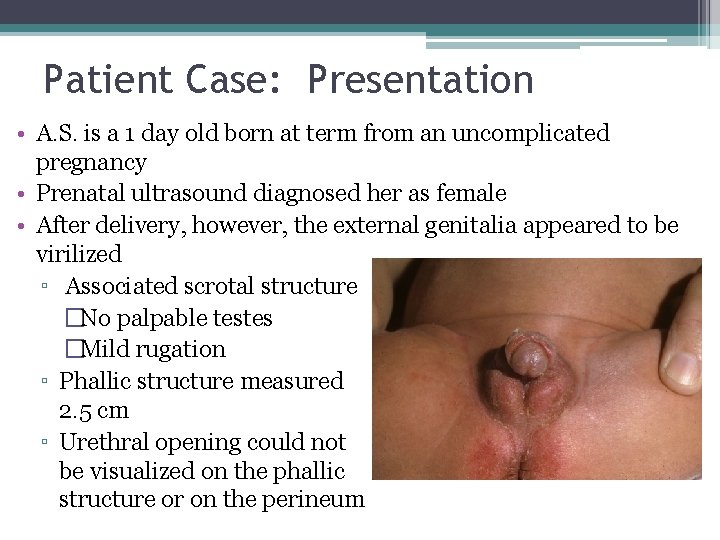
Patient Case: Presentation • A. S. is a 1 day old born at term from an uncomplicated pregnancy • Prenatal ultrasound diagnosed her as female • After delivery, however, the external genitalia appeared to be virilized ▫ Associated scrotal structure �No palpable testes �Mild rugation ▫ Phallic structure measured 2. 5 cm ▫ Urethral opening could not be visualized on the phallic structure or on the perineum
Normal Gonadal/Adrenal Development and Physiology
Sex Differentiation • Presence of Y chromosome induces differentiation of bipotential gonads to testes at 6 -8 wks gestation. • Remaining internal and external genitalia are also bipotential. • Hormonal regulation ▫ Dihydrotestosterone (DHT) ▫ Testosterone ▫ Anti-Mϋllerian hormone (AMH)
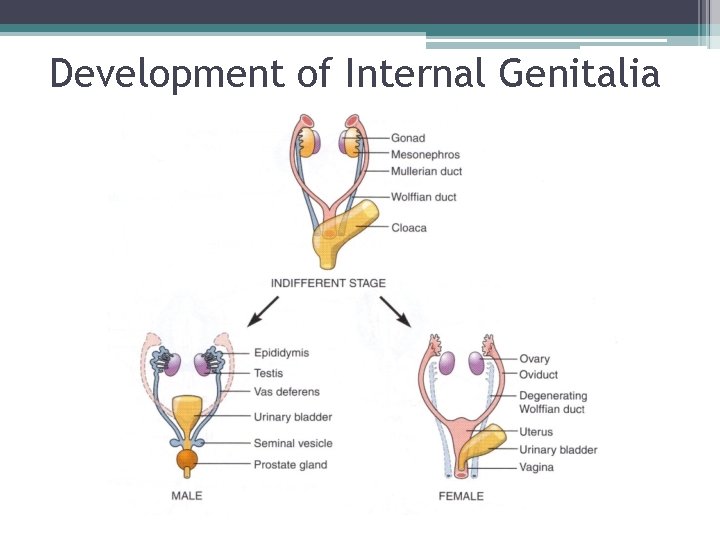
Development of Internal Genitalia
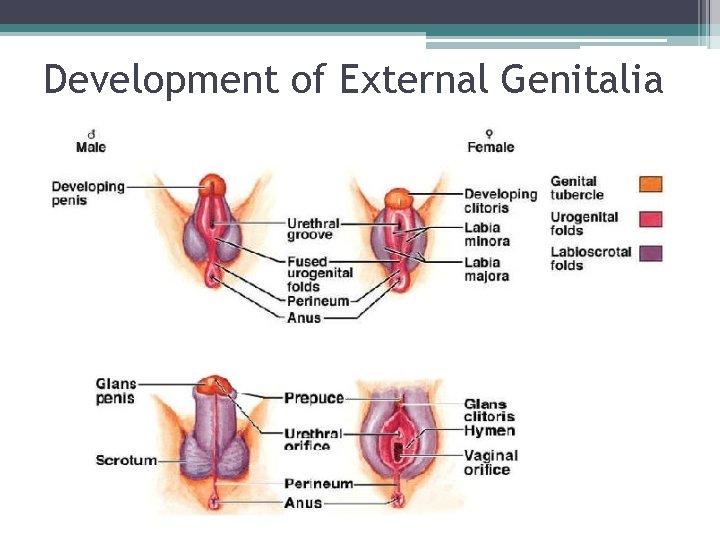
Development of External Genitalia
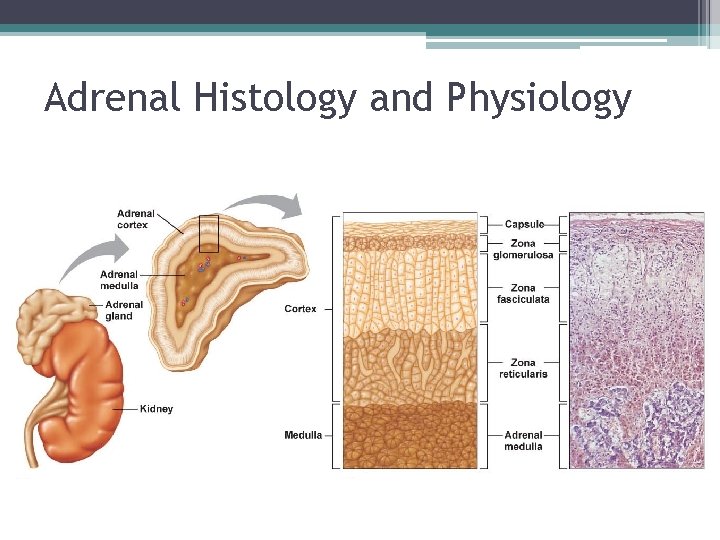
Adrenal Histology and Physiology
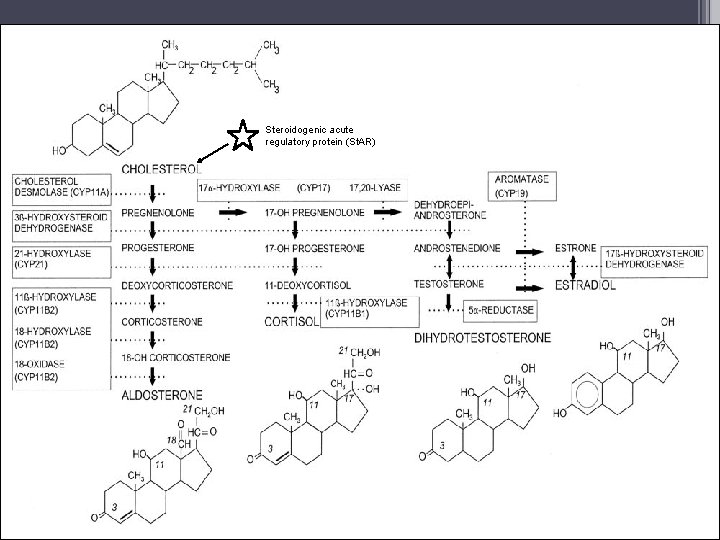
Steroidogenic acute regulatory protein (St. AR)
Pathophysiology of Congenital Adrenal Hyperplasia
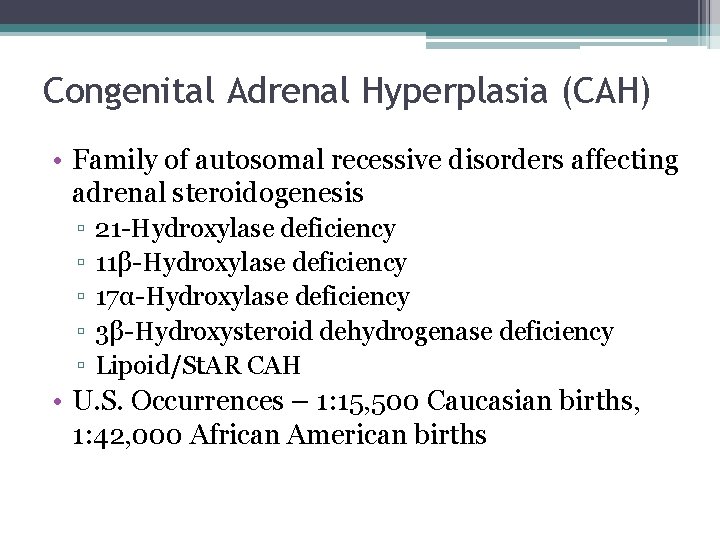
Congenital Adrenal Hyperplasia (CAH) • Family of autosomal recessive disorders affecting adrenal steroidogenesis ▫ ▫ ▫ 21 -Hydroxylase deficiency 11β-Hydroxylase deficiency 17α-Hydroxylase deficiency 3β-Hydroxysteroid dehydrogenase deficiency Lipoid/St. AR CAH • U. S. Occurrences – 1: 15, 500 Caucasian births, 1: 42, 000 African American births

Hypothalamic–Pituitary-Adrenal (HPA) Axis Normal HPA Feedback Abnormal HPA Feedback (CAH) Hypothalamus CRH Anterior Pituitary ACTH Adrenal Cortex Cortisol
21 -Hydroxylase Deficiency

21 -Hydroxylase Deficiency CRH, ACTH 21 -Hydroxylase

21 -Hydroxylase Deficiency • >90% of CAH cases • CYP 21 gene on chromosome 6 Classic Phenotype Non-classic Phenotype Severe form Mild/late-onset form 1: 15, 000 live births 1: 1, 000 live births Salt-losing (67%) or Simple virilizing (33%)

Classic 21 -Hydroxylase Deficiency Exam Findings Females • Enlarged clitoris • Partly-fused, rugose labia majora • Common urogenital sinus in place of urethra and vagina • Salt-losing present soon after birth, given ambigious genitalia • Normal internal female organs Males • Subtle hyperpigmentation • Possible penile enlargement • Salt-losing presents DOL 7 -14 with emesis, weight loss, lethargy, dehydration, shock, hyponatremia, hyperkalemia • Non-salt-losing present with early virilization at 2 -4 yrs • Normal male internal organs, but can have small testes if untreated.
Salt-Wasting 21 -Hydroxylase Deficiency • 67% patients with classic 21 -hydroxylase deficiency • Secondary to aldosterone deficiency ▫ Associated lab abnormalities: hyponatremia, hyperkalemia • Early signs: frequent feedings • Present with salt-wasting and acute adrenal crisis within weeks after birth
Signs of Acute Adrenal Crisis • Decreased activity/fatigue • Altered mental status/ unresponsiveness • Poor feeding/weak suck • Dry mucous membranes • Hyperpigmentation • Abdominal pain • Vomiting • Hyponatremia • Hyperkalemia • Hypoglycemia • Metabolic acidosis • Hypothermia • Hypotension • Dehydration • Lack of weight gain Initial Laboratory Work-up • POC Glucose • CMP (need non-hemolyzed sample) • ABG • Cortisol level • ACTH • 17 -hydroxyprogesterone level • Pelvic/scrotal ultrasound • Karyotype
Non-Classic 21 -Hydroxylase Deficiency Exam Findings • Present in late childhood or early adulthood • Hyperandrogenism manifestations ▫ Premature adrenarche ▫ Advanced bone age, short adult stature ▫ Female hirsutism (60%) or male-pattern baldness ▫ Oligomenorrhea/Amenorrhea (54%) ▫ Polycystic ovaries ▫ Insulin resistance ▫ Acne (33%) • 5 -10% children with premature adrenarche have an underlying diagnosis of non-classic CAH

Other Forms of CAH
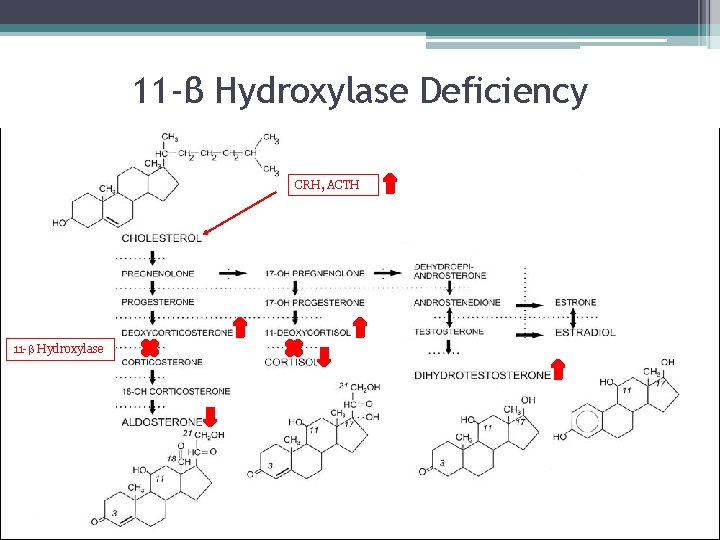
11 -β Hydroxylase Deficiency CRH, ACTH 11 - Hydroxylase
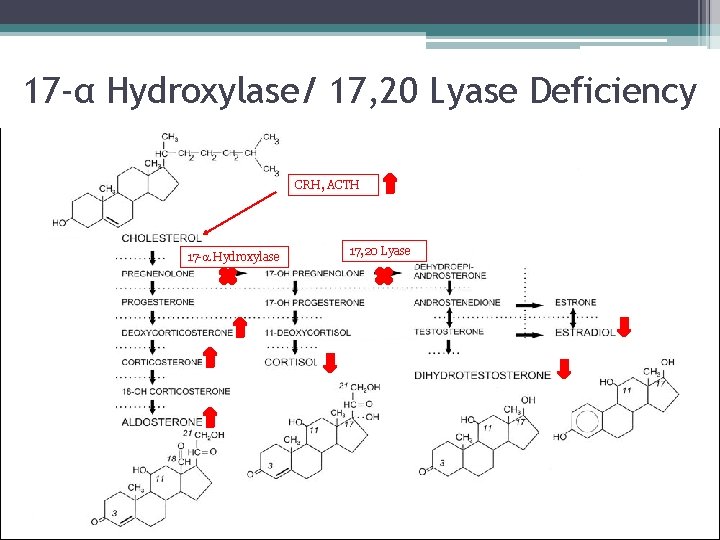
17 -α Hydroxylase/ 17, 20 Lyase Deficiency CRH, ACTH 17 - Hydroxylase 17, 20 Lyase
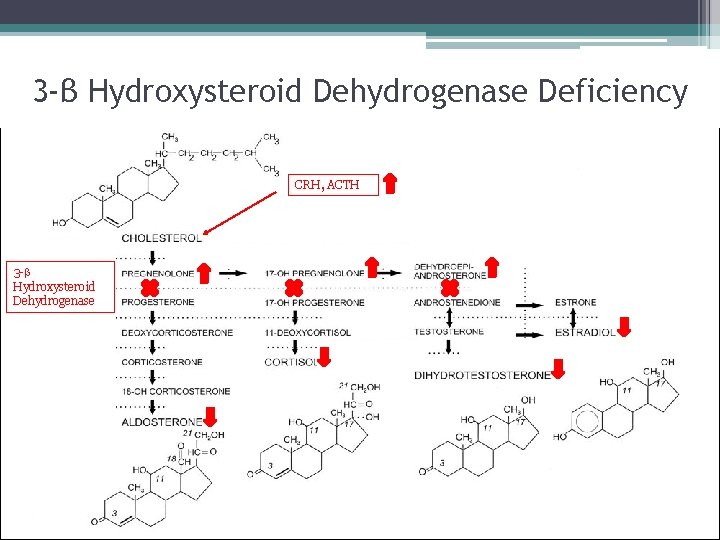
3 -β Hydroxysteroid Dehydrogenase Deficiency CRH, ACTH 3 - Hydroxysteroid Dehydrogenase
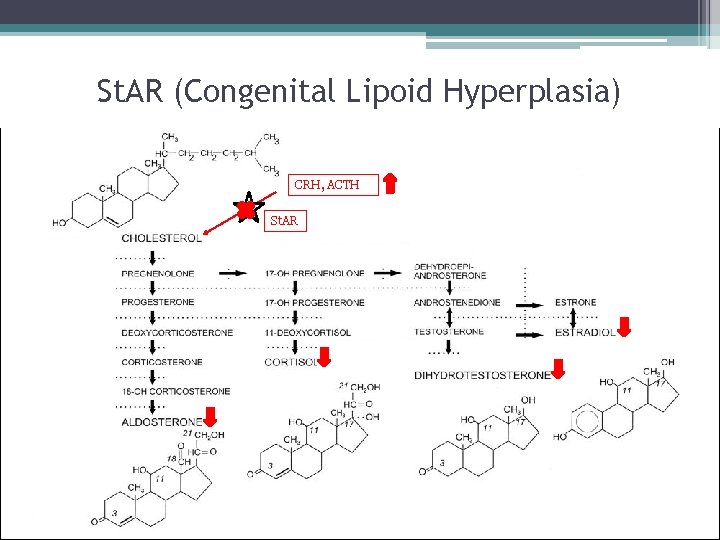
St. AR (Congenital Lipoid Hyperplasia) CRH, ACTH St. AR

Diagnosing CAH
Prenatal Diagnosis/Treatment • Dexamethasone <7 -8 wks gestation ▫ 70% of treated female fetuses are born with normal or only minimally virilized genitalia ▫ Still experimental treatment • Chromosome analysis ▫ ▫ Chorionic villous sampling (CVS) at 10 -12 wks Amniocentesis at 14 -18 wks If male, discontinue steroids. If female, pursue additional molecular testing. �If affected, continue dexamethasone to term. ▫ If both parents have classic CAH, the risk of having a daughter with CAH is 1: 8.

Post-partum Diagnosis of 21 -OH CAH 17 -OHP Screen Obtained Normal Elevated 17 -OHP Compare to normals for birth weight and EGA Borderline Elevated Repeat 17 -OHP Physical exam ACTH stim test Endocrine referral DNA analysis

• Newborn screens ▫ High 17 -hydroxyprogesterone (17 -OHP) level >242 nmol/L on day of life 3 ▫ Increased false-positive risk with premature infants �Need for age-adjusted levels �Prenatal treatment with glucocorticoids • Corticotropin stimulation test ▫ 17 -OHP > 45 nmol/L (1400 ng/d. L) is diagnostic. • Plasma renin activity (PRA) to aldosterone ratio • Evaluate ambiguous genitalia with karyotype and pelvic/abdominal ultrasound
Patient Case (cont. ): Evaluation • DOL 1 Electrolytes: ▫ Hypoglycemia that responded easily to IV dextrose (GIR between 6 -8 mg/kg/min) ▫ Normal Na and K • Pelvic U/S: No testes present in scrotum, inguinal canals or abdomen • Pelvic MRI: Uterus and ovaries present • The following labwork was sent: ▫ ▫ 17 -OH progesterone ACTH Karyotype FISH for SRY region

Medical Management
Medicinal and Laboratory Management • Supplemental glucocorticoids ▫ ▫ Hydrocortisone 12 -20 mg/m 2 per day divided TID Dexamethasone Qday Continuous subcutaneous therapy? Stress-dose when ill or undergoing surgery • Supplemental mineralocorticoids ▫ Fludrocortisone 0. 1 -0. 2 mg, up to 0. 4 mg, per day ▫ Sodium chloride 1 -2 g (1 g = 17 m. Eq sodium) • Regular labs ▫ 17 -OHP, Androstenedione • Watch for Cushing’s syndrome • Annual bone age
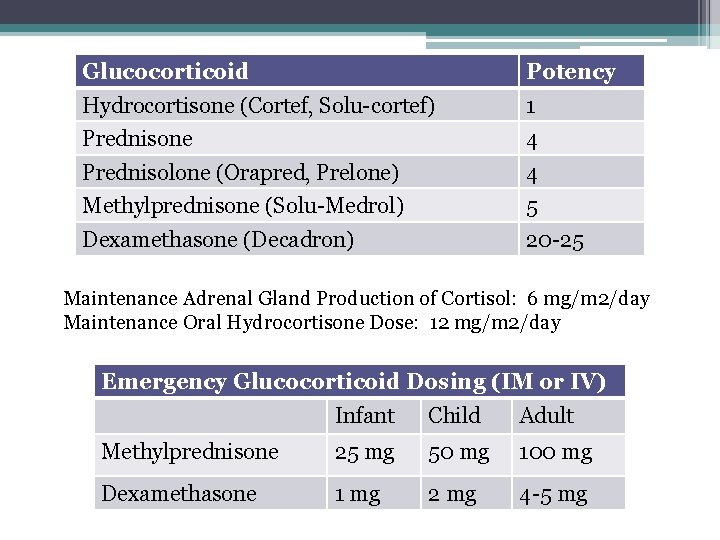
Glucocorticoid Potency Hydrocortisone (Cortef, Solu-cortef) 1 Prednisone 4 Prednisolone (Orapred, Prelone) 4 Methylprednisone (Solu-Medrol) 5 Dexamethasone (Decadron) 20 -25 Maintenance Adrenal Gland Production of Cortisol: 6 mg/m 2/day Maintenance Oral Hydrocortisone Dose: 12 mg/m 2/day Emergency Glucocorticoid Dosing (IM or IV) Infant Child Adult Methylprednisone 25 mg 50 mg 100 mg Dexamethasone 1 mg 2 mg 4 -5 mg
Patient Case (cont. ): Diagnosis and Treatment • Presumed dx was classical CAH • Medication management: ▫ Hydrocortisone 1 mg PO q 8 hrs (~ 15 mg/m 2/day) ▫ Fludrocortisone 0. 1 mg qday
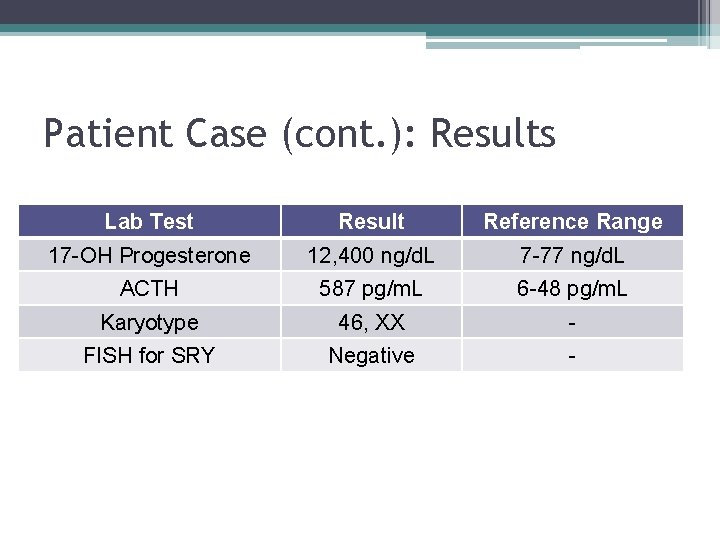
Patient Case (cont. ): Results Lab Test Result Reference Range 17 -OH Progesterone 12, 400 ng/d. L 7 -77 ng/d. L ACTH 587 pg/m. L 6 -48 pg/m. L Karyotype 46, XX - FISH for SRY Negative -
Long-term Sequelae
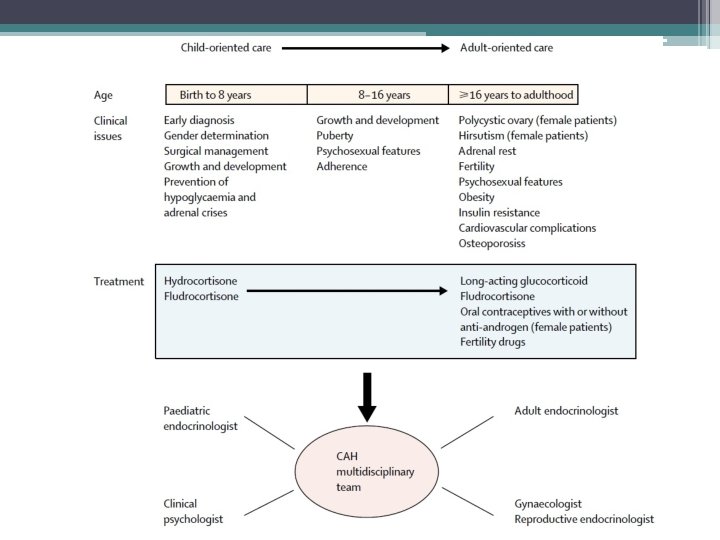
Linear Growth • Children with classic CAH have accelerated linear growth, but adult height is 1 -2 standard deviations below mean target height. • Recommend use of lowest effective treatment dose to maintain hormone levels, vary with age. • Non-classic CAH adult height consistent with mean parental height if appropriately treated.
Genitalia Reconstructive Surgery • Decision of genital surgery needs to involve multidisciplinary approach. • Goal: is to remove redundant erectile tissue, preserve the sexually sensitive glans clitoris, and provide a normal vaginal orifice that functions adequately for menstruation, intercourse, and delivery. • Procedures: ▫ Clitoroplasty with vaginoplasty in the neonate less common. ▫ Partial clitoral reduction in infancy with vaginoplasty reserved for late adolescence. ▫ In general, procedures have improved, but overall outcome is not optimal. ▫ Early surgery has been correlated with a higher risk of sexual disatisfaction.
Reproductive Function in Females • Delayed spontaneous menarche compared to peers, atrophic breast tissue • Poorly controlled females ▫ ▫ ▫ Hirsutism Oligomenorrhea, Amenorrhea Menorrhagia Absence of thelarche, Precocious adrenarche Cystic acne Cystic ovaries • Fertility and offspring concerns ▫ Some evidence of infertility
Reproductive Function in Males • Small testicular size • Gonadal function less impaired in males ▫ Oligospermia • Testicular adrenal rests
Psychosexual Concerns • Females with CAH (especially salt-wasters) ▫ ▫ Male-typical play Physical aggression Low-interest in infants/maternal nurturing Most raised as female express female gender identity, gender role, and heterosexual orientation �Increased rate of homosexuality compared to peers • Males with CAH ▫ No evidence of atypical gender behavior reported
Developmental Concerns • Overall, IQ is similar among patients with CAH and their matched controls. • Some data show that poorly controlled saltwasting children with CAH are prone to learning disabilities.
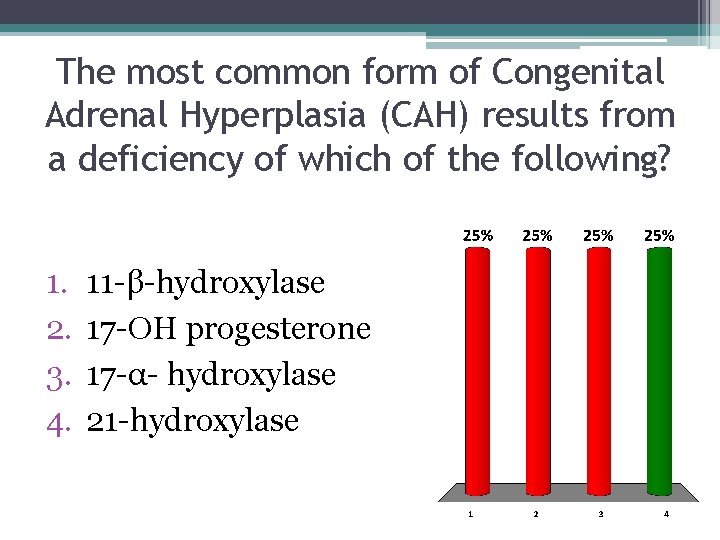
The most common form of Congenital Adrenal Hyperplasia (CAH) results from a deficiency of which of the following? 1. 2. 3. 4. 11 -β-hydroxylase 17 -OH progesterone 17 -α- hydroxylase 21 -hydroxylase
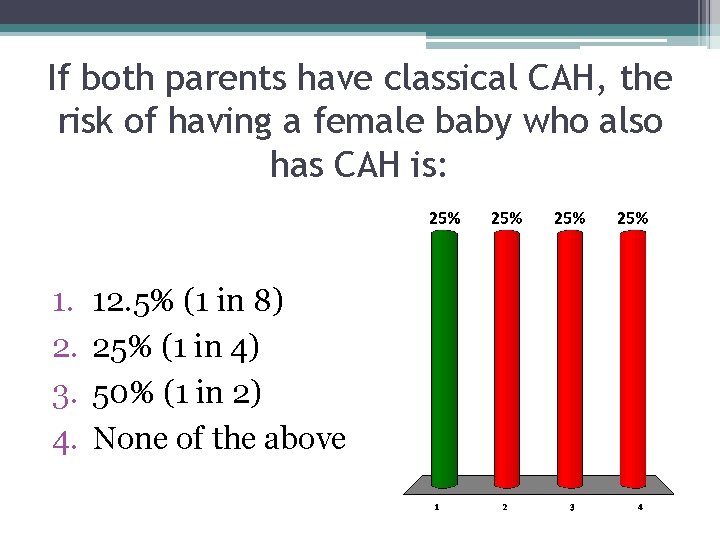
If both parents have classical CAH, the risk of having a female baby who also has CAH is: 1. 2. 3. 4. 12. 5% (1 in 8) 25% (1 in 4) 50% (1 in 2) None of the above
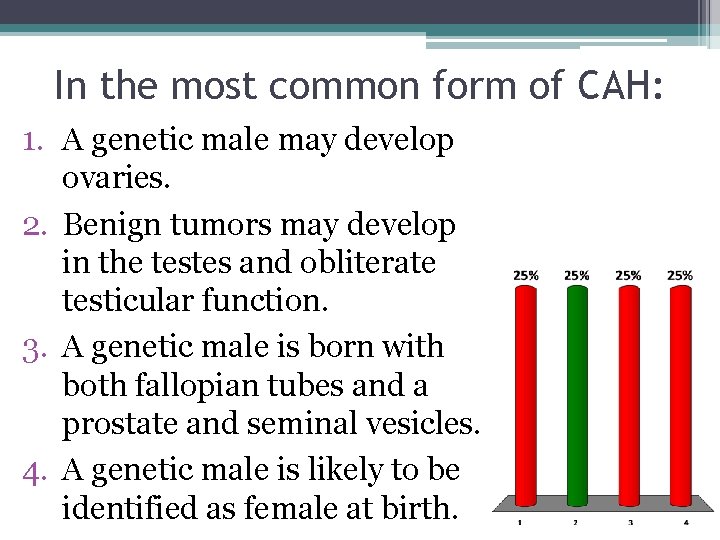
In the most common form of CAH: 1. A genetic male may develop ovaries. 2. Benign tumors may develop in the testes and obliterate testicular function. 3. A genetic male is born with both fallopian tubes and a prostate and seminal vesicles. 4. A genetic male is likely to be identified as female at birth.
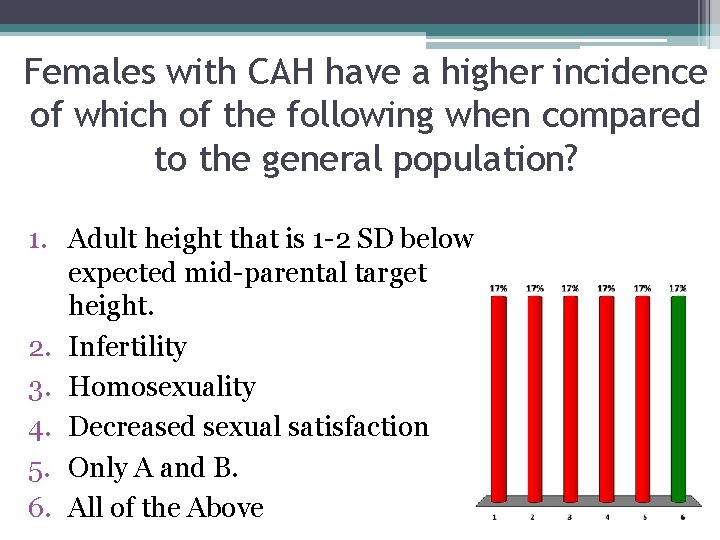
Females with CAH have a higher incidence of which of the following when compared to the general population? 1. Adult height that is 1 -2 SD below expected mid-parental target height. 2. Infertility 3. Homosexuality 4. Decreased sexual satisfaction 5. Only A and B. 6. All of the Above
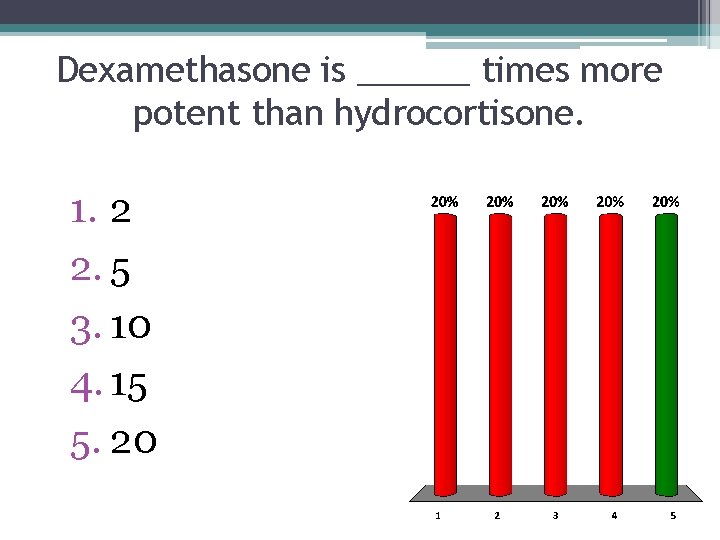
Dexamethasone is ______ times more potent than hydrocortisone. 1. 2 2. 5 3. 10 4. 15 5. 20
References 1. 2. 3. 4. 5. 6. 7. 8. 9. 10. 11. Antal, Z, Zhou, P. Congenital Adrenal Hyperplasia: Diagnosis, Evaluation, and Management. Pediatrics in Review. 2009; 30(7): e 49 -e 56. Bomberg, E, et al. The Relation of Peripubertal and Pubertal Growth to Final Adult Height in Children with Classic Congenital Adrenal Hyperplasia. The Journal of Pediatrics. 2015; 166(3): 743 -749. Creighton, S, et al. Objective costmetic and anatomical outcomes at adolescence of feminising surgery for ambiguous genitalia done in childhood. The Lancet. 2001; 358: 124125. Gatelais, F, et al. Effect of Single and Multiple Courses of Prenatal Corticosteroids on 17 Hydroxyprogesterone Levels: Implication for Neonatal Screening of Congenital Adrenal Hyperplasia. Pediatric Research. 2004; 56(5): 701 -705. Heino, F, et al. Sexual Orientation in Women with Classical or Non-classical Congenital Adrenal Hyperplasia as a Function of Degree of Prenatal Androgen Excess. Arch. Sex Behav. 2008; 37: 85 -99. Hindmarsh, P. The child with difficulty to control Congenital Adrenal Hyperplasia: is there a place for continuous subcutaneous hydrocortisone therapy. Clinical Endocrinology. 2014; 81: 15 -18. Lifshitz, E. (Ed. ). (2007). Pediatric Endocrinology, Fifth Edition (Vol 2: Growth, Adrenal, Sexual, Thyroid, Calcium, and Fluid Balance Disorders. ) New York, NY: Informa Healthcare. Merke, D, Bornstein, S. Congenital Adrenal Hyperplasia. Lancet. 2005; 365: 2125 -36. Michala, L, et al. Practice changes in childhood surgery for ambiguous genitalia? Journal of Pediatric Urology. 2014; 10: 934 -940. Sarafoglou, K. (Ed. ). (2009). Pediatric Endocrinology and Inborn Errors of Metabolism. New York, NY: Mc. Graw Hill Medical. White, P, Speiser, P. Long-term consequences of childhood-onset congenital adrenal hyperplasia. Best Practice & Research Clinical Endocrinology and Metabolism. 2002; 16(2): 273 -288.
Questions?
- Slides: 55