
Confucian Teachings Confucian Overview Confucius is a Romanization
- Slides: 31
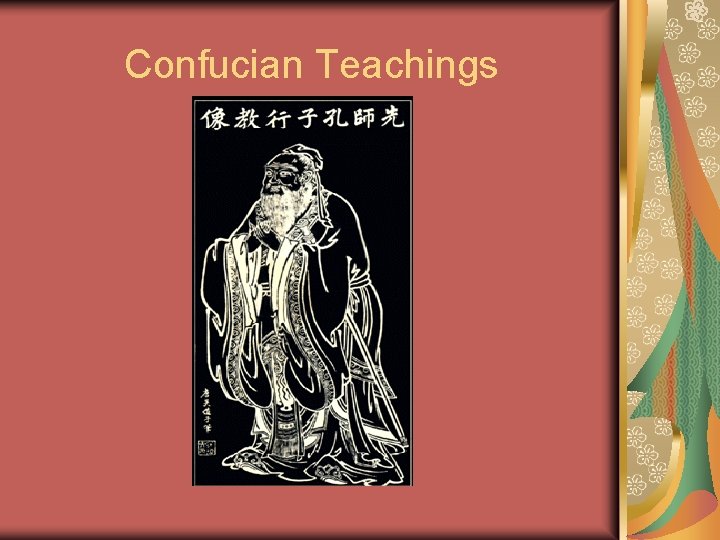
Confucian Teachings
Confucian Overview “Confucius” is a Romanization of a Chinese name. Kong Fu Tzi(u) or Kung Fu Tzi(u) Born @ 551 B. C. E. Called his teachings juchiao (“the way of the scholars”) Coexisted with Taoism and Buddhism for thousands of years in China
Confucianism- Taoism Timeline Lao Tzu born between 600 and 300 BCE Han dynasty (206 BCE to 220 CE)early Taoist sects established Inter-related and competing? Confucius born @551 BCE Han dynasty (206 BCE to 220 CE)Confucian classics used for civil service Inter-related and competing?
Confucian Ideas Five key relationships and their “cross-currents” Parent and child Older sibling and younger sibling Husband wife Older friend and younger friend Ruler and subject What are the common elements in these five relationships? Are there any others that could be added? How would this focus compare to that of Taoism?
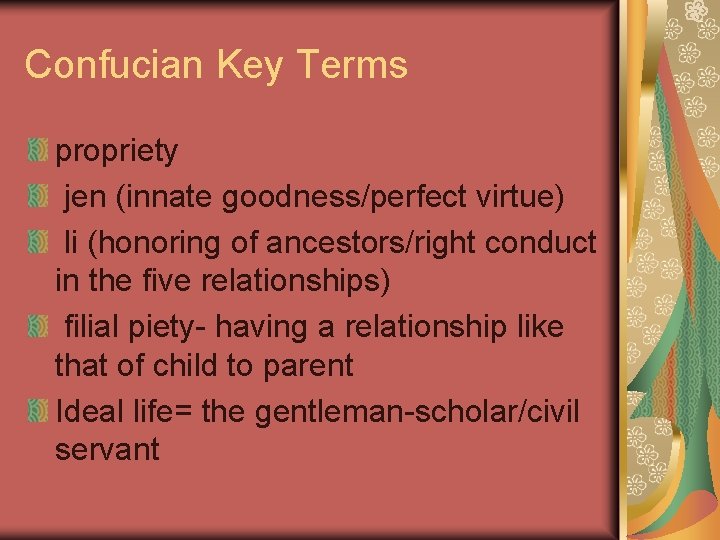
Confucian Key Terms propriety jen (innate goodness/perfect virtue) li (honoring of ancestors/right conduct in the five relationships) filial piety- having a relationship like that of child to parent Ideal life= the gentleman-scholar/civil servant
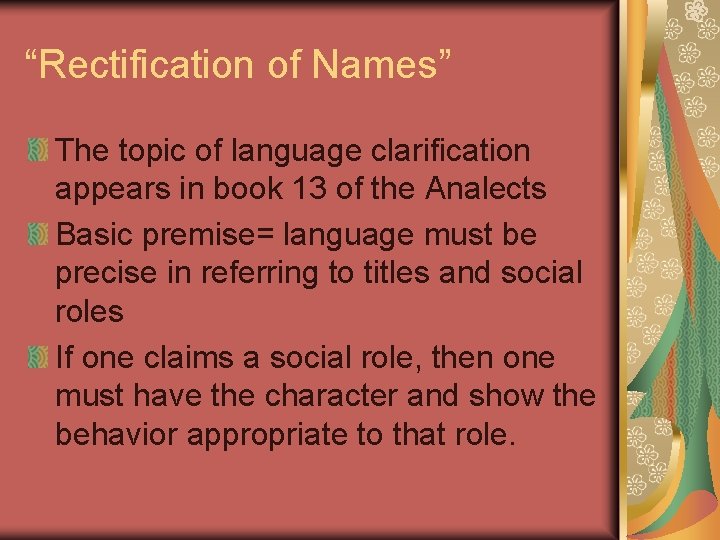
“Rectification of Names” The topic of language clarification appears in book 13 of the Analects Basic premise= language must be precise in referring to titles and social roles If one claims a social role, then one must have the character and show the behavior appropriate to that role.
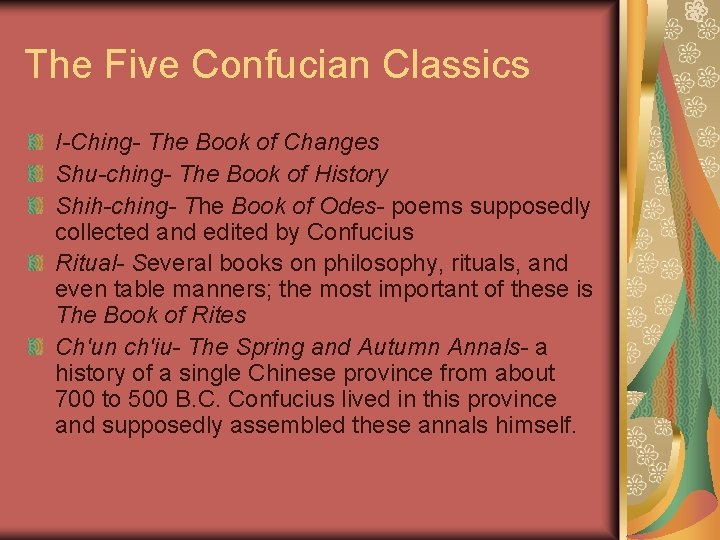
The Five Confucian Classics I-Ching- The Book of Changes Shu-ching- The Book of History Shih-ching- The Book of Odes- poems supposedly collected and edited by Confucius Ritual- Several books on philosophy, rituals, and even table manners; the most important of these is The Book of Rites Ch'un ch'iu- The Spring and Autumn Annals- a history of a single Chinese province from about 700 to 500 B. C. Confucius lived in this province and supposedly assembled these annals himself.
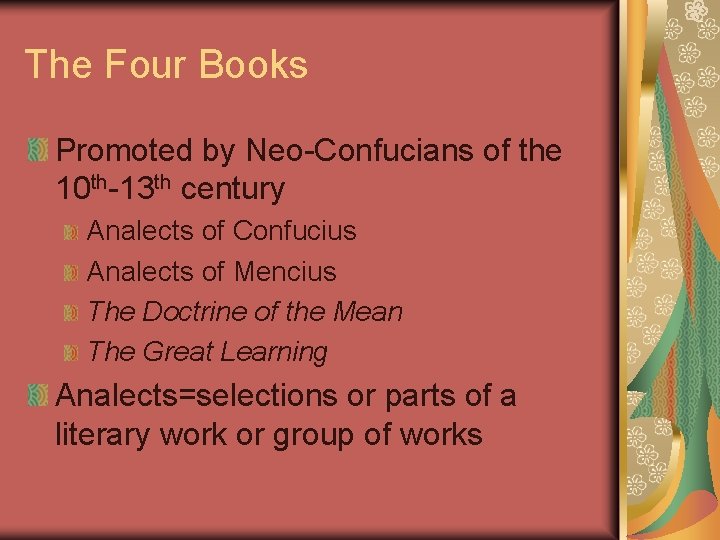
The Four Books Promoted by Neo-Confucians of the 10 th-13 th century Analects of Confucius Analects of Mencius The Doctrine of the Mean The Great Learning Analects=selections or parts of a literary work or group of works
Selections from the Analects What does Confucius say about supernatural or other-worldly subjects (144: 12, 145: 3)? How does he describe the “man of humanity” (146: 2)? What is the most important quality a successful ruler must never lose (145: 5)?
ICW task- Choose ONE of the options below Option One- How would either Confucian or Taoist thinking impact society positively? Could they work together effectively? Option Two- Generally speaking, what kinds of virtues are suggested by Confucius? How do they compare with “traditional” virtues embraced by Western culture?
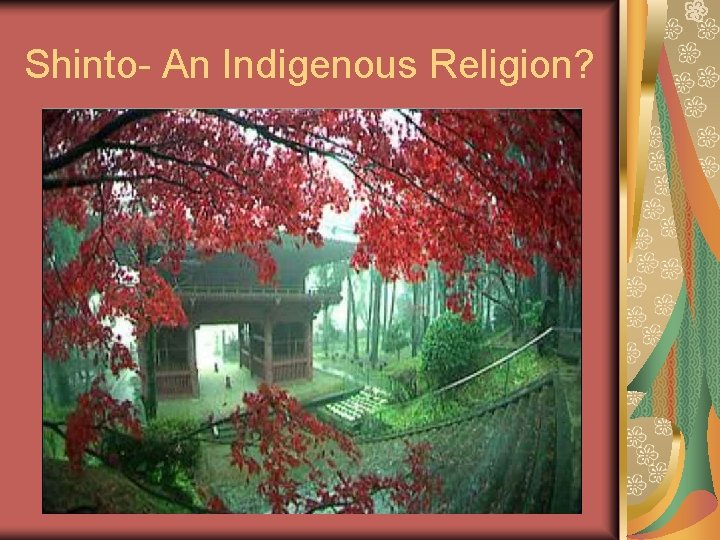
Shinto- An Indigenous Religion?
Definitions What is an indigenous tradition? descendants of original inhabitants of lands now controlled by political systems in which they have little or no control How can we define “original inhabitants”? Are indigenous groups always in flux?
People Versus Traditions Which one can be said to be indigenous? Religions blend and borrow constantly in order to blend with local traditions Buddhism – “kami” from Shinto as incarnations of Buddha Christianity- proximity of Christmas and winter solstice
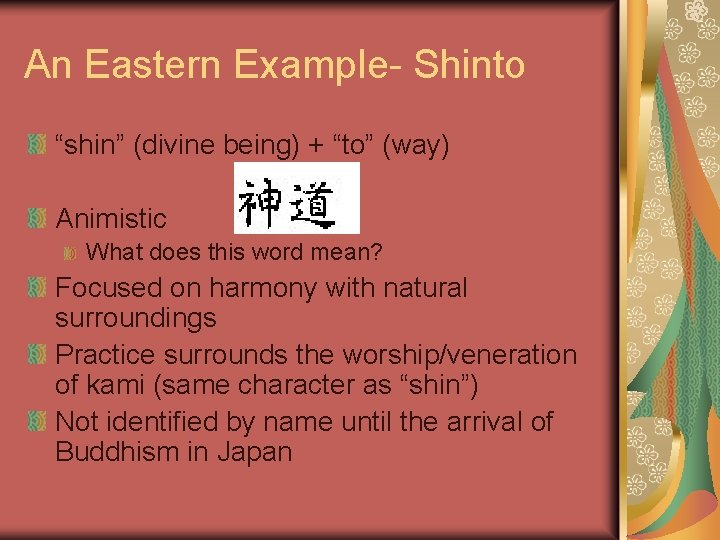
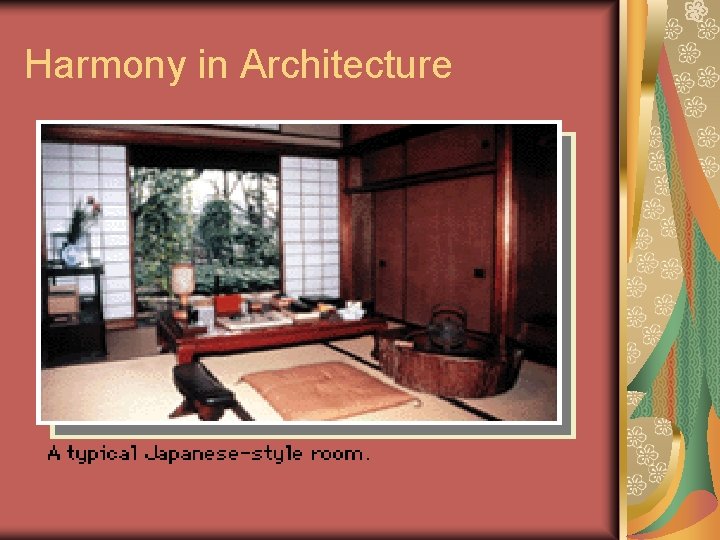
An Eastern Example- Shinto “shin” (divine being) + “to” (way) Animistic What does this word mean? Focused on harmony with natural surroundings Practice surrounds the worship/veneration of kami (same character as “shin”) Not identified by name until the arrival of Buddhism in Japan
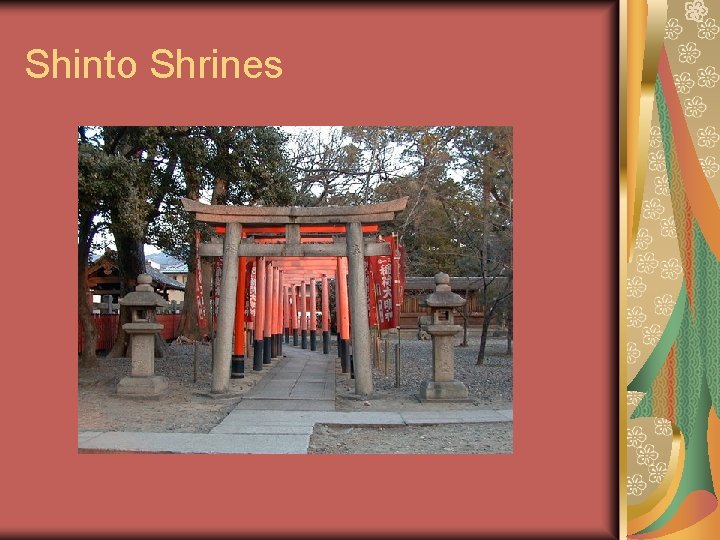
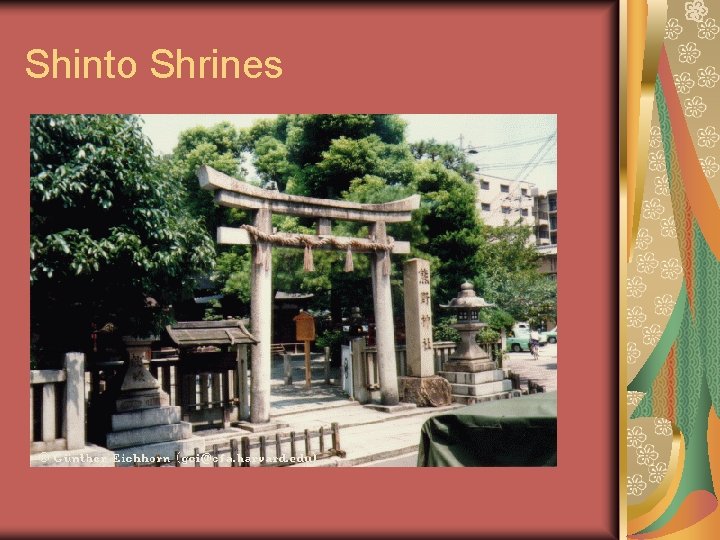
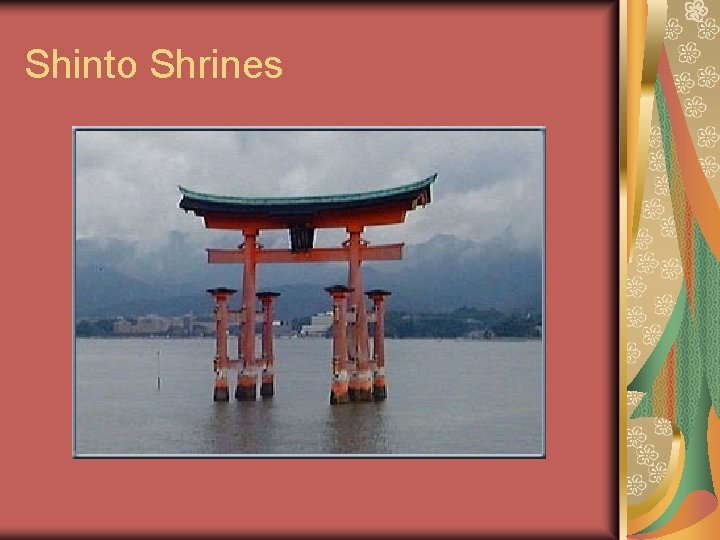
Kami Practices Kami= spirit or divine thing Kamikaze - divine wind Kami are everywhere in natural world Shrines honor kami Groves of trees, streams, bodies of water Enclosed natural space where sacred space begins Torii (tall gate frames) used to delineate space Can also be a public hall/offering hall No images in worship, all is in nature
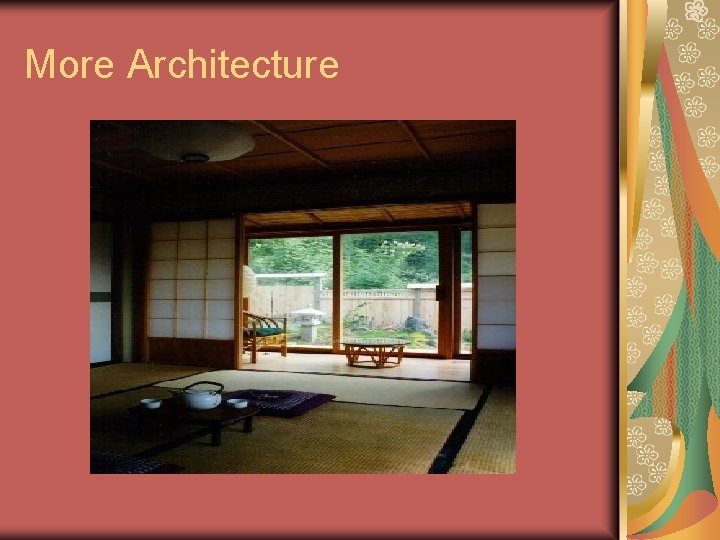
Shinto Concepts Kannagara- “celestial harmony” The purpose of Shinto practice is to bring harmony to our lives through nature Living “according to the natural flow of the universe” Misogi- ritual purification through water, often a waterfall
Other Shinto Concepts O- Harai- an exorcism of bad sprits or a ritual blessing Why is it performed on cars and new buildings? State Shinto- established in the Meiji era Last “traditional” era for Japan If it is state sponsored, how can it be indigenous?
Shinto Shrines
Shinto Shrines
Shinto Shrines
Harmony in Architecture
More Architecture
Modern Interpretations
Shinto Practice in Sports
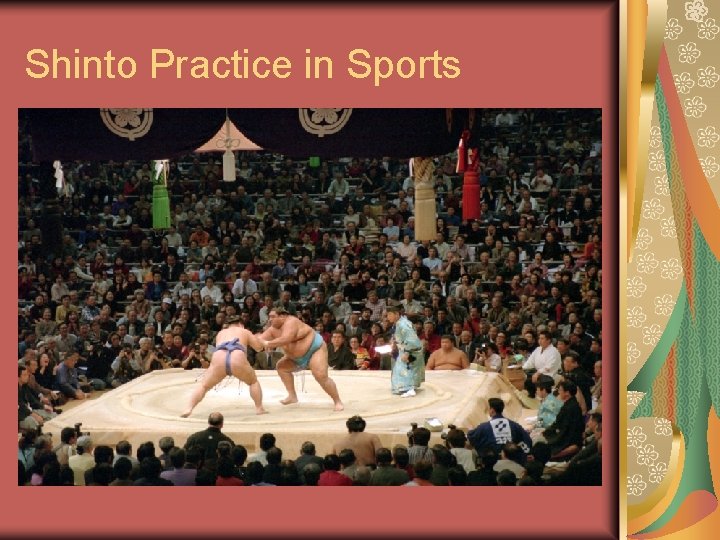
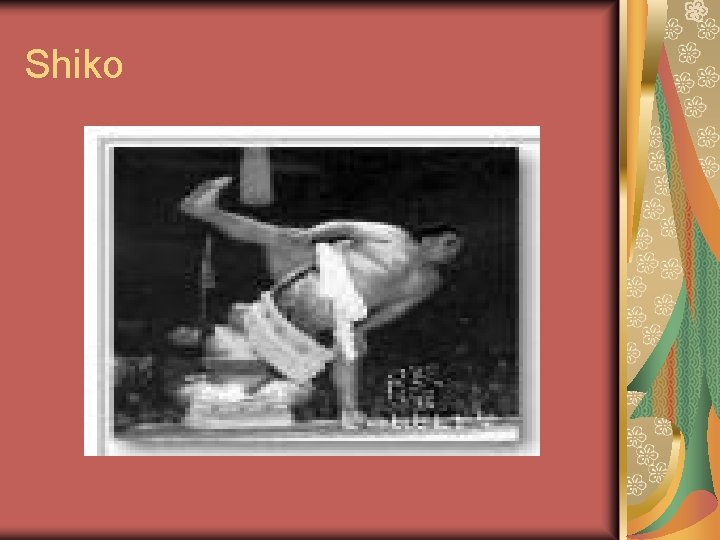
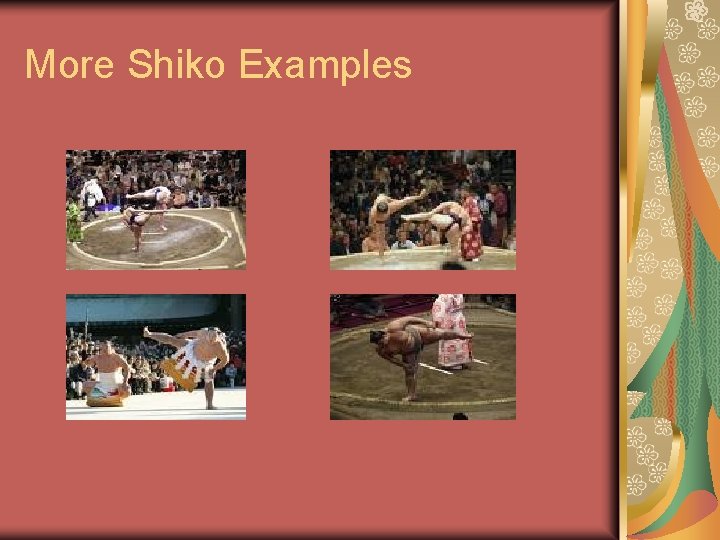
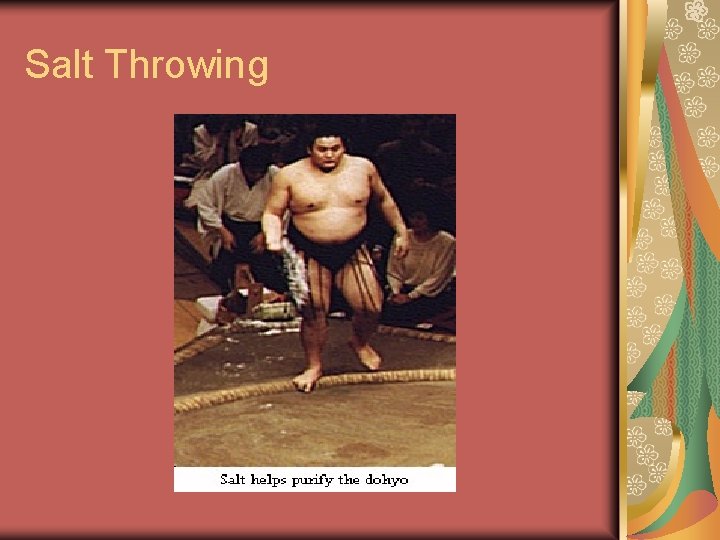
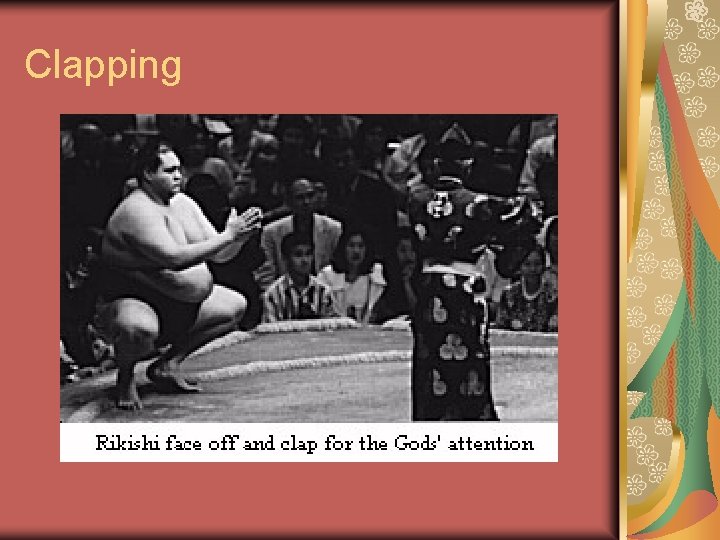
Shinto Practice in Sumo Shiko- ritual foot stomping to cleanse the ring of evil spirits Purifying water- splashed into ring for cleansing Salt throws- also for cleansing the ring Clapping- done by two sumotori in unison to call the attention of beneficial kami
Shiko
More Shiko Examples
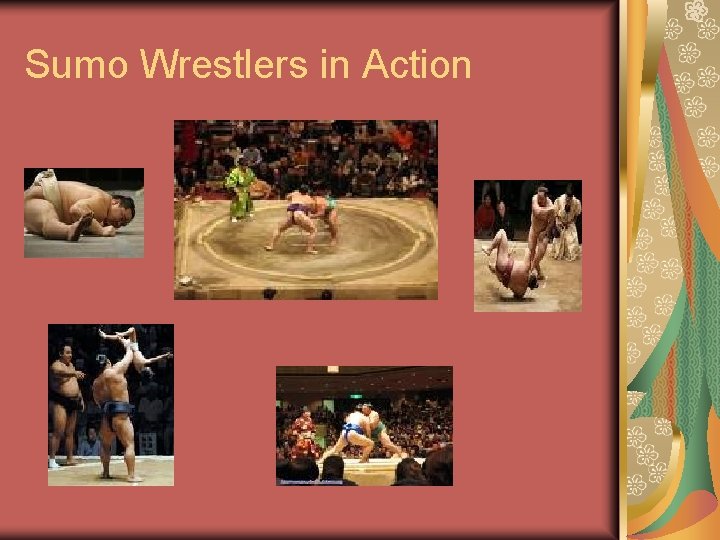
Sumo Wrestlers in Action
Salt Throwing
Clapping
Shinto Matsuri Festivals have community/civic as well as religious purpose Buddhist and Shinto interaction commonplace Music, dance and artistic expression are all elements in Shinto practice Check out the ribald stories the narrators enjoy!