
Confrontation Reconciliation End of Cold War The Cold
- Slides: 5
Confrontation, Reconciliation, End of Cold War The Cold War IB History 11
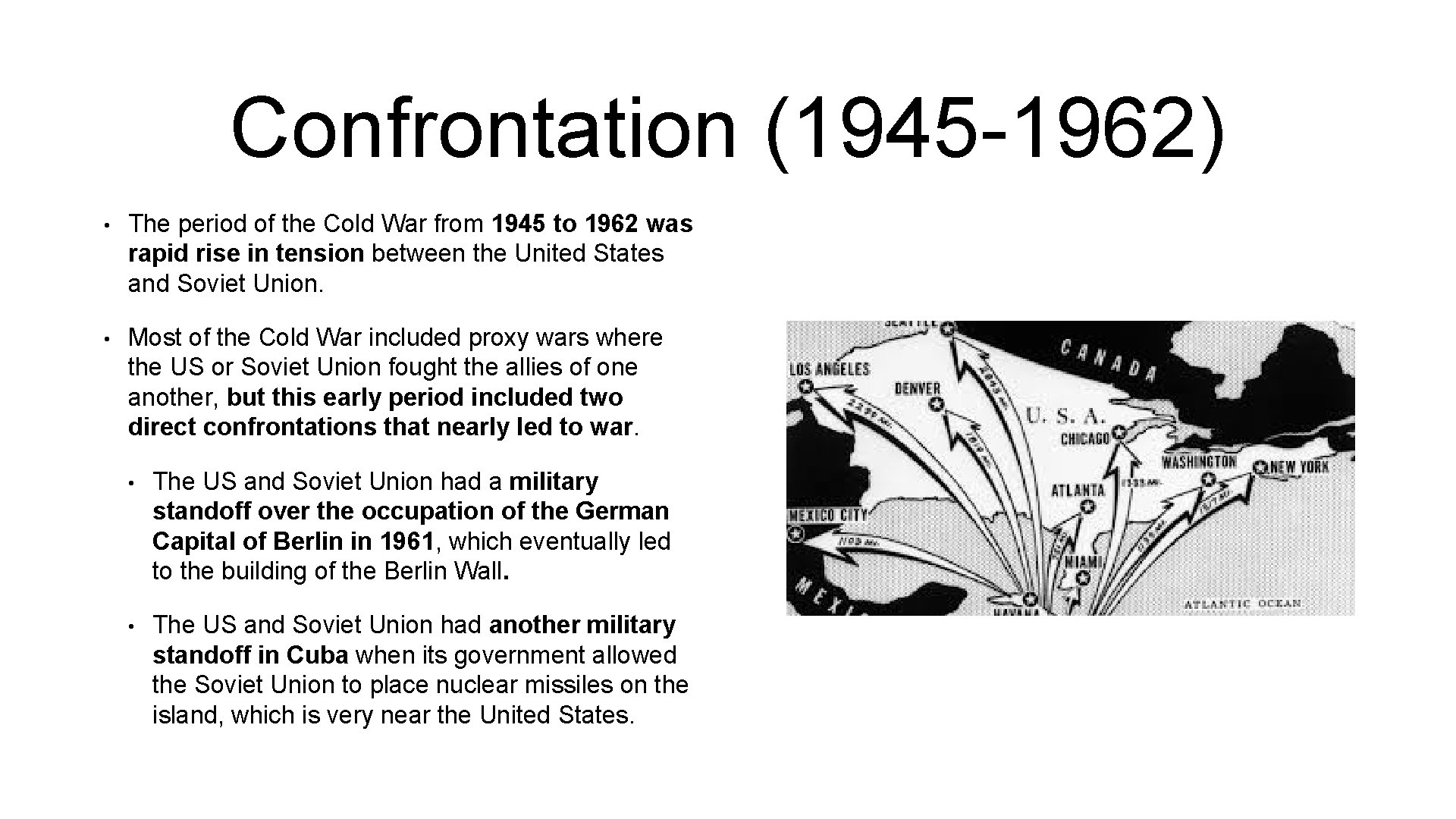
Confrontation (1945 -1962) • The period of the Cold War from 1945 to 1962 was rapid rise in tension between the United States and Soviet Union. • Most of the Cold War included proxy wars where the US or Soviet Union fought the allies of one another, but this early period included two direct confrontations that nearly led to war. • The US and Soviet Union had a military standoff over the occupation of the German Capital of Berlin in 1961, which eventually led to the building of the Berlin Wall. • The US and Soviet Union had another military standoff in Cuba when its government allowed the Soviet Union to place nuclear missiles on the island, which is very near the United States.
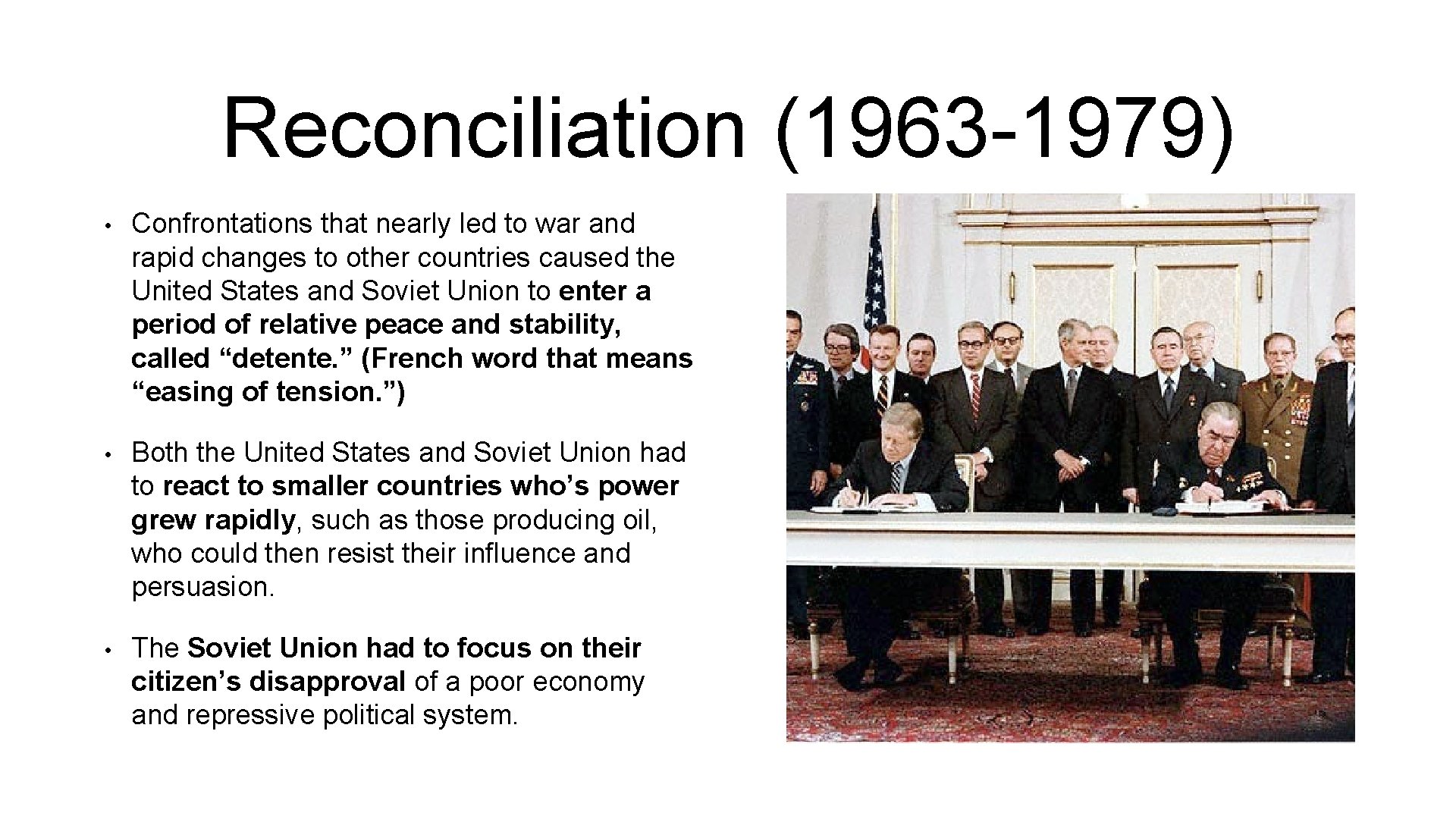
Reconciliation (1963 -1979) • Confrontations that nearly led to war and rapid changes to other countries caused the United States and Soviet Union to enter a period of relative peace and stability, called “detente. ” (French word that means “easing of tension. ”) • Both the United States and Soviet Union had to react to smaller countries who’s power grew rapidly, such as those producing oil, who could then resist their influence and persuasion. • The Soviet Union had to focus on their citizen’s disapproval of a poor economy and repressive political system.
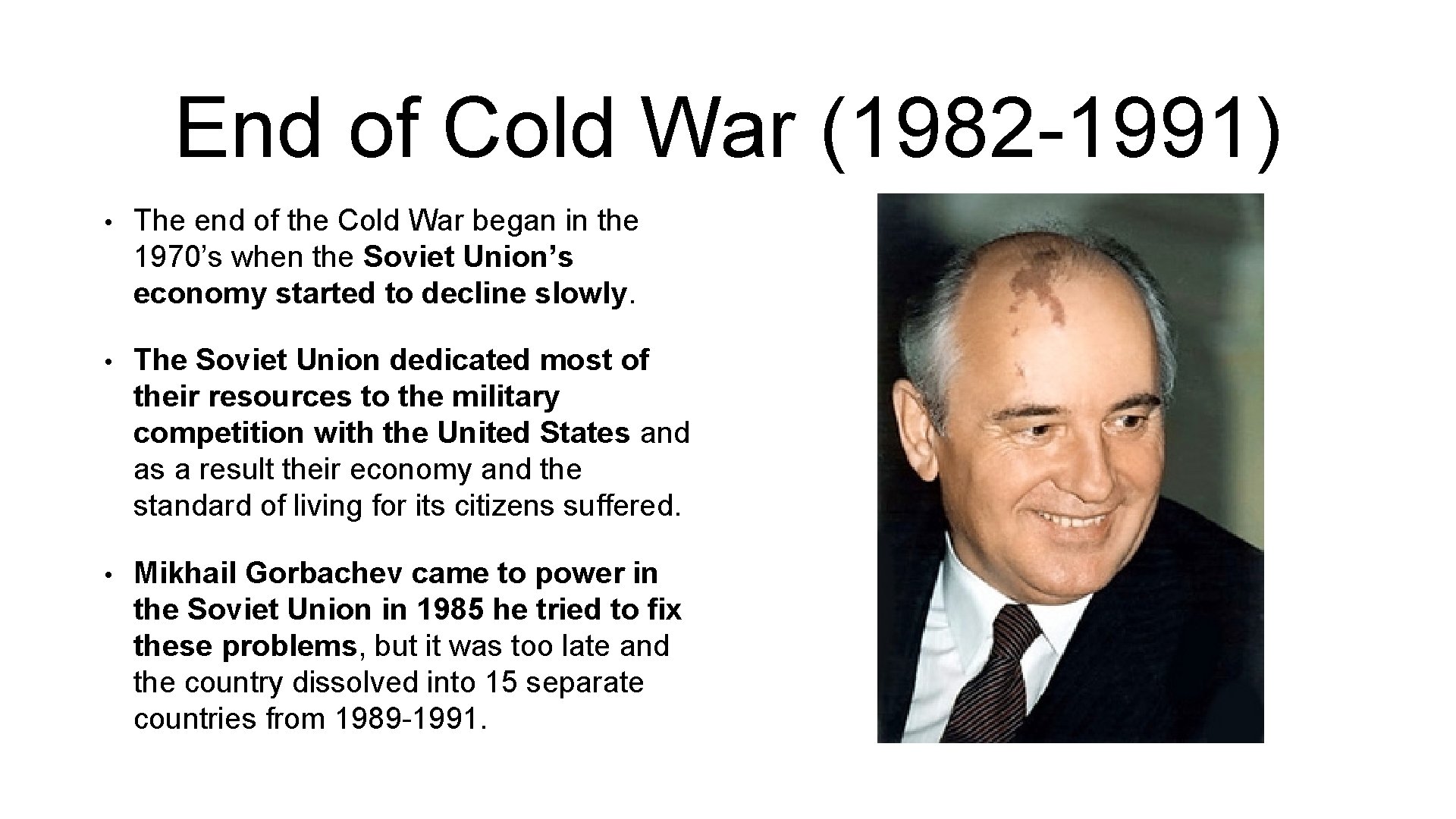
End of Cold War (1982 -1991) • The end of the Cold War began in the 1970’s when the Soviet Union’s economy started to decline slowly. • The Soviet Union dedicated most of their resources to the military competition with the United States and as a result their economy and the standard of living for its citizens suffered. • Mikhail Gorbachev came to power in the Soviet Union in 1985 he tried to fix these problems, but it was too late and the country dissolved into 15 separate countries from 1989 -1991.
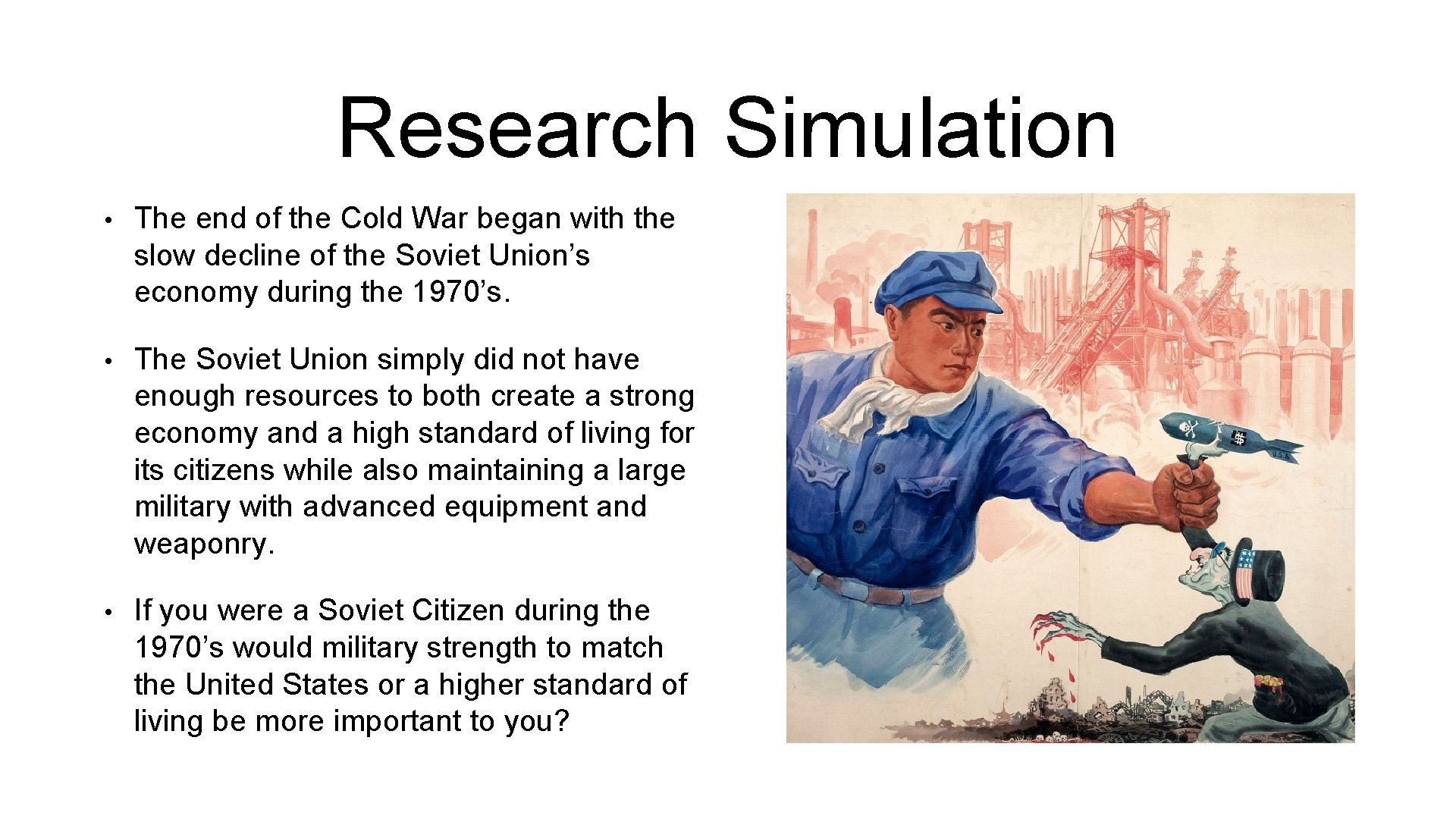
Research Simulation • The end of the Cold War began with the slow decline of the Soviet Union’s economy during the 1970’s. • The Soviet Union simply did not have enough resources to both create a strong economy and a high standard of living for its citizens while also maintaining a large military with advanced equipment and weaponry. • If you were a Soviet Citizen during the 1970’s would military strength to match the United States or a higher standard of living be more important to you?