
Conformity Aschs Study of Compliance Types of Conformity
- Slides: 37
Conformity Asch’s Study of Compliance
Types of Conformity • Compliance • Identification • Internalisation
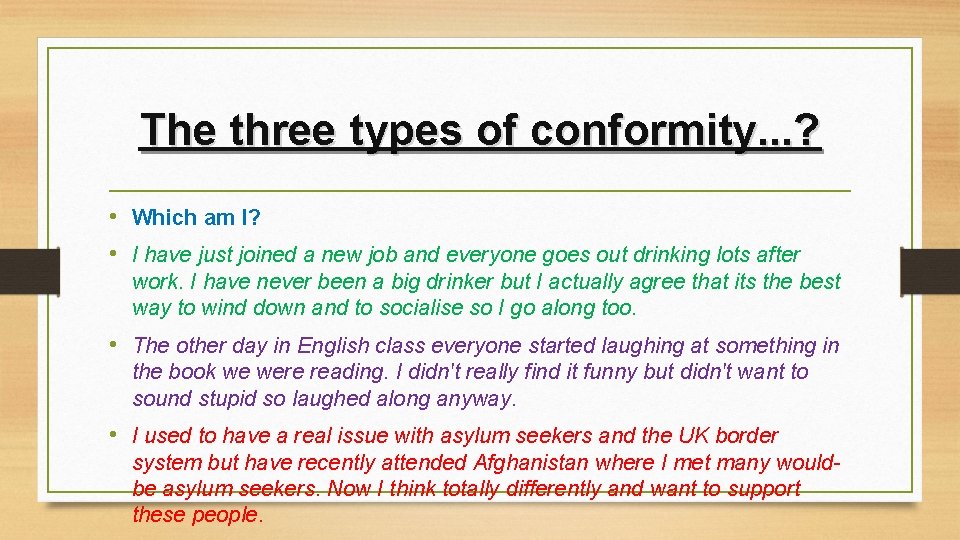
The three types of conformity. . . ? • Which am I? • I have just joined a new job and everyone goes out drinking lots after work. I have never been a big drinker but I actually agree that its the best way to wind down and to socialise so I go along too. • The other day in English class everyone started laughing at something in the book we were reading. I didn't really find it funny but didn't want to sound stupid so laughed along anyway. • I used to have a real issue with asylum seekers and the UK border system but have recently attended Afghanistan where I met many wouldbe asylum seekers. Now I think totally differently and want to support these people.
What is the difference between. . . ? • Compliance and internalisation? • Internalisation and identification? • Identification and compliance?
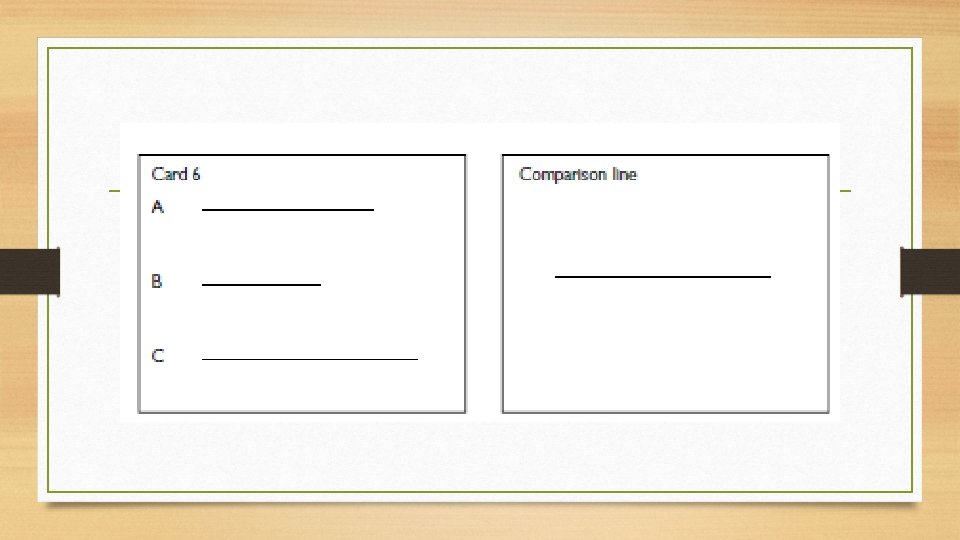
“A task of visual perception”
Instructions. . . • You must decide for yourself which line matches up and you should call out the correct answer
Instructions. . . • You must decide for yourself which line matches up and you should call out the correct answer
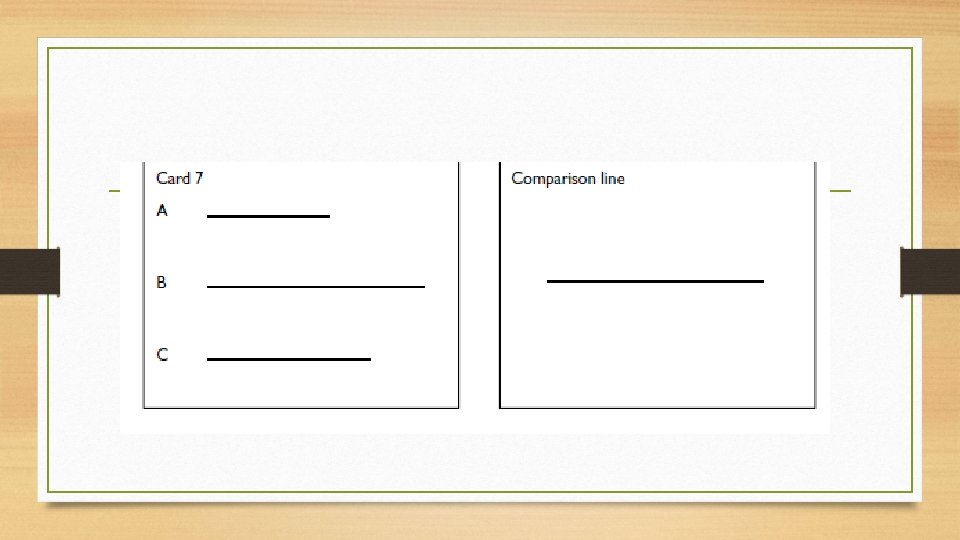
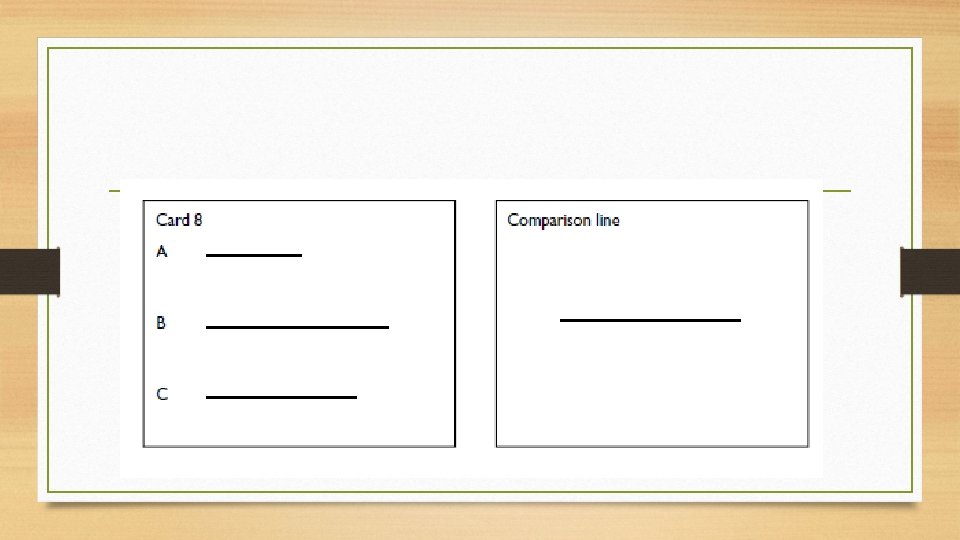
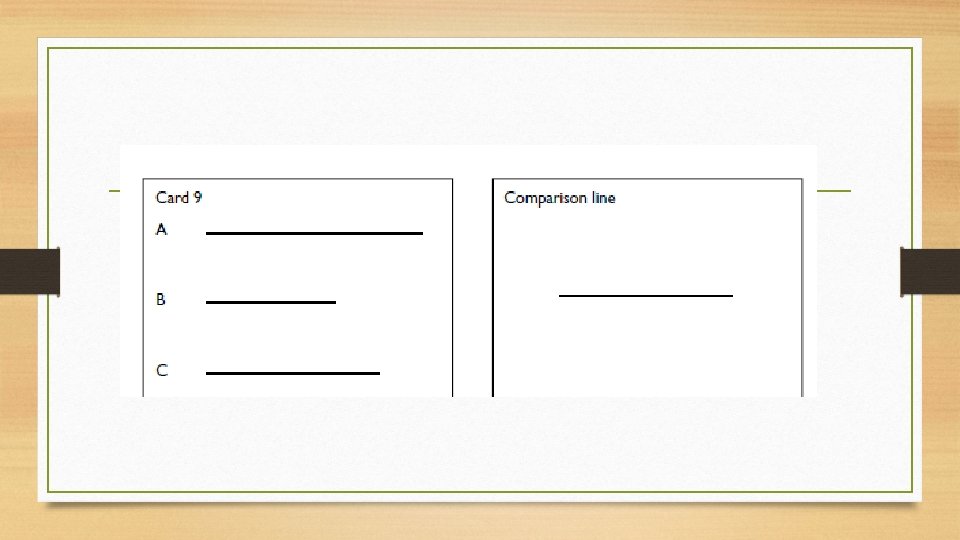
Instructions. . . • You must decide for yourself which line matches up, but then call out the letter of the one which to you appears the longest (critical or experimental trials) • Do this on every trial except for the following, 1, 3, 7, 8, 11, 15 when you should call out the correct answer (control trials)
Instructions. . . • You must decide for yourself which line matches up, but then call out the letter of the one which to you appears the longest (critical or experimental trials) • Do this on every trial except for the following, 1, 3, 7, 8, 11, 15 when you should call out the correct answer (control trials)
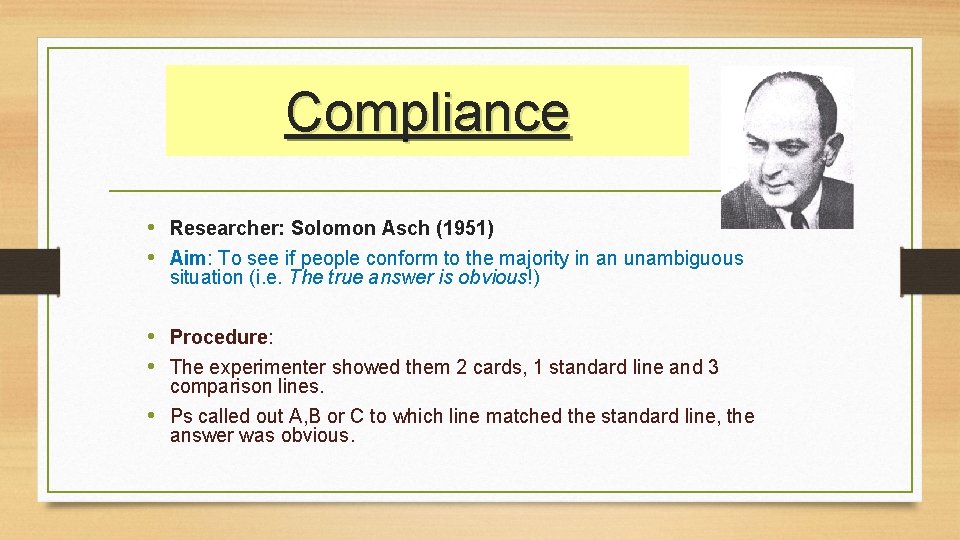
Compliance • Researcher: Solomon Asch (1951) • Aim: To see if people conform to the majority in an unambiguous situation (i. e. The true answer is obvious!) • Procedure: • 123 male students took part in a test of ‘Visual Perception’. • In groups of 7 -9 around a large table.
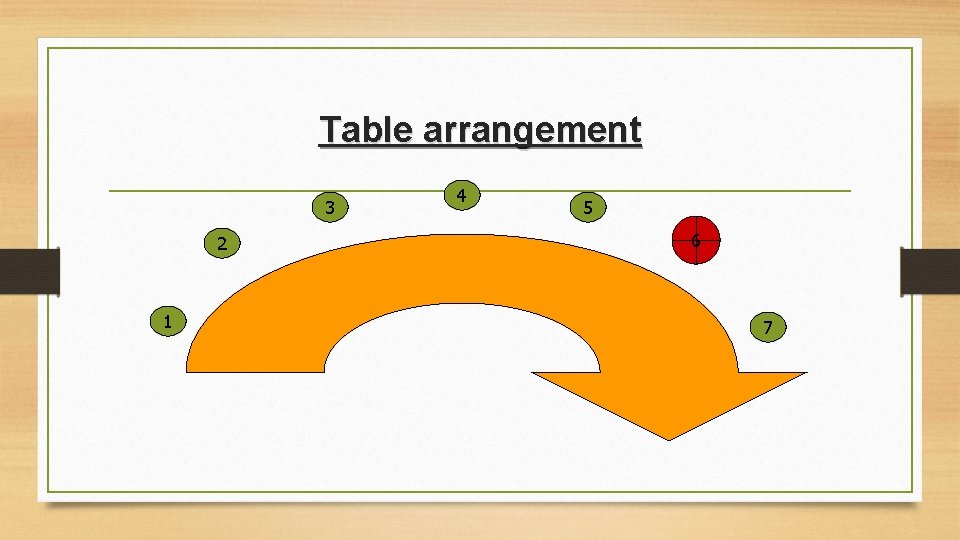
Table arrangement 3 2 1 4 5 6 7
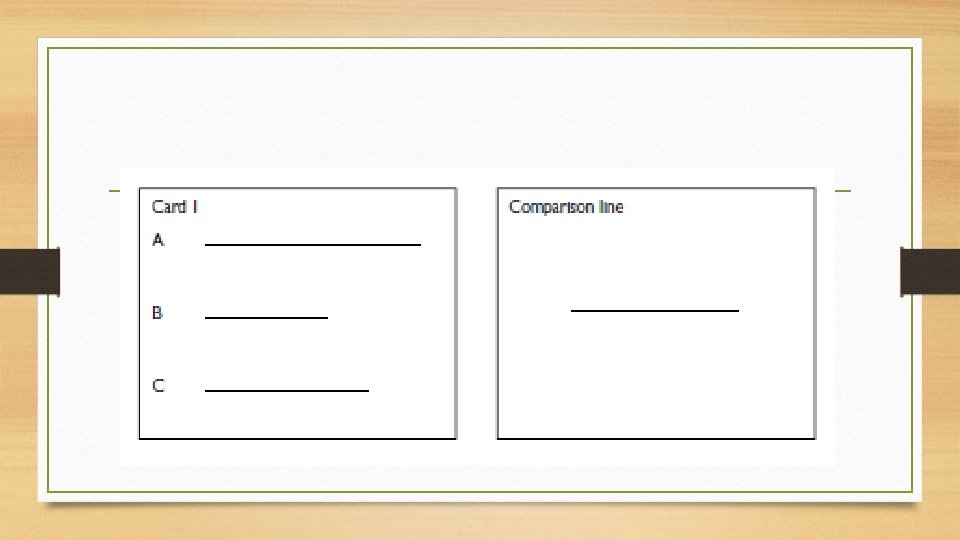
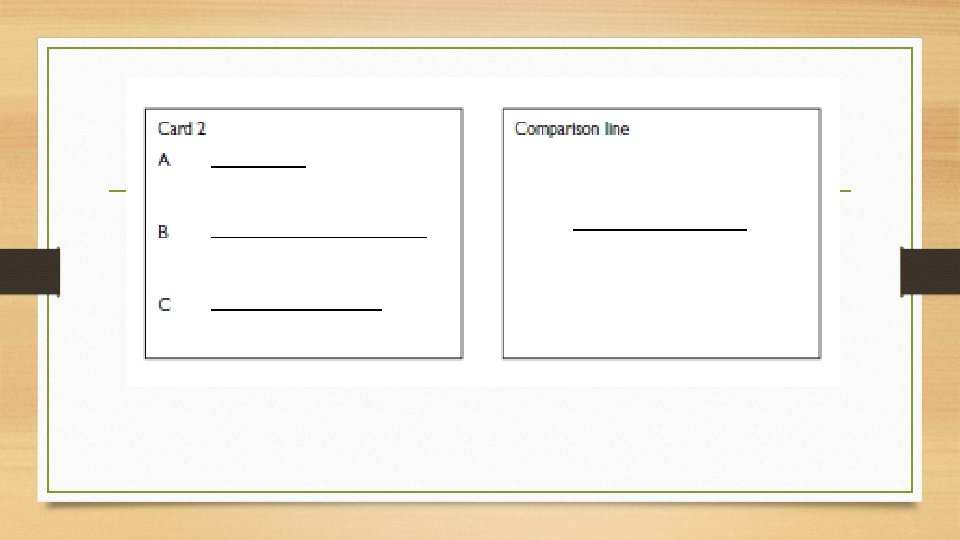
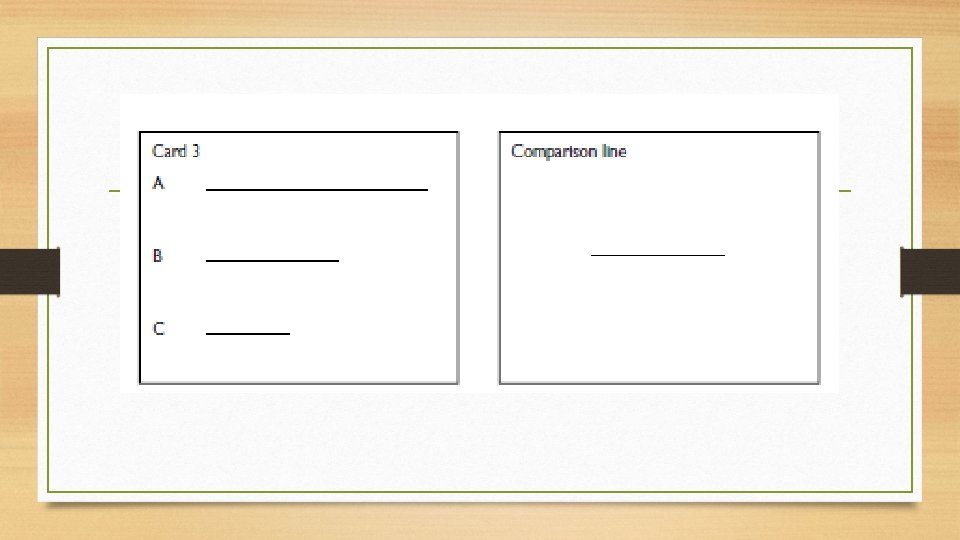
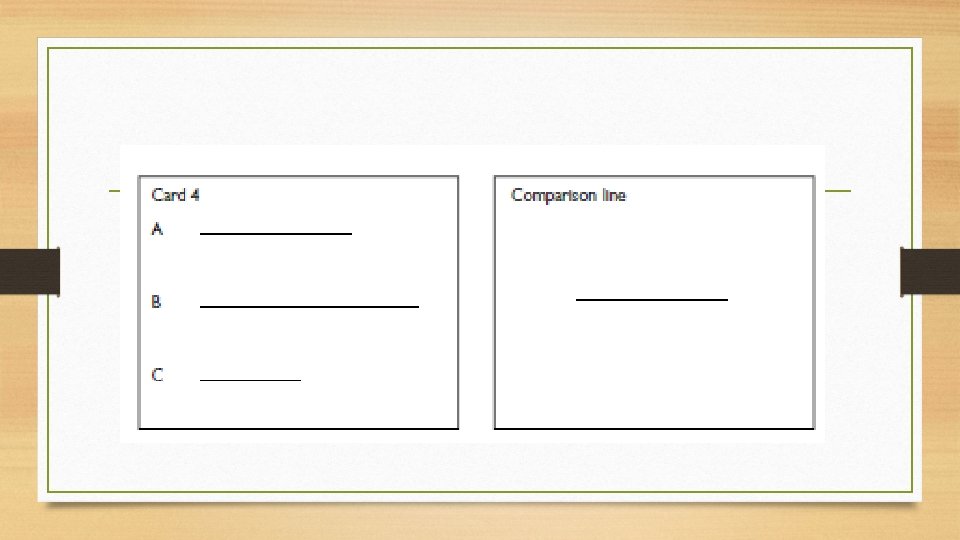
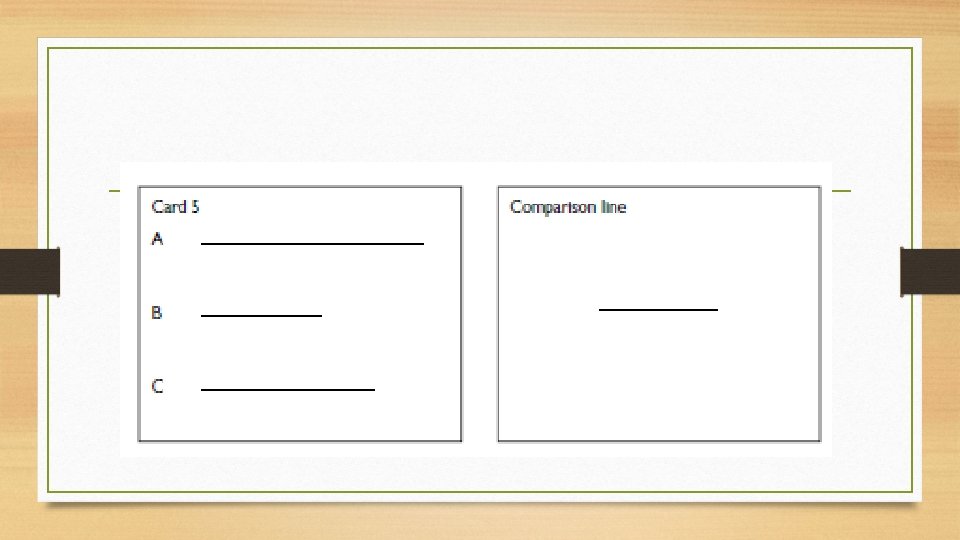
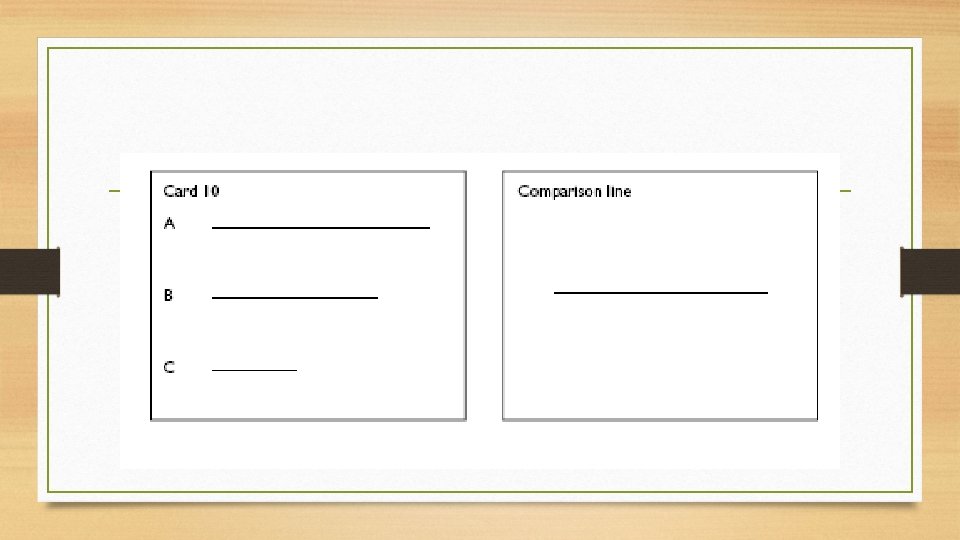
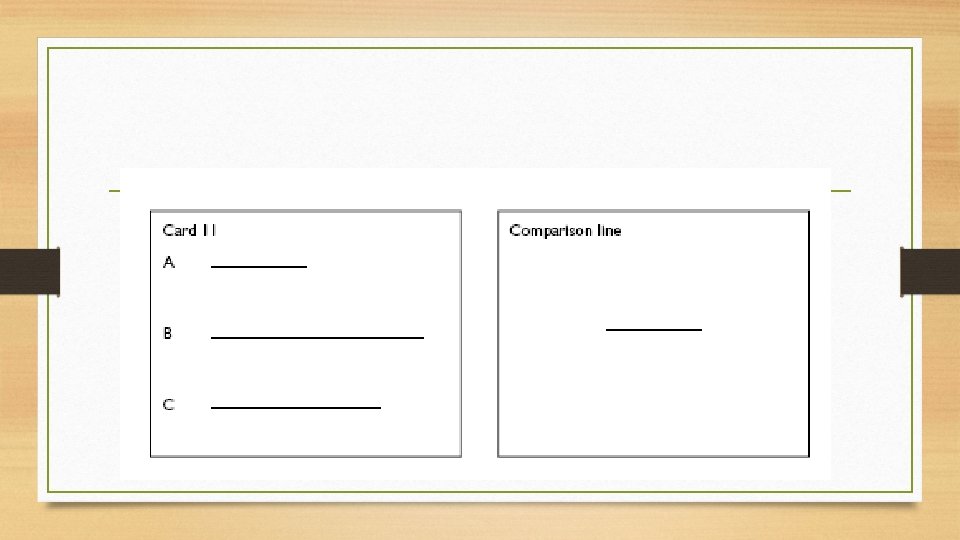
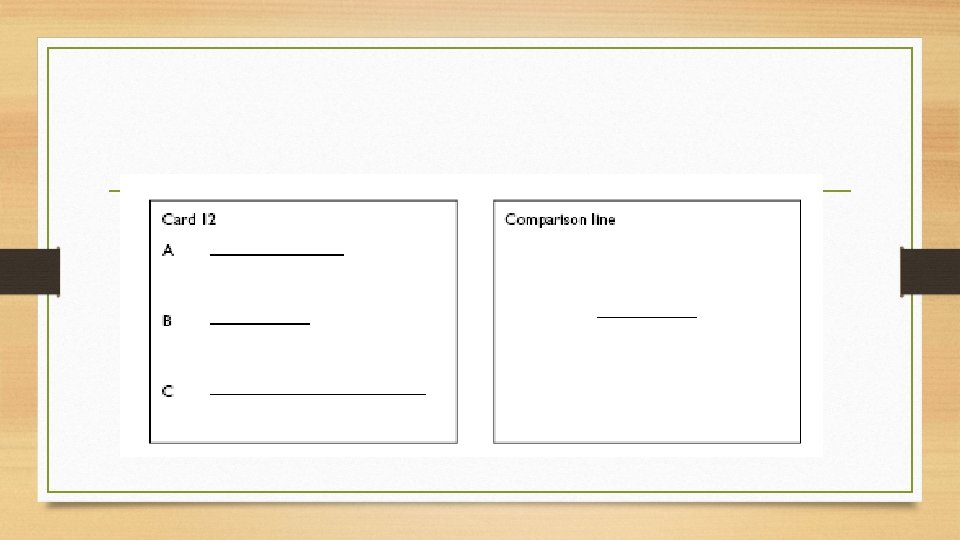
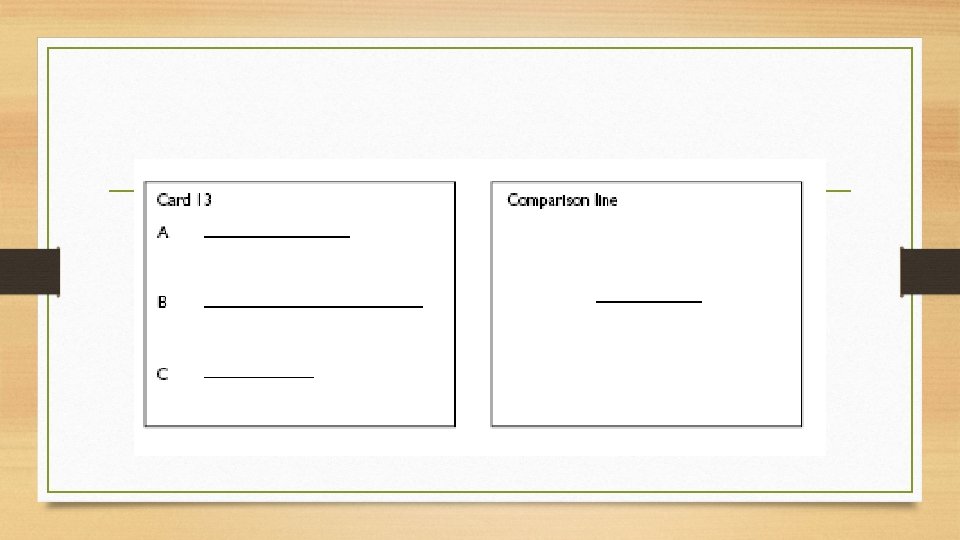
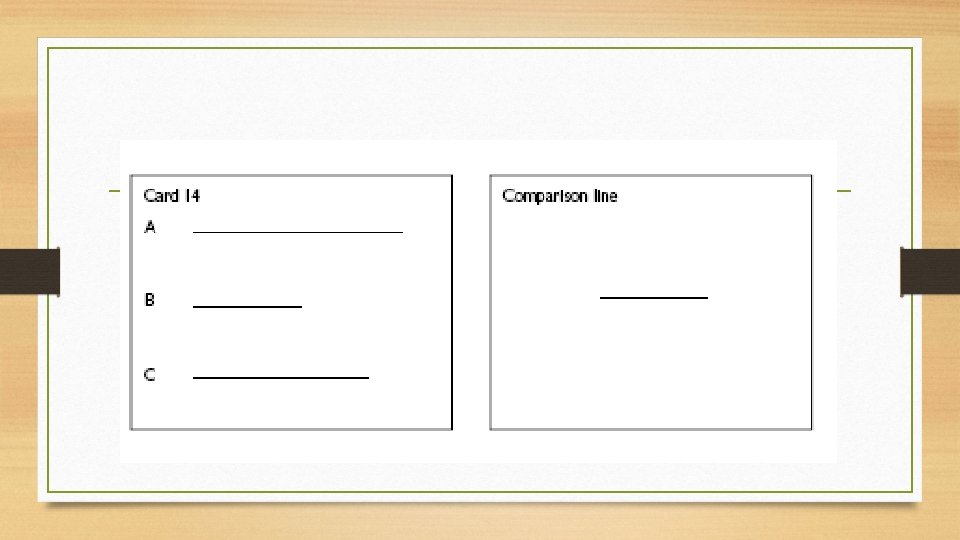
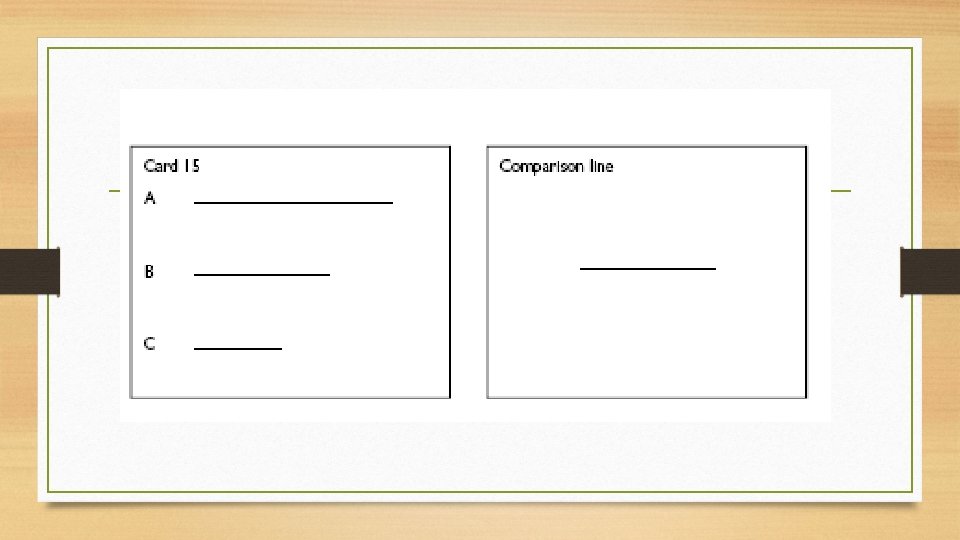
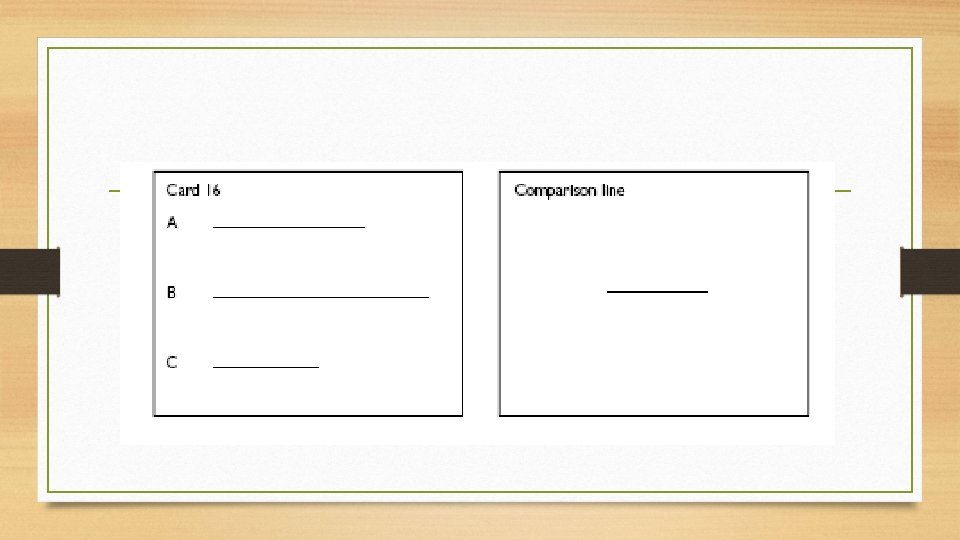
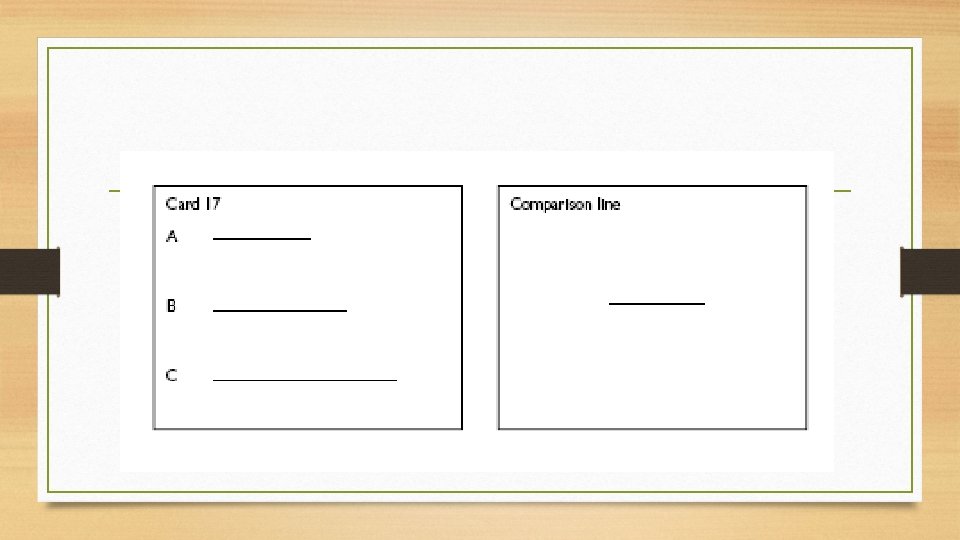
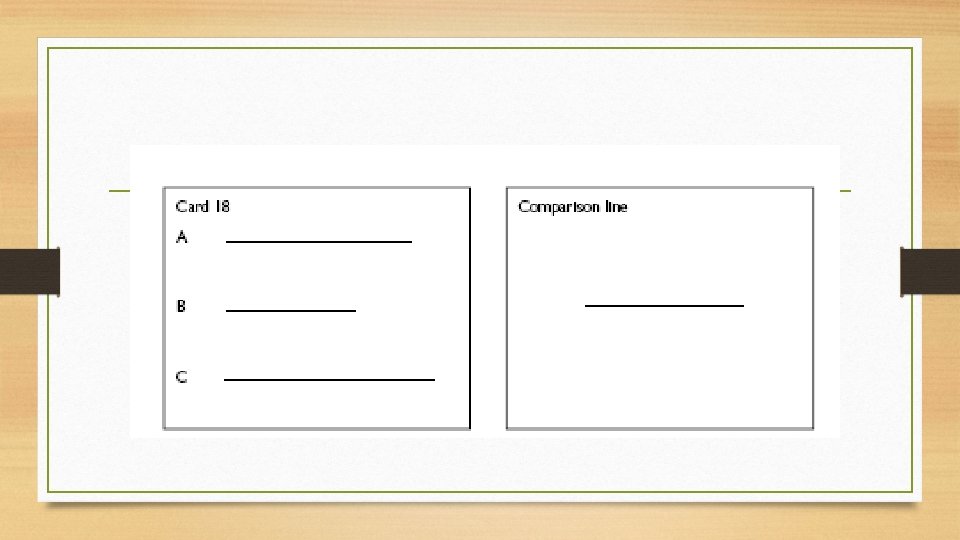
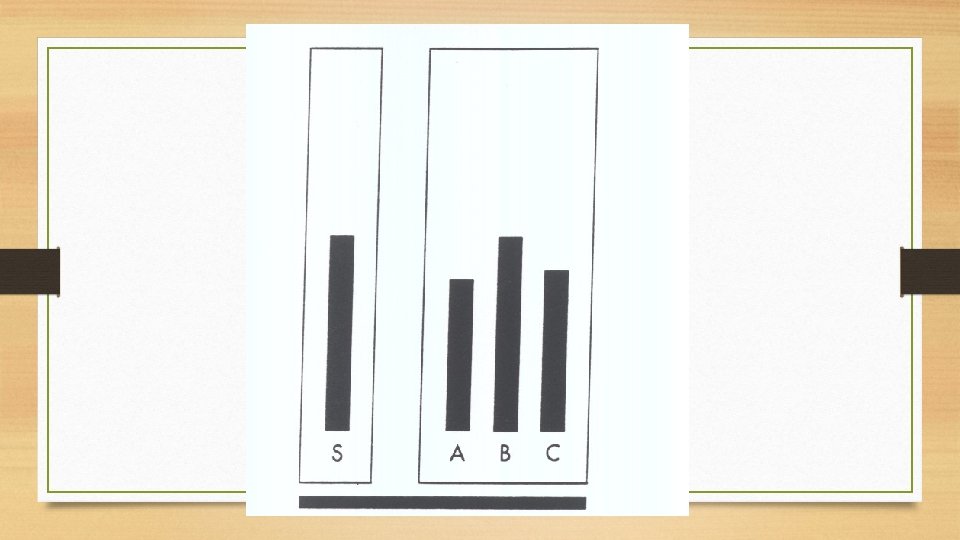
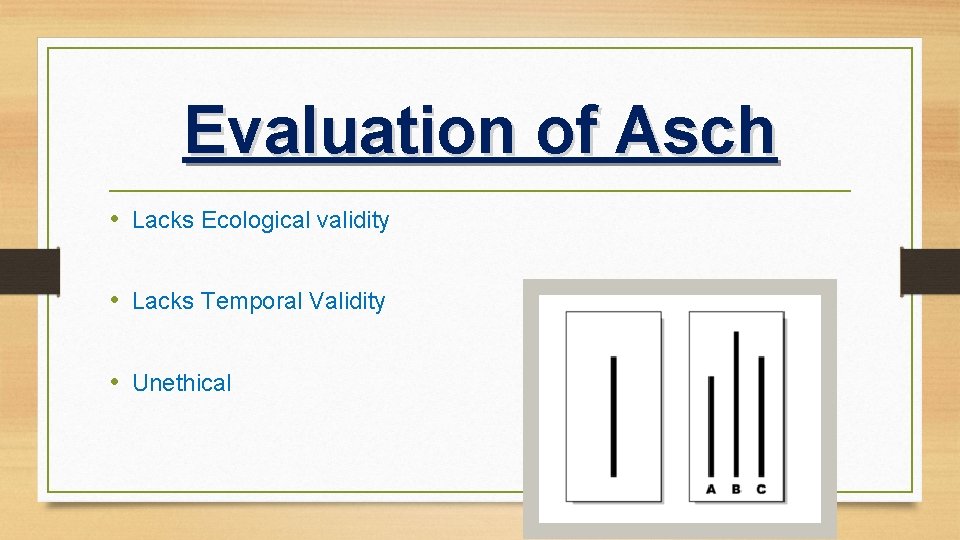
Compliance • Researcher: Solomon Asch (1951) • Aim: To see if people conform to the majority in an unambiguous situation (i. e. The true answer is obvious!) • Procedure: • The experimenter showed them 2 cards, 1 standard line and 3 comparison lines. • Ps called out A, B or C to which line matched the standard line, the answer was obvious.
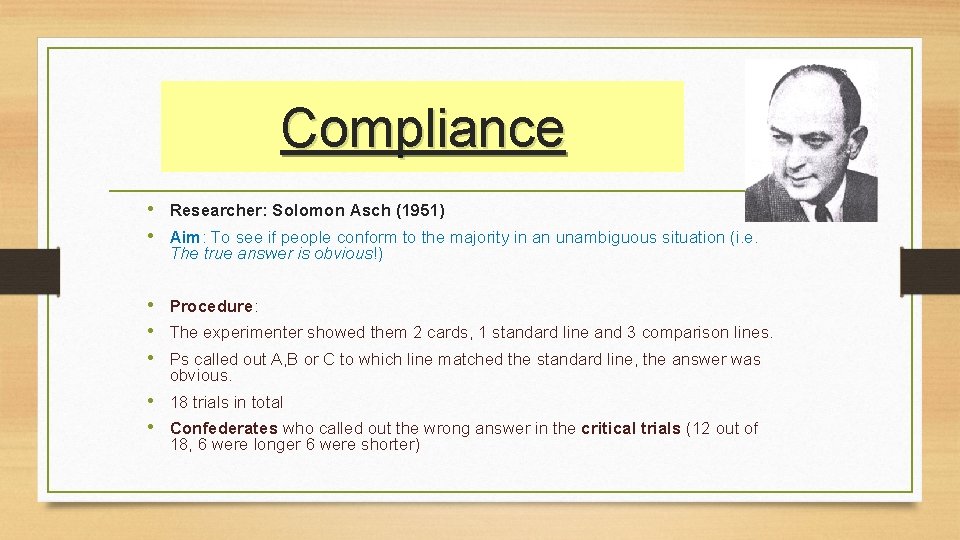
Compliance • Researcher: Solomon Asch (1951) • Aim: To see if people conform to the majority in an unambiguous situation (i. e. The true answer is obvious!) • Procedure: • The experimenter showed them 2 cards, 1 standard line and 3 comparison lines. • Ps called out A, B or C to which line matched the standard line, the answer was obvious. • 18 trials in total • Confederates who called out the wrong answer in the critical trials (12 out of 18, 6 were longer 6 were shorter)
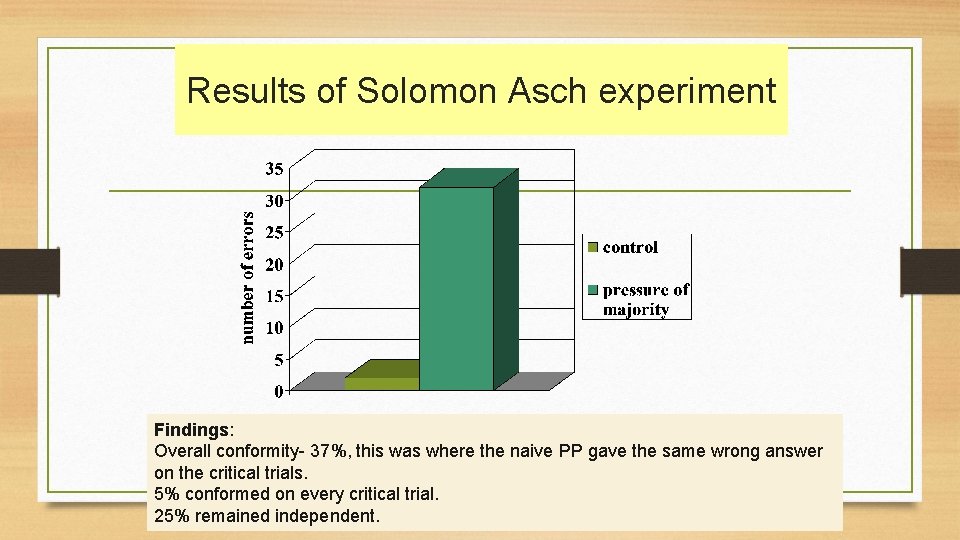
Results of Solomon Asch experiment Findings: Overall conformity- 37%, this was where the naive PP gave the same wrong answer on the critical trials. 5% conformed on every critical trial. 25% remained independent.
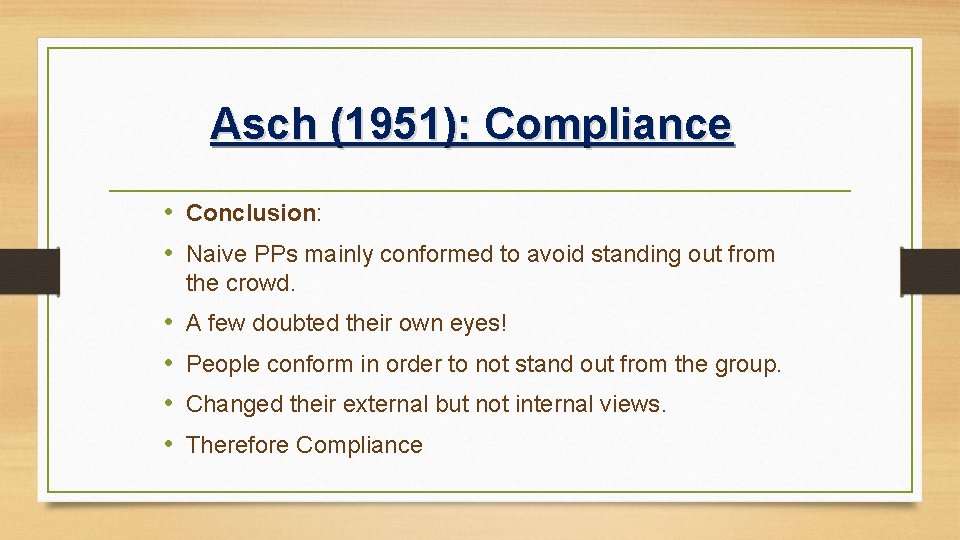
Asch (1951): Compliance • Conclusion: • Naive PPs mainly conformed to avoid standing out from the crowd. • • A few doubted their own eyes! People conform in order to not stand out from the group. Changed their external but not internal views. Therefore Compliance
Evaluation of Asch • Lacks Ecological validity • Lacks Temporal Validity • Unethical
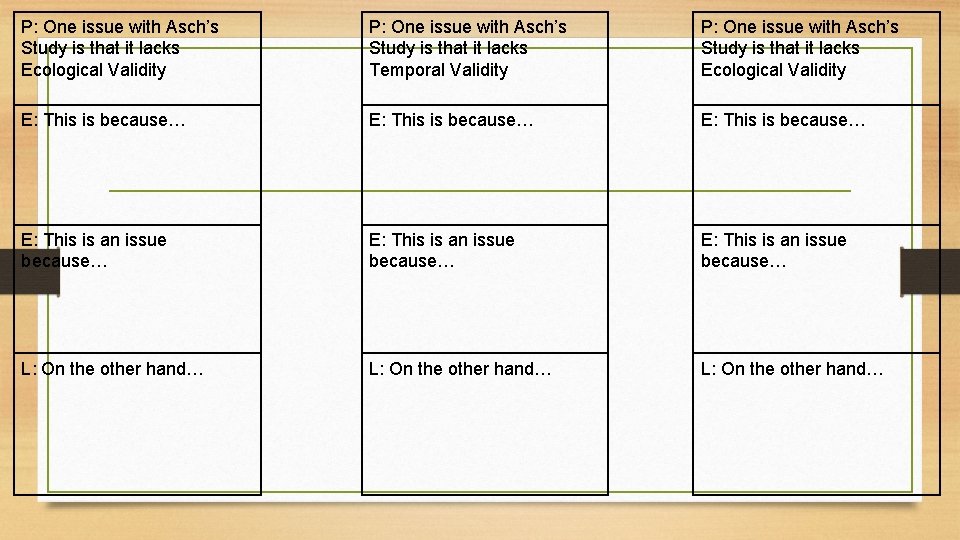
P: One issue with Asch’s Study is that it lacks Ecological Validity P: One issue with Asch’s Study is that it lacks Temporal Validity P: One issue with Asch’s Study is that it lacks Ecological Validity E: This is because… E: This is an issue because… L: On the other hand…
Asch quiz. . . (AO 1) 1. 2. 3. 4. 5. 6. 7. 8. What is a critical trial? What is a confederate? How many confederates are there? What was the size of the group? What were three lines called? What was the one line called? Where was the naive participant seated? What was the compliance rate overall (i. e. % of the time that the naive pa gave the same wrong answer as the confed. )? 9. What was the % of people who conformed (complied) on every critical trial? 10. What percentage remained independent?