
Conflicts Disasters How to Eliminate Hunger and Malnutrition
- Slides: 47
Conflicts & Disasters: How to Eliminate Hunger and Malnutrition in Difficult Times Hilal Elver UN Special Rapporteur on Right to Food
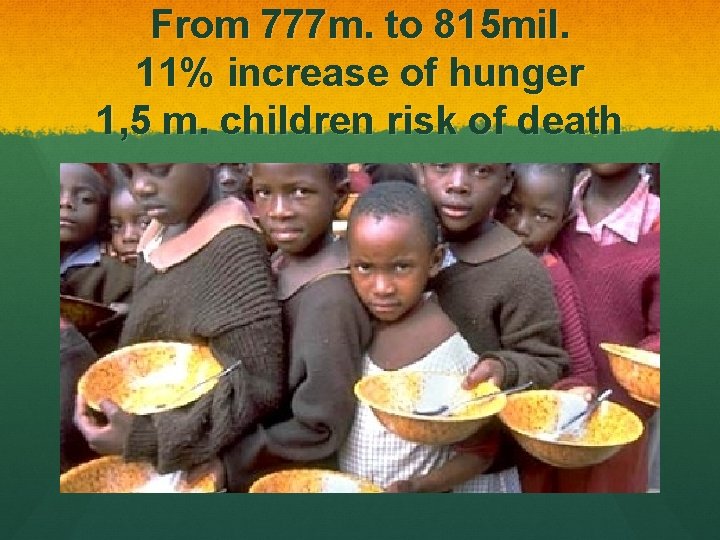
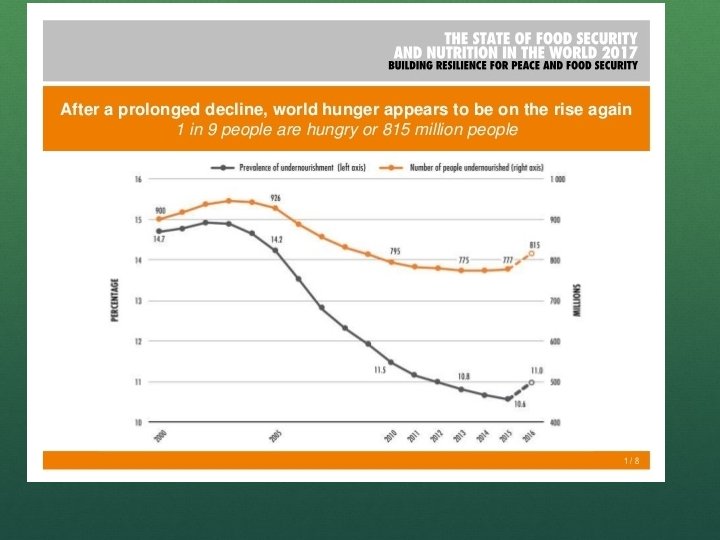
From 777 m. to 815 mil. 11% increase of hunger 1, 5 m. children risk of death
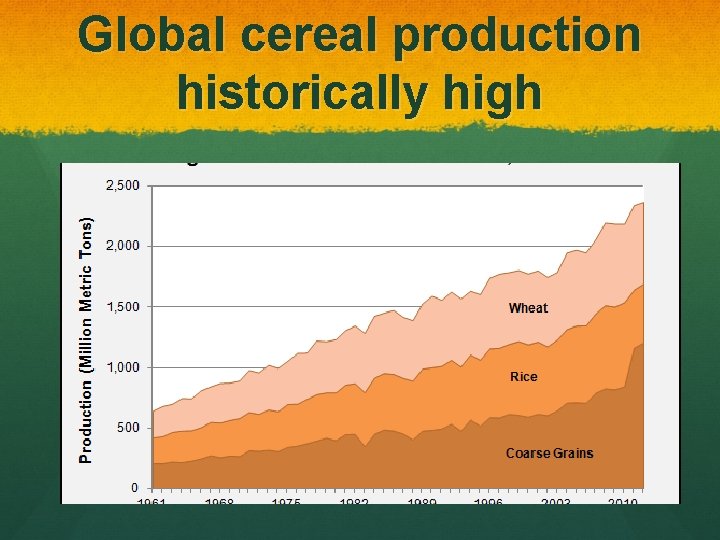
Global cereal production historically high
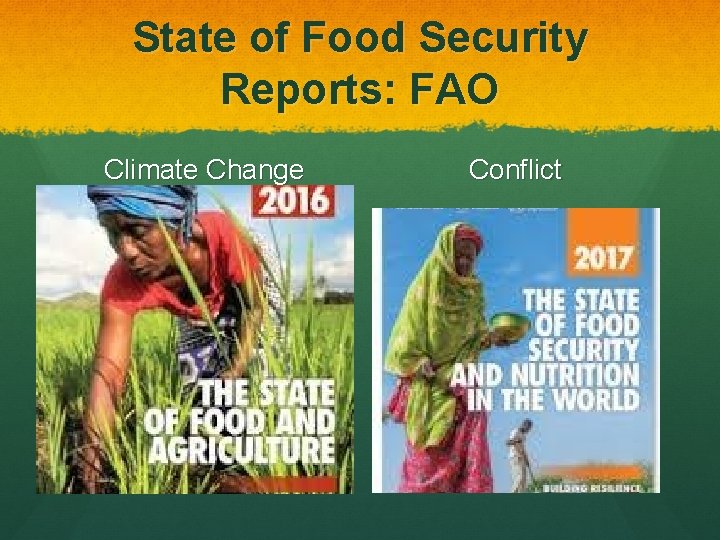
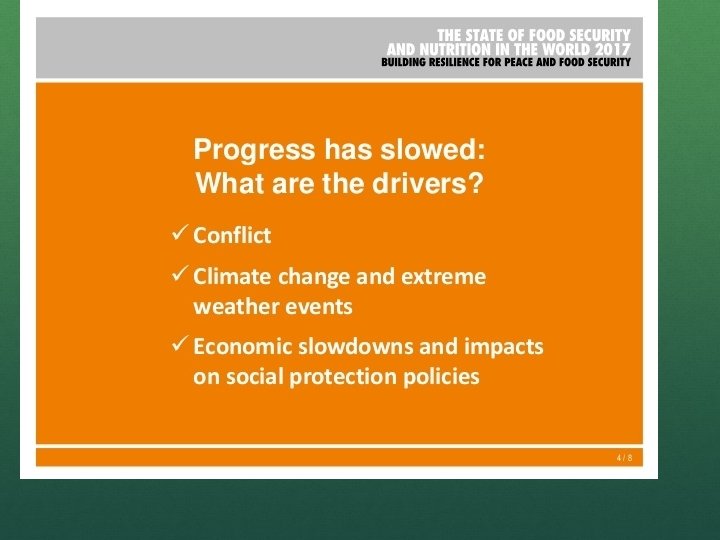
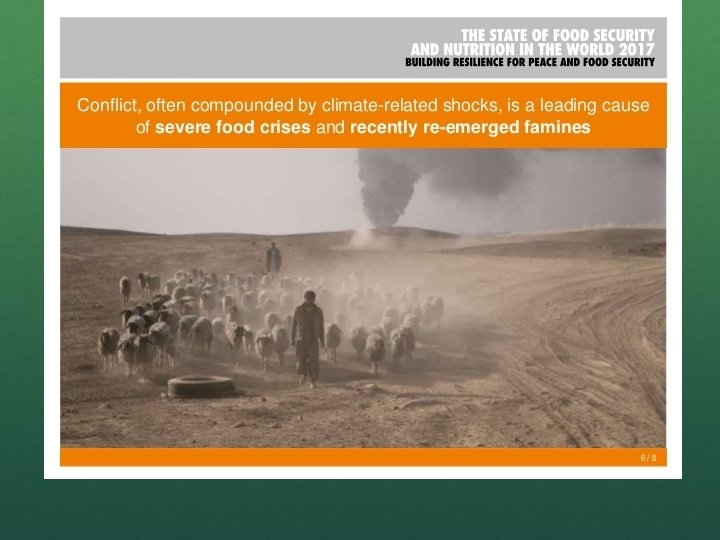
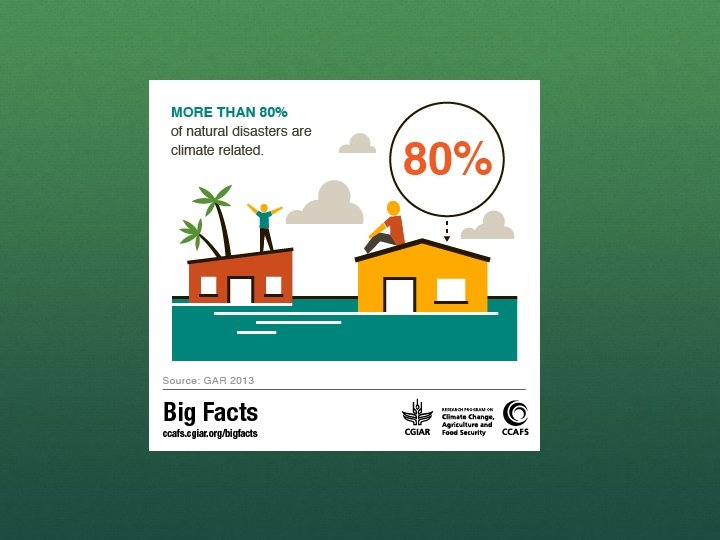
State of Food Security Reports: FAO Climate Change Conflict
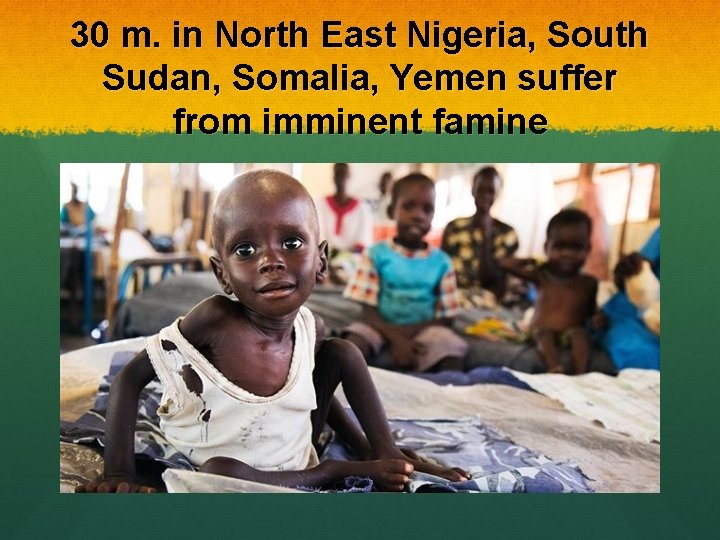
30 m. in North East Nigeria, South Sudan, Somalia, Yemen suffer from imminent famine
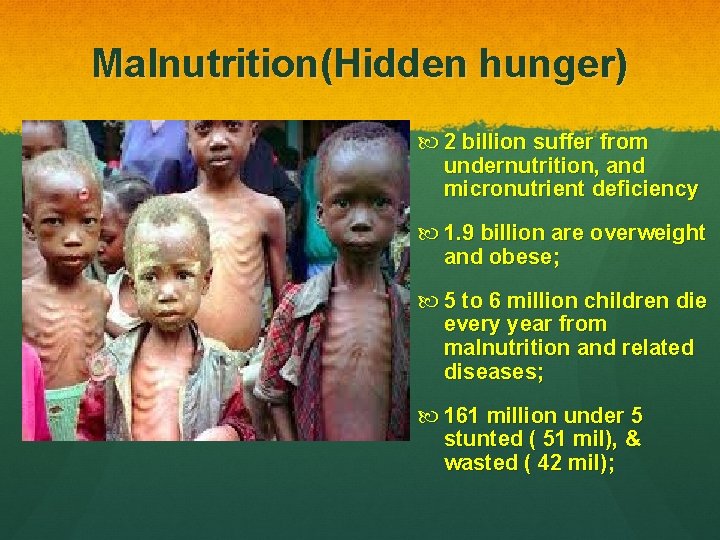
Malnutrition(Hidden hunger) 2 billion suffer from undernutrition, and micronutrient deficiency 1. 9 billion are overweight and obese; 5 to 6 million children die every year from malnutrition and related diseases; 161 million under 5 stunted ( 51 mil), & wasted ( 42 mil);
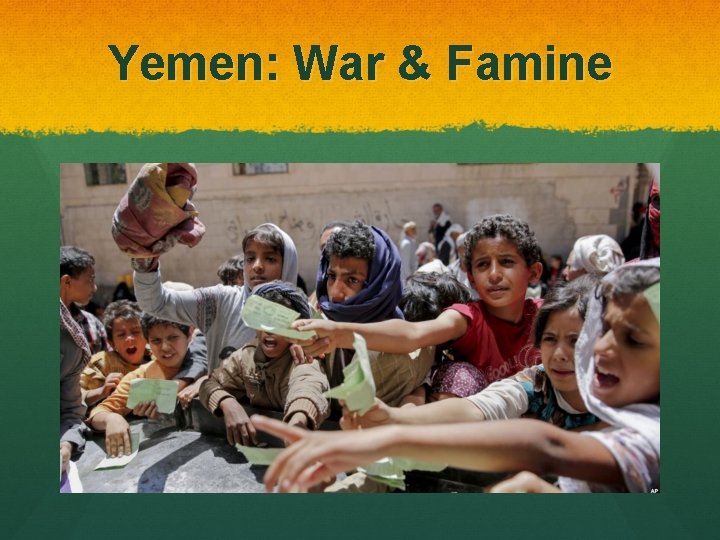
Yemen: War & Famine
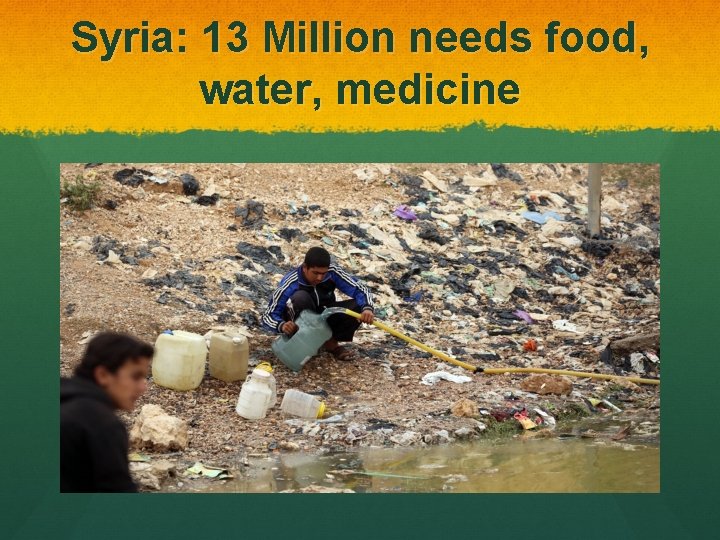
Syria: 13 Million needs food, water, medicine
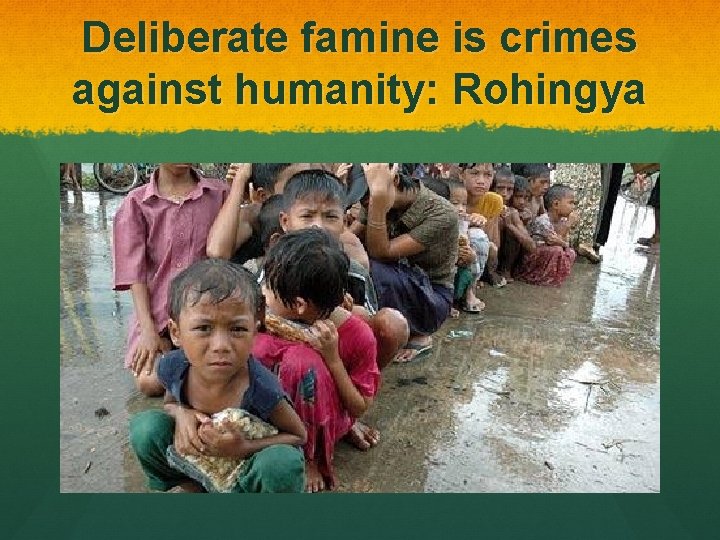
Deliberate famine is crimes against humanity: Rohingya
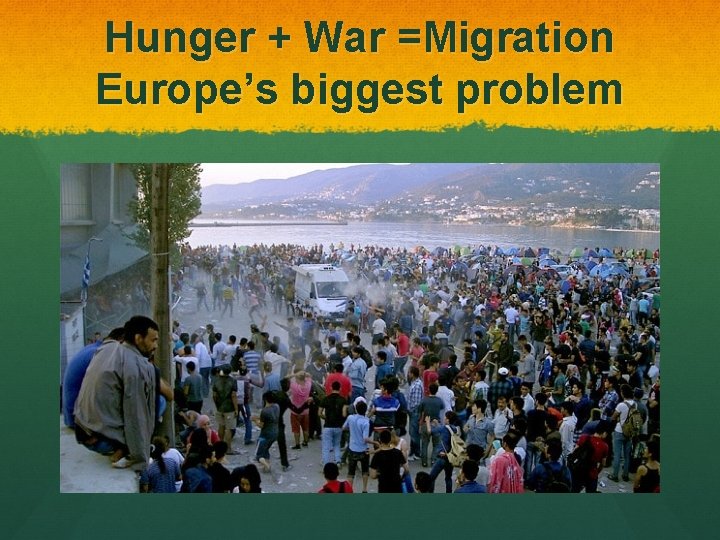
Hunger + War =Migration Europe’s biggest problem
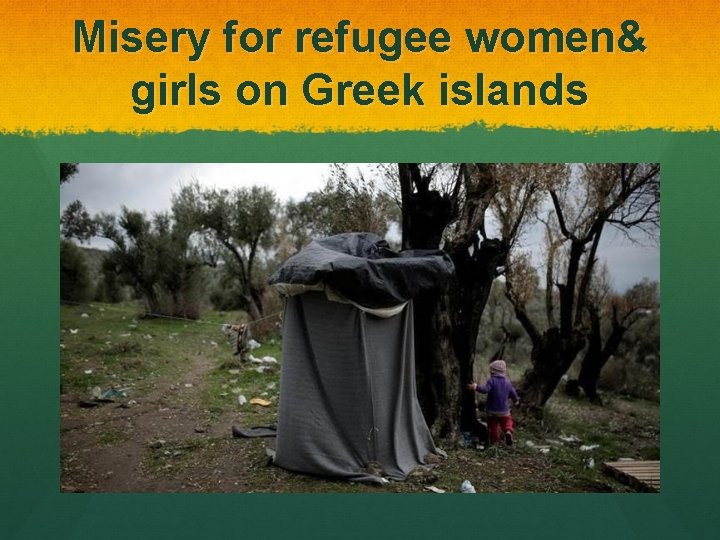
Misery for refugee women& girls on Greek islands
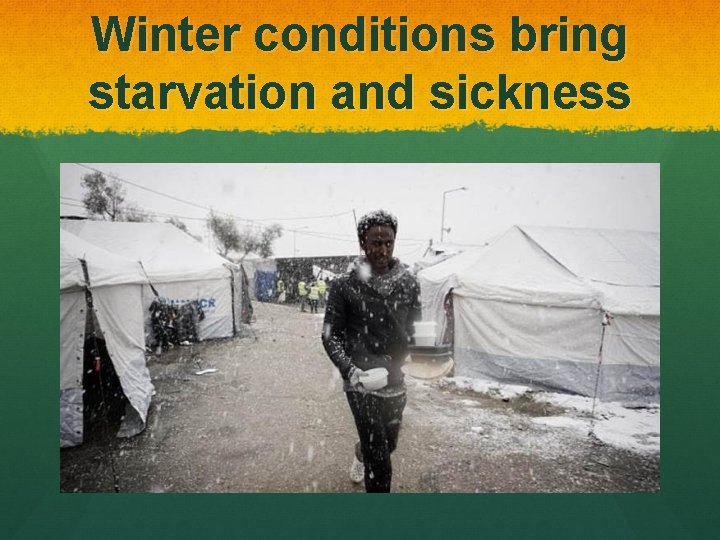
Winter conditions bring starvation and sickness
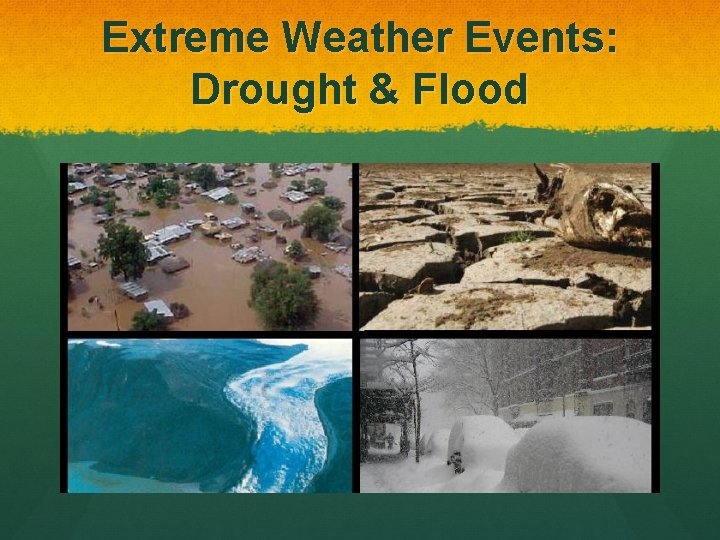
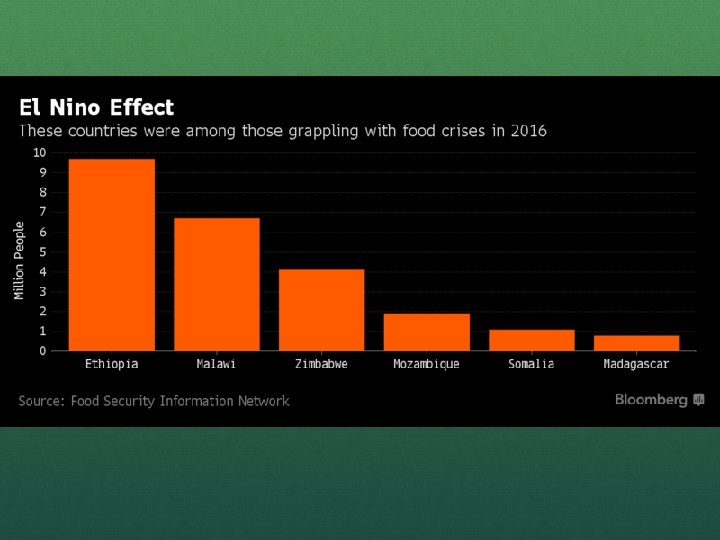
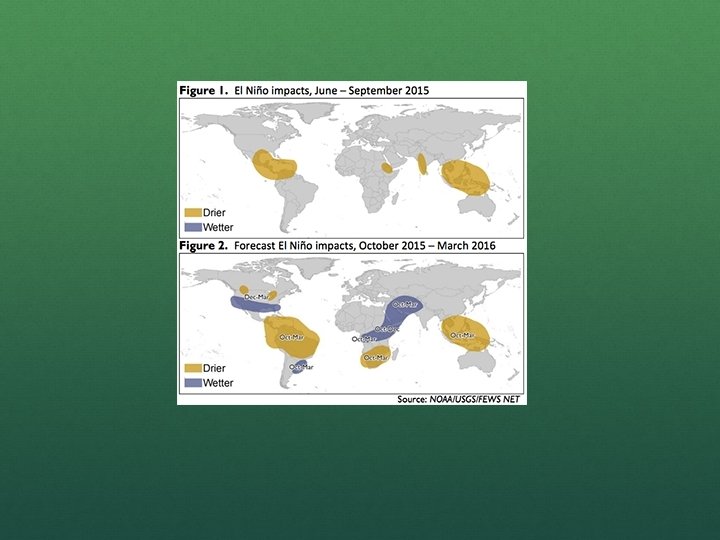
Extreme Weather Events: Drought & Flood
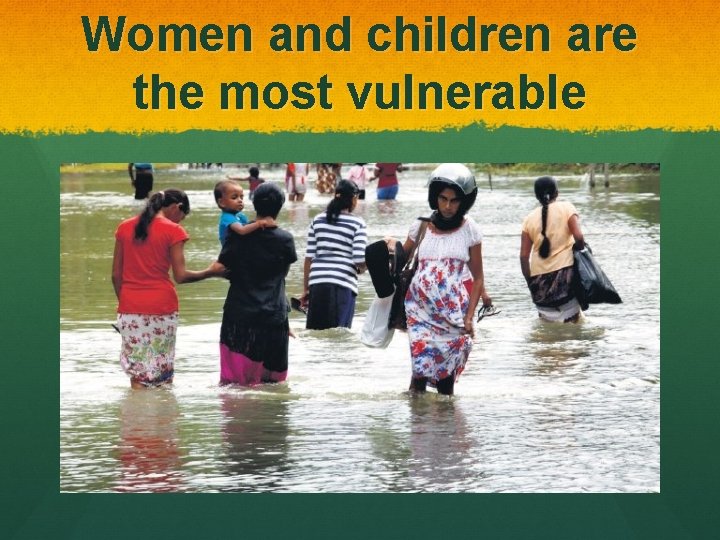
Women and children are the most vulnerable
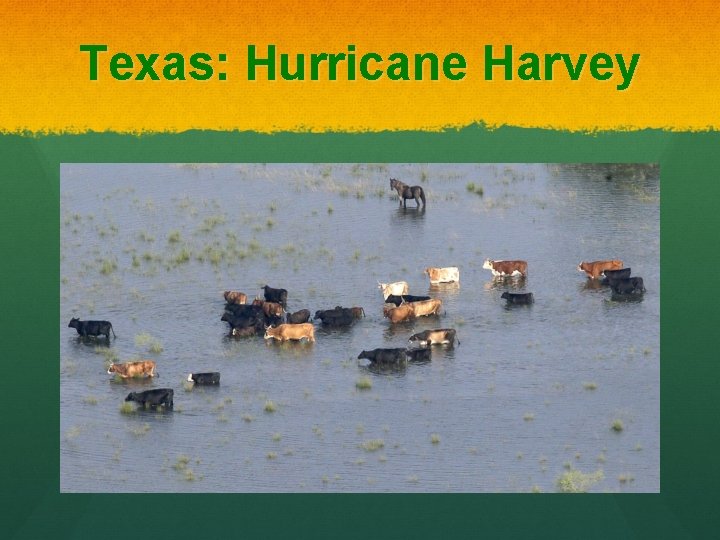
Texas: Hurricane Harvey
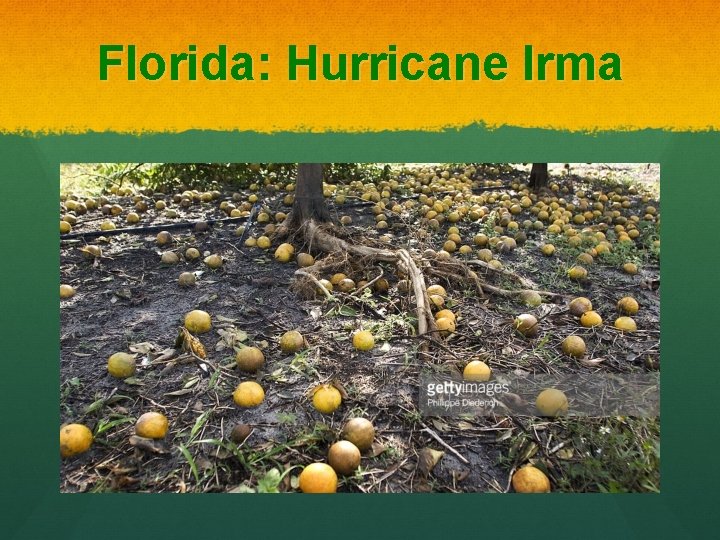
Florida: Hurricane Irma
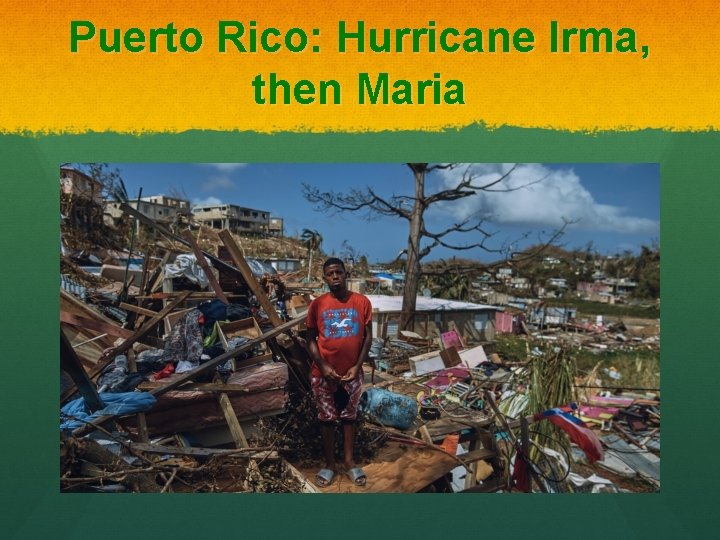
Puerto Rico: Hurricane Irma, then Maria
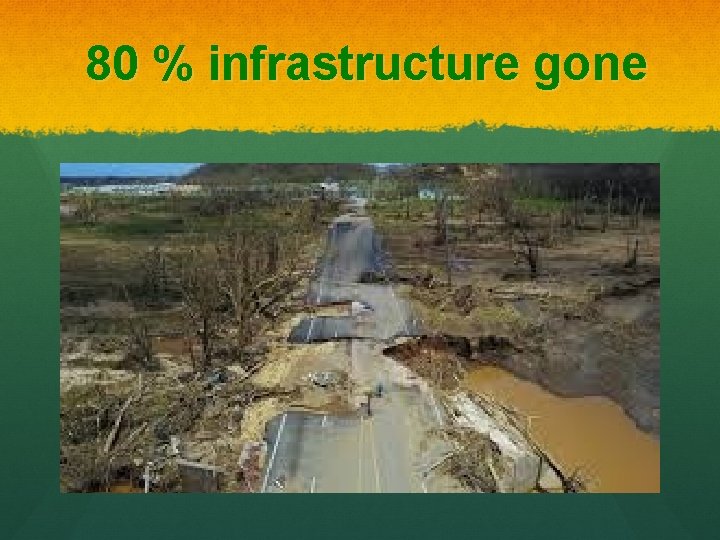
80 % infrastructure gone
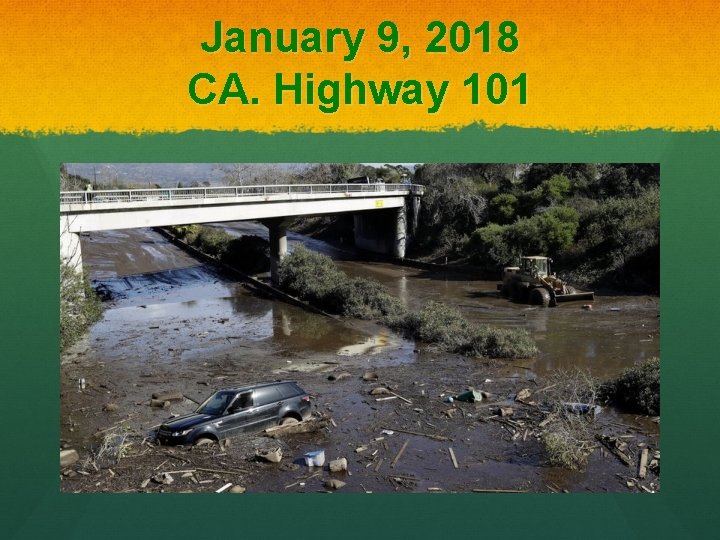
January 9, 2018 CA. Highway 101
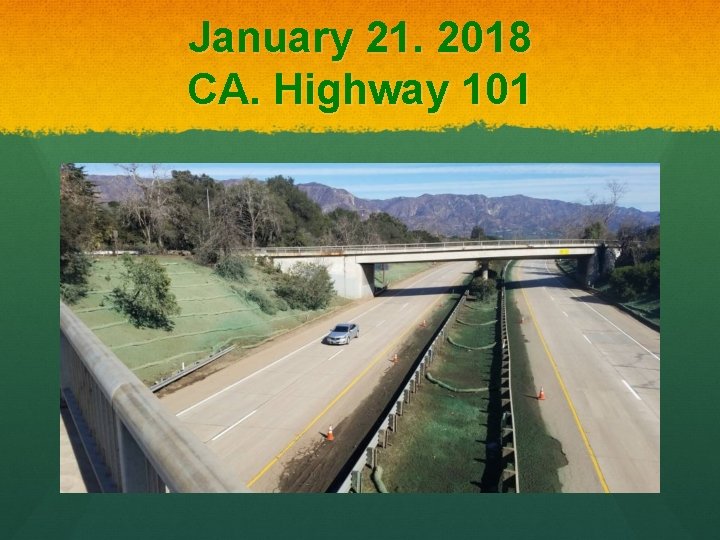
January 21. 2018 CA. Highway 101
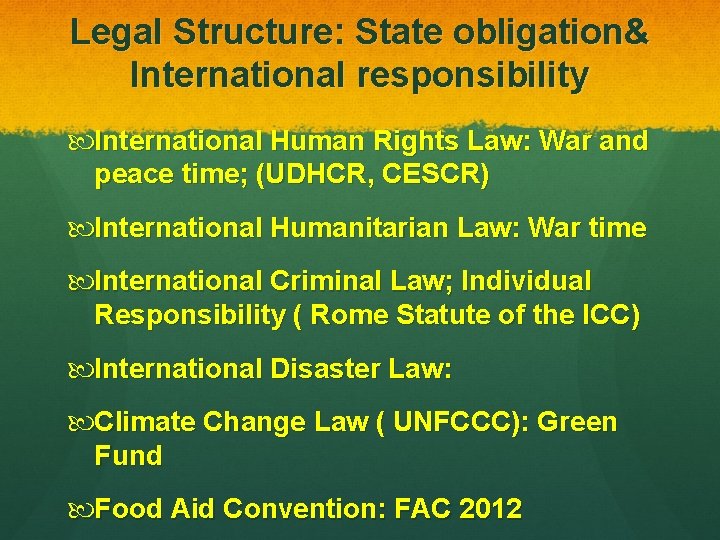
Legal Structure: State obligation& International responsibility International Human Rights Law: War and peace time; (UDHCR, CESCR) International Humanitarian Law: War time International Criminal Law; Individual Responsibility ( Rome Statute of the ICC) International Disaster Law: Climate Change Law ( UNFCCC): Green Fund Food Aid Convention: FAC 2012
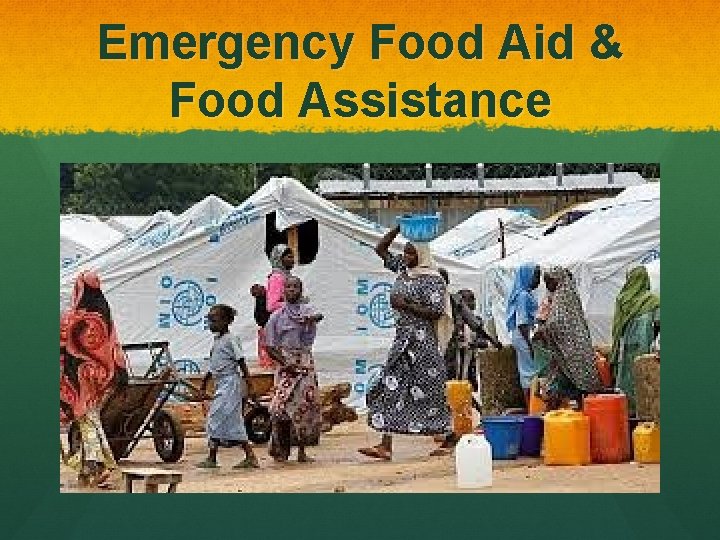
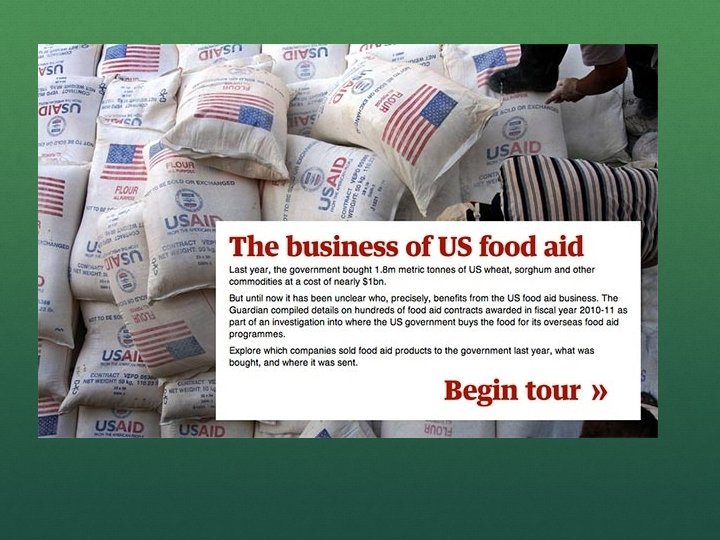
Emergency Food Aid & Food Assistance
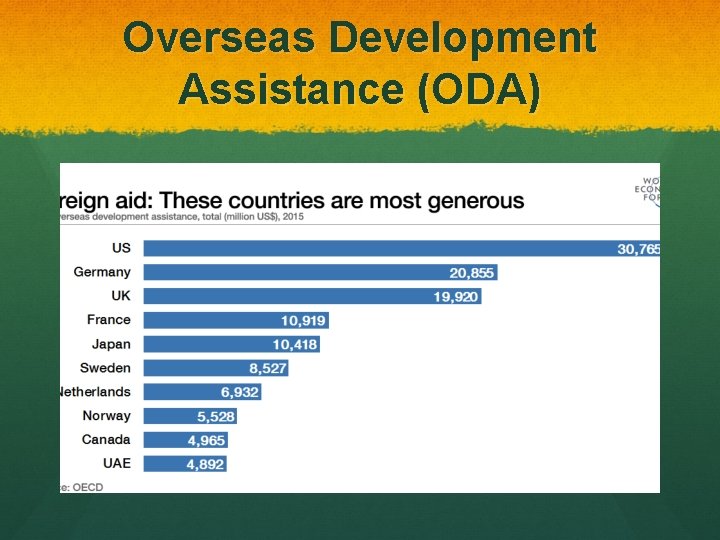
Overseas Development Assistance (ODA)
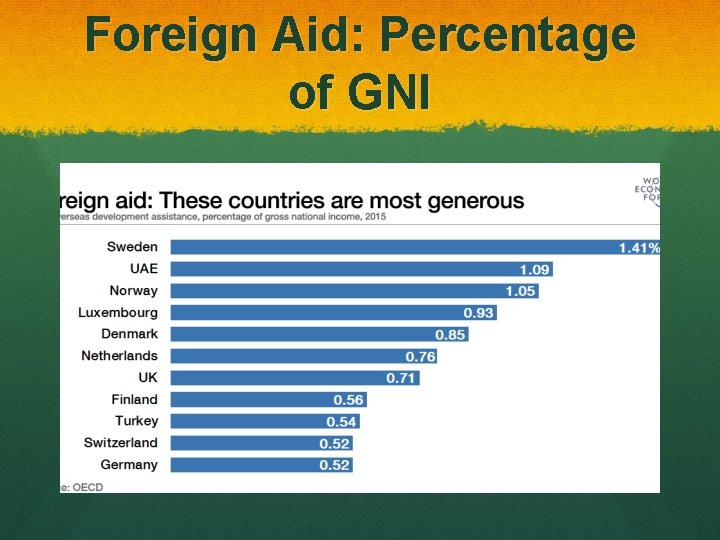
Foreign Aid: Percentage of GNI
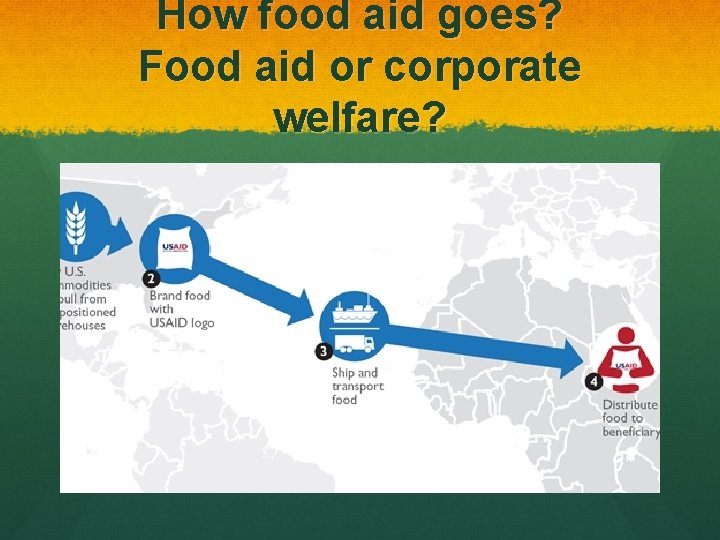
How food aid goes? Food aid or corporate welfare?
Reforming humanitarianism From charity and voluntarism to legal obligation Coordination: States, IO, NGOs, Private Sector Human rights approach; Accountability for all; More flexible, less earmarked; Greater local ownership; Solving funding gap: Innovative solution
Reform of the food assistance Convergence of emergency with development: than includes pre. , during and post disaster remedies ( infrastructure investment); Holistic approach: Climate justice, migration and other global problems; Right to food is collective rights as well as individual Introduce food sovereignty instead of industrial agriculture Strong gender perspective as they are the agent of change
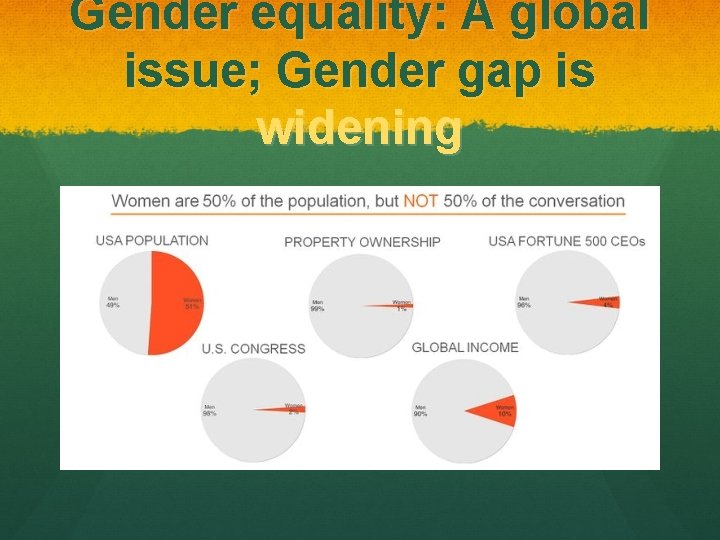
Gender equality: A global issue; Gender gap is widening
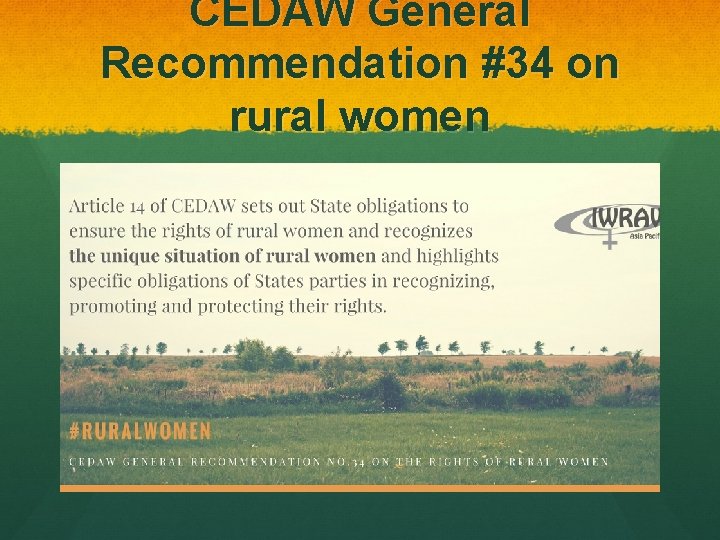
CEDAW General Recommendation #34 on rural women
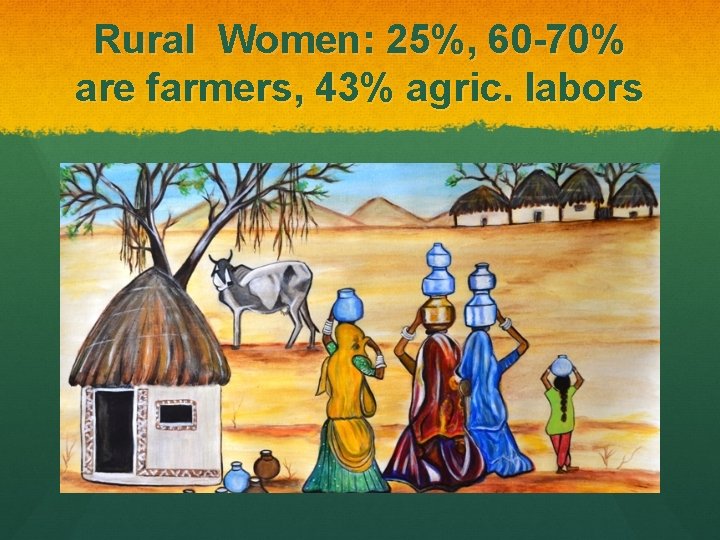
Rural Women: 25%, 60 -70% are farmers, 43% agric. labors
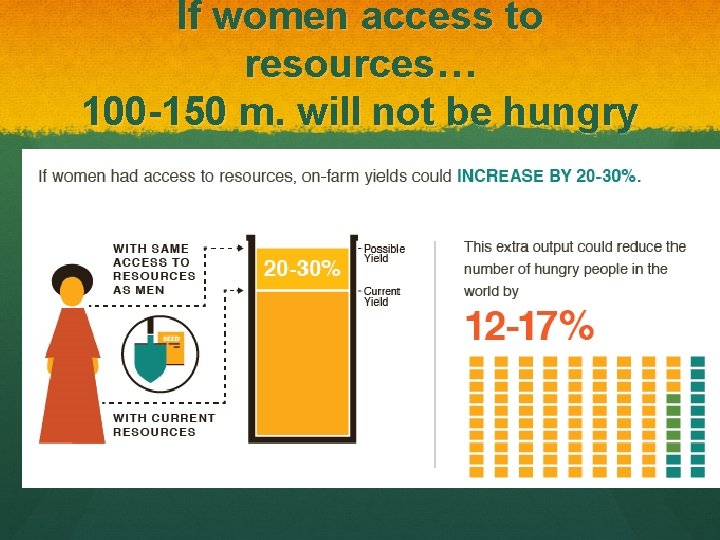
If women access to resources… 100 -150 m. will not be hungry
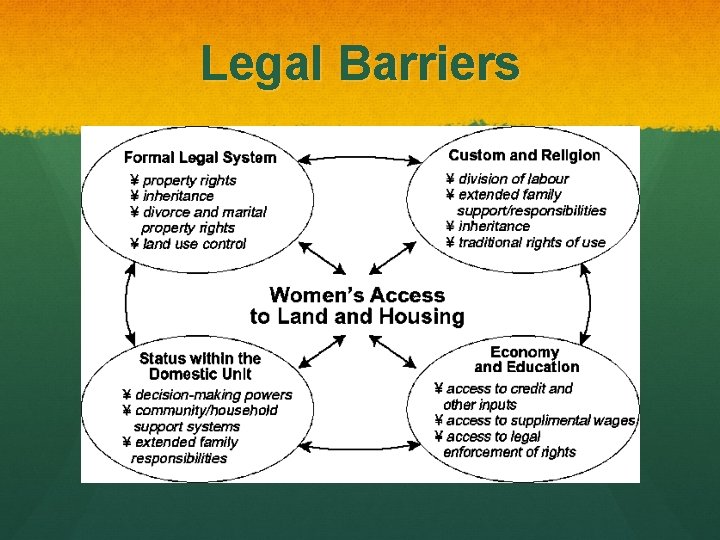
Legal Barriers
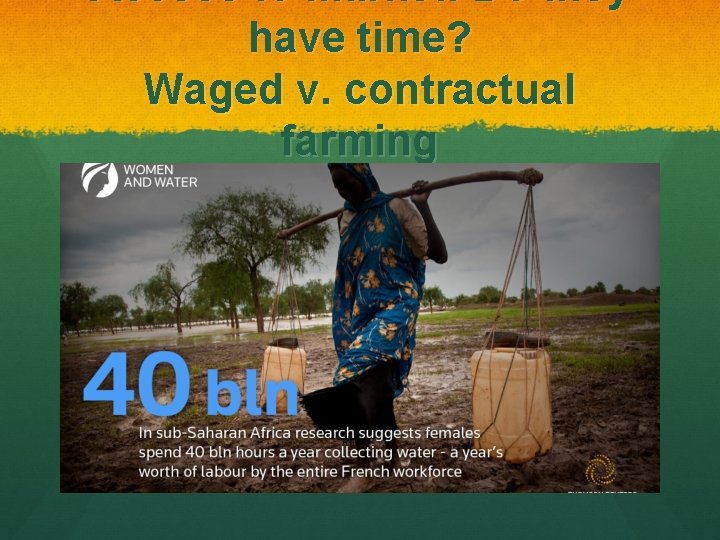
Access to market: Do they have time? Waged v. contractual farming
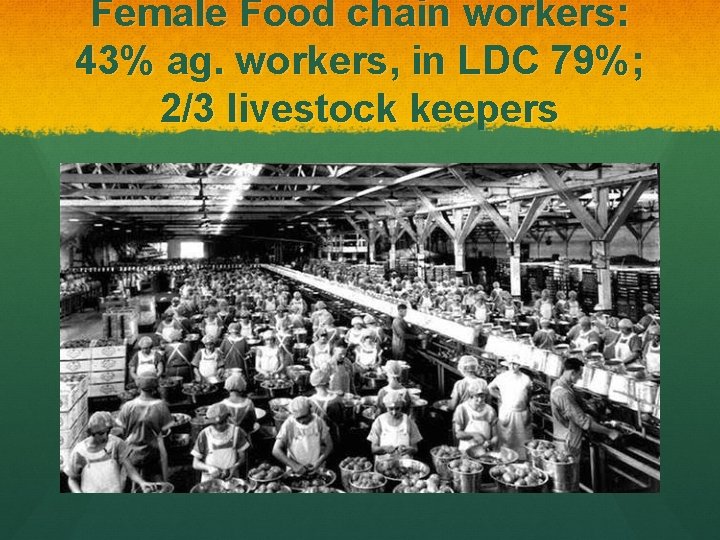
Female Food chain workers: 43% ag. workers, in LDC 79%; 2/3 livestock keepers
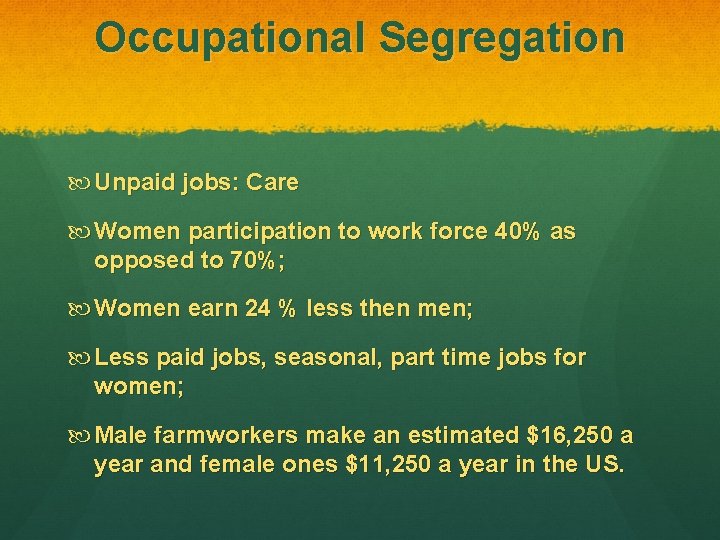
Occupational Segregation Unpaid jobs: Care Women participation to work force 40% as opposed to 70%; Women earn 24 % less then men; Less paid jobs, seasonal, part time jobs for women; Male farmworkers make an estimated $16, 250 a year and female ones $11, 250 a year in the US.
Economic Barriers: Gender gap Trade liberalization: Big scale industrial agriculture excludes women; Mono-cropping; Land grabbing; Cash crops v. local production; Access to credit; Agro-biotechnology ( Seed- GE);
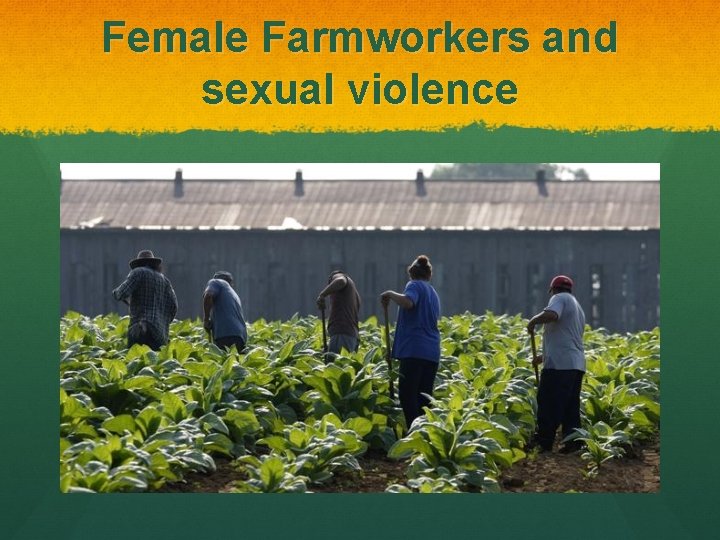
Female Farmworkers and sexual violence
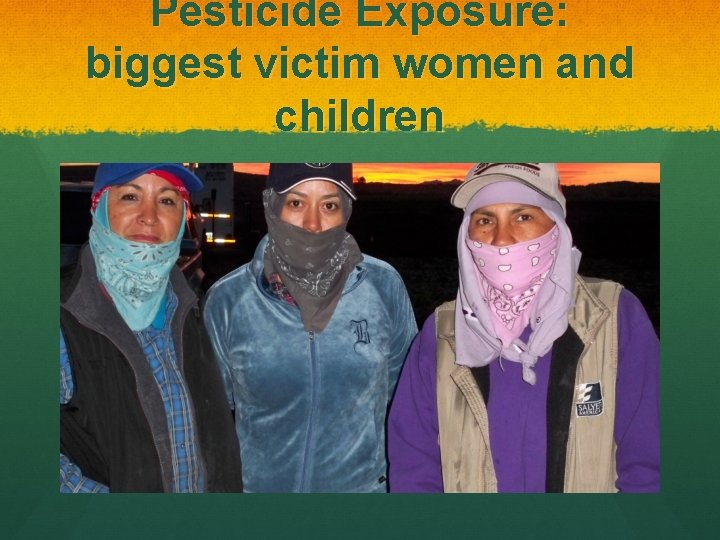
Pesticide Exposure: biggest victim women and children