
Conflict Theory Sociology 3 Major Theoretical Perspectives in
- Slides: 18
Conflict Theory Sociology
3 Major Theoretical Perspectives in Sociology l l l Symbolic Interactionism Functional Analysis Conflict Theory
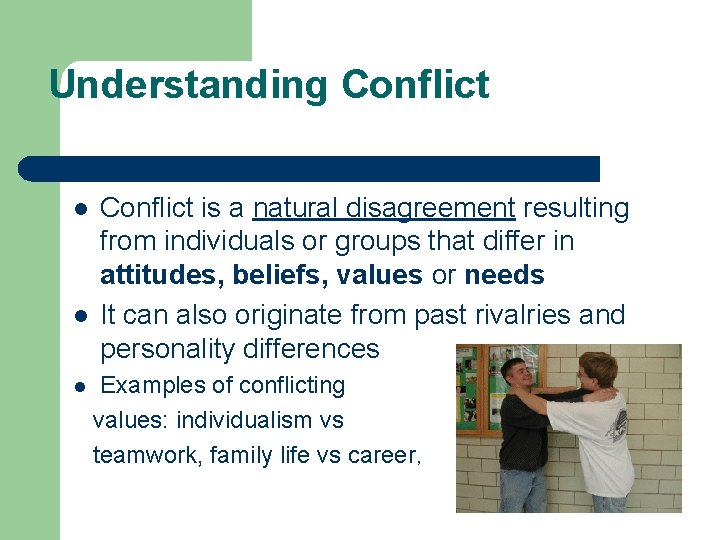
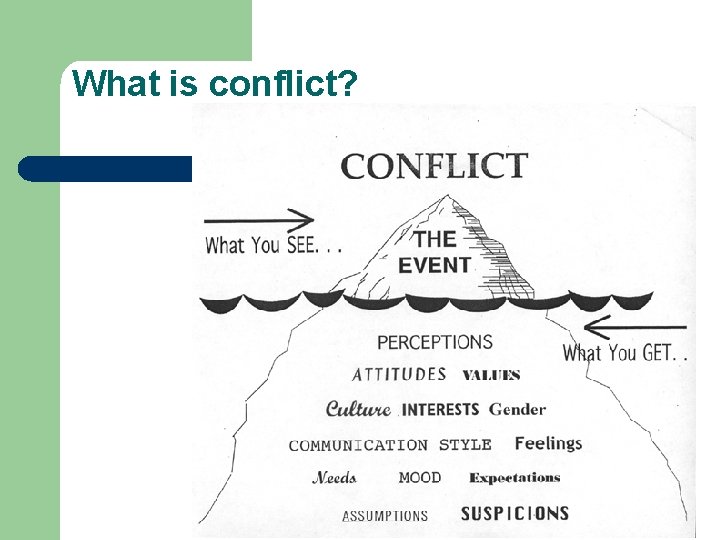
Understanding Conflict l l l Conflict is a natural disagreement resulting from individuals or groups that differ in attitudes, beliefs, values or needs It can also originate from past rivalries and personality differences Examples of conflicting values: individualism vs teamwork, family life vs career,
What is conflict?
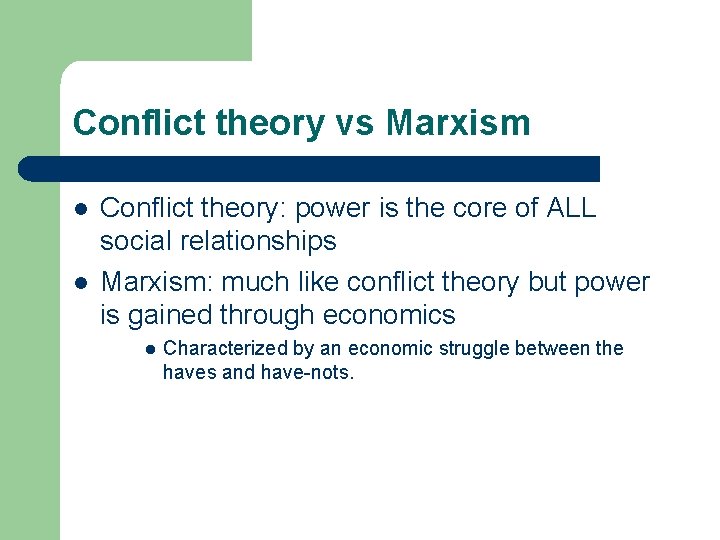
Conflict theory vs Marxism l l Conflict theory: power is the core of ALL social relationships Marxism: much like conflict theory but power is gained through economics l Characterized by an economic struggle between the haves and have-nots.
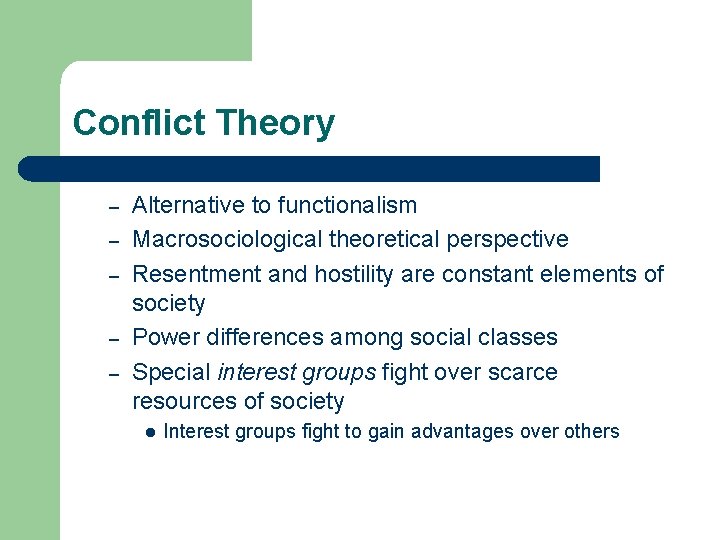
Conflict Theory – – – Alternative to functionalism Macrosociological theoretical perspective Resentment and hostility are constant elements of society Power differences among social classes Special interest groups fight over scarce resources of society l Interest groups fight to gain advantages over others
Conflict Theory (Cont’d) l Competition puts society off-balance until dominant group gains control and stability through power
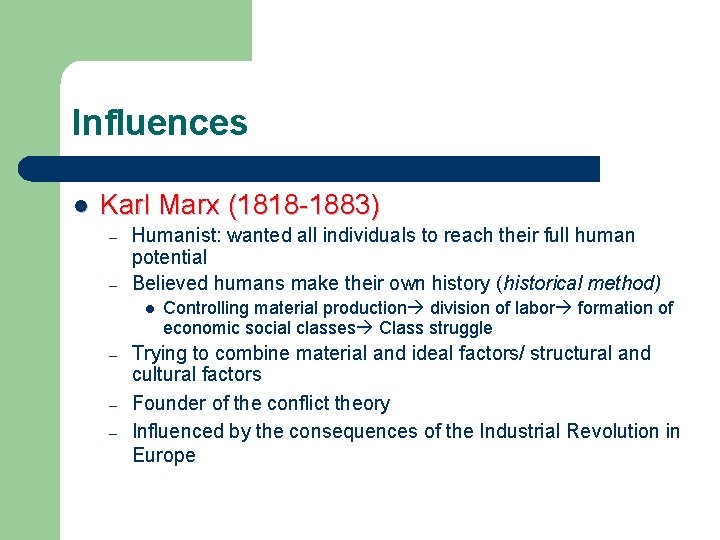
Influences l Karl Marx (1818 -1883) – – Humanist: wanted all individuals to reach their full human potential Believed humans make their own history (historical method) l – – – Controlling material production division of labor formation of economic social classes Class struggle Trying to combine material and ideal factors/ structural and cultural factors Founder of the conflict theory Influenced by the consequences of the Industrial Revolution in Europe
Karl Marx l l l Bourgeoisie – small group of capitalists who own the means to produce wealth Proletariat – mass of workers exploited by the bourgeoisie To be fair…Marx witnessed capitalism in its infancy Class differences have a lot to do with possession of personal property Believed the exploited would become conscious and unite communism elimination of class struggle
Conflict Theory Today l l Some sociologists use conflict theory in a much broader sense than Marx Result = constant struggle throughout society to determine who has authority and how far it goes
Conflict Theory Today l l Lewis Coser (1913 -2003) – argued conflict was most likely to develop among people in close relationships People work out a distribution of responsibilities, privileges, power, and rewards Defined conflict as “a struggle over values and claims to scarce status, power and resources in which the aims of the opponents are to neutralize, injure, or eliminate their rivals. ” Conflicts between intergroups and intragroups are part of social life
Feminists and Conflict Theory l l l View = conflict between men and women (not a united feminist view) At the core of feminist perspective is the issue of gender inequality, both at home and in the workplace. The emphasis for feminists is social change.
Applying the conflict Theory – why is the US divorce rate so high? l Number of marriages: 2, 118, 000 (2012) – – l l l Marriage rate: 6. 8 per 1, 000 total population Divorce rate: 3. 6 per 1, 000 population (44 reporting States and D. C. ) Conflict theorists – male / female relationships have changed. Men used to dominate With industrialization, women can meet their basic needs outside of marriage They don’t need to rely / put up with male conflict
Summary l l l Dominance of men over women once considered natural and right As women gained education and earnings, they lost willingness to accept this Divorce rates up – women not putting up w/ unfair relationships
Relevancy l l Maintains that what social order does, is the result of power elites’ coercion of masses Those without power seek social change Two class system by Marx Contemporary conflict theorists don’t limit power to just economics, but also look at other issues
Relevancy (cont’d) l 1. 2. 3. Three criticisms of conflict theory: Ignores other ways (i. e. non-forceful ways in which people reach agreements Sides with people who lack power Focuses on economic factors as the sole issue for all conflict in society l This primarily is for Marx’s approach
Relevancy (cont’d) l l Differences in power are in all types of interaction Power used to be physical, but now, it’s legal and economic
Macro vs. Micro l l Macro – functionalists & conflict theorists focus on large scale patterns Micro – symbolic interactionists focus on what people do in each other’s presence