
Conflict Resolution Year 7 Teaching Resource Western Australian
- Slides: 16
Conflict Resolution Year 7 Teaching Resource: Western Australian Curriculum Content Descriptions Health and Physical Education Management of emotional and social changes associated with puberty through the use of: • coping skills • communication skills • problem-solving skills and strategies The impact of relationships of own and others’ wellbeing: • the benefits of relationships; • the influence of peers and family; • applying online and social protocols to enhance relationships. Year 7 Unit of Work Transitions. Module 3 - Conflict Resolution © 2017 Government of Western Australia Department of Health <<www. gdhr. wa. gov. au>> 1
C NFLICT RES LUTI N When there is conflict it is important that you deal with it in a respectful way
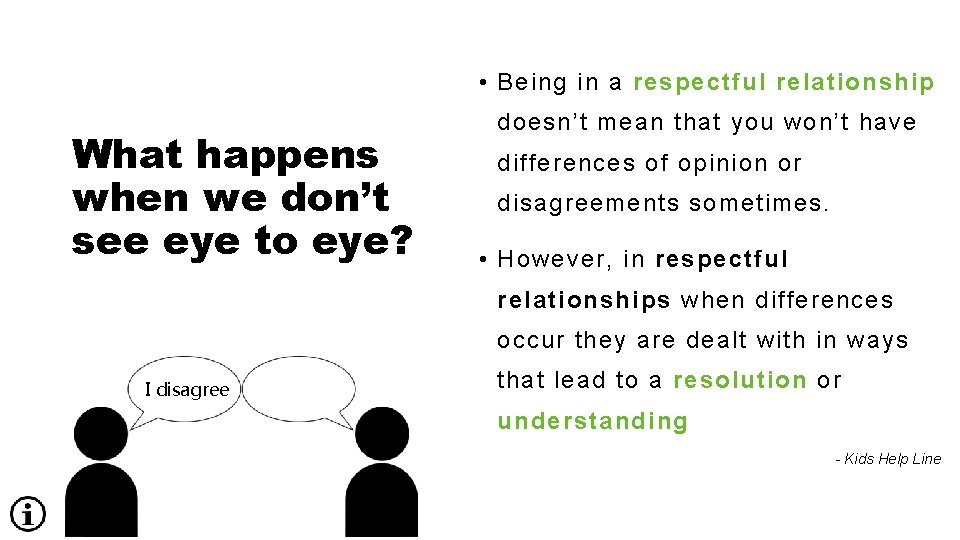
• Being in a respectful relationship What happens when we don’t see eye to eye? doesn’t mean that you won’t have differences of opinion or disagreements sometimes. • However, in respectful relationships when differences occur they are dealt with in ways I disagree that lead to a resolution or understanding - Kids Help Line
Managing Conflict Open the worksheet: Conflict Resolution Work in groups to come up with some ways that people in respectful relationships might manage differences:
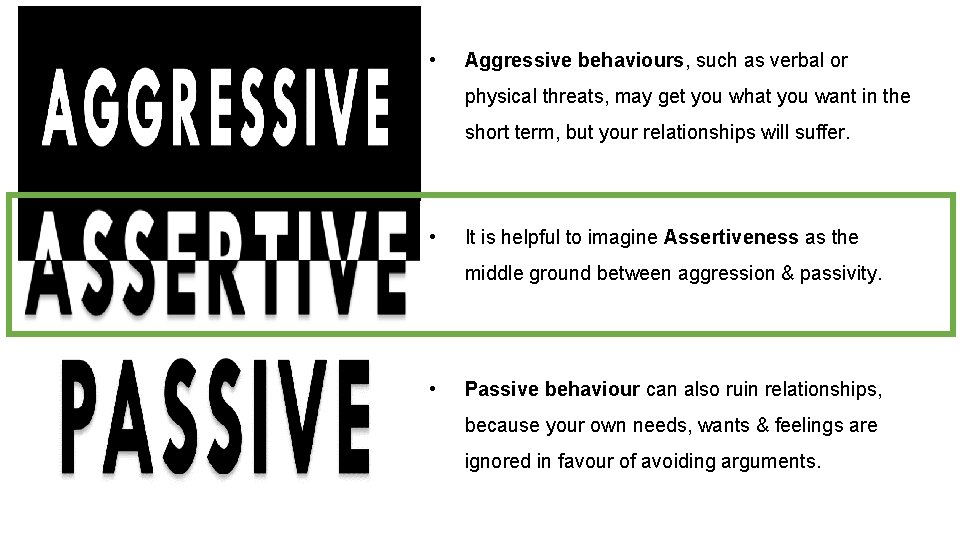
• Aggressive behaviours, such as verbal or physical threats, may get you what you want in the short term, but your relationships will suffer. • It is helpful to imagine Assertiveness as the middle ground between aggression & passivity. • Passive behaviour can also ruin relationships, because your own needs, wants & feelings are ignored in favour of avoiding arguments.
Being assertive is a skill anyone can learn! Being Assertive means… …communicating with others in a direct & honest manner without intentionally hurting anyone’s feelings
Benefits of being Assertive… • your needs, wants & feelings are more likely to be understood • your confidence & self-esteem are enhanced • your relationship is strengthened by the exchange • both parties are more likely to feel respected & heard • you experience fewer negative conflicts & arguments • you feel in control of your own life • you have a better chance of getting what you really want
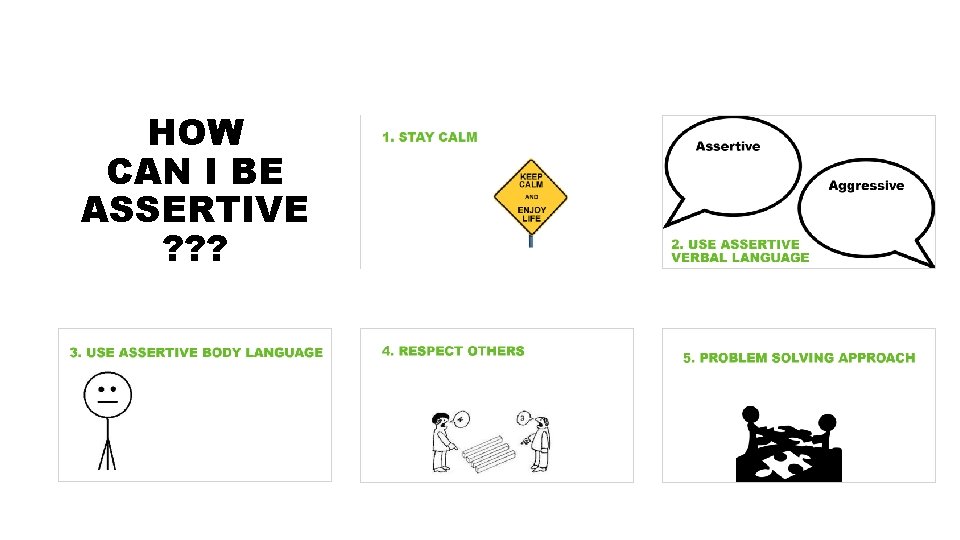
HOW CAN I BE ASSERTIVE ? ? ?
1. STAY CALM • Breathe, and take your time to respond. • Try not to take heat-of-the-moment criticisms to heart. (Remember that there may be other issues motivating their behaviour. ) • Steer the conversation back to the original point and try to understand the other person’s point of view. • If the conversation is not going well, tell the person you’ll take up the subject again at another time, and leave.
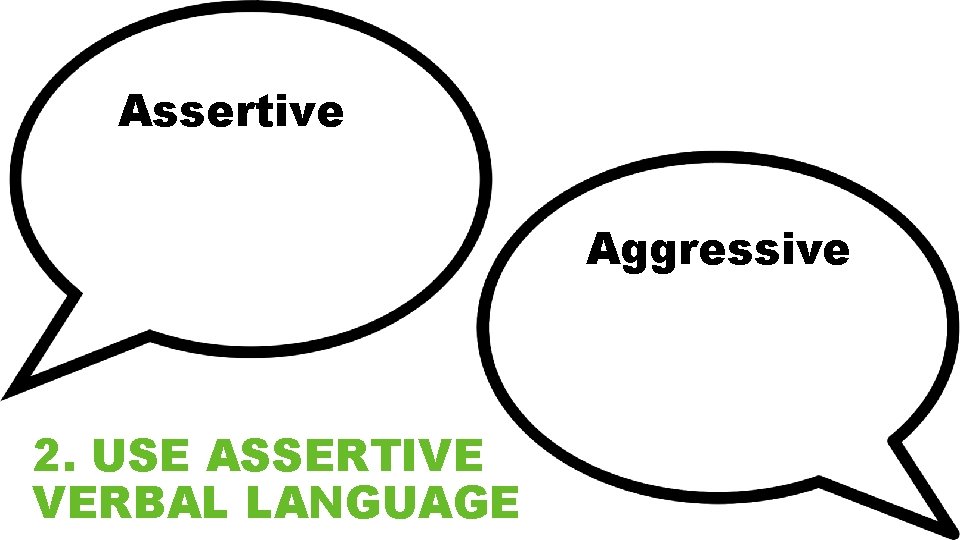
Assertive Such as: “I feel…” or “I think…” - takes responsibility for & explains exactly how you are feeling Aggressive Such as: “You always…” or “You…” - blames the other & escalates conflict 2. USE ASSERTIVE VERBAL LANGUAGE
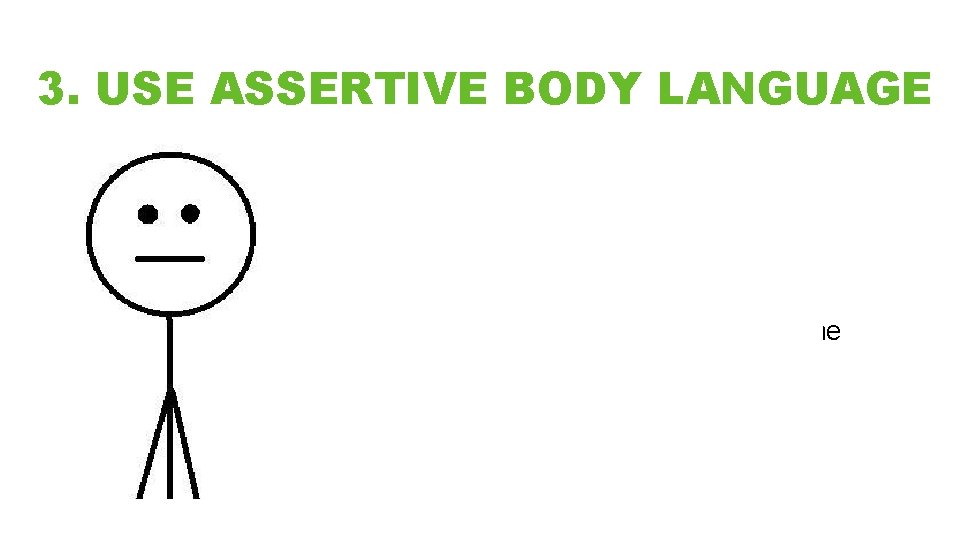
3. USE ASSERTIVE BODY LANGUAGE • Look the person in the eye • Breathe normally, don’t hold your breath • Speak at normal conversational volume • Keep your face & shoulders relaxed • Stand up straight
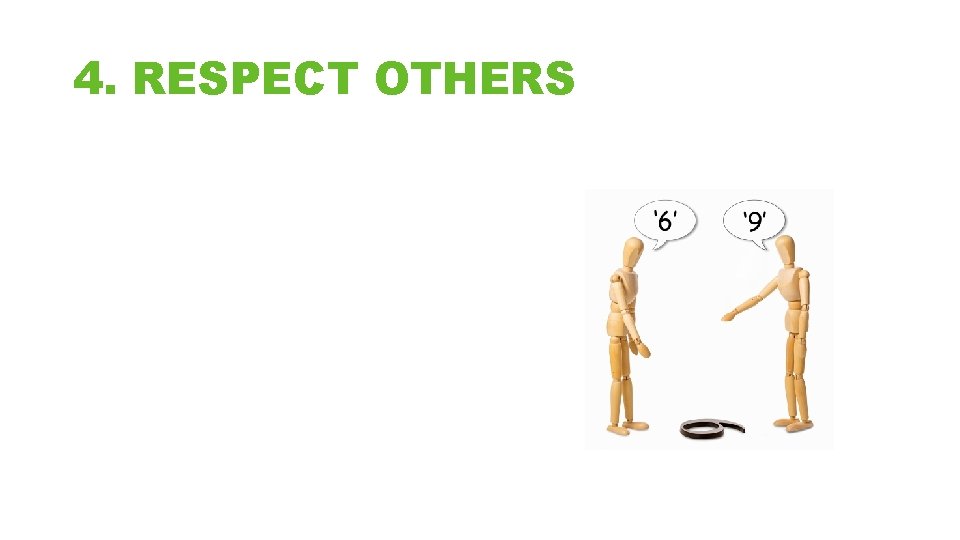
4. RESPECT OTHERS • Respect others - their wants, needs & feelings • Accept that their viewpoints may be different to yours • Don’t interrupt the other person when they are talking – listen!!
5. PROBLEM SOLVING APPROACH • Decide together exactly what the problem is • Seek solutions that will meet both sets of needs - be open & creative • Think out the consequences of each possible solution. • Try to see the other person as someone you are working with, rather than against.
Activity : « Walk in my Shoes» • Is there a way to achieve a solution that is okay for both? What might it be?
Activity : « Relationship Action Plan» • Consider your existing relationships (e. g. with a parent, a sibling, a friend) • Choose [1] relationship that you would like to improve and develop an action plan for this. What actions or choices could be taken to improve this relationship? Open worksheet: Relationship Action Plan
« Discussion » …Do you think this would improve relationships with your …Why is it important to talk to your parents or carers about how you …Why is it important for us to reflect on our own relationships? …Why is it important for us to make changes to our relationships if they …Why is it important to put ourselves in the other person’s shoes (or …Do you think your parents/carers would trust you more if you tell …Where do you think you could go for help if you couldn't improve an parents/carers? are feeling, rather than keep what you are thinking and doing to are not healthy? show empathy) when we experience conflict in our relationships? them what you are feeling and doing? unhealthy relationship yourself?