
Conflict Resolution Sharon Parrott 1 Agenda Introduction Icebreaker
Conflict Resolution Sharon Parrott 1

Agenda • • Introduction Icebreaker Understanding the nature of conflict The Win/Win Approach 2

Ice Breaker • Discuss desired outcomes • Record on wall posters • Revisit at the end of class 3

Understanding Conflict • Conflict is everywhere • Do not avoid • Handle in a productive manner 4

Recalling Personal Experience of Conflict • What does conflict mean to you? • Is conflict a fight, a disagreement or war? • What feelings do you have when conflict arises? 5
Destructive Ways • • • Tension Unresolved problems Stress Low productivity Sour relationships Time off – sick Health problems Anxiety Resentment 6

Constructive Ways • • Relaxation Openness High productivity Expanding friendly relationships Vitality Good health Empowerment A sense of achievement 7

Levels of Conflict 8
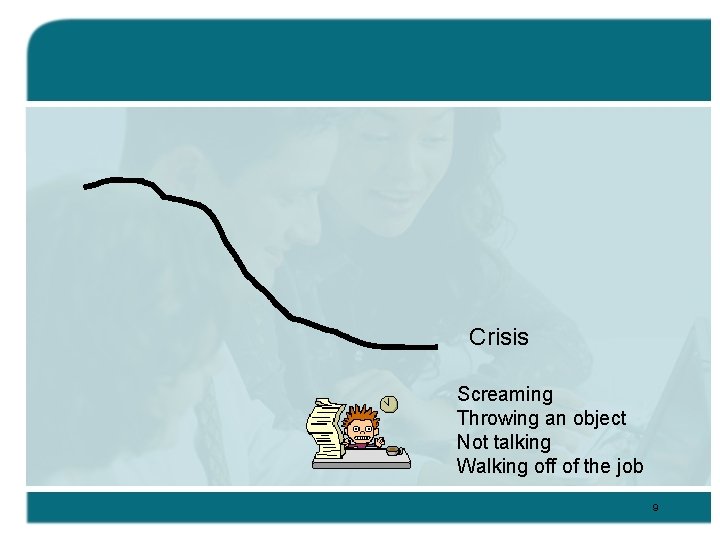
Crisis Screaming Throwing an object Not talking Walking off of the job 9
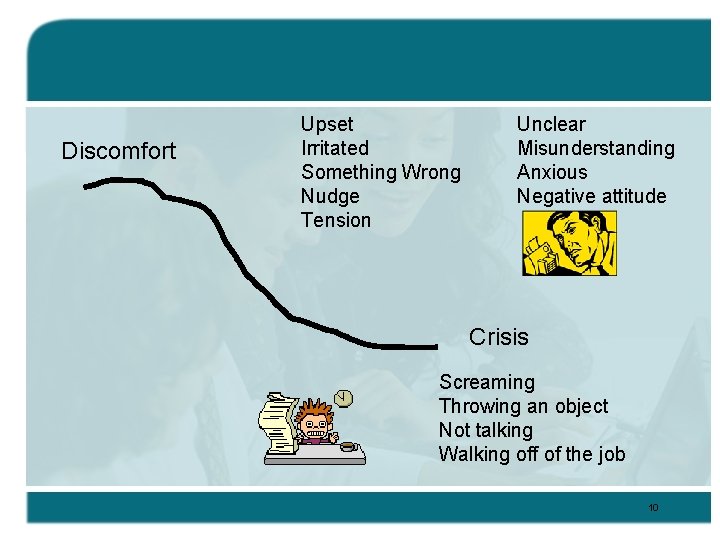
Discomfort Upset Irritated Something Wrong Nudge Tension Unclear Misunderstanding Anxious Negative attitude Crisis Screaming Throwing an object Not talking Walking off of the job 10
• Stay Alert • Choose the appropriate – Time – Opportunity – Option 11
Break Time • Return in 15 minutes 12
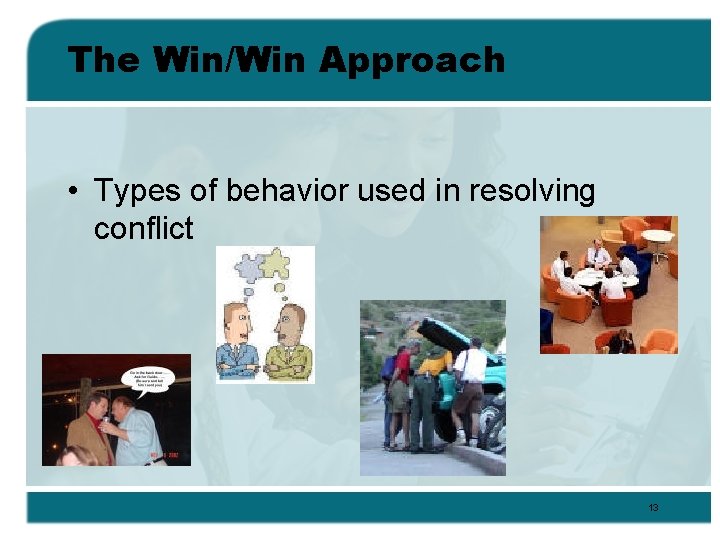
The Win/Win Approach • Types of behavior used in resolving conflict 13
Conflict Behavior • • • Some deal with the problem Others avoid it Some enhance relationships Others harm relationships Some solve the conflict Others increase it 14
Reasons for Conflict Responses • Habit • Learned patterns • Variations with mood, setting, relationship, significance of the conflict • Belief system – for me to win someone must lose 15
Fight Concept • • • Screaming Physical violence Refusing to listen Manipulation Sulking 16
Fight Behaviors • • I am right and you are wrong To blame and punish To threaten I am ok and you are not 17
Flight Behaviors • • • Sulking Crying Avoiding Pretending it has not happened Giving in 18
Flight Behavior Intentions • • • I am wrong and you are right To avoid conflict To maintain peace To let the other people win I am not ok and you are 19
Flow Behaviors • • • Discussing the issue Listening to others Taking time-out Explaining own perspective and needs Compromising 20
Flow Behavior Intentions • • There must be a way to solve this To sort out the problem To respect others To make sure everyone is satisfied with the solution • I am ok and you are ok 21

22
Understanding Behavior • • • Context Relationship of participants Culture Past history Future 23
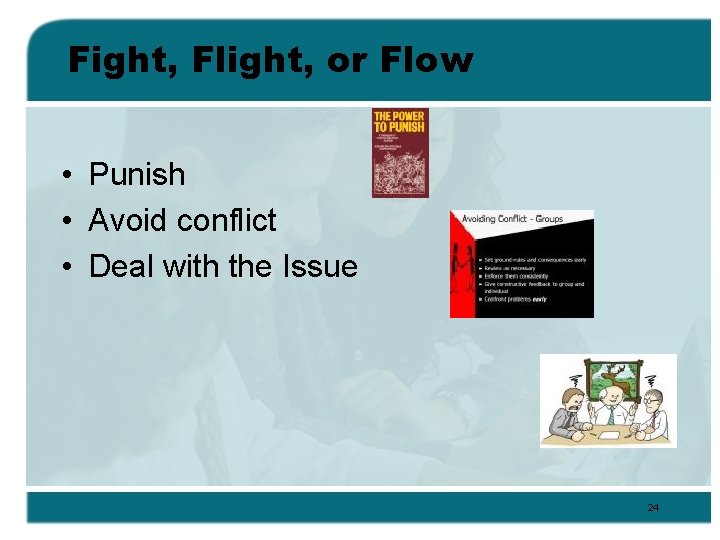
Fight, Flight, or Flow • Punish • Avoid conflict • Deal with the Issue 24
25
Discuss Listen Find out what each other wants/needs 26
Win/Win Approach • Needs first • Solutions later 27

The Win/Win Approach • Compromise – Fair – Everyone shares – Everyone has some needs met 28
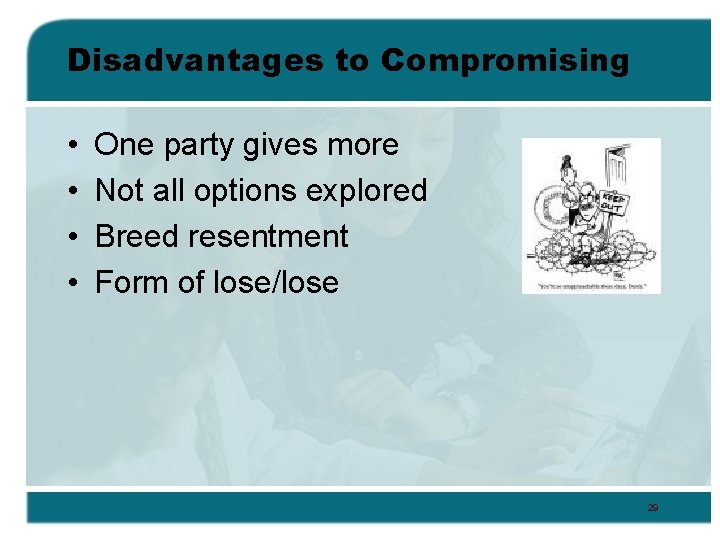
Disadvantages to Compromising • • One party gives more Not all options explored Breed resentment Form of lose/lose 29
Break Time Return in 15 minutes 30
Principles of Win/Win Approach • • • Considering needs Concerned with fairness Respecting relationships No one loses Fulfilling needs Consulting with others 31
Benefits to Win/Win Approach • • • Productivity Creativity Quality Commitment Focus 32
No Compromise • Jobs • Not worked hard enough • Conflicting family functions 33

34
Beginning conflict issues – were they answered? 35
Finale Thank you for attending! 36
- Slides: 36