
CONFLICT RESOLUTION HOW TO SOLVE A CHALLENGE WITHOUT
- Slides: 15
CONFLICT RESOLUTION HOW TO SOLVE A CHALLENGE WITHOUT FIGHTING By Dr. Eugene Simpson & Ms. Va. Nessa Meads
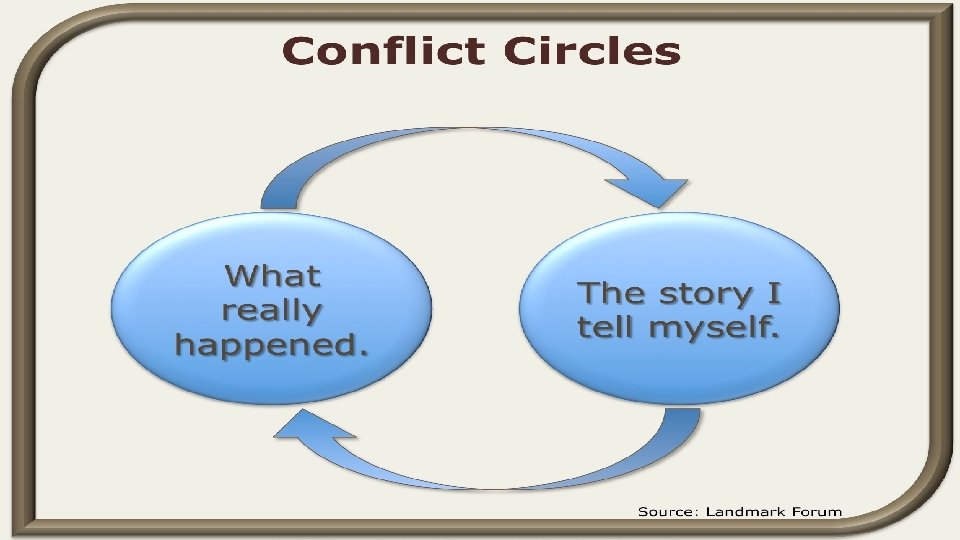
Take a moment and visualize a recent conflict you had with someone. Represent that conflict in some way on paper. Using figures, shapes, or simply color. ATTITUDES IN CONFLICT NEGOTIATION
Seek mutual gain Explore Try options for solution to achieve agreement Agree on goals SUCCESSFUL NEGOTIATIONS
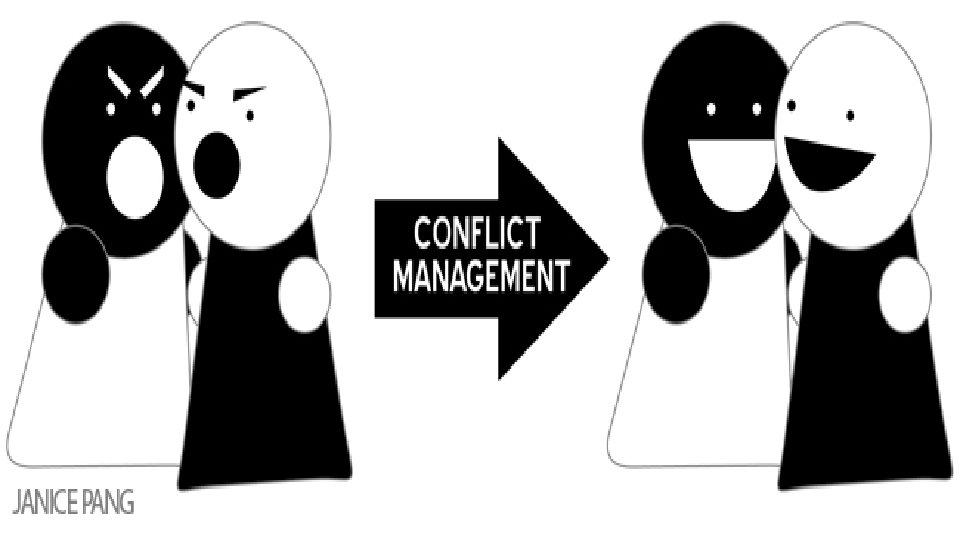
Conflict is a normal part of any healthy relationship. After all, two people can’t be expected to agree on everything, all the time. Learning how to deal with conflict—rather than avoiding it—is crucial. When conflict is mismanaged, it can cause great harm to a relationship, but when handled in a respectful, positive way, conflict provides an opportunity to strengthen the bond between two people. By learning these skills for conflict resolution, you can keep your personal relationships strong and growing.
Understanding conflict in relationships Conflict arises from differences, both large and small. It occurs whenever people disagree over their values, motivations, perceptions, ideas, or desires. Sometimes these differences appear trivial, but when a conflict triggers strong feelings, a deep personal need is often at the core of the problem. These needs can be a need to feel safe and secure or need to feel respected.
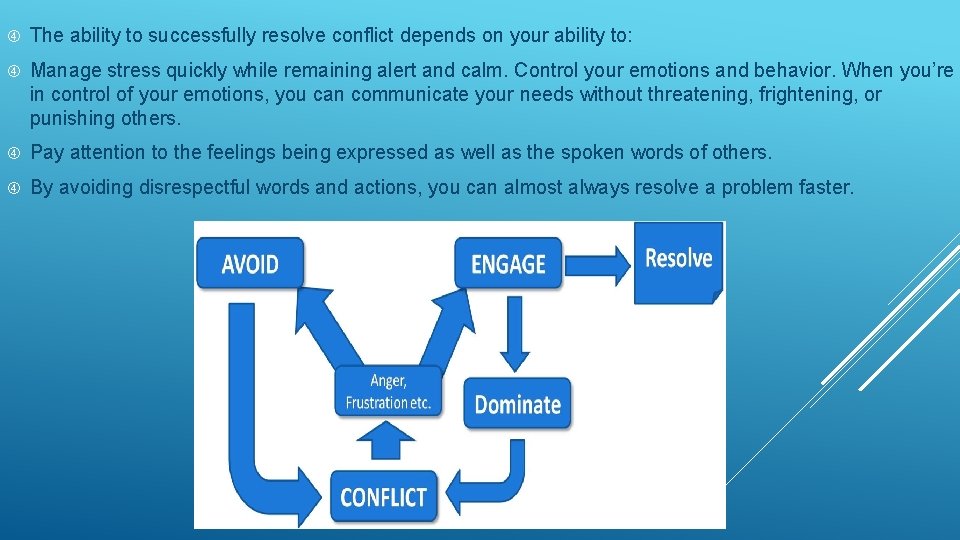
The ability to successfully resolve conflict depends on your ability to: Manage stress quickly while remaining alert and calm. Control your emotions and behavior. When you’re in control of your emotions, you can communicate your needs without threatening, frightening, or punishing others. Pay attention to the feelings being expressed as well as the spoken words of others. By avoiding disrespectful words and actions, you can almost always resolve a problem faster.
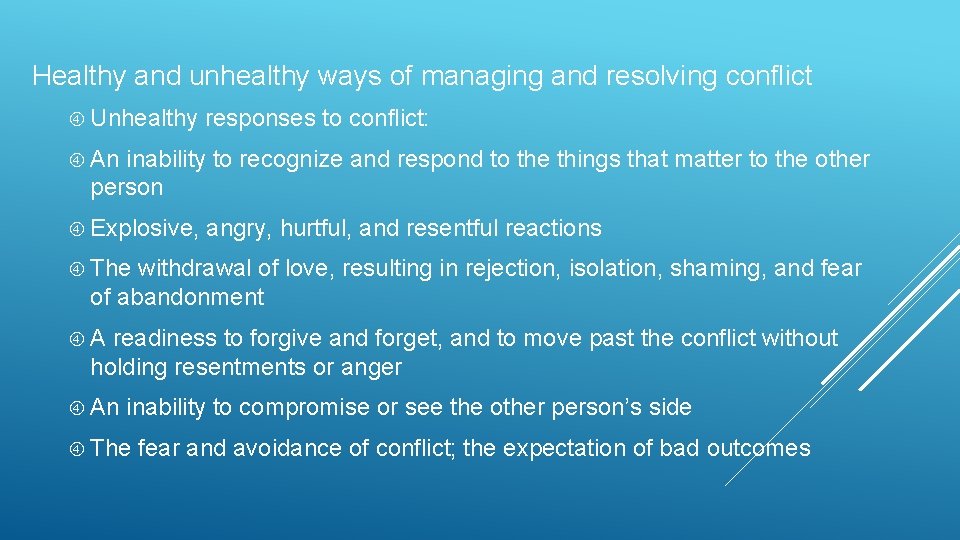
Healthy and unhealthy ways of managing and resolving conflict Unhealthy responses to conflict: An inability to recognize and respond to the things that matter to the other person Explosive, angry, hurtful, and resentful reactions The withdrawal of love, resulting in rejection, isolation, shaming, and fear of abandonment A readiness to forgive and forget, and to move past the conflict without holding resentments or anger An inability to compromise or see the other person’s side The fear and avoidance of conflict; the expectation of bad outcomes
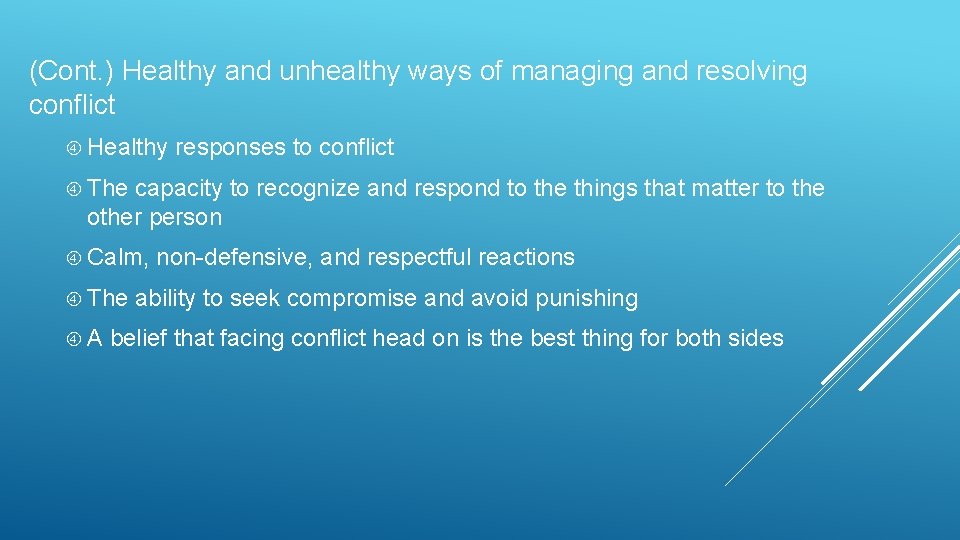
(Cont. ) Healthy and unhealthy ways of managing and resolving conflict Healthy responses to conflict The capacity to recognize and respond to the things that matter to the other person Calm, The A non-defensive, and respectful reactions ability to seek compromise and avoid punishing belief that facing conflict head on is the best thing for both sides
TYPICAL CONFLICT BEHAVIORS S. T. E. P. S. TO CONFLICT NEGOTIATION
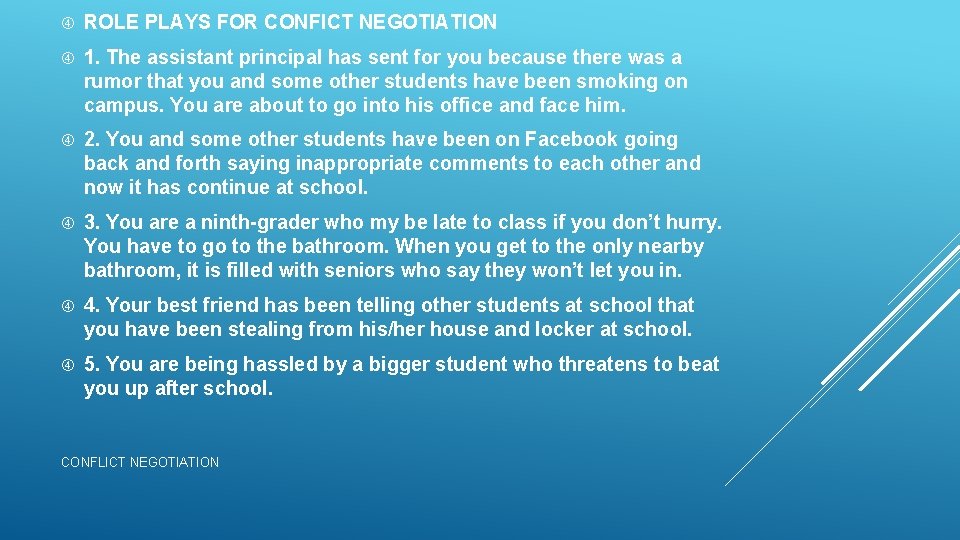
ROLE PLAYS FOR CONFICT NEGOTIATION 1. The assistant principal has sent for you because there was a rumor that you and some other students have been smoking on campus. You are about to go into his office and face him. 2. You and some other students have been on Facebook going back and forth saying inappropriate comments to each other and now it has continue at school. 3. You are a ninth-grader who my be late to class if you don’t hurry. You have to go to the bathroom. When you get to the only nearby bathroom, it is filled with seniors who say they won’t let you in. 4. Your best friend has been telling other students at school that you have been stealing from his/her house and locker at school. 5. You are being hassled by a bigger student who threatens to beat you up after school. CONFLICT NEGOTIATION
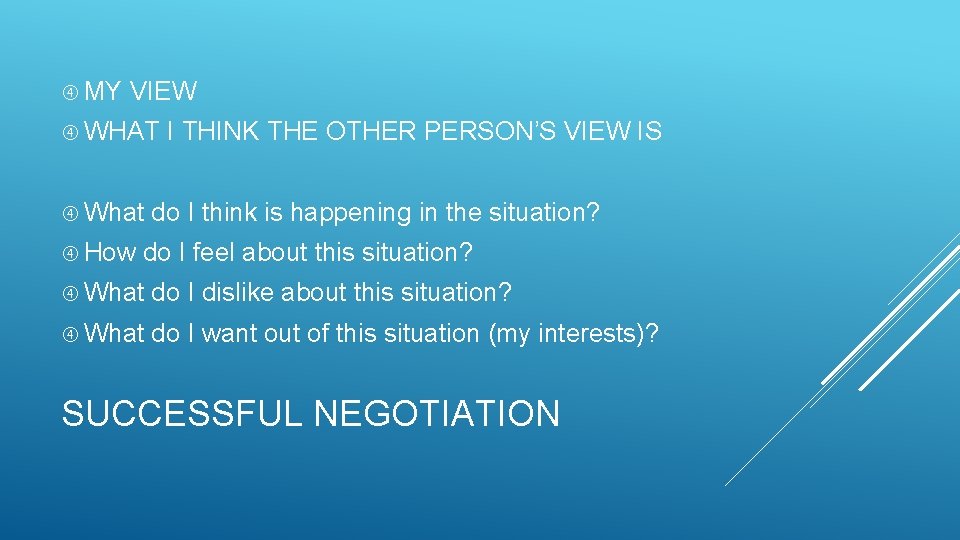
MY VIEW WHAT What How I THINK THE OTHER PERSON’S VIEW IS do I think is happening in the situation? do I feel about this situation? What do I dislike about this situation? What do I want out of this situation (my interests)? SUCCESSFUL NEGOTIATION