
Conflict Resolution Conflict List five words that you
- Slides: 21
Conflict Resolution
Conflict • List five words that you associate with “conflict”.
• What are some similarities and differences in the words you gave? • What might account for these similarities and differences? • What do these words say about how you feel about conflict? (Positve or negative? Why? )
Conflict • Is inevitable • Is normal part of life.
• Why do people often see conflict as something negative, something to avoid, a reason to fight?
• How can a conflict becomes positive?
Components of Conflict Who: What: When : Where: Why
Definition of Conflict • Conflict is when two or more people want different things.
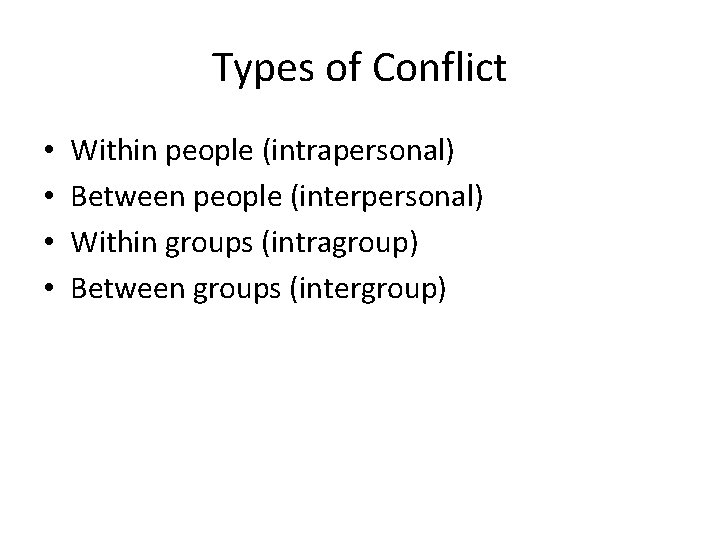
Types of Conflict • • Within people (intrapersonal) Between people (interpersonal) Within groups (intragroup) Between groups (intergroup)
TIPS • Every time we interact with someone there is a potential for conflict because people’s needs and expectations may not be the same. • We can feel conflicts within ourselves and may displace these onto others unless we are careful.
TIPS • Small conflicts should be dealt with as soon as possible, so they don’t grow. • Try to identify possible hidden conflicts. • Disagree with ideas or behavior, not people.
How do you think people approach conflicts? • Think about the importance of issues and/or relationships
Conflict Styles • • • Avoiding – Accommodating – Forcing – Compromising – Collaborating -
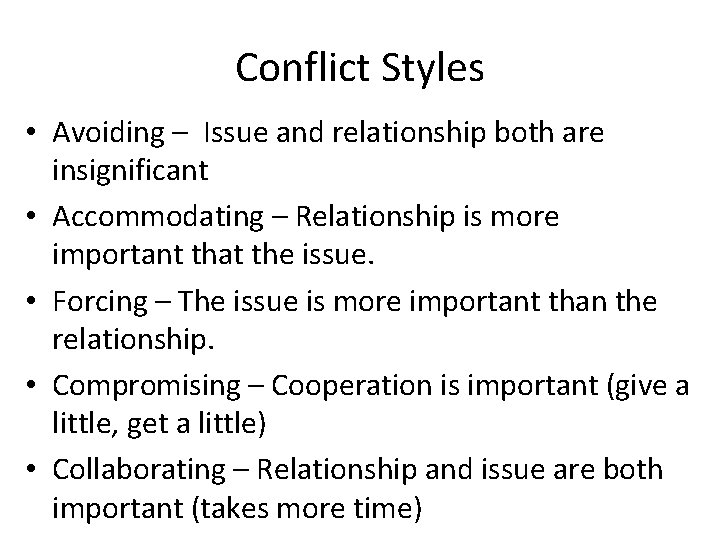
Conflict Styles • Avoiding – Issue and relationship both are insignificant • Accommodating – Relationship is more important that the issue. • Forcing – The issue is more important than the relationship. • Compromising – Cooperation is important (give a little, get a little) • Collaborating – Relationship and issue are both important (takes more time)
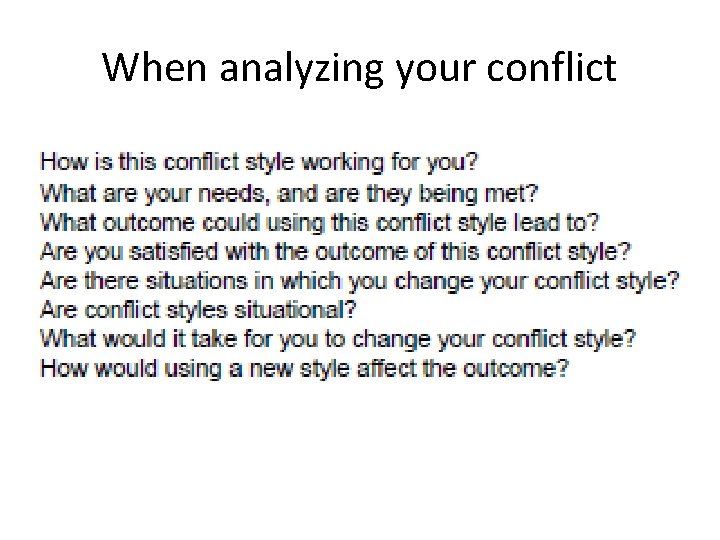
When analyzing your conflict
Activity One • Clenched Fist. One student clenches his/her fist. The rest need to figure out a way to unclench this student’s fist in 30 seconds.
• What happened? • How did you get the person to unclench his or her fist? • What worked? What didn’t work? • What did you do to overcome the challenges?
Conflict Outcomes • • Win – Lose – Win Lose – Lose Win -Win
• Quietly reflect on a recent conflict you had. After one minute share the conflict style with a partner.
• • How did you approach the conflict? What conflict style did you use? Did both of you feel satisfied? If you could be in the conflict again, what style would you use?
Summary • Conflict styles are based on the issue, the situation, the significance of the relationship, and personal values. • The style one chooses directly affects the conflict’s outcome.