
CONFLICT MANAGEMENT PRAMOD NIROULA Nepal Administrative Staff College




- Slides: 30
CONFLICT MANAGEMENT PRAMOD NIROULA Nepal Administrative Staff College, 2076
Session Outline 2 Understand Conflict Nature and Causes of Conflict Process Conflict Management Strategies Some Effective Tips to handle Conflict
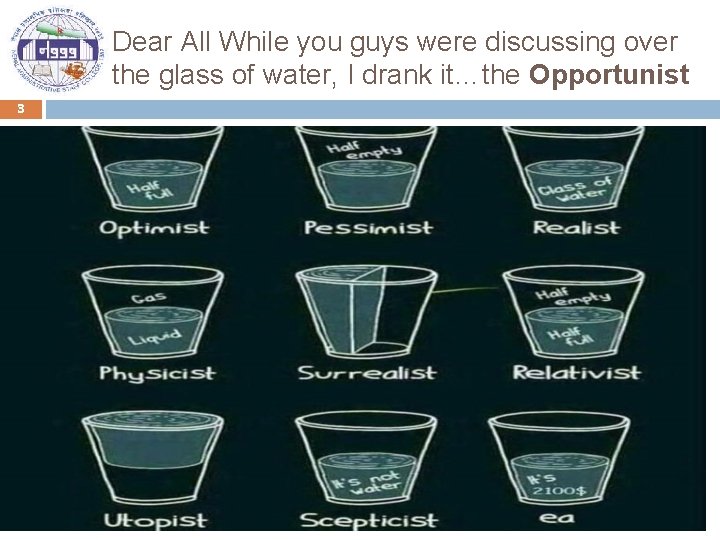
Dear All While you guys were discussing over the glass of water, I drank it…the Opportunist 3
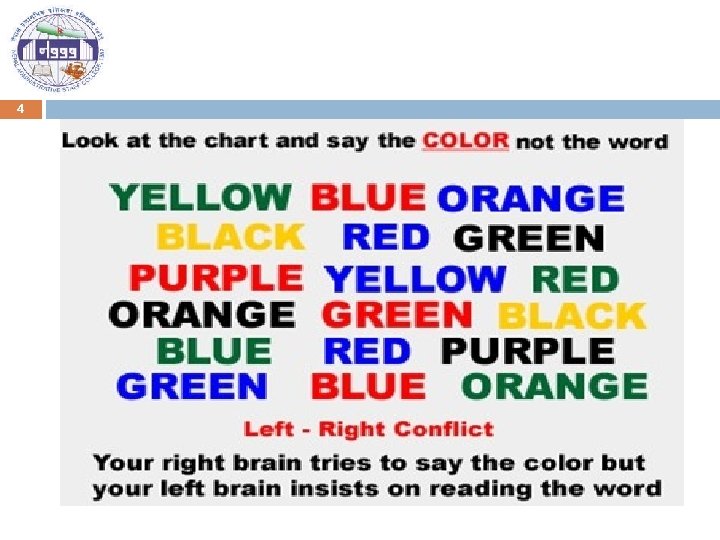
4
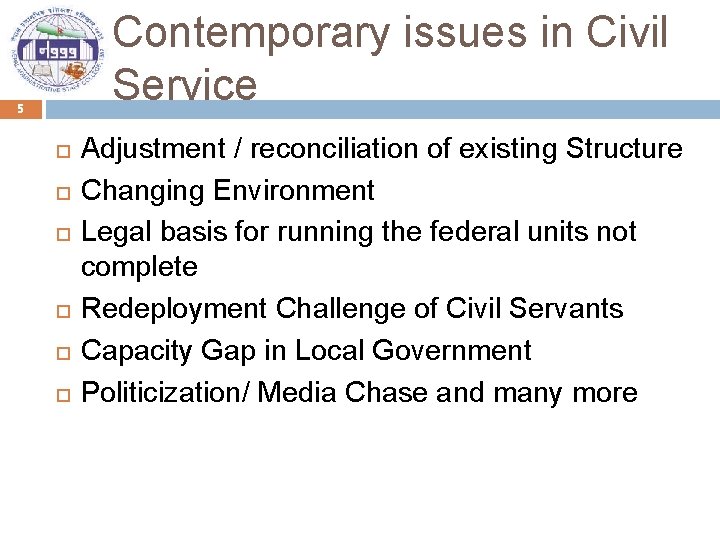
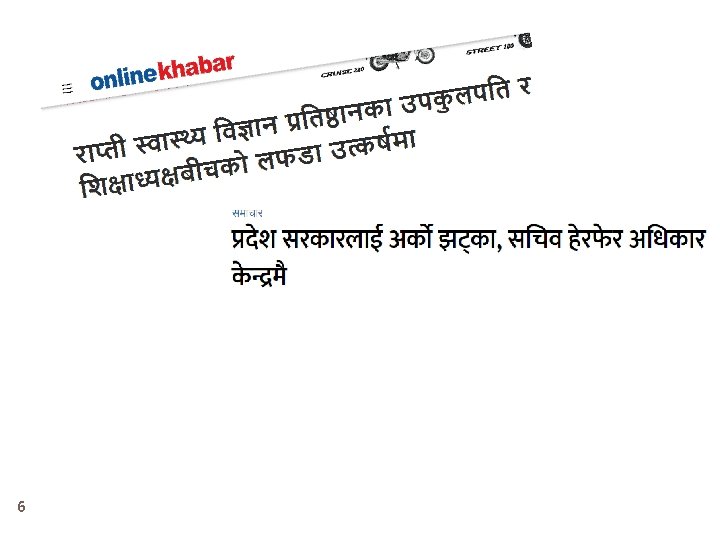
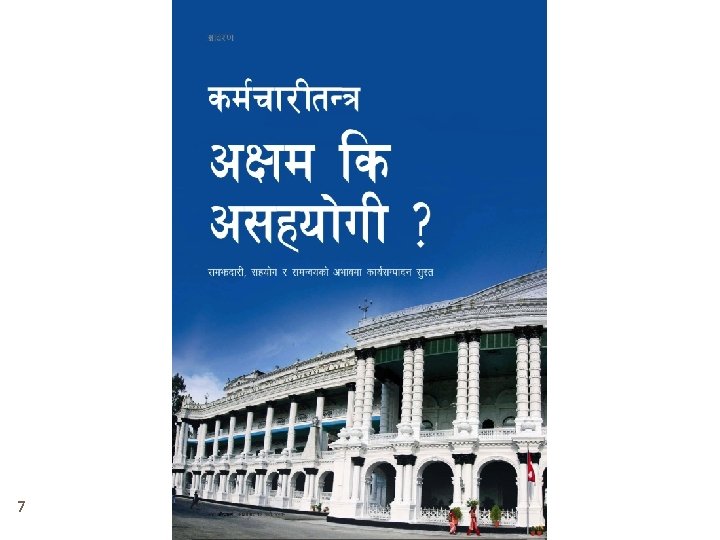
Contemporary issues in Civil Service 5 Adjustment / reconciliation of existing Structure Changing Environment Legal basis for running the federal units not complete Redeployment Challenge of Civil Servants Capacity Gap in Local Government Politicization/ Media Chase and many more
6
7
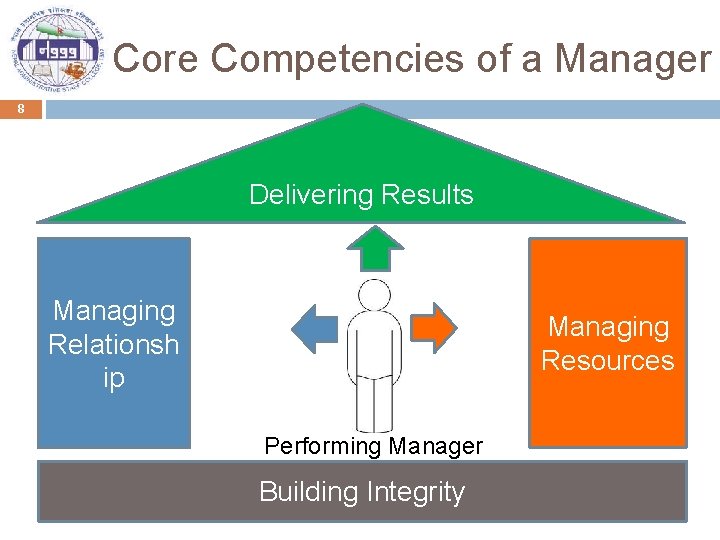
Core Competencies of a Manager 8 Delivering Results Managing Relationsh ip Managing Resources Performing Manager Building Integrity
One of the realities we face 9 Community User group at Aadhikhola RMCP- Use dozer instead of labor hour contribution for local road construction. Using dozer means ensuring a VAT bill of 13%. However, they do not pay it instead generate “varpai receipt” of the amount allocated in the form of “Dor-Hajiri”
Conflict: Definition 10 A process that begins when one party perceives that another party has negatively affected, or is about to negatively affect, something that the first party cares about. -S. P. Robbins
Conflict: Definition 11 A natural and inevitable fact of personal/ organizational life; Occurs due to various reasons ranging from personalities, attitude to rules, regulations, policies, practices and available resources, communication and structure etc. . . ; May have positive or negative implications;
Conflict: Transitions Thought 12 Traditional View of Conflict(Dysfunctional) The belief that all conflict is harmful and must be avoided Prevalent view in the 1930 s-1940 s Human Relations(Humanistic) View of Conflict The belief that conflict is a natural and inevitable outcome in any group Focuses on productive conflict resolution
Conflict: Transitions Thought 13 Modern(Interactionistic) View of Conflict The belief that conflict is not only a positive force in a group but that it is absolutely necessary for a group to perform effectively A “positive force” that is necessary for a group effectiveness, self critical & creative.
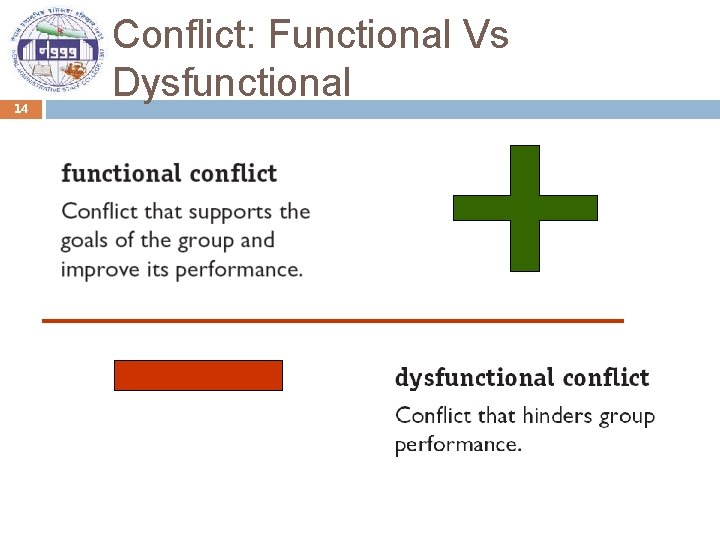
14 Conflict: Functional Vs Dysfunctional
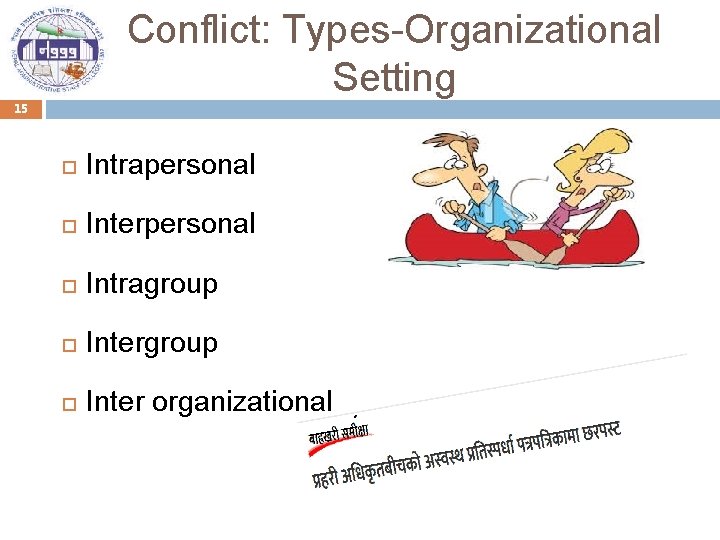
Conflict: Types-Organizational Setting 15 Intrapersonal Interpersonal Intragroup Inter organizational
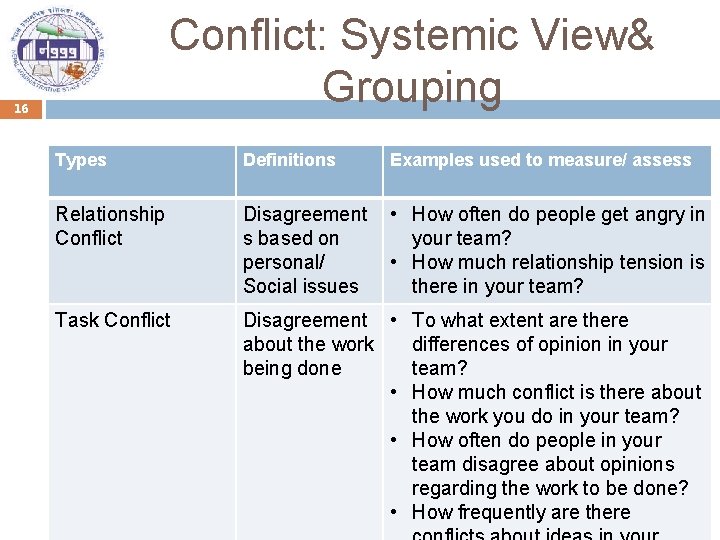
Conflict: Systemic View& Grouping 16 Types Definitions Examples used to measure/ assess Relationship Conflict Disagreement s based on personal/ Social issues • How often do people get angry in your team? • How much relationship tension is there in your team? Task Conflict Disagreement • To what extent are there about the work differences of opinion in your being done team? • How much conflict is there about the work you do in your team? • How often do people in your team disagree about opinions regarding the work to be done? • How frequently are there
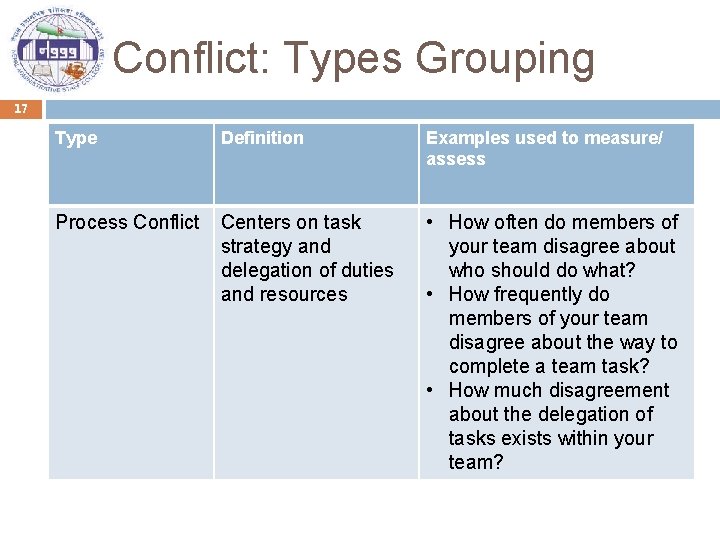
Conflict: Types Grouping 17 Type Definition Examples used to measure/ assess Process Conflict Centers on task strategy and delegation of duties and resources • How often do members of your team disagree about who should do what? • How frequently do members of your team disagree about the way to complete a team task? • How much disagreement about the delegation of tasks exists within your team?
Sources/ Causes of Conflict 18 Personal Variable External Factors Communication Variable Structure Variable Leadership Factor
Self Assessment 19
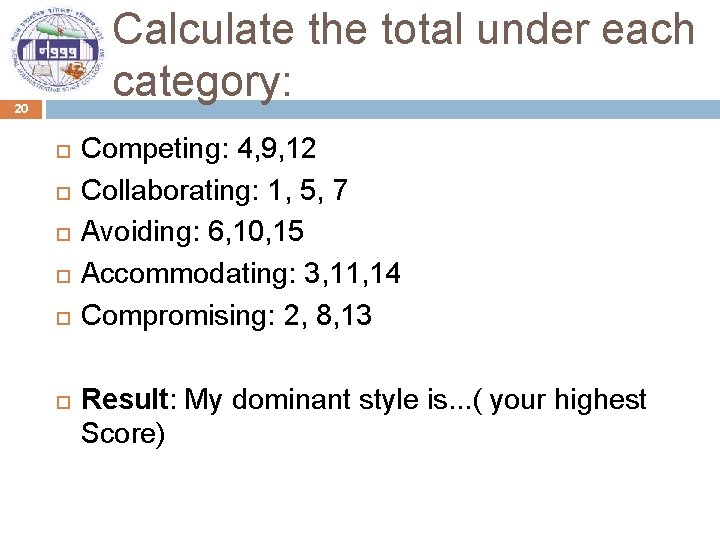
Calculate the total under each category: 20 Competing: 4, 9, 12 Collaborating: 1, 5, 7 Avoiding: 6, 10, 15 Accommodating: 3, 11, 14 Compromising: 2, 8, 13 Result: My dominant style is. . . ( your highest Score)
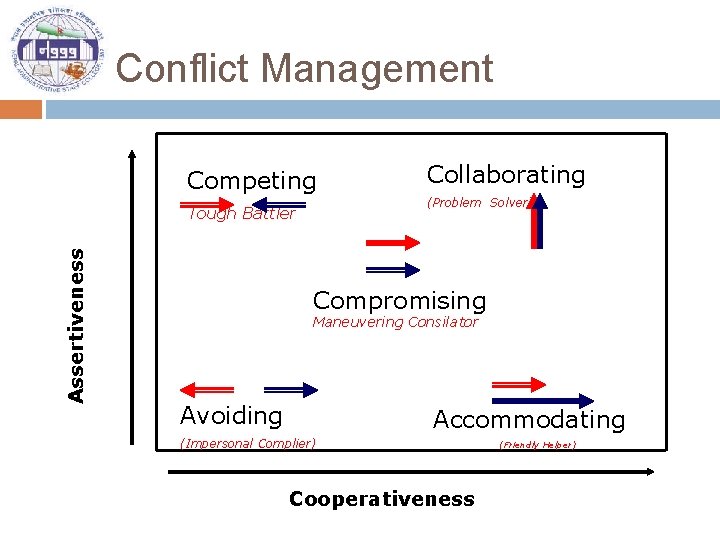
Stage III: Intentions Conflict Management: Two Broad Dimensions 21 Cooperativeness Attempting to satisfy the other party's concerns Assertiveness Attempting to satisfy the one's own concerns
Conflict Management Competing (Problem Solver) Tough Battler Assertiveness Collaborating Compromising Maneuvering Consilator Avoiding Accommodating (Impersonal Complier) Cooperativeness (Friendly Helper)
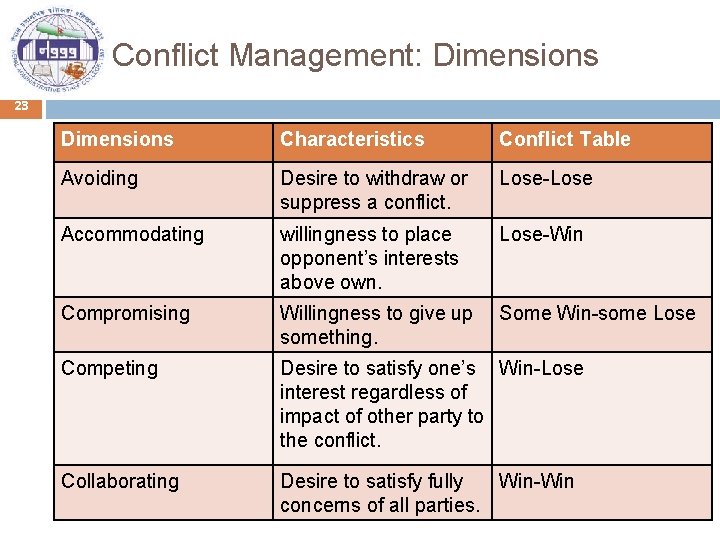
Conflict Management: Dimensions 23 Dimensions Characteristics Conflict Table Avoiding Desire to withdraw or suppress a conflict. Lose-Lose Accommodating willingness to place opponent’s interests above own. Lose-Win Compromising Willingness to give up something. Some Win-some Lose Competing Desire to satisfy one’s Win-Lose interest regardless of impact of other party to the conflict. Collaborating Desire to satisfy fully Win-Win concerns of all parties.
Conflict Management 24 q q It is the use of resolution and stimulation techniques to achieve the desired level of conflict. Is the practice of being able to identify and handle conflicts sensibly, fairly and efficiently.
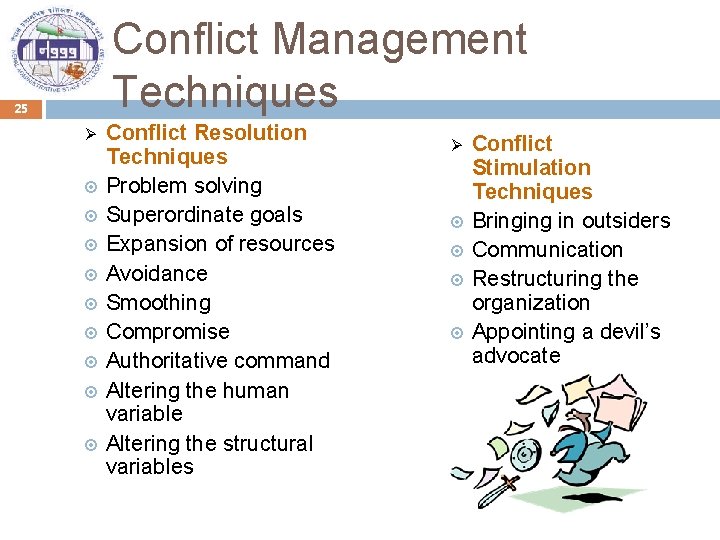
Conflict Management Techniques 25 Ø Conflict Resolution Techniques Problem solving Superordinate goals Expansion of resources Avoidance Smoothing Compromise Authoritative command Altering the human variable Altering the structural variables Ø Conflict Stimulation Techniques Bringing in outsiders Communication Restructuring the organization Appointing a devil’s advocate
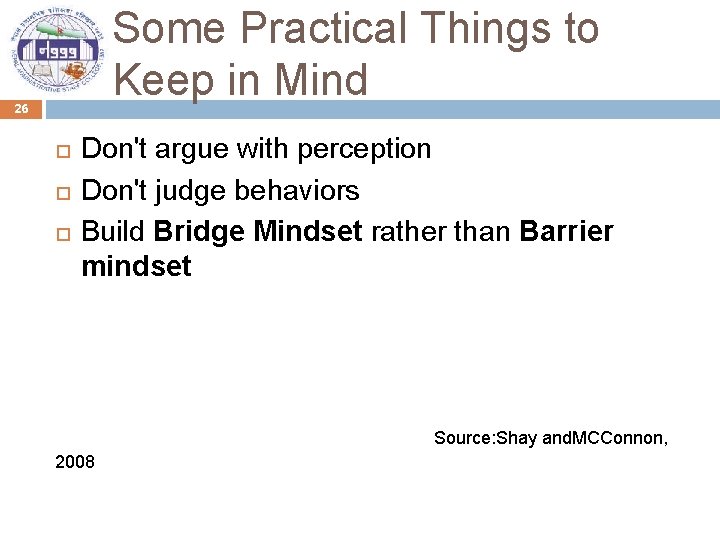
Some Practical Things to Keep in Mind 26 Don't argue with perception Don't judge behaviors Build Bridge Mindset rather than Barrier mindset Source: Shay and. MCConnon, 2008
How to build Bridge Mindset? 27 Listen for feelings, needs Acceptance Listening Talk Constructively Example: We seem to have diff approaches to. . . Help me to understand why you want to. . . Would it be a good idea to talk about. .
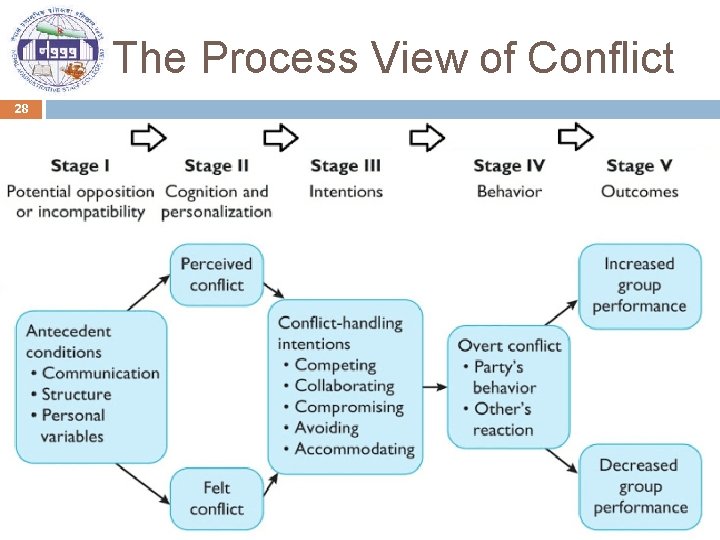
The Process View of Conflict 28
Closing Note 29 Conflict is inevitable phenomenon yet complex Human and non human factors are responsible for conflict Different perspectives from all parties need to be analyzed Rather than Judging behaviors , connect with needs Conflict handling intentions and conflict resolution/stimulation techniques need to be used appropriately based on the
30 Thank You