
Conflict Management Definition of Conflict Common themes Perception
- Slides: 15
Conflict Management
Definition of Conflict • Common themes – Perception of conflict – Opposition or incompatibility – Interaction “ A process that begins when one party perceives that another party has negatively affected, or is about to negatively affect, something the first party cares about”
3 Schools of Conflict Thought 1. Traditional View (1930’s and 1940’s) 2. Human Relations View (late 40’s to mid 70’s) 3. Interactionist View (current)
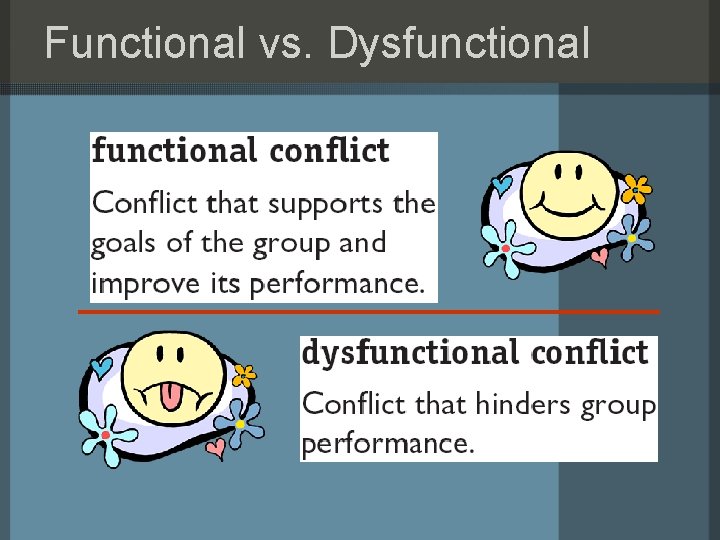
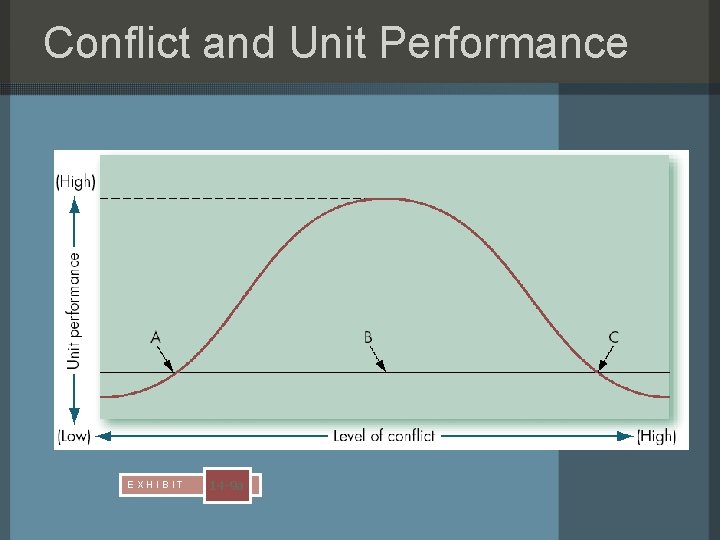
Functional vs. Dysfunctional
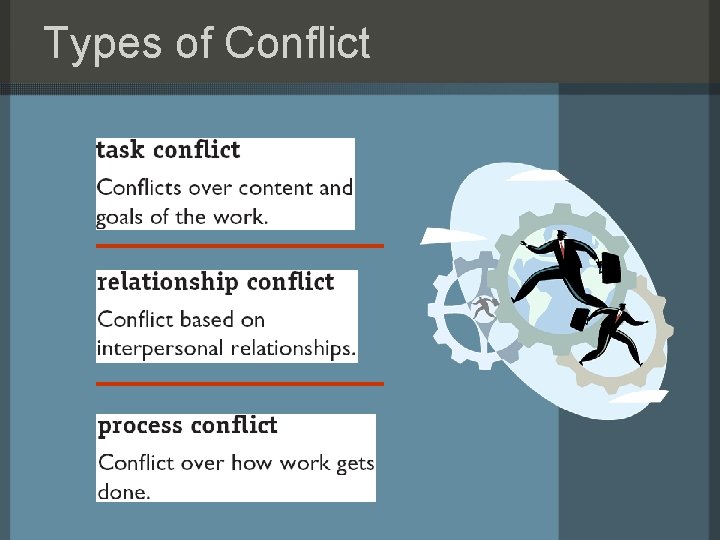
Types of Conflict
Conflict and Unit Performance EXHIBIT 14 -9 a
!CONFLICT! It’s Inevitable. . . and necessary 1. Causes of team conflict 2. When to call the boss 3. Conflict management styles
Causes of Team Conflict: External Issues • Competing for scarce resources • Lack of information sharing • Lack of clear direction • Others working on same issue • Lack of buy-in with recommendations
Causes of Team Conflict Team Member Issues • Performance issues – Behavior problems (absenteeism, late work, not doing what promised) – Work quality problems
Causes of Team Conflict: Team Member Issues • Interaction/Communication Issues – Schedule conflicts – One member taking over – Conflict between members – Disagreeing over responsibilities – Differing values, attitudes, or personalities
Conflict: When to call the boss • External issues - almost always • Team performance issues – use strategies for conflict management and attempt to resolve – if no immediate and sustained improvement, ask the boss for facilitation assistance
Conflict: When to call the boss • Team interaction/ communication issues – require immediate facilitation, inform boss and discuss next steps together
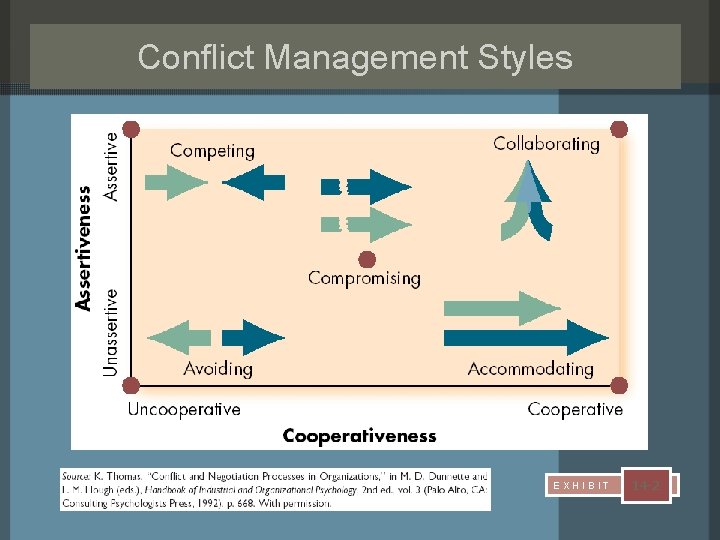
Conflict Management Styles EXHIBIT 14 -2
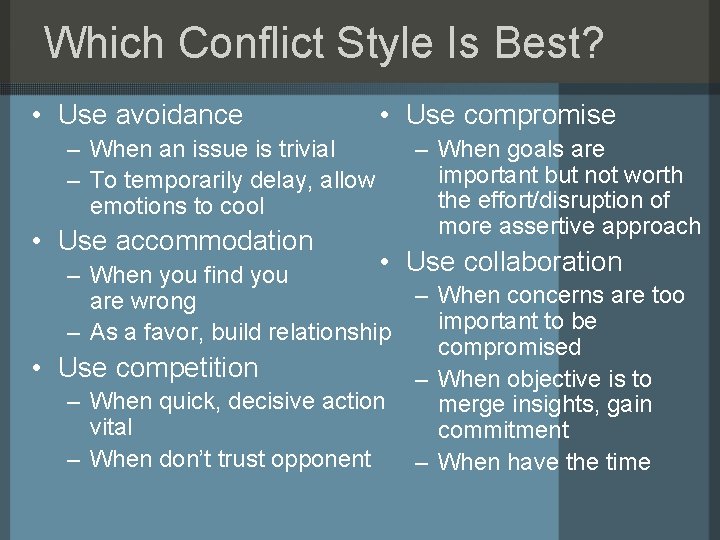
Which Conflict Style Is Best? • Use avoidance – When an issue is trivial – To temporarily delay, allow emotions to cool • Use accommodation • Use compromise – When goals are important but not worth the effort/disruption of more assertive approach • Use collaboration – When you find you – When concerns are too are wrong important to be – As a favor, build relationship compromised • Use competition – When objective is to – When quick, decisive action merge insights, gain vital commitment – When don’t trust opponent – When have the time
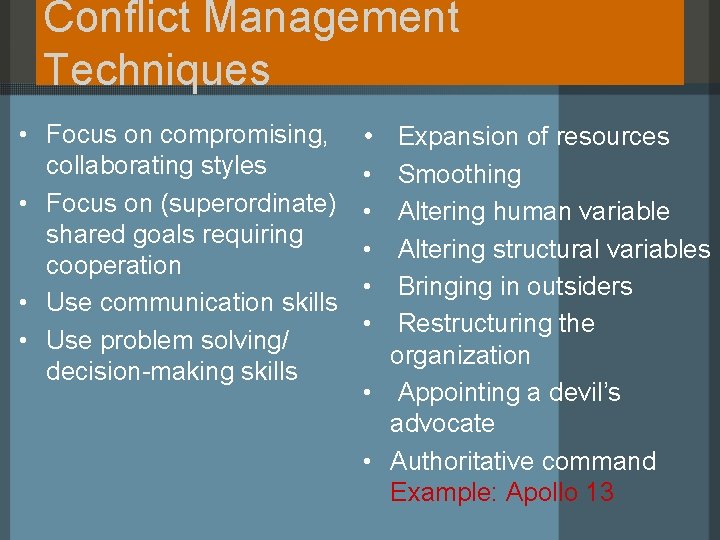
Conflict Management Techniques • Focus on compromising, collaborating styles • Focus on (superordinate) shared goals requiring cooperation • Use communication skills • Use problem solving/ decision-making skills • Expansion of resources • • • Smoothing Altering human variable Altering structural variables Bringing in outsiders Restructuring the organization • Appointing a devil’s advocate • Authoritative command Example: Apollo 13