
Conflict Management Core Course 14 Personality Type and
- Slides: 59
Conflict Management Core Course #14
Personality Type and How YOU Manage Conflict
THE GOLDEN RULE OF CONFLICT MANAGEMENT YOU CANNOT CONTROL OTHER PEOPLE. YOU CAN ONLY CONTROL YOUR REACTIONS TO THEM.
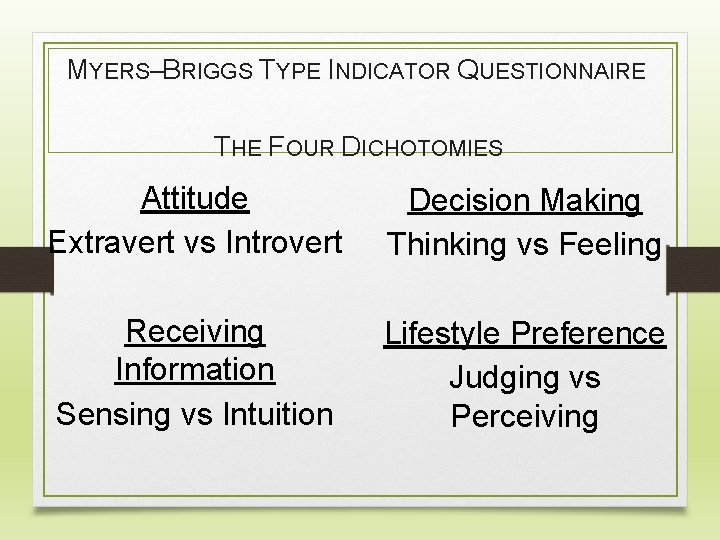
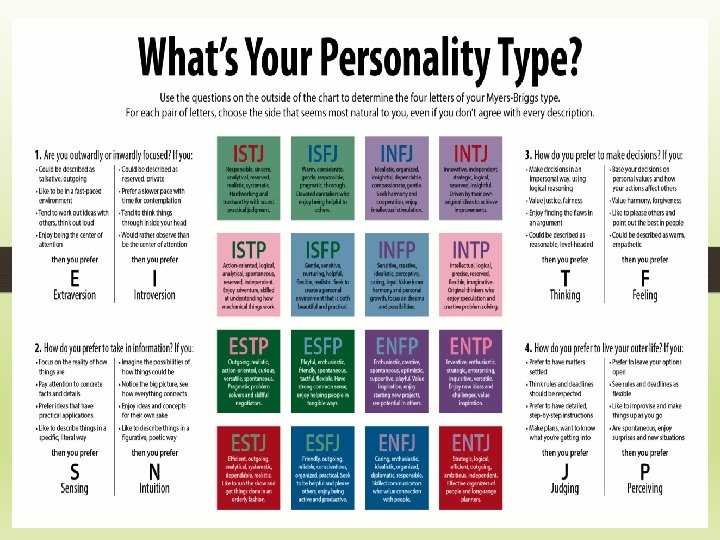
MYERS–BRIGGS TYPE INDICATOR QUESTIONNAIRE THE FOUR DICHOTOMIES Attitude Extravert vs Introvert Decision Making Thinking vs Feeling Receiving Information Sensing vs Intuition Lifestyle Preference Judging vs Perceiving
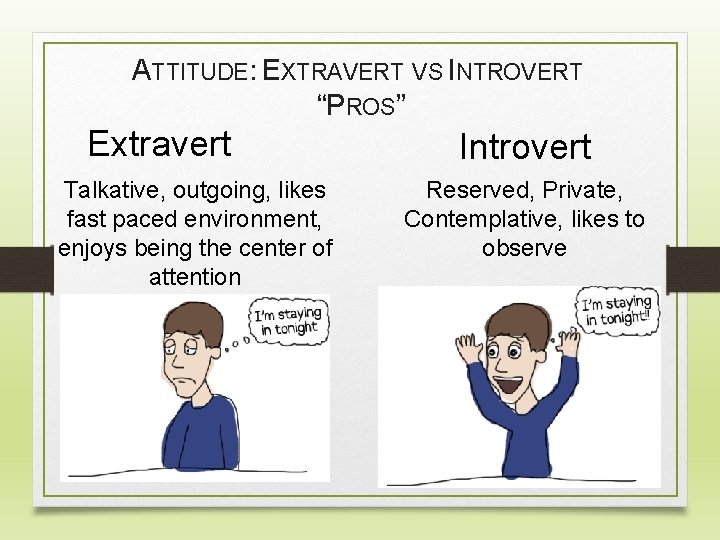
ATTITUDE: EXTRAVERT VS INTROVERT “PROS” Extravert Talkative, outgoing, likes fast paced environment, enjoys being the center of attention Introvert Reserved, Private, Contemplative, likes to observe
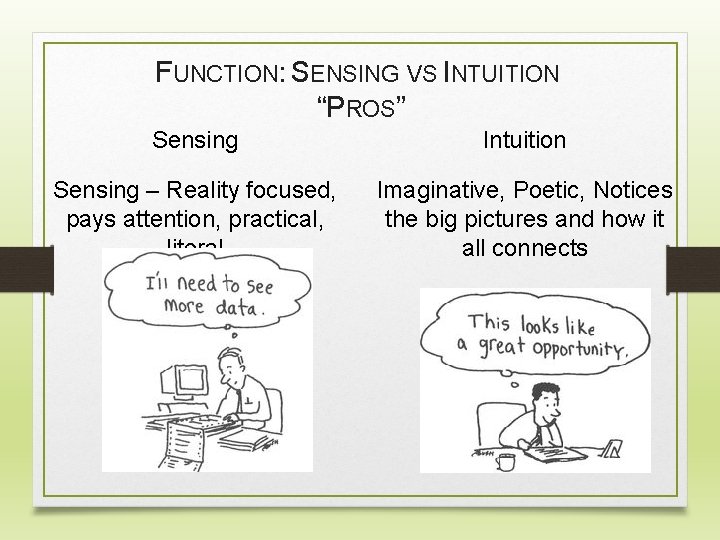
FUNCTION: SENSING VS INTUITION “PROS” Sensing Intuition Sensing – Reality focused, pays attention, practical, literal Imaginative, Poetic, Notices the big pictures and how it all connects
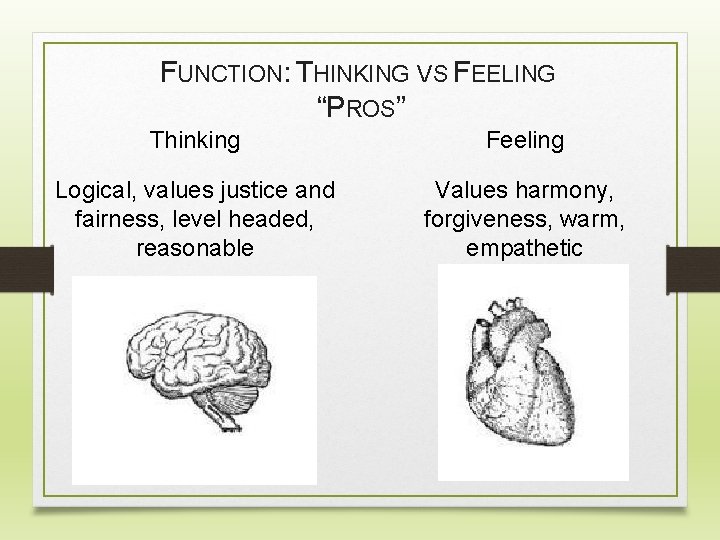
FUNCTION: THINKING VS FEELING “PROS” Thinking Feeling Logical, values justice and fairness, level headed, reasonable Values harmony, forgiveness, warm, empathetic
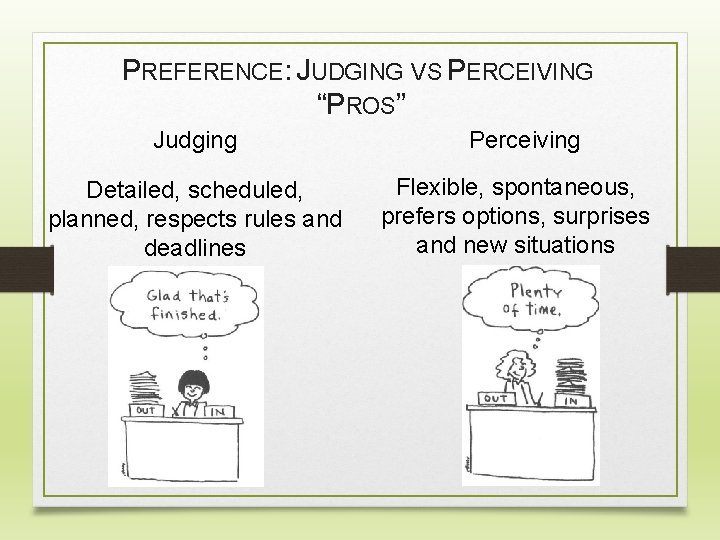
PREFERENCE: JUDGING VS PERCEIVING “PROS” Judging Perceiving Detailed, scheduled, planned, respects rules and deadlines Flexible, spontaneous, prefers options, surprises and new situations
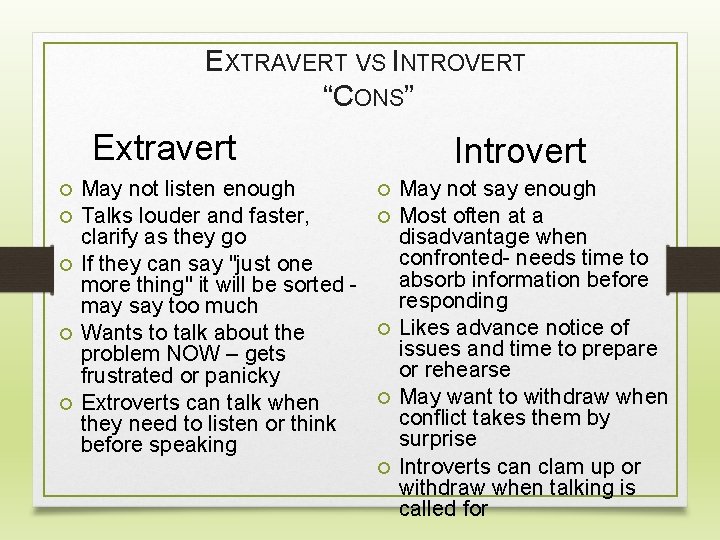
EXTRAVERT VS INTROVERT “CONS” Extravert May not listen enough Talks louder and faster, clarify as they go If they can say "just one more thing" it will be sorted - may say too much Wants to talk about the problem NOW – gets frustrated or panicky Extroverts can talk when they need to listen or think before speaking Introvert May not say enough Most often at a disadvantage when confronted- needs time to absorb information before responding Likes advance notice of issues and time to prepare or rehearse May want to withdraw when conflict takes them by surprise Introverts can clam up or withdraw when talking is called for
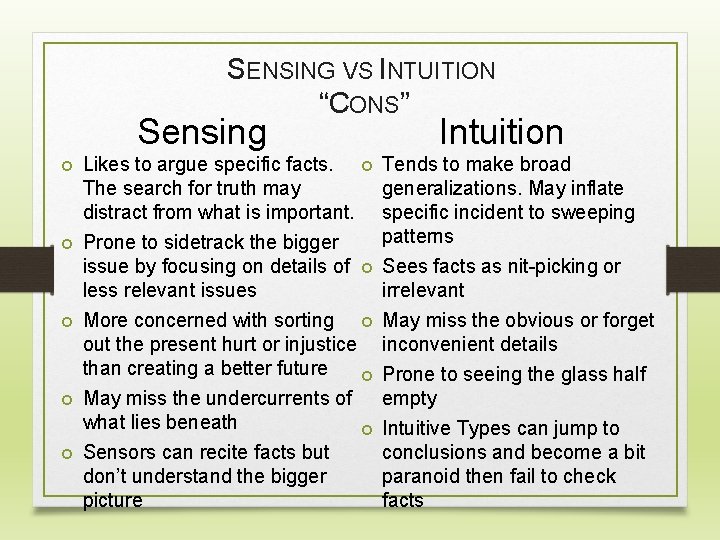
SENSING VS INTUITION “CONS” Sensing Likes to argue specific facts. The search for truth may distract from what is important. Prone to sidetrack the bigger issue by focusing on details of less relevant issues More concerned with sorting out the present hurt or injustice than creating a better future May miss the undercurrents of what lies beneath Sensors can recite facts but don’t understand the bigger picture Intuition Tends to make broad generalizations. May inflate specific incident to sweeping patterns Sees facts as nit-picking or irrelevant May miss the obvious or forget inconvenient details Prone to seeing the glass half empty Intuitive Types can jump to conclusions and become a bit paranoid then fail to check facts
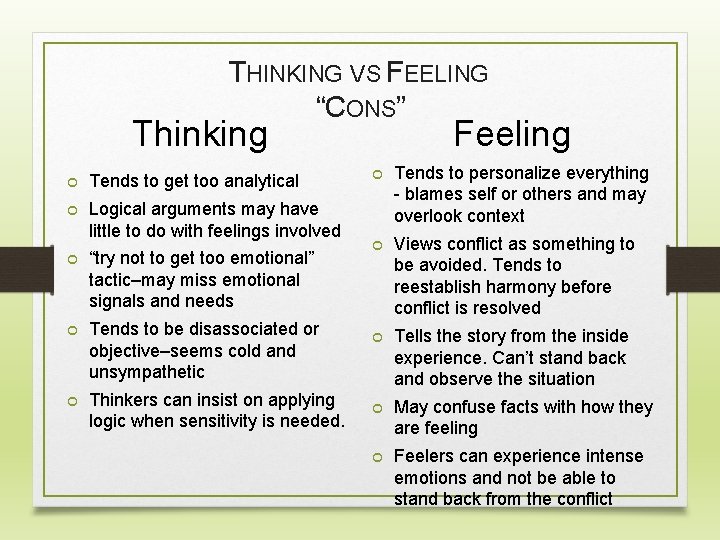
THINKING VS FEELING “CONS” Thinking Tends to get too analytical Logical arguments may have little to do with feelings involved “try not to get too emotional” tactic–may miss emotional signals and needs Tends to be disassociated or objective–seems cold and unsympathetic Thinkers can insist on applying logic when sensitivity is needed. Feeling Tends to personalize everything - blames self or others and may overlook context Views conflict as something to be avoided. Tends to reestablish harmony before conflict is resolved Tells the story from the inside experience. Can’t stand back and observe the situation May confuse facts with how they are feeling Feelers can experience intense emotions and not be able to stand back from the conflict
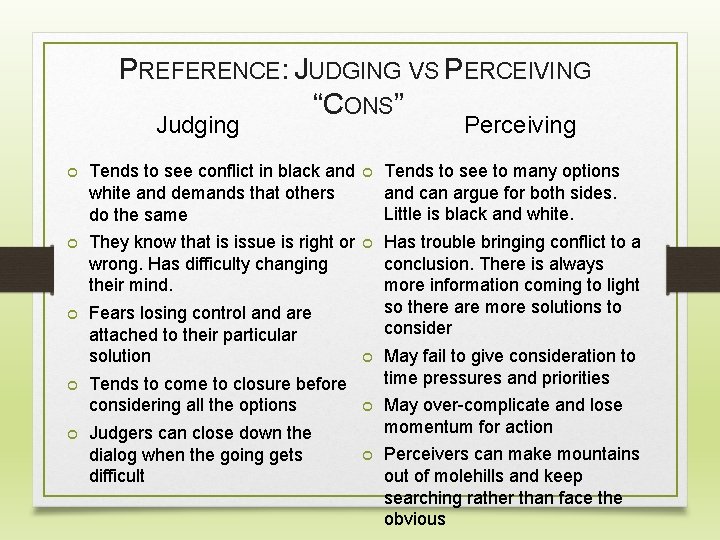
PREFERENCE: JUDGING VS PERCEIVING “CONS” Judging Perceiving Tends to see conflict in black and Tends to see to many options and can argue for both sides. white and demands that others Little is black and white. do the same They know that is issue is right or Has trouble bringing conflict to a conclusion. There is always wrong. Has difficulty changing more information coming to light their mind. so there are more solutions to Fears losing control and are consider attached to their particular solution Tends to come to closure before considering all the options May fail to give consideration to time pressures and priorities May over-complicate and lose momentum for action Perceivers can make mountains out of molehills and keep searching rather than face the obvious Judgers can close down the dialog when the going gets difficult
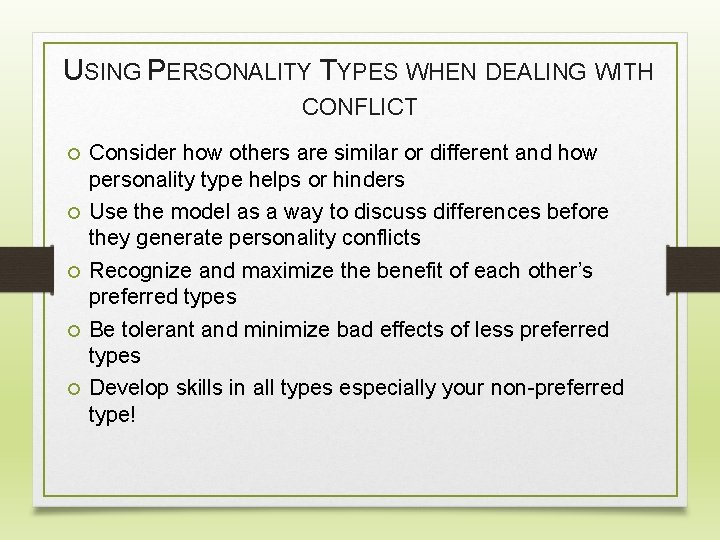
USING PERSONALITY TYPES WHEN DEALING WITH CONFLICT Consider how others are similar or different and how personality type helps or hinders Use the model as a way to discuss differences before they generate personality conflicts Recognize and maximize the benefit of each other’s preferred types Be tolerant and minimize bad effects of less preferred types Develop skills in all types especially your non-preferred type!
5 CONFLICT MANAGEMENT TECHNIQUES
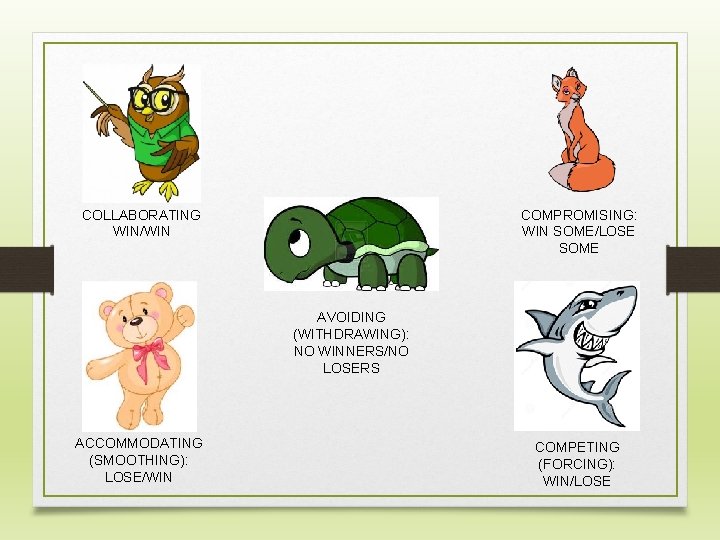
COLLABORATING WIN/WIN COMPROMISING: WIN SOME/LOSE SOME AVOIDING (WITHDRAWING): NO WINNERS/NO LOSERS ACCOMMODATING (SMOOTHING): LOSE/WIN COMPETING (FORCING): WIN/LOSE
COLLABORATING (PROBLEM SOLVING): WIN/WIN CONFLICT MANAGEMENT TECHNIQUE
Collaborating is an attempt to work with others to find a WIN-WIN solution to the problem in hand, satisfying both parties’ concerns.
COLLABORATING INVOLVES: 1. Teamwork 2. Cooperation TO: 1. Achieve mutually beneficial results 2. Maintain relationships 3. Solve a problem 4. Identify underlying concerns 5. Meet each parties’ concerns
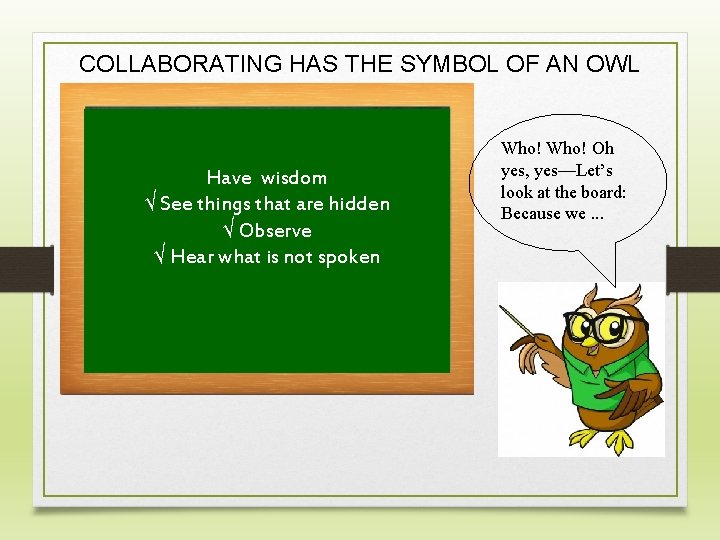
COLLABORATING HAS THE SYMBOL OF AN OWL Have wisdom √ See things that are hidden √ Observe √ Hear what is not spoken Who! Oh yes, yes—Let’s look at the board: Because we. . .
When to use the Collaborating technique: √ When a high level of trust is present √ When consensus and commitment of other parties is important √ When you don’t want to have full responsibility and want others to have “ownership” of solutions √ When you need to work through animosity and hard feelings √ When those involved are willing to change their thinking as more information is found and new options are suggested √ When a long-term relationship is important
ADVANTAGES OF COLLABORATING ¨ Leads to solving the actual problem ¨ Win-Win outcome ¨ Reinforces mutual trust and respect ¨ Shared responsibility ¨ Builds a foundation for collaboration in future ¨ Earns you the reputation of a good negotiator DISADVANTAGES OF COLLABORATING · Requires lots of time and energy · Some may take advantage of other people’s trust and openness · Requires commitment from all parties · Not practical when timing is crucial and quick solution is required
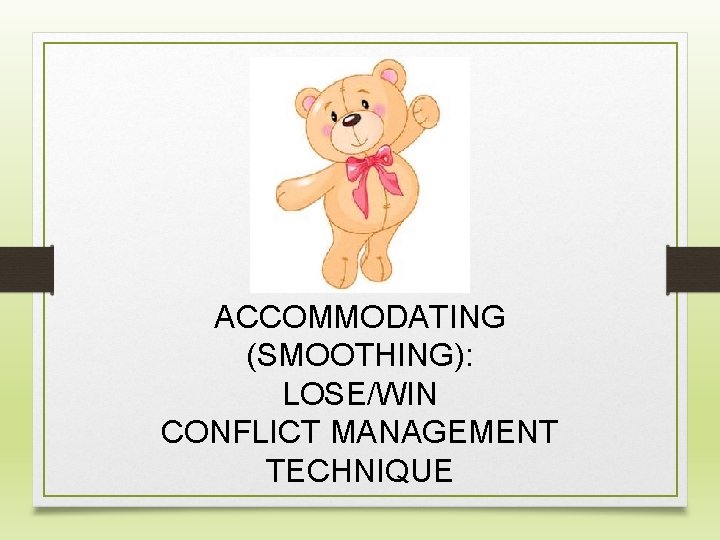
ACCOMMODATING (SMOOTHING): LOSE/WIN CONFLICT MANAGEMENT TECHNIQUE
Accommodating (Smoothing) is an I LOSE, YOU WIN attempt to working toward a common purpose where concerns of others are more important than one’s own concerns.
ACCOMMODATING INVOLVES: 1. Teamwork 2. Appeasement TO : 1. Achieve a common purpose 2. Protect the relationship 3. Solve a problem 4. Downplay conflict
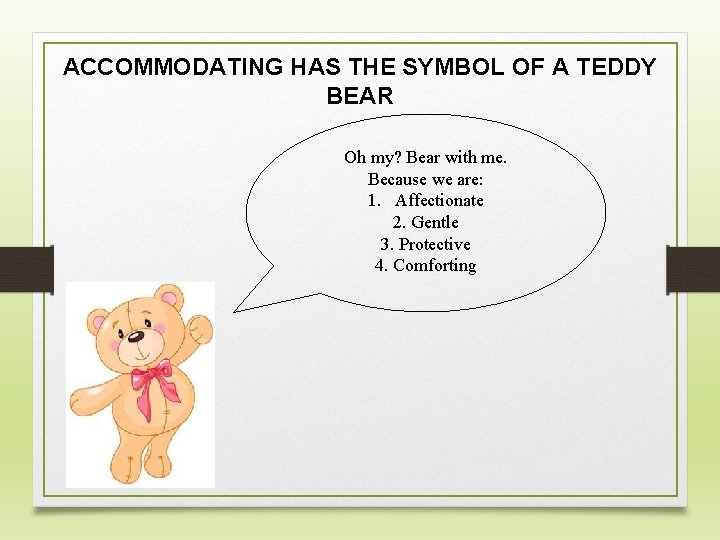
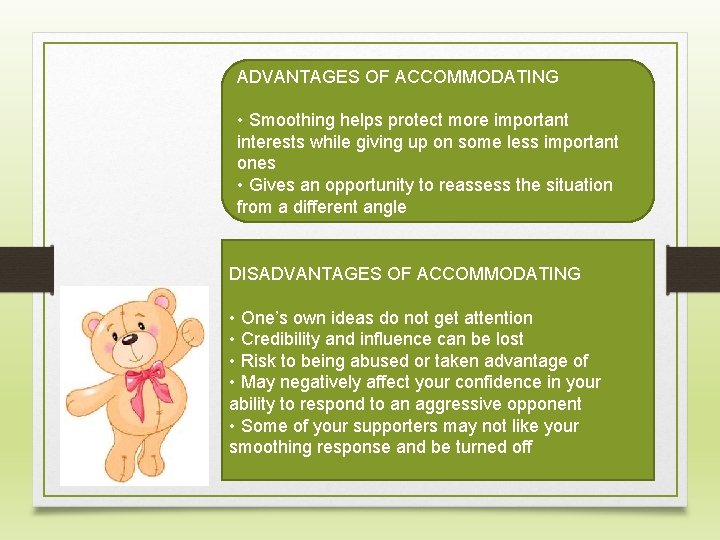
ACCOMMODATING HAS THE SYMBOL OF A TEDDY BEAR Oh my? Bear with me. Because we are: 1. Affectionate 2. Gentle 3. Protective 4. Comforting
When to use the Accommodating technique: √ When an issue is not as important to you as it is to the other person √ When a temporary relief is needed from the conflict , not the right time √ When you accept and realize you are wrong √ When you have no choice, so the conflict will not be detrimental √ When you are willing to let others learn by mistake √ When harmony is extremely important √ When you know you cannot win
ADVANTAGES OF ACCOMMODATING • Smoothing helps protect more important interests while giving up on some less important ones • Gives an opportunity to reassess the situation from a different angle DISADVANTAGES OF ACCOMMODATING • One’s own ideas do not get attention • Credibility and influence can be lost • Risk to being abused or taken advantage of • May negatively affect your confidence in your ability to respond to an aggressive opponent • Some of your supporters may not like your smoothing response and be turned off
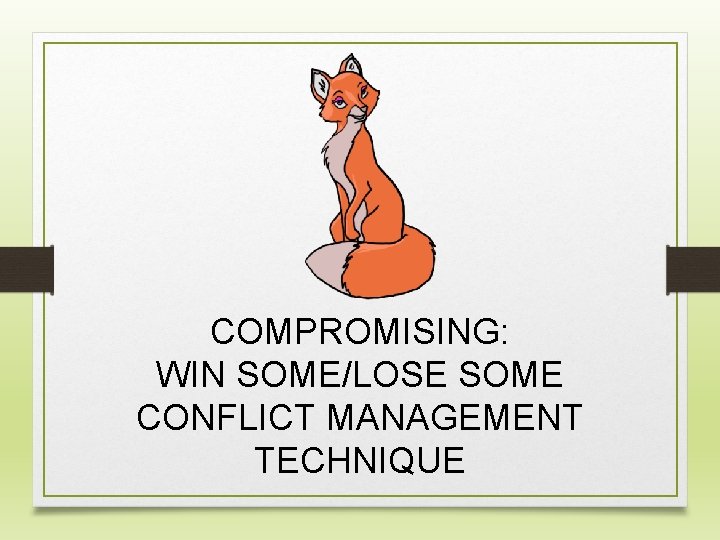
COMPROMISING: WIN SOME/LOSE SOME CONFLICT MANAGEMENT TECHNIQUE
Compromising is a YOU WIN SOME, I WIN SOME or YOU BEND, I BEND attempt to look for an expedient and mutually acceptable solution satisfying both parties.
COMPROMISING INVOLVES: 1. Teamwork 2. Equality TO : 1. Serve the common good 2. Ensure each person maintains some of their original position 3. Solve a problem
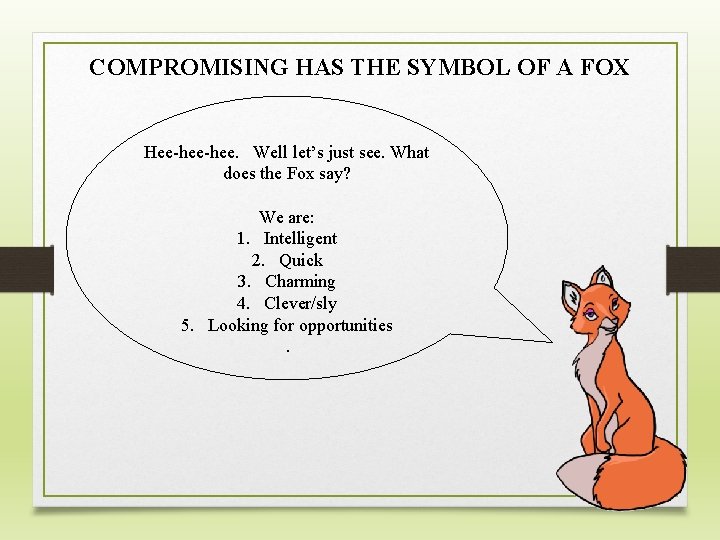
COMPROMISING HAS THE SYMBOL OF A FOX Hee-hee. Well let’s just see. What does the Fox say? We are: 1. Intelligent 2. Quick 3. Charming 4. Clever/sly 5. Looking for opportunities.
When to use the Compromising technique: √ When winning something while losing a little is ok √ When people of equal status are equally committed to goals √ When time can be saved by reaching temporary settlements on complex issues √ When goals are moderately important √ When you need to reach expedient solutions on important issues √ When the parties do not know each other well
ADVANTAGES OF COMPROMISING • Faster issue resolution • Can provide a temporary solution while still • looking for a permanent solution • Lowers the level of tension and stress resulting from the conflict DISADVANTAGES OF COMPROMISING • Both parties may not be satisfied with outcome • Important values and long-term objectives may be derailed • Does not contribute to building trust in the long run • May not work if initial demands are too great • Can spawn distrust, especially if there’s no commitment to honor the compromised solutions
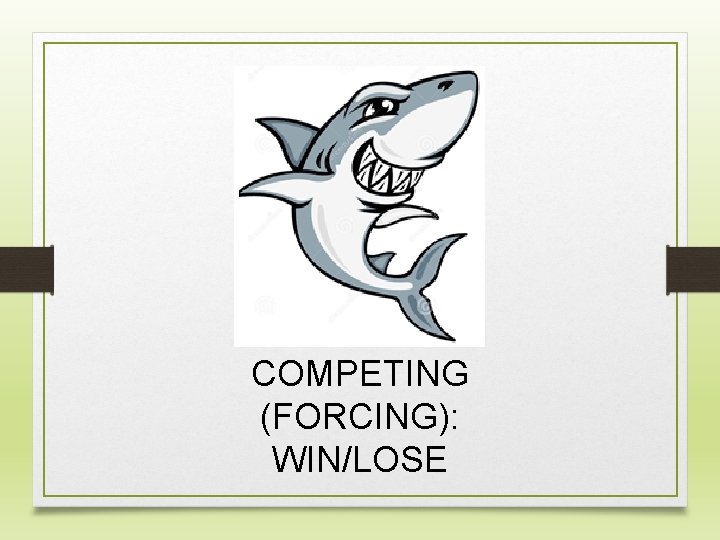
COMPETING (FORCING): WIN/LOSE
Competing (Forcing) is an I WIN, YOU LOSE attempt to look for a solution satisfying one party.
COMPETING INVOLVES: 1. Force 2. Competition TO : 1. Pursue one’s own concerns 2. Use power to win if goals are extremely important 3. Solve a problem
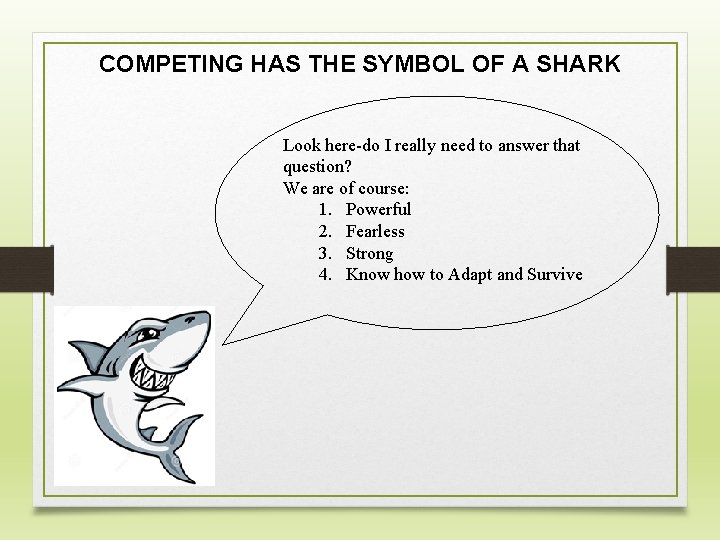
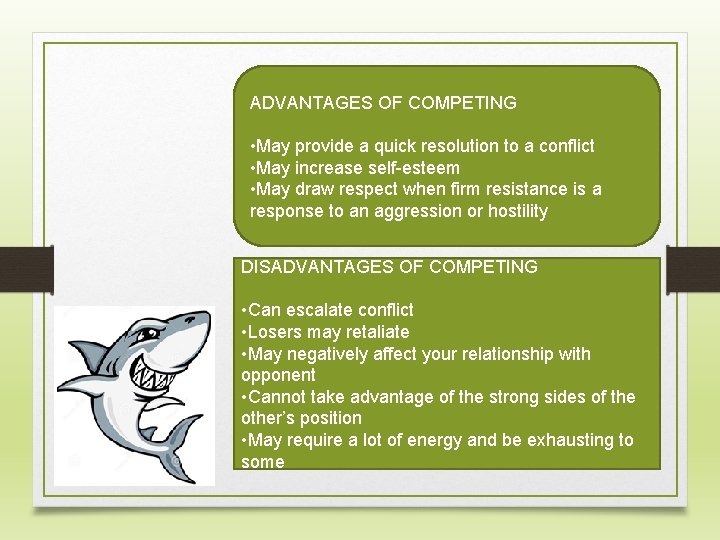
COMPETING HAS THE SYMBOL OF A SHARK Look here-do I really need to answer that question? We are of course: 1. Powerful 2. Fearless 3. Strong 4. Know how to Adapt and Survive
When to use the Competing technique: √ When you know you are right √ When time is short and a quick decision is needed √ When a strong personality is trying to steamroll you and you don’t want to be taken advantage of √ When you need to stand up for your rights/ force your concerns √ When all other techniques fail
ADVANTAGES OF COMPETING • May provide a quick resolution to a conflict • May increase self-esteem • May draw respect when firm resistance is a response to an aggression or hostility DISADVANTAGES OF COMPETING • Can escalate conflict • Losers may retaliate • May negatively affect your relationship with opponent • Cannot take advantage of the strong sides of the other’s position • May require a lot of energy and be exhausting to some
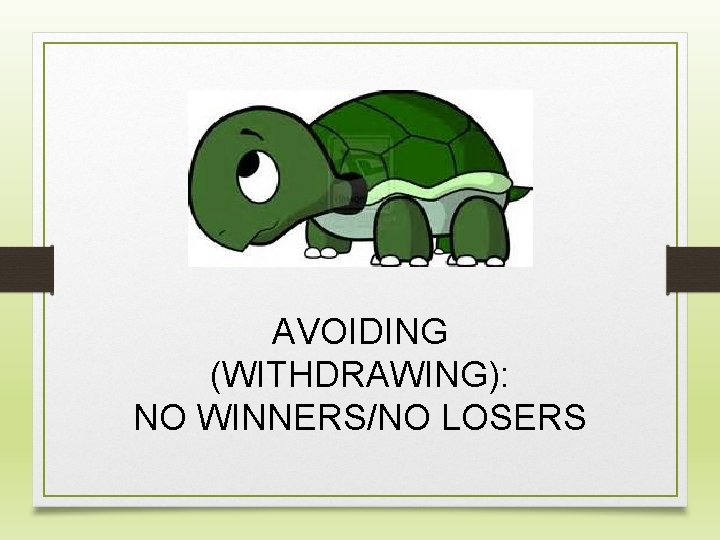
AVOIDING (WITHDRAWING): NO WINNERS/NO LOSERS
Avoiding (Withdrawing) is a NO WINNERS, NO LOSERS attempt to look for a solution when a person does not want to pursue or address the concerns or to postpone the conflict.
AVOIDING INVOLVES: 1. Withdrawing 2. Postponing TO : 1. Not address the conflict when it presents itself 2. Solve a problem 3. Take time for resolution
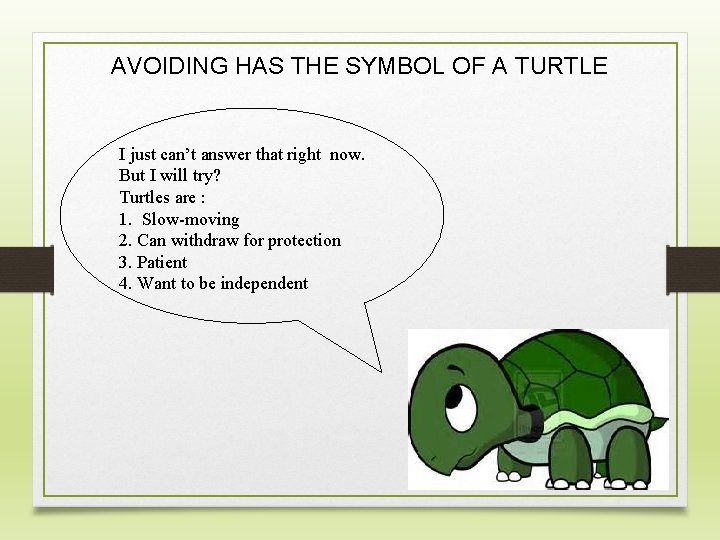
AVOIDING HAS THE SYMBOL OF A TURTLE I just can’t answer that right now. But I will try? Turtles are : 1. Slow-moving 2. Can withdraw for protection 3. Patient 4. Want to be independent
When to use the Avoiding technique: √ When the conflict is small and not worth the effort √ When more important issues are pressing √ When you do not have time to deal with the conflict or need more time (Withdraw) √ When you cannot handle the conflict (ex. are too emotionally involved or others can handle better) √ When you have no power and see no chance of getting your concerns met √ When more information is needed
ADVANTAGES OF AVOIDING • May need to withdraw or postpone if conflict • becomes aggressive • Low stress approach when conflict is short • Gives more time to better prepare and collect • Information • Gives the ability to focus on more important/urgent conflicts/issues instead DISADVANTAGES OF AVOIDING • Important decisions may be made by default • Postponing may make matters worse • May lead to weakening/losing your position • May negatively affect your relationships with other parties that expect you to act
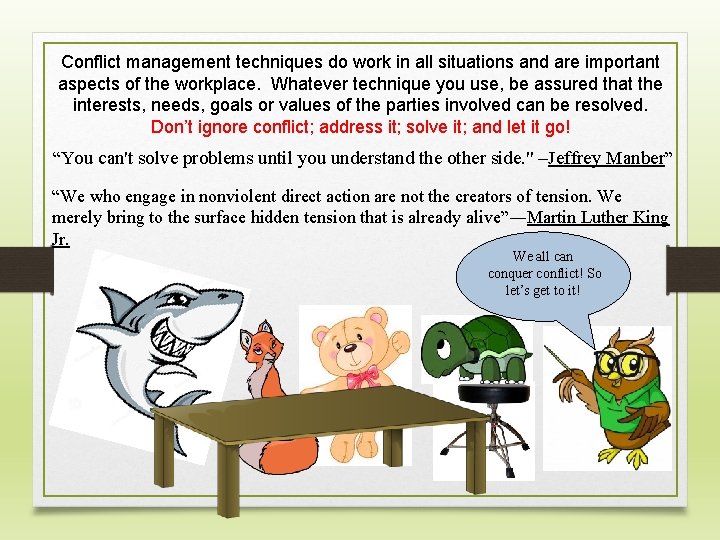
Conflict management techniques do work in all situations and are important aspects of the workplace. Whatever technique you use, be assured that the interests, needs, goals or values of the parties involved can be resolved. Don’t ignore conflict; address it; solve it; and let it go! “You can't solve problems until you understand the other side. " –Jeffrey Manber” “We who engage in nonviolent direct action are not the creators of tension. We merely bring to the surface hidden tension that is already alive”―Martin Luther King Jr. We all can conquer conflict! So let’s get to it!
Conflict Management Skills
Active Listening • Allow the person to express their opinion/issue/argument —a chance to vent. • Connect with the person by letting them know you understand the emotion behind the words and recognize their point of view. • Pay attention and focus on what’s being said.
Common Barriers to Listening • Mentally preparing a response • Faking attention to what’s being said • Thinking you already know what they are going to say • Personal bias or concern
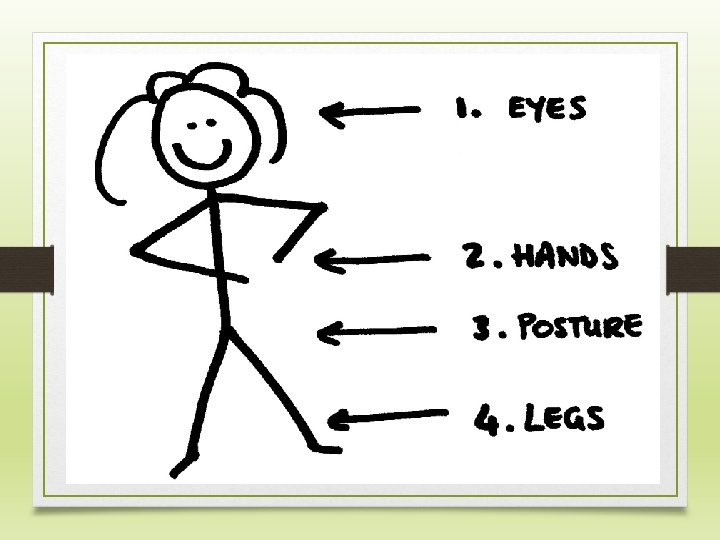
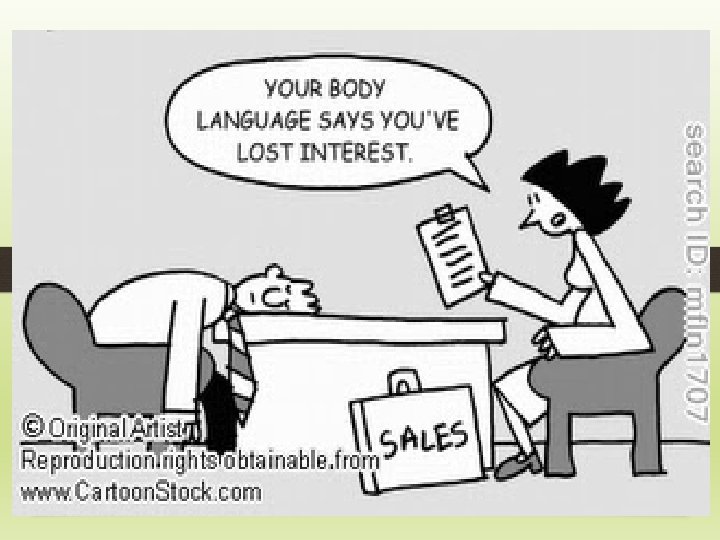
Body Language Interpretation (Yours and Theirs) • Send a positive message • Make eye contact • Sit forward or stand straight • Nod your head as an acknowledgement • Sending a negative message • • Arms crossed Eye rolling Placing hands on hips Raised voice
Show Respect • Encourage the mindset that the other person’s perspective may be valid • Show that you value the other person’s opinion or point of view • Keep a positive attitude • Focus on the issue (not the person) and BE HONEST!!
Don’t fear conflict; embrace it—it’s a big part of your job. Conflict in the workplace is unavoidable and will find you whether you look for it or not.
“Responsibilities gravitate to the person who can shoulder them; power flows to the man who knows how. ” ~Elbert Hubbard
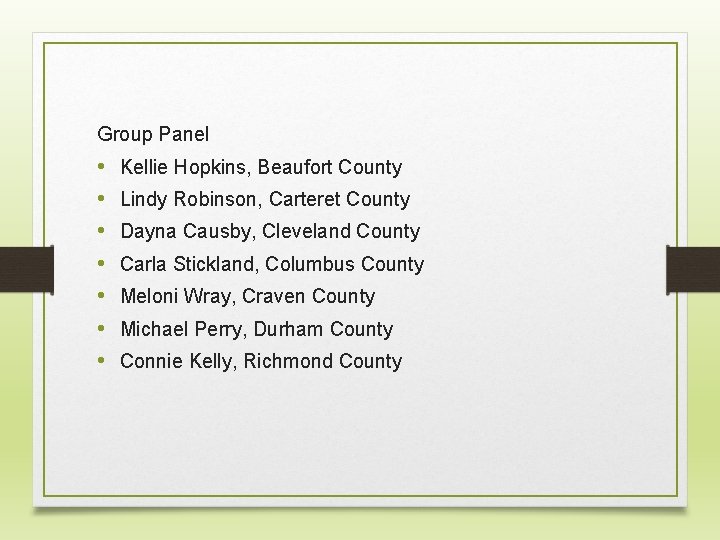
Group Panel • • Kellie Hopkins, Beaufort County Lindy Robinson, Carteret County Dayna Causby, Cleveland County Carla Stickland, Columbus County Meloni Wray, Craven County Michael Perry, Durham County Connie Kelly, Richmond County