
Conflict Dynamics Peacekeeping peacemaking and peacebuilding IB Global
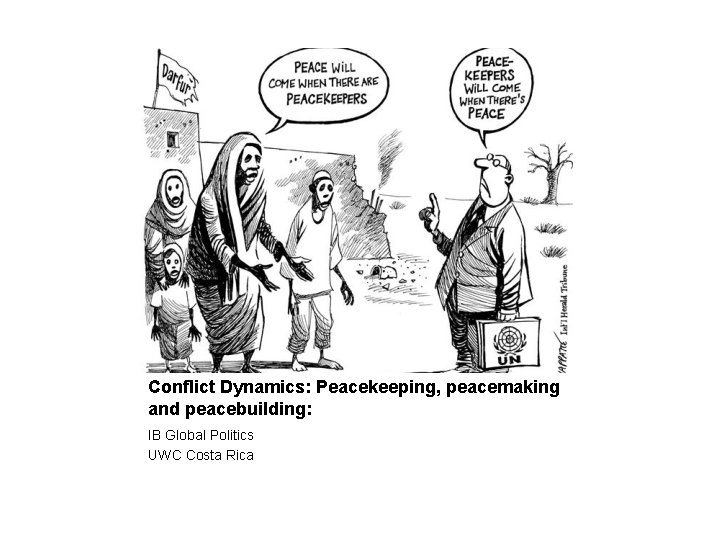
Conflict Dynamics: Peacekeeping, peacemaking and peacebuilding: IB Global Politics UWC Costa Rica
Learning Objectives • To distinguish between peacekeeping, peacemaking and peacebuilding • To understand the key features of the model of conflict dynamics • To link the three possible responses to the different stages of the MCD through the use of appropriate case studies
Peacekeeping means keeping people from attacking each other by putting some kind of barrier between them. Often this barrier is made up of neutral soldiers--peacekeepers-from the UN or a group of neutral nations. The soldiers do nothing to settle the disputant's differences or help negotiate a peace agreement--they simply keep the two sides apart.

Peacemaking is the process of forging a settlement between the disputing parties. While this can be done in direct negotiations with just the two disputants, it is often also done with a third-party mediator, who assists with process and communication problems, and helps the parties work effectively together to draft a workable peace accord. Usually the negotiators are official diplomats, although citizens are getting involved in the peacemaking process more and more. While they do not negotiate final accords, citizen diplomacy is becoming an increasingly common way to start the peacemaking process, which is then finalized with official diplomatic efforts.

Peacebuilding However, peacemaking is not the final step in the peace process. As both the situations in the Middle East and Bosnia so well demonstrate, it takes more than a peace accord to bring peace to a region. The peace accord is just a beginning, which must be followed by long-term peacebuilding-the process of normalizing relations and reconciling differences between all the citizens of the warring factions. .
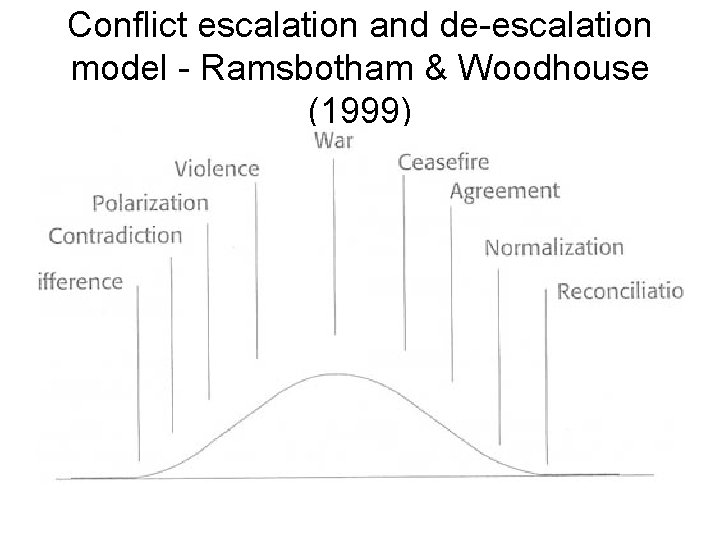
Conflict escalation and de-escalation model - Ramsbotham & Woodhouse (1999)

Conflict dynamics • Ramsbotham & Woodhouse argue that, while every conflict has different dynamics, there are similarities between conflicts. • Model of conflict dynamics helps policy makers identify best responses for each stage of escalation and de-escalation.
Task • Use the table on pages 76 -77 of ‘Pearson Essentials’ to identify one case study for each stage of the conflict escalation and de-escalation model. • You should make sure you have sufficient notes for each case study
- Slides: 8