
Confined Spaces Overview Traffic Control Safety Traffic Control
- Slides: 45
Confined Spaces Overview Traffic Control Safety
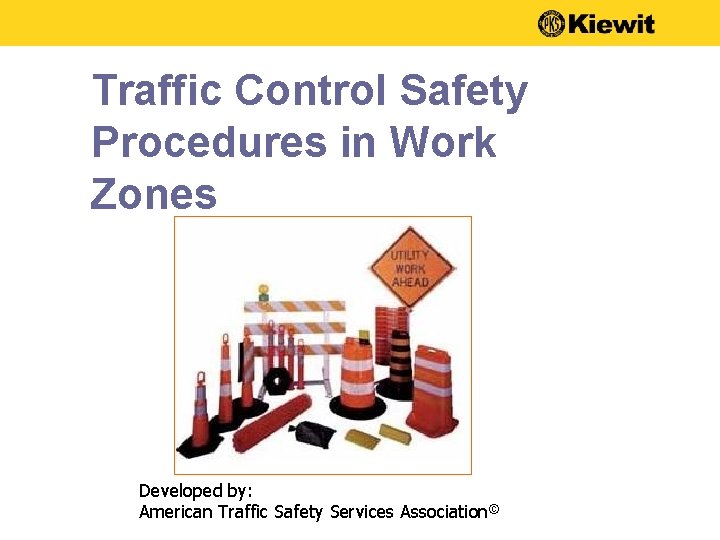
Traffic Control Safety Procedures in Work Zones Developed by: American Traffic Safety Services Association©
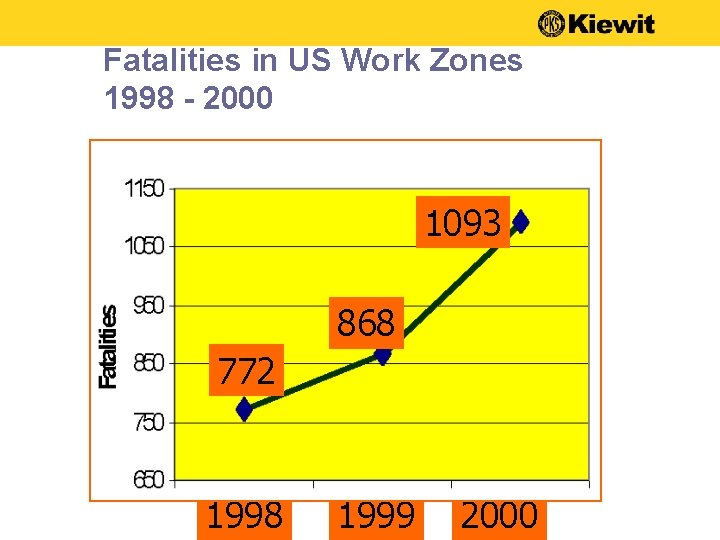
Fatalities in US Work Zones 1998 - 2000 1093 868 772 1998 1999 2000
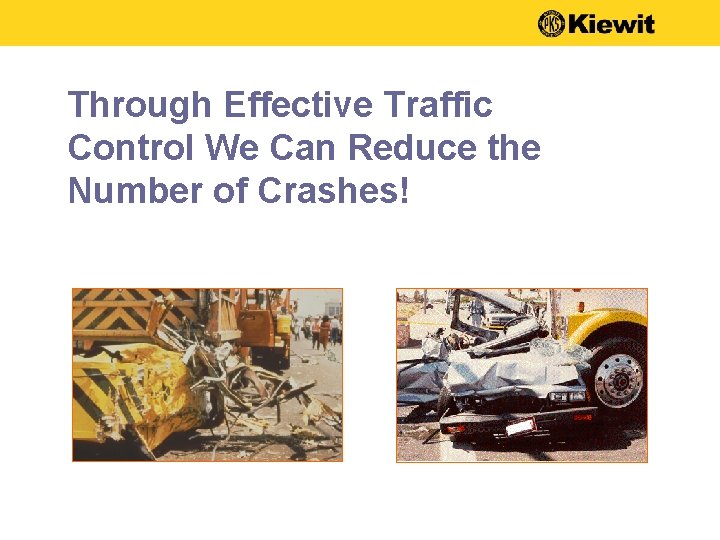
Through Effective Traffic Control We Can Reduce the Number of Crashes!
Fundamentals of Traffic Control 1. Visibility 2. Warning 3. Control
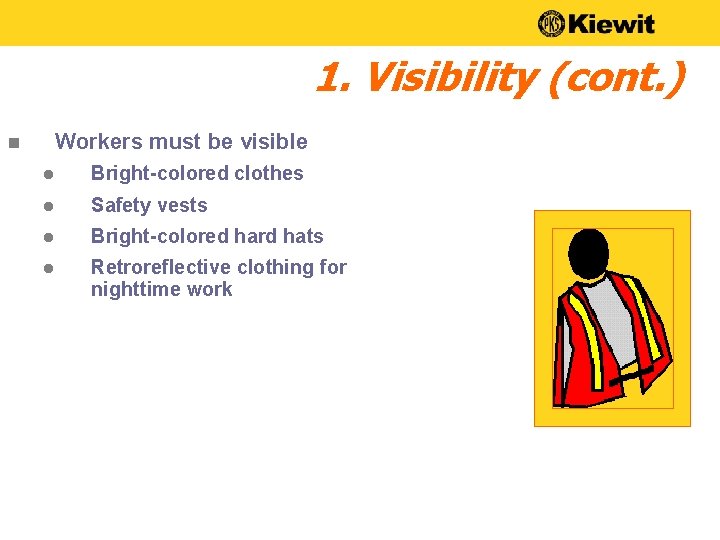
1. Visibility (cont. ) n Workers must be visible l Bright-colored clothes l Safety vests l Bright-colored hard hats l Retroreflective clothing for nighttime work
1. Visibility (cont. ) n Vehicle’s flashers, strobes and beacons also help get attention
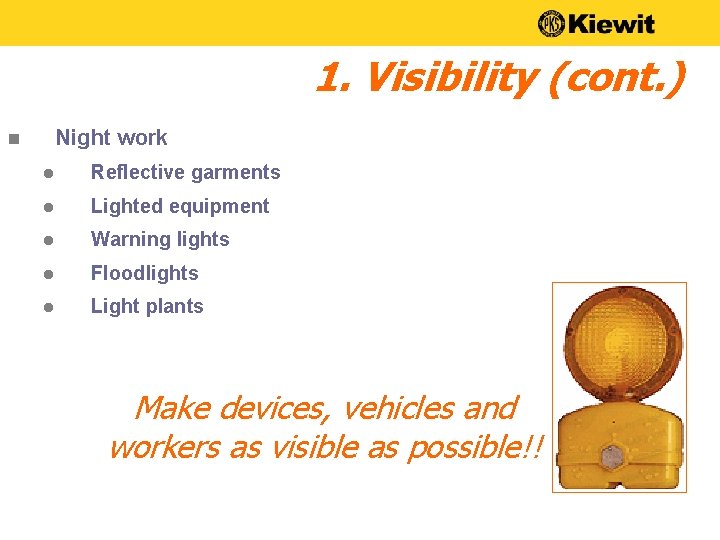
1. Visibility (cont. ) n Night work l Reflective garments l Lighted equipment l Warning lights l Floodlights l Light plants Make devices, vehicles and workers as visible as possible!!
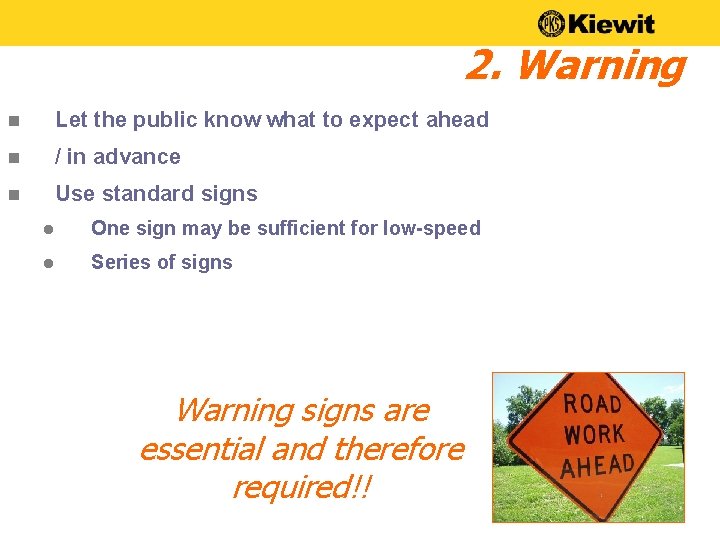
2. Warning n Let the public know what to expect ahead n / in advance n Use standard signs l One sign may be sufficient for low-speed l Series of signs Warning signs are essential and therefore required!!
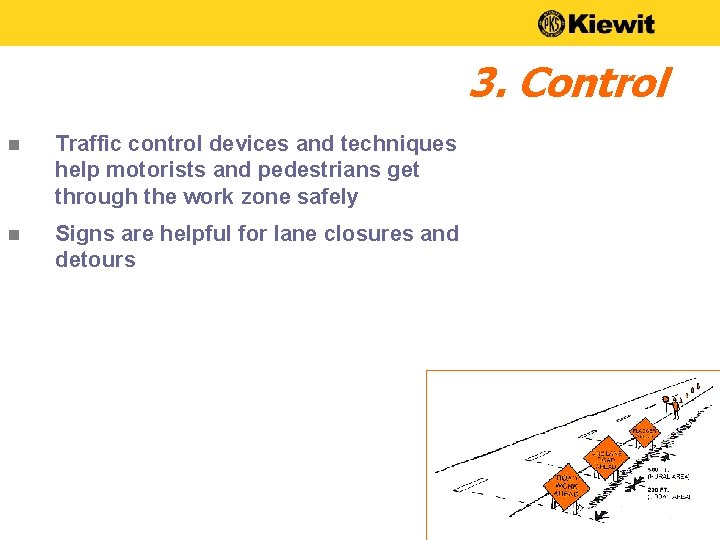
3. Control n Traffic control devices and techniques help motorists and pedestrians get through the work zone safely n Signs are helpful for lane closures and detours
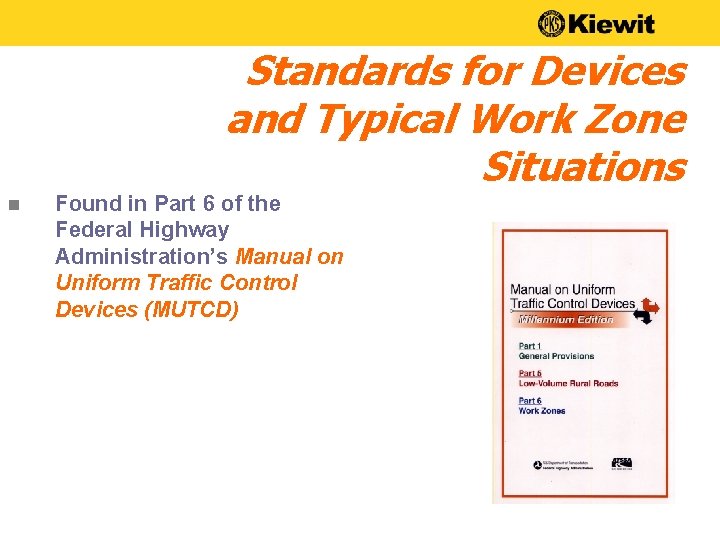
Standards for Devices and Typical Work Zone Situations n Found in Part 6 of the Federal Highway Administration’s Manual on Uniform Traffic Control Devices (MUTCD)
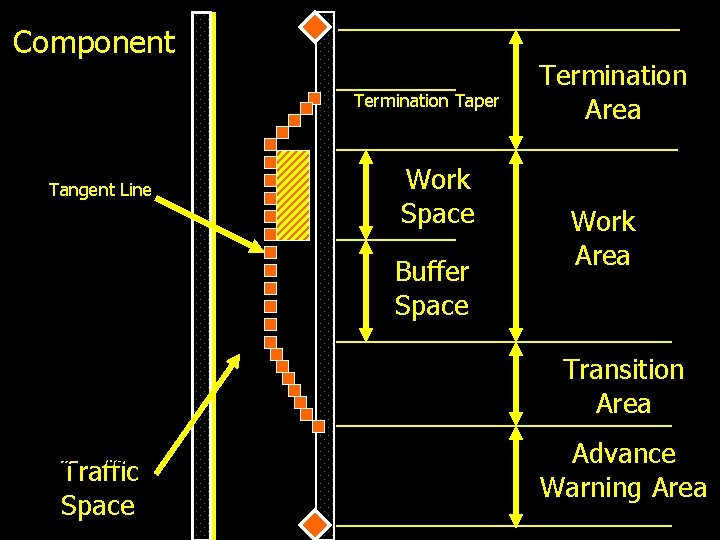
Component Parts of a TTC Tangent Line Termination Taper Work Space Buffer Space Termination Area Work Area Transition Area Not to scale Traffic Space Advance Warning Area
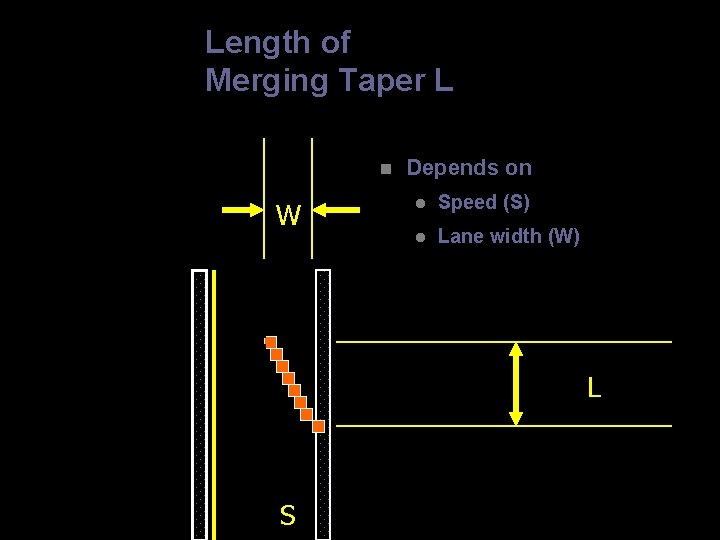
Length of Merging Taper L n W Depends on l Speed (S) l Lane width (W) L S
Low vs. High Speed n Depends on the jurisdiction n Typically “high” speed is 45 mph and higher n “Low” speed is typically 35 -40 mph or less n Not necessarily a set number
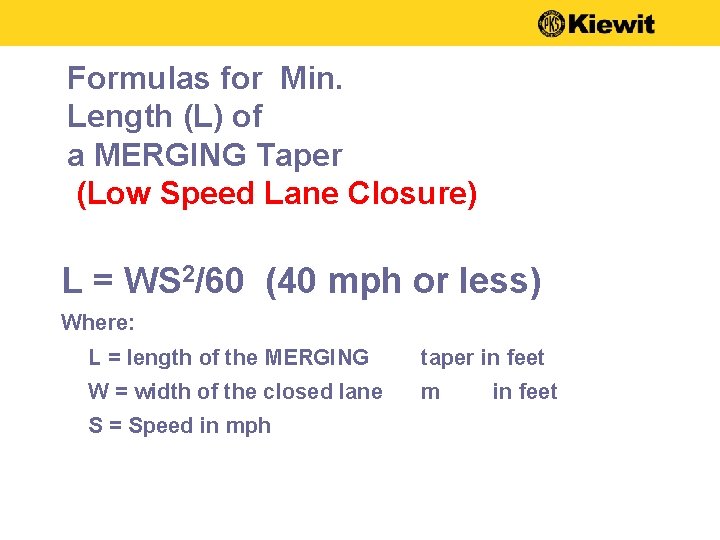
Formulas for Min. Length (L) of a MERGING Taper (Low Speed Lane Closure) L = WS 2/60 (40 mph or less) Where: L = length of the MERGING taper in feet W = width of the closed lane m S = Speed in mph in feet
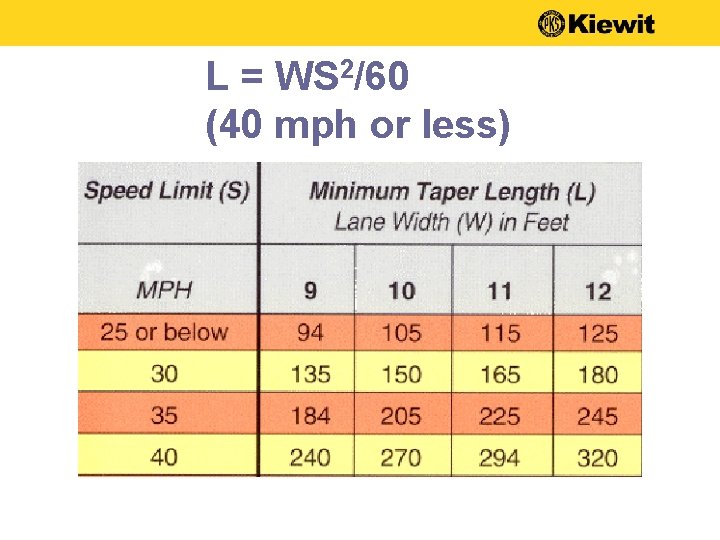
L = WS 2/60 (40 mph or less)
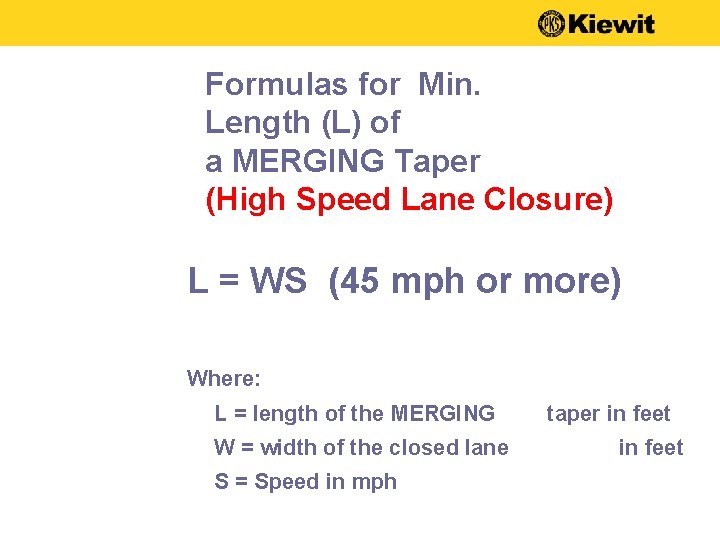
Formulas for Min. Length (L) of a MERGING Taper (High Speed Lane Closure) L = WS (45 mph or more) Where: L = length of the MERGING W = width of the closed lane S = Speed in mph taper in feet
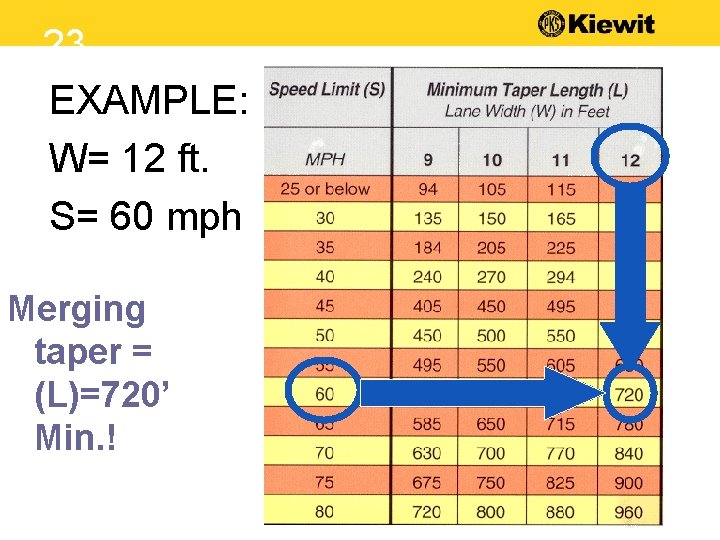
23 EXAMPLE: W= 12 ft. S= 60 mph Merging taper = (L)=720’ Min. !
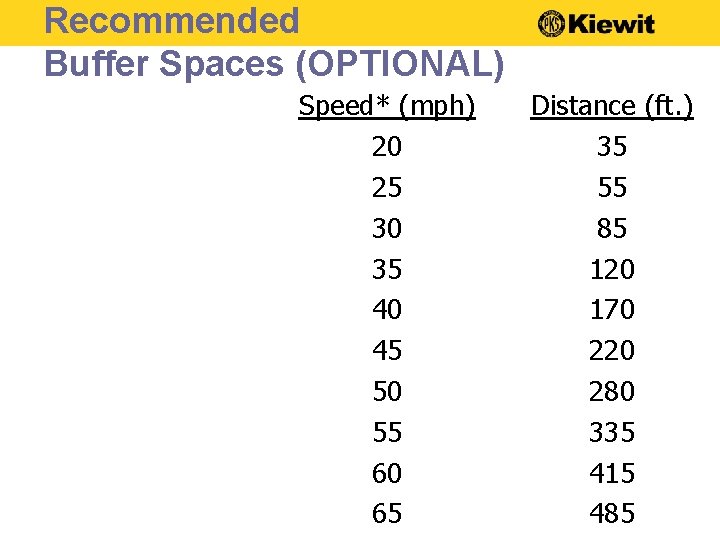
Recommended Buffer Spaces (OPTIONAL) Speed* (mph) 20 25 30 35 40 45 50 55 60 65 Distance (ft. ) 35 55 85 120 170 220 280 335 415 485
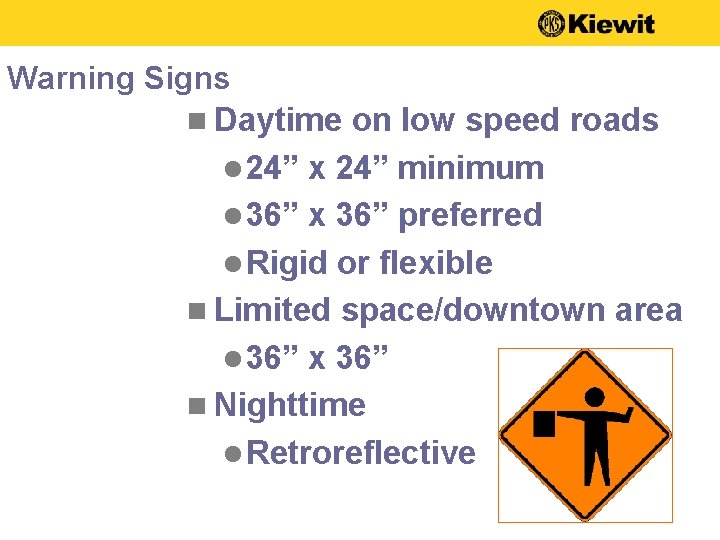
Warning Signs n Daytime on low speed roads l 24” x 24” minimum l 36” x 36” preferred l Rigid or flexible n Limited space/downtown area l 36” x 36” n Nighttime l Retroreflective
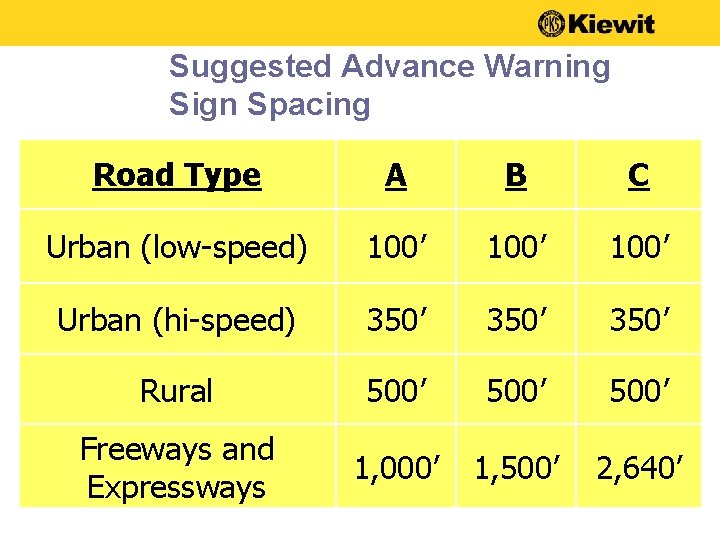
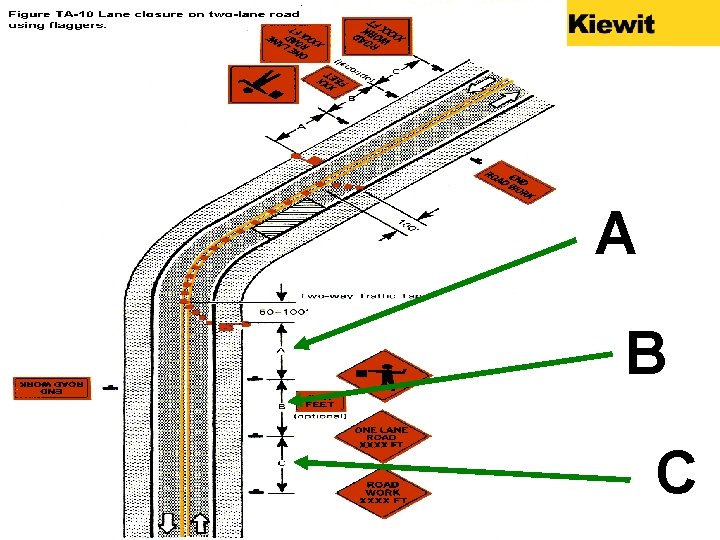
Suggested Advance Warning Sign Spacing Road Type A B C Urban (low-speed) 100’ Urban (hi-speed) 350’ Rural 500’ Freeways and Expressways 1, 000’ 1, 500’ 2, 640’
A B C
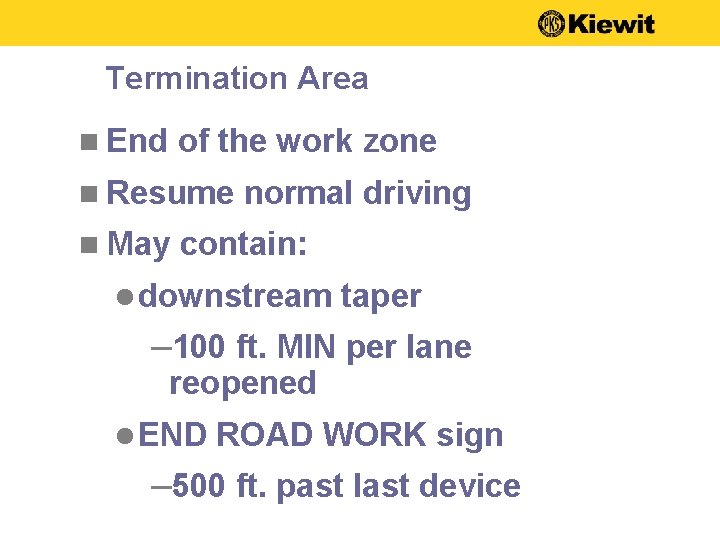
Termination Area n End of the work zone n Resume n May normal driving contain: l downstream taper – 100 ft. MIN per lane reopened l END ROAD WORK sign – 500 ft. past last device
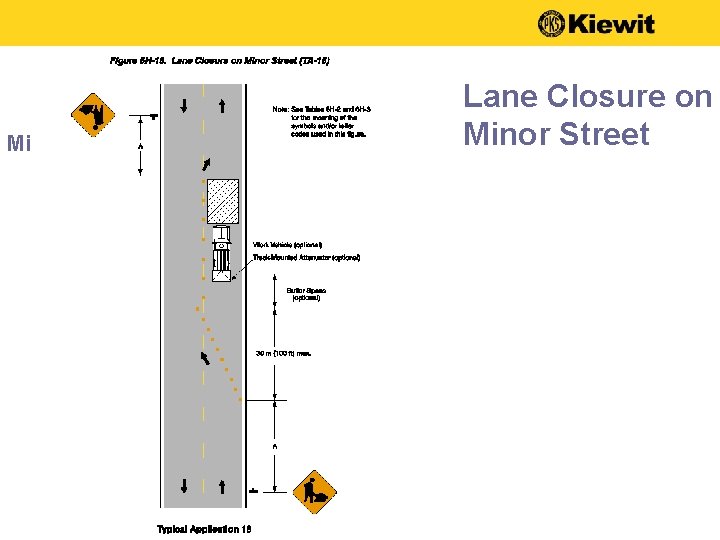
Mi Lane Closure on Minor Street
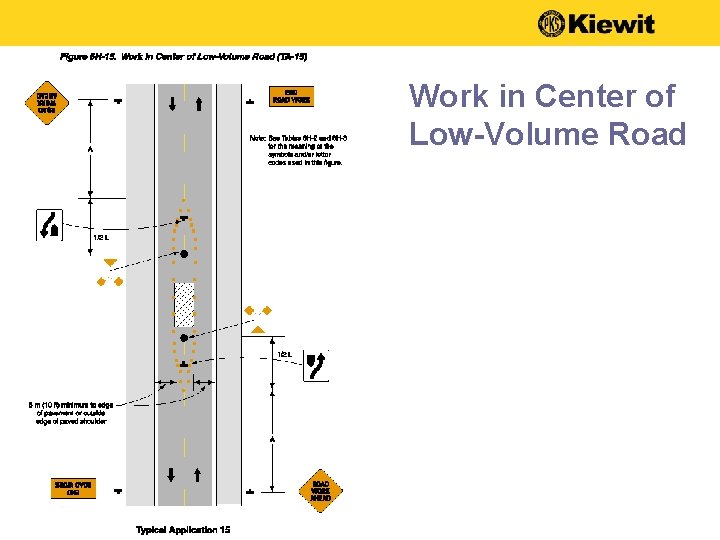
Work in Center of Low-Volume Road
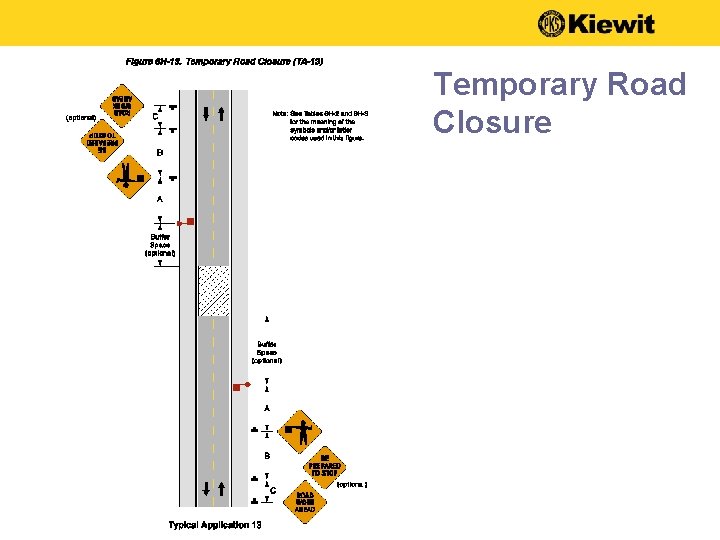
Temporary Road Closure
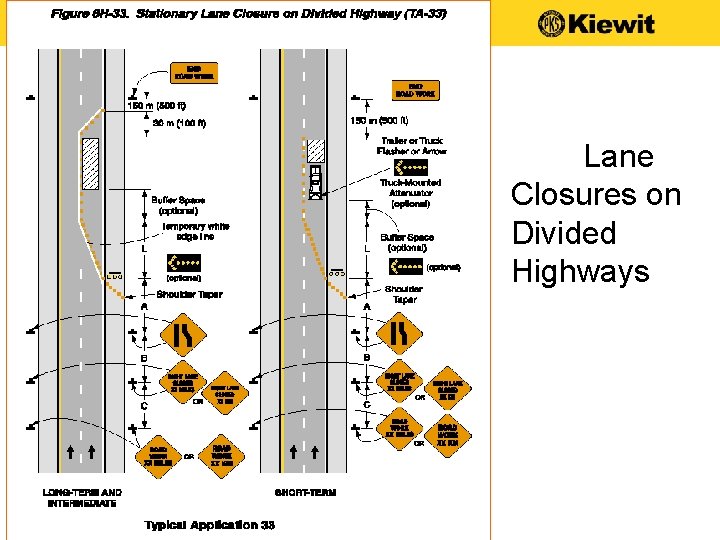
Lane Closures on Divided Highways
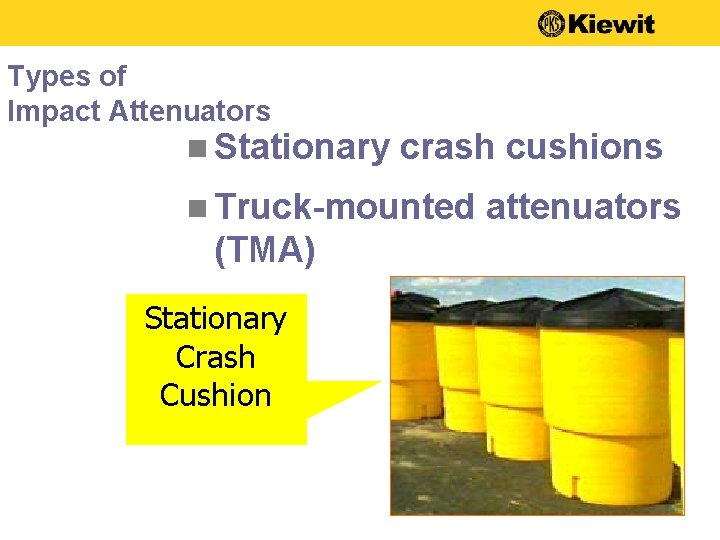
Types of Impact Attenuators n Stationary crash cushions n Truck-mounted (TMA) Stationary Crash Cushion attenuators
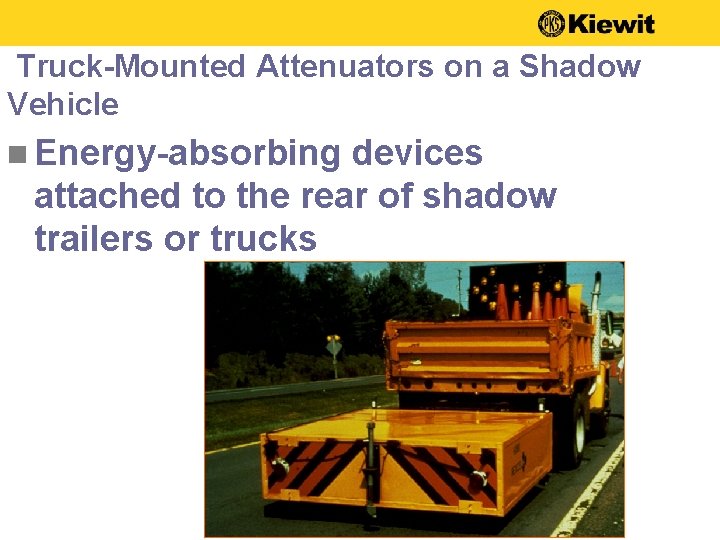
Truck-Mounted Attenuators on a Shadow Vehicle n Energy-absorbing devices attached to the rear of shadow trailers or trucks
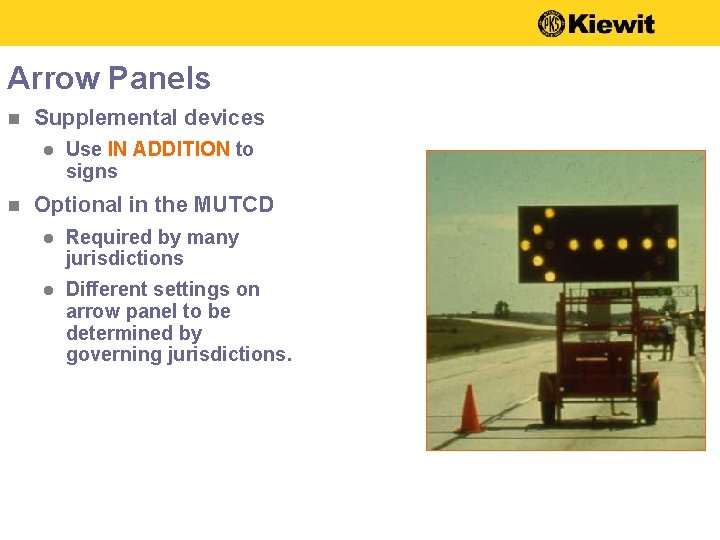
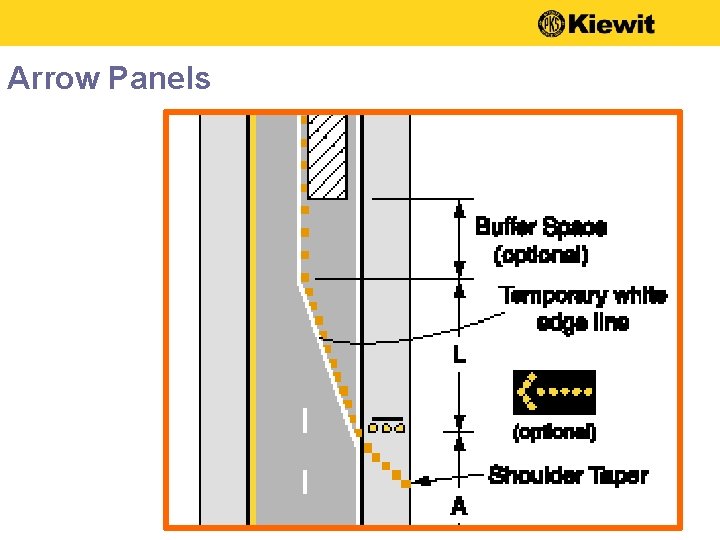
Arrow Panels n Supplemental devices l n Use IN ADDITION to signs Optional in the MUTCD l Required by many jurisdictions l Different settings on arrow panel to be determined by governing jurisdictions.
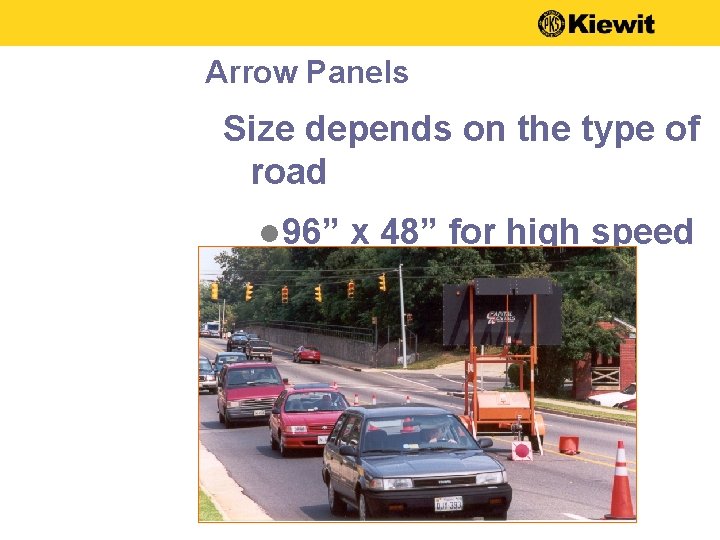
Arrow Panels Size depends on the type of road l 96” x 48” for high speed
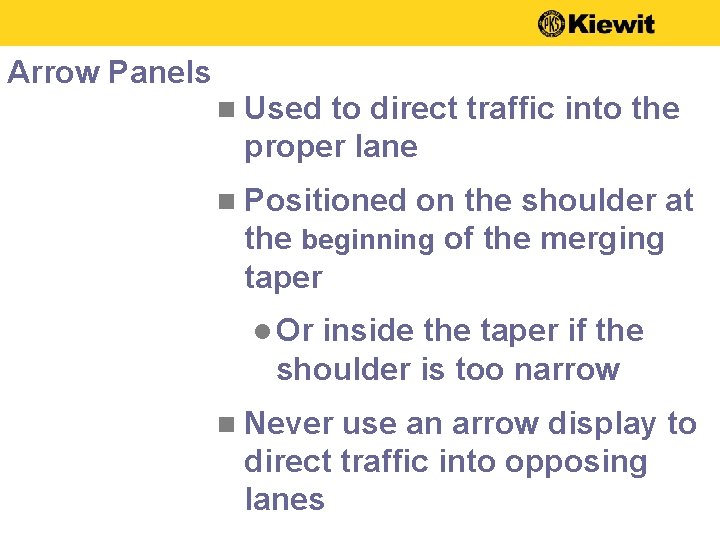
Arrow Panels n Used to direct traffic into the proper lane n Positioned on the shoulder at the beginning of the merging taper l Or inside the taper if the shoulder is too narrow n Never use an arrow display to direct traffic into opposing lanes
Arrow Panels
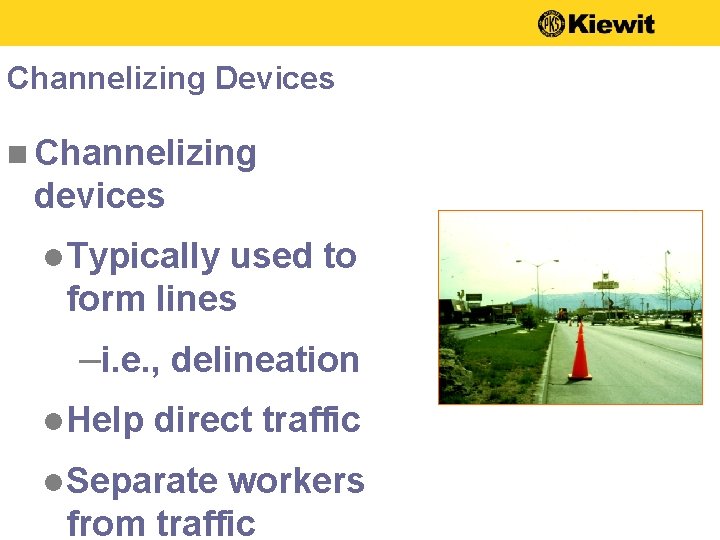
Channelizing Devices n Channelizing devices l. Typically used to form lines –i. e. , delineation l. Help direct traffic l. Separate workers from traffic
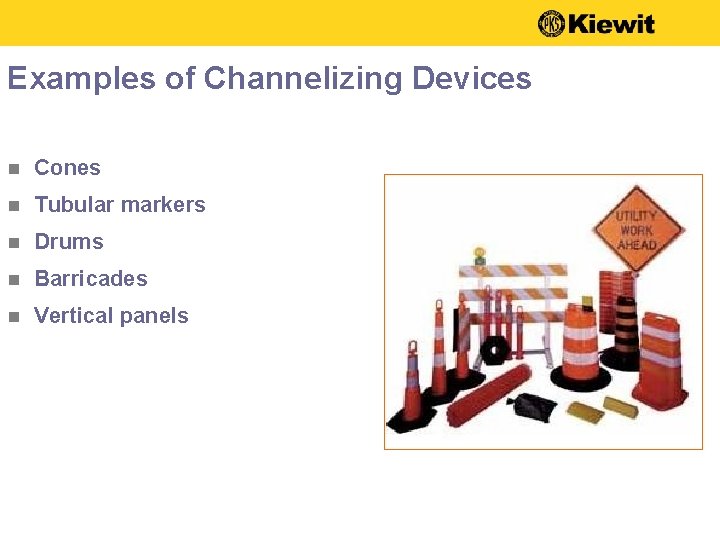
Examples of Channelizing Devices n Cones n Tubular markers n Drums n Barricades n Vertical panels
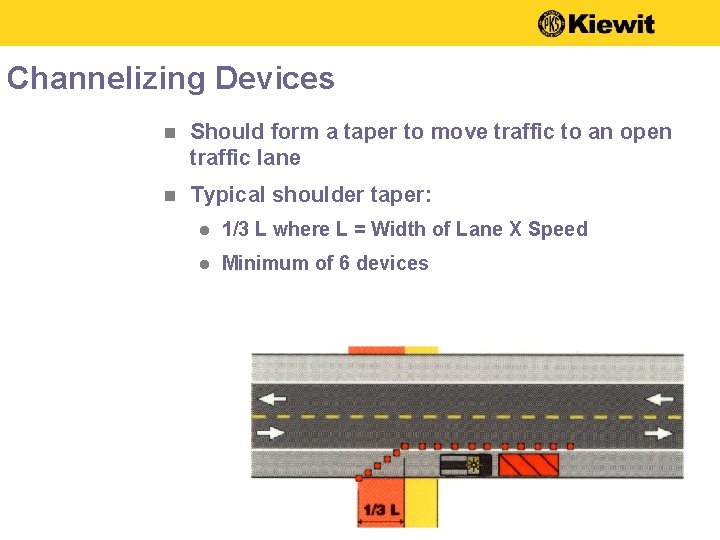
Channelizing Devices n Should form a taper to move traffic to an open traffic lane n Typical shoulder taper: l 1/3 L where L = Width of Lane X Speed l Minimum of 6 devices
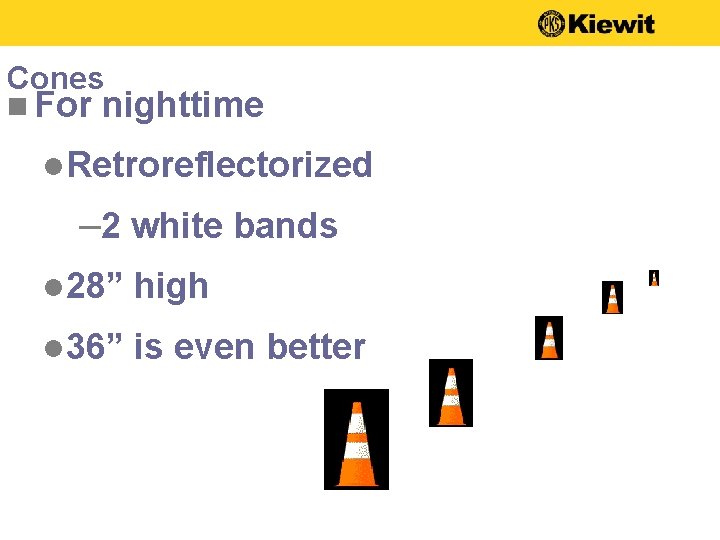
Cones n For nighttime l. Retroreflectorized – 2 white bands l 28” high l 36” is even better
Spacing of Devices on the Merging Taper n Max. spacing of channelizing devices = speed l i. e. , n 60’ for 60 mph This will create a taper l 720’ long l About n 13 devices Long enough to allow traffic to merge without slowing down
Spacing of Channelizing Devices n On the taper l n MAX spacing = Speed On the tangent l MAX spacing = Speed x 2 n Closer together if needed n Use skip lines pattern as a guide
Installation of Devices n RULE 1: Workers should always face traffic n RULE 2: Place sign furthest (first motorists will see) and proceed with the flow of traffic
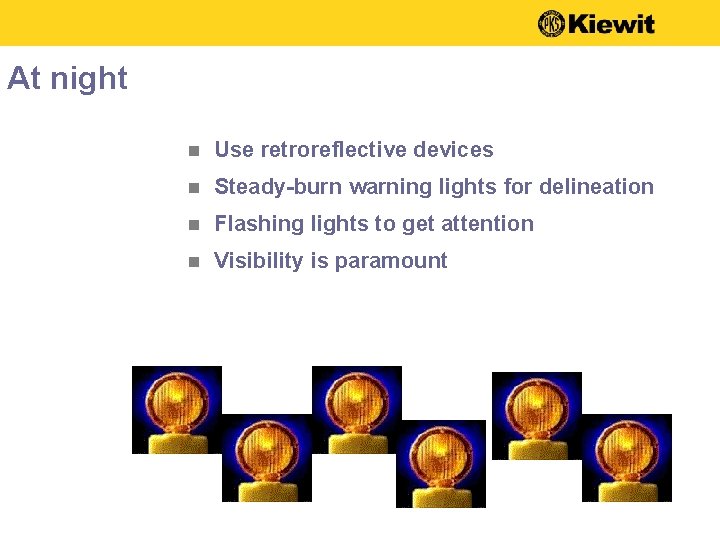
At night n Use retroreflective devices n Steady-burn warning lights for delineation n Flashing lights to get attention n Visibility is paramount
Always n Know your project’s requirements n Be prepared to do more than what the plans call for, if required n Know your agency’s or company’s policies and procedures
Remember n Each work site is unique n “By the book” rules won’t apply every time n Basic fundamentals still apply n Communicate a clear and simple message n Use common sense and good judgment!!
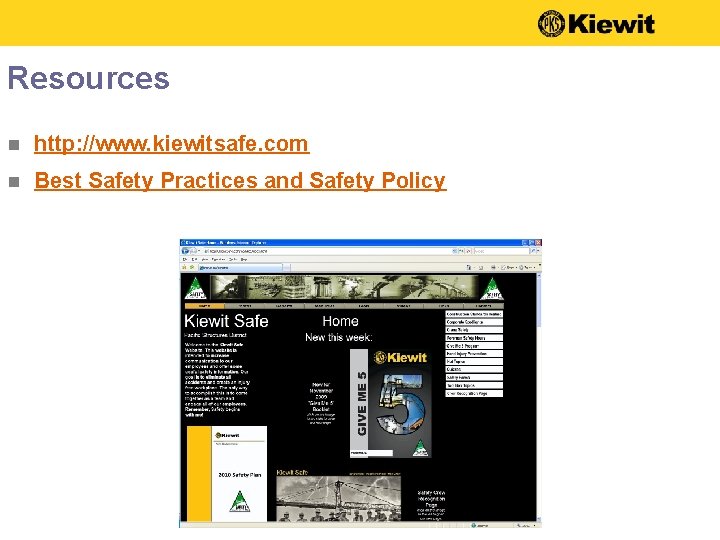
Resources n http: //www. kiewitsafe. com n Best Safety Practices and Safety Policy
Now that you have completed reviewing the training materials click on the link below for a short quiz.