
Confined Space Safety 1 Terminal Learning Objective Upon
Confined Space Safety 1

Terminal Learning Objective Upon the successful completion of this module, participants will have a greater understanding of confined spaces, their hazards, and the methods to control those hazards 2
Enabling Learning Objectives In this module, we will: • Describe the characteristics of confined spaces • Define Permit-Required Confined Spaces and Non. Permit-Required Confined Spaces and the hazards associated with these spaces 3
Enabling Learning Objectives In this module, we will: • List the elements of the Entry Permit • Discuss how the hazards are managed, including atmospheric testing and ventilation 4
Enabling Learning Objectives • Describe the responsibilities of the entry supervisor, attendant, and entrant and • Define and discuss the three types of rescue scenarios: self-rescue, non-entry rescue, and entry rescue 5
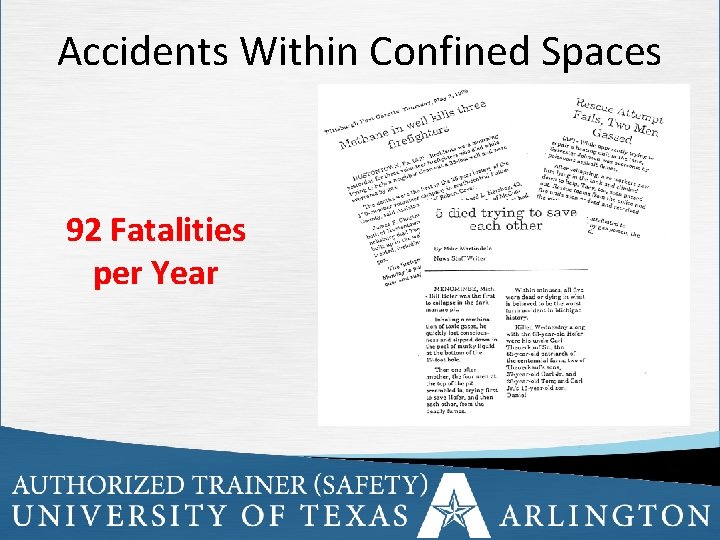
Accidents Within Confined Spaces 92 Fatalities per Year 6
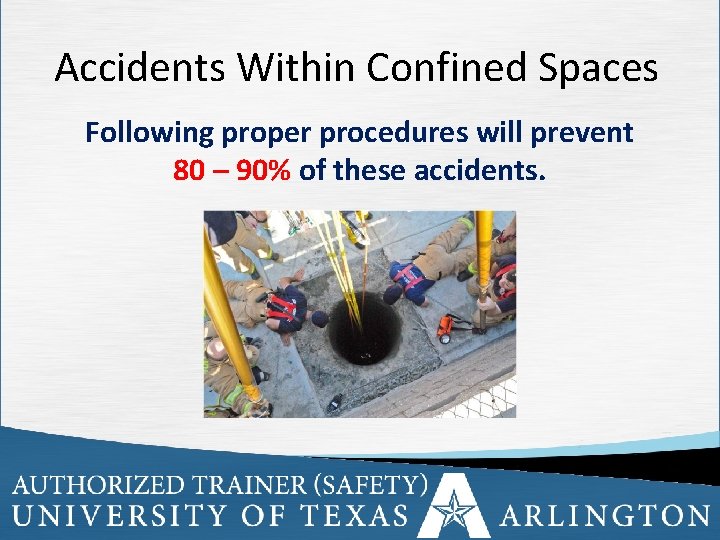
Accidents Within Confined Spaces Following proper procedures will prevent 80 – 90% of these accidents. 7
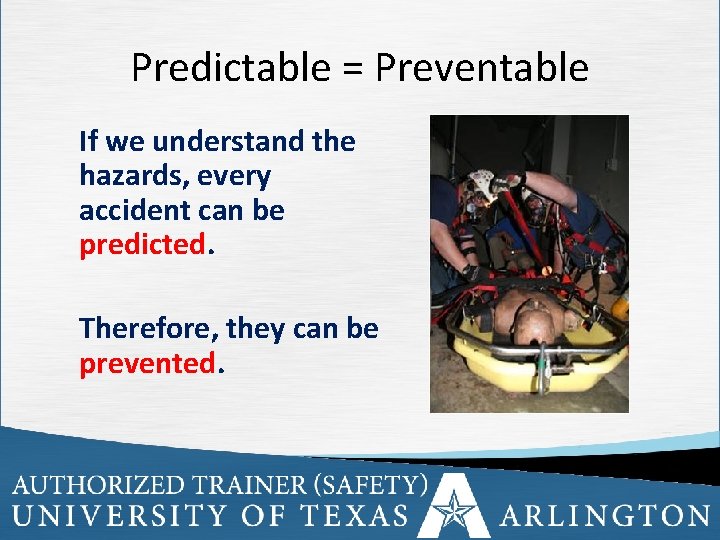
Predictable = Preventable If we understand the hazards, every accident can be predicted. Therefore, they can be prevented. 8
If we can keep one worker from getting into trouble in a confined space, we will be saving two or three. 65% of the people who die in these spaces are would-be rescuers — people who see someone passed out and in trouble, so they jump in to help the victim. 9
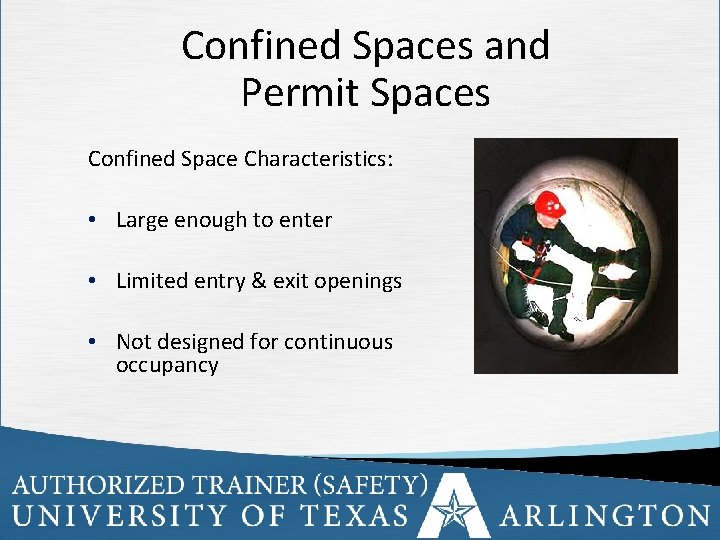
Confined Spaces and Permit Spaces Confined Space Characteristics: • Large enough to enter • Limited entry & exit openings • Not designed for continuous occupancy 10
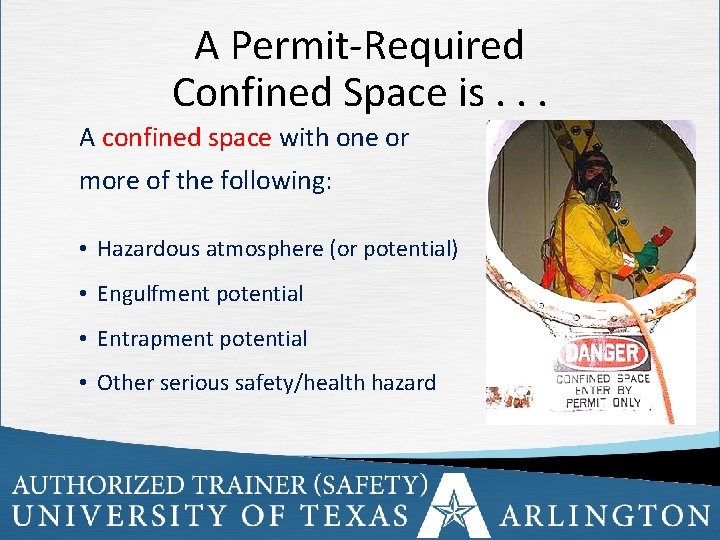
A Permit-Required Confined Space is. . . A confined space with one or more of the following: • Hazardous atmosphere (or potential) • Engulfment potential • Entrapment potential • Other serious safety/health hazard 11
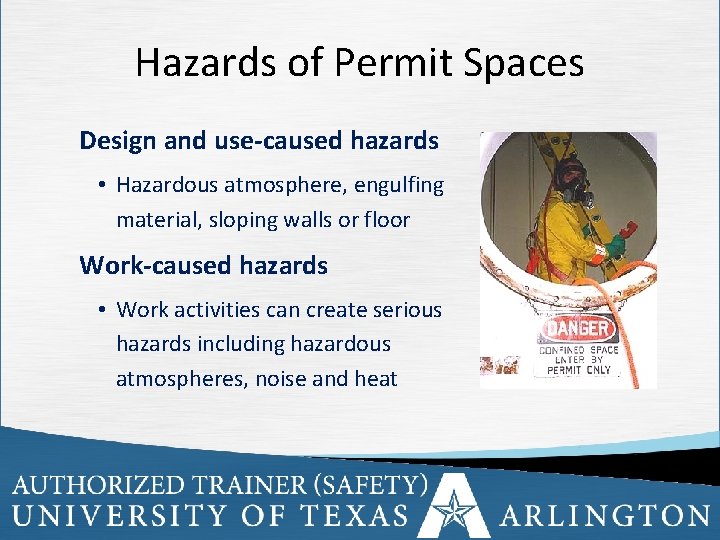
Hazards of Permit Spaces Design and use-caused hazards • Hazardous atmosphere, engulfing material, sloping walls or floor Work-caused hazards • Work activities can create serious hazards including hazardous atmospheres, noise and heat 12
Permit Program Components • Identify confined & permit spaces • Assess the hazards • Determine how to manage/control hazards • Produce entry procedures • Develop entry permit 13
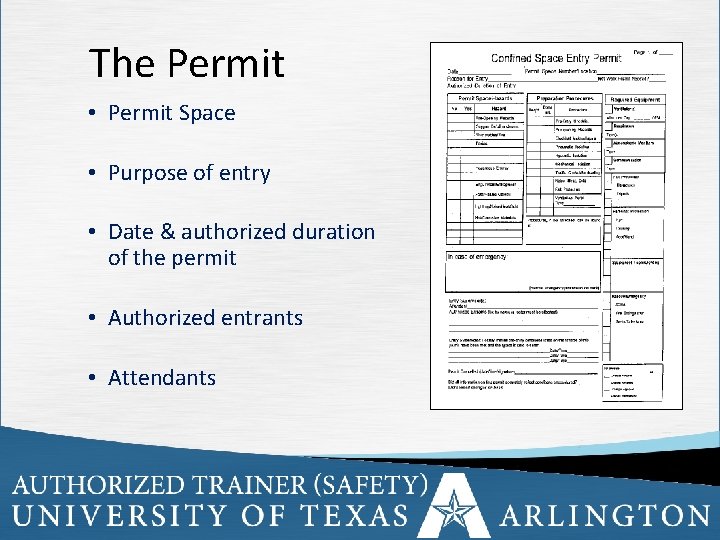
The Permit • Permit Space • Purpose of entry • Date & authorized duration of the permit • Authorized entrants • Attendants 14
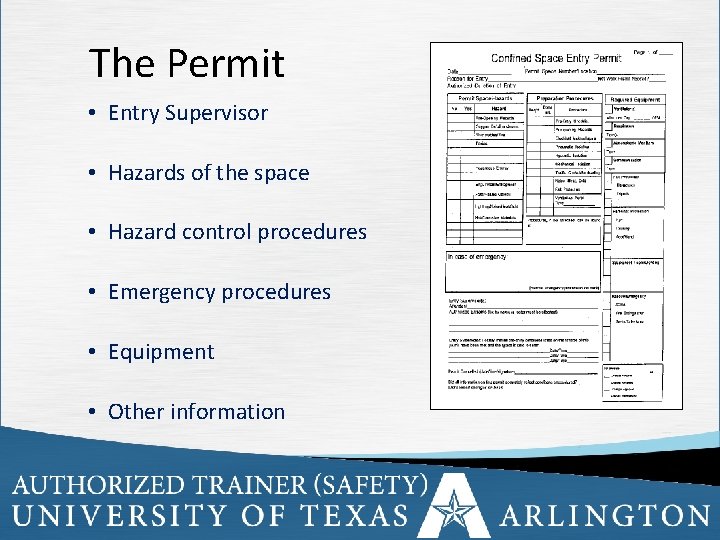
The Permit • Entry Supervisor • Hazards of the space • Hazard control procedures • Emergency procedures • Equipment • Other information 15
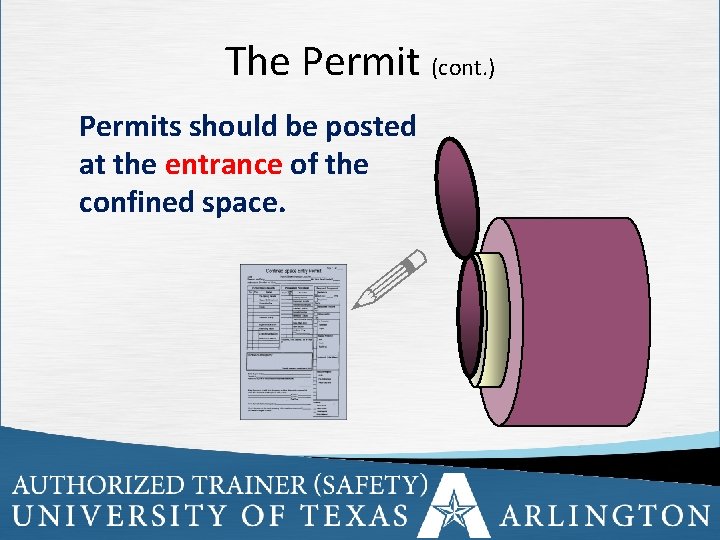
The Permit (cont. ) Permits should be posted at the entrance of the confined space. 16
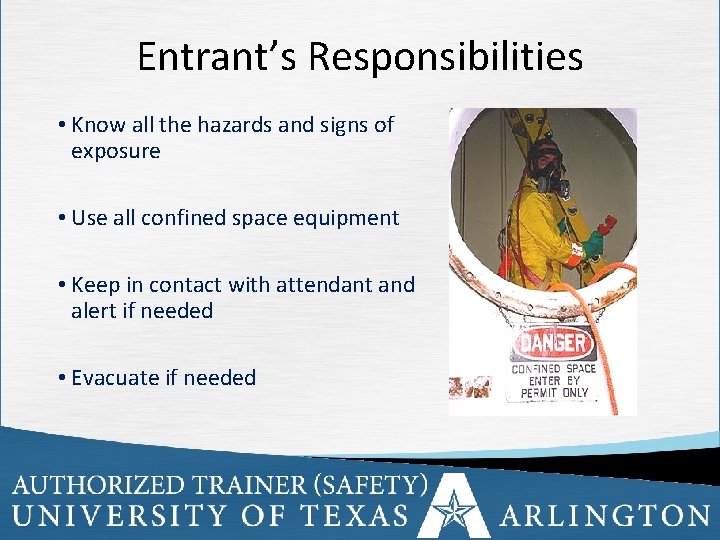
Entrant’s Responsibilities • Know all the hazards and signs of exposure • Use all confined space equipment • Keep in contact with attendant and alert if needed • Evacuate if needed 17
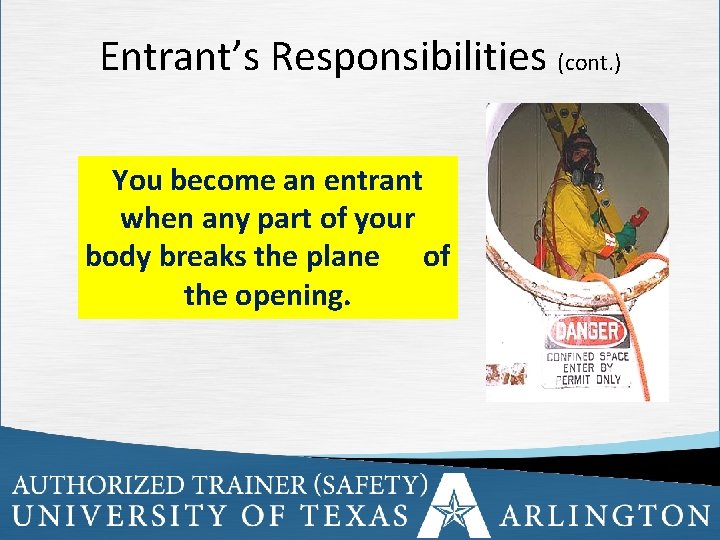
Entrant’s Responsibilities (cont. ) You become an entrant when any part of your body breaks the plane of the opening. 18
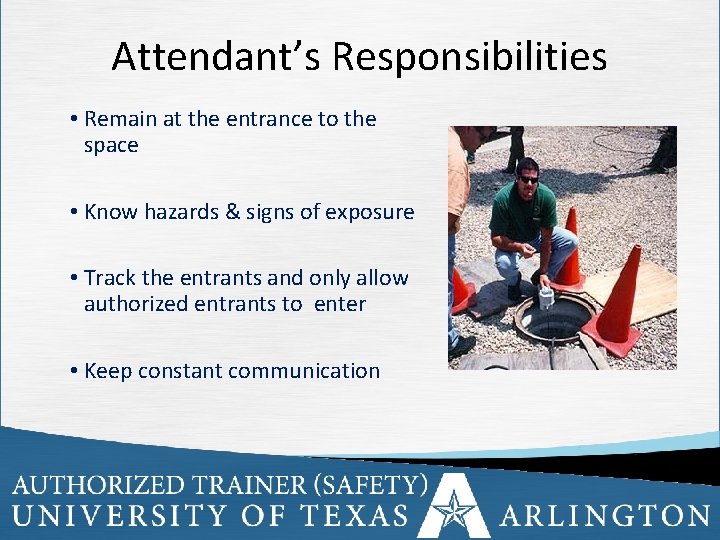
Attendant’s Responsibilities • Remain at the entrance to the space • Know hazards & signs of exposure • Track the entrants and only allow authorized entrants to enter • Keep constant communication 19
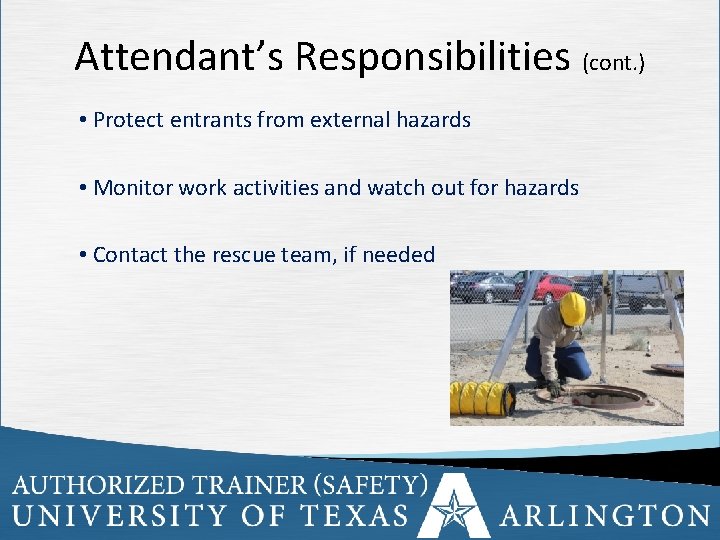
Attendant’s Responsibilities (cont. ) • Protect entrants from external hazards • Monitor work activities and watch out for hazards • Contact the rescue team, if needed 20
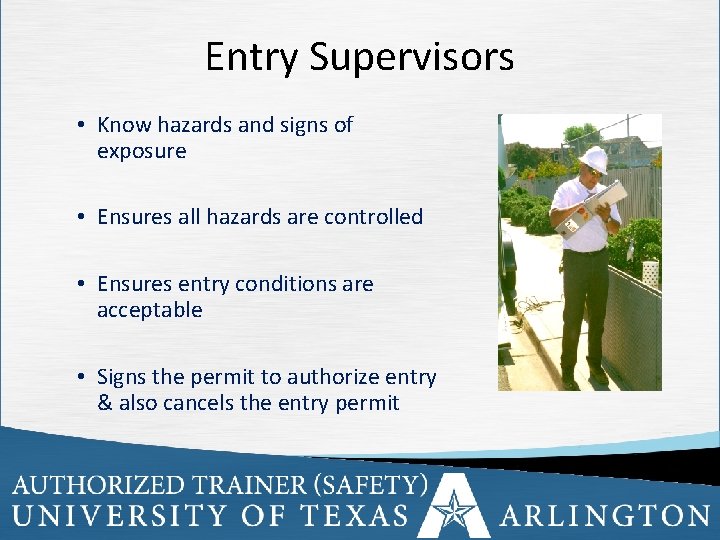
Entry Supervisors • Know hazards and signs of exposure • Ensures all hazards are controlled • Ensures entry conditions are acceptable • Signs the permit to authorize entry & also cancels the entry permit 21
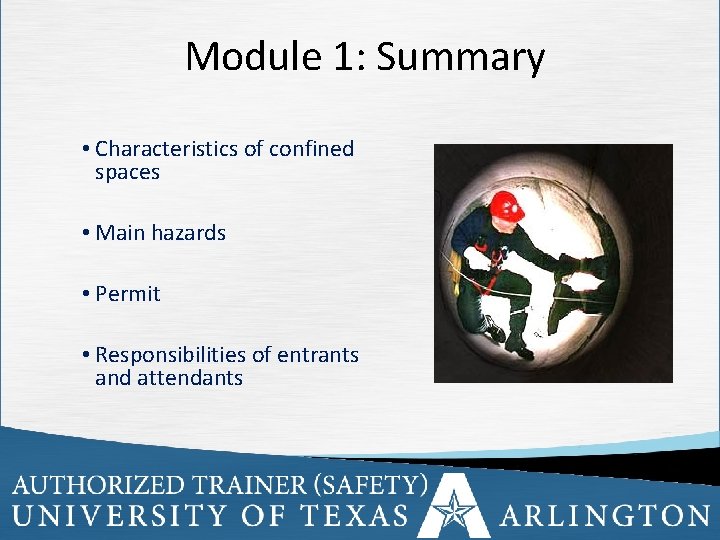
Module 1: Summary • Characteristics of confined spaces • Main hazards • Permit • Responsibilities of entrants and attendants 22
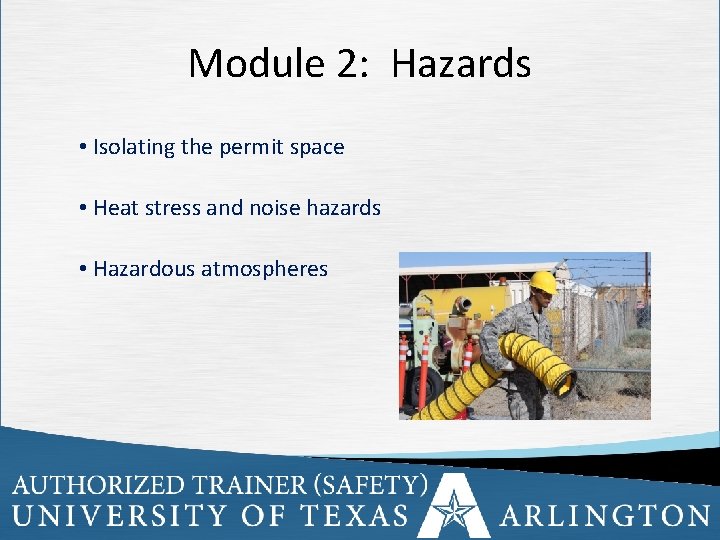
Module 2: Hazards • Isolating the permit space • Heat stress and noise hazards • Hazardous atmospheres 23
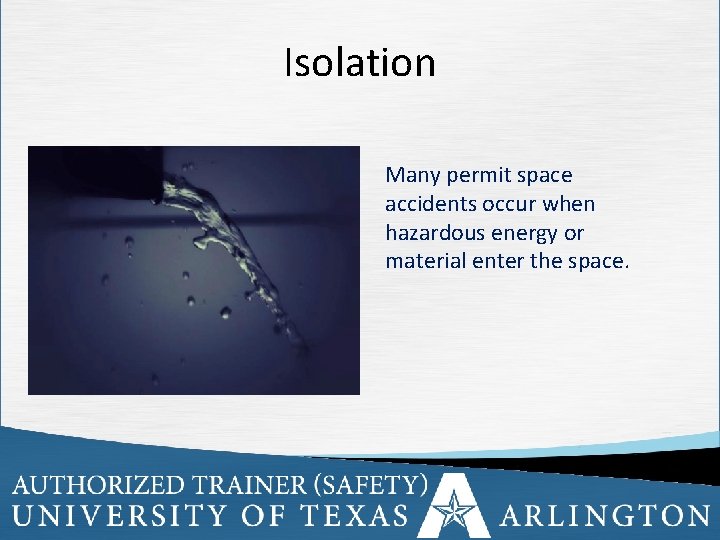
Isolation Many permit space accidents occur when hazardous energy or material enter the space. 24
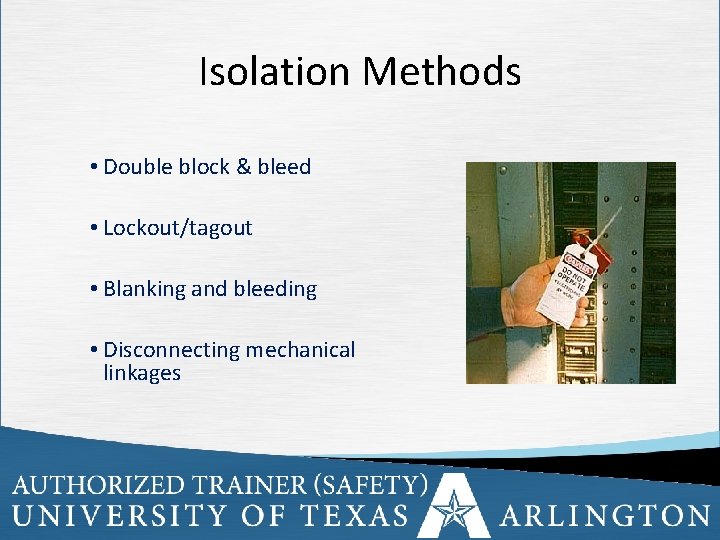
Isolation Methods • Double block & bleed • Lockout/tagout • Blanking and bleeding • Disconnecting mechanical linkages 25
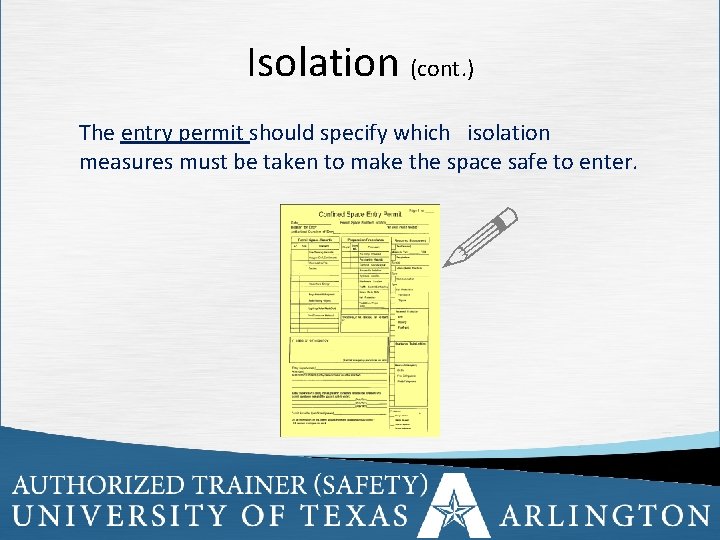
Isolation (cont. ) The entry permit should specify which isolation measures must be taken to make the space safe to enter. 26
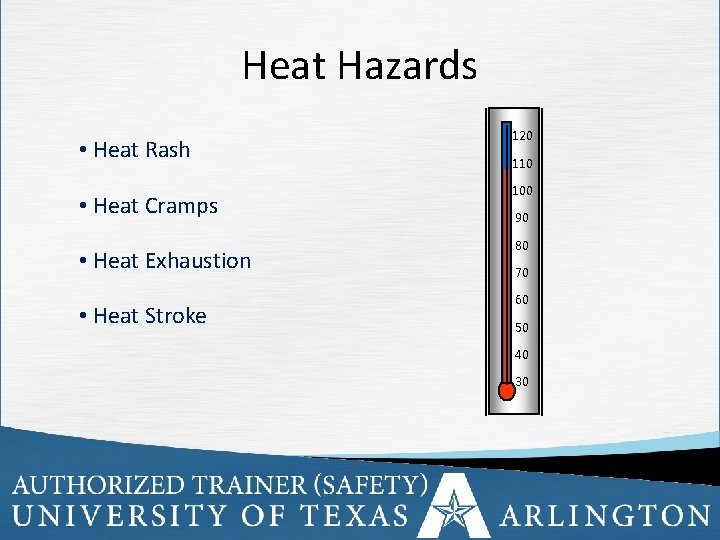
Heat Hazards • Heat Rash • Heat Cramps • Heat Exhaustion • Heat Stroke 120 110 100 90 80 70 60 50 40 30 27
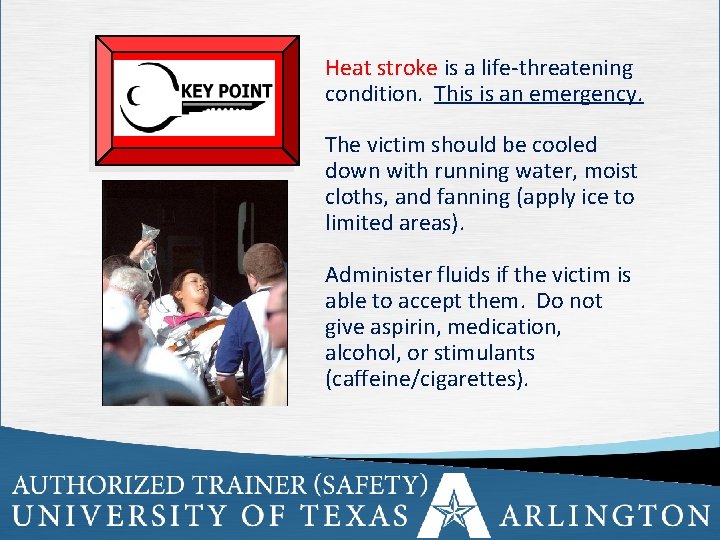
Heat stroke is a life-threatening condition. This is an emergency. The victim should be cooled down with running water, moist cloths, and fanning (apply ice to limited areas). Administer fluids if the victim is able to accept them. Do not give aspirin, medication, alcohol, or stimulants (caffeine/cigarettes). 28
Atmospheric Hazards Hazardous atmospheres cause many of the accidents in confined spaces. An atmosphere that seems safe near the entrance can be deadly just a few feet away. 29
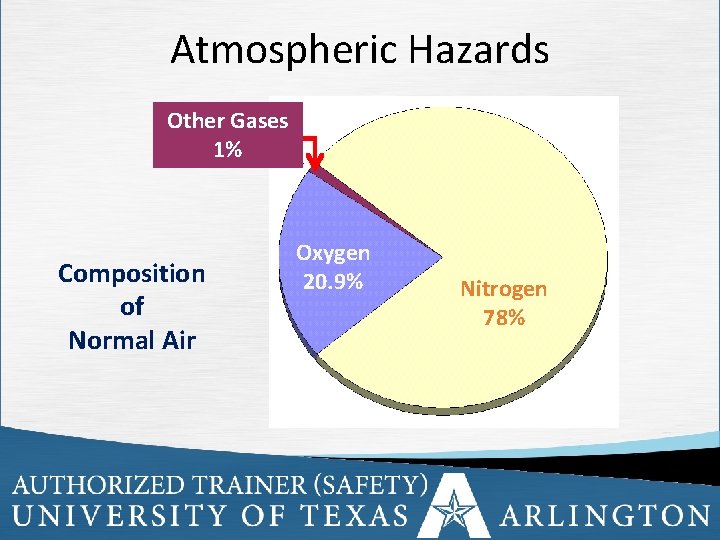
Atmospheric Hazards Other Gases 1% Composition of Normal Air Oxygen 20. 9% Nitrogen 78% 30
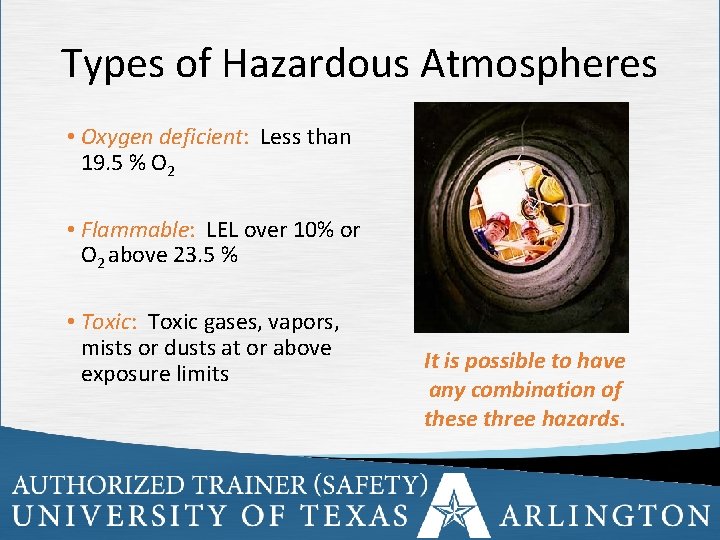
Types of Hazardous Atmospheres • Oxygen deficient: Less than 19. 5 % O 2 • Flammable: LEL over 10% or O 2 above 23. 5 % • Toxic: Toxic gases, vapors, mists or dusts at or above exposure limits It is possible to have any combination of these three hazards. 31
Hazardous Atmospheres Human senses (sight, smell, taste) cannot protect you from hazardous atmospheres since some gases have no taste or odor. 32
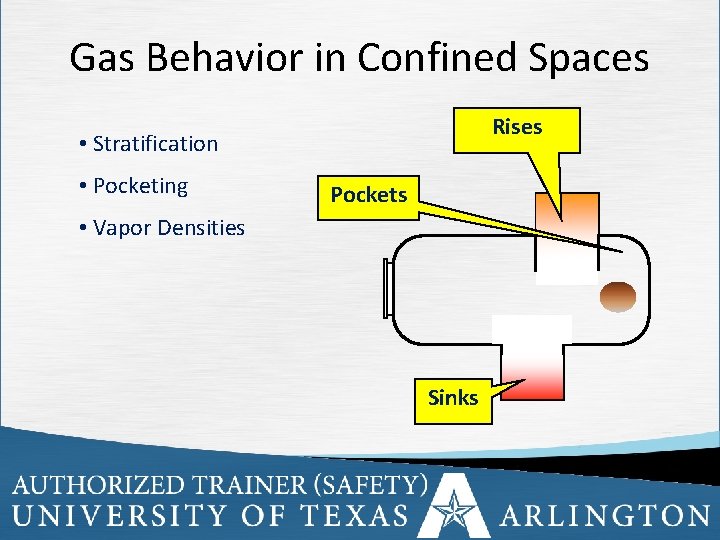
Gas Behavior in Confined Spaces Rises • Stratification • Pocketing Pockets • Vapor Densities Sinks 33
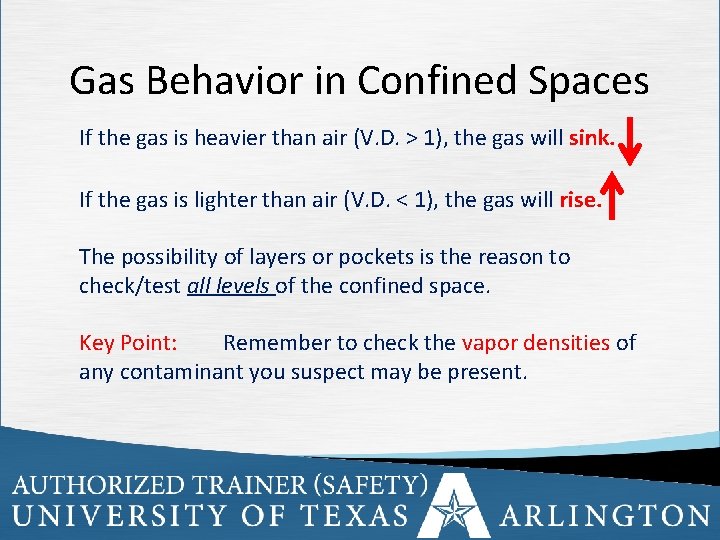
Gas Behavior in Confined Spaces If the gas is heavier than air (V. D. > 1), the gas will sink. If the gas is lighter than air (V. D. < 1), the gas will rise. The possibility of layers or pockets is the reason to check/test all levels of the confined space. Key Point: Remember to check the vapor densities of any contaminant you suspect may be present. 34
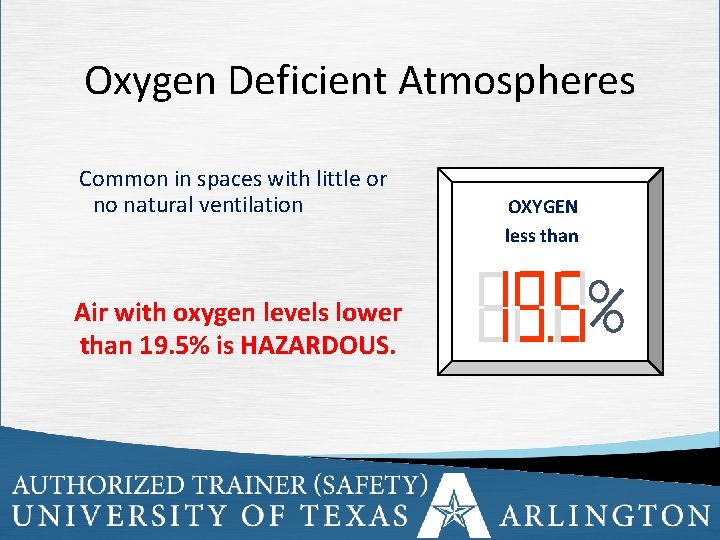
Oxygen Deficient Atmospheres Common in spaces with little or no natural ventilation OXYGEN less than Air with oxygen levels lower than 19. 5% is HAZARDOUS. 35
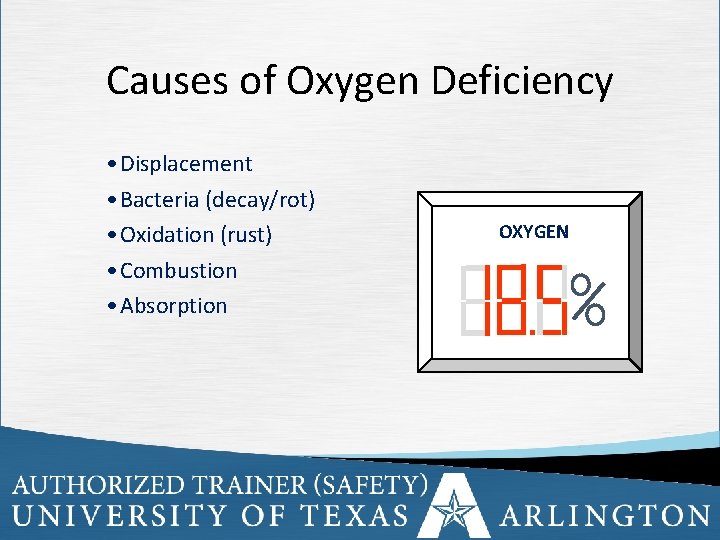
Causes of Oxygen Deficiency • Displacement • Bacteria (decay/rot) • Oxidation (rust) • Combustion • Absorption OXYGEN 36
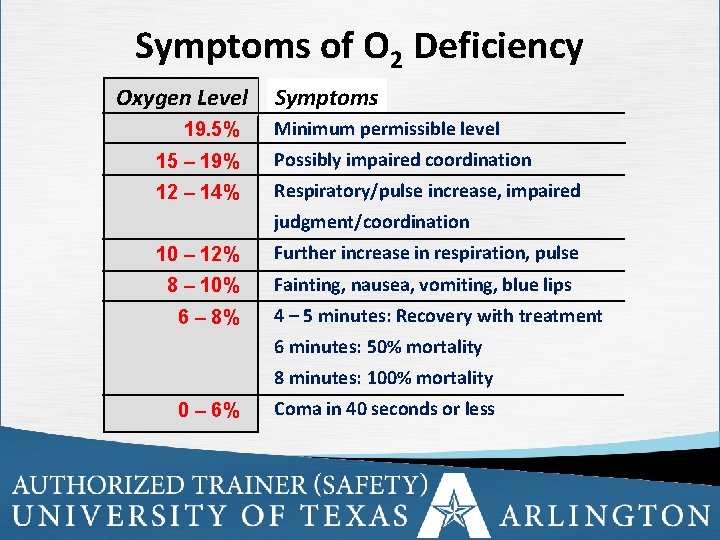
Symptoms of O 2 Deficiency Oxygen Level 19. 5% Symptoms Minimum permissible level 15 – 19% Possibly impaired coordination 12 – 14% Respiratory/pulse increase, impaired judgment/coordination 10 – 12% Further increase in respiration, pulse 8 – 10% Fainting, nausea, vomiting, blue lips 6 – 8% 4 – 5 minutes: Recovery with treatment 6 minutes: 50% mortality 8 minutes: 100% mortality 0 – 6% Coma in 40 seconds or less 37
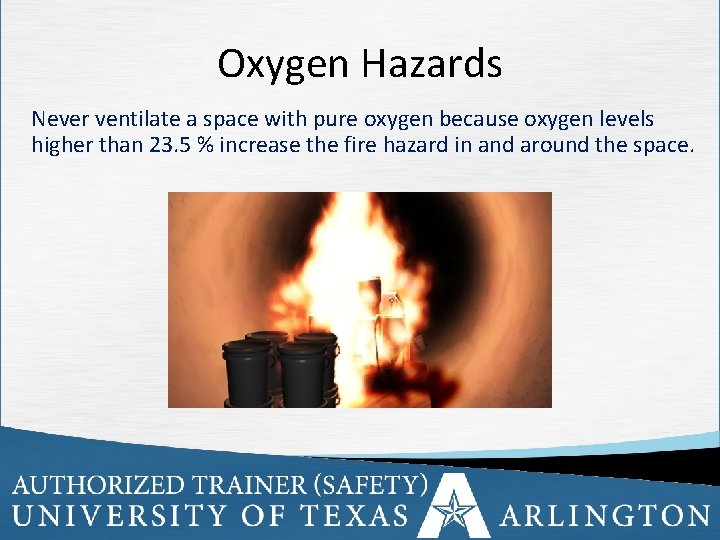
Oxygen Hazards Never ventilate a space with pure oxygen because oxygen levels higher than 23. 5 % increase the fire hazard in and around the space. 38
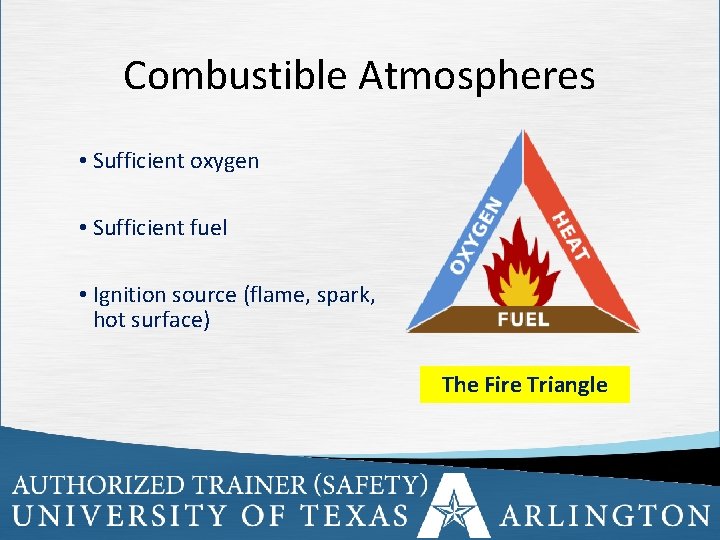
Combustible Atmospheres • Sufficient oxygen • Sufficient fuel • Ignition source (flame, spark, hot surface) The Fire Triangle 39
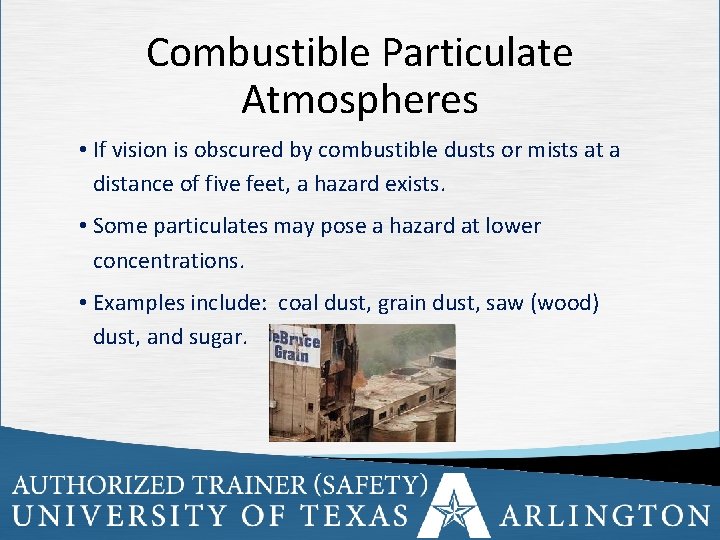
Combustible Particulate Atmospheres • If vision is obscured by combustible dusts or mists at a distance of five feet, a hazard exists. • Some particulates may pose a hazard at lower concentrations. • Examples include: coal dust, grain dust, saw (wood) dust, and sugar. 40
Flammable Range, UEL, LEL Flammable (Explosive) Range. The range of flammable vapor or gas-air mixture between the upper and lower flammable limits is known as the "flammable range", also often referred to as the "explosive range". 41
Flammable Range, UEL, LEL Lower Explosive Limit (LEL) -or Lower Flammable Limit (LFL) The lower explosive limit (LEL) or lower flammable limit (LFL) of a combustible gas is defined as the smallest amount of the gas that will support a self-propagating flame when mixed with air (or oxygen) and ignited. Below the LEL/LFL, the mixture is said to be too “lean” to burn. 42
Flammable Range, UEL, LEL Upper Explosive Limit (LEL) -or Upper Flammable Limit (LFL) The upper explosive limit (LEL) or upper flammable limit (LFL) of a combustible gas is defined as the maximum amount of the gas that will support a self-propagating flame when mixed with air (or oxygen) and ignited. Above the UEL/UFL, the mixture is said to be too “rich” to burn. 43
Toxic Atmospheres • Sources: • Bacteria • Toxins stored (or once stored) in the space • Substances brought into space • Work being done in or near space • Engine exhaust 44
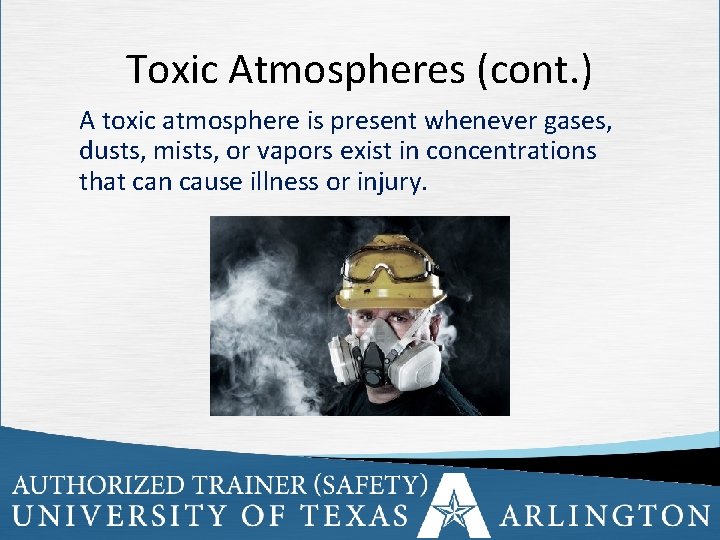
Toxic Atmospheres (cont. ) A toxic atmosphere is present whenever gases, dusts, mists, or vapors exist in concentrations that can cause illness or injury. 45
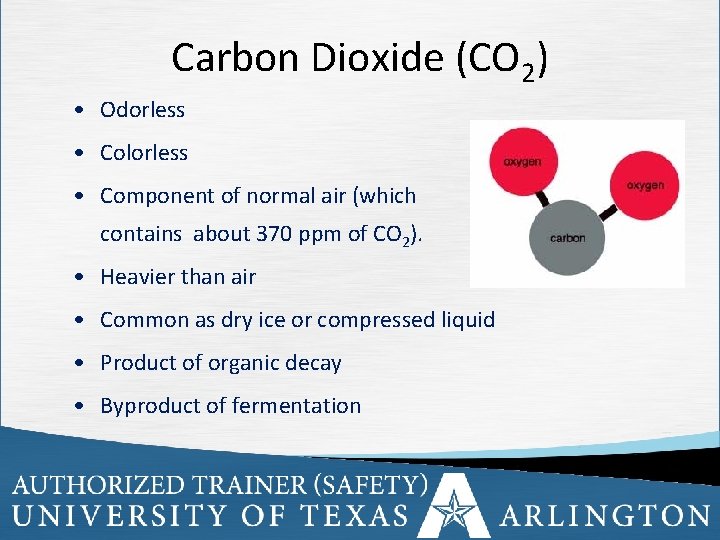
Carbon Dioxide (CO 2) • Odorless • Colorless • Component of normal air (which contains about 370 ppm of CO 2). • Heavier than air • Common as dry ice or compressed liquid • Product of organic decay • Byproduct of fermentation 46
Carbon Dioxide: Symptoms of Overexposure • Headache and dizziness • Prickling or burning skin sensations • Breathing difficulty or painful breathing • Sweating and a sense of malaise 47
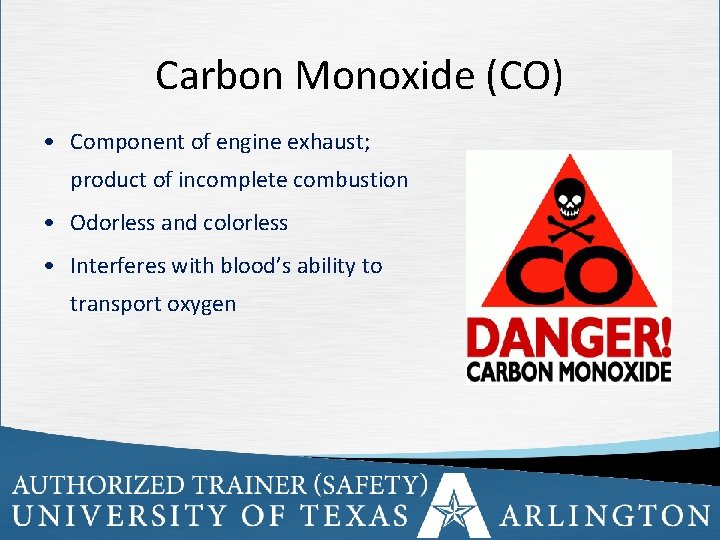
Carbon Monoxide (CO) • Component of engine exhaust; product of incomplete combustion • Odorless and colorless • Interferes with blood’s ability to transport oxygen 48
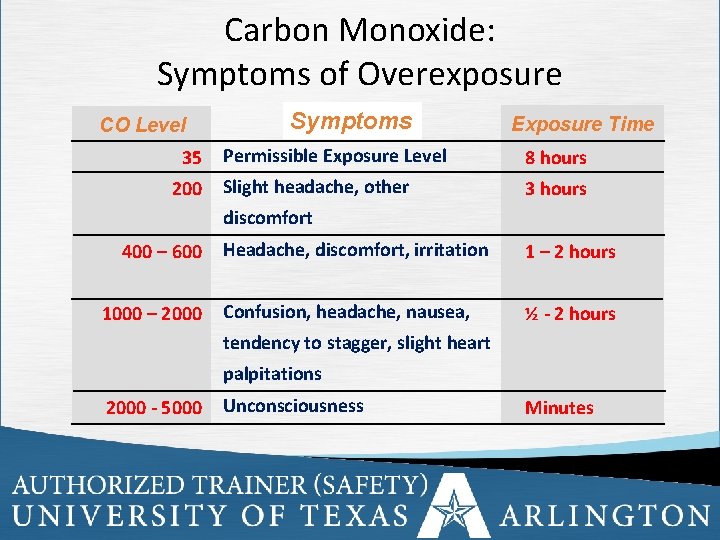
Carbon Monoxide: Symptoms of Overexposure CO Level 35 200 Symptoms Exposure Time Permissible Exposure Level 8 hours Slight headache, other 3 hours discomfort 400 – 600 1000 – 2000 Headache, discomfort, irritation 1 – 2 hours Confusion, headache, nausea, ½ - 2 hours tendency to stagger, slight heart palpitations 2000 - 5000 Unconsciousness Minutes 49
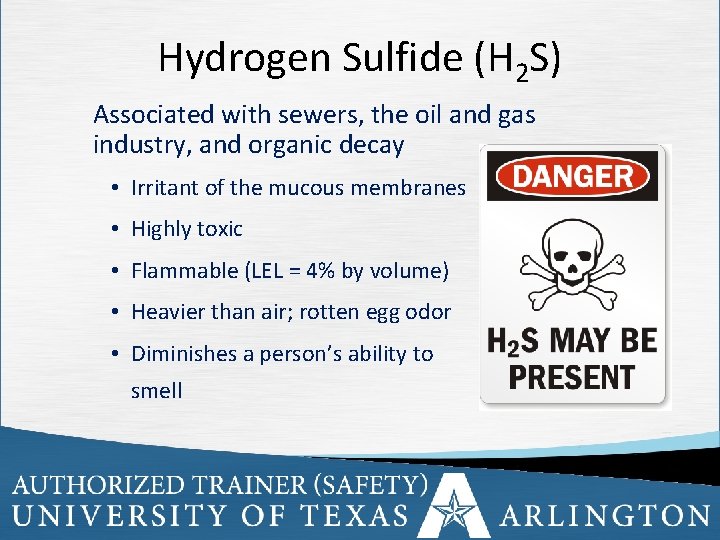
Hydrogen Sulfide (H 2 S) Associated with sewers, the oil and gas industry, and organic decay • Irritant of the mucous membranes • Highly toxic • Flammable (LEL = 4% by volume) • Heavier than air; rotten egg odor • Diminishes a person’s ability to smell 50
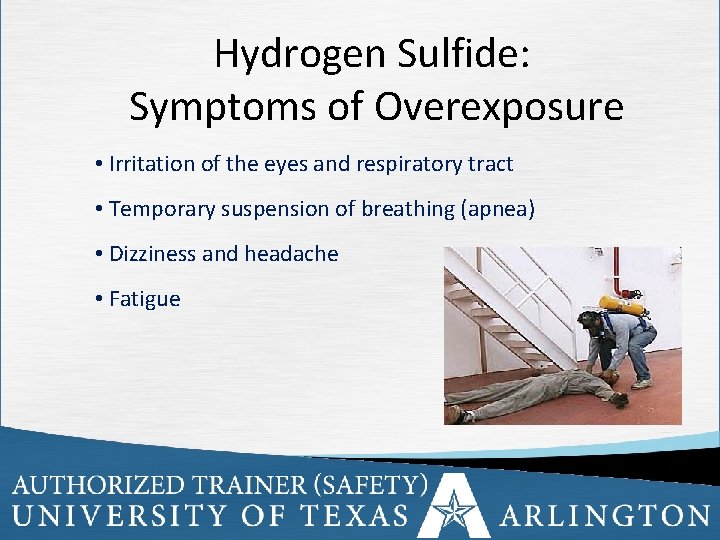
Hydrogen Sulfide: Symptoms of Overexposure • Irritation of the eyes and respiratory tract • Temporary suspension of breathing (apnea) • Dizziness and headache • Fatigue 51
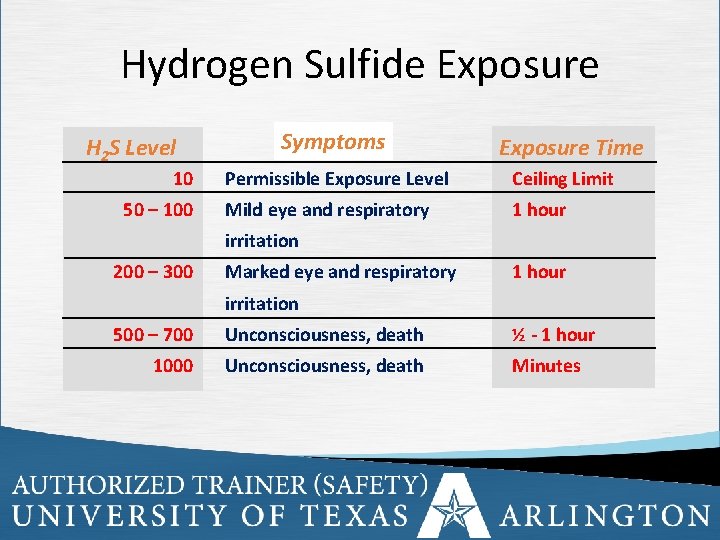
Hydrogen Sulfide Exposure H 2 S Level 10 50 – 100 Symptoms Exposure Time Permissible Exposure Level Ceiling Limit Mild eye and respiratory 1 hour irritation 200 – 300 Marked eye and respiratory 1 hour irritation 500 – 700 Unconsciousness, death ½ - 1 hour 1000 Unconsciousness, death Minutes 52
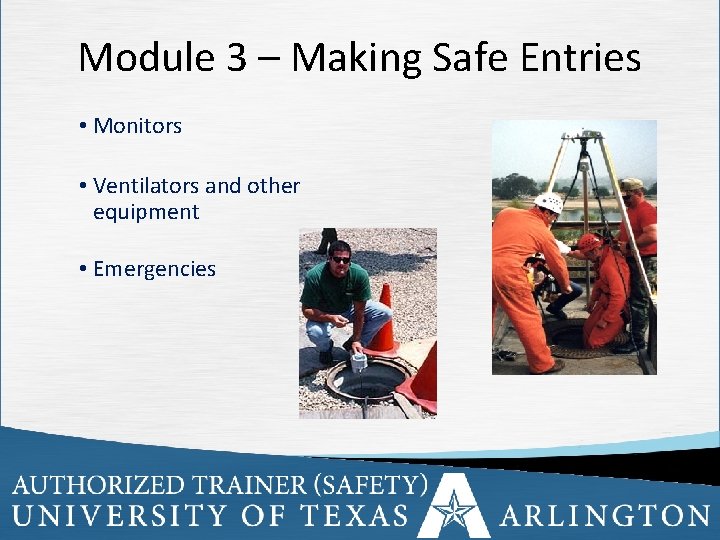
Module 3 – Making Safe Entries • Monitors • Ventilators and other equipment • Emergencies 53
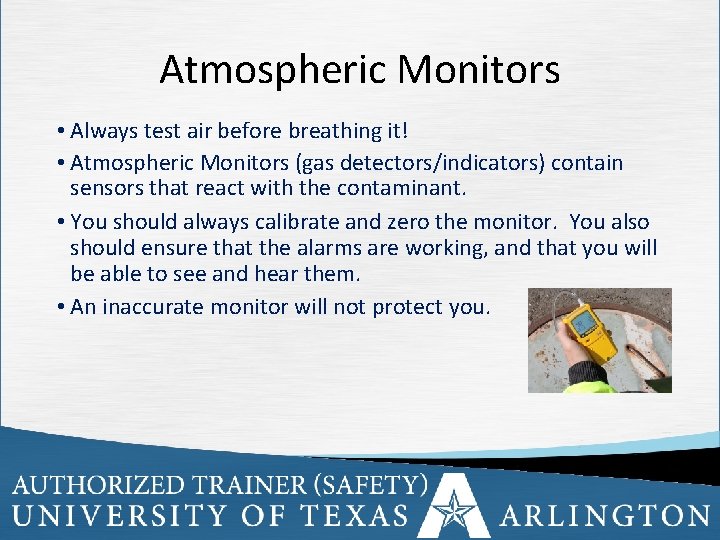
Atmospheric Monitors • Always test air before breathing it! • Atmospheric Monitors (gas detectors/indicators) contain sensors that react with the contaminant. • You should always calibrate and zero the monitor. You also should ensure that the alarms are working, and that you will be able to see and hear them. • An inaccurate monitor will not protect you. 54
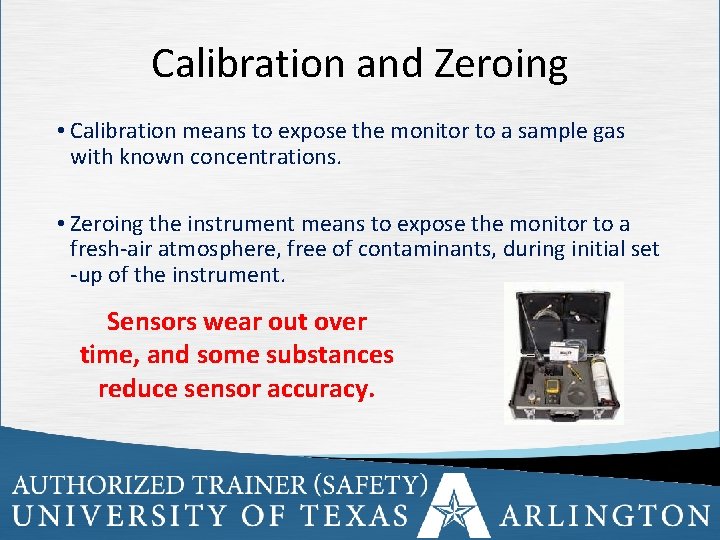
Calibration and Zeroing • Calibration means to expose the monitor to a sample gas with known concentrations. • Zeroing the instrument means to expose the monitor to a fresh-air atmosphere, free of contaminants, during initial set -up of the instrument. Sensors wear out over time, and some substances reduce sensor accuracy. 55
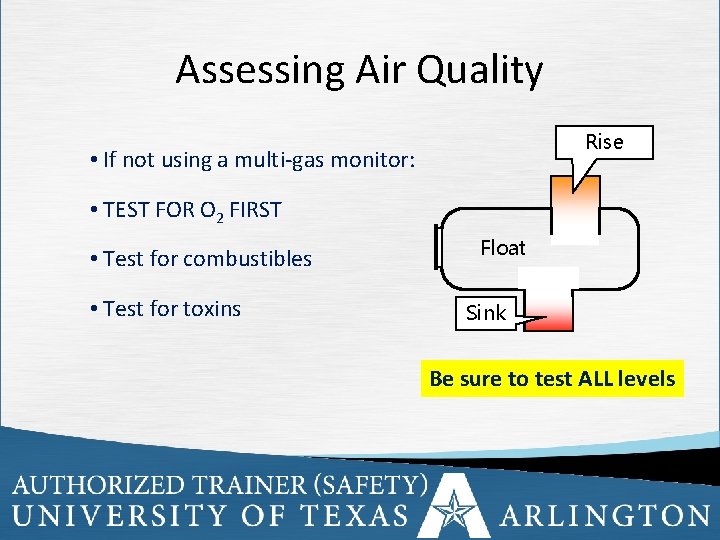
Assessing Air Quality Rise • If not using a multi-gas monitor: • TEST FOR O 2 FIRST • Test for combustibles • Test for toxins Float Sink Be sure to test ALL levels 56
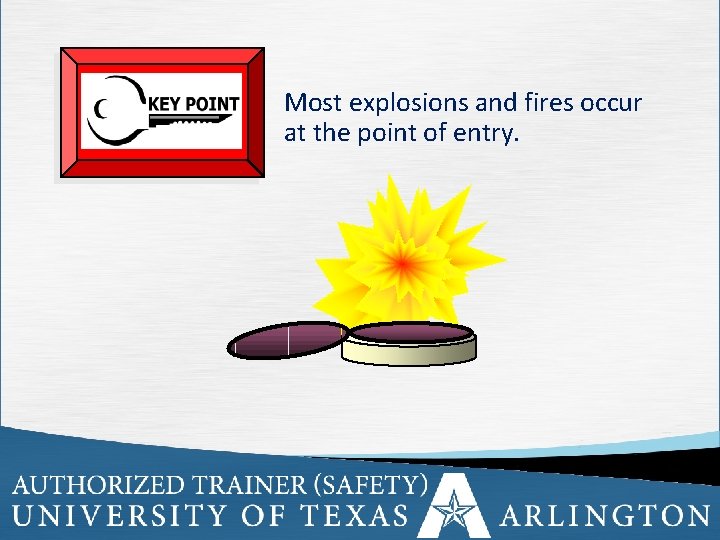
Most explosions and fires occur at the point of entry. 57
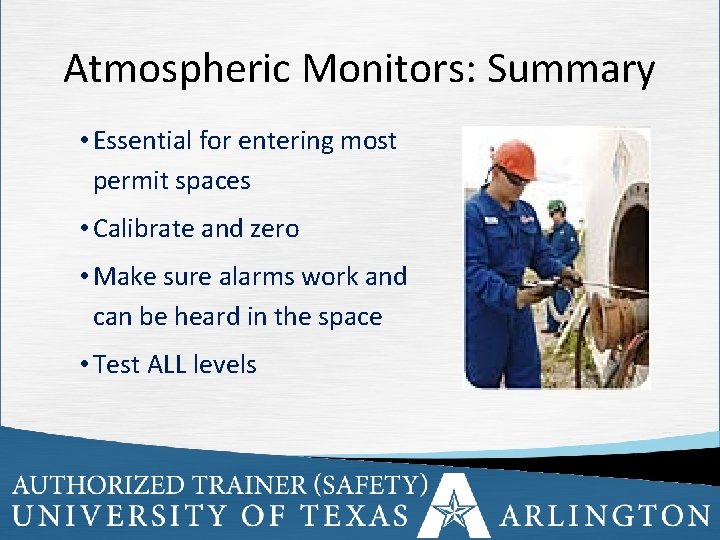
Atmospheric Monitors: Summary • Essential for entering most permit spaces • Calibrate and zero • Make sure alarms work and can be heard in the space • Test ALL levels 58
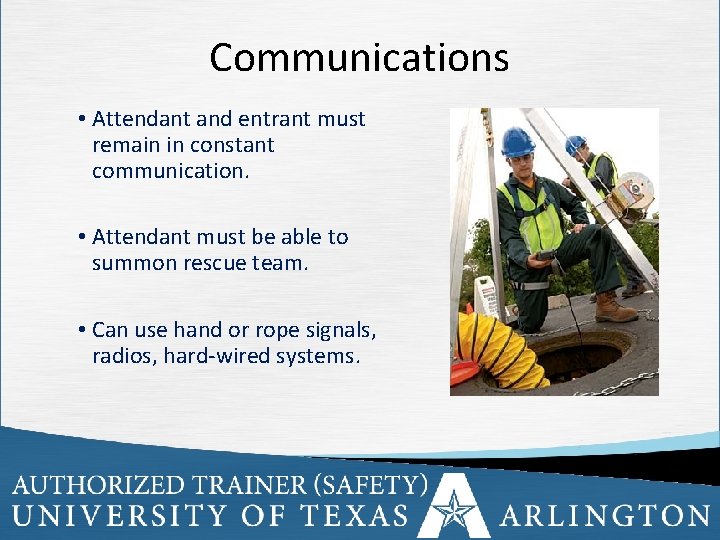
Communications • Attendant and entrant must remain in constant communication. • Attendant must be able to summon rescue team. • Can use hand or rope signals, radios, hard-wired systems. 59
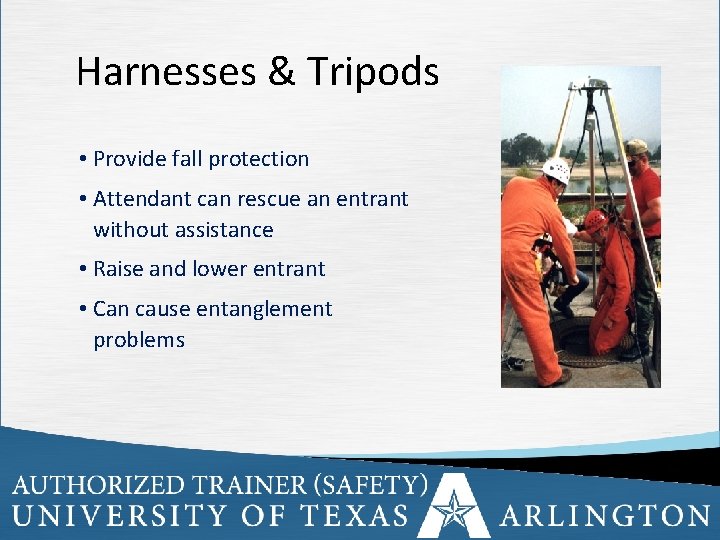
Harnesses & Tripods • Provide fall protection • Attendant can rescue an entrant without assistance • Raise and lower entrant • Can cause entanglement problems 60
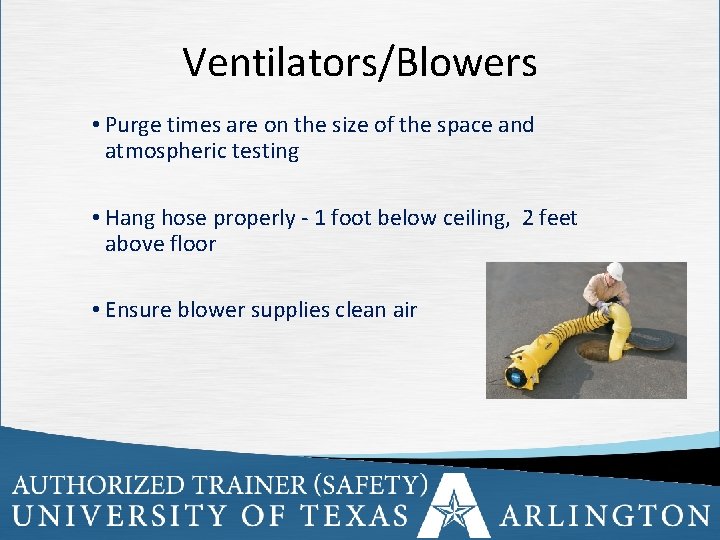
Ventilators/Blowers • Purge times are on the size of the space and atmospheric testing • Hang hose properly - 1 foot below ceiling, 2 feet above floor • Ensure blower supplies clean air 61
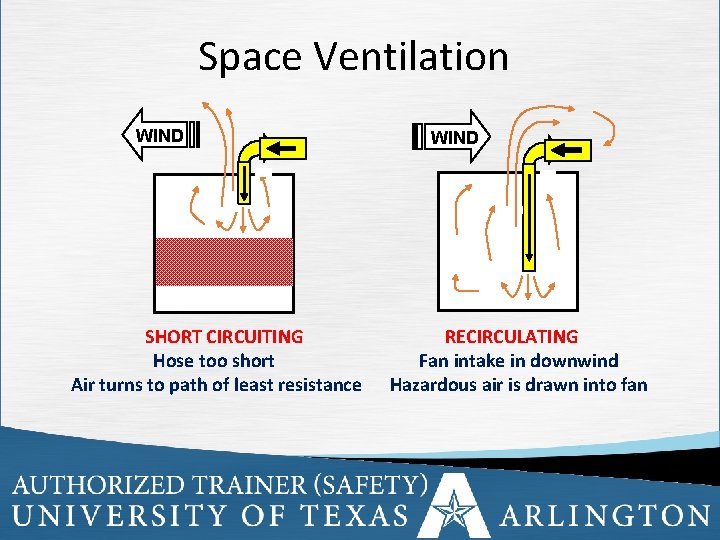
Space Ventilation WIND SHORT CIRCUITING Hose too short Air turns to path of least resistance WIND RECIRCULATING Fan intake in downwind Hazardous air is drawn into fan 62
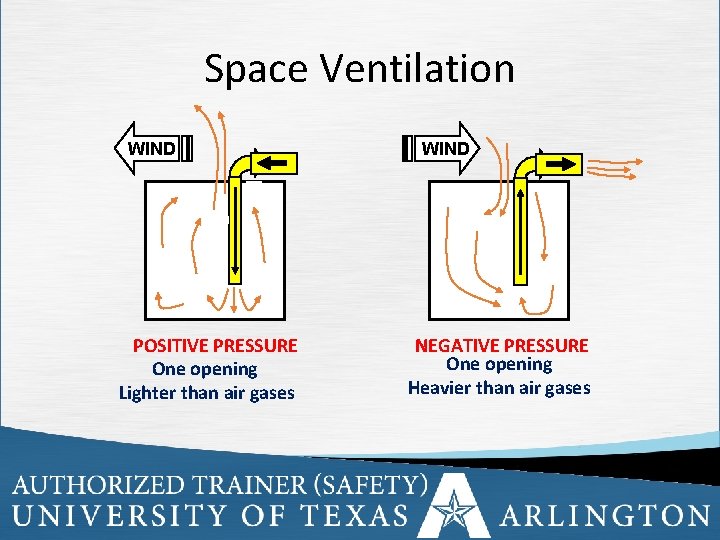
Space Ventilation WIND POSITIVE PRESSURE One opening Lighter than air gases WIND NEGATIVE PRESSURE One opening Heavier than air gases 63
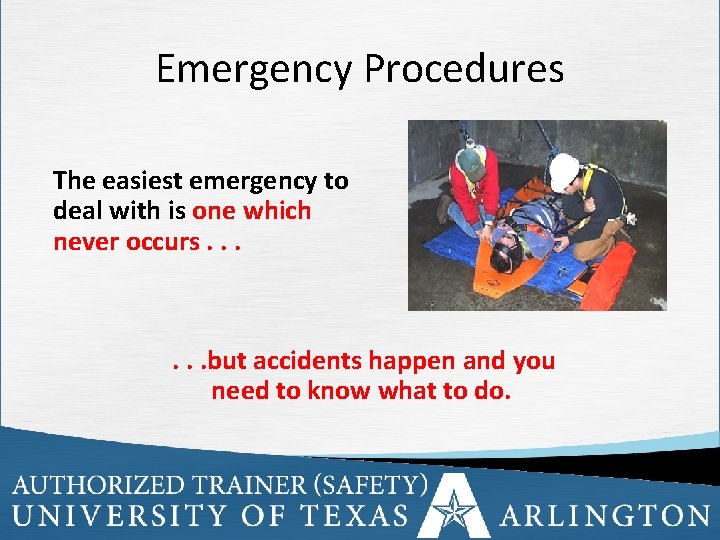
Emergency Procedures The easiest emergency to deal with is one which never occurs. . . but accidents happen and you need to know what to do. 64
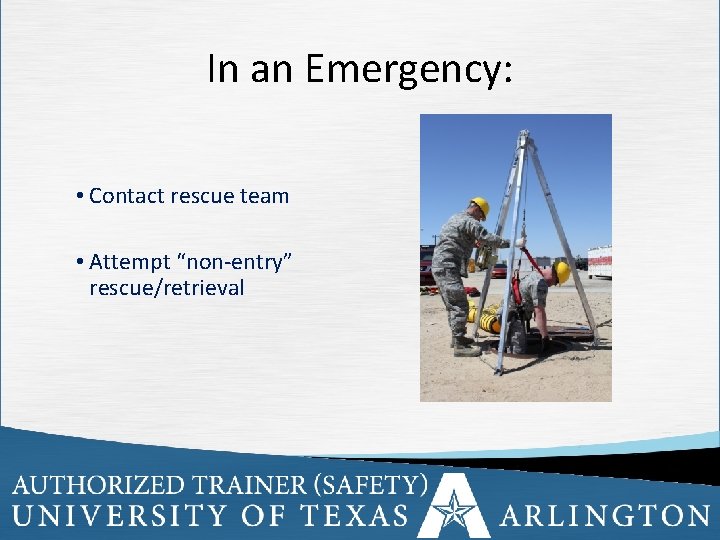
In an Emergency: • Contact rescue team • Attempt “non-entry” rescue/retrieval 65
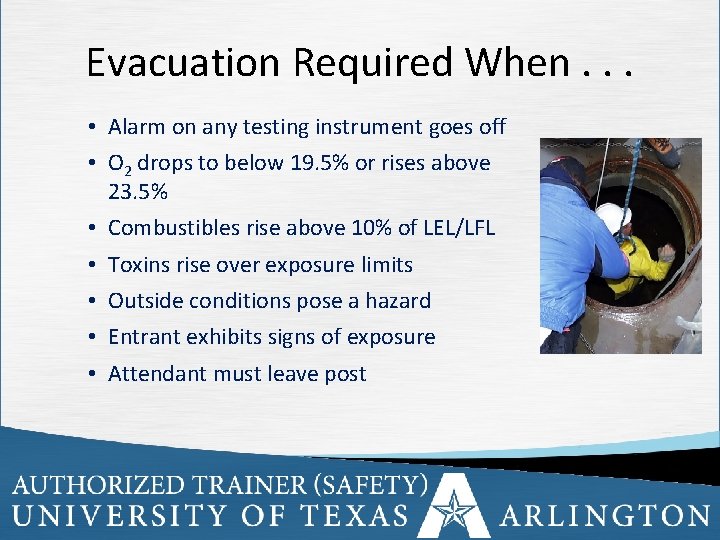
Evacuation Required When. . . • Alarm on any testing instrument goes off • O 2 drops to below 19. 5% or rises above 23. 5% • Combustibles rise above 10% of LEL/LFL • Toxins rise over exposure limits • Outside conditions pose a hazard • Entrant exhibits signs of exposure • Attendant must leave post 66
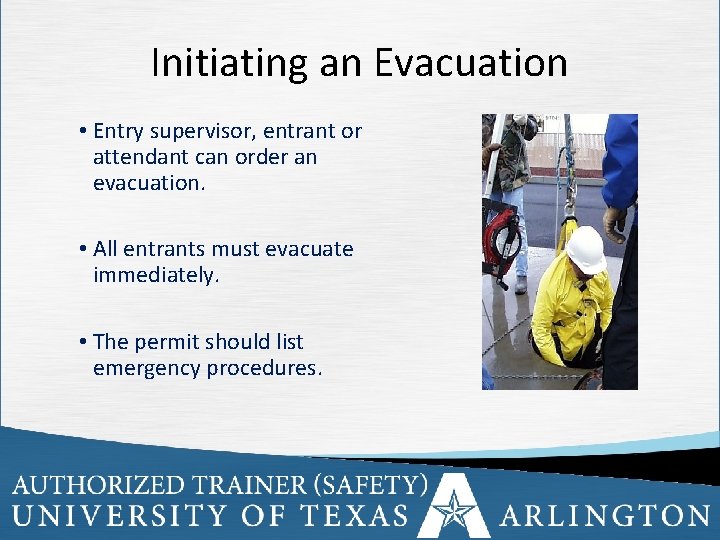
Initiating an Evacuation • Entry supervisor, entrant or attendant can order an evacuation. • All entrants must evacuate immediately. • The permit should list emergency procedures. 67
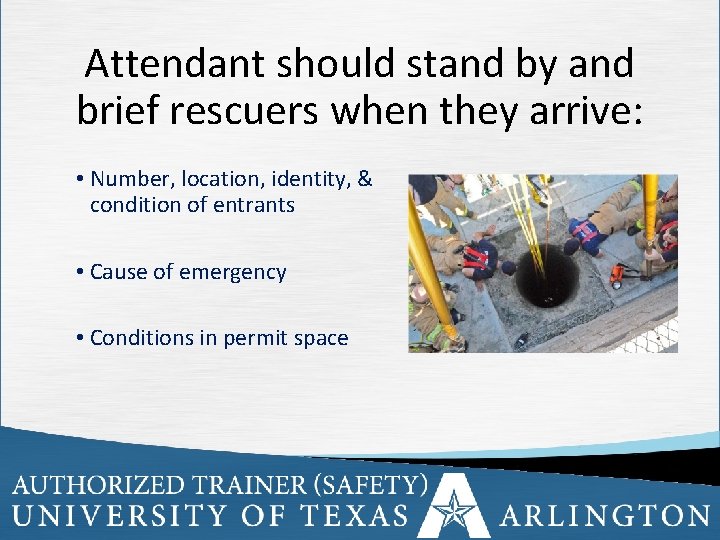
Attendant should stand by and brief rescuers when they arrive: • Number, location, identity, & condition of entrants • Cause of emergency • Conditions in permit space 68
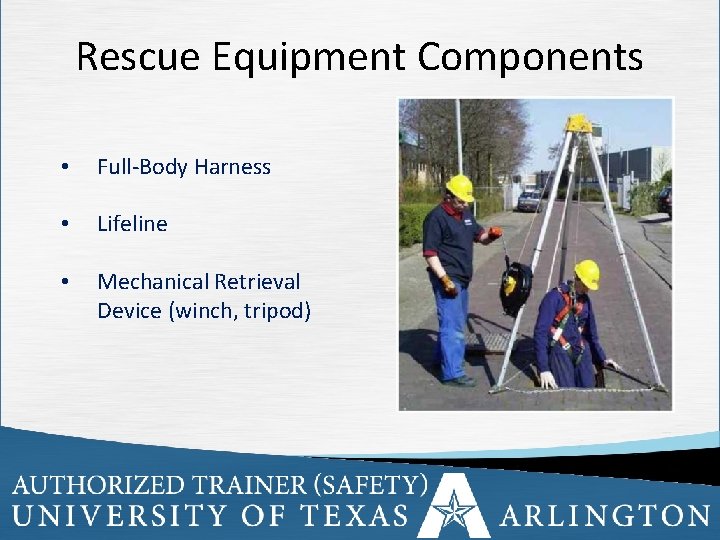
Rescue Equipment Components • Full-Body Harness • Lifeline • Mechanical Retrieval Device (winch, tripod) 69
Attendants should remember: When in doubt, get them OUT! 70
Module 3: Summary • Monitors • Ventilators and other equipment • Emergencies 71
Review In this module, we: • Described the characteristics of confined spaces • Defined Permit-Required Confined Spaces and Non. Permit-Required Confined Spaces and the hazards associated with these spaces • Listed the elements of the Entry Permit 72
Review (cont’d) • Discussed how the hazards are managed, including atmospheric testing and ventilation • Described the responsibilities of the entry supervisor, attendant, and entrant • Defined and discussed the three types of rescue scenarios: self-rescue, non-entry rescue, and entry rescue 73
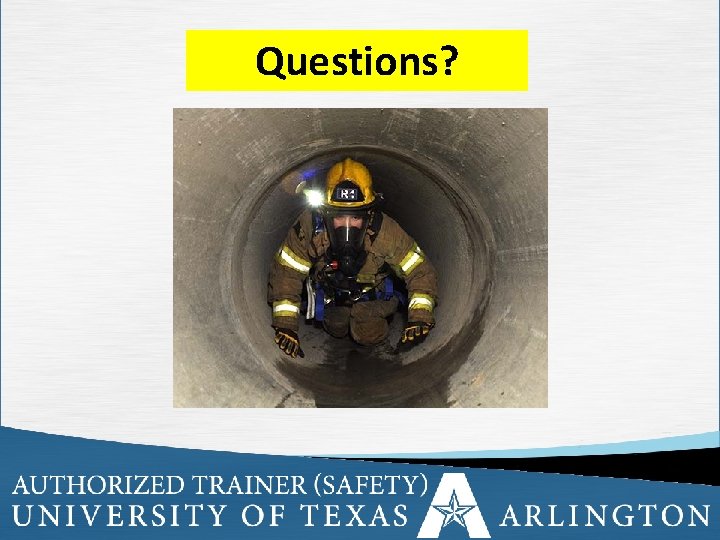
Questions? 74
- Slides: 74