
Confined Space Entry November 2009 Principles of gas
Confined Space Entry November 2009 Principles of gas detection Slide 1
Characteristics of Confined Spaces • Large enough for worker to enter • Are not designed for continuous worker occupancy • Limited openings for entry and exit November 2009 Principles of gas detection Slide 2
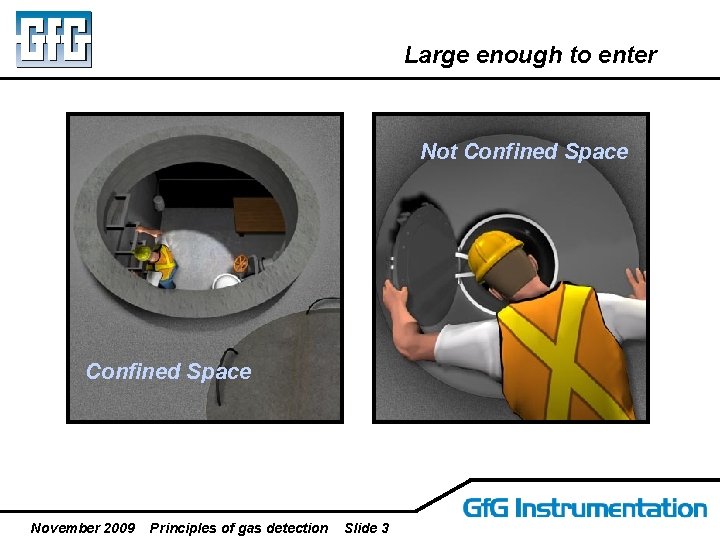
Large enough to enter Not Confined Space November 2009 Principles of gas detection Slide 3
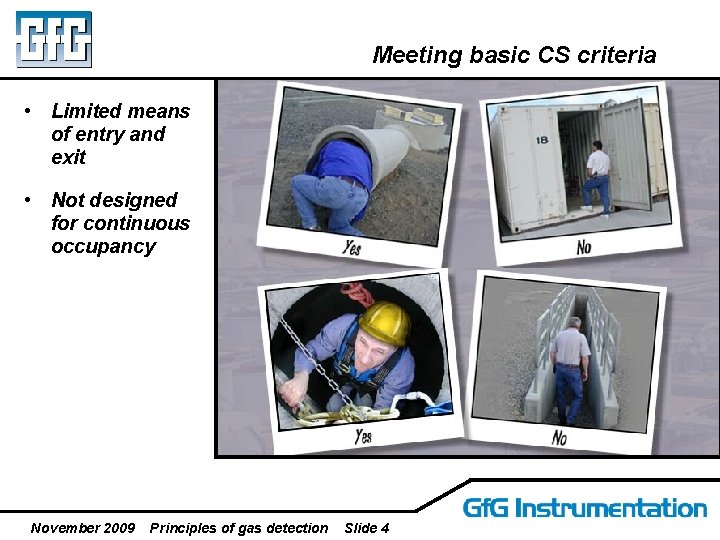
Meeting basic CS criteria • Limited means of entry and exit • Not designed for continuous occupancy November 2009 Principles of gas detection Slide 4
Permit Required Confined Spaces • One or more of the following: • Hazardous atmosphere (known or potential) • Material with the potential for engulfment • Inwardly sloping walls or dangerously sloping floors or • Contains any other serious safety hazard November 2009 Principles of gas detection Slide 5

Typical Confined Spaces • Storage tanks • Ship compartments • Process vessels • Boilers • Sewers • Tunnels • Underground utility vaults • Pipelines • Storm drains November 2009 Principles of gas detection Slide 6
Some confined spaces are open topped • Pits • Degreasers • Open-topped water tanks • Ship holds • Excavations November 2009 Principles of gas detection Slide 7
Confined Space Entry Requirements • OSHA 29 CFR 1910. 146 “Permit-Required Confined Spaces” November 2009 Principles of gas detection Slide 8
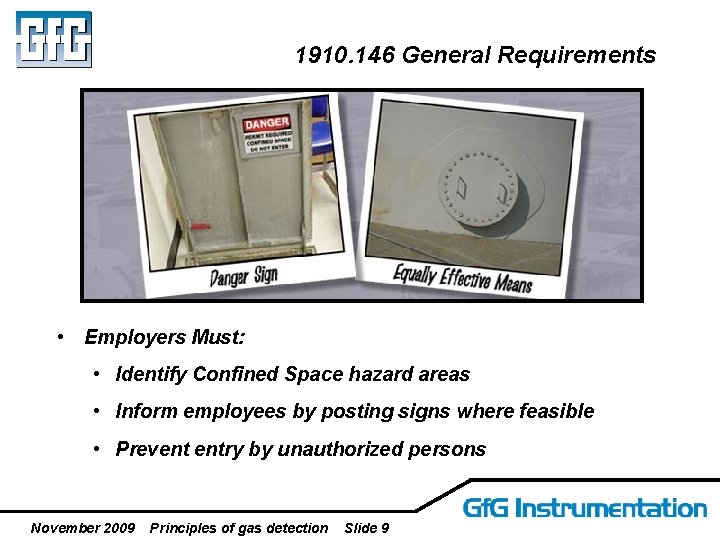
1910. 146 General Requirements • Employers Must: • Identify Confined Space hazard areas • Inform employees by posting signs where feasible • Prevent entry by unauthorized persons November 2009 Principles of gas detection Slide 9
1910. 146 General Requirements • Employers Must: • Establish procedures and practices to allow safe entry (Permit system) • Train employees • Provide required equipment • Control hazards where possible through engineering or work practices November 2009 Principles of gas detection Slide 10
1910. 146 General Requirements • Employers Must: • Ensure procedures and equipment necessary for rescue • Protect entrants from external hazards • Enforce established procedures November 2009 Principles of gas detection Slide 11
1910. 146 General Requirements • Employers must provide required equipment: • Testing and monitoring • Ventilation • Communications • Lighting • Barriers • Other personal protective equipment • Any required rescue and emergency equipment November 2009 Principles of gas detection Slide 12
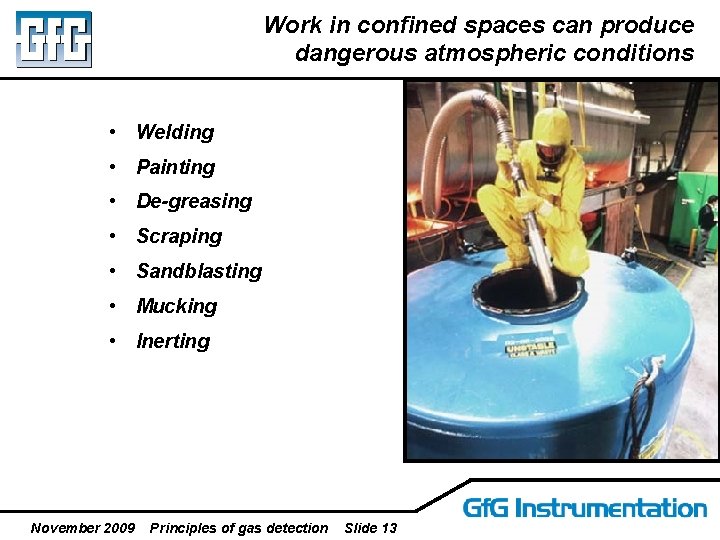
Work in confined spaces can produce dangerous atmospheric conditions • Welding • Painting • De-greasing • Scraping • Sandblasting • Mucking • Inerting November 2009 Principles of gas detection Slide 13
Before entry it is mandatory to determine that the CS atmosphere is safe! November 2009 Principles of gas detection Slide 14
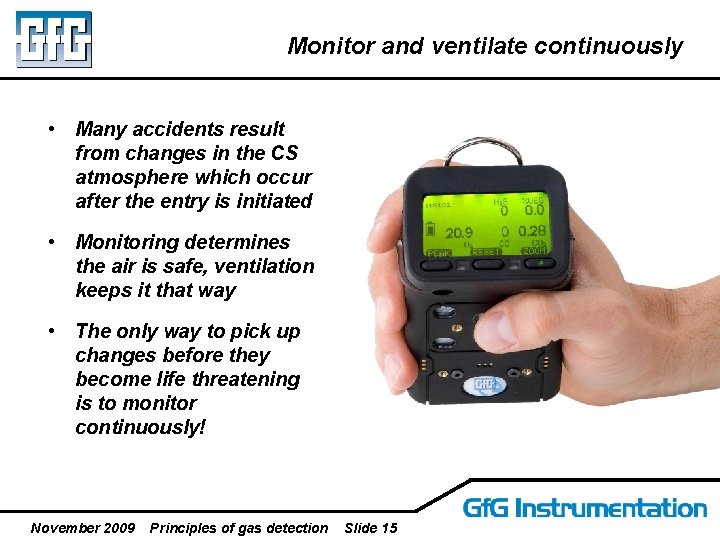
Monitor and ventilate continuously • Many accidents result from changes in the CS atmosphere which occur after the entry is initiated • Monitoring determines the air is safe, ventilation keeps it that way • The only way to pick up changes before they become life threatening is to monitor continuously! November 2009 Principles of gas detection Slide 15
Three basic kinds of atmospheric hazards • Oxygen (deficiency and enrichment) • Flammable gases and vapors • Toxic contaminants November 2009 Principles of gas detection Slide 16
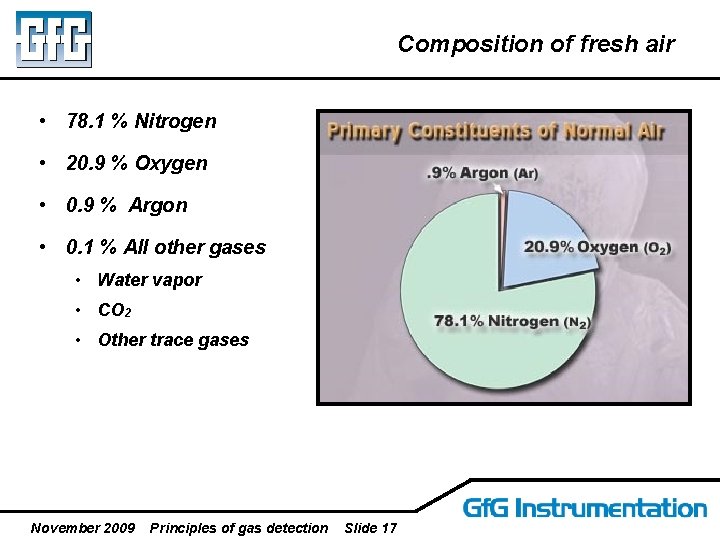
Composition of fresh air • 78. 1 % Nitrogen • 20. 9 % Oxygen • 0. 9 % Argon • 0. 1 % All other gases • Water vapor • CO 2 • Other trace gases November 2009 Principles of gas detection Slide 17
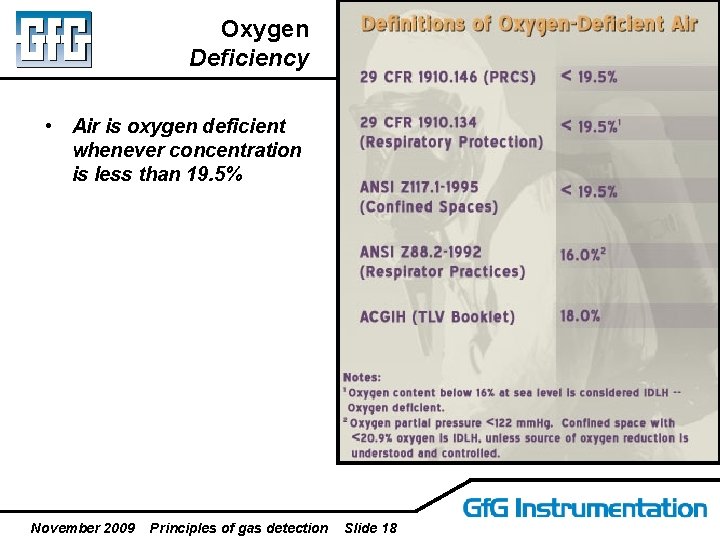
Oxygen Deficiency • Air is oxygen deficient whenever concentration is less than 19. 5% November 2009 Principles of gas detection Slide 18
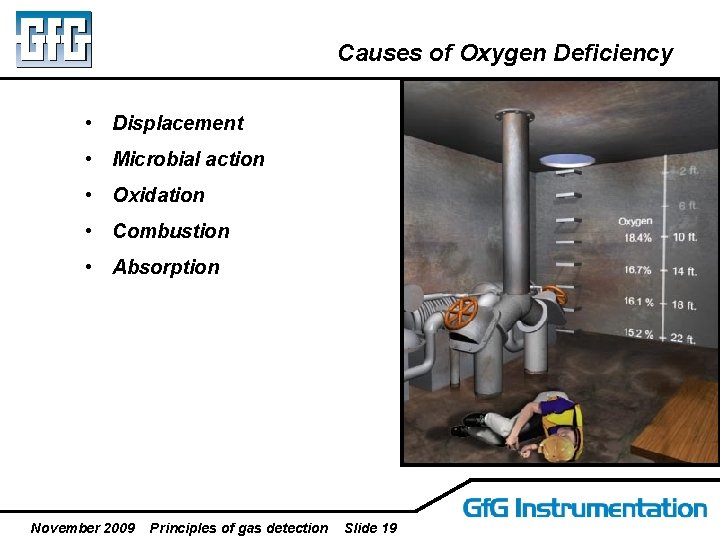
Causes of Oxygen Deficiency • Displacement • Microbial action • Oxidation • Combustion • Absorption November 2009 Principles of gas detection Slide 19

Symptoms of Oxygen Deficiency 20. 9 % Oxygen content in fresh air 19. 5 % - 12 % Impaired judgment, increased pulse and respiration, fatigue, loss of coordination 12 % - 10 % Disturbed respiration, poor circulation, worsening fatigue and loss of critical faculties, symptoms within seconds to minutes 10 % - 6 % Nausea, vomiting, inability to move, loss of consciousness, and death 6% - 0% Convulsions, gasping respiration, cessation of breathing, cardiac arrest, symptoms immediate, death within minutes November 2009 Principles of gas detection Slide 20
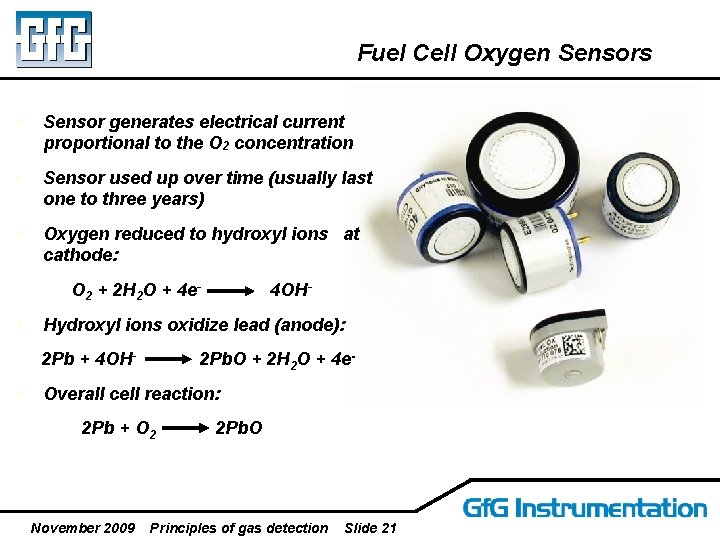
Fuel Cell Oxygen Sensors • Sensor generates electrical current proportional to the O 2 concentration • Sensor used up over time (usually last one to three years) • Oxygen reduced to hydroxyl ions at cathode: O 2 + 2 H 2 O + 4 e- • Hydroxyl ions oxidize lead (anode): 2 Pb + 4 OH- • 4 OH- 2 Pb. O + 2 H 2 O + 4 e- Overall cell reaction: 2 Pb + O 2 November 2009 2 Pb. O Principles of gas detection Slide 21
Explosive or Flammable Atmospheres November 2009 Principles of gas detection Slide 22
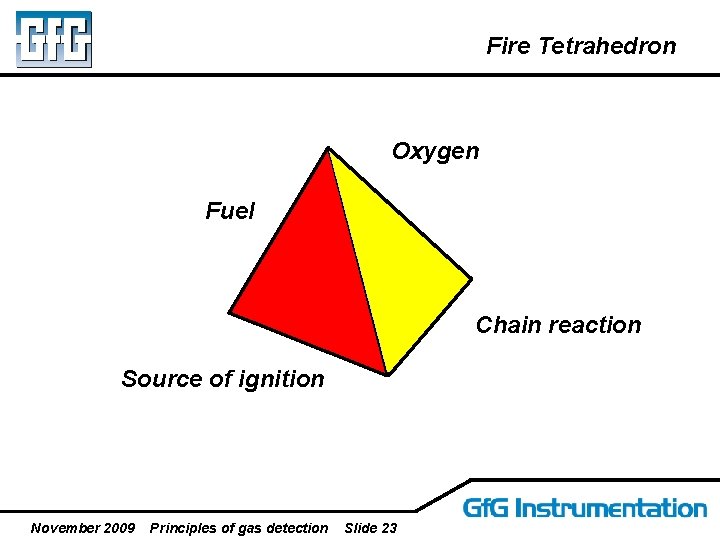
Fire Tetrahedron Oxygen Fuel Chain reaction Source of ignition November 2009 Principles of gas detection Slide 23

Lower Explosive Limit (L. E. L. ) • Minimum concentration of a combustible gas or vapor in air which will ignite if a source of ignition is present November 2009 Principles of gas detection Slide 24
Upper Explosive Limit (U. E. L. ) • Most but not all combustible gases have an upper explosive limit • Maximum concentration in air which will support combustion • Concentrations which are above the U. E. L. are too “rich” to burn November 2009 Principles of gas detection Slide 25
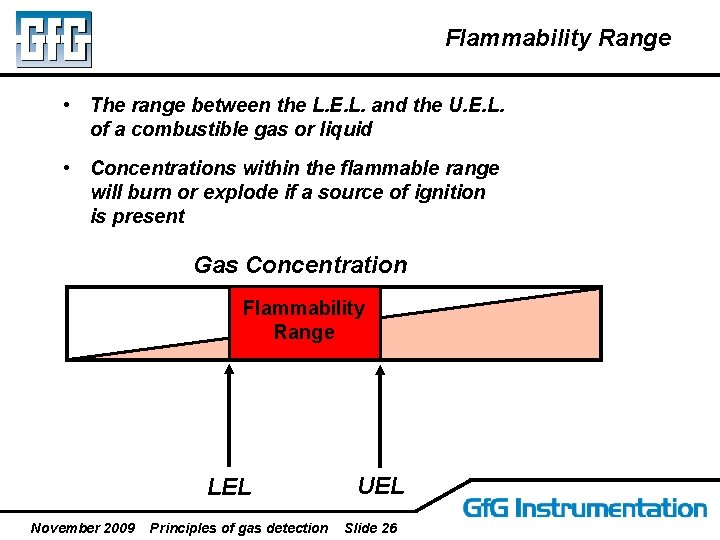
Flammability Range • The range between the L. E. L. and the U. E. L. of a combustible gas or liquid • Concentrations within the flammable range will burn or explode if a source of ignition is present Gas Concentration Flammability Range LEL November 2009 Principles of gas detection UEL Slide 26

Different gases have different flammability ranges LEL UEL Methane 5% 15 % Propane 2. 2 % 9. 5 % Acetone 2. 6 % 12. 8 % Ammonia 16 % 25 % 12. 5 % 74 % 3% 100 % 4. 3 % 46 % Carbon monoxide Ethylene oxide Hydrogen sulfide November 2009 Principles of gas detection Slide 27

Combustible Gas/Vapor Instruments Read in “Percent LEL” • The Lower Explosion Limit (LEL) concentration for methane is 5. 0% volume 0 100% LEL Flammability Range Methane Concentration 0 November 2009 5% Vol Principles of gas detection Slide 28
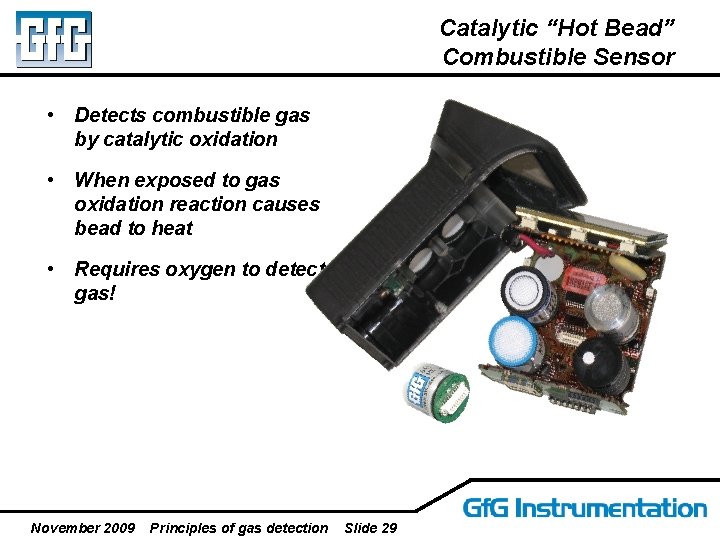
Catalytic “Hot Bead” Combustible Sensor • Detects combustible gas by catalytic oxidation • When exposed to gas oxidation reaction causes bead to heat • Requires oxygen to detect gas! November 2009 Principles of gas detection Slide 29
Toxic Gases and Vapors November 2009 Principles of gas detection Slide 30

Exposure Limits defined in three ways: • Time Weighted Average (TWA) • Ceiling • Short Term Exposure Limit (STEL) November 2009 Principles of gas detection Slide 31
Carbon Monoxide • Produced as a by product of incomplete combustion • Associated with internal combustion engine exhaust • Vehicles • Pumps • Compressors November 2009 Principles of gas detection Slide 32
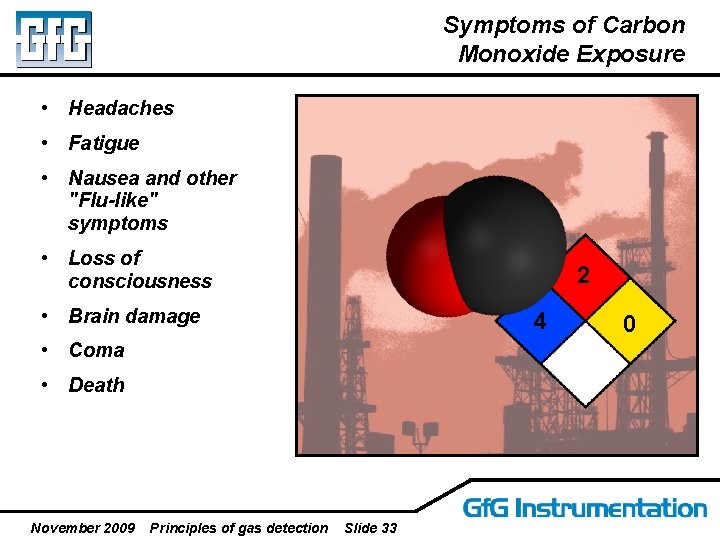
Symptoms of Carbon Monoxide Exposure • Headaches • Fatigue • Nausea and other "Flu-like" symptoms • Loss of consciousness 2 • Brain damage 4 • Coma • Death November 2009 Principles of gas detection Slide 33 0

Exposure Limits for Carbon Monoxide 8 -Hr TWA STEL Ceiling Federal USA OSHA PEL 50 ppm NA NA NIOSH REL 35 ppm NA 200 ppm TLV 25 ppm NA NA UK OEL 30 ppm 200 ppm NA French VL 50 ppm NA NA DFG MAK 30 ppm November 2009 Principles of gas detection 60 ppm peak for any 15 -min period, (as average value), maximum 4 per shift separated by at least 1 -hour Slide 34
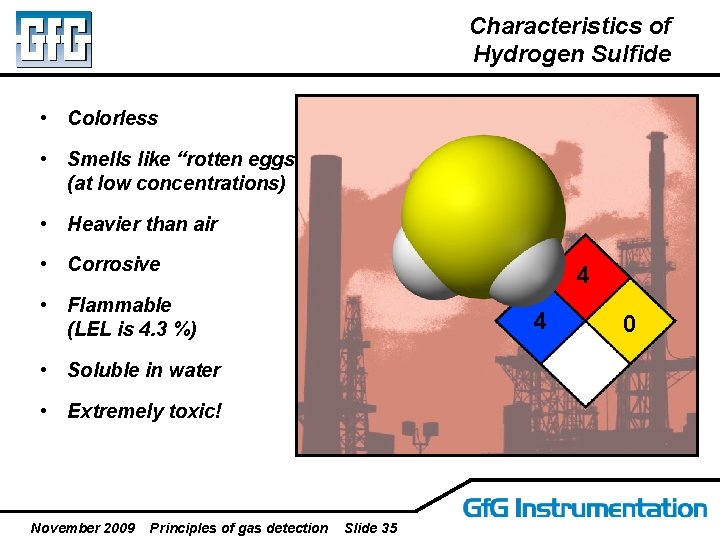
Characteristics of Hydrogen Sulfide • Colorless • Smells like “rotten eggs” (at low concentrations) • Heavier than air • Corrosive 4 • Flammable (LEL is 4. 3 %) 4 • Soluble in water • Extremely toxic! November 2009 Principles of gas detection Slide 35 0
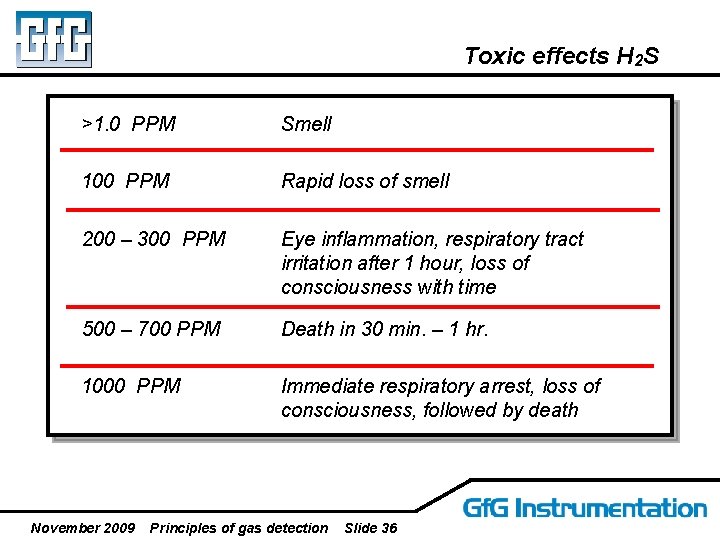
Toxic effects H 2 S >1. 0 PPM Smell 100 PPM Rapid loss of smell 200 – 300 PPM Eye inflammation, respiratory tract irritation after 1 hour, loss of consciousness with time 500 – 700 PPM Death in 30 min. – 1 hr. 1000 PPM Immediate respiratory arrest, loss of consciousness, followed by death November 2009 Principles of gas detection Slide 36

Exposure limits for H 2 S Federal USA OSHA PEL 8 -Hour TWA STEL Acceptable Ceiling Concentration Acceptable Max Peak Above Ceiling for an 8 -Hour Shift Concentration Maximum Duration NA NA 20 ppm 50 ppm 10 -minutes once only if no other measurable exposure occurs during shift 10 ppm 15 ppm NA NA NA 1. 0 ppm TLV (2010) UK OEL 10 ppm 5. 0 ppm NA 15 ppm NA FR VL 5 ppm 10 ppm NA DFG MAK 10 ppm REL November 2009 NA NA 20 ppm peak in any 10 -min period, (as momentary ceiling value), maximum 4 per shift Principles of gas detection Slide 37
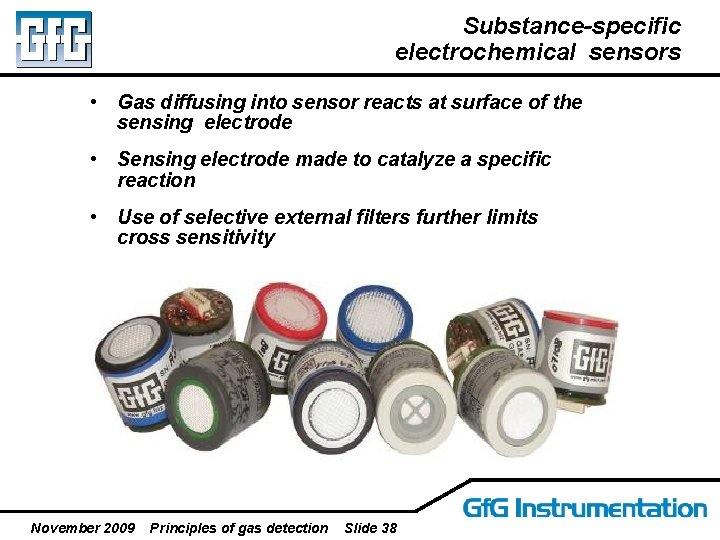
Substance-specific electrochemical sensors • Gas diffusing into sensor reacts at surface of the sensing electrode • Sensing electrode made to catalyze a specific reaction • Use of selective external filters further limits cross sensitivity November 2009 Principles of gas detection Slide 38
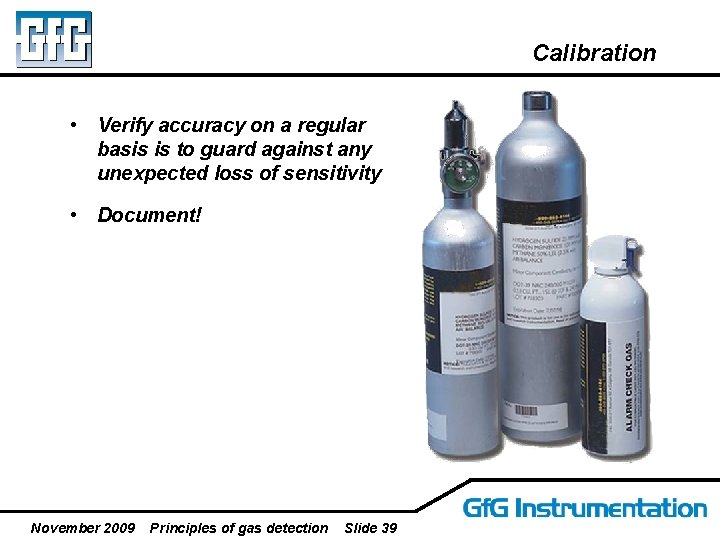
Calibration • Verify accuracy on a regular basis is to guard against any unexpected loss of sensitivity • Document! November 2009 Principles of gas detection Slide 39
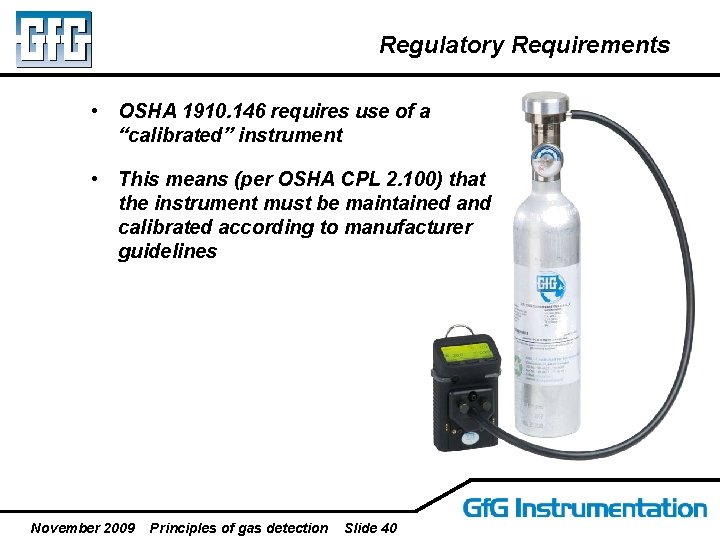
Regulatory Requirements • OSHA 1910. 146 requires use of a “calibrated” instrument • This means (per OSHA CPL 2. 100) that the instrument must be maintained and calibrated according to manufacturer guidelines November 2009 Principles of gas detection Slide 40
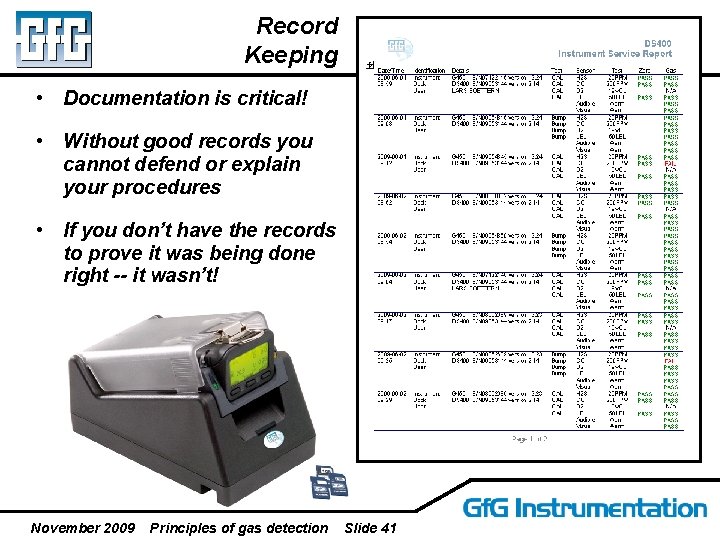
Record Keeping • Documentation is critical! • Without good records you cannot defend or explain your procedures • If you don’t have the records to prove it was being done right -- it wasn’t! November 2009 Principles of gas detection Slide 41
Atmospheric hazards are frequently invisible to human senses • You don’t know whether it’s safe until it’s been tested! November 2009 Principles of gas detection Slide 42
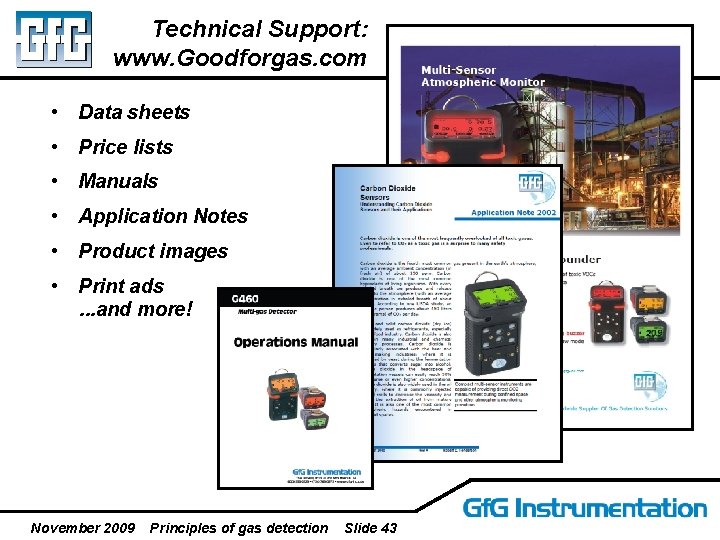
Technical Support: www. Goodforgas. com • Data sheets • Price lists • Manuals • Application Notes • Product images • Print ads. . . and more! November 2009 Principles of gas detection Slide 43
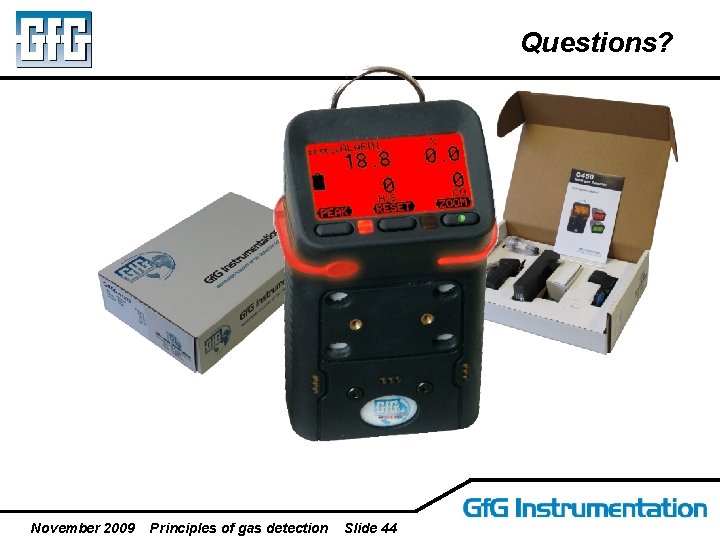
Questions? November 2009 Principles of gas detection Slide 44
- Slides: 44