
Cone of Safety around a Crane Hook Presented













- Slides: 36
Cone of Safety around a Crane Hook Presented by Team 5 Xue Cheng Samuel Falabi Charlie Nguyen Richard Szink Lanea Williamson
The Team Richard Szink Samuel Falabi Charlie Nguyen Xue Cheng Lanea Williamson Project Management • Proximity Sensors • Overall design and Hardware Implementation Documents Preparer • Power supply • Alarm system Web Designer • Safety cone design • Software implementation Presentation • Sensor Research • Data Logging Lab • Alarm system • Cost estimating and Purchasing
Faculty Dr. Hayder Radha Professor and Associate Chair for Research Study in coding and communications; image and video compression; image processing; multimedia communications over packet networks; video coding and communications over the Internet and wireless networks; modeling and analysis of the stochastic behavior of communication networks; wavelet, subband, and multiresolution coding
Sponsor • Arcelor. Mittal USA -World’s leading steel and mining company • James Lang -Coordinator, Finish and Coating
Background and Objectives
Arcelor. Mittal Company Background • World’s leading steel and mining company • Annual production capacity of 115 million tons and operating in 60 countries • Produce safe and sustainable steel • Provide conductive and a safe work environment for its employees
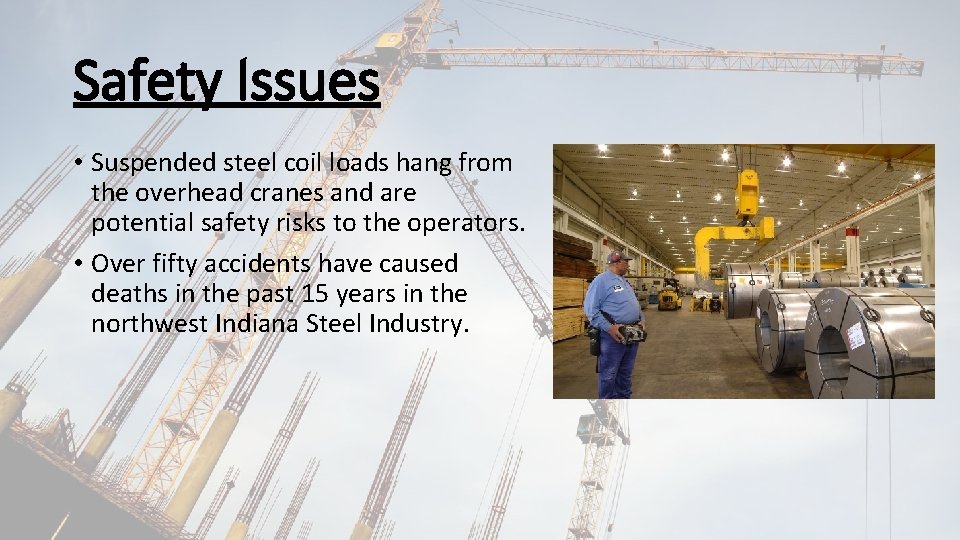
Safety Issues • Suspended steel coil loads hang from the overhead cranes and are potential safety risks to the operators. • Over fifty accidents have caused deaths in the past 15 years in the northwest Indiana Steel Industry.
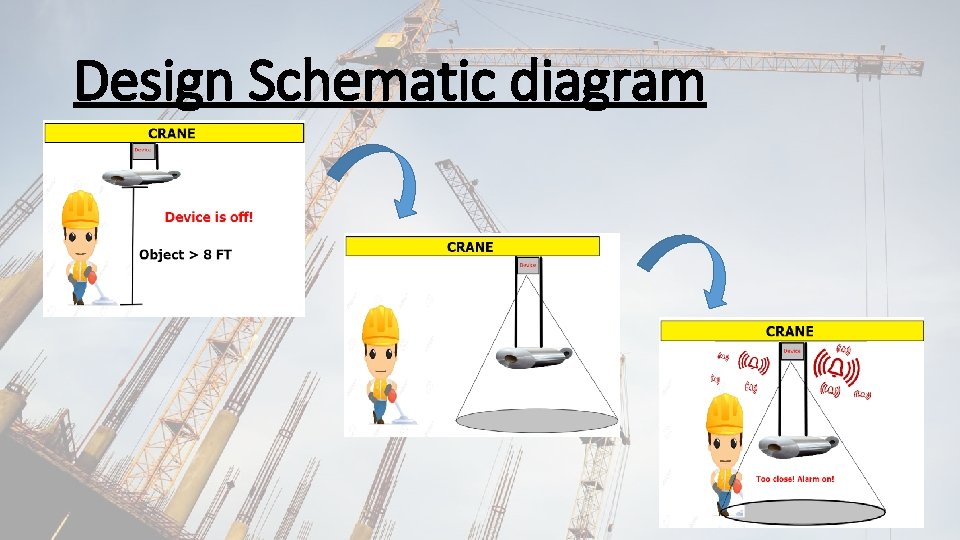
Our Mission • The system will be able to detect any operator within a certain distance from a working crane. • The system will be turned on when the load is within 8 ft above ground. • The system will sound an alarm and warn the operator when the operator is in the danger zone. • Data will be recorded so Arcelor. Mittal can constantly improve their safety measures and prevent future occurrences.
Exploring a Solution
Design Schematic diagram
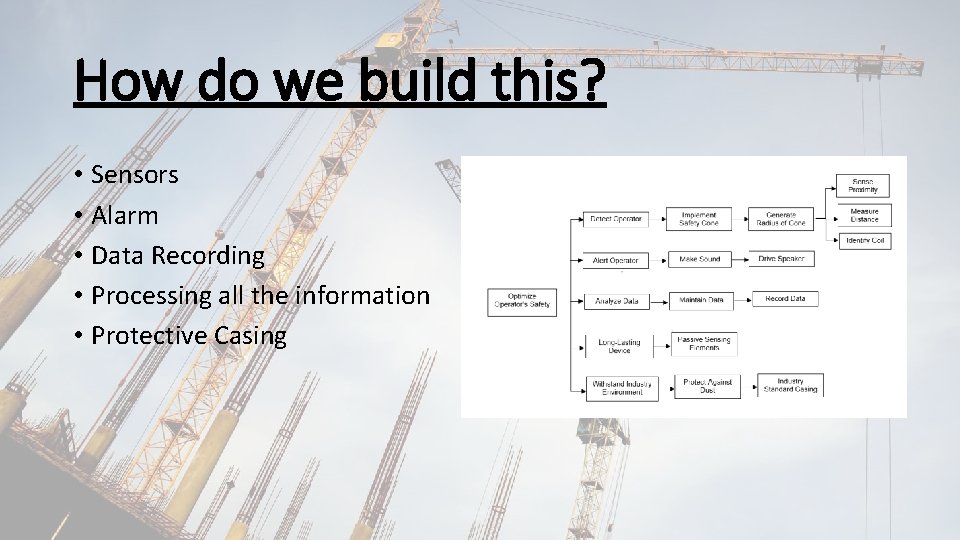
How do we build this? • Sensors • Alarm • Data Recording • Processing all the information • Protective Casing
Research Techniques • What are the industry standards? • Opportunity to advance field? • Has a similar project been completed before? • What was the outcome? • What type of sensors would fulfill our needs? • What are our design constraints? • How can we overcome them?
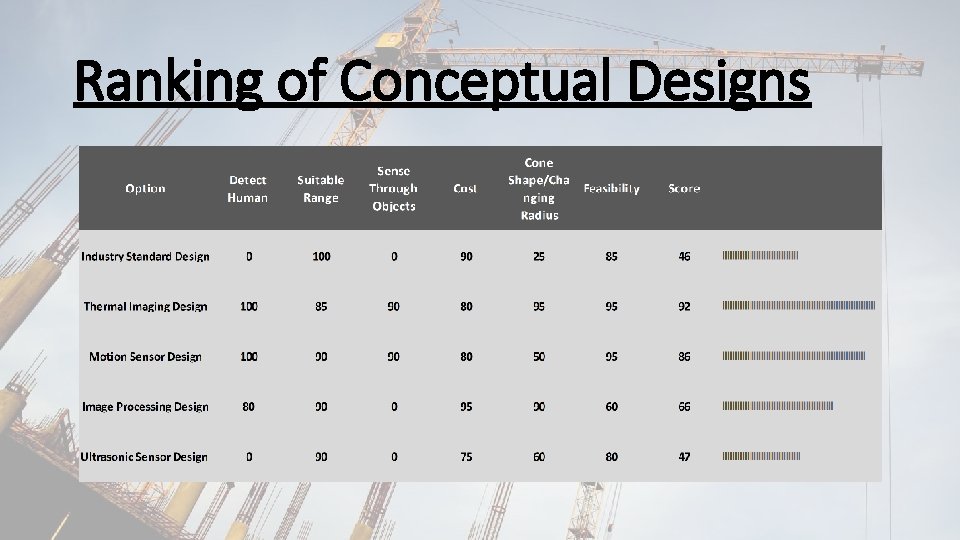
Ranking of Conceptual Designs
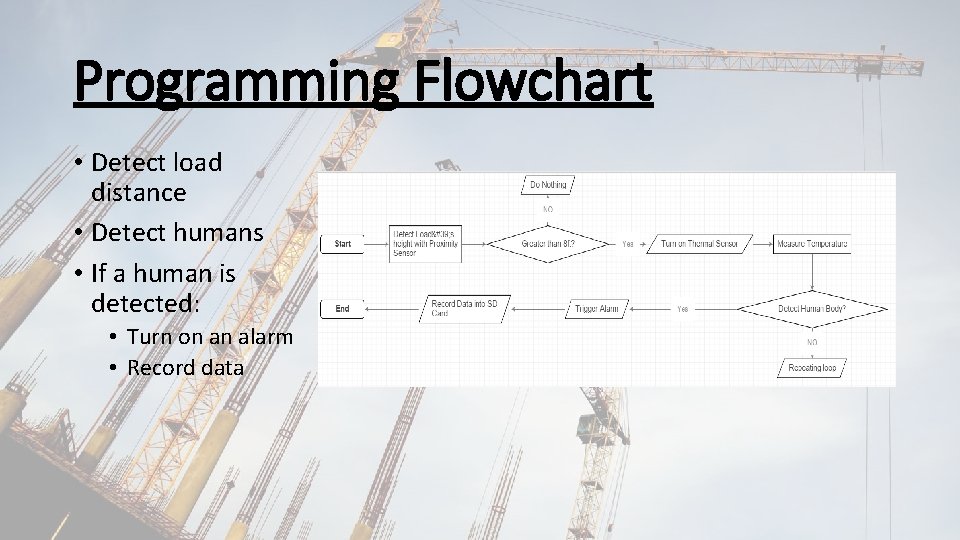
Programming Flowchart • Detect load distance • Detect humans • If a human is detected: • Turn on an alarm • Record data
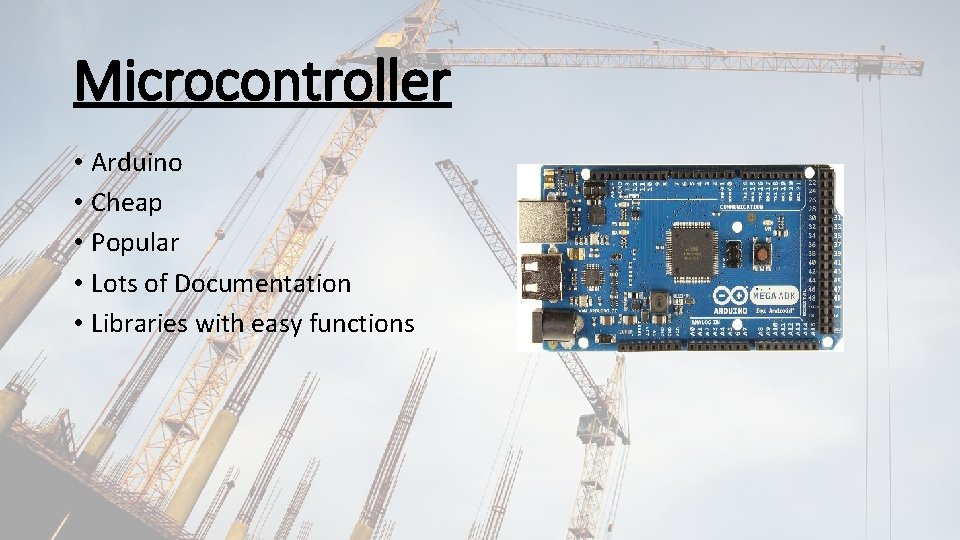
Microcontroller • Arduino • Cheap • Popular • Lots of Documentation • Libraries with easy functions
Final Design
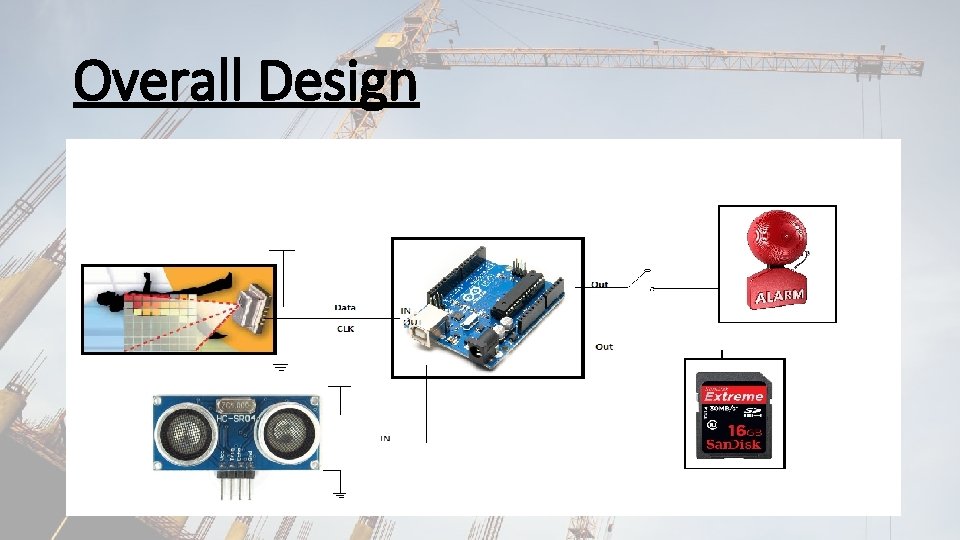
Overall Design
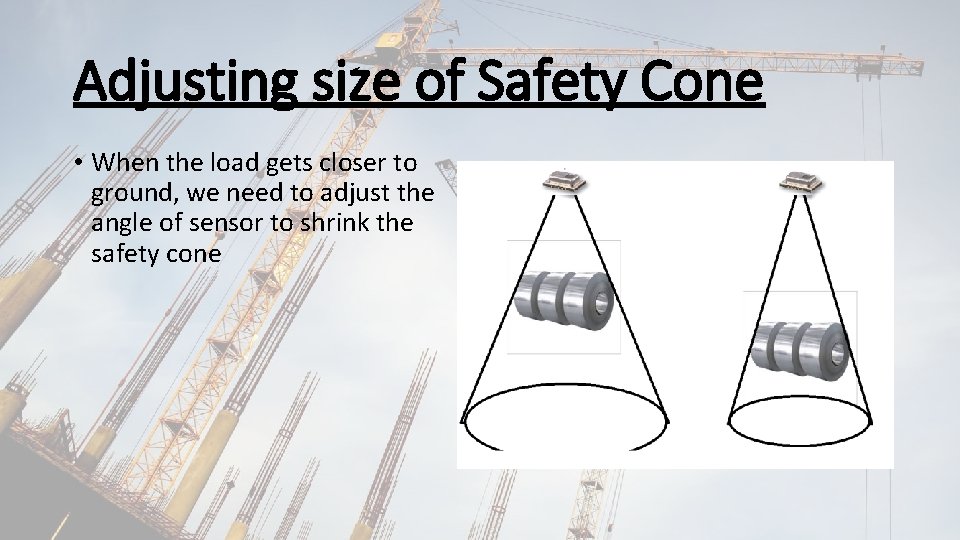
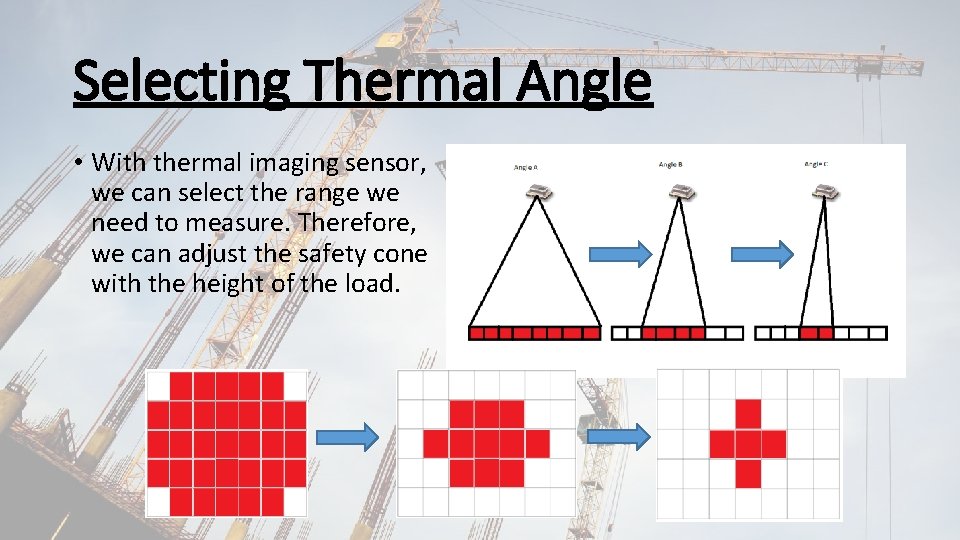
Adjusting size of Safety Cone • When the load gets closer to ground, we need to adjust the angle of sensor to shrink the safety cone
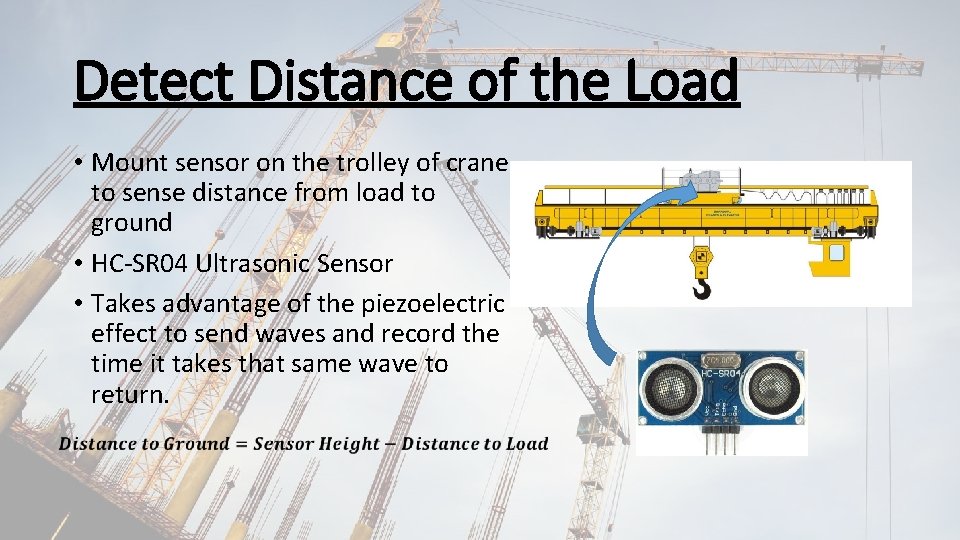
Detect Distance of the Load • Mount sensor on the trolley of crane to sense distance from load to ground • HC-SR 04 Ultrasonic Sensor • Takes advantage of the piezoelectric effect to send waves and record the time it takes that same wave to return.
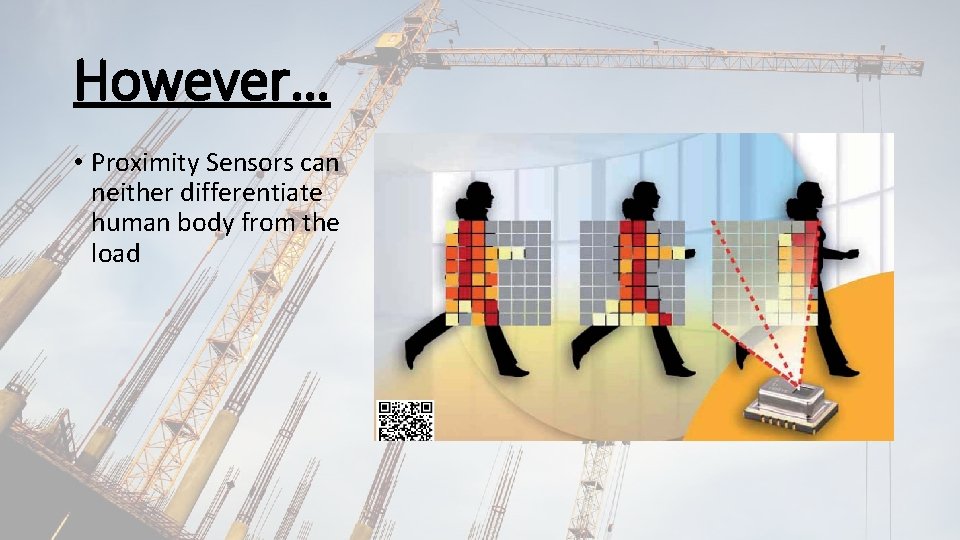
However… • Proximity Sensors can neither differentiate human body from the load
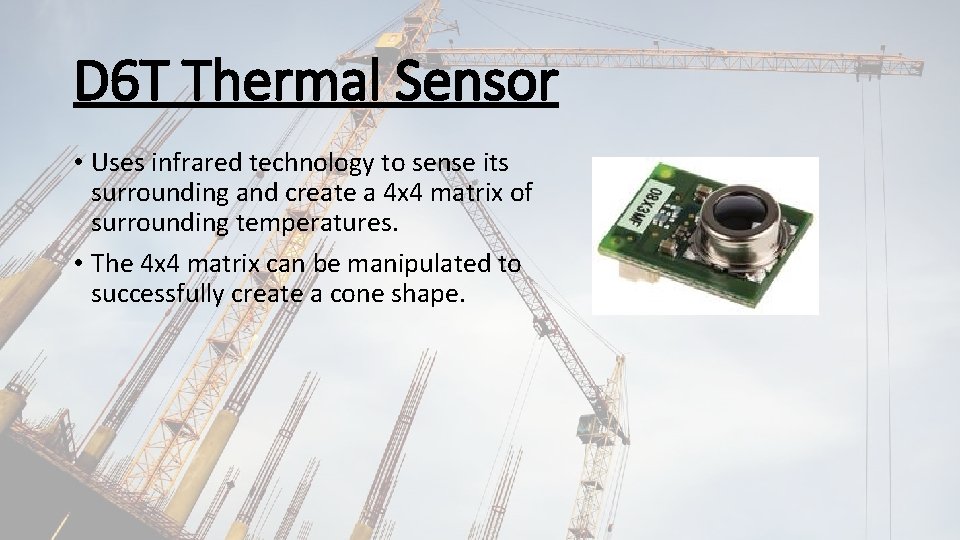
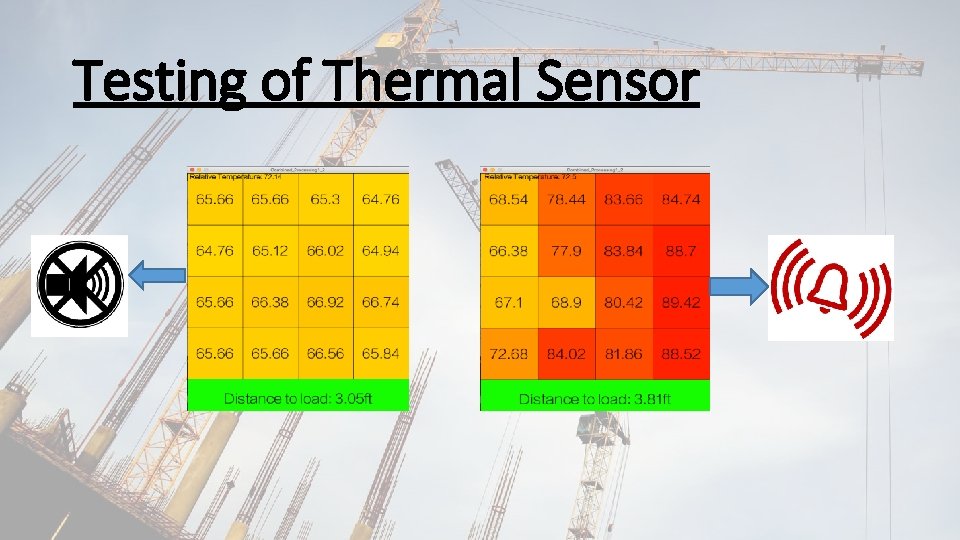
D 6 T Thermal Sensor • Uses infrared technology to sense its surrounding and create a 4 x 4 matrix of surrounding temperatures. • The 4 x 4 matrix can be manipulated to successfully create a cone shape.
Selecting Thermal Angle • With thermal imaging sensor, we can select the range we need to measure. Therefore, we can adjust the safety cone with the height of the load.
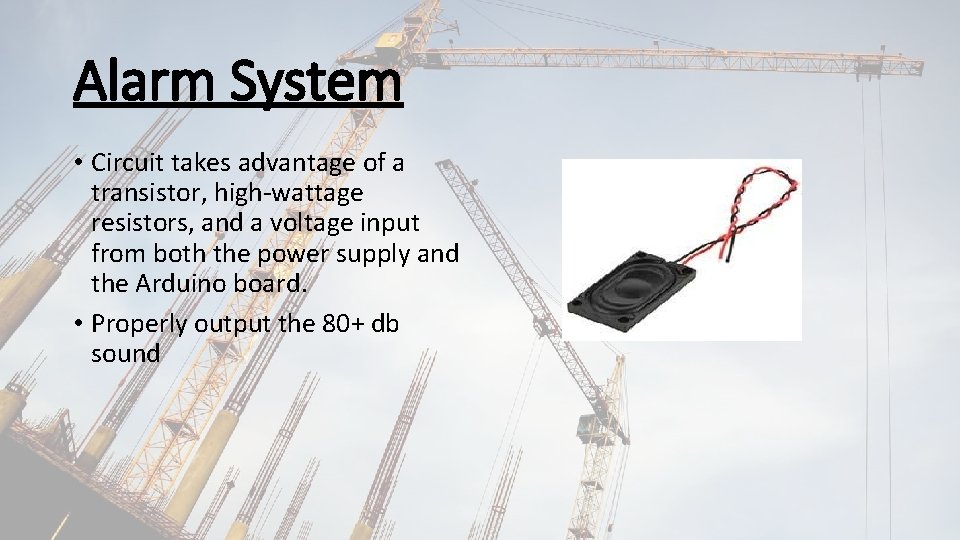
Alarm System • Circuit takes advantage of a transistor, high-wattage resistors, and a voltage input from both the power supply and the Arduino board. • Properly output the 80+ db sound
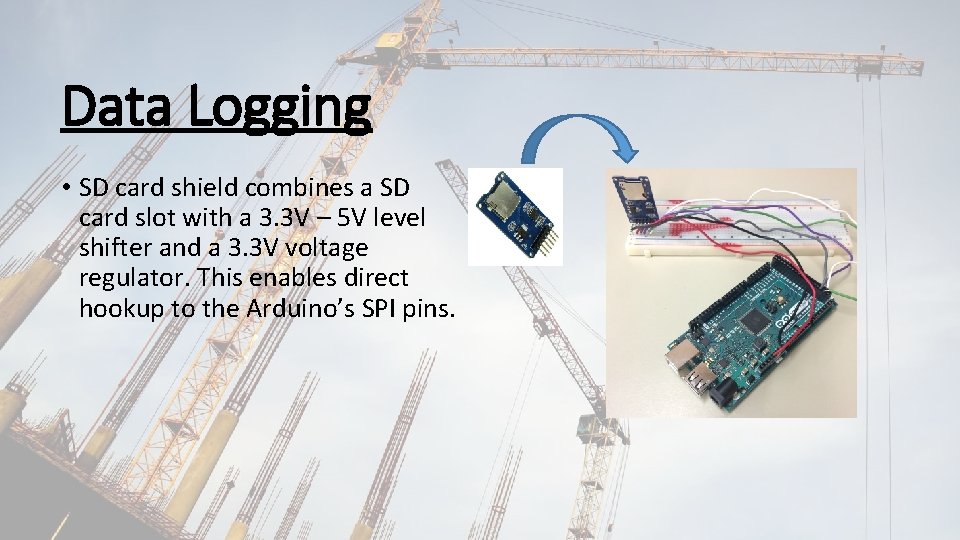
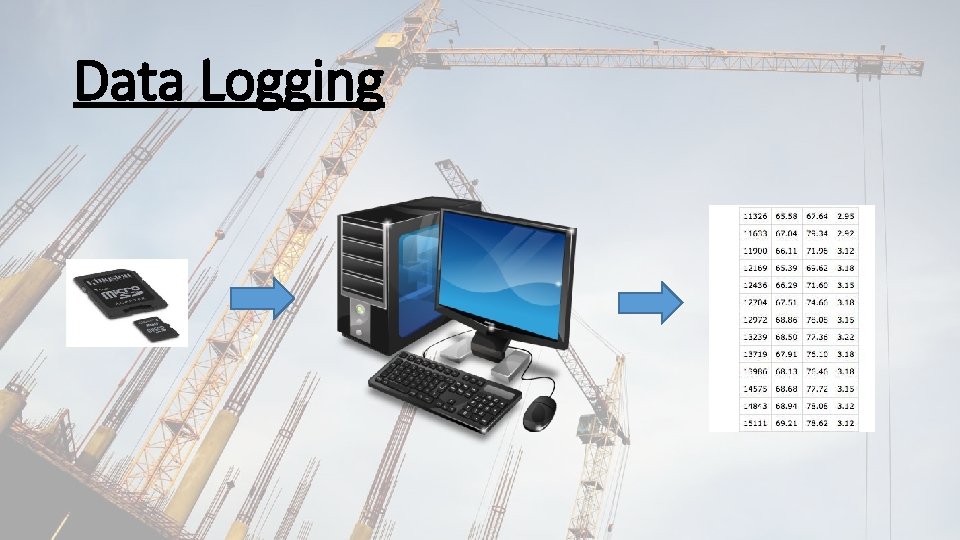
Data Logging • SD card shield combines a SD card slot with a 3. 3 V – 5 V level shifter and a 3. 3 V voltage regulator. This enables direct hookup to the Arduino’s SPI pins.
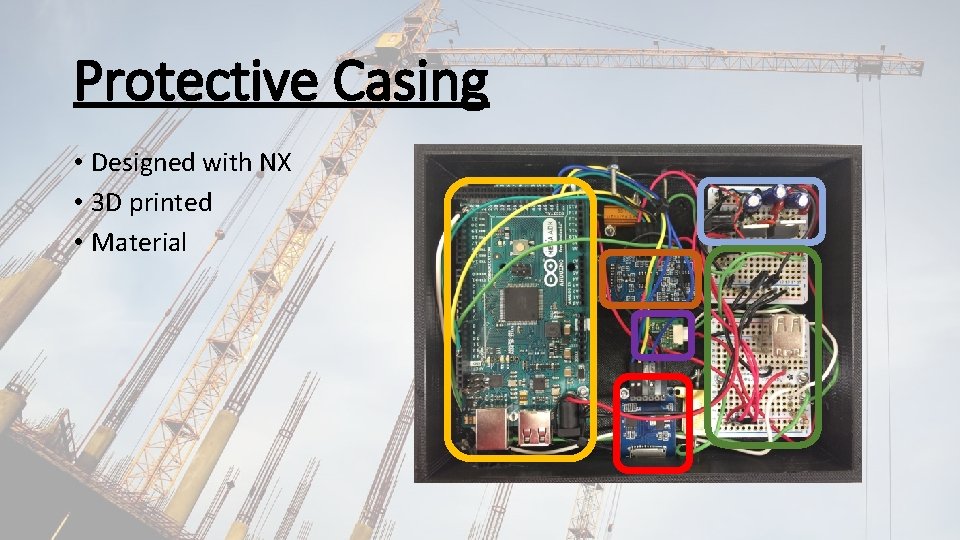
Protective Casing • Designed with NX • 3 D printed • Material
Testing and Proof of Design
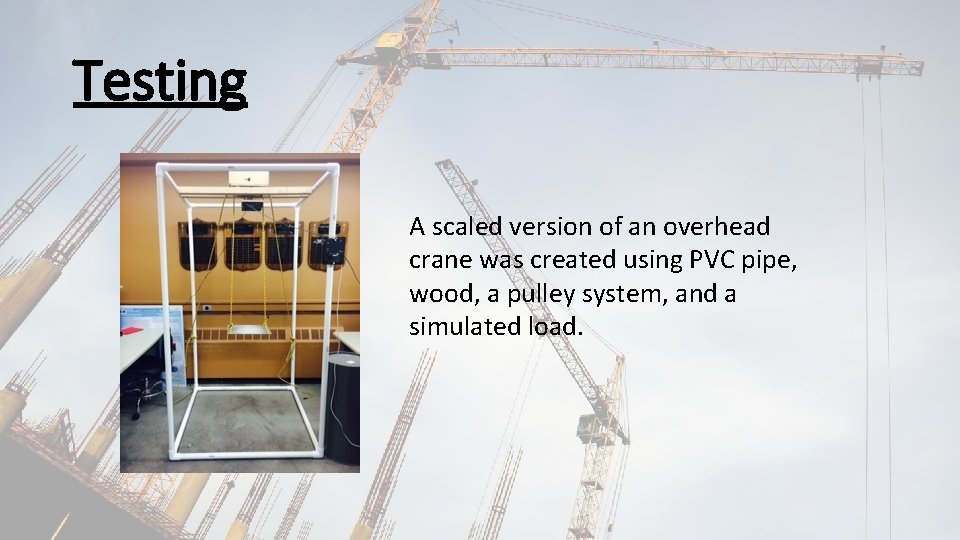
Testing A scaled version of an overhead crane was created using PVC pipe, wood, a pulley system, and a simulated load.
Testing of Thermal Sensor
Data Logging
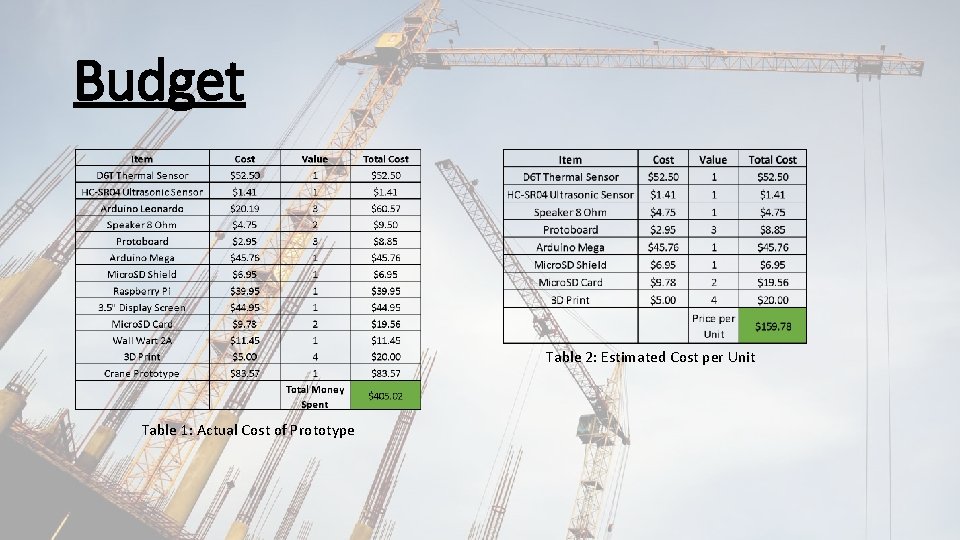
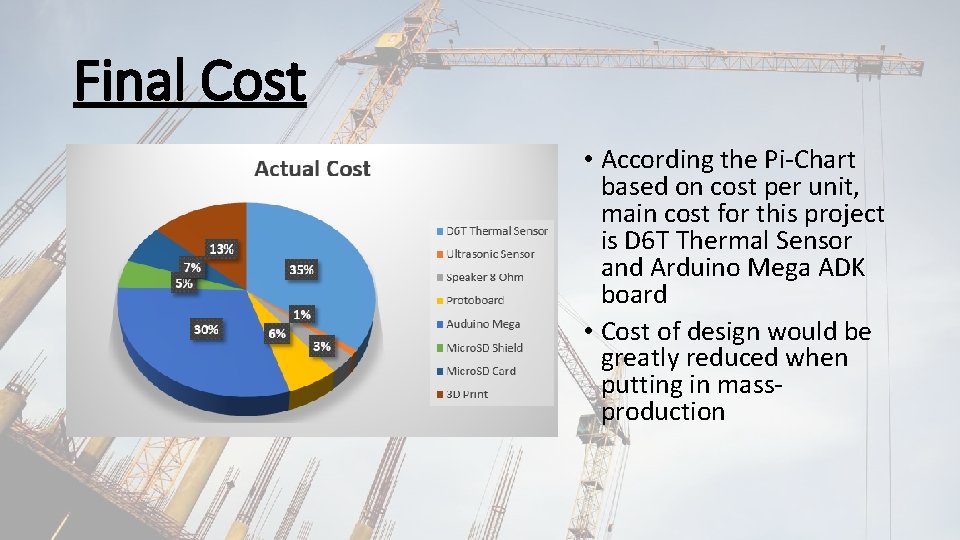
Budget Table 2: Estimated Cost per Unit Table 1: Actual Cost of Prototype
Final Cost • According the Pi-Chart based on cost per unit, main cost for this project is D 6 T Thermal Sensor and Arduino Mega ADK board • Cost of design would be greatly reduced when putting in massproduction
Suggestions for Future Work • Panasonic Thermal Sensor – Product Liability • Improvement in System Housing – Product Safety • Power Supply - Standards
Summary • Safety is top priority at Arcelor. Mittal • Using effective design techniques leads to best results • Opportunity for industry to use new methods to enhance safety • First recognizable project of its kind