
Cone of Safety around a Crane Hook Presented





- Slides: 30
Cone of Safety around a Crane Hook Presented by Team 5 Xue Cheng Samuel Falabi Charlie Nguyen Richard Szink Lanea Williamson
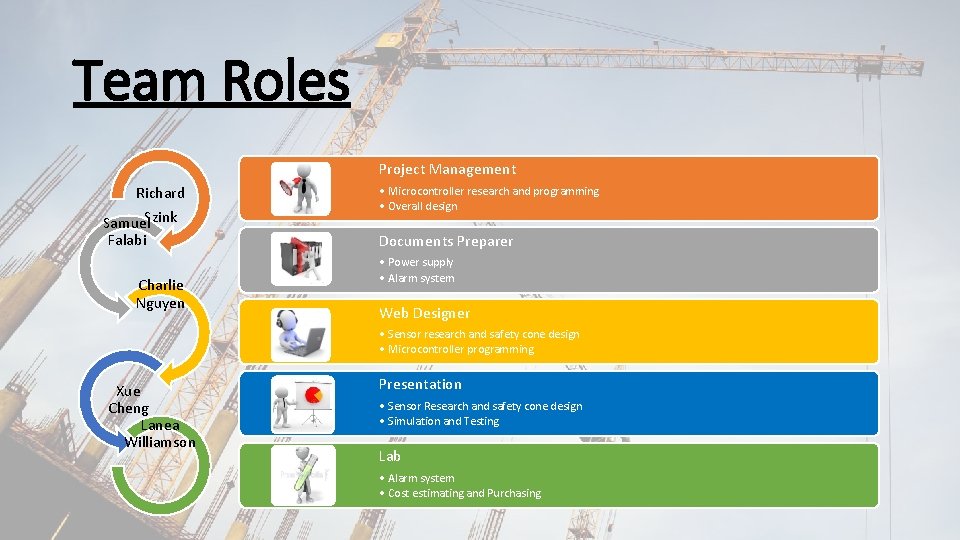
Team Roles Project Management Richard Samuel. Szink Falabi Charlie Nguyen • Microcontroller research and programming • Overall design Documents Preparer • Power supply • Alarm system Web Designer • Sensor research and safety cone design • Microcontroller programming Xue Cheng Lanea Williamson Presentation • Sensor Research and safety cone design • Simulation and Testing Lab • Alarm system • Cost estimating and Purchasing
Faculty Dr. Hayder Radha Professor and Associate Chair for Research Study in coding and communications; image and video compression; image processing; multimedia communications over packet networks; video coding and communications over the Internet and wireless networks; modeling and analysis of the stochastic behavior of communication networks; wavelet, subband, and multiresolution coding
Sponsor • Arcelor. Mittal USA -World’s leading steel and mining company • James Lang -Coordinator, Finish and Coating
Arcelor. Mittal Company Background • World’s leading steel and mining company • Annual production capacity of 115 million tons and operating in 60 countries • Produce safe and sustainable steel • Provide conductive and a safe work environment for its employees
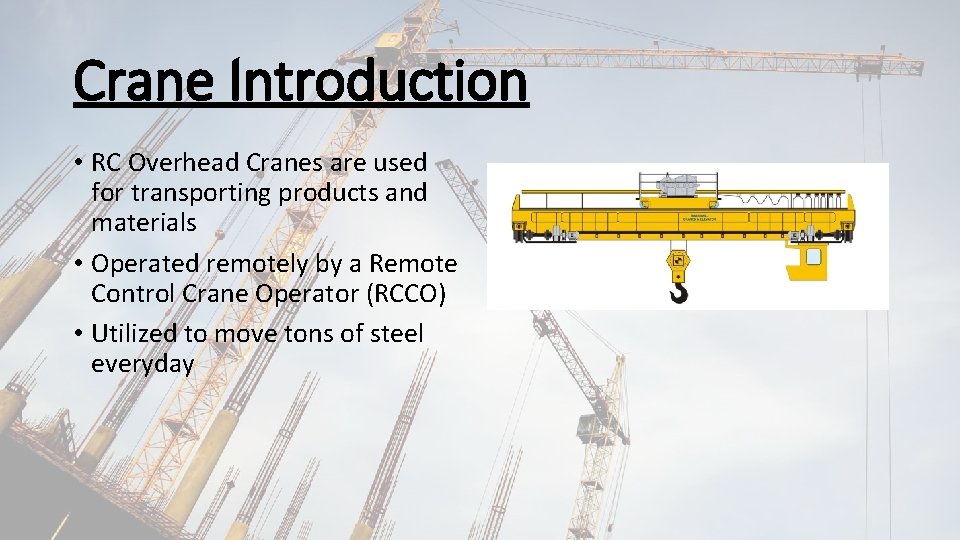
Crane Introduction • RC Overhead Cranes are used for transporting products and materials • Operated remotely by a Remote Control Crane Operator (RCCO) • Utilized to move tons of steel everyday
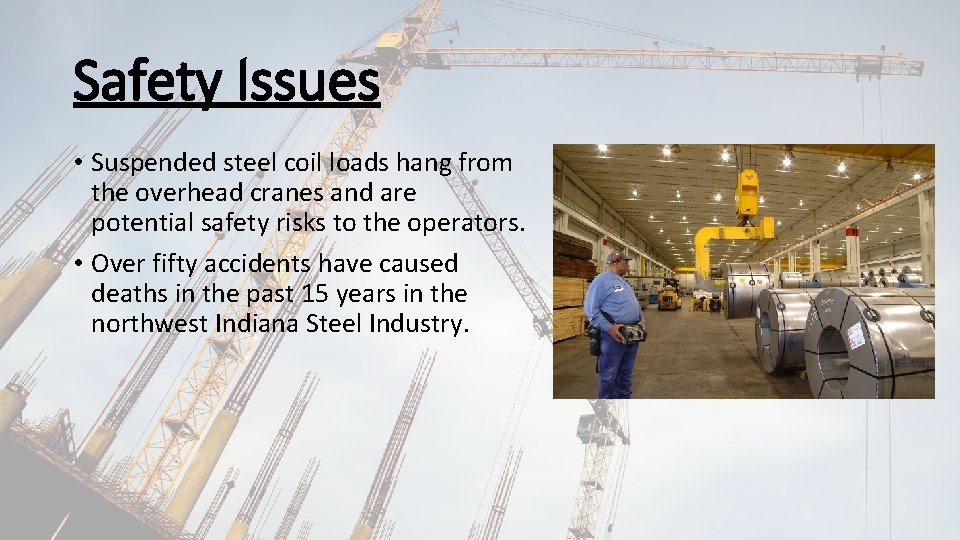
Safety Issues • Suspended steel coil loads hang from the overhead cranes and are potential safety risks to the operators. • Over fifty accidents have caused deaths in the past 15 years in the northwest Indiana Steel Industry.
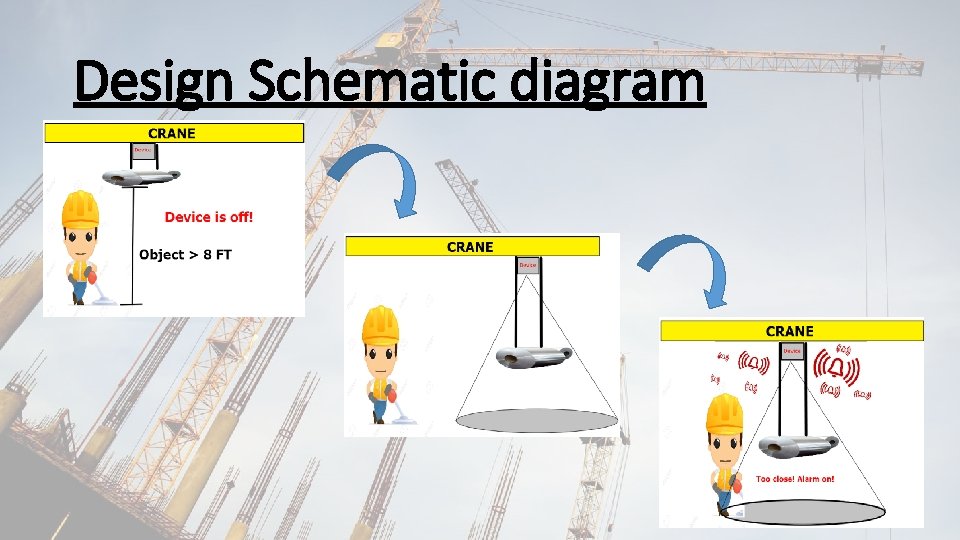
Our Mission • The system will be able to detect any operator within a certain distance from a working crane. • The system will be turned on when the load is within 8 ft above ground. • The system will sound an alarm and warn the operator when the operator is in the danger zone. • Data will be recorded so Arcelor. Mittal can constantly improve their safety measures and prevent future occurrences.
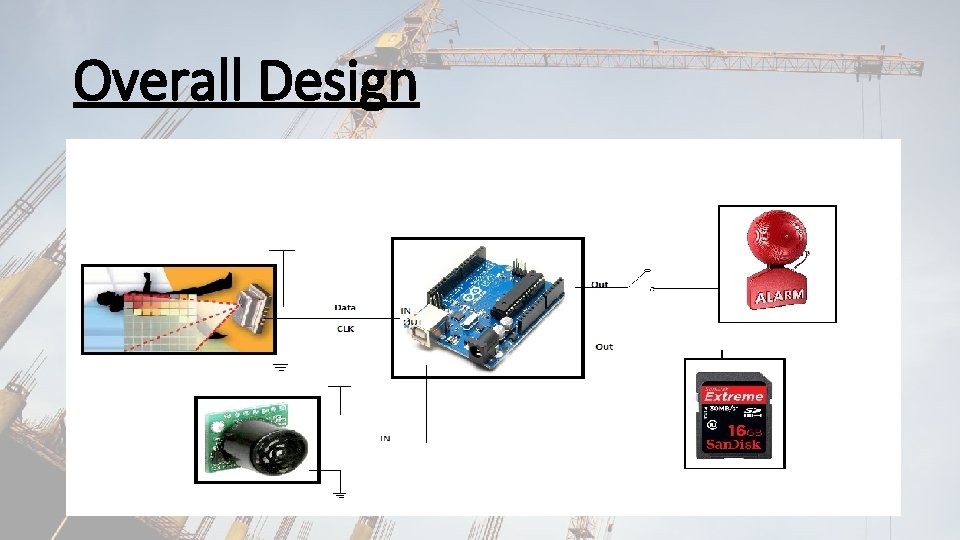
Design Schematic diagram
Research Techniques • What are the industry standards? • Opportunity to advance field? • Has a similar project been completed before? • What was the outcome? • What type of sensors would fulfill our needs? • What are our design constraints? • How can we overcome them?
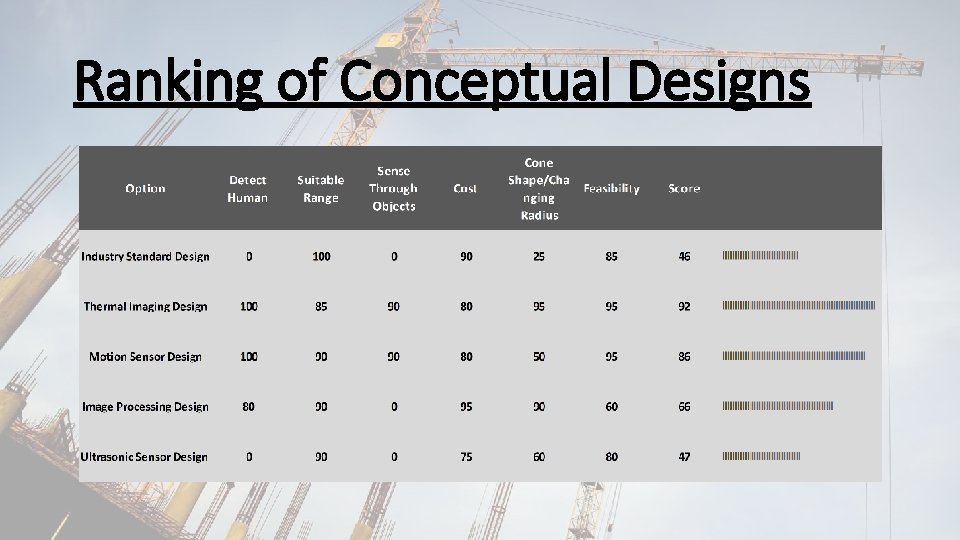
Ranking of Conceptual Designs
How do we build this? • Sensors • Alarm • Data Recording • Processing all the information
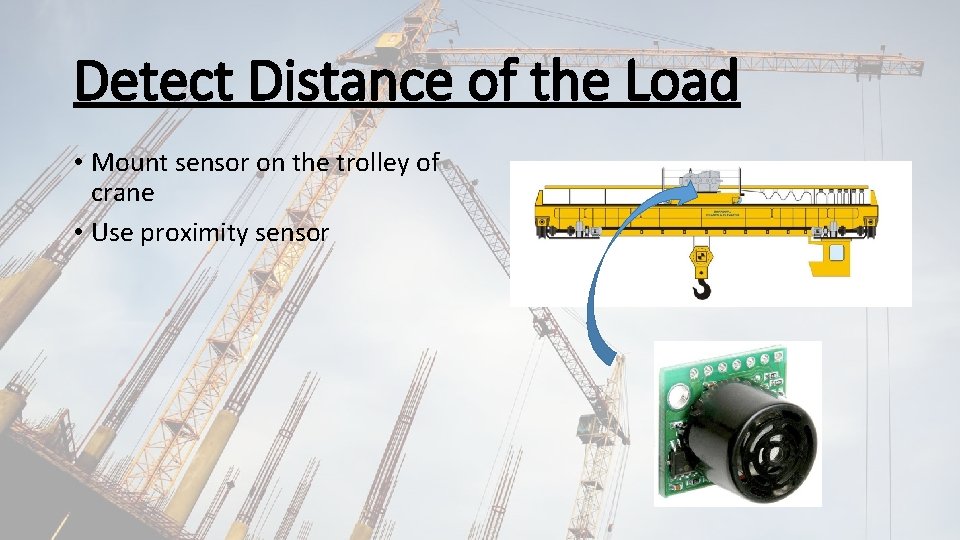
Detect Distance of the Load • Mount sensor on the trolley of crane • Use proximity sensor
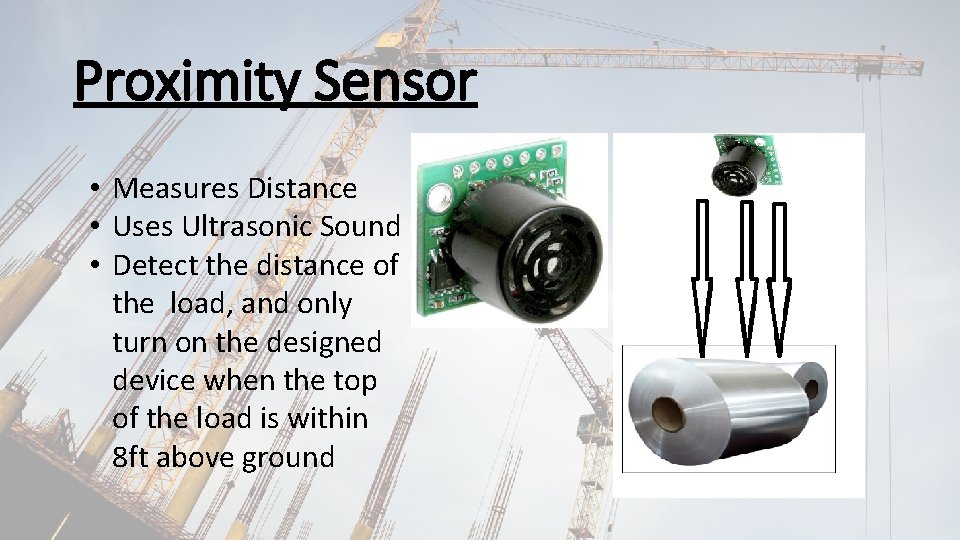
Proximity Sensor • Measures Distance • Uses Ultrasonic Sound • Detect the distance of the load, and only turn on the designed device when the top of the load is within 8 ft above ground
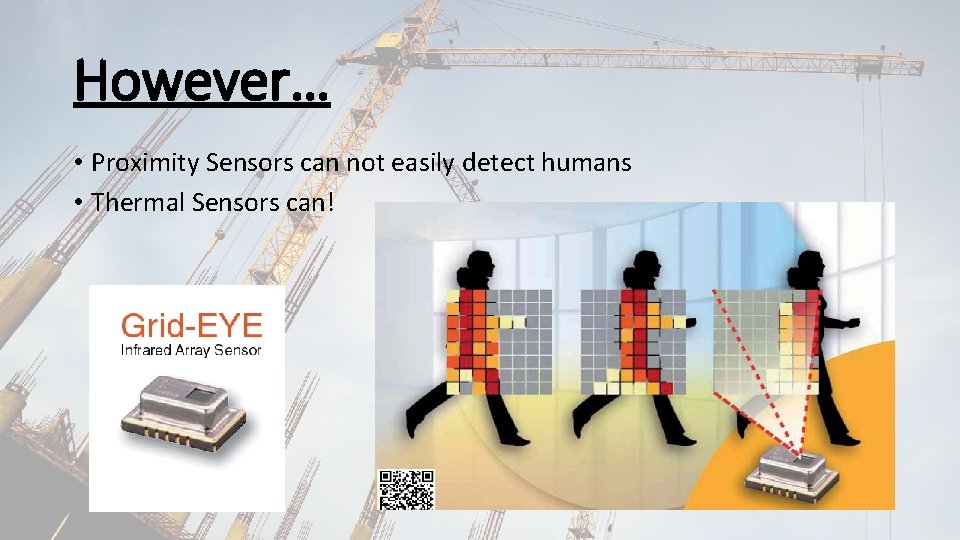
However… • Proximity Sensors can not easily detect humans • Thermal Sensors can!
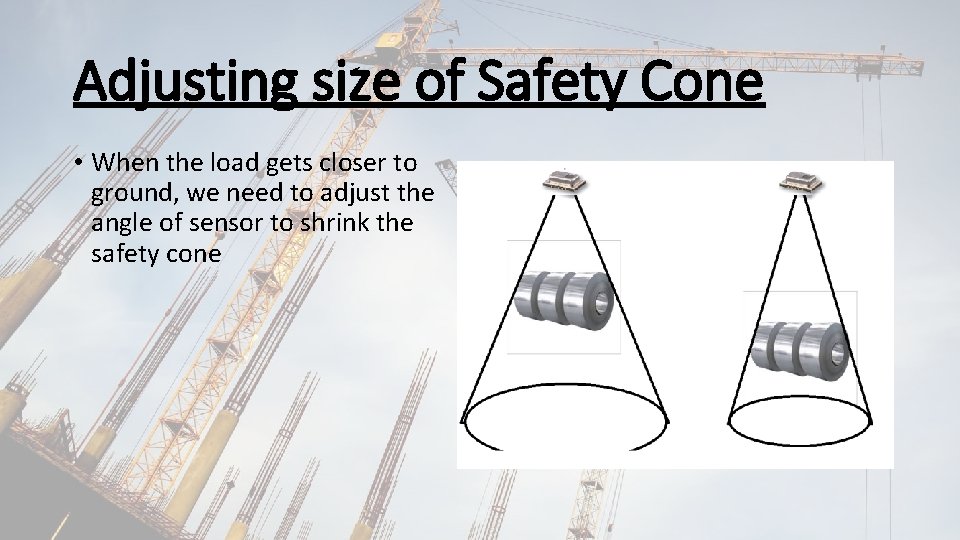
Adjusting size of Safety Cone • When the load gets closer to ground, we need to adjust the angle of sensor to shrink the safety cone
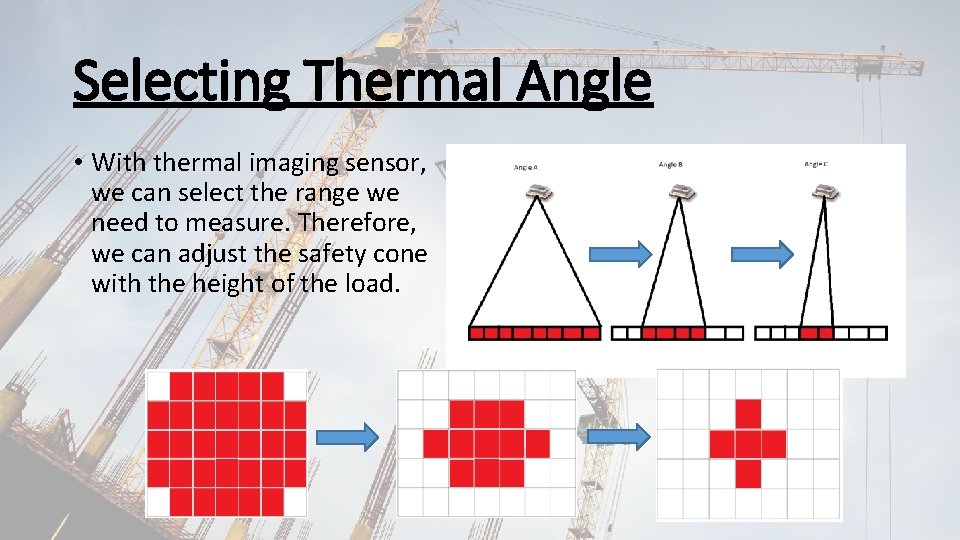
Selecting Thermal Angle • With thermal imaging sensor, we can select the range we need to measure. Therefore, we can adjust the safety cone with the height of the load.
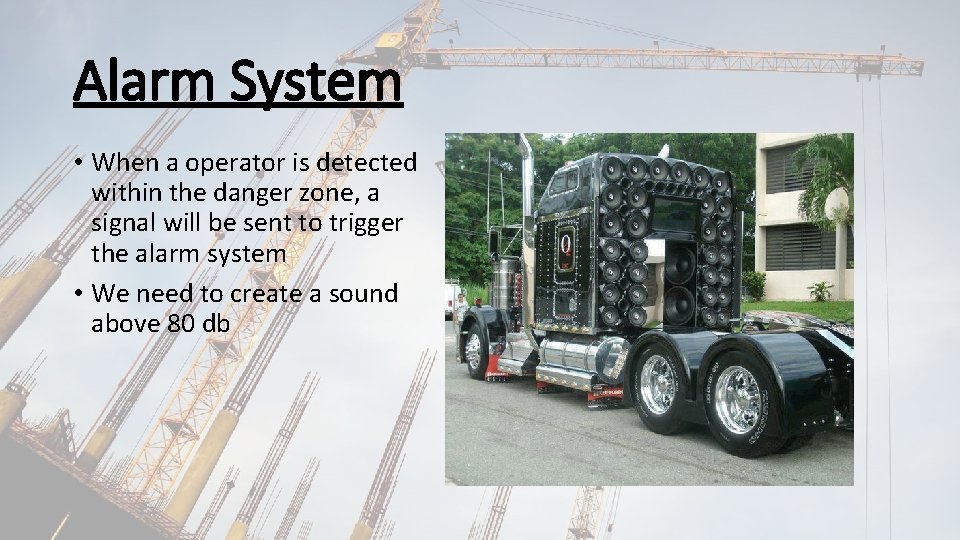
Alarm System • When a operator is detected within the danger zone, a signal will be sent to trigger the alarm system • We need to create a sound above 80 db
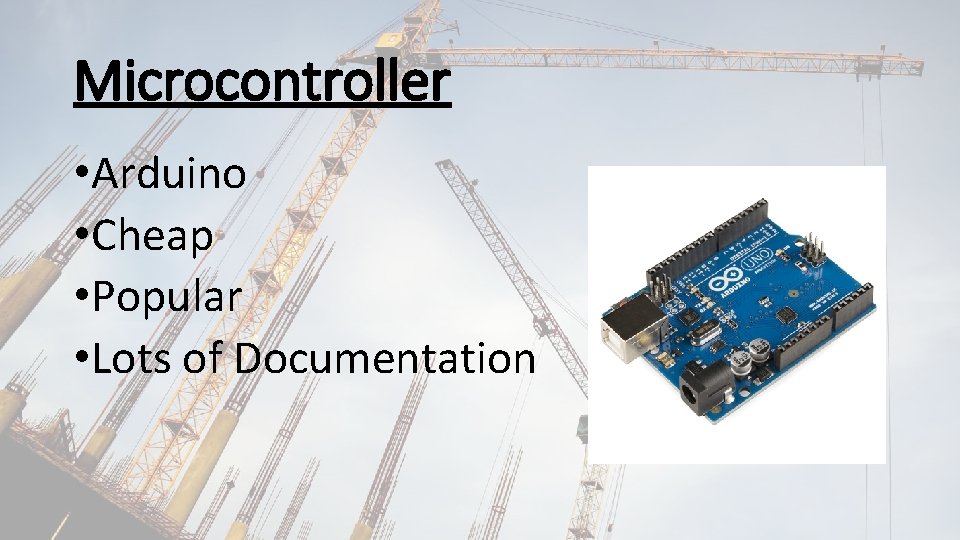
Microcontroller • Arduino • Cheap • Popular • Lots of Documentation
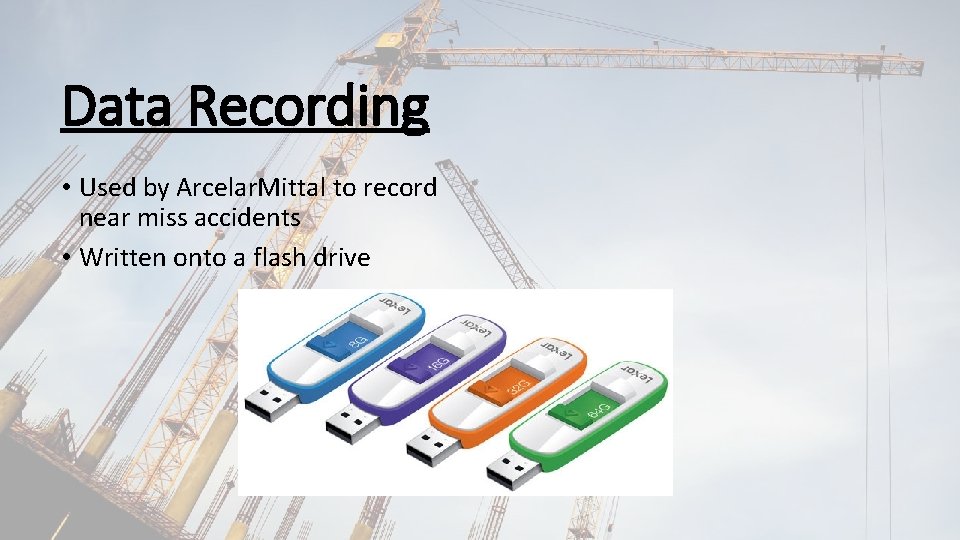
Data Recording • Used by Arcelar. Mittal to record near miss accidents • Written onto a flash drive
Overall Design
Design Constraints • Mounting • Alarm • Human Sensing - Temperature
Mounting • Bolted and not welded • Dust Prevention Box • Mounted to limit vibrations • Wiring Placement
Alarm • Mounting Location • Sound Frequency to alert the operator • Above 80 db
Human Sensing • Human’s Temperature is 98. 6 • Static Objects
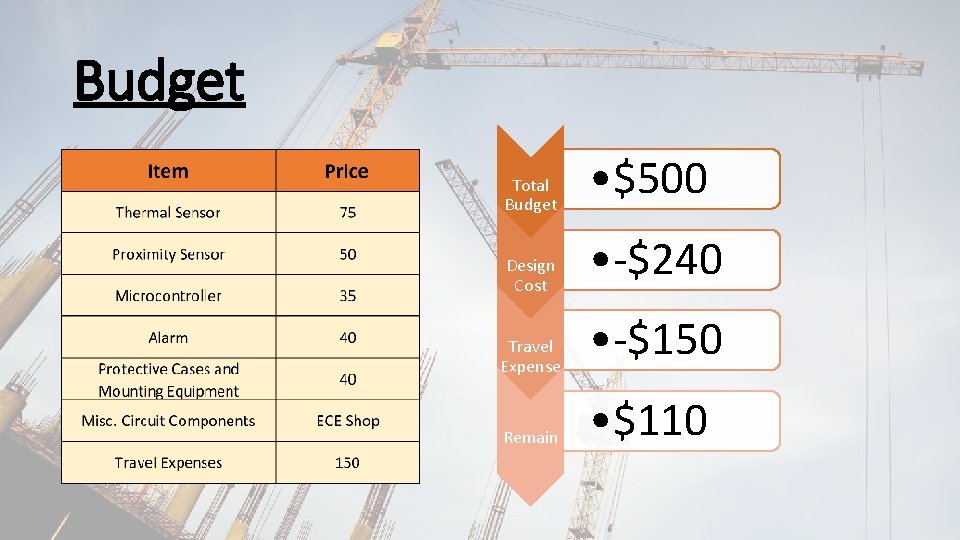
Budget Total Budget Design Cost Travel Expense Remain • $500 • -$240 • -$150 • $110
Summary • Safety is top priority at Arcelor. Mittal • Using effective design techniques leads to best results • Opportunity for industry to use new methods to enhance safety • First recognizable project of its kind
Suggestions for Future Work • Purchase thermal sensor with a larger sensing matrix (cost ) • Use Programmable Logic Controller instead of microcontroller • Very few connections and easy to integrate.