
CONDUCTING CHEST CIRCUMFERENCE ASSESSMENT IN INFANTS AND CHILDREN

- Slides: 8
CONDUCTING CHEST CIRCUMFERENCE ASSESSMENT IN INFANTS AND CHILDREN
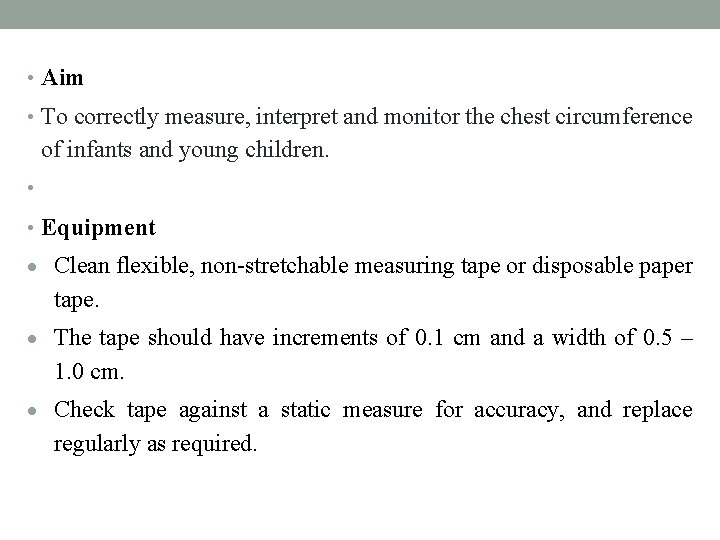
• Aim • To correctly measure, interpret and monitor the chest circumference of infants and young children. • • Equipment Clean flexible, non-stretchable measuring tape or disposable paper tape. The tape should have increments of 0. 1 cm and a width of 0. 5 – 1. 0 cm. Check tape against a static measure for accuracy, and replace regularly as required.
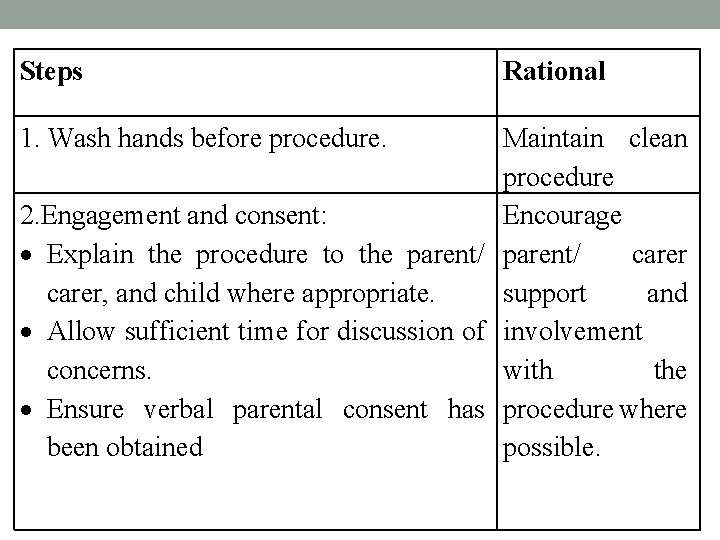
Steps 1. Wash hands before procedure. Rational Maintain clean procedure 2. Engagement and consent: Encourage Explain the procedure to the parent/ carer, and child where appropriate. support and Allow sufficient time for discussion of involvement concerns. with the Ensure verbal parental consent has procedure where been obtained possible.
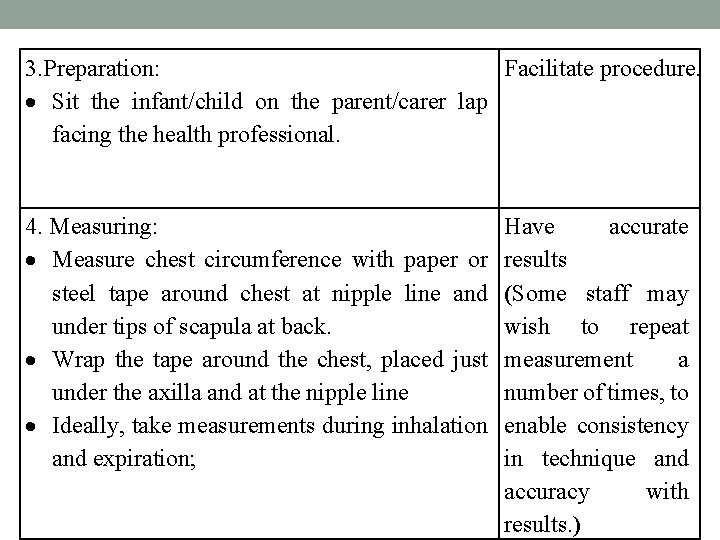
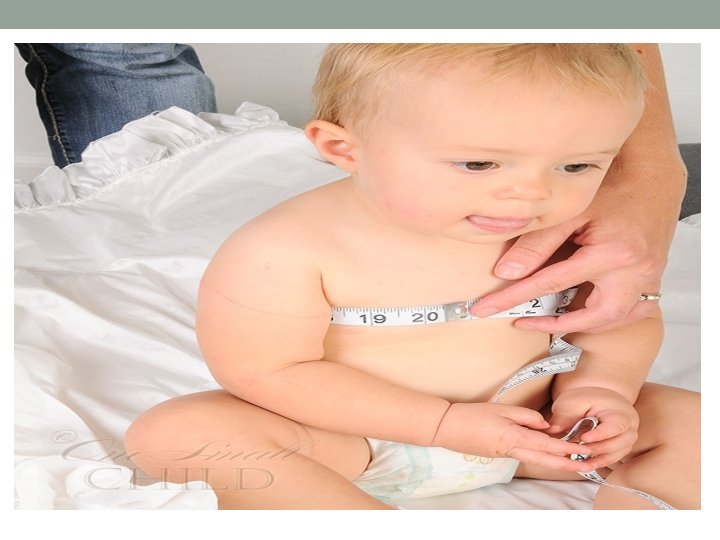
3. Preparation: Facilitate procedure. Sit the infant/child on the parent/carer lap facing the health professional. 4. Measuring: Measure chest circumference with paper or steel tape around chest at nipple line and under tips of scapula at back. Wrap the tape around the chest, placed just under the axilla and at the nipple line Ideally, take measurements during inhalation and expiration; Have accurate results (Some staff may wish to repeat measurement a number of times, to enable consistency in technique and accuracy with results. )
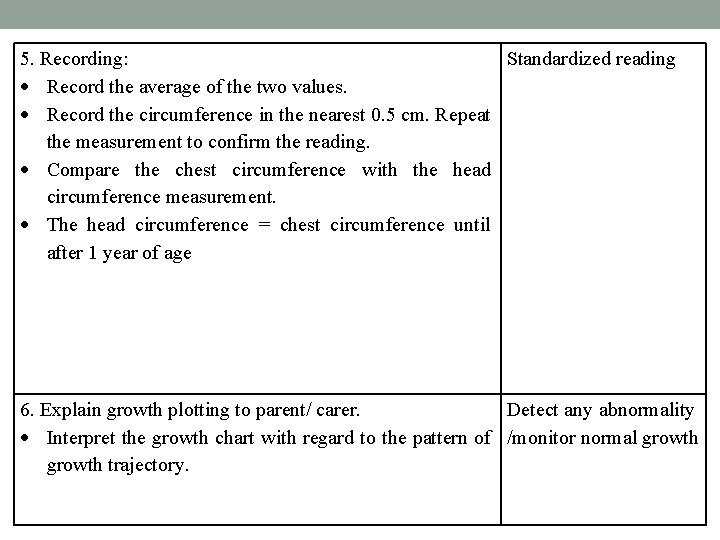
5. Recording: Standardized reading Record the average of the two values. Record the circumference in the nearest 0. 5 cm. Repeat the measurement to confirm the reading. Compare the chest circumference with the head circumference measurement. The head circumference = chest circumference until after 1 year of age 6. Explain growth plotting to parent/ carer. Detect any abnormality Interpret the growth chart with regard to the pattern of /monitor normal growth trajectory.