
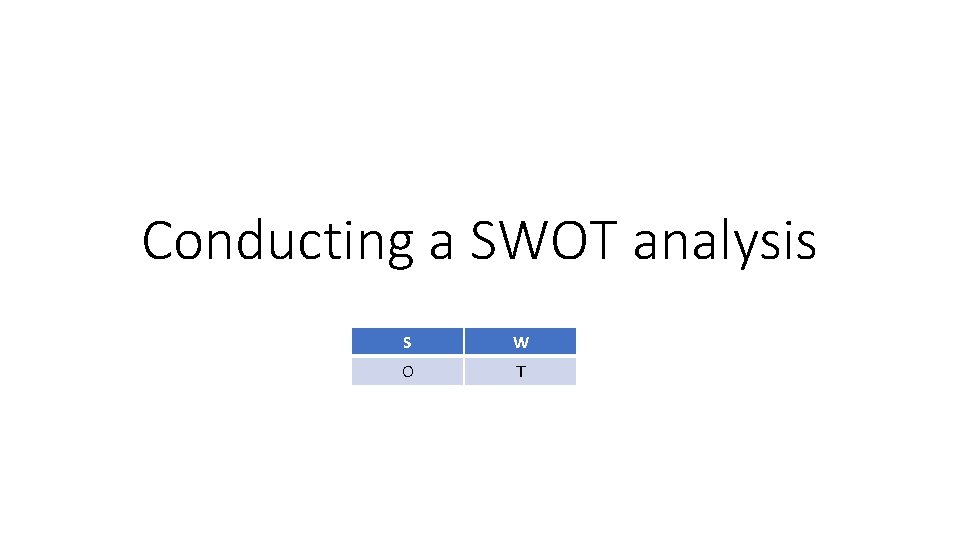
Conducting a SWOT analysis S W O T
- Slides: 3
Conducting a SWOT analysis S W O T
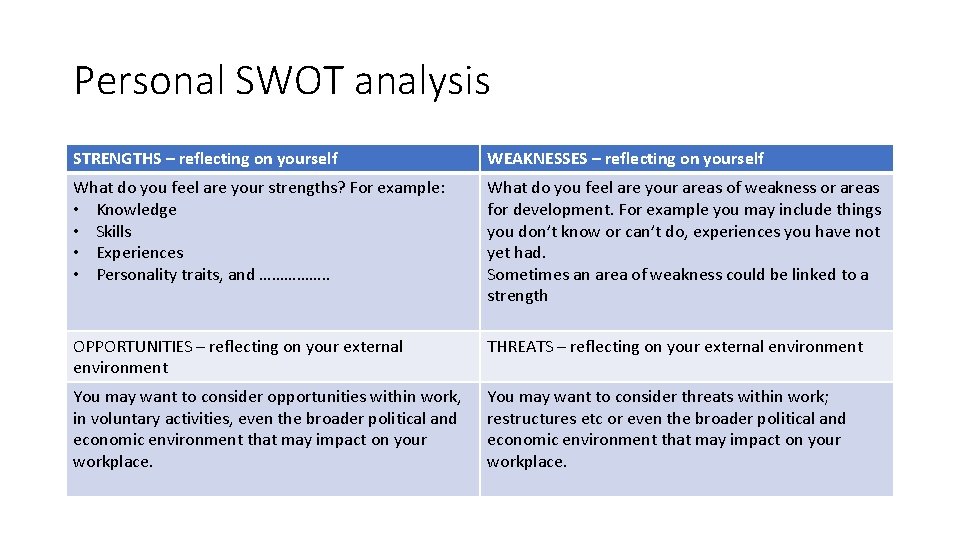
Personal SWOT analysis STRENGTHS – reflecting on yourself WEAKNESSES – reflecting on yourself What do you feel are your strengths? For example: • Knowledge • Skills • Experiences • Personality traits, and ……………. . What do you feel are your areas of weakness or areas for development. For example you may include things you don’t know or can’t do, experiences you have not yet had. Sometimes an area of weakness could be linked to a strength OPPORTUNITIES – reflecting on your external environment THREATS – reflecting on your external environment You may want to consider opportunities within work, in voluntary activities, even the broader political and economic environment that may impact on your workplace. You may want to consider threats within work; restructures etc or even the broader political and economic environment that may impact on your workplace.
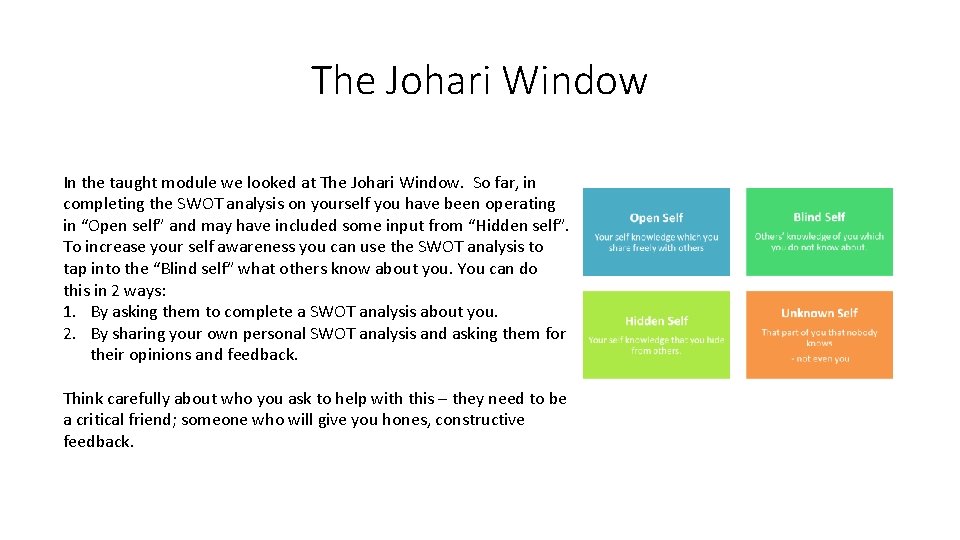
The Johari Window In the taught module we looked at The Johari Window. So far, in completing the SWOT analysis on yourself you have been operating in “Open self” and may have included some input from “Hidden self”. To increase your self awareness you can use the SWOT analysis to tap into the “Blind self” what others know about you. You can do this in 2 ways: 1. By asking them to complete a SWOT analysis about you. 2. By sharing your own personal SWOT analysis and asking them for their opinions and feedback. Think carefully about who you ask to help with this – they need to be a critical friend; someone who will give you hones, constructive feedback.