
Conductance based neural models John Huguenard Stanford University

Conductance based neural models John Huguenard Stanford University
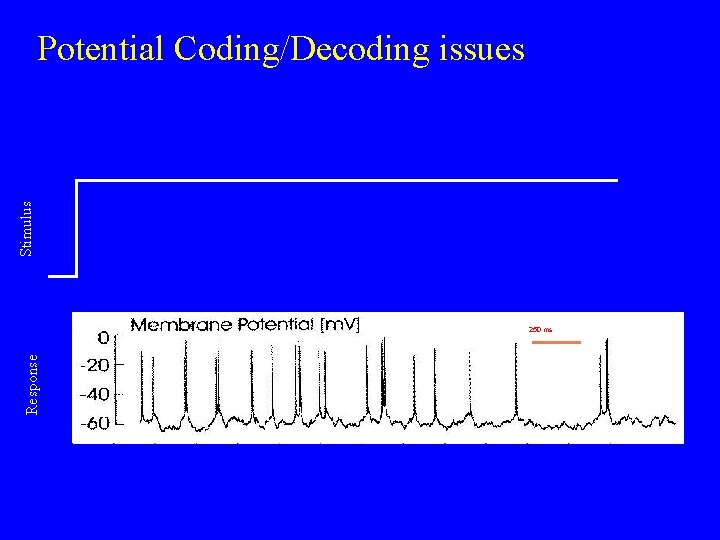
Stimulus Potential Coding/Decoding issues Response 250 ms
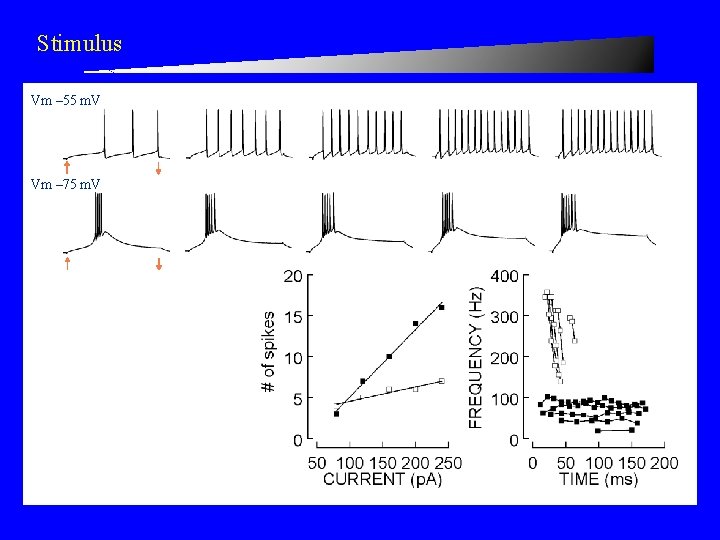
Stimulus Vm – 55 m. V Vm – 75 m. V
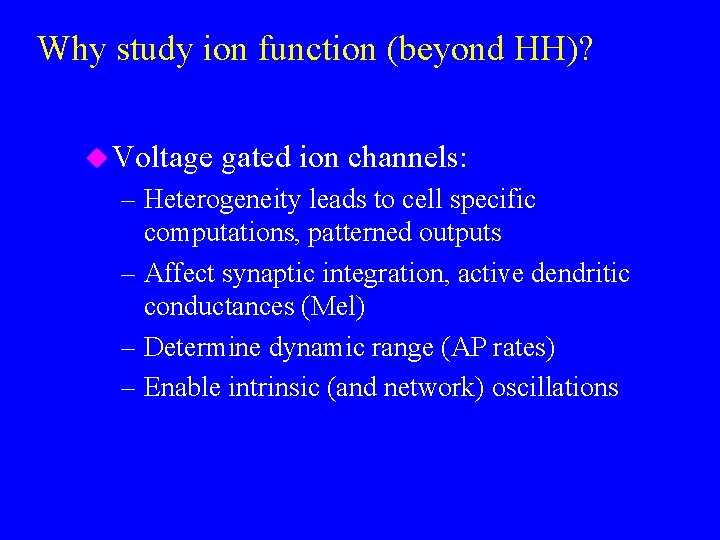
Why study ion function (beyond HH)? u Voltage gated ion channels: – Heterogeneity leads to cell specific computations, patterned outputs – Affect synaptic integration, active dendritic conductances (Mel) – Determine dynamic range (AP rates) – Enable intrinsic (and network) oscillations
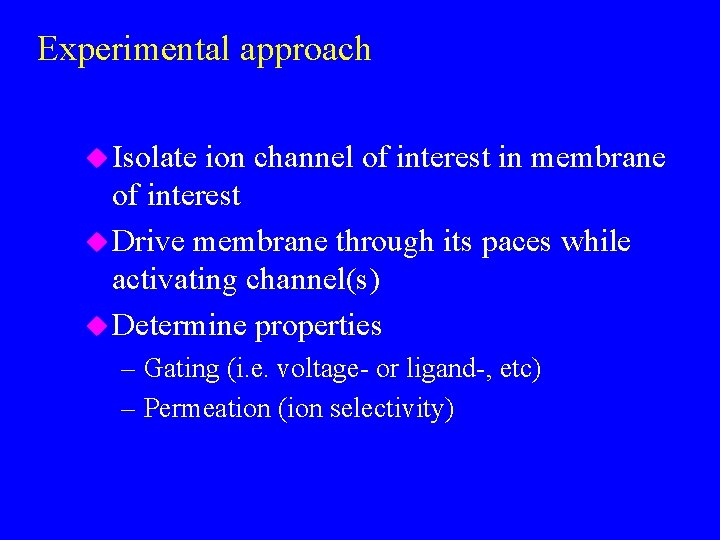
Experimental approach u Isolate ion channel of interest in membrane of interest u Drive membrane through its paces while activating channel(s) u Determine properties – Gating (i. e. voltage- or ligand-, etc) – Permeation (ion selectivity)
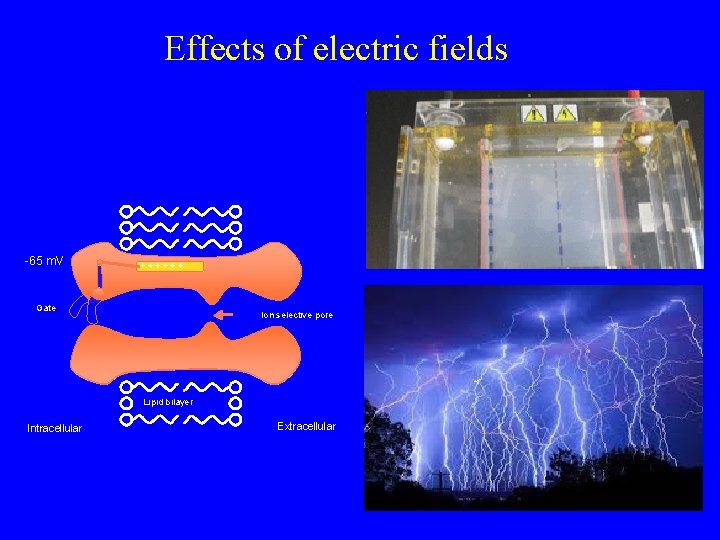
Effects of electric fields -65 m. V ++++ Gate Ion selective pore Lipid bilayer Intracellular Extracellular
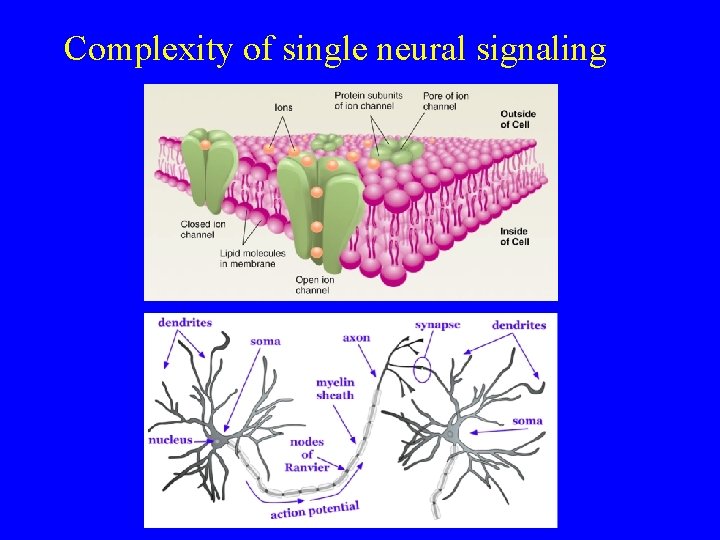
Complexity of single neural signaling
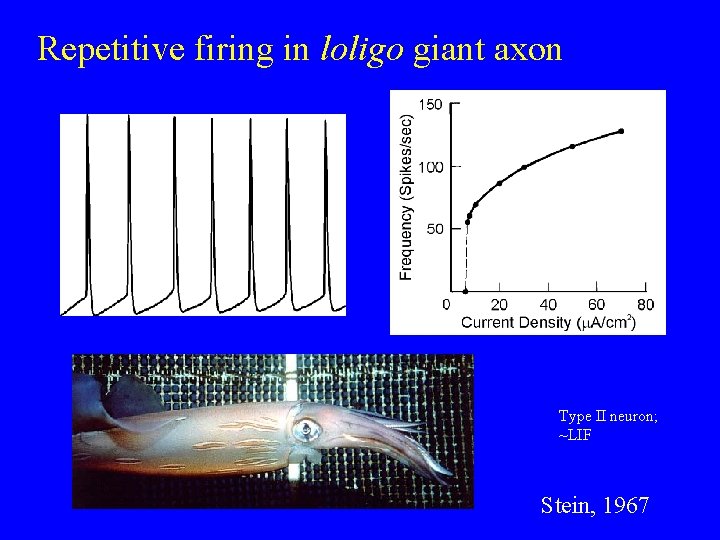
Repetitive firing in loligo giant axon Type II neuron; ~LIF Stein, 1967
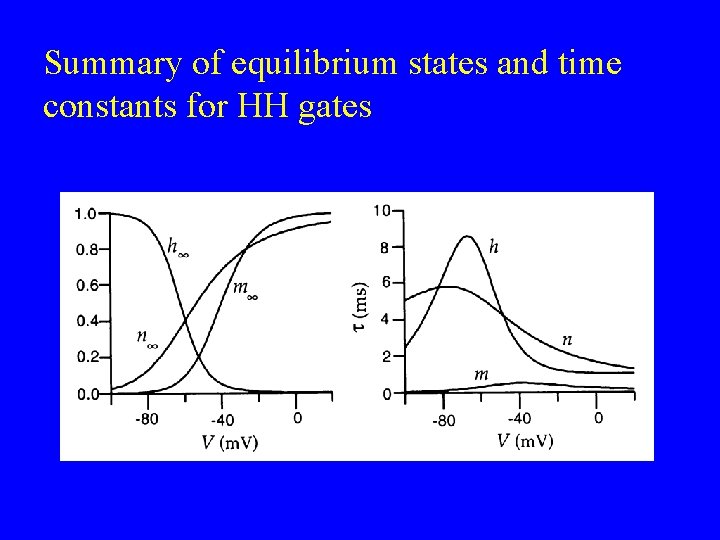
Summary of equilibrium states and time constants for HH gates
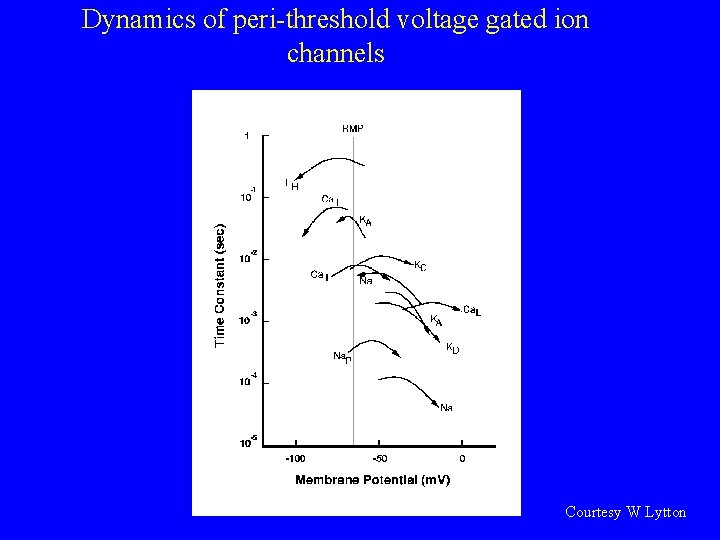
Dynamics of peri-threshold voltage gated ion channels Courtesy W Lytton
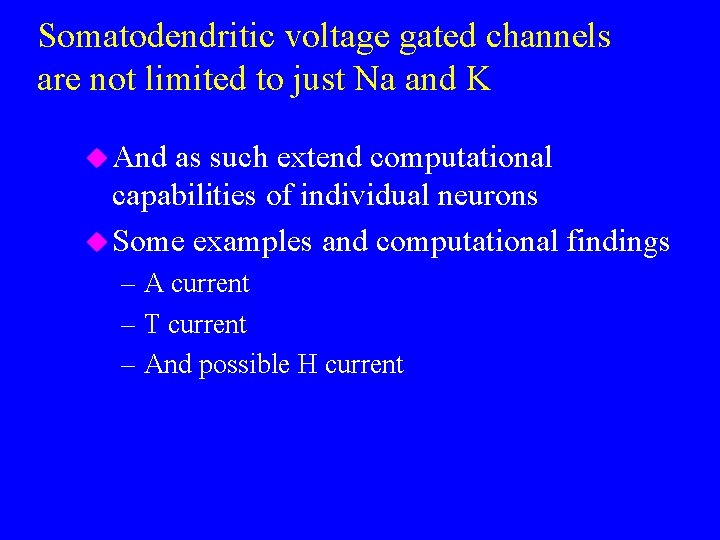
Somatodendritic voltage gated channels are not limited to just Na and K u And as such extend computational capabilities of individual neurons u Some examples and computational findings – A current – T current – And possible H current
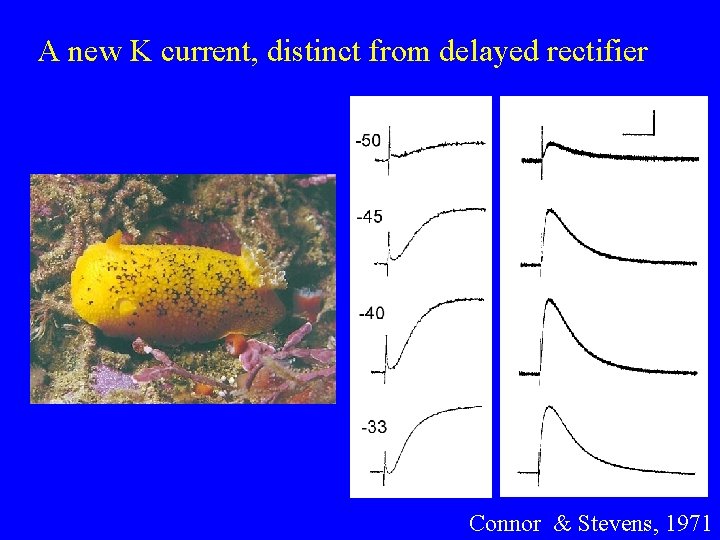
A new K current, distinct from delayed rectifier Connor & Stevens, 1971
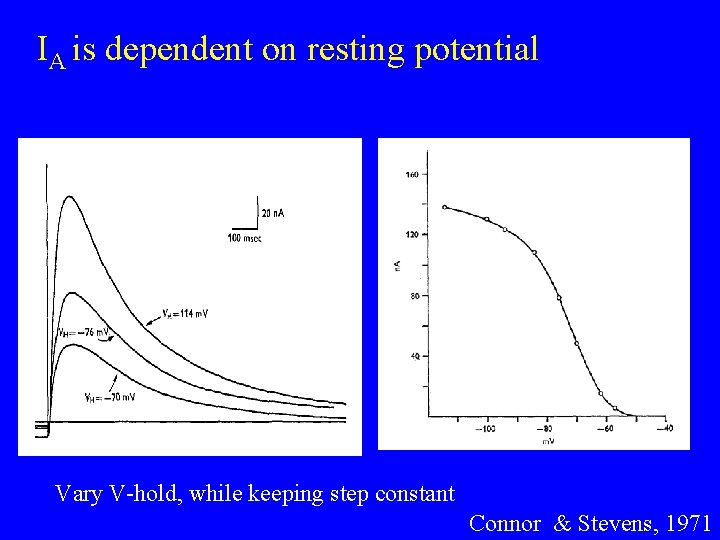
IA is dependent on resting potential Vary V-hold, while keeping step constant Connor & Stevens, 1971
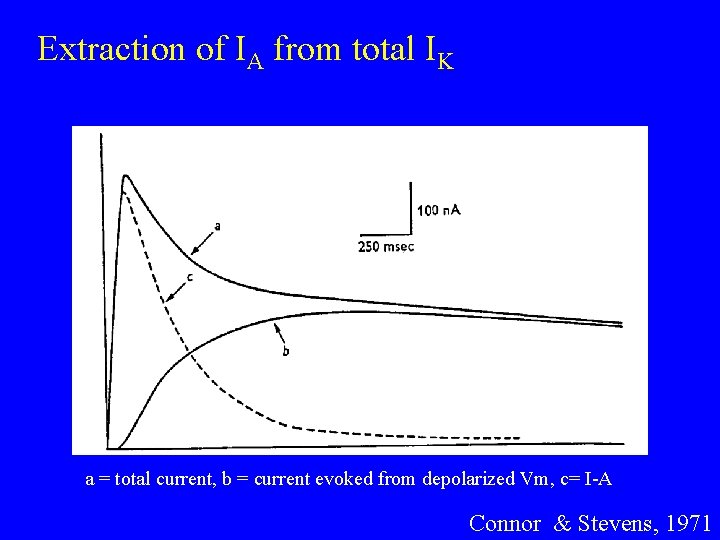
Extraction of IA from total IK a = total current, b = current evoked from depolarized Vm, c= I-A Connor & Stevens, 1971
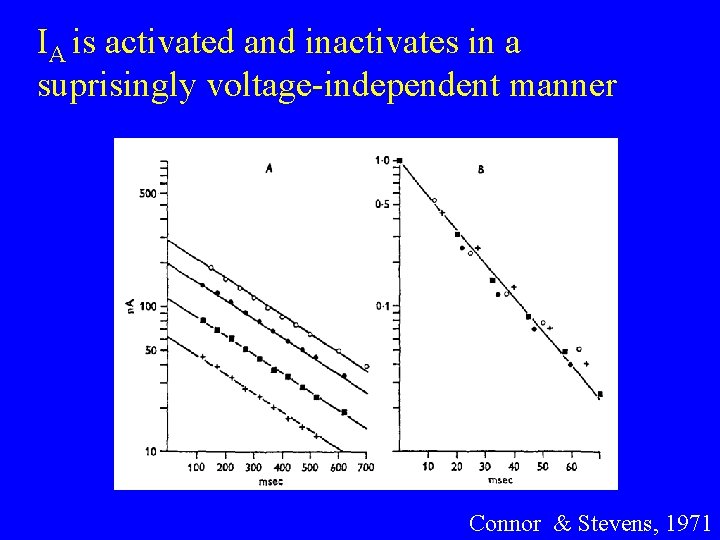
IA is activated and inactivates in a suprisingly voltage-independent manner Connor & Stevens, 1971
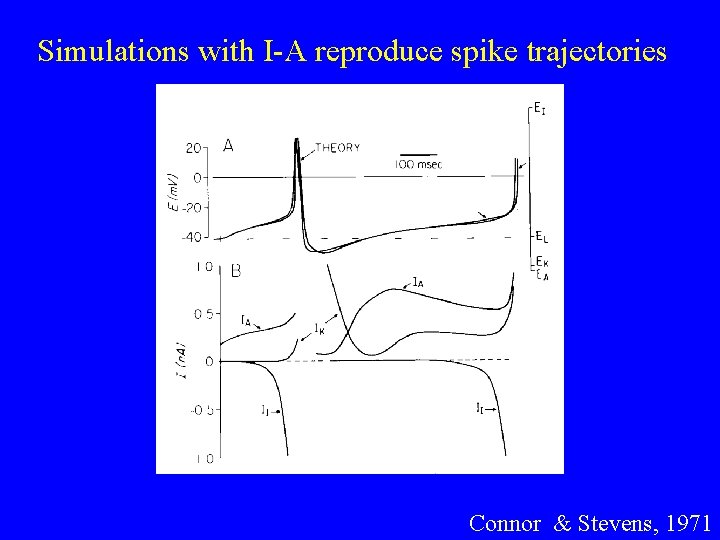
Simulations with I-A reproduce spike trajectories Connor & Stevens, 1971
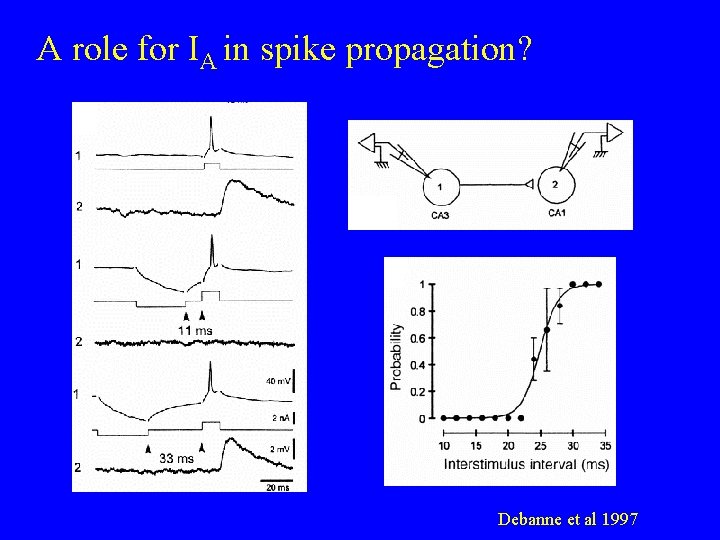
A role for IA in spike propagation? Debanne et al 1997
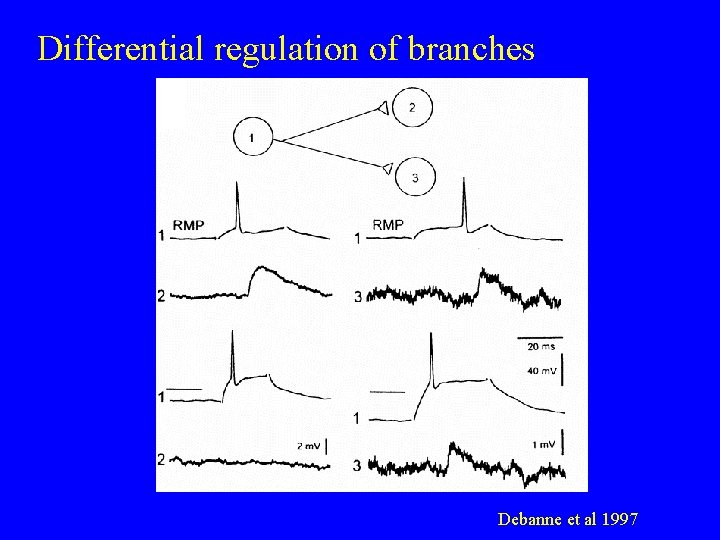
Differential regulation of branches Debanne et al 1997
Voltage gated ion channels promote intrinsic and network oscillations
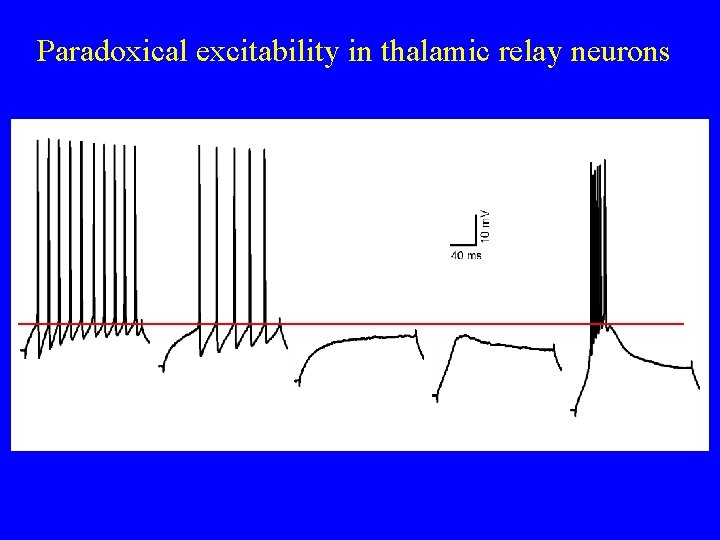
Paradoxical excitability in thalamic relay neurons
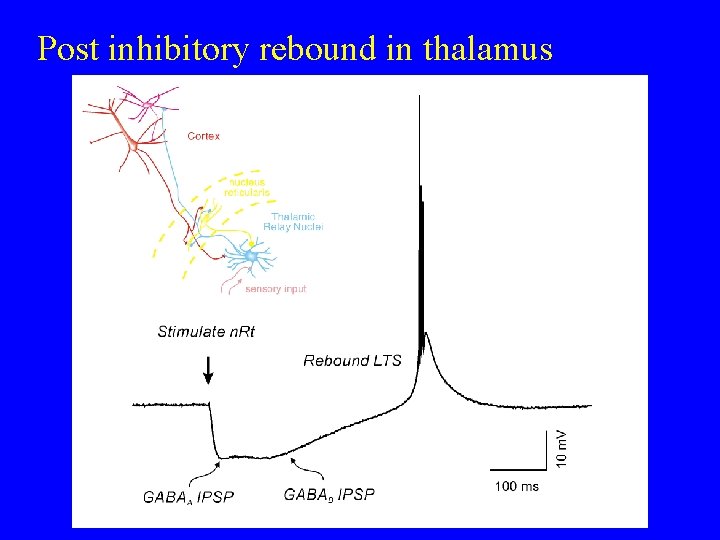
Post inhibitory rebound in thalamus
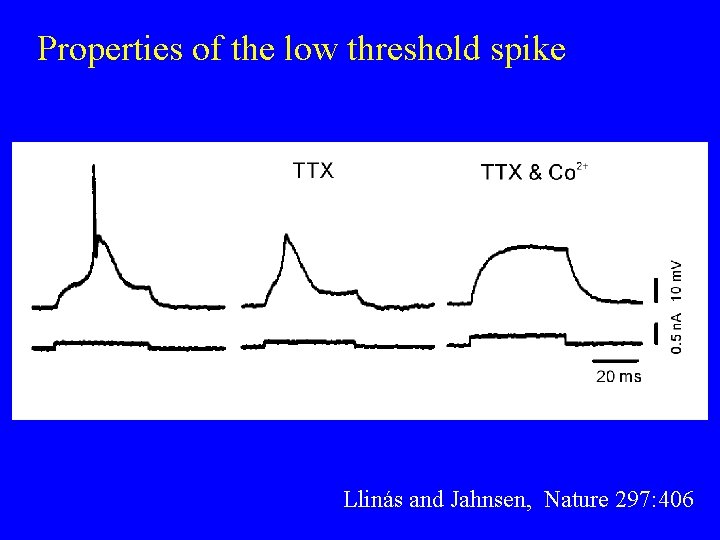
Properties of the low threshold spike Llinás and Jahnsen, Nature 297: 406
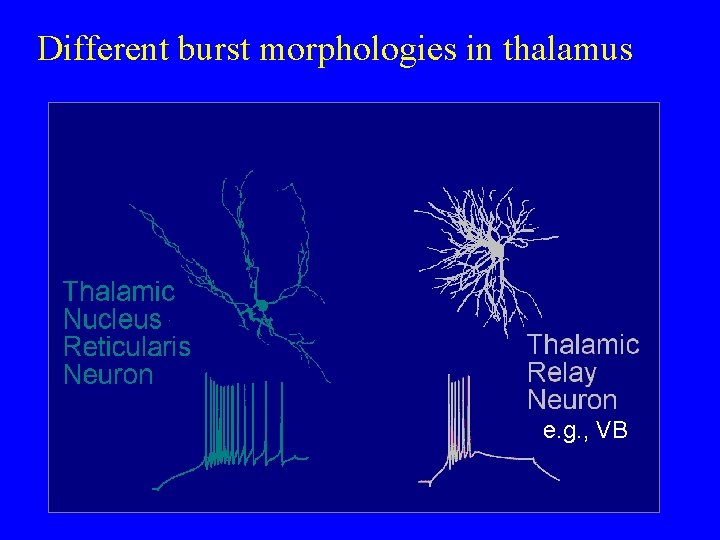
Different burst morphologies in thalamus e. g. , VB
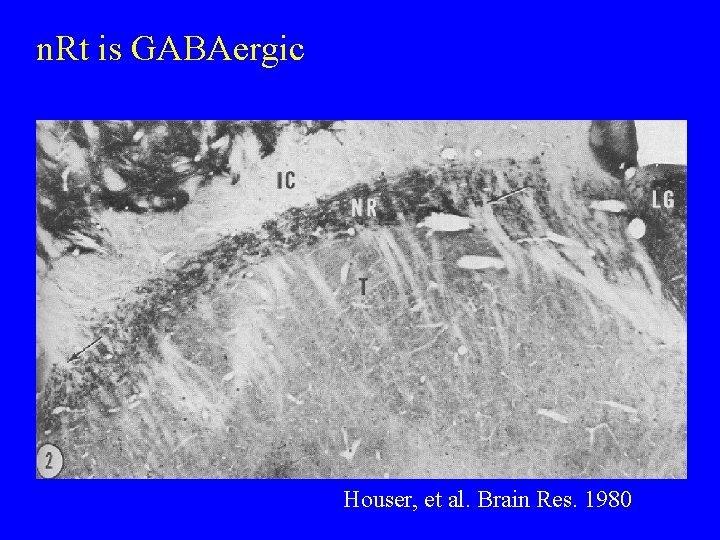
n. Rt is GABAergic Houser, et al. Brain Res. 1980
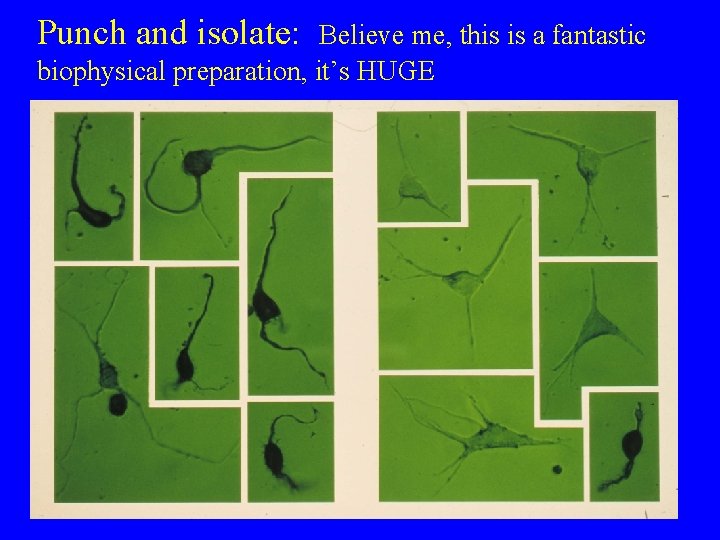
Punch and isolate: Believe me, this is a fantastic biophysical preparation, it’s HUGE
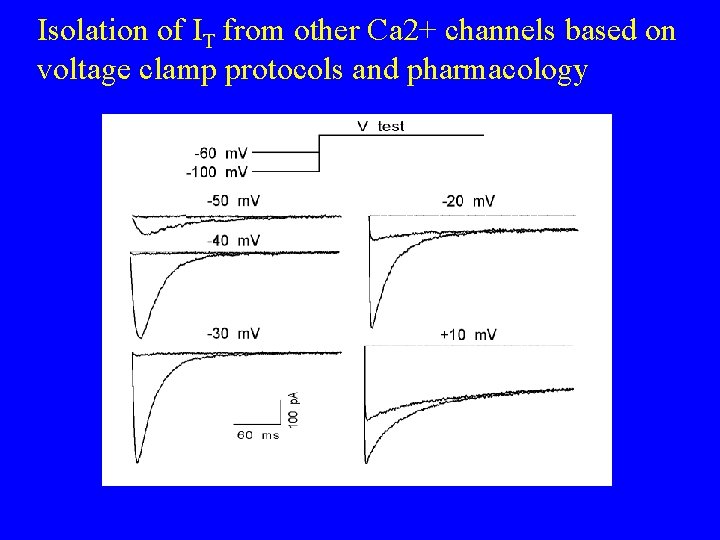
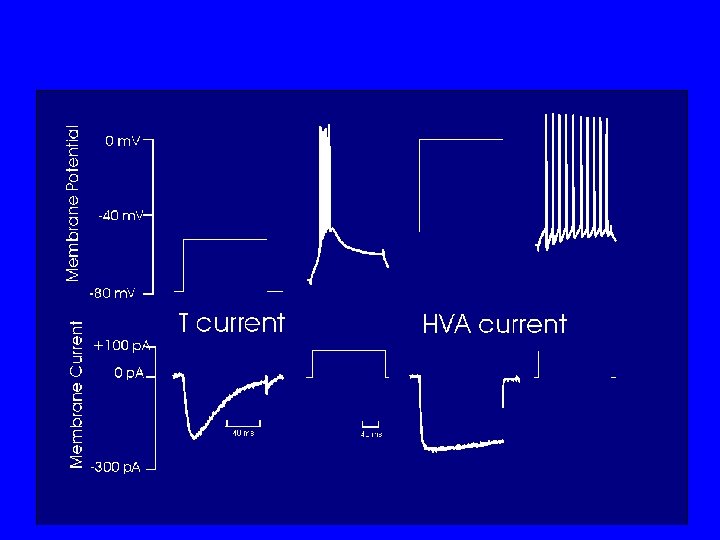
Isolation of IT from other Ca 2+ channels based on voltage clamp protocols and pharmacology
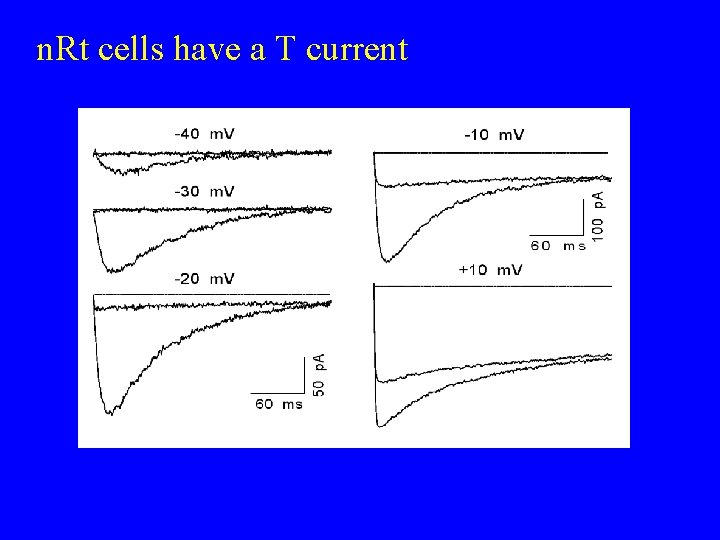
n. Rt cells have a T current
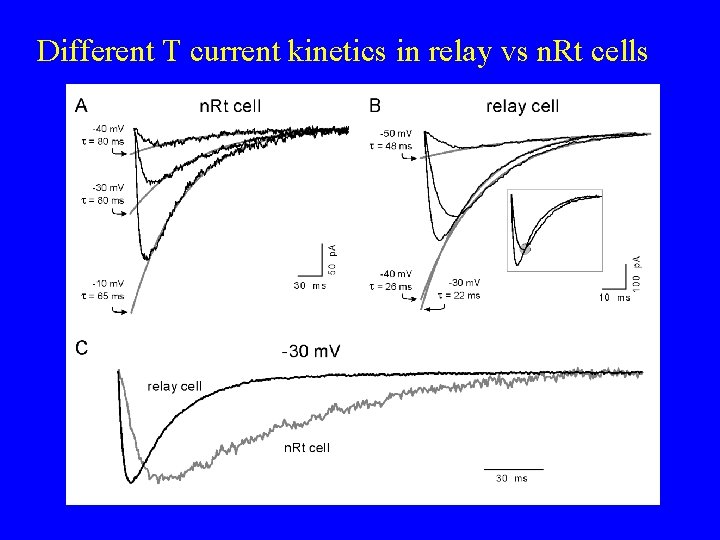
Different T current kinetics in relay vs n. Rt cells
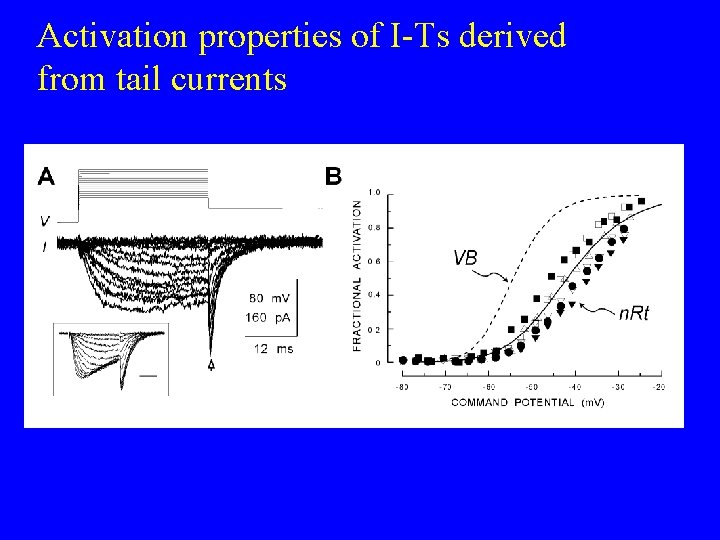
Activation properties of I-Ts derived from tail currents
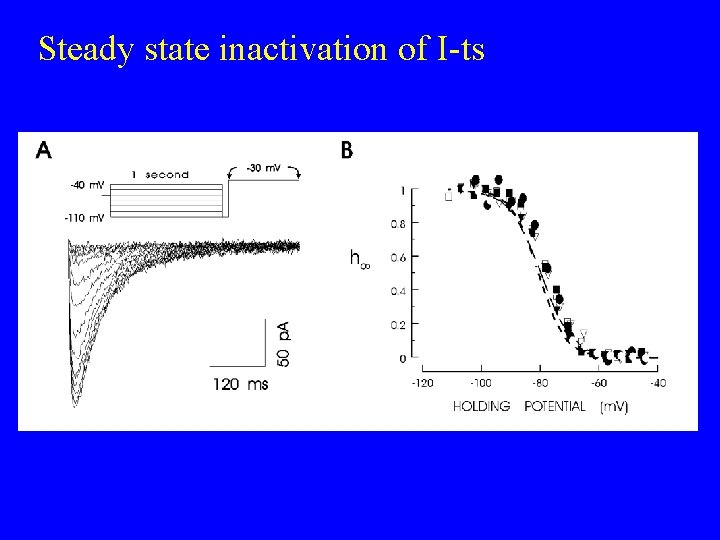
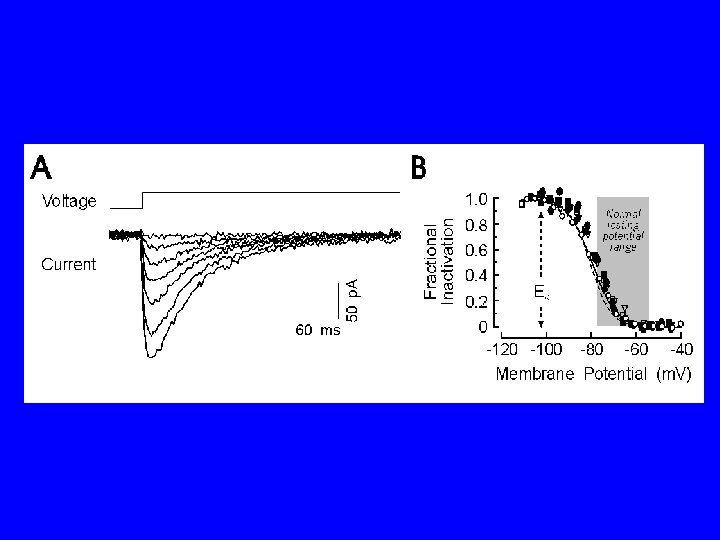
Steady state inactivation of I-ts
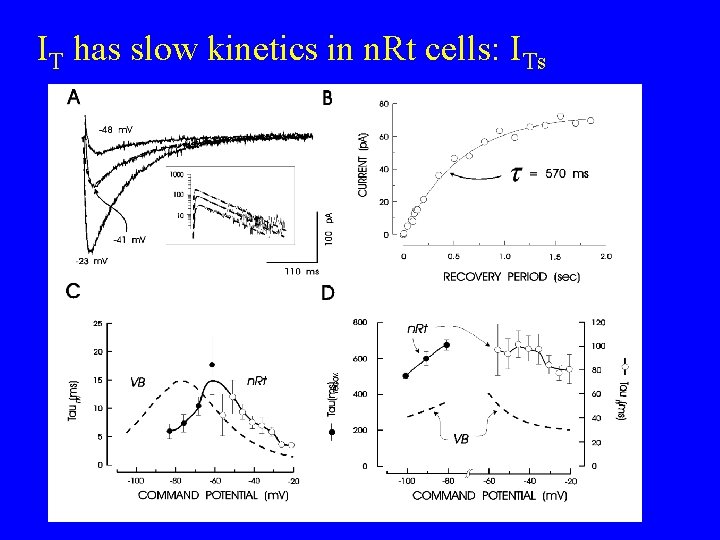
IT has slow kinetics in n. Rt cells: ITs
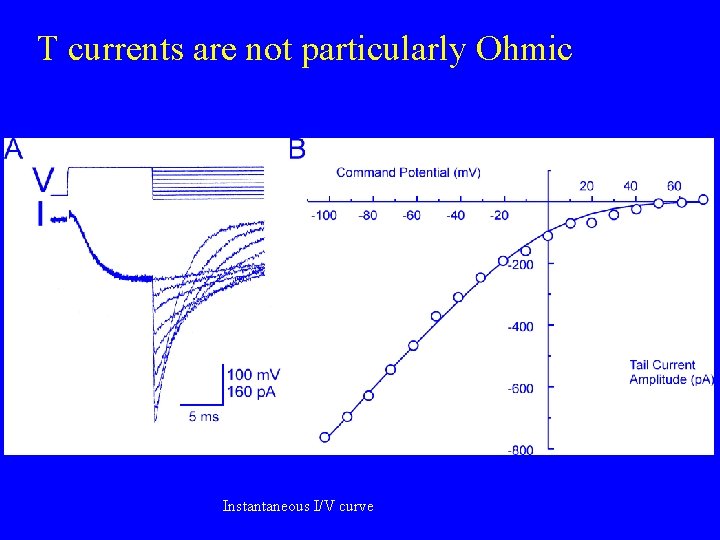
T currents are not particularly Ohmic Instantaneous I/V curve
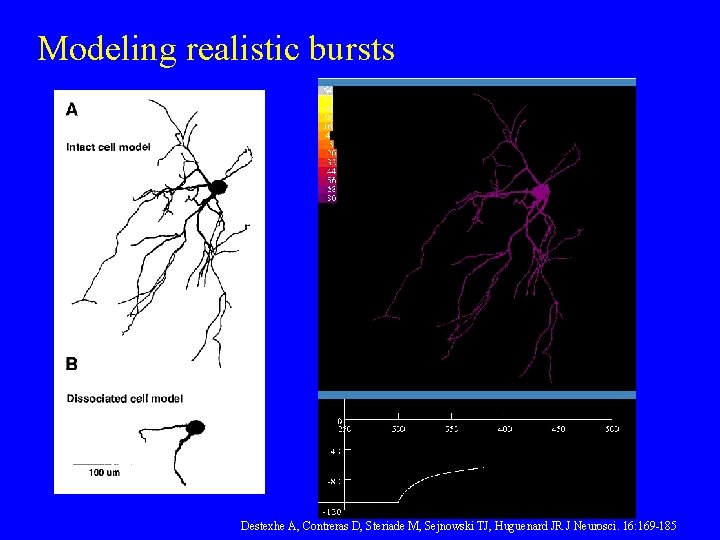
Modeling realistic bursts Destexhe A, Contreras D, Steriade M, Sejnowski TJ, Huguenard JR J Neurosci. 16: 169 -185


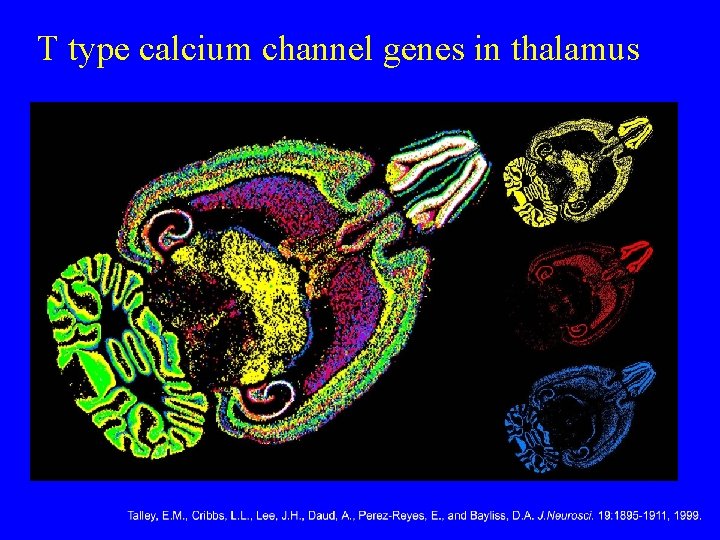
T type calcium channel genes in thalamus
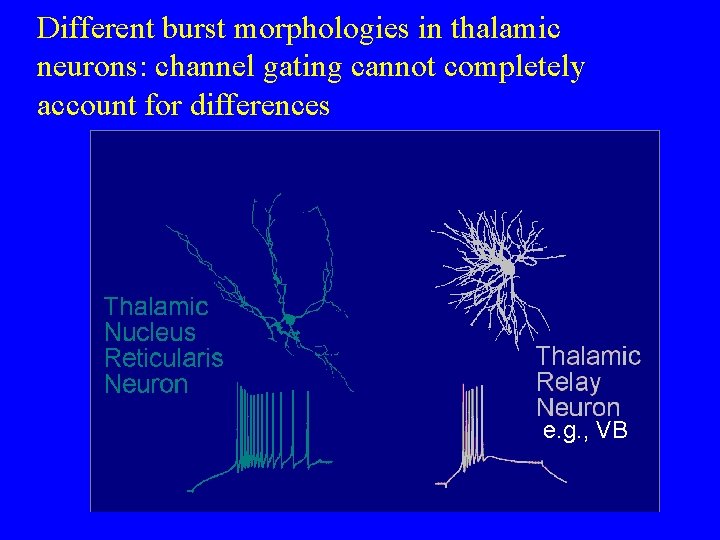
Different burst morphologies in thalamic neurons: channel gating cannot completely account for differences e. g. , VB
Putting it together u What are the consequences of the particular form of voltage-gated conductances and resulting firing patterns in thalamic neurons?

Post inhibitory rebound in thalamus
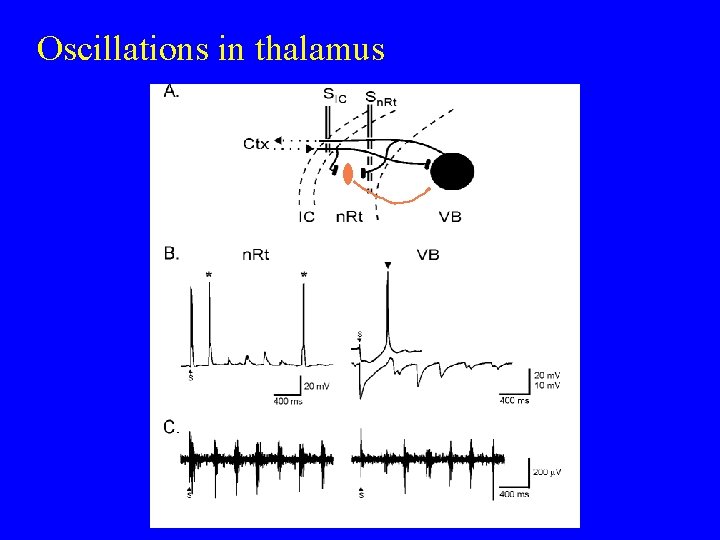
Oscillations in thalamus
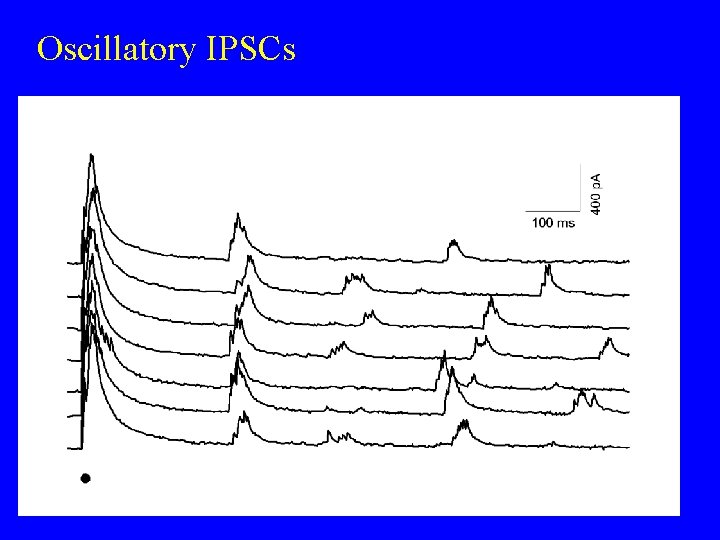
Oscillatory IPSCs

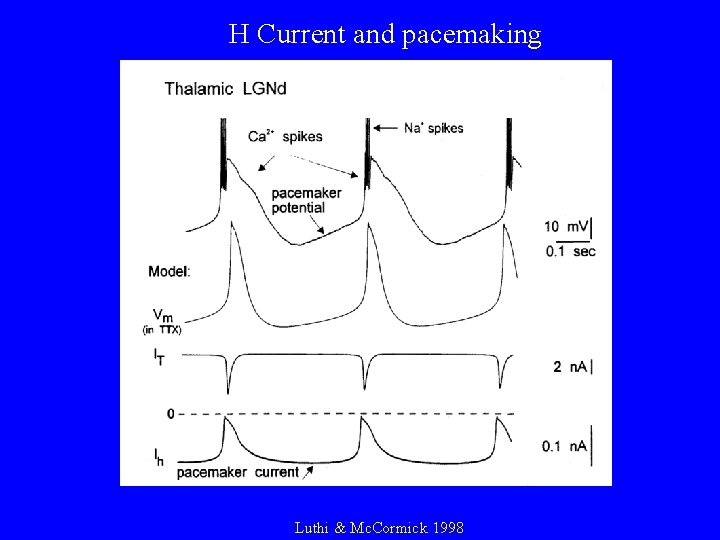
H Current and pacemaking Luthi & Mc. Cormick 1998
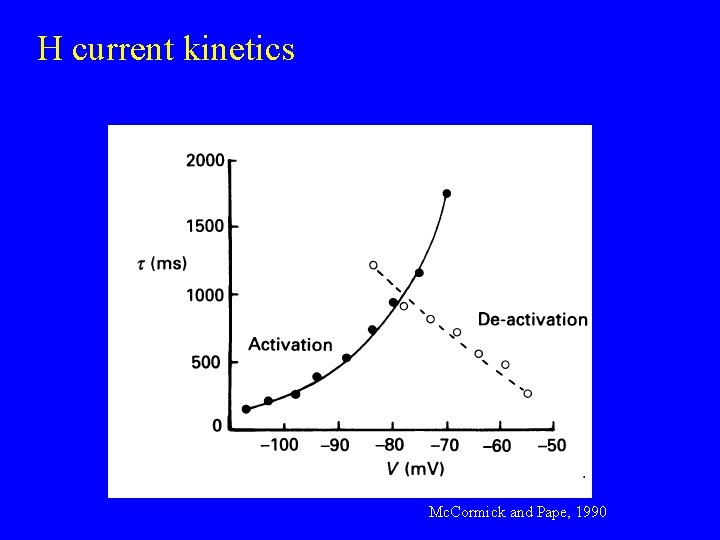
H current kinetics Mc. Cormick and Pape, 1990
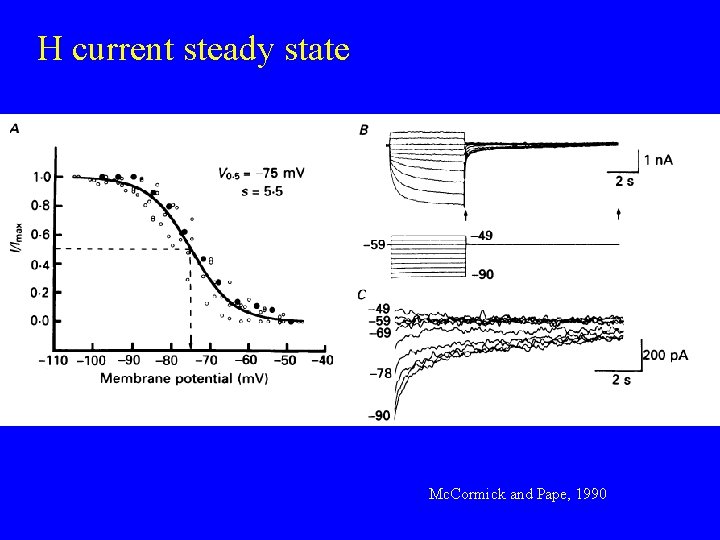
H current steady state Mc. Cormick and Pape, 1990
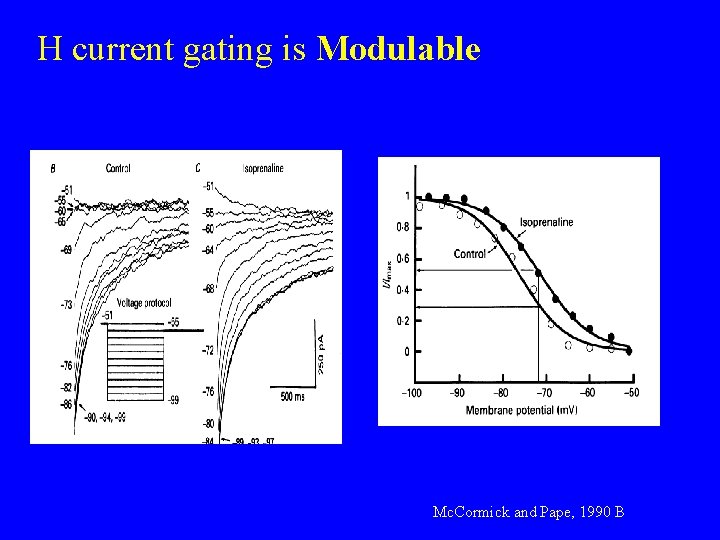
H current gating is Modulable Mc. Cormick and Pape, 1990 B
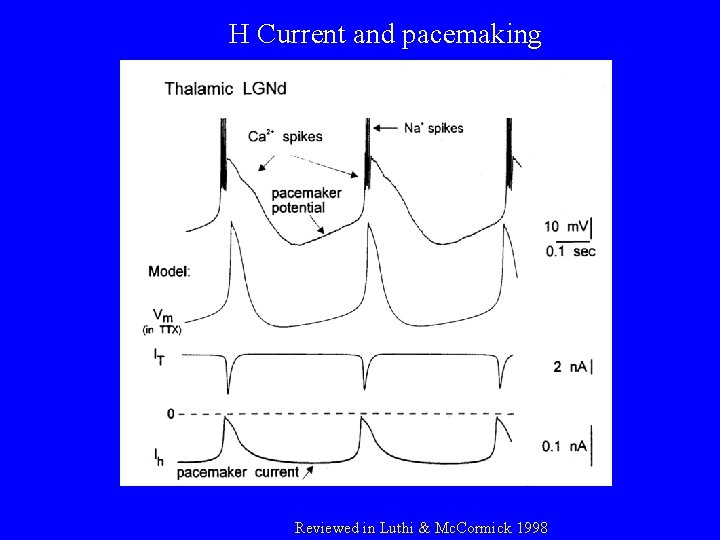
H Current and pacemaking Reviewed in Luthi & Mc. Cormick 1998


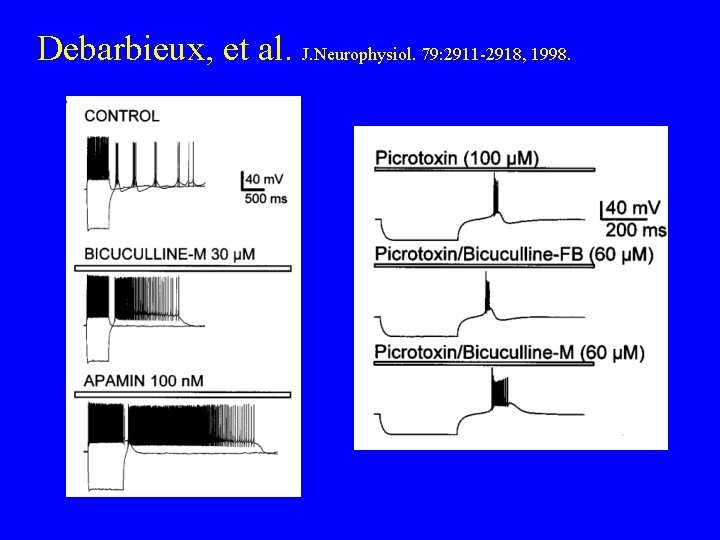
Debarbieux, et al. J. Neurophysiol. 79: 2911 -2918, 1998.
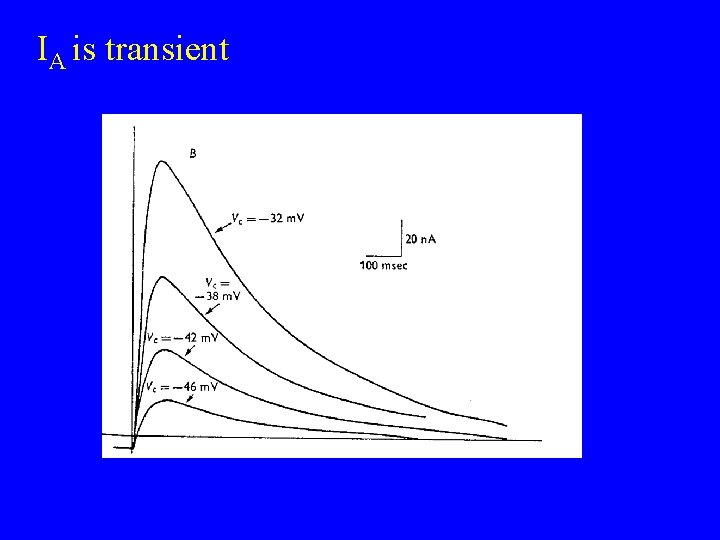
IA is transient
- Slides: 53