
CONDITIONS OF THE STIFLE OCDs AND BONE CYSTS
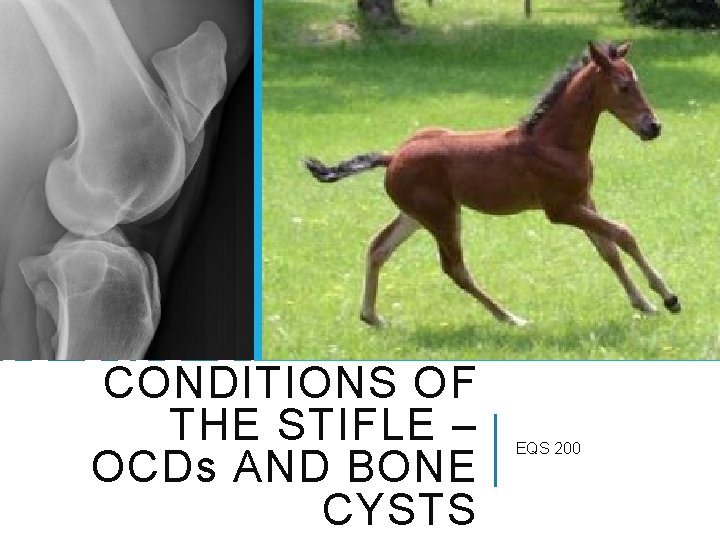
CONDITIONS OF THE STIFLE – OCDs AND BONE CYSTS EQS 200
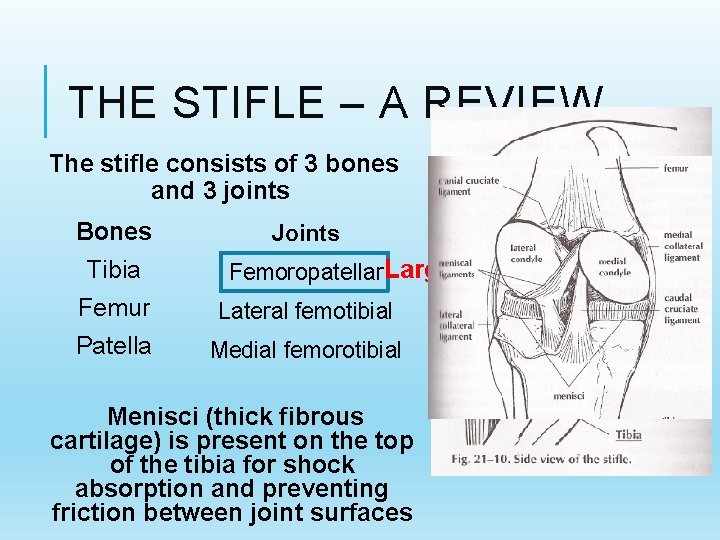
THE STIFLE – A REVIEW The stifle consists of 3 bones and 3 joints Bones Tibia Joints Femoropatellar Largest! Femur Lateral femotibial Patella Medial femorotibial Menisci (thick fibrous cartilage) is present on the top of the tibia for shock absorption and preventing friction between joint surfaces
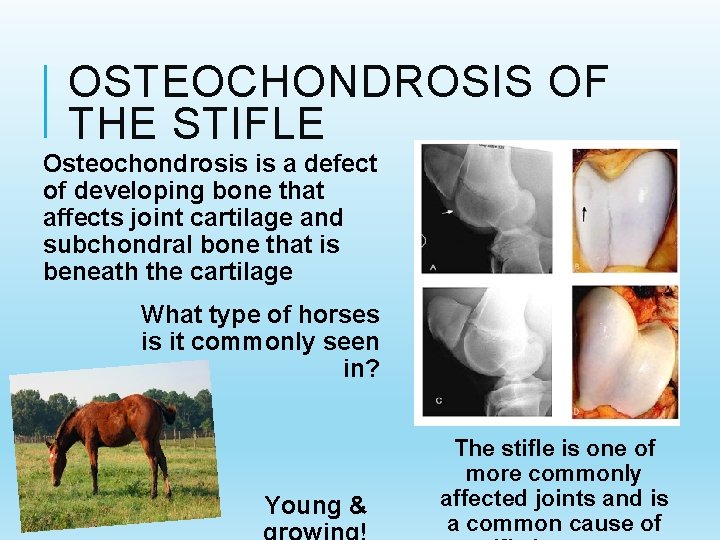
OSTEOCHONDROSIS OF THE STIFLE Osteochondrosis is a defect of developing bone that affects joint cartilage and subchondral bone that is beneath the cartilage What type of horses is it commonly seen in? Young & The stifle is one of more commonly affected joints and is a common cause of
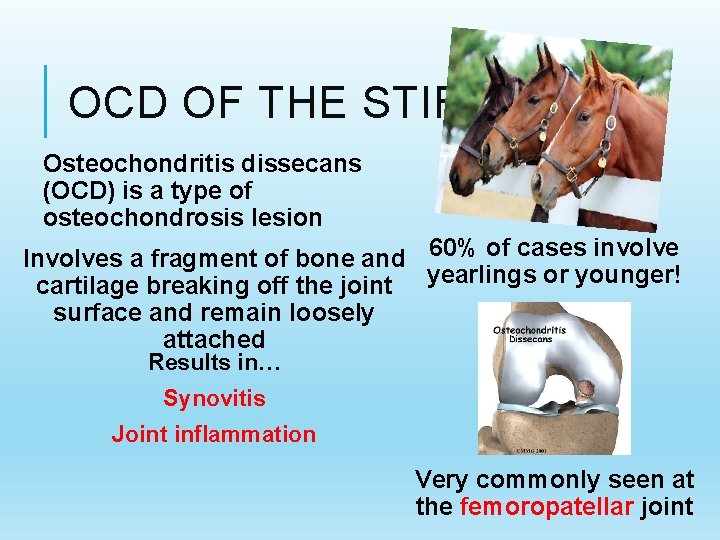
OCD OF THE STIFLE Osteochondritis dissecans (OCD) is a type of osteochondrosis lesion Involves a fragment of bone and 60% of cases involve cartilage breaking off the joint yearlings or younger! surface and remain loosely attached Results in… Synovitis Joint inflammation Very commonly seen at the femoropatellar joint
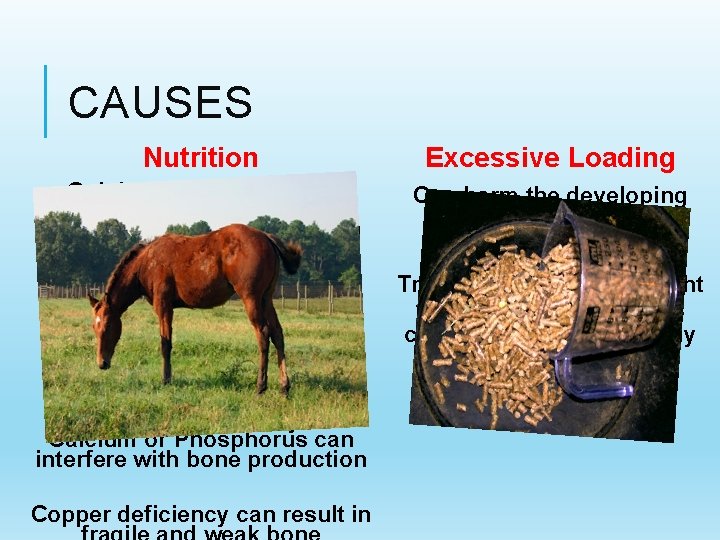
CAUSES Nutrition Excessive Loading Gaining body weight too quickly will result in overloading and/or damaging growing bones Can harm the developing cartilage Excess carbohydrates can impair the production of thyroid hormones needed for growth Excess or deficiency of Calcium or Phosphorus can interfere with bone production Copper deficiency can result in Trauma or excessive weight from large, overfed foals can harm the blood supply canals to cartilage and bones
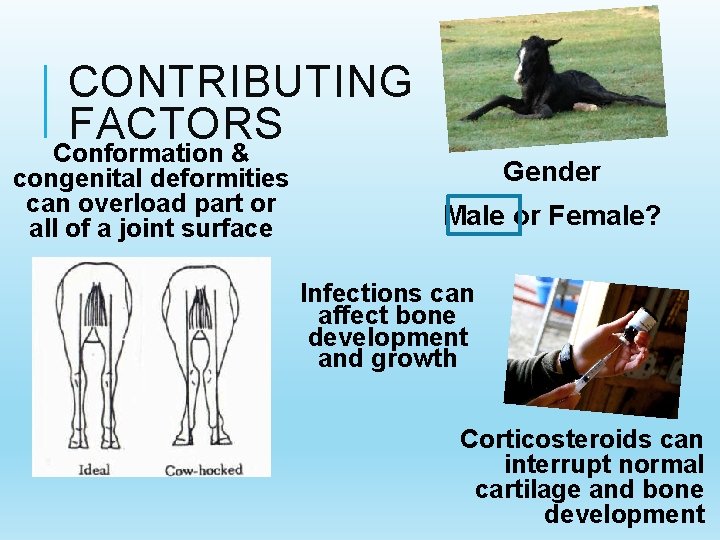
CONTRIBUTING FACTORS Conformation & congenital deformities can overload part or all of a joint surface Gender Male or Female? Infections can affect bone development and growth Corticosteroids can interrupt normal cartilage and bone development
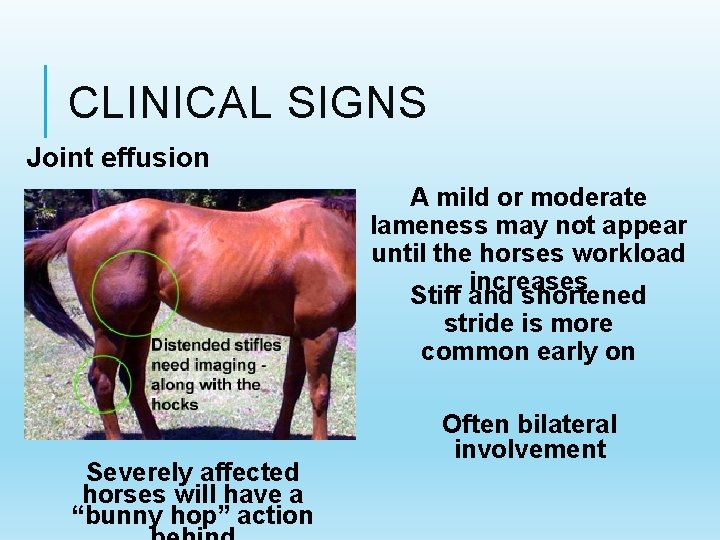
CLINICAL SIGNS Joint effusion A mild or moderate lameness may not appear until the horses workload increases Stiff and shortened stride is more common early on Severely affected horses will have a “bunny hop” action Often bilateral involvement
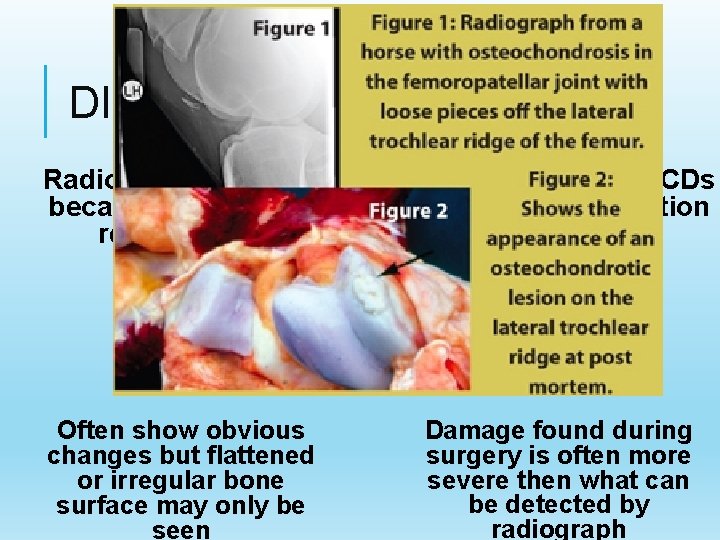
DIAGNOSIS Radiographs are the best diagnostic tool for OCDs because they provide the most useful information regarding specific lesion location and size Often show obvious changes but flattened or irregular bone surface may only be seen Damage found during surgery is often more severe then what can be detected by radiograph
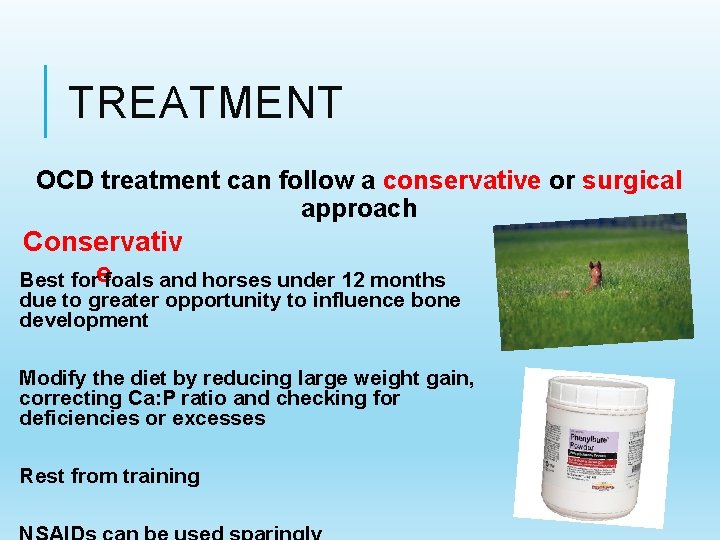
TREATMENT OCD treatment can follow a conservative or surgical approach Conservativ Best forefoals and horses under 12 months due to greater opportunity to influence bone development Modify the diet by reducing large weight gain, correcting Ca: P ratio and checking for deficiencies or excesses Rest from training
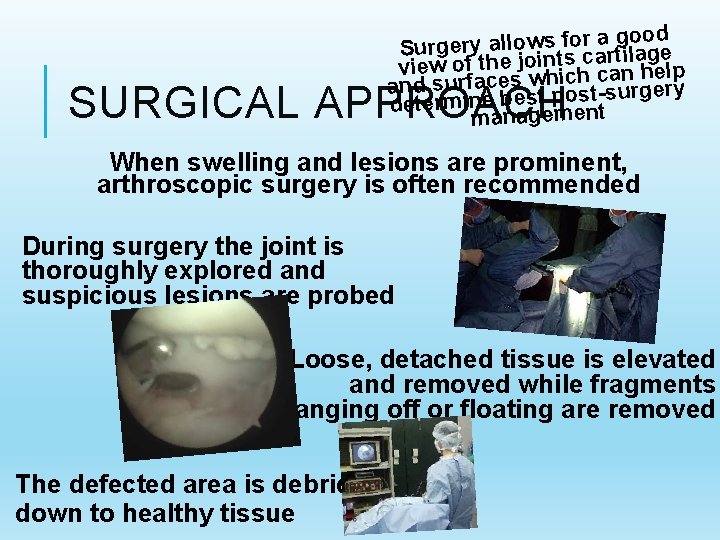
a good r fo s w o ll a ry e rg u S ilage rt a c ts in jo e th f o view an help c h ic h w s e c a rf u s and t-surgery s o p t s e b e in rm te e d management SURGICAL APPROACH When swelling and lesions are prominent, arthroscopic surgery is often recommended During surgery the joint is thoroughly explored and suspicious lesions are probed Loose, detached tissue is elevated and removed while fragments hanging off or floating are removed The defected area is debrided down to healthy tissue
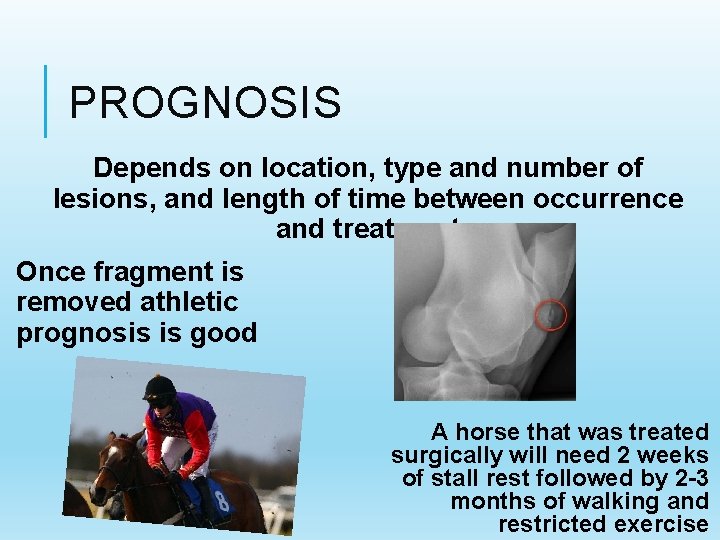
PROGNOSIS Depends on location, type and number of lesions, and length of time between occurrence and treatment Once fragment is removed athletic prognosis is good A horse that was treated surgically will need 2 weeks of stall rest followed by 2 -3 months of walking and restricted exercise
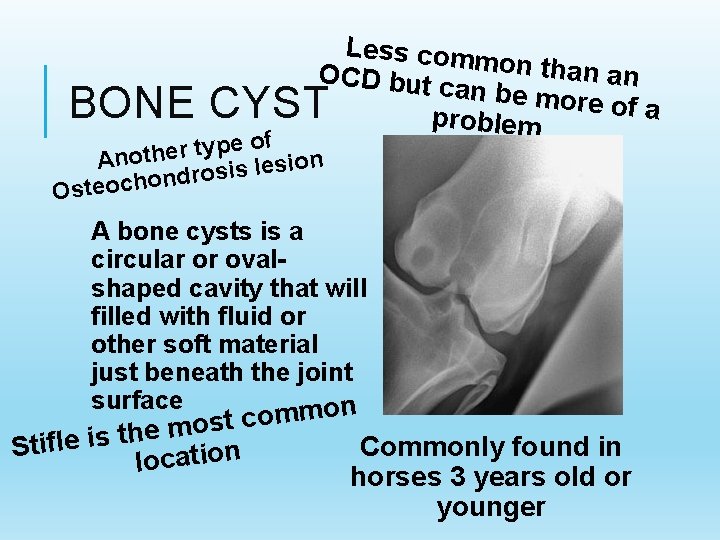
BONE Less comm on than an OCD but c an be mor e of a CYST problem f o e p y t r Anothe sion e l s i s o r teochond Os A bone cysts is a circular or ovalshaped cavity that will filled with fluid or other soft material just beneath the joint surface mon om c t s o m he t s i e l f i t S location Commonly found in horses 3 years old or younger
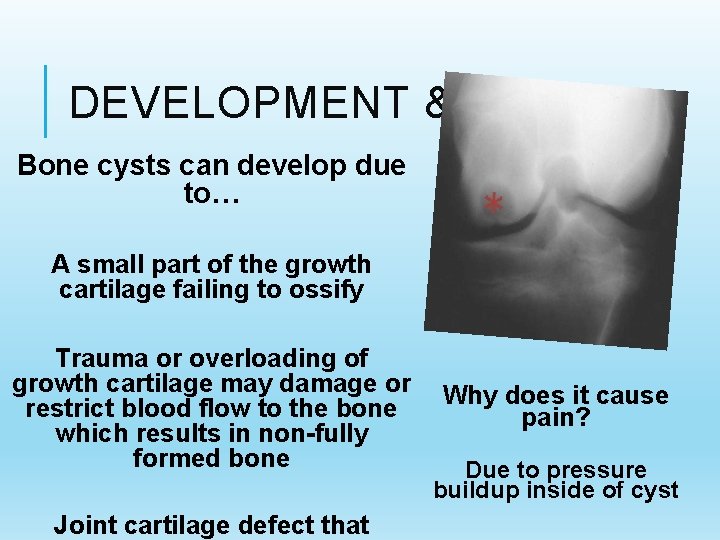
DEVELOPMENT & PAIN Bone cysts can develop due to… A small part of the growth cartilage failing to ossify Trauma or overloading of growth cartilage may damage or restrict blood flow to the bone which results in non-fully formed bone Joint cartilage defect that Why does it cause pain? Due to pressure buildup inside of cyst
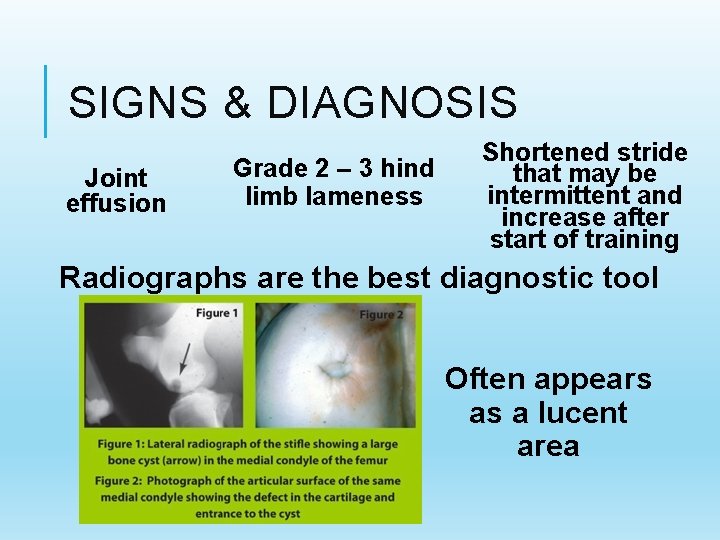
SIGNS & DIAGNOSIS Joint effusion Grade 2 – 3 hind limb lameness Shortened stride that may be intermittent and increase after start of training Radiographs are the best diagnostic tool Often appears as a lucent area
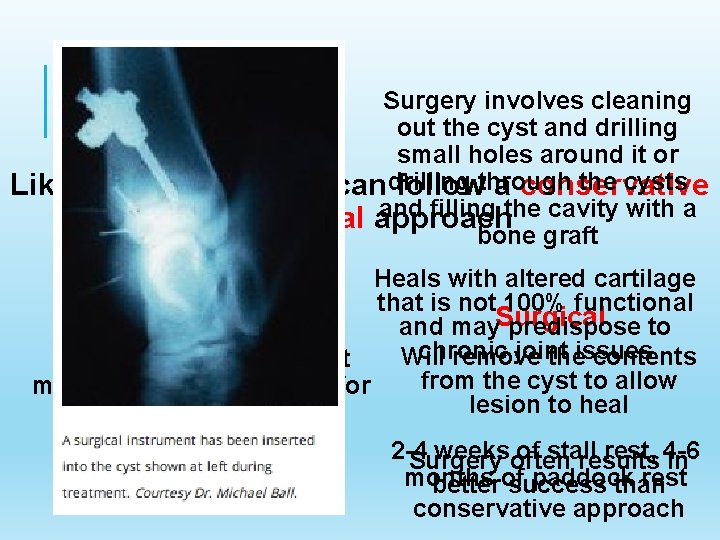
TREATMENT Like OCDs, Surgery involves cleaning out the cyst and drilling small holes around it or the cysts treatment candrilling followthrough a conservative and filling the cavity with a or surgical approach bone graft Heals with altered cartilage that is not 100% functional Conservative and may. Surgical predispose to chronic joint Will remove theissues contents Rest with or without joint from the cyst to allow medications and NSAIDS for lesion to heal at least 6 months 2 -4 weeksoften of stall rest, 4 -6 Surgery results in months paddock rest betterof success than conservative approach
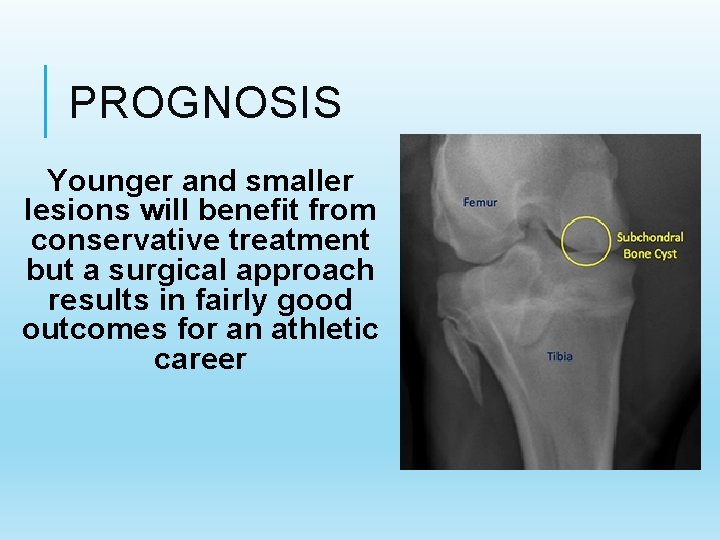
PROGNOSIS Younger and smaller lesions will benefit from conservative treatment but a surgical approach results in fairly good outcomes for an athletic career

PLEASE USE THE FOLLOWING PASSWORD TO ACCESS QUIZ 10 OCD 2015
- Slides: 17