
Conditionals Conditionals Conditional sentences express a CONDITION if

- Slides: 12
Conditionals
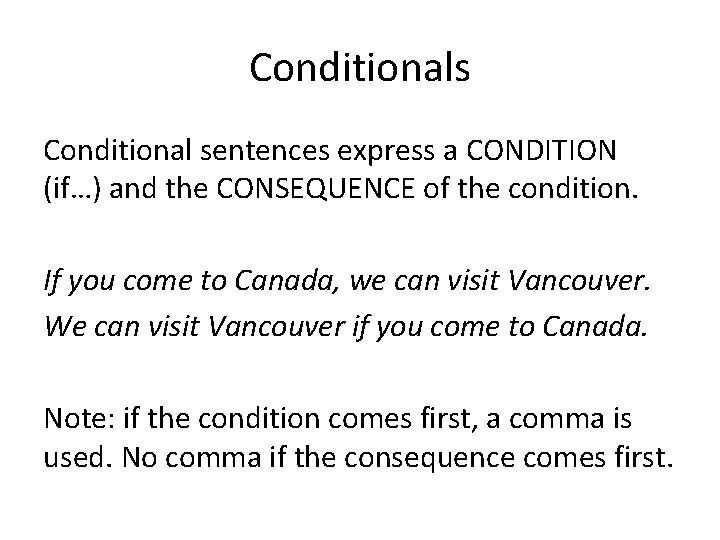
Conditionals Conditional sentences express a CONDITION (if…) and the CONSEQUENCE of the condition. If you come to Canada, we can visit Vancouver. We can visit Vancouver if you come to Canada. Note: if the condition comes first, a comma is used. No comma if the consequence comes first.
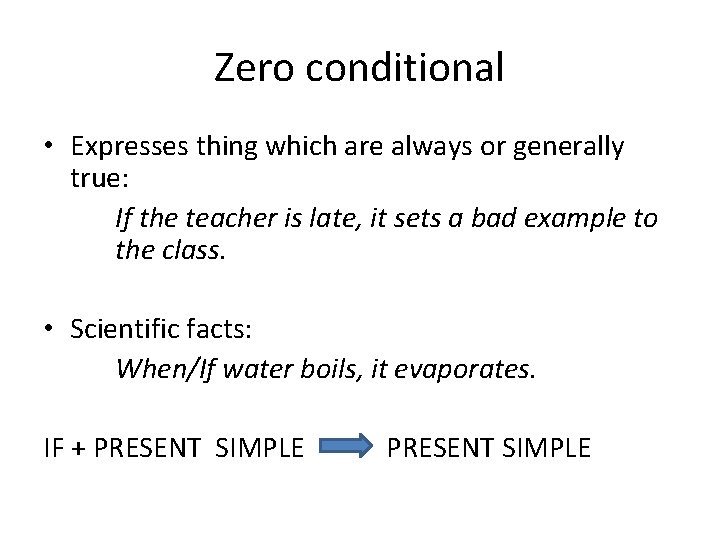
Zero conditional • Expresses thing which are always or generally true: If the teacher is late, it sets a bad example to the class. • Scientific facts: When/If water boils, it evaporates. IF + PRESENT SIMPLE
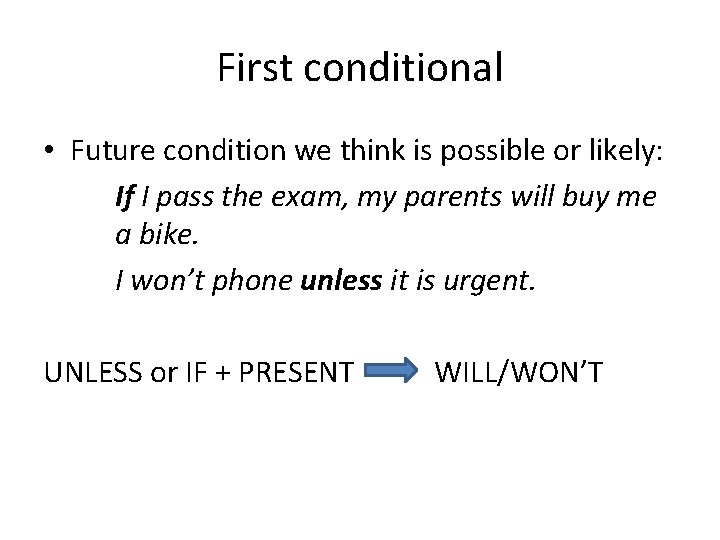
First conditional • Future condition we think is possible or likely: If I pass the exam, my parents will buy me a bike. I won’t phone unless it is urgent. UNLESS or IF + PRESENT WILL/WON’T
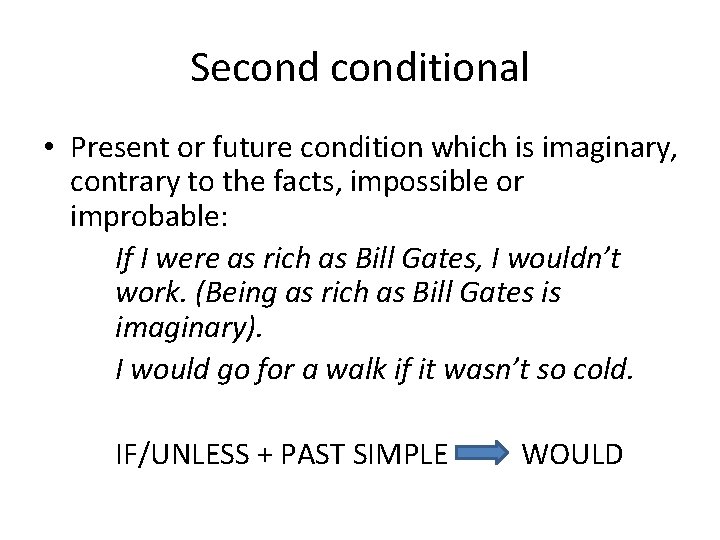
Seconditional • Present or future condition which is imaginary, contrary to the facts, impossible or improbable: If I were as rich as Bill Gates, I wouldn’t work. (Being as rich as Bill Gates is imaginary). I would go for a walk if it wasn’t so cold. IF/UNLESS + PAST SIMPLE WOULD
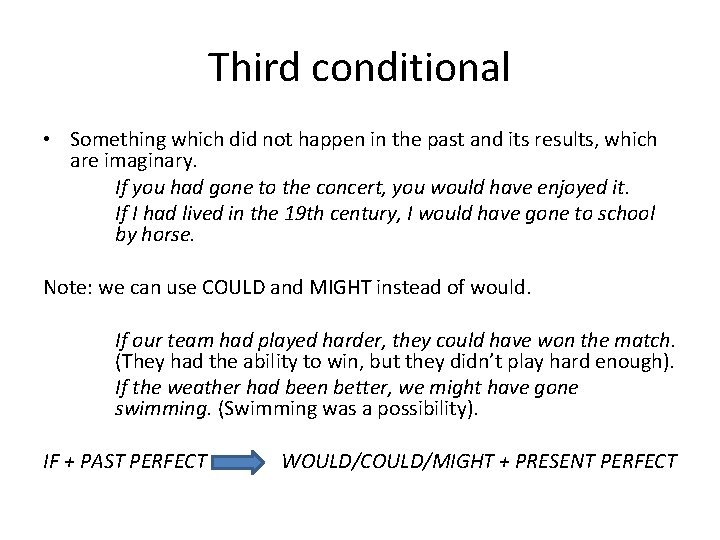
Third conditional • Something which did not happen in the past and its results, which are imaginary. If you had gone to the concert, you would have enjoyed it. If I had lived in the 19 th century, I would have gone to school by horse. Note: we can use COULD and MIGHT instead of would. If our team had played harder, they could have won the match. (They had the ability to win, but they didn’t play hard enough). If the weather had been better, we might have gone swimming. (Swimming was a possibility). IF + PAST PERFECT WOULD/COULD/MIGHT + PRESENT PERFECT
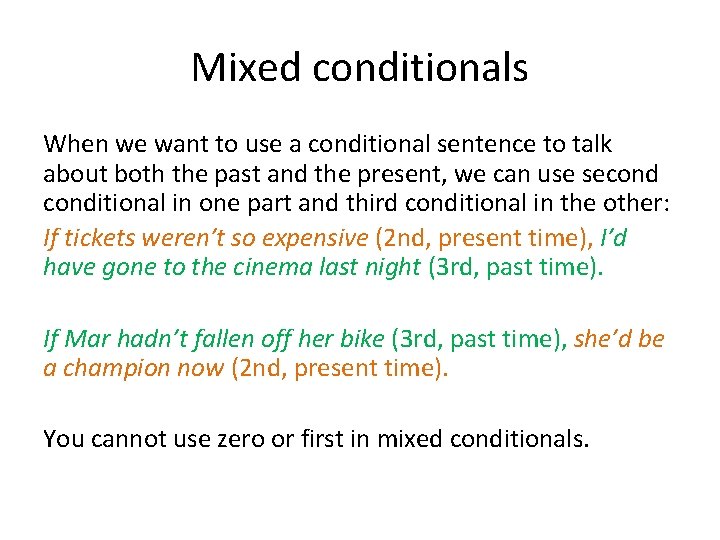
Mixed conditionals When we want to use a conditional sentence to talk about both the past and the present, we can use seconditional in one part and third conditional in the other: If tickets weren’t so expensive (2 nd, present time), I’d have gone to the cinema last night (3 rd, past time). If Mar hadn’t fallen off her bike (3 rd, past time), she’d be a champion now (2 nd, present time). You cannot use zero or first in mixed conditionals.
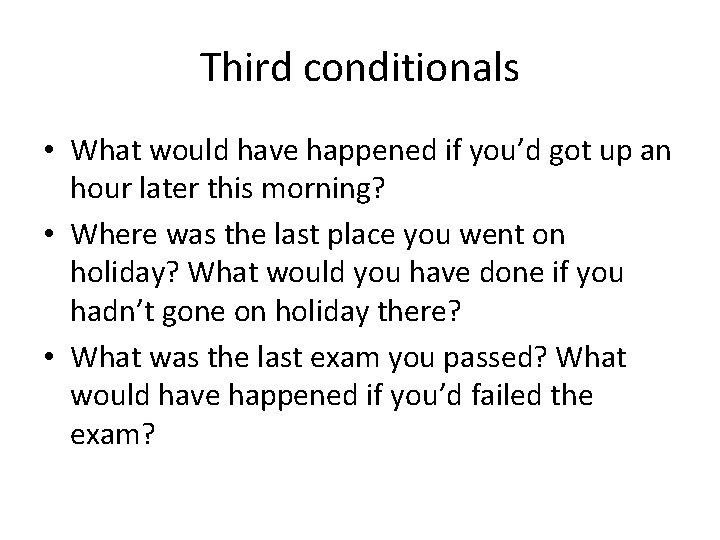
Third conditionals • What would have happened if you’d got up an hour later this morning? • Where was the last place you went on holiday? What would you have done if you hadn’t gone on holiday there? • What was the last exam you passed? What would have happened if you’d failed the exam?
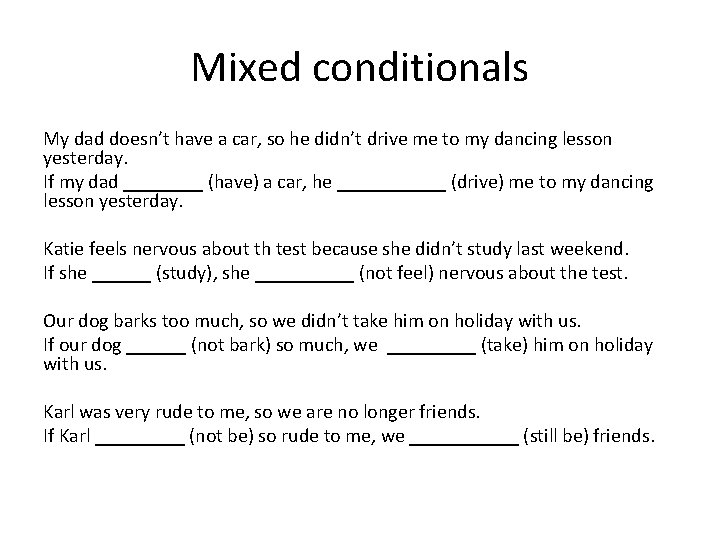
Mixed conditionals My dad doesn’t have a car, so he didn’t drive me to my dancing lesson yesterday. If my dad ____ (have) a car, he ______ (drive) me to my dancing lesson yesterday. Katie feels nervous about th test because she didn’t study last weekend. If she ______ (study), she _____ (not feel) nervous about the test. Our dog barks too much, so we didn’t take him on holiday with us. If our dog ______ (not bark) so much, we _____ (take) him on holiday with us. Karl was very rude to me, so we are no longer friends. If Karl _____ (not be) so rude to me, we ______ (still be) friends.
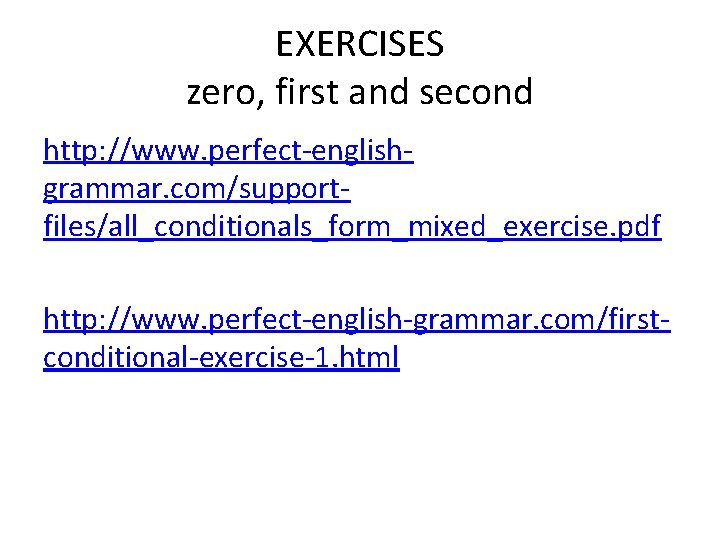
EXERCISES zero, first and second http: //www. perfect-englishgrammar. com/supportfiles/all_conditionals_form_mixed_exercise. pdf http: //www. perfect-english-grammar. com/firstconditional-exercise-1. html
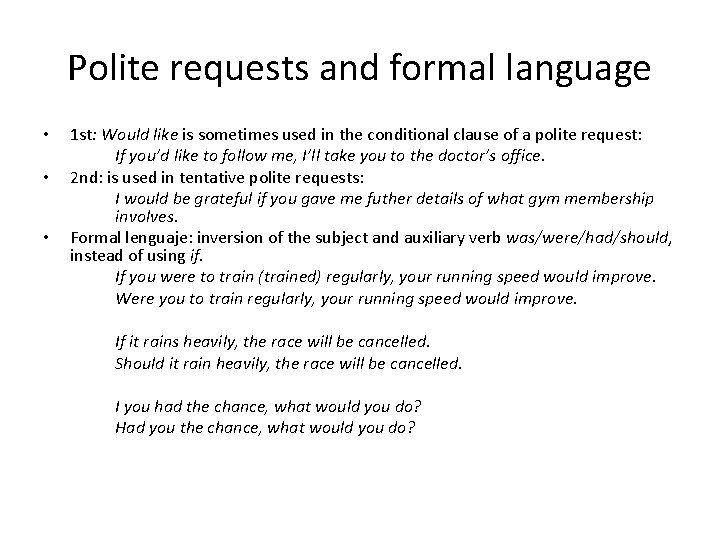
Polite requests and formal language • • • 1 st: Would like is sometimes used in the conditional clause of a polite request: If you’d like to follow me, I’ll take you to the doctor’s office. 2 nd: is used in tentative polite requests: I would be grateful if you gave me futher details of what gym membership involves. Formal lenguaje: inversion of the subject and auxiliary verb was/were/had/should, instead of using if. If you were to train (trained) regularly, your running speed would improve. Were you to train regularly, your running speed would improve. If it rains heavily, the race will be cancelled. Should it rain heavily, the race will be cancelled. I you had the chance, what would you do? Had you the chance, what would you do?