
CONDITIONALS and IF sentences Explanations What is always
- Slides: 15
CONDITIONALS and IF sentences Explanations
What is always true • Both present simple and continuous are possible after if meaning when. • If I work late, I get tired. • If the water is boiling, it means the food is nearly ready.
What was always true: past + past • Both past simple and continuous are possible after if meaning when. • We went home early if it was foggy. • If it was snowing, we stayed at home.
Real situations: present+ will Here we think that the outcome is really possible. If you keep driving like that, you’ll have an accident.
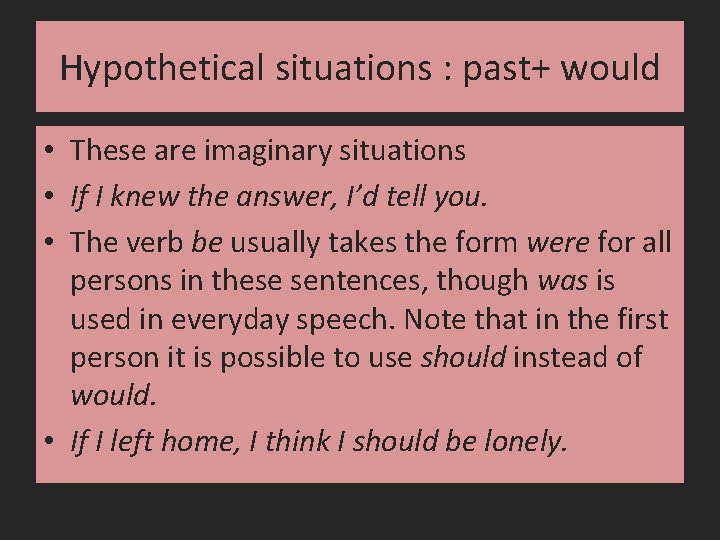
Hypothetical situations : past+ would • These are imaginary situations • If I knew the answer, I’d tell you. • The verb be usually takes the form were for all persons in these sentences, though was is used in everyday speech. Note that in the first person it is possible to use should instead of would. • If I left home, I think I should be lonely.
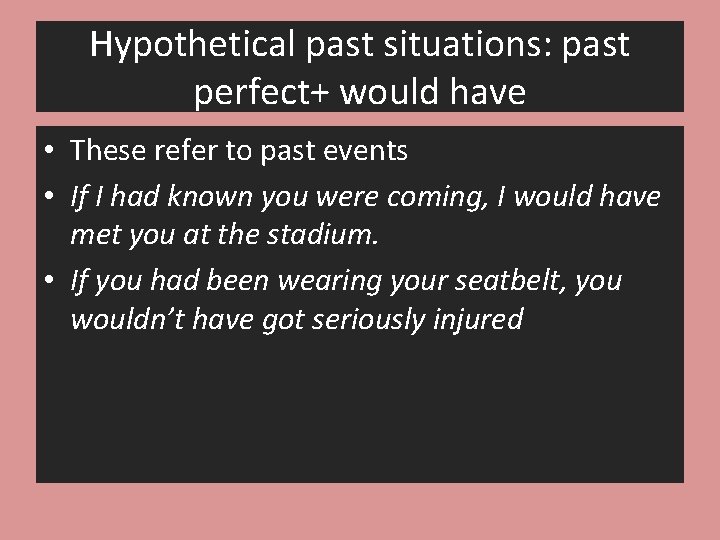
Hypothetical past situations: past perfect+ would have • These refer to past events • If I had known you were coming, I would have met you at the stadium. • If you had been wearing your seatbelt, you wouldn’t have got seriously injured
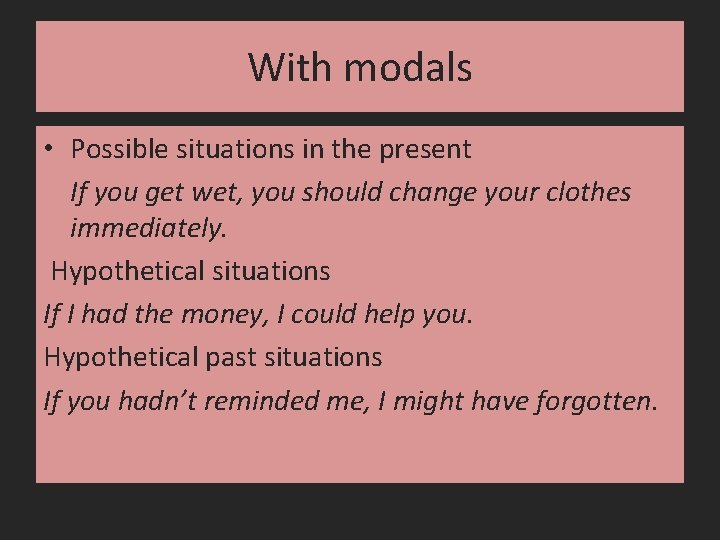
With modals • Possible situations in the present If you get wet, you should change your clothes immediately. Hypothetical situations If I had the money, I could help you. Hypothetical past situations If you hadn’t reminded me, I might have forgotten.
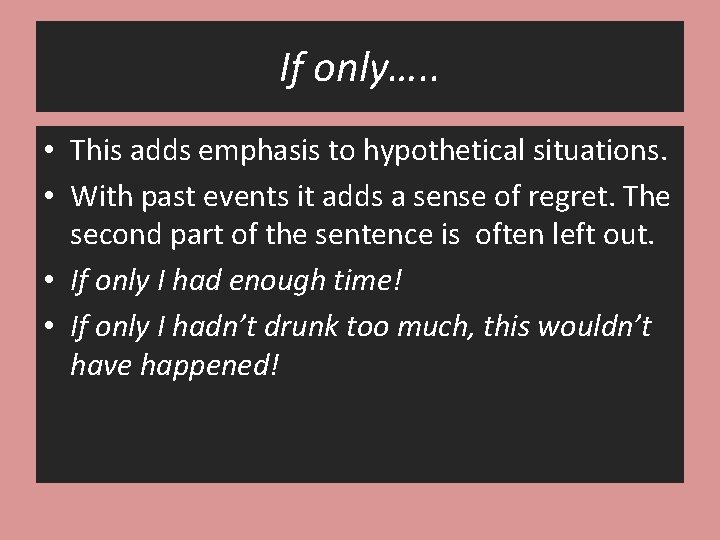
If only…. . • This adds emphasis to hypothetical situations. • With past events it adds a sense of regret. The second part of the sentence is often left out. • If only I had enough time! • If only I hadn’t drunk too much, this wouldn’t have happened!
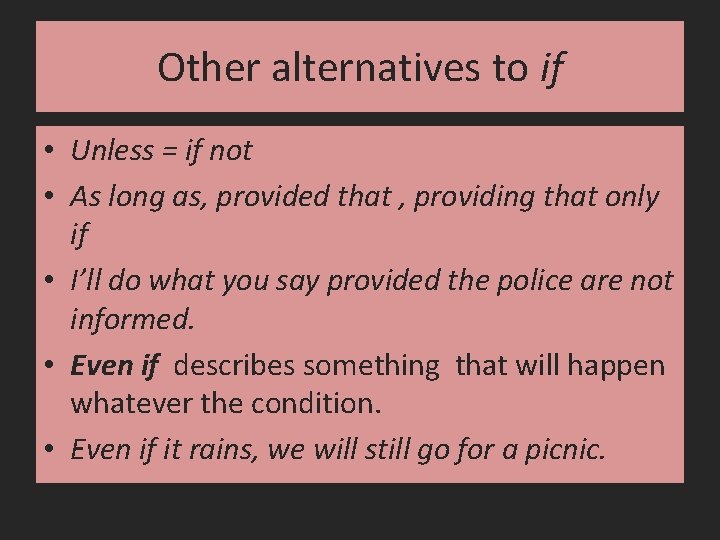
Other alternatives to if • Unless = if not • As long as, provided that , providing that only if • I’ll do what you say provided the police are not informed. • Even if describes something that will happen whatever the condition. • Even if it rains, we will still go for a picnic.
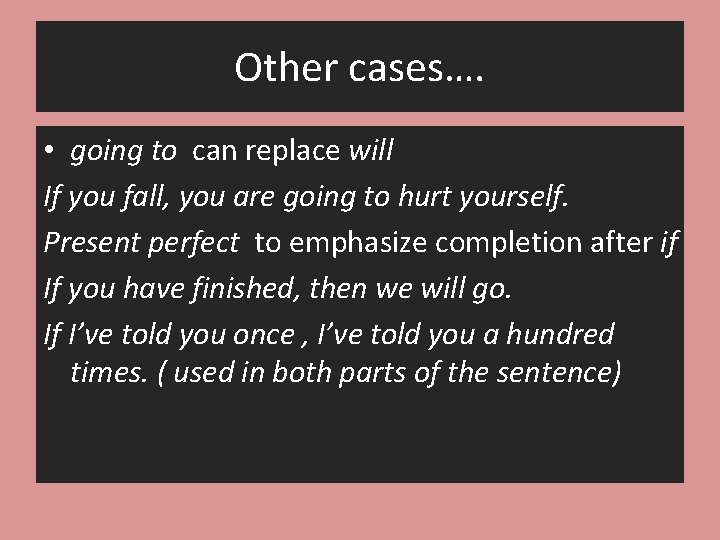
Other cases…. • going to can replace will If you fall, you are going to hurt yourself. Present perfect to emphasize completion after if If you have finished, then we will go. If I’ve told you once , I’ve told you a hundred times. ( used in both parts of the sentence)
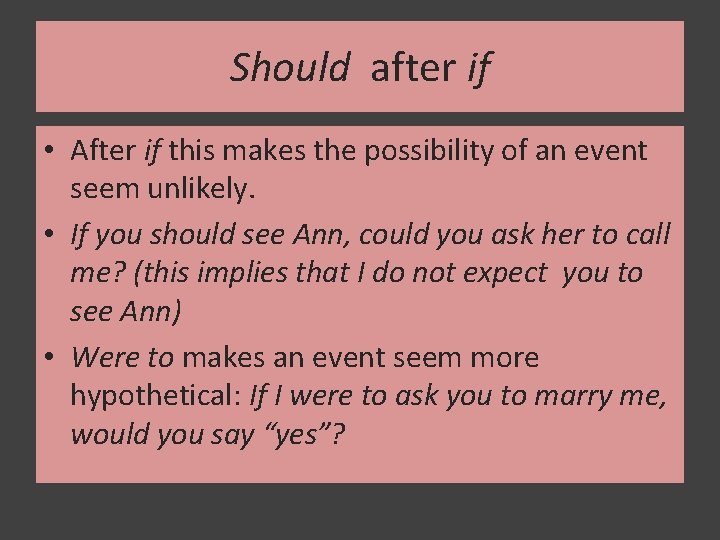
Should after if • After if this makes the possibility of an event seem unlikely. • If you should see Ann, could you ask her to call me? (this implies that I do not expect you to see Ann) • Were to makes an event seem more hypothetical: If I were to ask you to marry me, would you say “yes”?
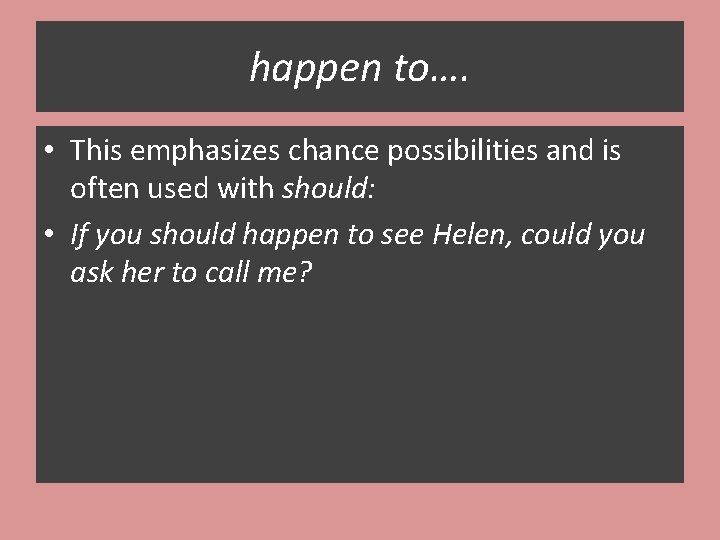
happen to…. • This emphasizes chance possibilities and is often used with should: • If you should happen to see Helen, could you ask her to call me?
If it were not for, if it hadn’t been for • When one event depends on another • If it weren’t for him, this company would be in a mess.
Will, would… • Politeness and emphasis meaning insist on • If you will/would wait here, I’ll see if Mrs Helen is free. • If you will stay out late, no wonder you are tired! (insist on staying)
Other cases • Supposing you won the football pools, what would you do? • But for your help, we would have been in trouble. • There is a possibility that Jack will be late. If so, I will take his place. (refers to a sentence understood but not stated) • Colloquial omission of if Sit down, and I’ll make us a cup of tea. (an imperative can be used instead of an if clause in every day speech) • If and adjectives: If interested, apply within. If necessary, take a taxi. • Formally if can mean although, usually as if+adj The room was well-furnished, if a little badly decorated.