
CONDITIONAL SENTENCES Module Teen Problems Grammar When do
CONDITIONAL SENTENCES Module: Teen Problems – Grammar
When do we use conditional sentences? In Secondary 1 & 2, we learnt how to use conditional sentences to talk about facts and possible situations. We can use conditional sentences to talk about imaginary situations and to make possible suggestions.
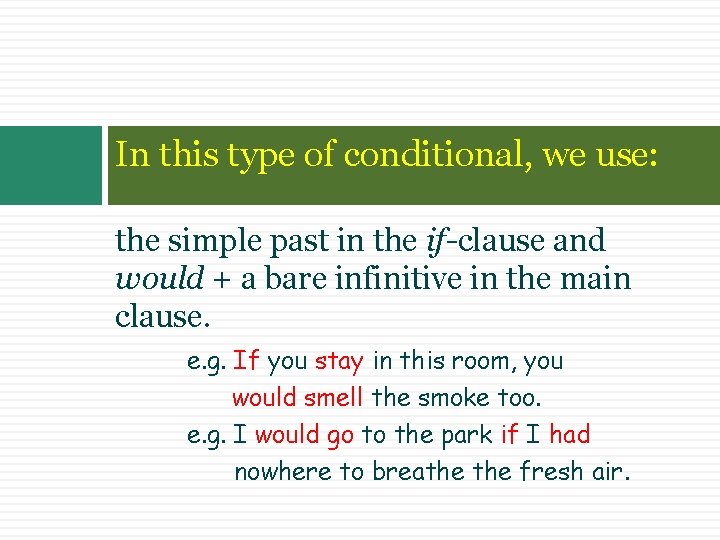
In this type of conditional, we use: the simple past in the if-clause and would + a bare infinitive in the main clause. e. g. If you stay in this room, you would smell the smoke too. e. g. I would go to the park if I had nowhere to breathe fresh air.
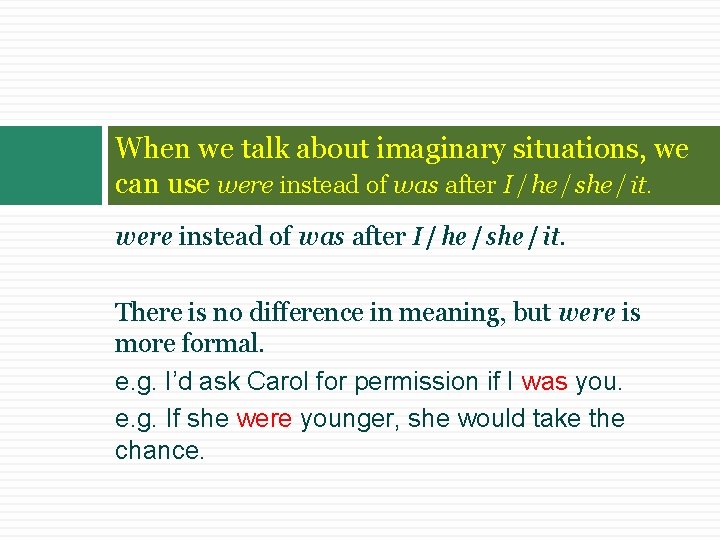
When we talk about imaginary situations, we can use were instead of was after I / he / she / it. There is no difference in meaning, but were is more formal. e. g. I’d ask Carol for permission if I was you. e. g. If she were younger, she would take the chance.
Please not that… We often use the following expression when we give advice, “If I was / were you”
Let’s talk about… different types of conditional sentences
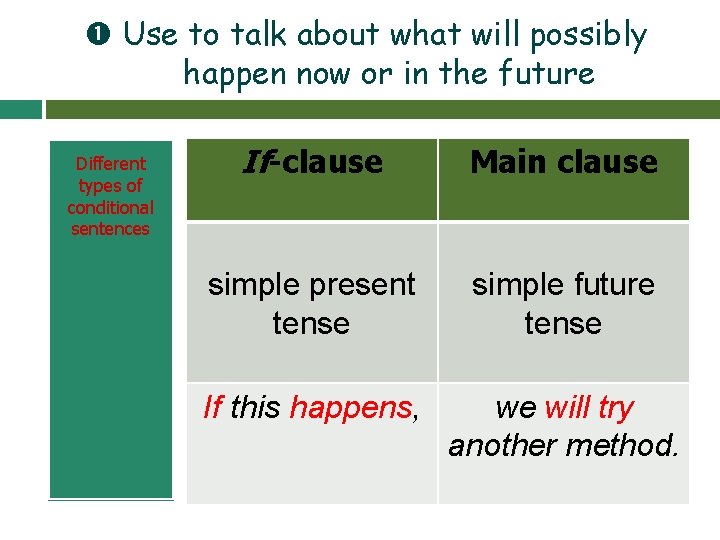
Use to talk about what will possibly happen now or in the future Different types of conditional sentences If-clause Main clause simple present tense simple future tense If this happens, we will try another method.
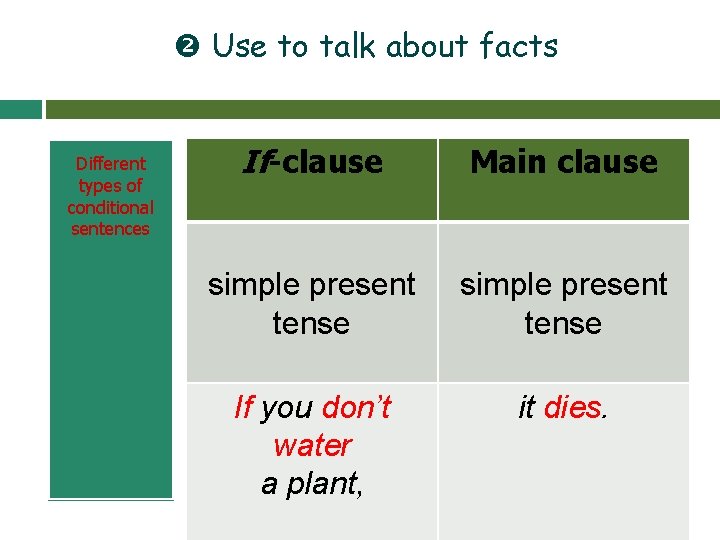
Use to talk about facts Different types of conditional sentences If-clause Main clause simple present tense If you don’t water a plant, it dies.
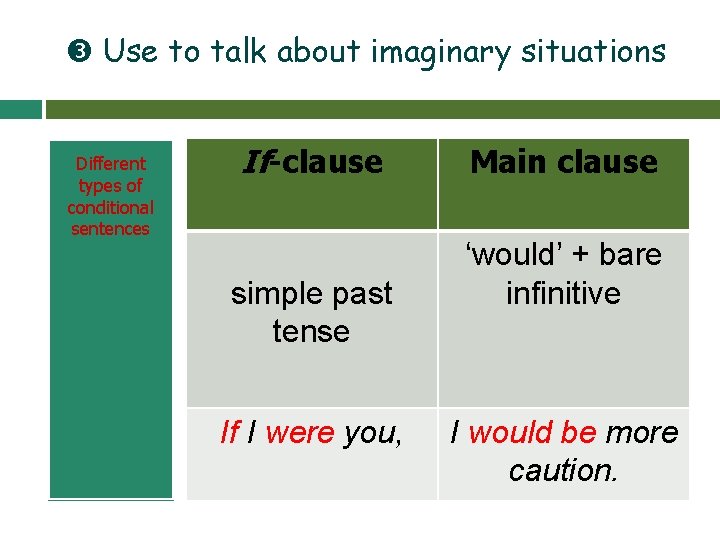
Use to talk about imaginary situations Different types of conditional sentences If-clause simple past tense If I were you, Main clause ‘would’ + bare infinitive I would be more caution.
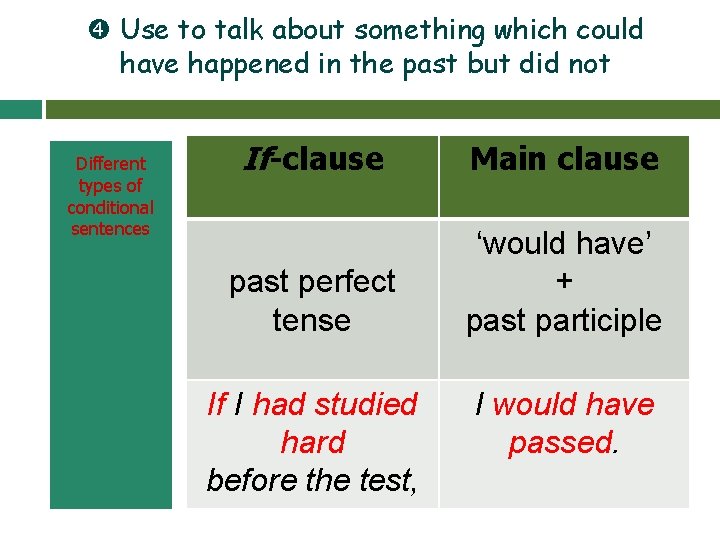
Use to talk about something which could have happened in the past but did not Different types of conditional sentences If-clause Main clause past perfect tense ‘would have’ + past participle If I had studied hard before the test, I would have passed.
- Slides: 10