
Conditional sentences if clauses and present perfect tense
- Slides: 10
Conditional sentences: “if” clauses and present perfect tense Teacher: Anayansi Santamaría
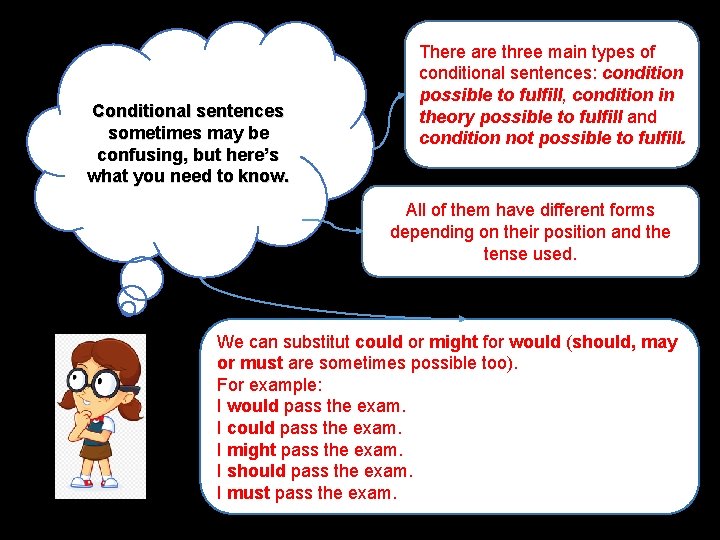
Conditional sentences sometimes may be confusing, but here’s what you need to know. There are three main types of conditional sentences: condition possible to fulfill, condition in theory possible to fulfill and condition not possible to fulfill. All of them have different forms depending on their position and the tense used. We can substitut could or might for would (should, may or must are sometimes possible too). For example: I would pass the exam. I could pass the exam. I might pass the exam. I should pass the exam. I must pass the exam.
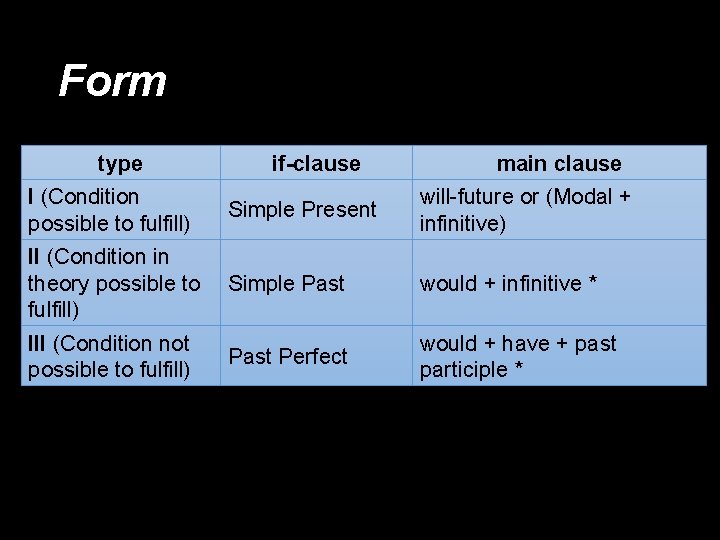
Form type if-clause main clause I (Condition possible to fulfill) Simple Present will-future or (Modal + infinitive) II (Condition in theory possible to fulfill) Simple Past would + infinitive * III (Condition not possible to fulfill) Past Perfect would + have + past participle *
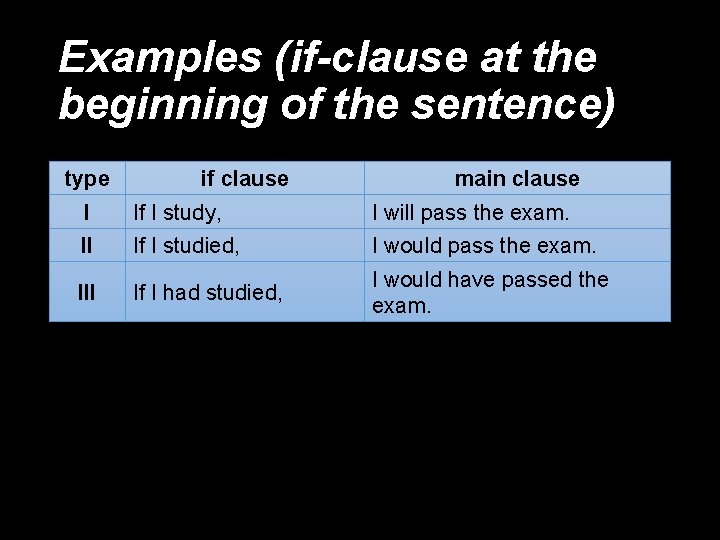
Examples (if-clause at the beginning of the sentence) type if clause main clause I If I study, I will pass the exam. II If I studied, I would pass the exam. III If I had studied, I would have passed the exam.
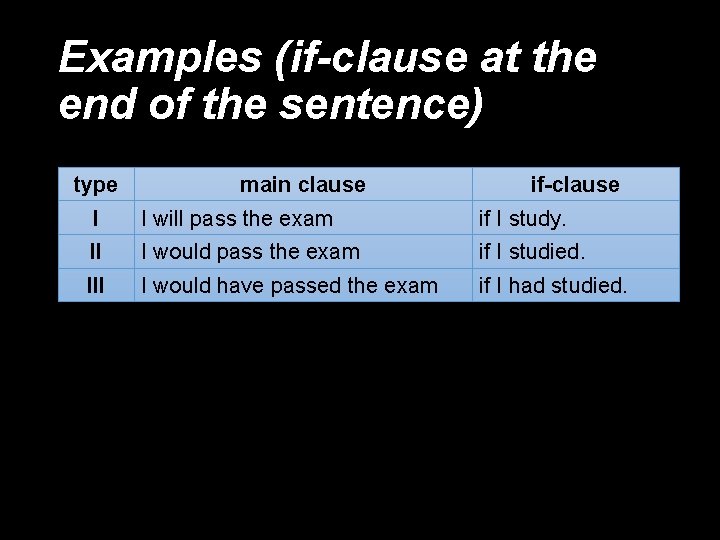
Examples (if-clause at the end of the sentence) type main clause if-clause I I will pass the exam if I study. II I would pass the exam if I studied. III I would have passed the exam if I had studied.
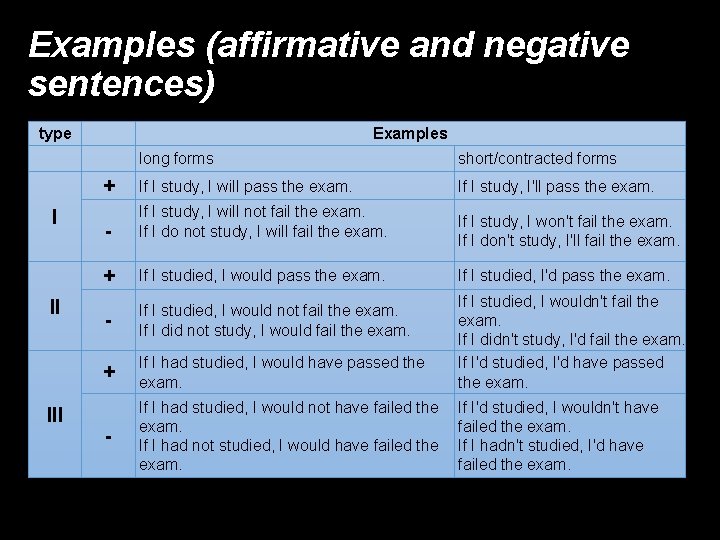
Examples (affirmative and negative sentences) type I II III Examples long forms short/contracted forms + If I study, I will pass the exam. If I study, I'll pass the exam. - If I study, I will not fail the exam. If I do not study, I will fail the exam. + If I studied, I would pass the exam. - If I studied, I would not fail the exam. If I did not study, I would fail the exam. + If I had studied, I would have passed the exam. If I studied, I wouldn't fail the exam. If I didn't study, I'd fail the exam. If I'd studied, I'd have passed the exam. - If I had studied, I would not have failed the exam. If I had not studied, I would have failed the exam. If I'd studied, I wouldn't have failed the exam. If I hadn't studied, I'd have failed the exam. If I study, I won't fail the exam. If I don't study, I'll fail the exam. If I studied, I'd pass the exam.
Present perfect tense
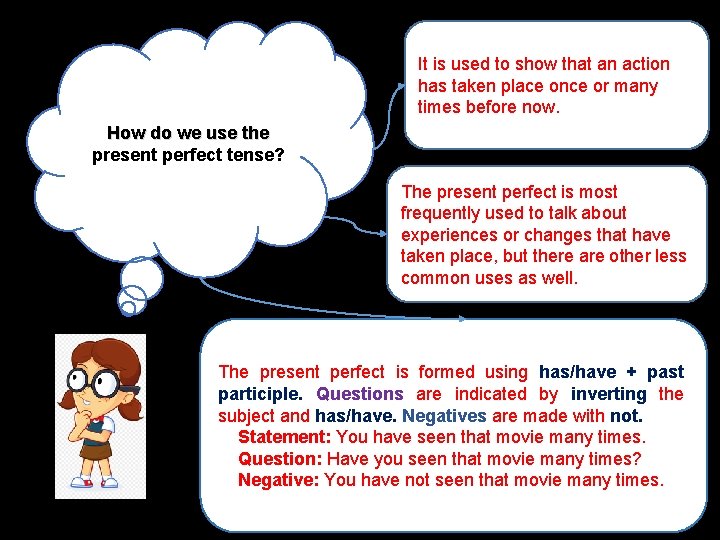
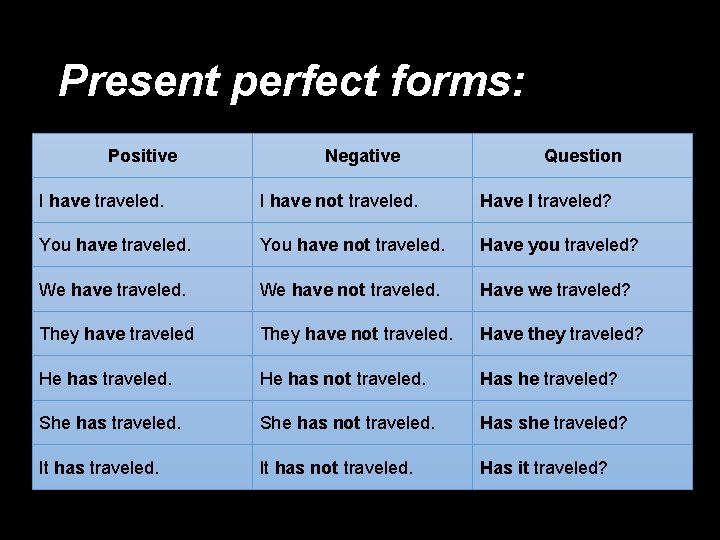
It is used to show that an action has taken place once or many times before now. How do we use the present perfect tense? The present perfect is most frequently used to talk about experiences or changes that have taken place, but there are other less common uses as well. The present perfect is formed using has/have + past participle. Questions are indicated by inverting the subject and has/have. Negatives are made with not. Statement: You have seen that movie many times. Question: Have you seen that movie many times? Negative: You have not seen that movie many times.
Present perfect forms: Positive Negative Question I have traveled. I have not traveled. Have I traveled? You have traveled. You have not traveled. Have you traveled? We have traveled. We have not traveled. Have we traveled? They have traveled They have not traveled. Have they traveled? He has traveled. He has not traveled. Has he traveled? She has traveled. She has not traveled. Has she traveled? It has traveled. It has not traveled. Has it traveled?
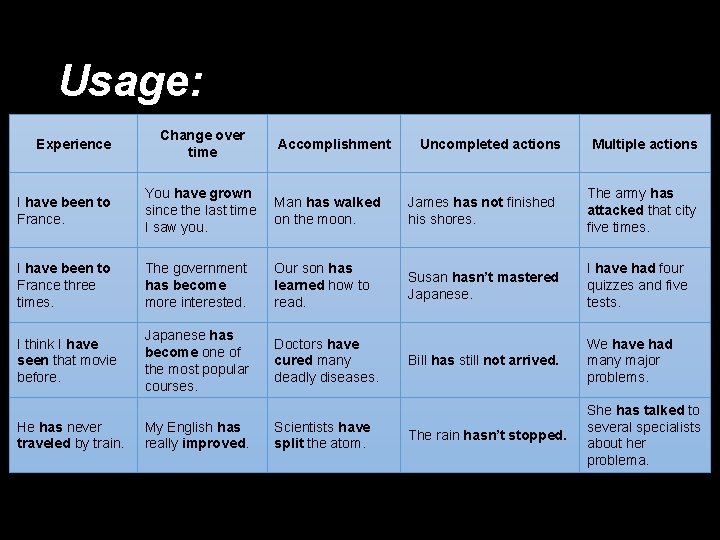
Usage: Experience Change over time Accomplishment Uncompleted actions Multiple actions I have been to France. You have grown since the last time I saw you. Man has walked on the moon. James has not finished his shores. The army has attacked that city five times. I have been to France three times. The government has become more interested. Our son has learned how to read. Susan hasn’t mastered Japanese. I have had four quizzes and five tests. I think I have seen that movie before. Japanese has become one of the most popular courses. Doctors have cured many deadly diseases. Bill has still not arrived. We have had many major problems. The rain hasn’t stopped. She has talked to several specialists about her problema. He has never traveled by train. My English has really improved. Scientists have split the atom.