
CONDITIONAL SENTENCES Conditional sentences express a hypothesis in

- Slides: 6
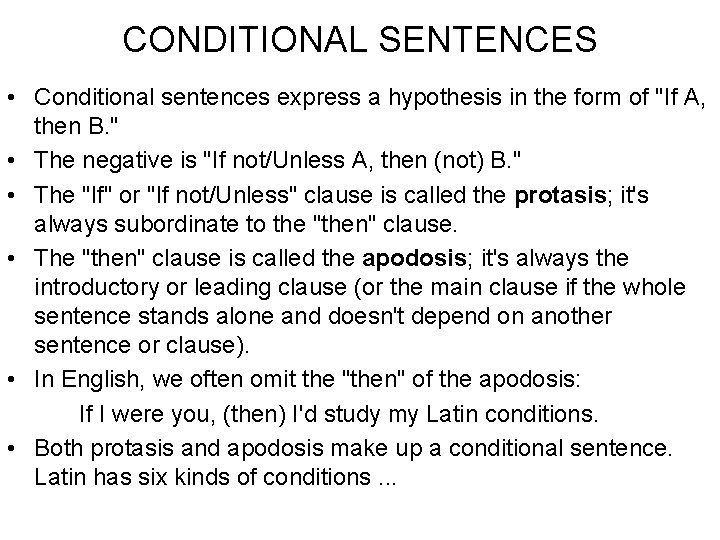
CONDITIONAL SENTENCES • Conditional sentences express a hypothesis in the form of "If A, then B. " • The negative is "If not/Unless A, then (not) B. " • The "If" or "If not/Unless" clause is called the protasis; it's always subordinate to the "then" clause. • The "then" clause is called the apodosis; it's always the introductory or leading clause (or the main clause if the whole sentence stands alone and doesn't depend on another sentence or clause). • In English, we often omit the "then" of the apodosis: If I were you, (then) I'd study my Latin conditions. • Both protasis and apodosis make up a conditional sentence. Latin has six kinds of conditions. . .
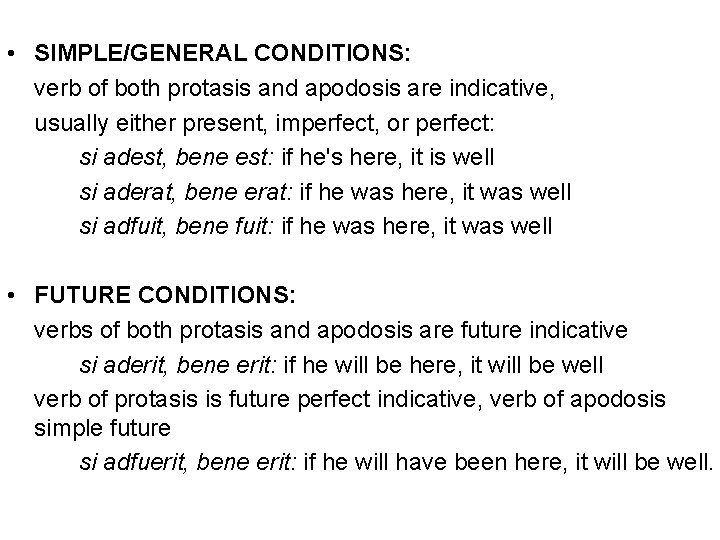
• SIMPLE/GENERAL CONDITIONS: verb of both protasis and apodosis are indicative, usually either present, imperfect, or perfect: si adest, bene est: if he's here, it is well si aderat, bene erat: if he was here, it was well si adfuit, bene fuit: if he was here, it was well • FUTURE CONDITIONS: verbs of both protasis and apodosis are future indicative si aderit, bene erit: if he will be here, it will be well verb of protasis is future perfect indicative, verb of apodosis simple future si adfuerit, bene erit: if he will have been here, it will be well.
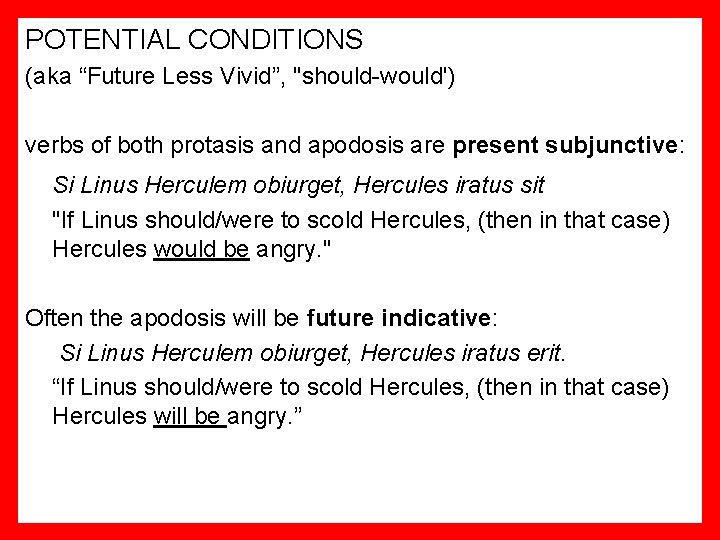
POTENTIAL CONDITIONS (aka “Future Less Vivid”, "should-would') verbs of both protasis and apodosis are present subjunctive: Si Linus Herculem obiurget, Hercules iratus sit "If Linus should/were to scold Hercules, (then in that case) Hercules would be angry. " Often the apodosis will be future indicative: Si Linus Herculem obiurget, Hercules iratus erit. “If Linus should/were to scold Hercules, (then in that case) Hercules will be angry. ”
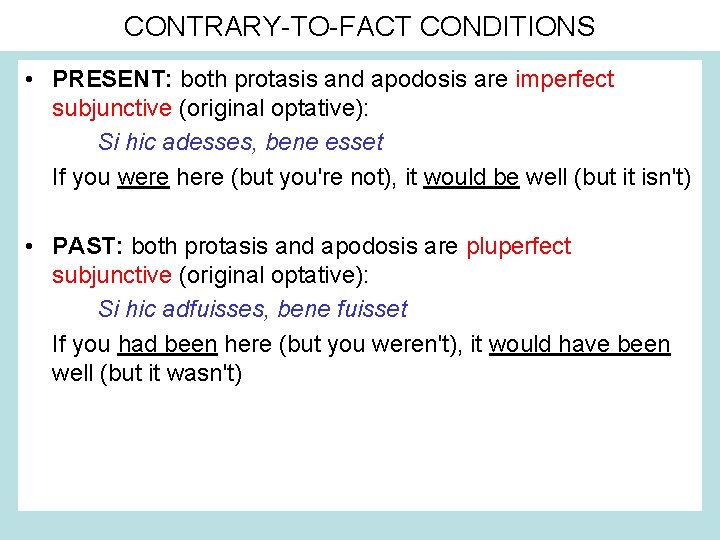
CONTRARY-TO-FACT CONDITIONS • PRESENT: both protasis and apodosis are imperfect subjunctive (original optative): Si hic adesses, bene esset If you were here (but you're not), it would be well (but it isn't) • PAST: both protasis and apodosis are pluperfect subjunctive (original optative): Si hic adfuisses, bene fuisset If you had been here (but you weren't), it would have been well (but it wasn't)
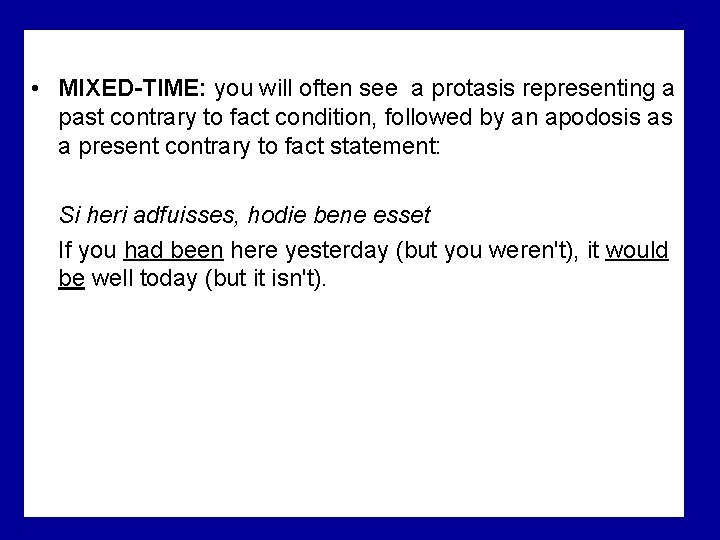
• MIXED-TIME: you will often see a protasis representing a past contrary to fact condition, followed by an apodosis as a present contrary to fact statement: Si heri adfuisses, hodie bene esset If you had been here yesterday (but you weren't), it would be well today (but it isn't).
conditions, conditions INDICATIVE • SIMPLE/GENERAL: usually present or perfect tense. • FUTURE: both verbs future, though verb of protasis often future perfect. SUBJUNCTIVE • POTENTIAL: both verbs present subjunctive; use “should … would” to translate. • CONTRARY-TO-FACT: • present: both verbs imperfect; use “were (. . . ing)” for protasis, “would” for apodosis. • past: both verbs pluperfect; use “had … would have …” to translate.