
CONDITIONAL SENTENCES Conditional sentences express a condition and
- Slides: 6
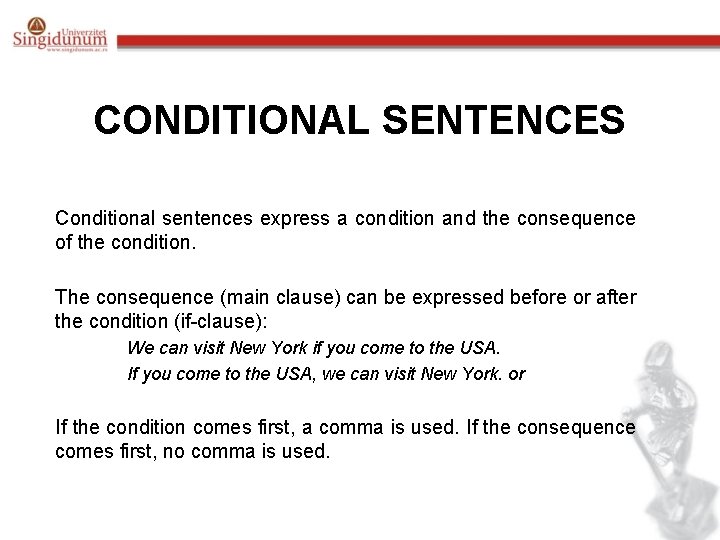
CONDITIONAL SENTENCES Conditional sentences express a condition and the consequence of the condition. The consequence (main clause) can be expressed before or after the condition (if-clause): We can visit New York if you come to the USA. If you come to the USA, we can visit New York. or If the condition comes first, a comma is used. If the consequence comes first, no comma is used.
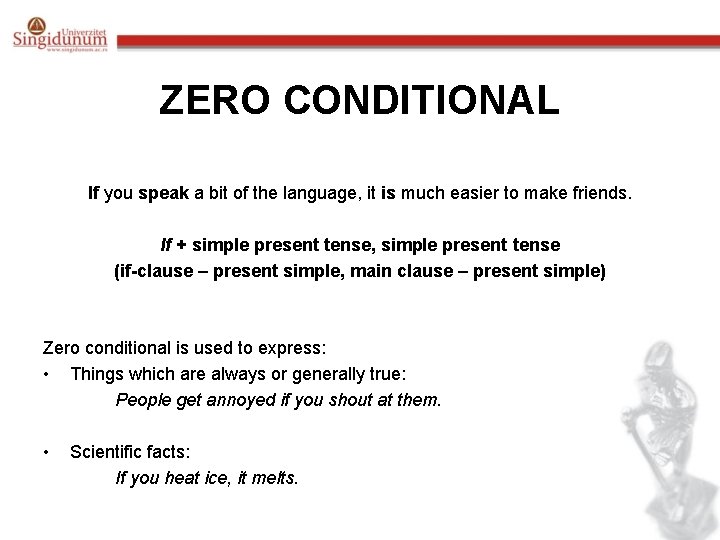
ZERO CONDITIONAL If you speak a bit of the language, it is much easier to make friends. If + simple present tense, simple present tense (if-clause – present simple, main clause – present simple) Zero conditional is used to express: • Things which are always or generally true: People get annoyed if you shout at them. • Scientific facts: If you heat ice, it melts.
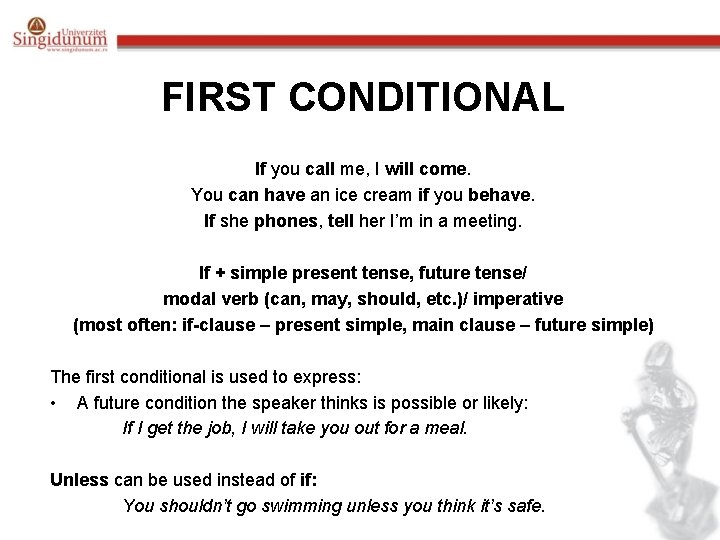
FIRST CONDITIONAL If you call me, I will come. You can have an ice cream if you behave. If she phones, tell her I’m in a meeting. If + simple present tense, future tense/ modal verb (can, may, should, etc. )/ imperative (most often: if-clause – present simple, main clause – future simple) The first conditional is used to express: • A future condition the speaker thinks is possible or likely: If I get the job, I will take you out for a meal. Unless can be used instead of if: You shouldn’t go swimming unless you think it’s safe.
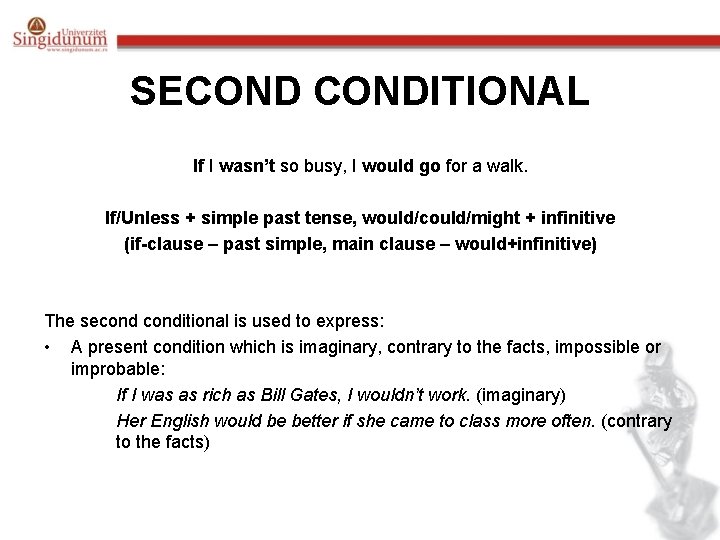
SECONDITIONAL If I wasn’t so busy, I would go for a walk. If/Unless + simple past tense, would/could/might + infinitive (if-clause – past simple, main clause – would+infinitive) The seconditional is used to express: • A present condition which is imaginary, contrary to the facts, impossible or improbable: If I was as rich as Bill Gates, I wouldn’t work. (imaginary) Her English would be better if she came to class more often. (contrary to the facts)
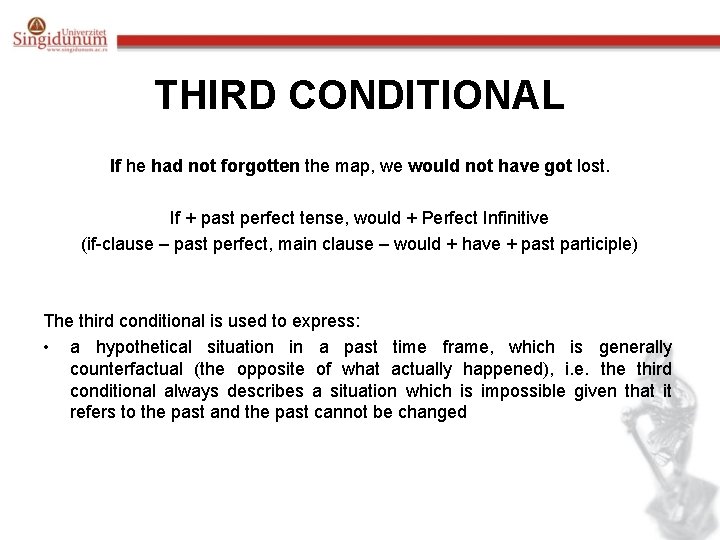
THIRD CONDITIONAL If he had not forgotten the map, we would not have got lost. If + past perfect tense, would + Perfect Infinitive (if-clause – past perfect, main clause – would + have + past participle) The third conditional is used to express: • a hypothetical situation in a past time frame, which is generally counterfactual (the opposite of what actually happened), i. e. the third conditional always describes a situation which is impossible given that it refers to the past and the past cannot be changed
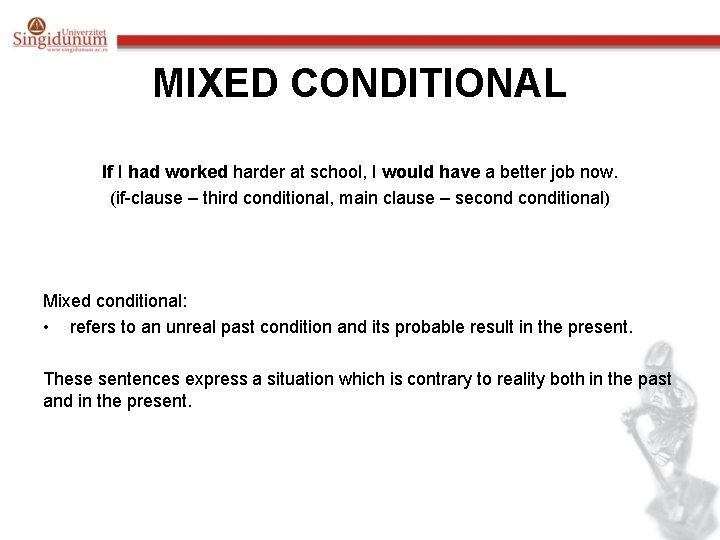
MIXED CONDITIONAL If I had worked harder at school, I would have a better job now. (if-clause – third conditional, main clause – seconditional) Mixed conditional: • refers to an unreal past condition and its probable result in the present. These sentences express a situation which is contrary to reality both in the past and in the present.