
Conditional Sentences Ayano Shoda What are Conditional Sentences
- Slides: 23
Conditional Sentences Ayano Shoda
What are Conditional Sentences? 条件文 If (もし~ならば)
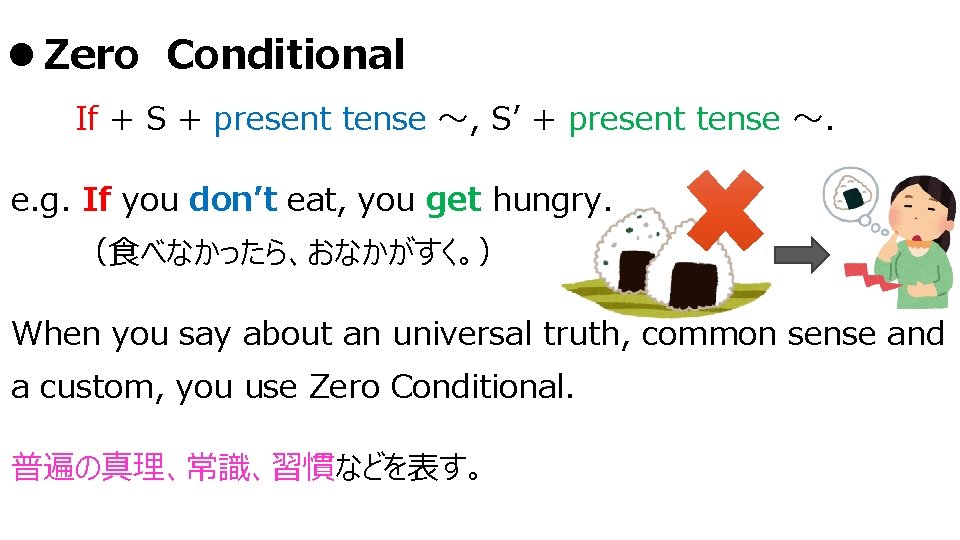
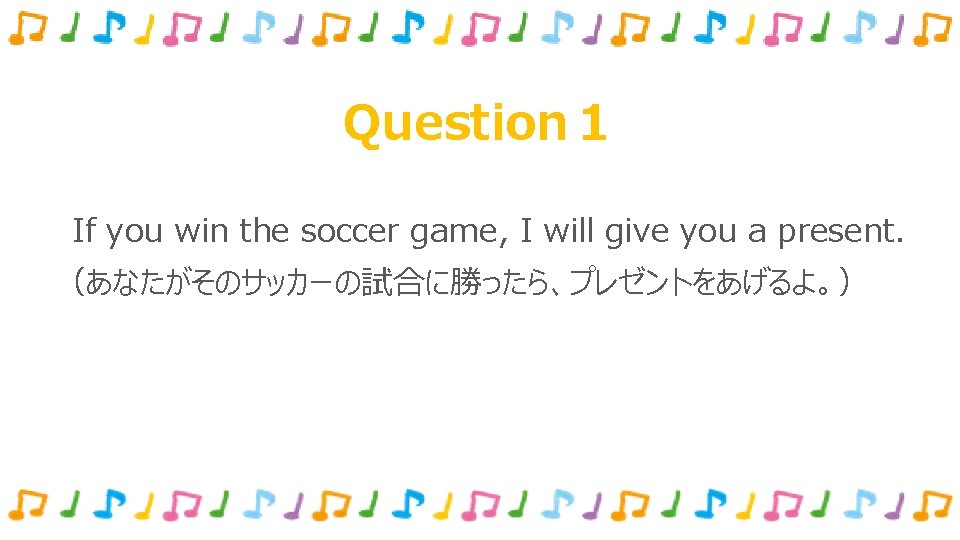
l Zero Conditional If + S + present tense ~, S’ + present tense ~. e. g. If you don’t eat, you get hungry. (食べなかったら、おなかがすく。) When you say about an universal truth, common sense and a custom, you use Zero Conditional. 普遍の真理、常識、習慣などを表す。
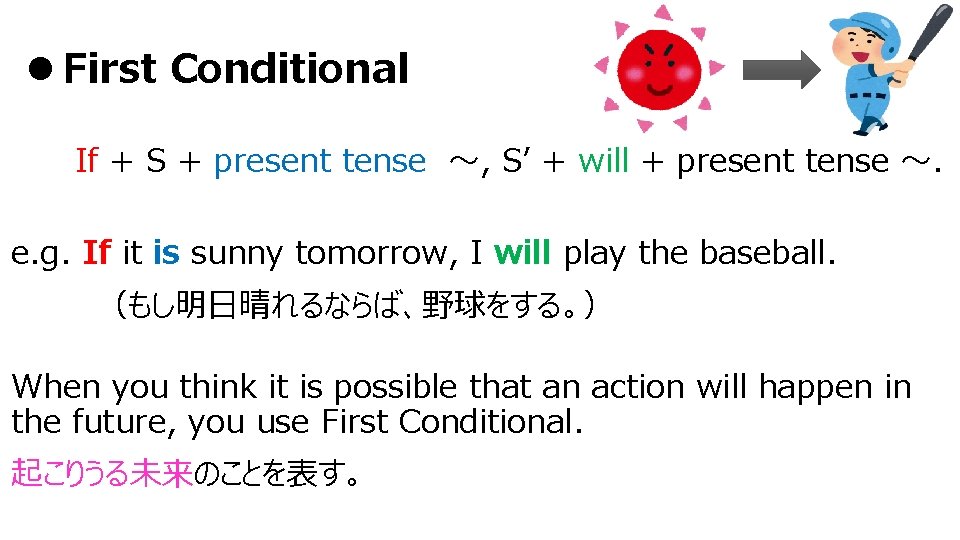
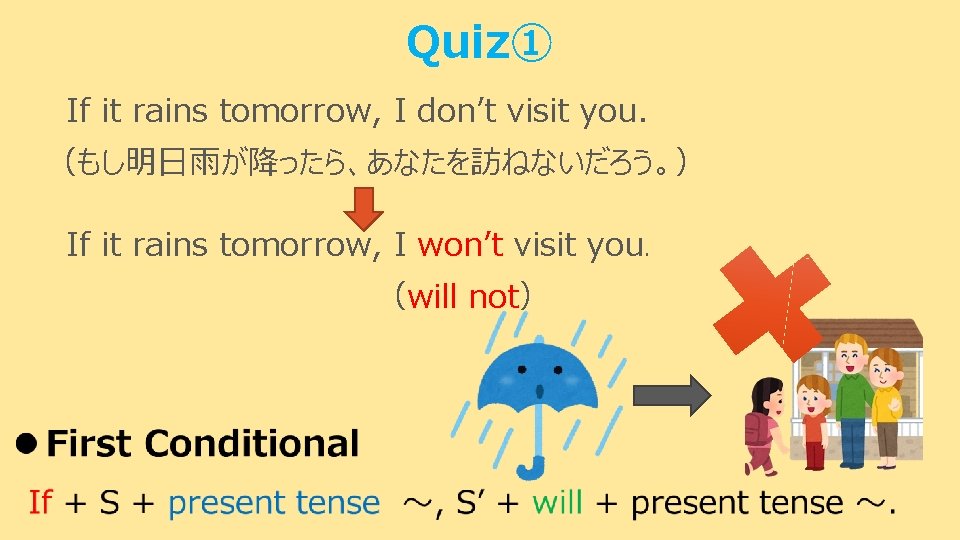
l First Conditional If + S + present tense ~, S’ + will + present tense ~. e. g. If it is sunny tomorrow, I will play the baseball. (もし明日晴れるならば、野球をする。) When you think it is possible that an action will happen in the future, you use First Conditional. 起こりうる未来のことを表す。
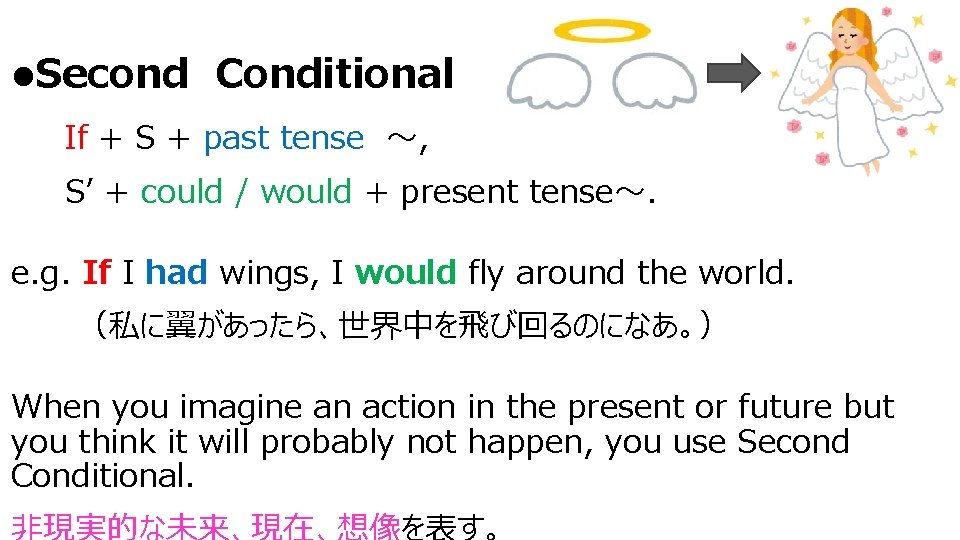
l. Second Conditional If + S + past tense ~, S’ + could / would + present tense~. e. g. If I had wings, I would fly around the world. (私に翼があったら、世界中を飛び回るのになあ。) When you imagine an action in the present or future but you think it will probably not happen, you use Second Conditional.
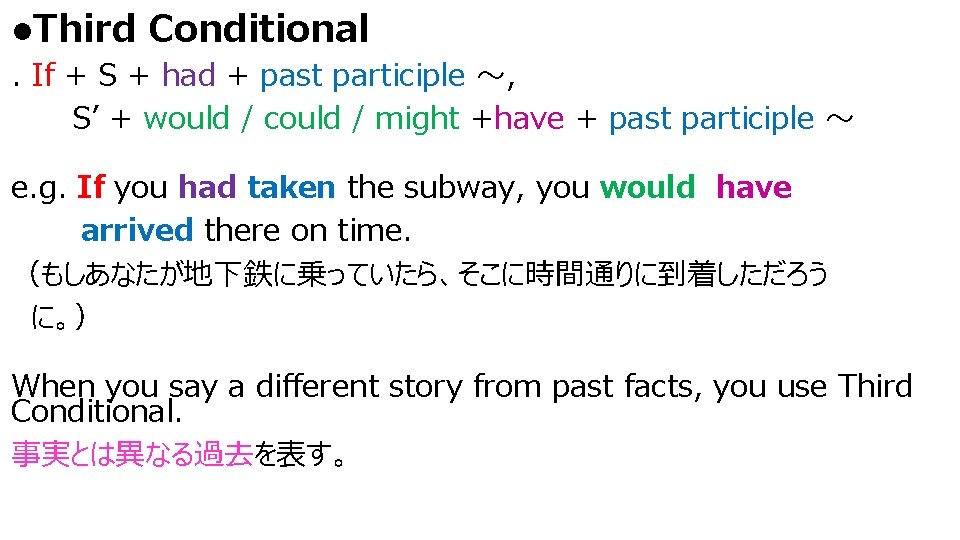
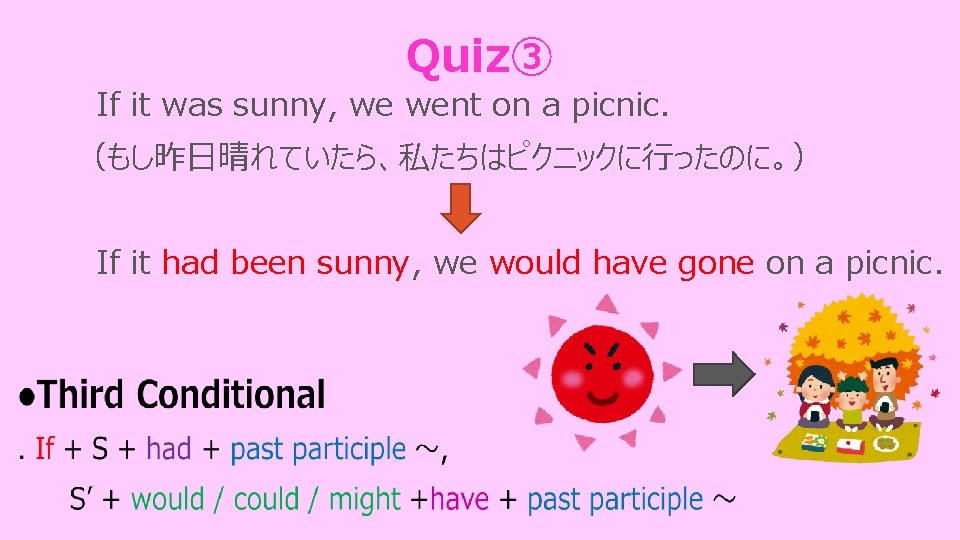
l. Third Conditional. If + S + had + past participle ~, S’ + would / could / might +have + past participle ~ e. g. If you had taken the subway, you would have arrived there on time. (もしあなたが地下鉄に乗っていたら、そこに時間通りに到着しただろう に。) When you say a different story from past facts, you use Third Conditional. 事実とは異なる過去を表す。
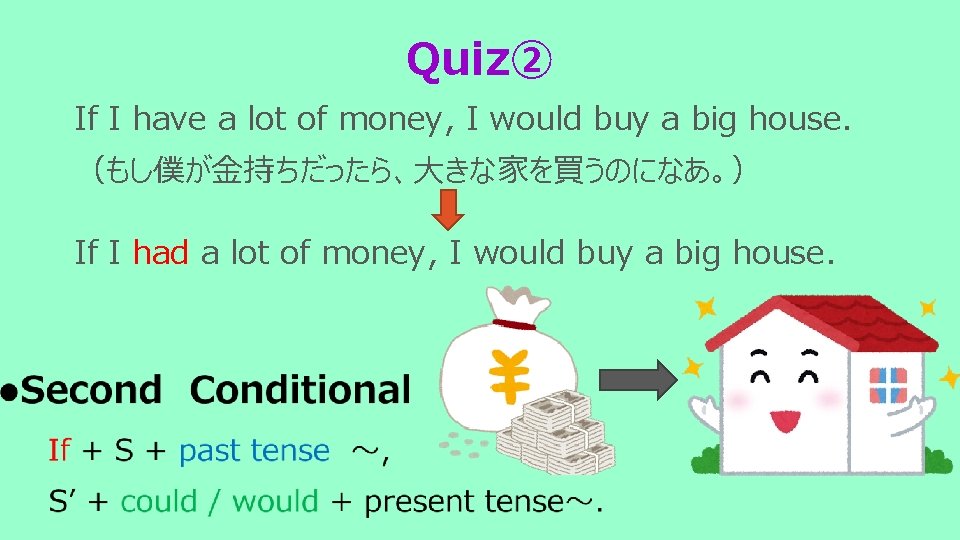
Quiz② If I have a lot of money, I would buy a big house. (もし僕が金持ちだったら、大きな家を買うのになあ。) If I had a lot of money, I would buy a big house.
Quiz③ If it was sunny, we went on a picnic. (もし昨日晴れていたら、私たちはピクニックに行ったのに。) If it had been sunny, we would have gone on a picnic.
Activity!!!!
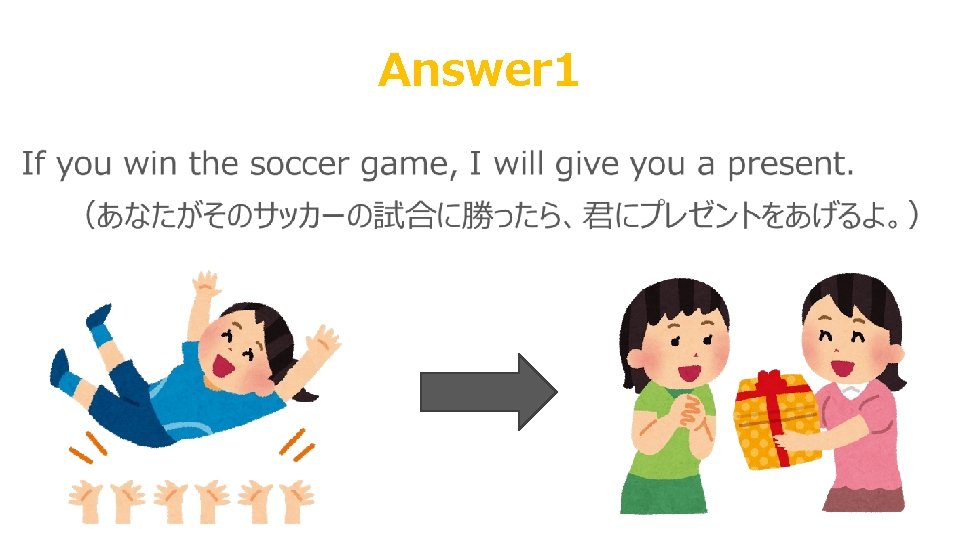
Answer 1
Question 2 If you eat too much, you gain weight. (食べ過ぎると、太る。)
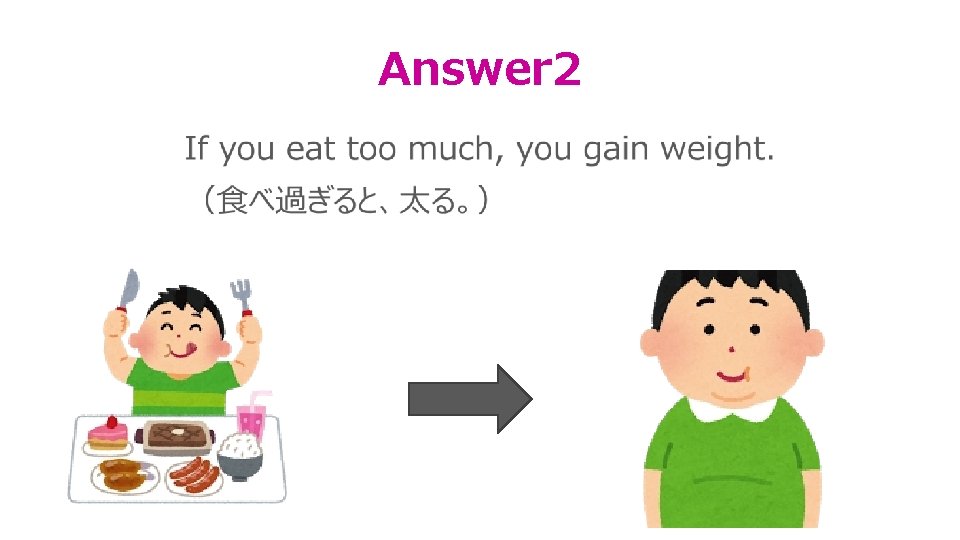
Answer 2
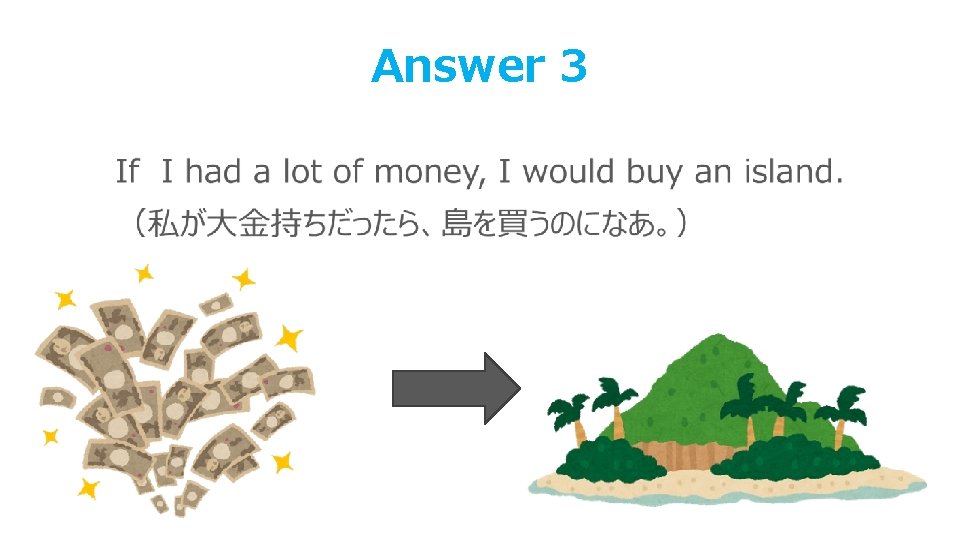
Question 3 If I had a lot of money, I would buy an island. (私が大金持ちだったら、島を買うのになあ。)
Answer 3
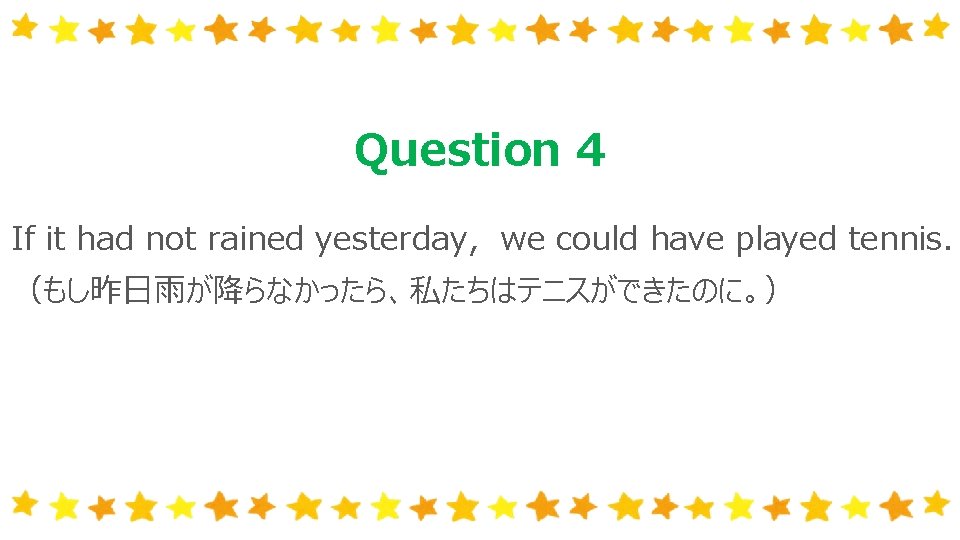
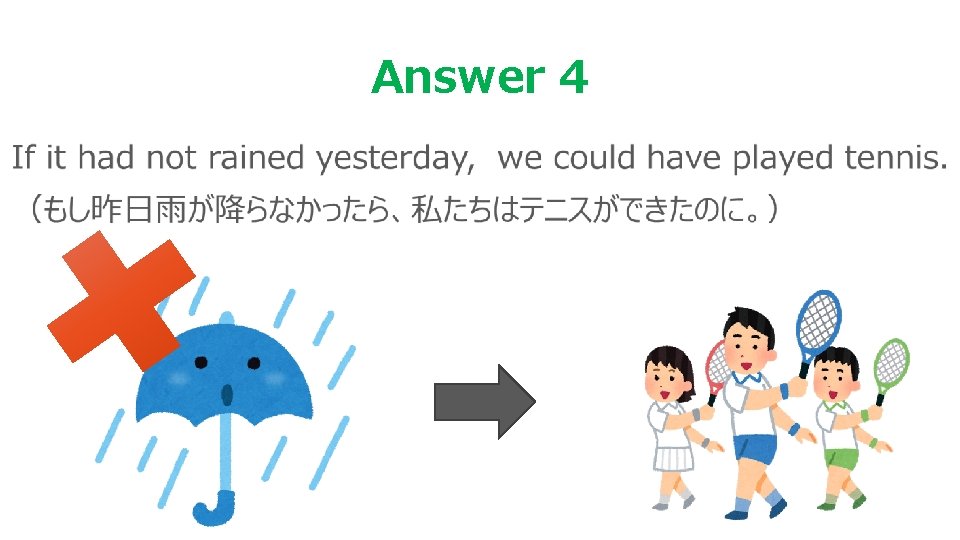
Question 4 If it had not rained yesterday, we could have played tennis. (もし昨日雨が降らなかったら、私たちはテニスができたのに。)
Answer 4
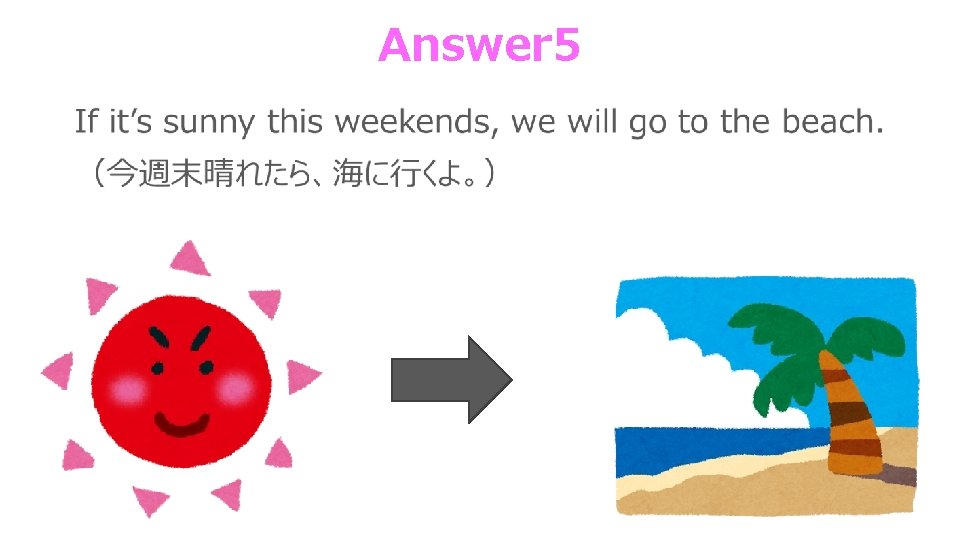
Question5 If it’s sunny this weekend, we will go to the beach. (今週末晴れたら、海に行くよ。)
Answer 5