
Conditional Probability and Independence Example Solution Notation If
Conditional Probability and Independence
Example •
Solution •
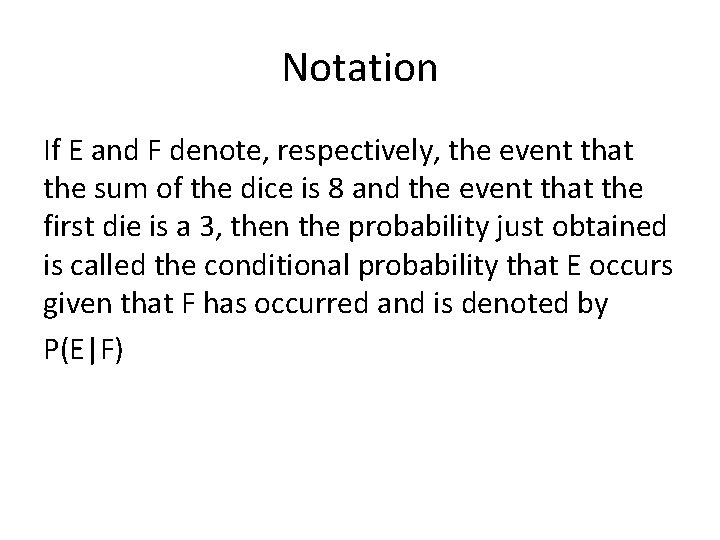
Notation If E and F denote, respectively, the event that the sum of the dice is 8 and the event that the first die is a 3, then the probability just obtained is called the conditional probability that E occurs given that F has occurred and is denoted by P(E|F)
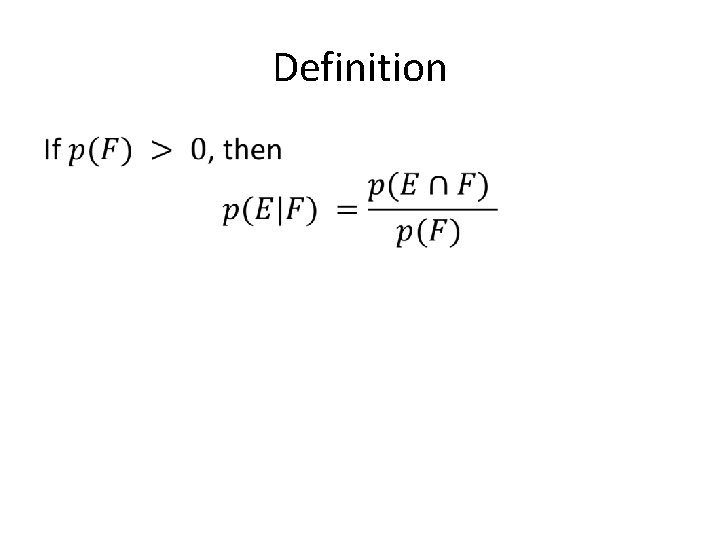
Definition •
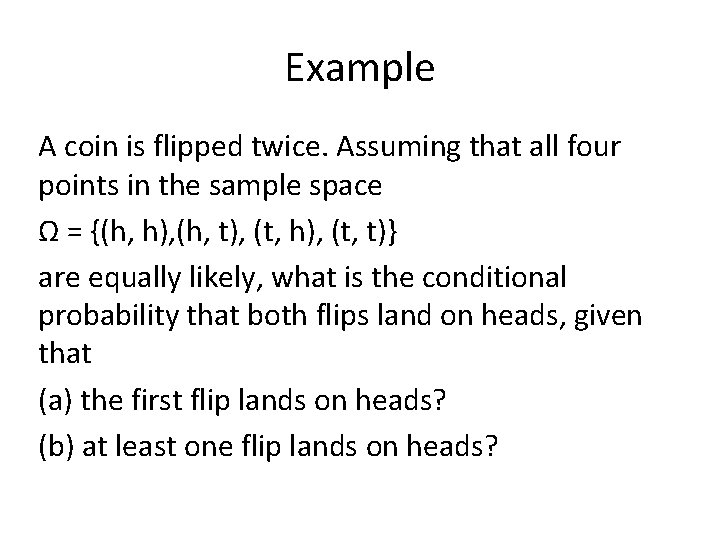
Example A coin is flipped twice. Assuming that all four points in the sample space Ω = {(h, h), (h, t), (t, h), (t, t)} are equally likely, what is the conditional probability that both flips land on heads, given that (a) the first flip lands on heads? (b) at least one flip lands on heads?
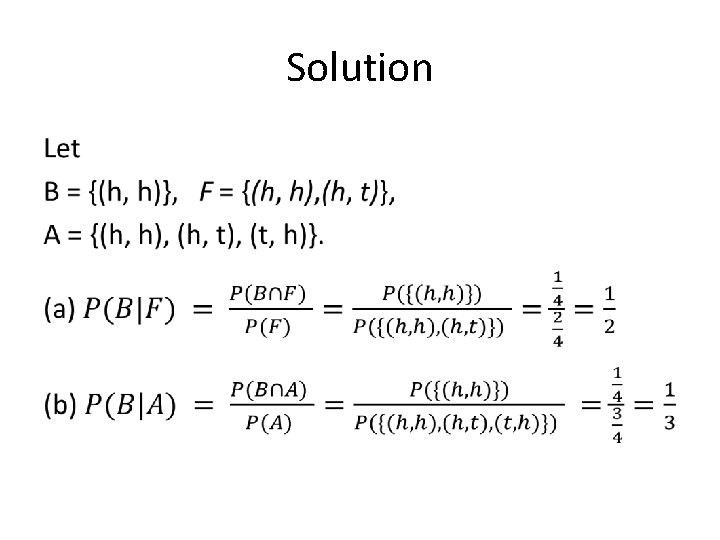
Solution •
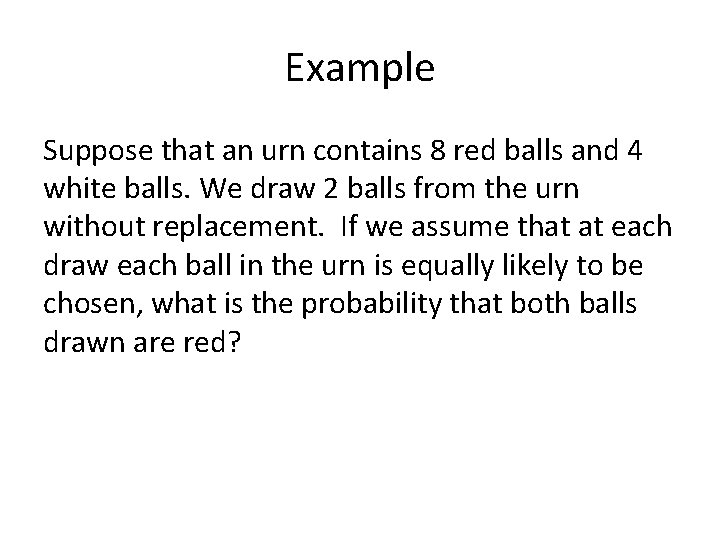
Example Suppose that an urn contains 8 red balls and 4 white balls. We draw 2 balls from the urn without replacement. If we assume that at each draw each ball in the urn is equally likely to be chosen, what is the probability that both balls drawn are red?
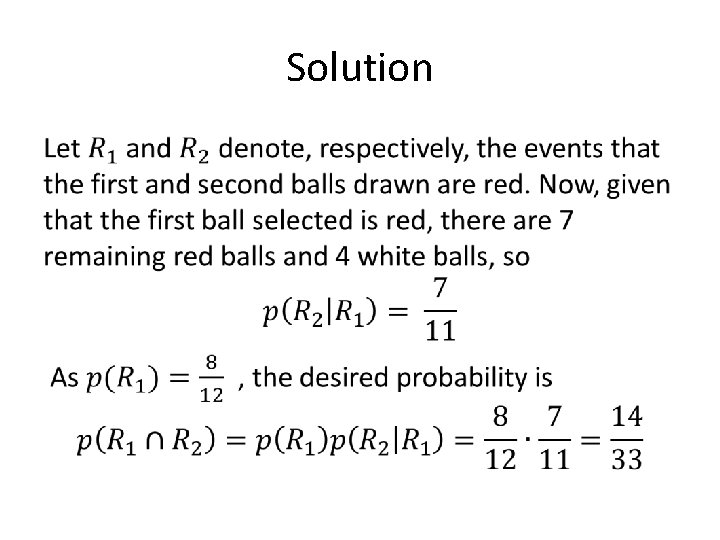
Solution •
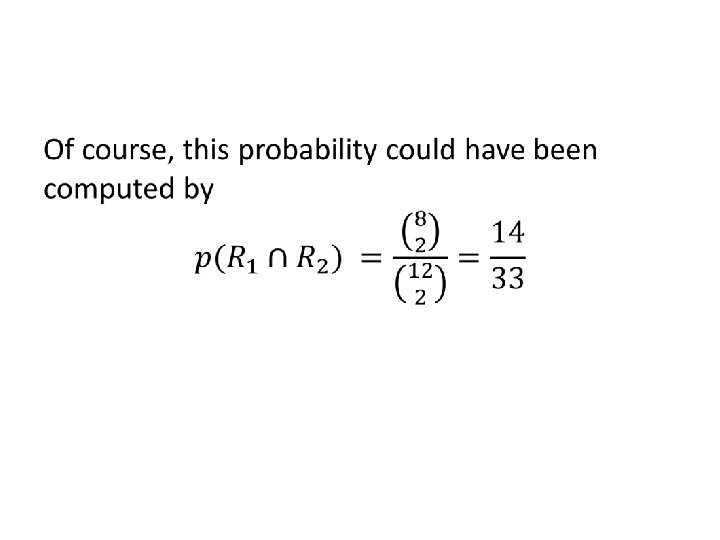
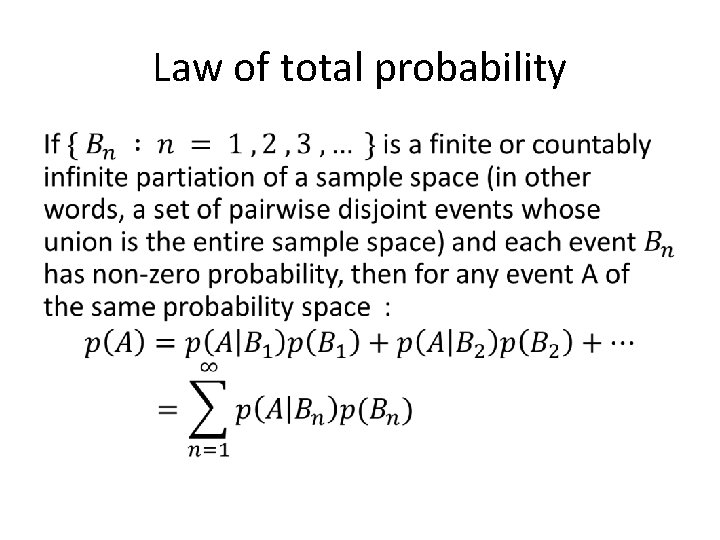
Law of total probability •
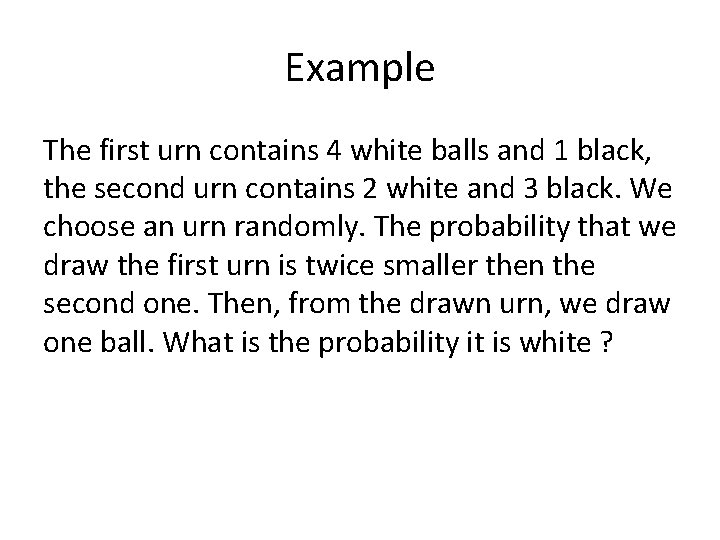
Example The first urn contains 4 white balls and 1 black, the second urn contains 2 white and 3 black. We choose an urn randomly. The probability that we draw the first urn is twice smaller then the second one. Then, from the drawn urn, we draw one ball. What is the probability it is white ?
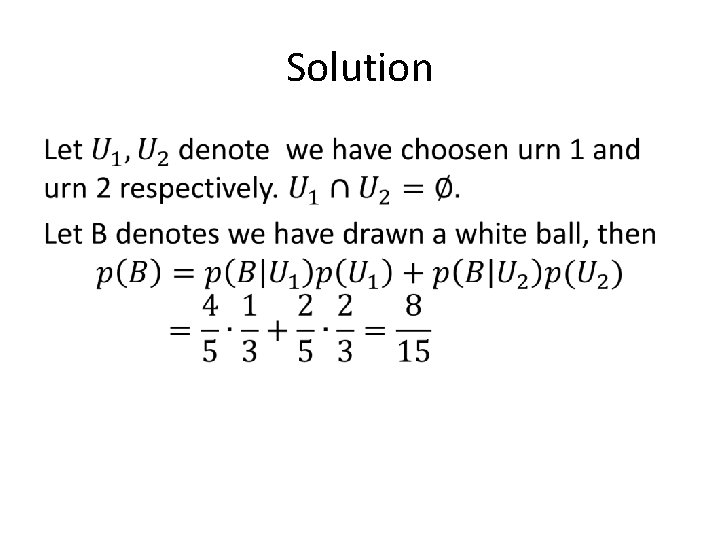
Solution •
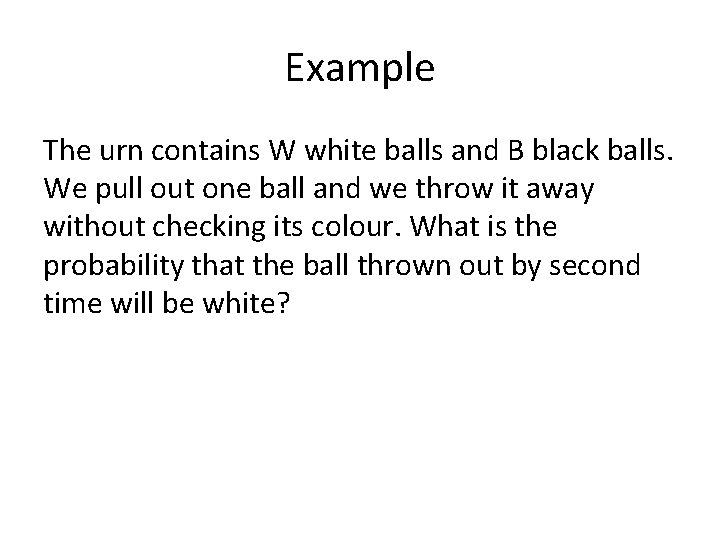
Example The urn contains W white balls and B black balls. We pull out one ball and we throw it away without checking its colour. What is the probability that the ball thrown out by second time will be white?
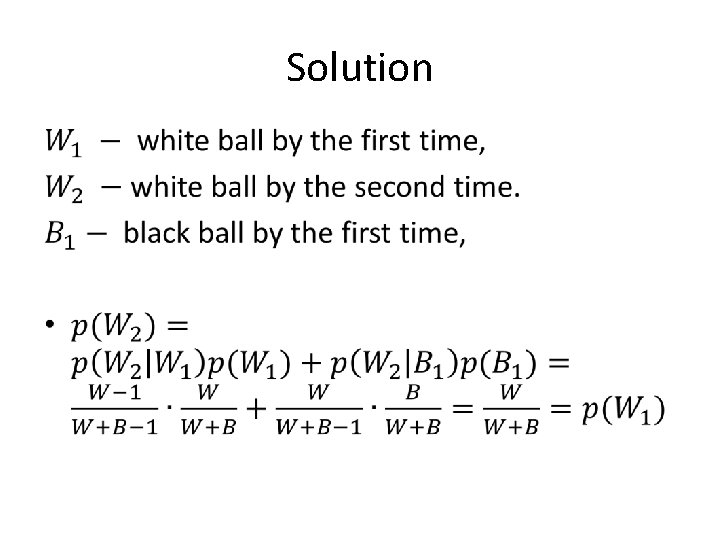
Solution •
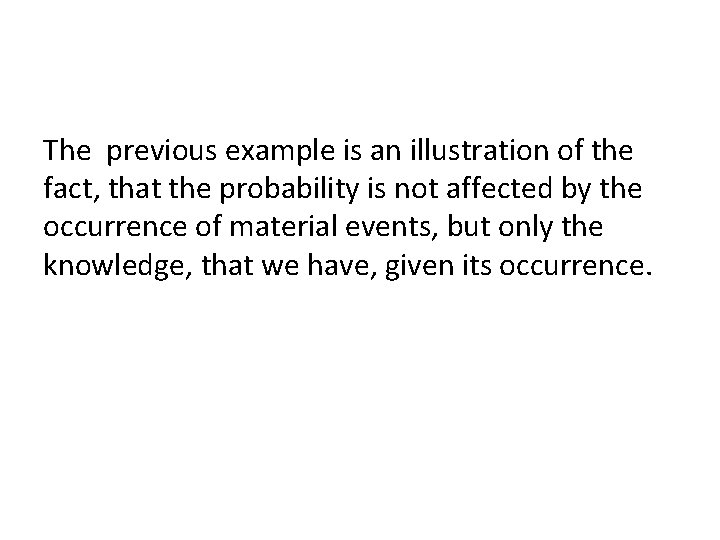
The previous example is an illustration of the fact, that the probability is not affected by the occurrence of material events, but only the knowledge, that we have, given its occurrence.
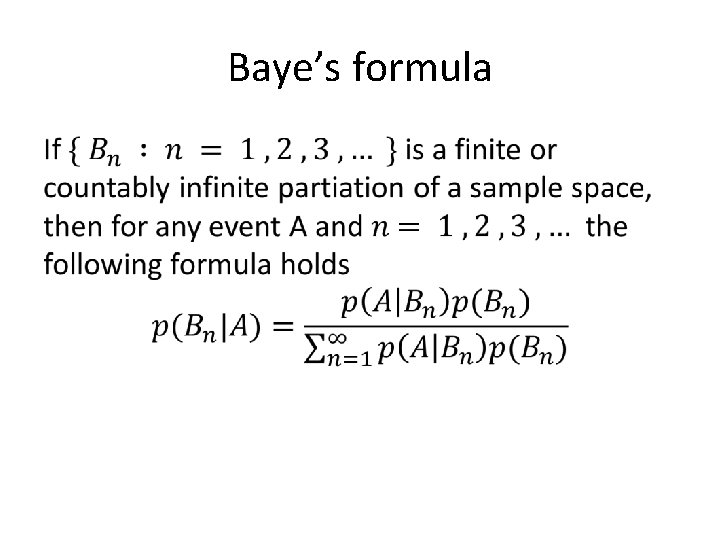
Baye’s formula •
Example One of 100 coins has tails on both sides (rest 99 are correct). As a result of 10 throws of randomly selected coin we received 10 tails. Calculate the probability that it was a coin with tails on both sides.
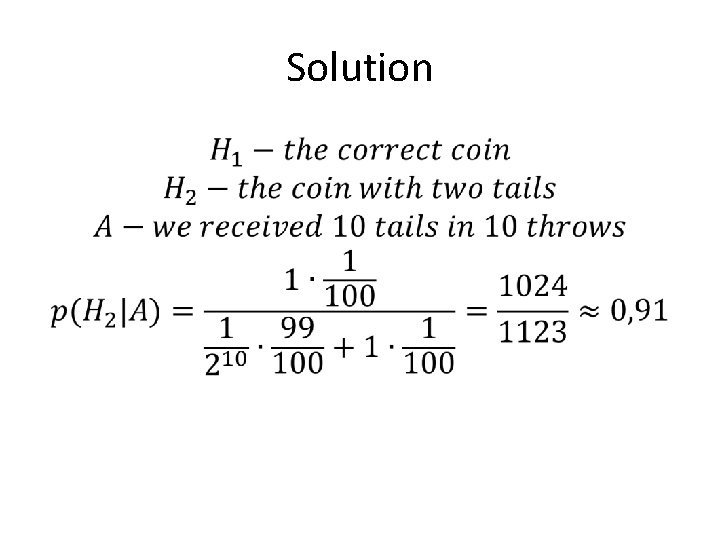
Solution •
Sensitivity and specificity • Sensitivity and specificity are statistical measures of the performance of a binary classification test, also known in statistics as classification function.
Sensitivity • Sensitivity (also called the true positive rate) measures the proportion of positives that are correctly identified as such (i. e. the percentage of sick people who are correctly identified as having the condition).
Specificity • Specificity (also called the true negative rate) measures the proportion of negatives that are correctly identified as such (i. e. , the percentage of healthy people who are correctly identified as not having the condition).
Sensitivity therefore quantifies the avoiding of false negatives, and specificity does the same for false positives.
Medical tests Another way to understand in the context of medical tests is that sensitivity is the extent to which true positives are not missed/overlooked (so false negatives are few) and specificity is the extent to which positives really represent the condition of interest and not some other condition being mistaken for it (so false positives are few).
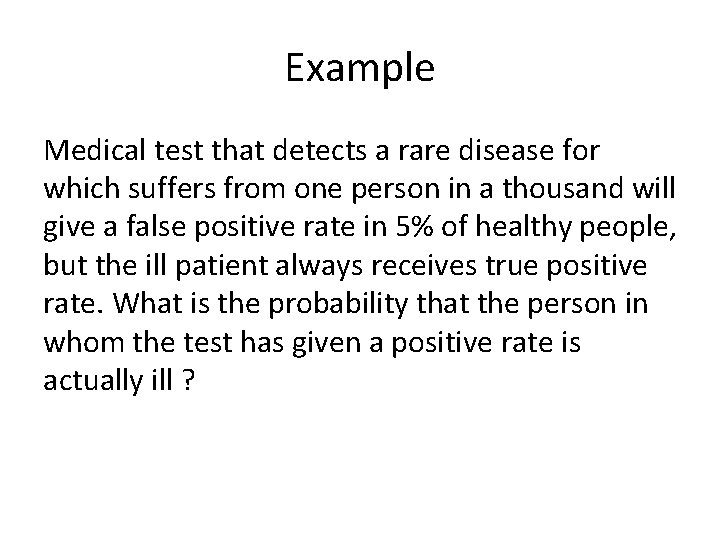
Example Medical test that detects a rare disease for which suffers from one person in a thousand will give a false positive rate in 5% of healthy people, but the ill patient always receives true positive rate. What is the probability that the person in whom the test has given a positive rate is actually ill ?
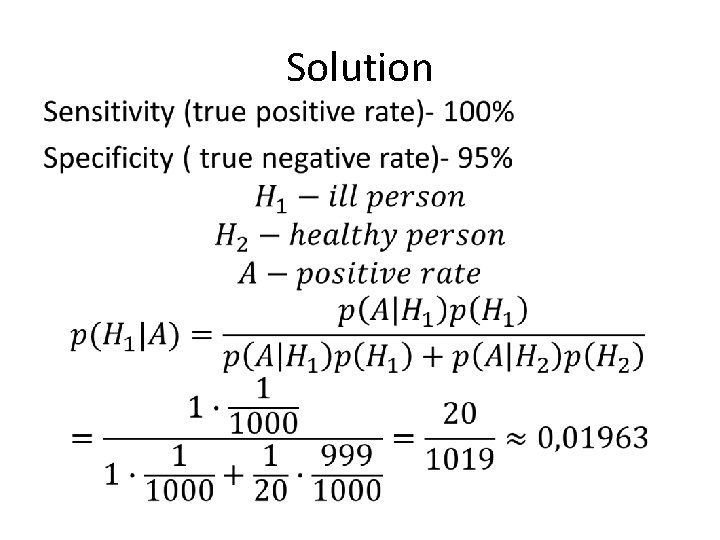
• Solution

Independence •
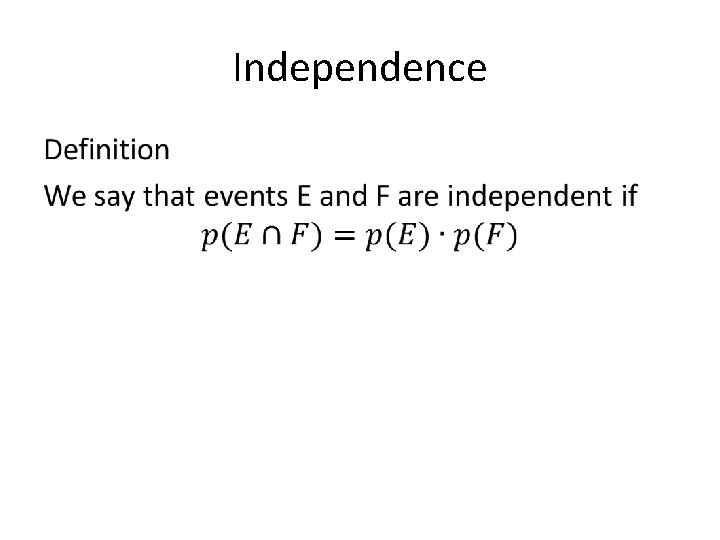
Independence •
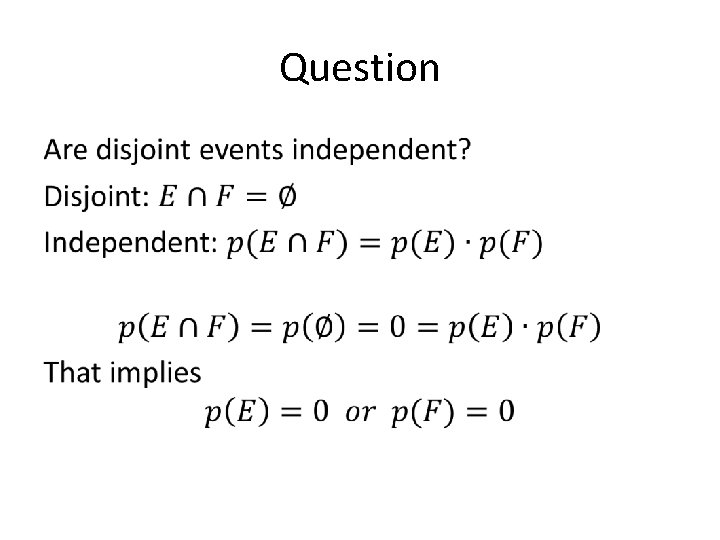
Question •
Examples Independent events
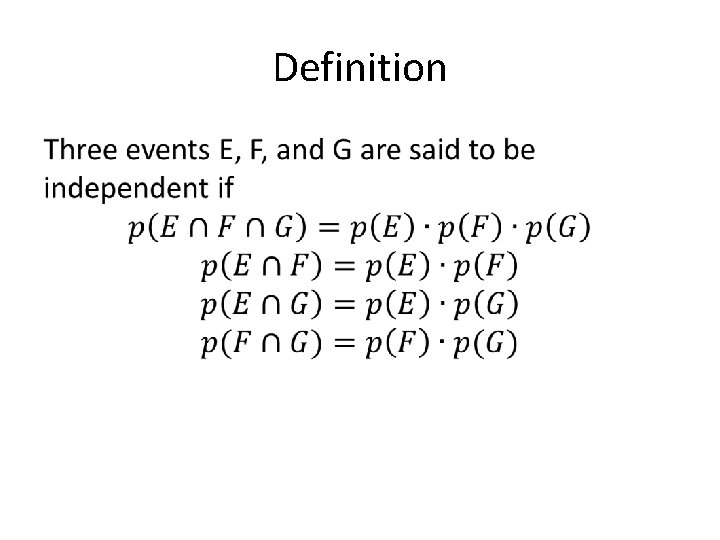
Definition •
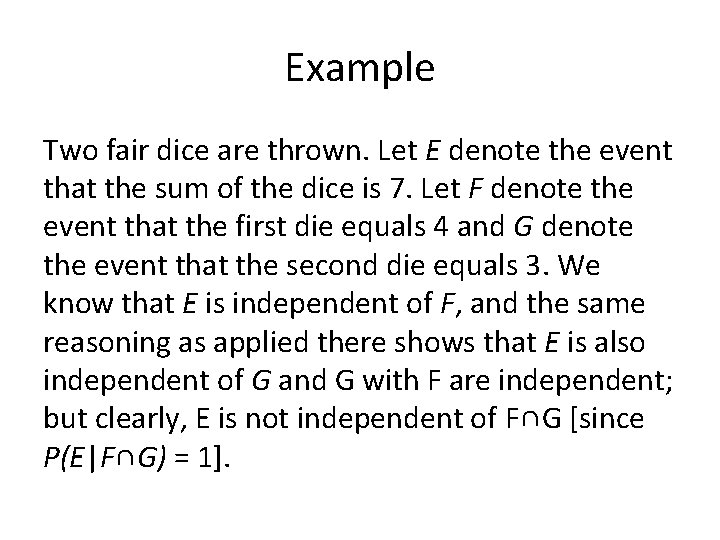
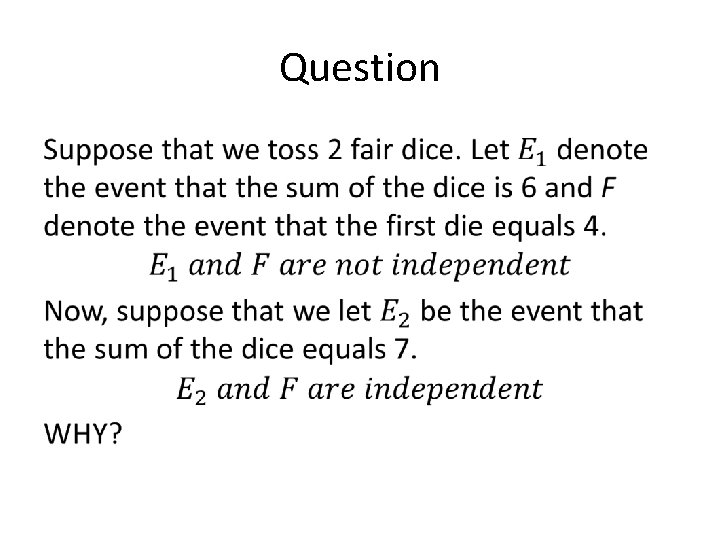
Example Two fair dice are thrown. Let E denote the event that the sum of the dice is 7. Let F denote the event that the first die equals 4 and G denote the event that the second die equals 3. We know that E is independent of F, and the same reasoning as applied there shows that E is also independent of G and G with F are independent; but clearly, E is not independent of F∩G [since P(E|F∩G) = 1].
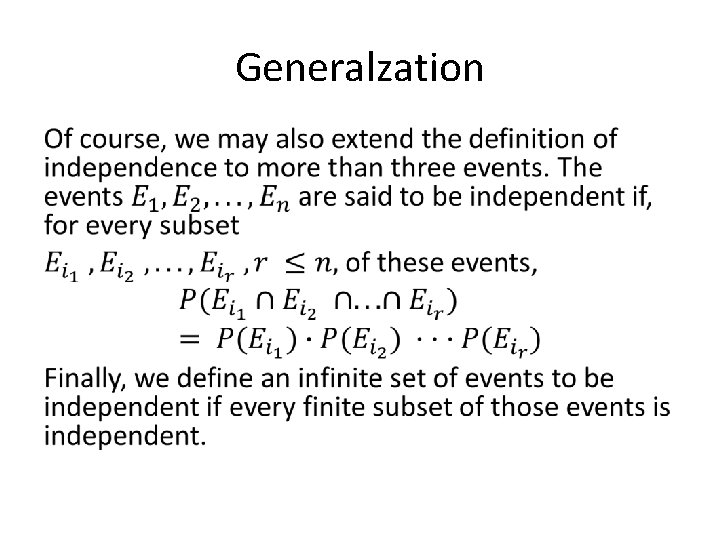
Generalzation •
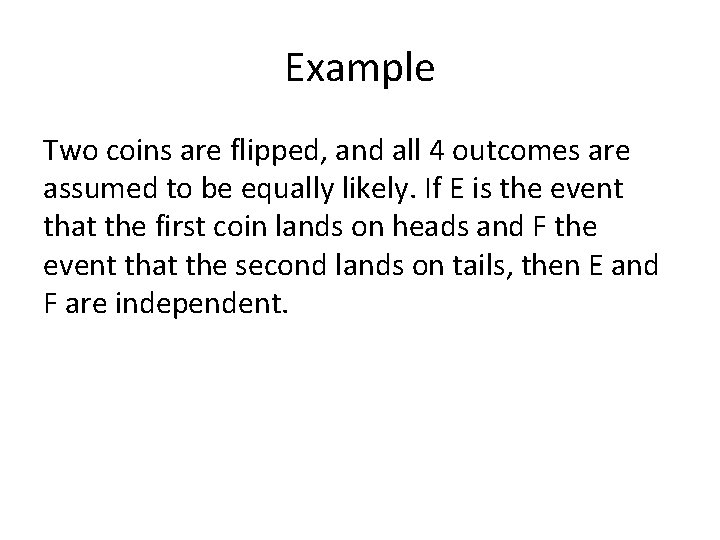
Example Two coins are flipped, and all 4 outcomes are assumed to be equally likely. If E is the event that the first coin lands on heads and F the event that the second lands on tails, then E and F are independent.
Question •
Proposition •
- Slides: 36