
Condition Monitoring Objectives of the lesson To understand
Condition Monitoring
Objectives of the lesson • To understand the use of condition monitoring methods

Condition Monitoring • Condition Monitoring can be defined as the use of advanced technologies in order to determine equipment condition, and potentially predict failure ultrasound detector for industrial predictive maintenance
The Need for Monitoring • • Improved safety Reduction of environmental hazards Improved product quality Reduction of downtime Reduced costs Extended equipment life Comprehensive database Improved communication between operations/ maintenance
Safety • Continuous monitoring of plant and equipment can enable alarms and possibly automatic safe shutdown to occur in the event of catastrophic failure. • This can thereby avoid potential imminent danger and injury. • Also, operations and maintenance personnel can become aware of trends to failure before problems arise.
Environmental Hazards • As in the case of safety, early warning of the potential release of hazardous materials to the atmosphere or water courses can be detected through monitoring systems e. g. Emissions from boilers, fluids from pumps, etc.
Product Quality • Product quality control can be greatly enhanced through monitoring each stage of the production process, e. g. – Assembly line products can be monitored during manufacturing processes. – The quality of steam, oil, fluids, chemical products etc. can be monitored in the process industries.
Downtime • Reduced downtime of plant, equipment and systems through early warning of potential failure or loss of performance can be provided. • WHAT IS DOWNTIME? • DOWN TIME IS……. • “THE LENGTH OF TIME A MACHINE IS OUT OF PRODUCTION DUE TO MAINTENANCE”.

Costs • Given the benefits outlined in the previous slides, significant savings can be made in both operational and maintenance costs. For Example; Better quality control Plant & equipment out of service for less time Reduced maintenance activity etc
Extended Equipment Life • Continuous monitoring together with proactive maintenance checks can enable plant and equipment to remain running within design specification for longer periods thereby extending equipment life.
Comprehensive Database& Improved Operations /Maintenance Communication • Continuous monitoring of data from plant and equipment enables a comprehensive database to be established. • This may have significant benefits when analysing operational performance and associated maintenance activity in the future. • This in turn improves communication between operations and maintenance personnel.

Any Questions?
Objectives of Condition Monitoring • Prevent catastrophic failure through shut down and alarms • Reduce ‘downtime’ of equipment and systems through early warning of potential failure or loss of performance • Provide a basis upon which preventive maintenance requirements may be better organised and optimised

Condition Monitoring • All condition monitoring techniques rely on monitoring some physical characteristic that reflects the condition of the machine. • A normal running level for that characteristic is established when the machine is in good condition and then any significant deviation from that level gives warning that a fault may be developing.
Methods of condition Monitoring • Before the development of these techniques, condition monitoring was carried out by the operator of a machine who observed the running condition using the senses of sight, hearing, touch and smell. • In modern industry however, the majority of machines run unattended and although inspection by personnel is still an important element in the monitoring process, mechanised techniques are essential if constant surveillance is to be achieved.

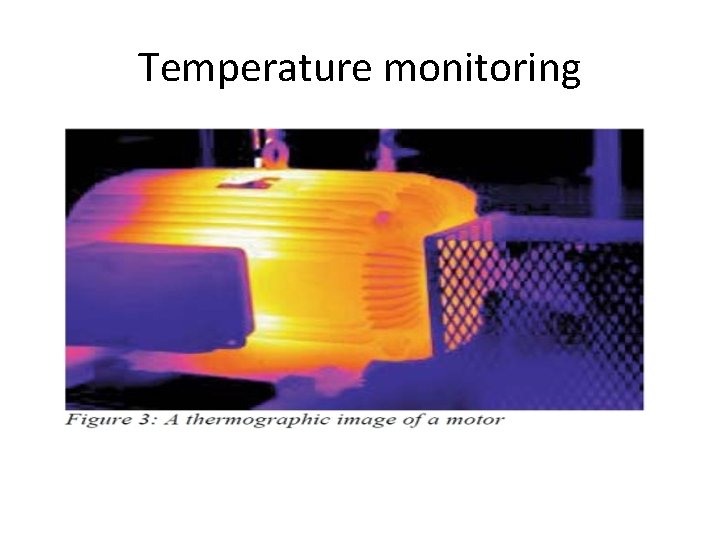
Methods of condition Monitoring • Temperature monitoring This is one of the simplest methods available and involves the use of thermocouples or resistance thermometers to measure bearing temperatures. Temperature Monitoring for Power Generators and Motor Bearings
Temperature monitoring
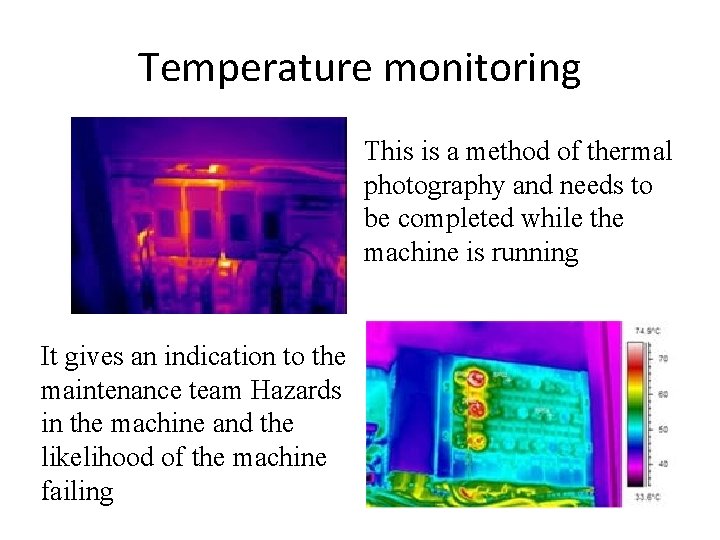
Temperature monitoring This is a method of thermal photography and needs to be completed while the machine is running It gives an indication to the maintenance team Hazards in the machine and the likelihood of the machine failing
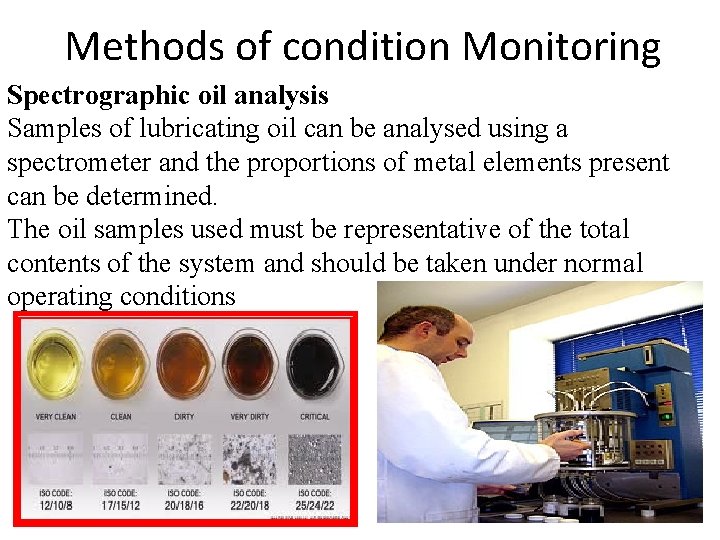
Methods of condition Monitoring Spectrographic oil analysis Samples of lubricating oil can be analysed using a spectrometer and the proportions of metal elements present can be determined. The oil samples used must be representative of the total contents of the system and should be taken under normal operating conditions
Particle retrieval • This technique analyses the wear debris present in the lubricating oil but instead of measuring metal levels it is more concerned with the physical size of the particles. • Wear debris can be collected by installing magnetic plugs in the system downstream of bearings to catch ferrous particles and by backwashing the oil filter element to collect non-ferrous particles. • Because this method is based on intermittent sampling, it is not suitable for automatic alarm and shutdown.
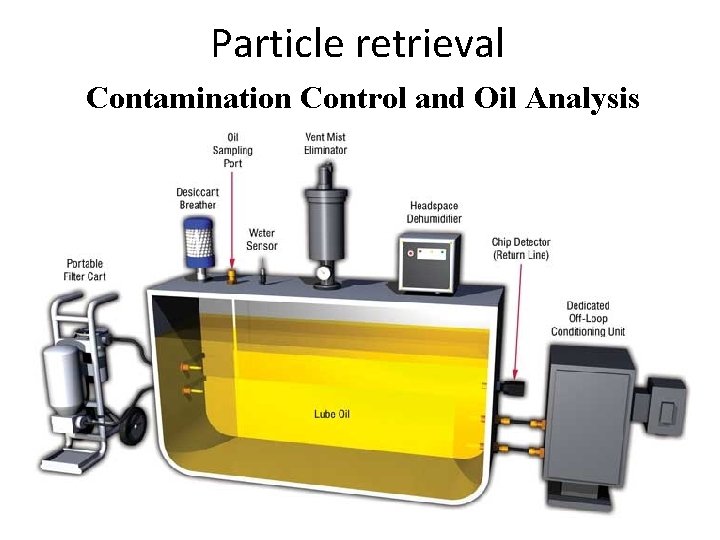
Particle retrieval Contamination Control and Oil Analysis
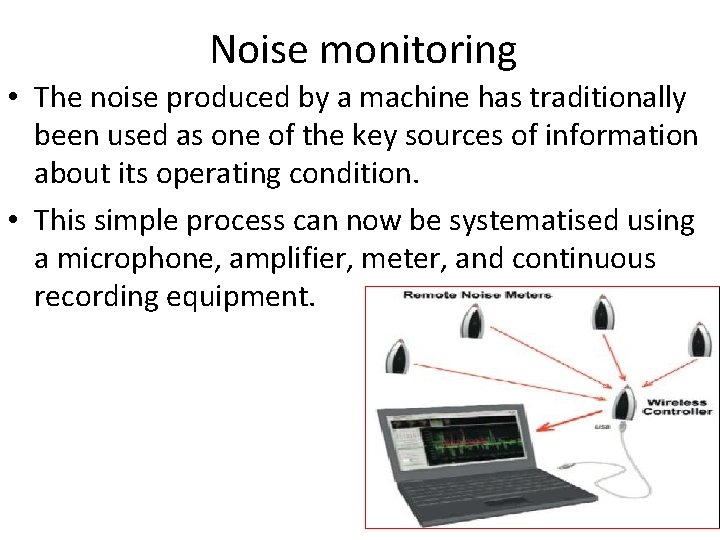
Noise monitoring • The noise produced by a machine has traditionally been used as one of the key sources of information about its operating condition. • This simple process can now be systematised using a microphone, amplifier, meter, and continuous recording equipment.
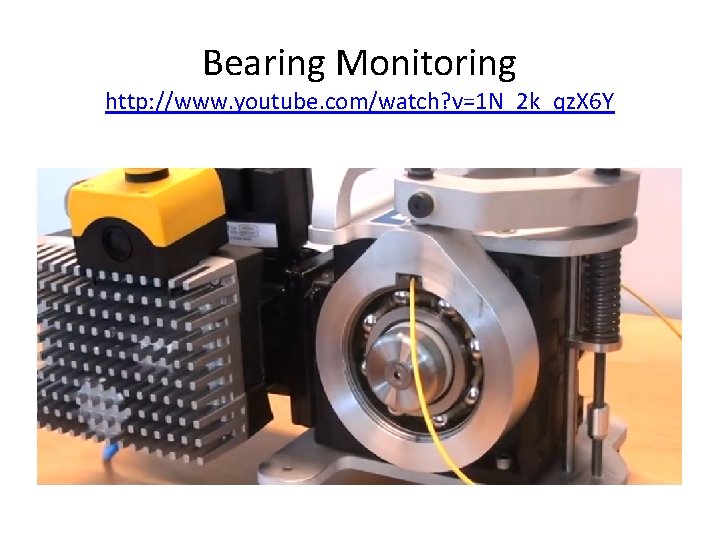
Bearing Monitoring http: //www. youtube. com/watch? v=1 N_2 k_qz. X 6 Y
Vibration monitoring • The most widely adopted form of condition monitoring, which involves the recording and analysis of machine vibration patterns. • Excessive vibration is a reliable indicator of malfunction and by analysing vibration levels at different frequencies accurate diagnosis of the source of vibration is possible. • The monitoring equipment may be tuned to record vibration levels at all frequencies • This method is ideal for continuous monitoring and vibration sensors can be used to initiate automatic alarm and shutdown devices.
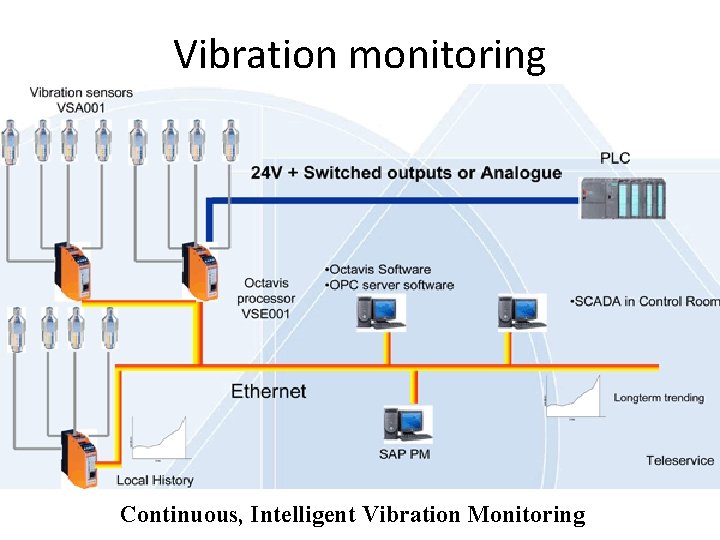
Vibration monitoring Continuous, Intelligent Vibration Monitoring

SKF bearing monitoring http: //www. youtube. com/watch? v=GS 3 Kc 4 Hbe. XM
Advantages of Condition Monitoring • Safety is improved by avoiding the development of dangerous situations that may be hazardous to personnel and other plant and equipment. • Disruption of production schedules can be reduced by preventing unexpected breakdowns. • By detecting faults before serious failure occurs, damage to plant and equipment is reduced.

Wireless Condition Monitoring System Chiller Facility http: //www. youtube. com/watch? v=SWHgo. Wtxt. O 0
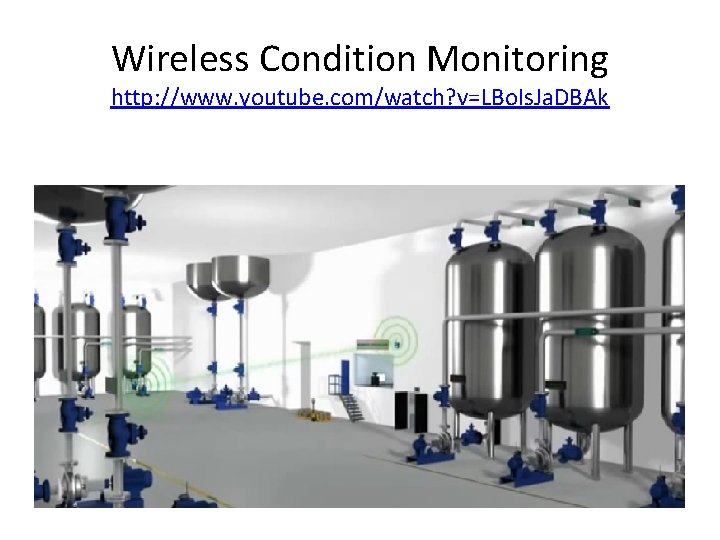
Wireless Condition Monitoring http: //www. youtube. com/watch? v=LBo. Is. Ja. DBAk
Advantages of Condition Monitoring • Condition monitoring eliminates the need to strip down equipment during annual overhaul. As well as indicating when a machine is becoming unserviceable, monitoring also confirms that a machine is operating satisfactorily. • The equipment can also be used to assist in troubleshooting and to help identify failed components when breakdown does occur.
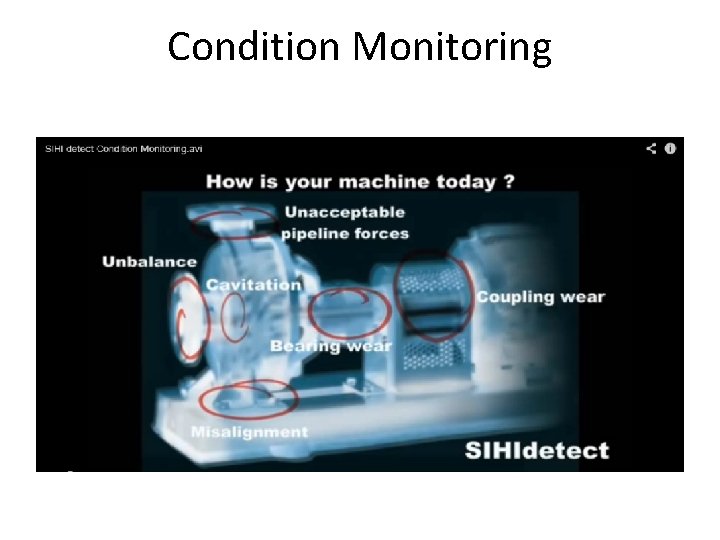
Condition Monitoring
Monitoring Techniques • • Vibration Lubricant analysis Temperature (Thermography) Leak detection Corrosion detection Crack detection Insulation Electrical resistance
Example of Monitoring Techniques on a Large Diesel Engine • • • Piston ring monitoring Temperature monitoring Vibration monitoring Bearing wear down monitoring Performance monitoring

Any Questions?
- Slides: 34