
Concussion Myths True or False Having Multiple Concussions
- Slides: 22
Concussion Myths – True or False • Having Multiple Concussions is common in sports & no cause for concern. • If there is no visible injury, everything is okay. • You should play through pain. “Get back in the game!” • A symptomatic athlete may return to play as long as the symptoms are “mild”. • A concussed athlete should be awakened every hour. • All concussion grading scales are the same. ………………. . …………………………………………………………………. . • May return to play as soon as the symptoms resolve.
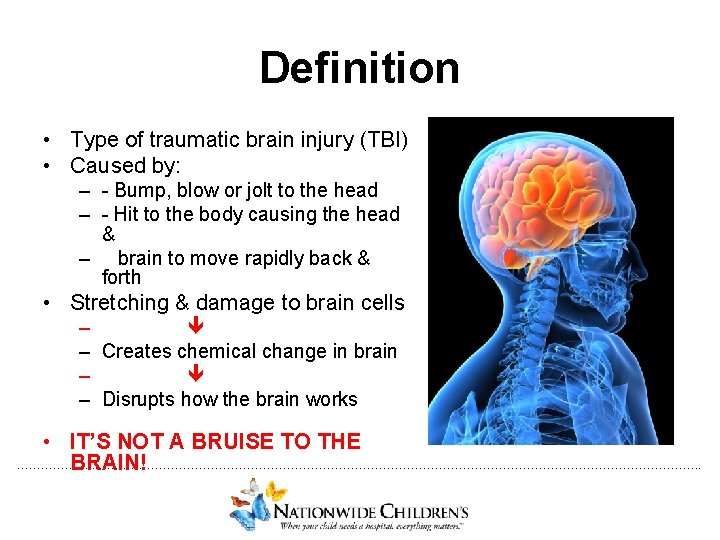
Definition • Type of traumatic brain injury (TBI) • Caused by: – - Bump, blow or jolt to the head – - Hit to the body causing the head & – brain to move rapidly back & forth • Stretching & damage to brain cells – – Creates chemical change in brain – – Disrupts how the brain works • IT’S NOT A BRUISE TO THE ………………. . …………………………………………………………………. . BRAIN!
Definition • Occurs in any sports or recreational activity • All are serious because it is a brain injury • Loss of consciousness (LOC) – - may or may not happen - for most it does NOT happen - only occurs 10% of the time ………………. . …………………………………………………………………. .
Concussion Signs and Symptoms • Physical – – – Headache Dizziness Balance problems Nausea/vomiting Fatigue Sensitivity to light and/or noise • Sleep – Trouble falling asleep – Sleeping more than usual – Sleeping less than usual • Cognitive Feeling mentally foggy Feeling slowed down Difficulty concentrating Difficulty remembering Difficulty focusing • Emotional Irritability Sadness Nervousness More emotional than usual ………………. . …………………………………………………………………. .
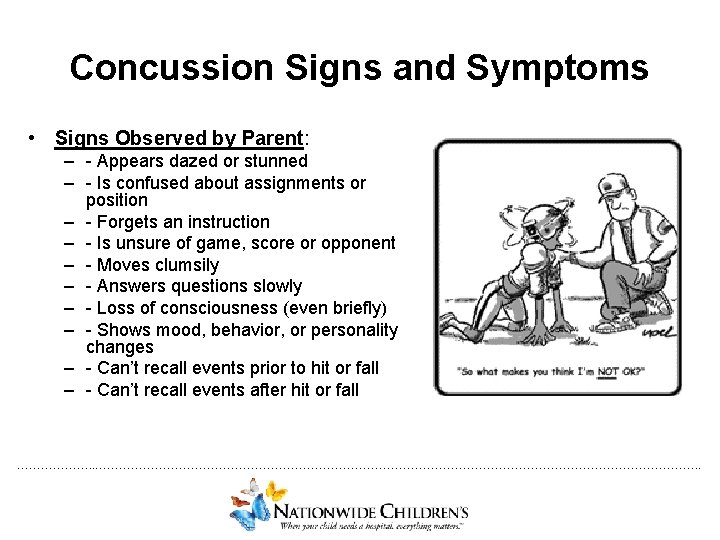
Concussion Signs and Symptoms • Signs Observed by Parent: – - Appears dazed or stunned – - Is confused about assignments or position – - Forgets an instruction – - Is unsure of game, score or opponent – - Moves clumsily – - Answers questions slowly – - Loss of consciousness (even briefly) – - Shows mood, behavior, or personality changes – - Can’t recall events prior to hit or fall – - Can’t recall events after hit or fall ………………. . …………………………………………………………………. .
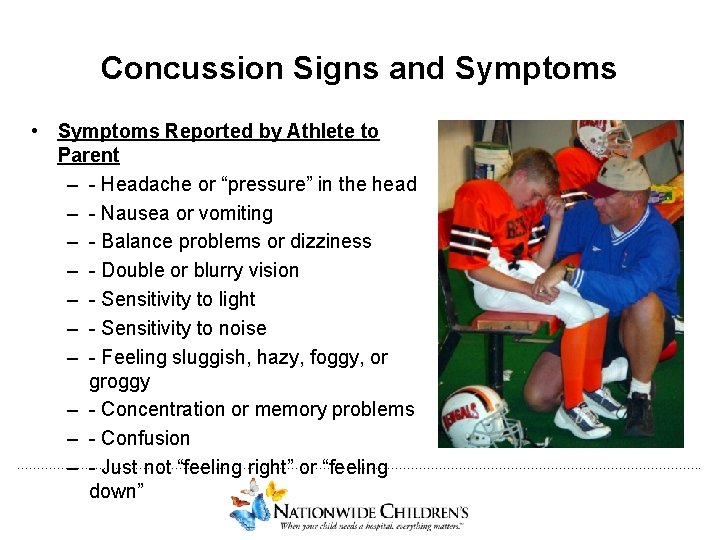
Concussion Signs and Symptoms • Symptoms Reported by Athlete to Parent – - Headache or “pressure” in the head – - Nausea or vomiting – - Balance problems or dizziness – - Double or blurry vision – - Sensitivity to light – - Sensitivity to noise – - Feeling sluggish, hazy, foggy, or groggy – - Concentration or memory problems – - Confusion ………………. . …………………………………………………………………. . – - Just not “feeling right” or “feeling down”
Concussion Signs and Symptoms • May develop immediately or up to 48 hours after the injury • Don’t ignore any signs and symptoms regardless of how minor they appear putting a child’s health at risk ………………. . …………………………………………………………………. .
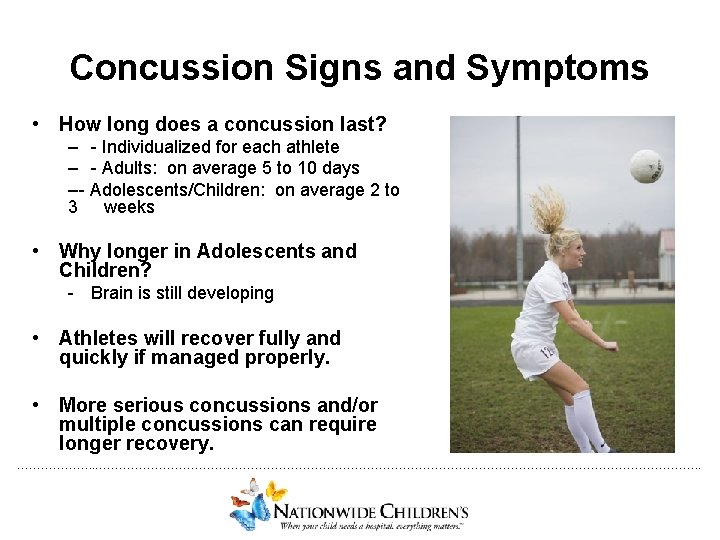
Concussion Signs and Symptoms • How long does a concussion last? – - Individualized for each athlete – - Adults: on average 5 to 10 days –- Adolescents/Children: on average 2 to 3 weeks • Why longer in Adolescents and Children? - Brain is still developing • Athletes will recover fully and quickly if managed properly. • More serious concussions and/or multiple concussions can require longer recovery. …………………………………………………………………. .
Management • When does an athlete require IMMEDIATE medical attention? – – – - Any loss of consciousness (regardless of how brief) - Severe or headache - Unequal pupils - Unusual drowsiness - Projectile or repeated vomiting - Personality changes - Numbness in face or extremities - Double vision - Convulsions - Bleeding/clear fluid from the ear/nose - Unusual stiffness in the neck area - Weakness in either arm(s)/leg(s) ………………. . …………………………………………………………………. .
Management • What do I do as a parent? 1. Remove your child immediately from sport/activity if you suspect a concussion and DO NOT allow them to return to activity on the same date. 2. Must be evaluated by a medical professional (physician or athletic trainer) before can return to sport/activity. Make sure you have a note from a physician. 3. Do not allow your child to return to sport/activity if they continue to have or complain of concussion symptoms. 4. When your child is ready to return, have him/her participate in a gradual progression back to activity ………………. . …………………………………………………………………. .
Management • Once cleared by a medical professional, the athlete will complete a gradual return to play progression. – - Return to play/activity progression consist of 6 stages with at least a 24 hour period between stages. – - The athlete must complete each stage with no concussion symptoms before, during and after before moving to the next stage. – - If the athlete begins to have symptoms during or after a stage, they must stop the activity for the day and rest until the symptoms resolve. – - The intensity of each step will increase. ………………. . …………………………………………………………………. .
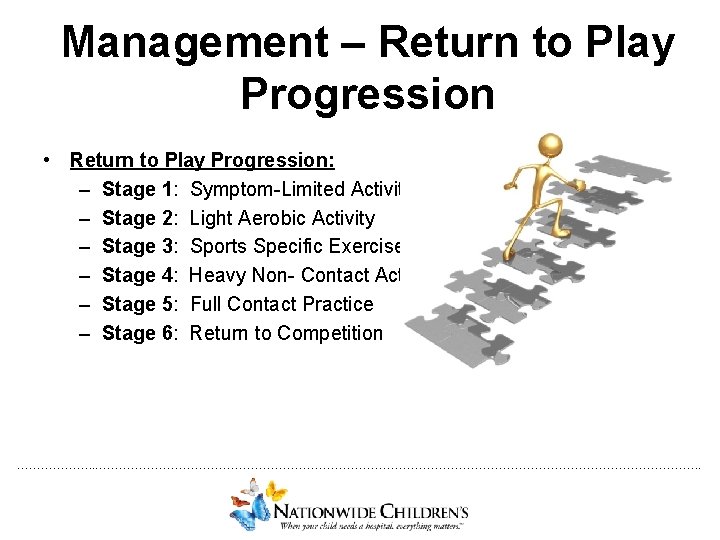
Management – Return to Play Progression • Return to Play Progression: – Stage 1: Symptom-Limited Activity – Stage 2: Light Aerobic Activity – Stage 3: Sports Specific Exercises – Stage 4: Heavy Non- Contact Activity – Stage 5: Full Contact Practice – Stage 6: Return to Competition ………………. . …………………………………………………………………. .
Management – Return to Play Progression • Stage 1: Symptom-Limited Activities – Daily Activities that do not provoke symptoms – Gradual reintroduction to work/school activities – Physical Rest – Mental rest – Limit exposure to light and noise – use sunglasses, avoid parties, concerts, etc. – For pain/headache relief – use Tylenol (avoid NSAIDS – ibuprofen, Advil, Aleve, Motrin for the first 48 -72 hours) and/or ice packs on head/neck. …………………………………………………………………. .
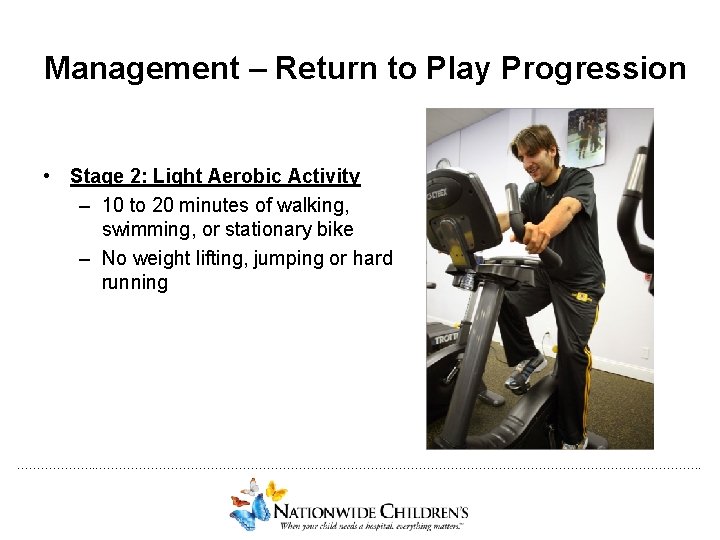
Management – Return to Play Progression • Stage 2: Light Aerobic Activity – 10 to 20 minutes of walking, swimming, or stationary bike – No weight lifting, jumping or hard running ………………. . …………………………………………………………………. .
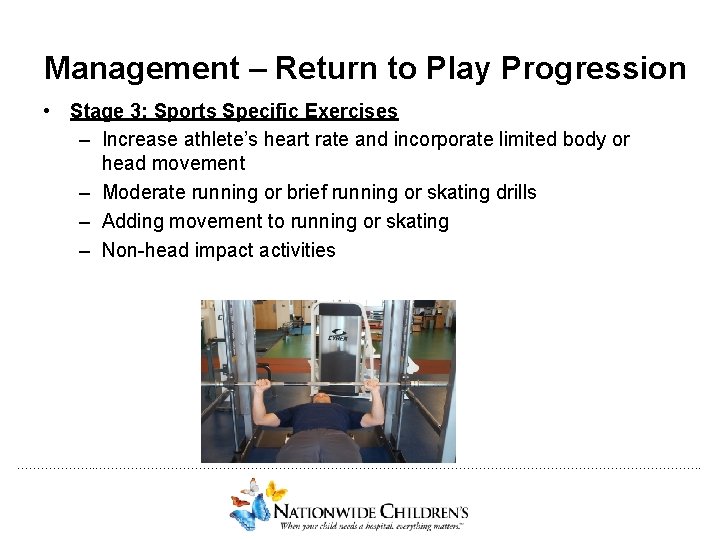
Management – Return to Play Progression • Stage 3: Sports Specific Exercises – Increase athlete’s heart rate and incorporate limited body or head movement – Moderate running or brief running or skating drills – Adding movement to running or skating – Non-head impact activities ………………. . …………………………………………………………………. .
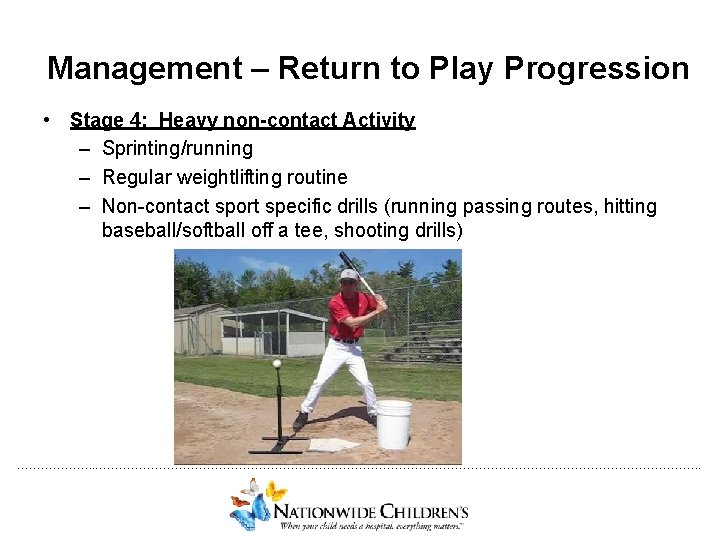
Management – Return to Play Progression • Stage 4: Heavy non-contact Activity – Sprinting/running – Regular weightlifting routine – Non-contact sport specific drills (running passing routes, hitting baseball/softball off a tee, shooting drills) ………………. . …………………………………………………………………. .
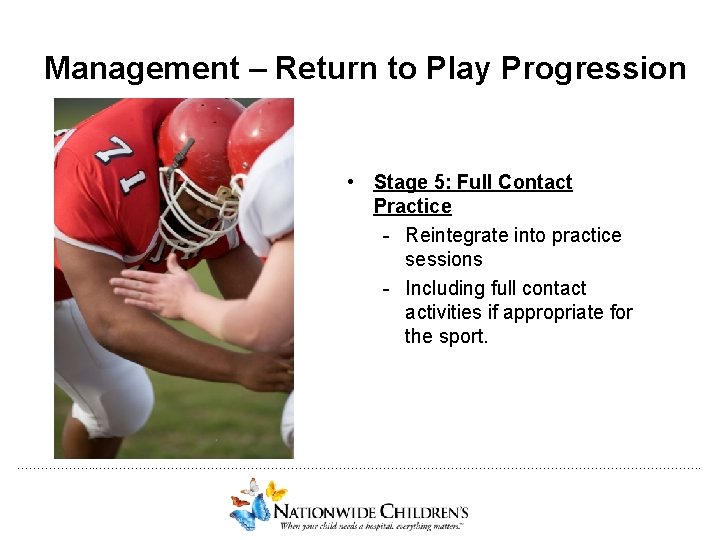
Management – Return to Play Progression • Stage 5: Full Contact Practice - Reintegrate into practice sessions - Including full contact activities if appropriate for the sport. ………………. . …………………………………………………………………. .
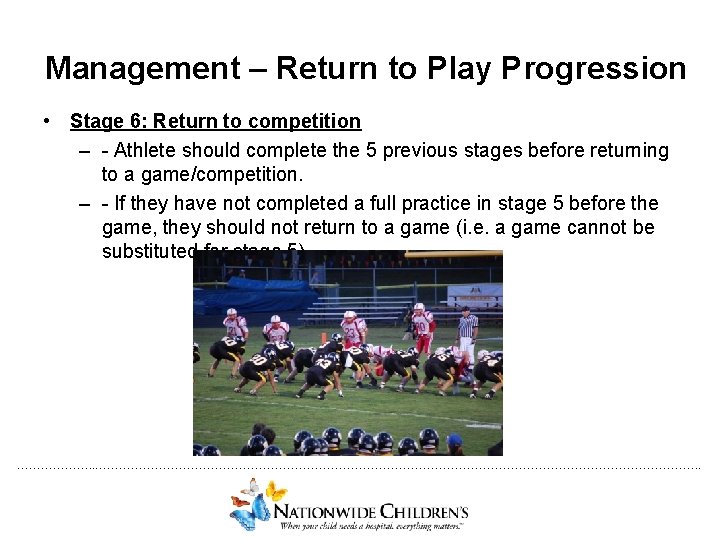
Management – Return to Play Progression • Stage 6: Return to competition – - Athlete should complete the 5 previous stages before returning to a game/competition. – - If they have not completed a full practice in stage 5 before the game, they should not return to a game (i. e. a game cannot be substituted for stage 5) ………………. . …………………………………………………………………. .
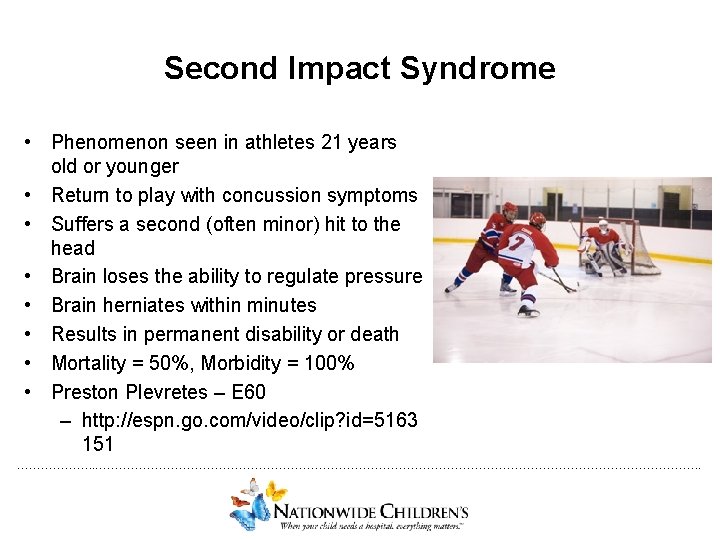
Second Impact Syndrome • Phenomenon seen in athletes 21 years old or younger • Return to play with concussion symptoms • Suffers a second (often minor) hit to the head • Brain loses the ability to regulate pressure • Brain herniates within minutes • Results in permanent disability or death • Mortality = 50%, Morbidity = 100% • Preston Plevretes – E 60 – http: //espn. go. com/video/clip? id=5163 151 ………………. . …………………………………………………………………. .
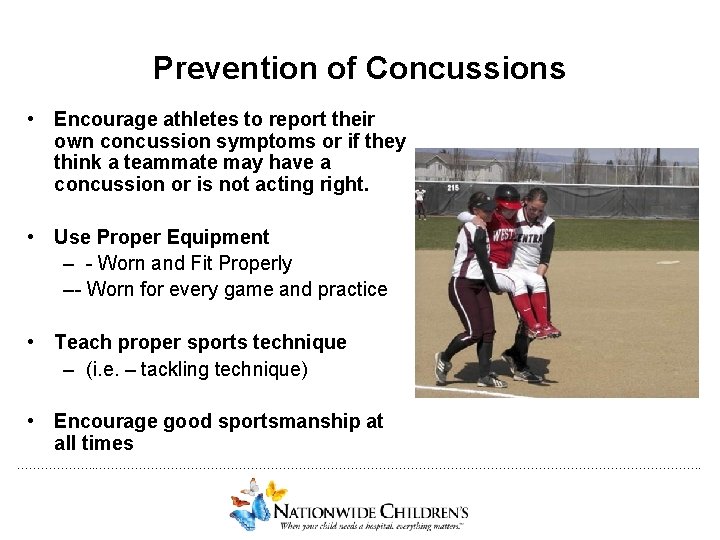
Prevention of Concussions • Encourage athletes to report their own concussion symptoms or if they think a teammate may have a concussion or is not acting right. • Use Proper Equipment – - Worn and Fit Properly –- Worn for every game and practice • Teach proper sports technique – (i. e. – tackling technique) • Encourage good sportsmanship at all times ………………. . …………………………………………………………………. .