
Concussion Education 2012 13 House Bill 632 Section
Concussion Education 2012 -13
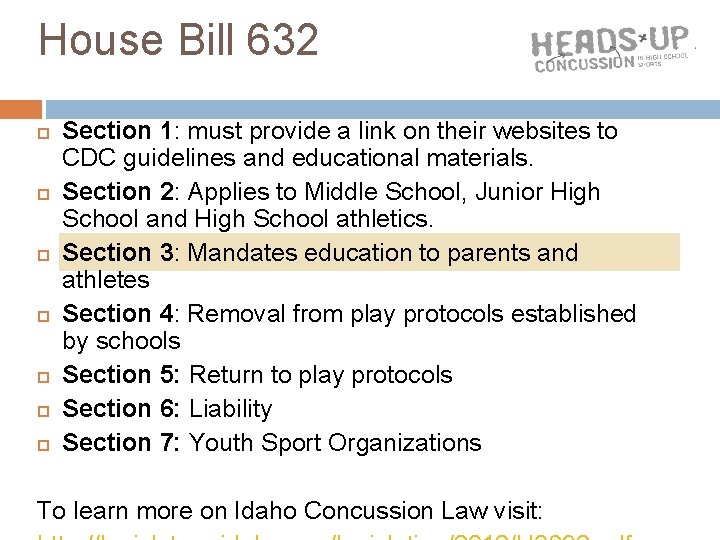
House Bill 632 Section 1: must provide a link on their websites to CDC guidelines and educational materials. Section 2: Applies to Middle School, Junior High School and High School athletics. Section 3: Mandates education to parents and athletes Section 4: Removal from play protocols established by schools Section 5: Return to play protocols Section 6: Liability Section 7: Youth Sport Organizations To learn more on Idaho Concussion Law visit:
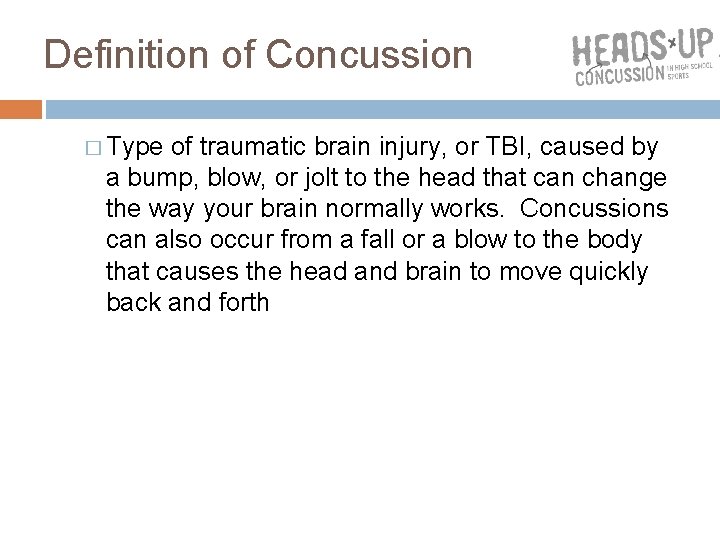
Definition of Concussion � Type of traumatic brain injury, or TBI, caused by a bump, blow, or jolt to the head that can change the way your brain normally works. Concussions can also occur from a fall or a blow to the body that causes the head and brain to move quickly back and forth
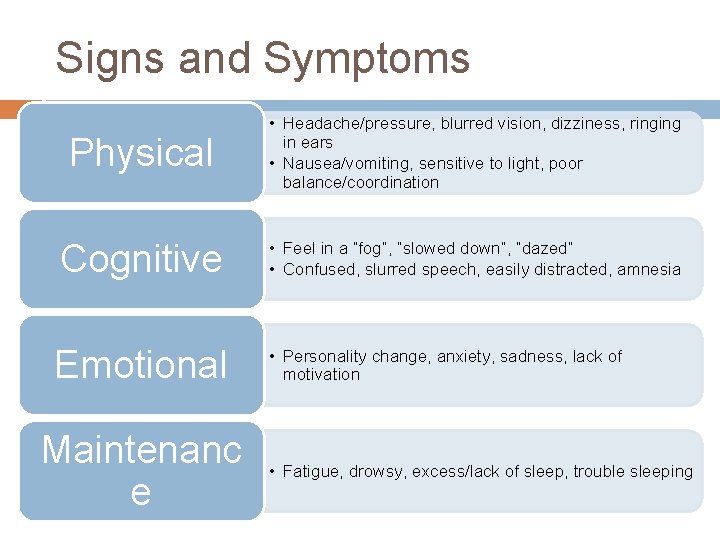
Signs and Symptoms Physical • Headache/pressure, blurred vision, dizziness, ringing in ears • Nausea/vomiting, sensitive to light, poor balance/coordination Cognitive • Feel in a “fog”, “slowed down”, “dazed” • Confused, slurred speech, easily distracted, amnesia Emotional Maintenanc e • Personality change, anxiety, sadness, lack of motivation • Fatigue, drowsy, excess/lack of sleep, trouble sleeping

Observable Signs by Others Observe your Athlete at home! Signs observed by Parent or Guardian Dazed Confused Forgets instruction Clumsy Slow to answer questions Mood shifts Cannot recall events Symptoms Reported by Athlete Sluggish, foggy, groggy Nausea or vomiting Double or blurry vision Sensitive to light Concentration is difficult Notwww. cdc. gov/Concussion “feeling right”
Concussion Education Tips for prevention: � Wear correct protective equipment � Follow coaches’ rules for safety � Encourage good sportsmanship at all times Risk with continued play after concussion � Second Impact Syndrome Though rare, SIS is rapid swelling of the brain. Most instances are fatal, those who live through SIS are often severely disabled.
What to do if you suspect someone has sustained a concussion Parents 1. Keep your teen out of play 2. Seek medical attention 3. Teach your teen that it’s not smart to play with a concussion 4. Inform coach, athletic trainer, school nurse Athletes 1. Tell the coach, athletic trainer, or parents 2. Get a medical check up 3. Give yourself time to heal
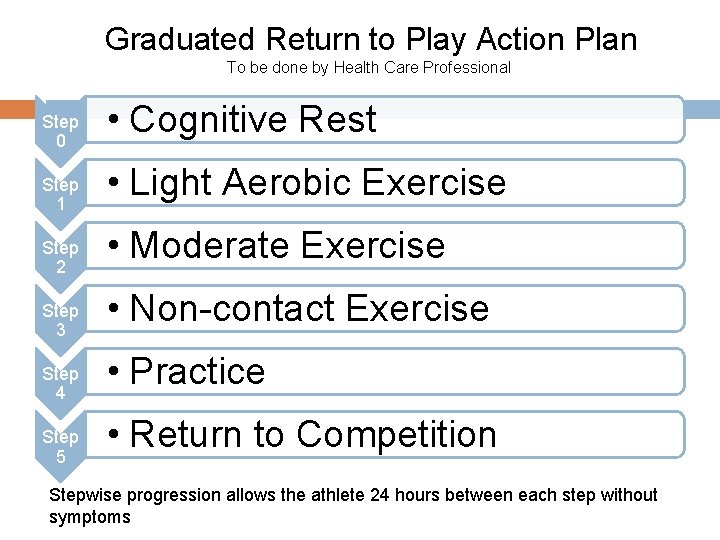
Graduated Return to Play Action Plan To be done by Health Care Professional Step 0 Step 1 Step 2 Step 3 Step 4 Step 5 • Cognitive Rest • Light Aerobic Exercise • Moderate Exercise • Non-contact Exercise • Practice • Return to Competition Stepwise progression allows the athlete 24 hours between each step without symptoms
Resources for parents, athletes and coaches www. stlukesonline. org/spor ts www. cdc. gov/concussion www. nfhslearn. com www. idhssa. org
- Slides: 9