
CONCRETE SURFACE PREPARATION Fred Goodwin Fellow Scientist BASF
CONCRETE SURFACE PREPARATION Fred Goodwin Fellow Scientist BASF Construction Chemicals Beachwood, OH
Surface Preparation: The MOST Important Factor for the Success of Coating and Lining Installations SSPC Definition: “The method or combination of methods used • to clean a concrete surface, • remove loose and weak materials & contaminants, • repair the surface, and • roughen the surface to promote adhesion” • SSPC SP 13 “An acceptable prepared concrete surface should: • be free of contaminants, laitance, loosely adhering concrete, & dust, • provide a sound, uniform substrate • be suitable for the application of the protective coating or lining system. ”
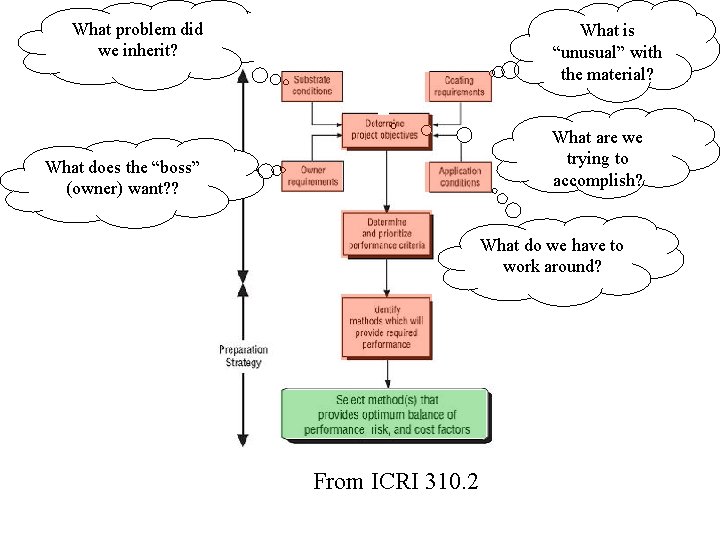
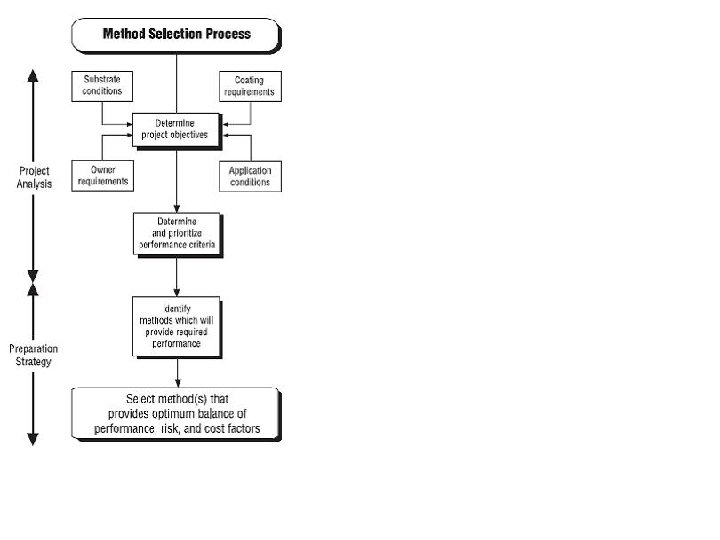
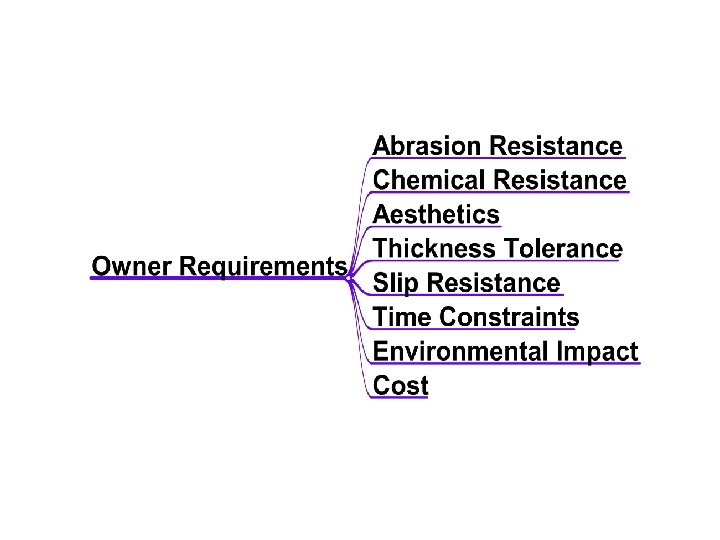
What problem did we inherit? What is “unusual” with the material? What are we trying to accomplish? What does the “boss” (owner) want? ? What do we have to work around? From ICRI 310. 2
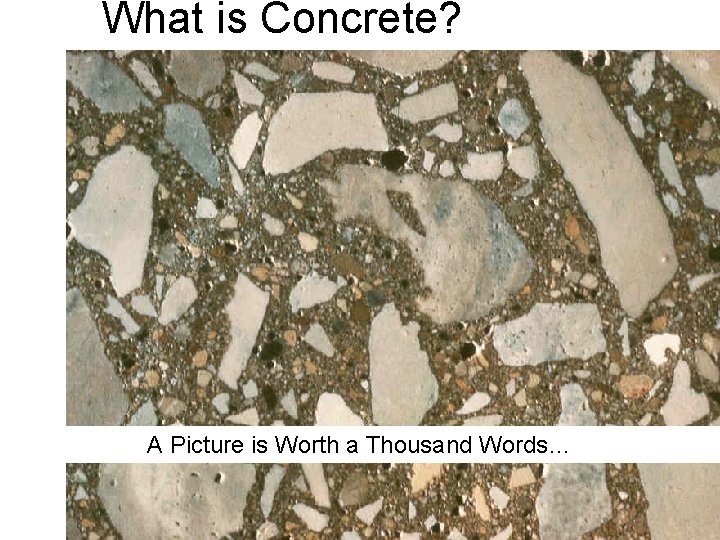
What is Concrete? A Picture is Worth a Thousand Words…
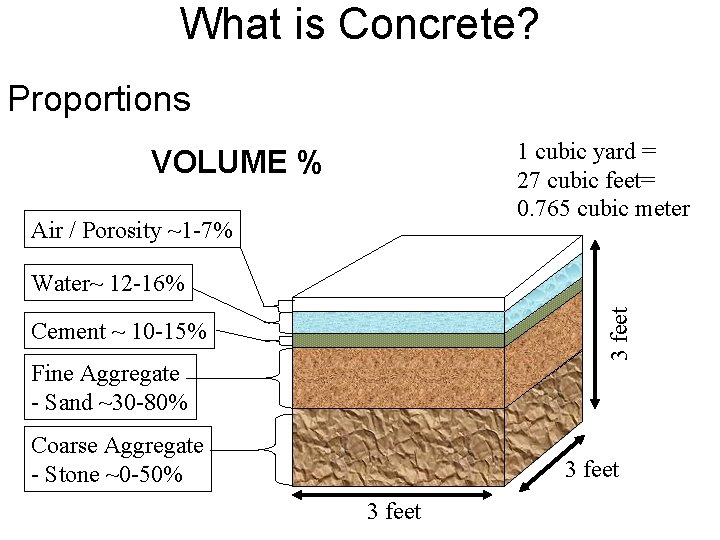
What is Concrete? Proportions 1 cubic yard = 27 cubic feet= 0. 765 cubic meter VOLUME % Air / Porosity ~1 -7% 3 feet Water~ 12 -16% Cement ~ 10 -15% Fine Aggregate - Sand ~30 -80% Coarse Aggregate - Stone ~0 -50% 3 feet
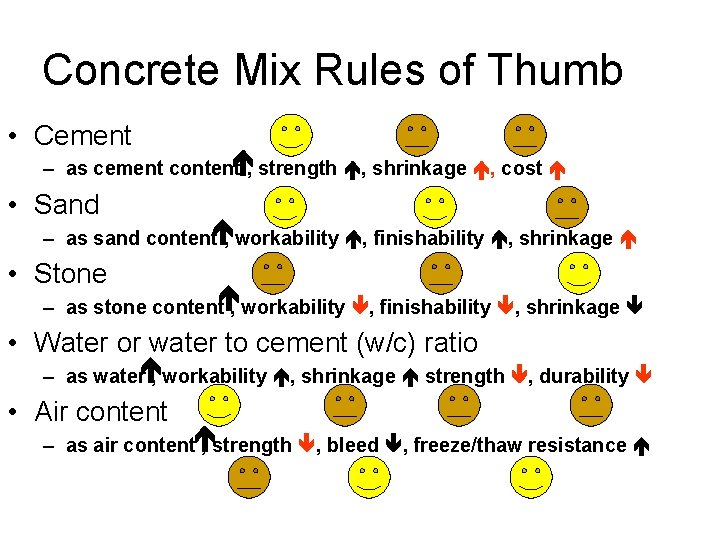
Concrete Mix Rules of Thumb • Cement – as cement content , strength , shrinkage , cost • Sand – as sand content , workability , finishability , shrinkage • Stone – as stone content , workability , finishability , shrinkage • Water or water to cement (w/c) ratio – as water , workability , shrinkage strength , durability • Air content – as air content , strength , bleed , freeze/thaw resistance
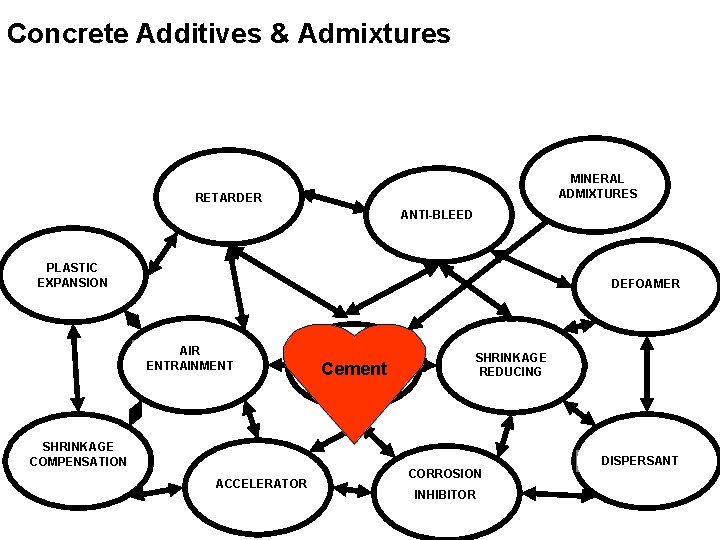
Concrete Additives & Admixtures MINERAL ADMIXTURES RETARDER ANTI-BLEED PLASTIC EXPANSION DEFOAMER AIR ENTRAINMENT SHRINKAGE COMPENSATION ACCELERATOR BINDER Cement SHRINKAGE REDUCING CORROSION INHIBITOR DISPERSANT
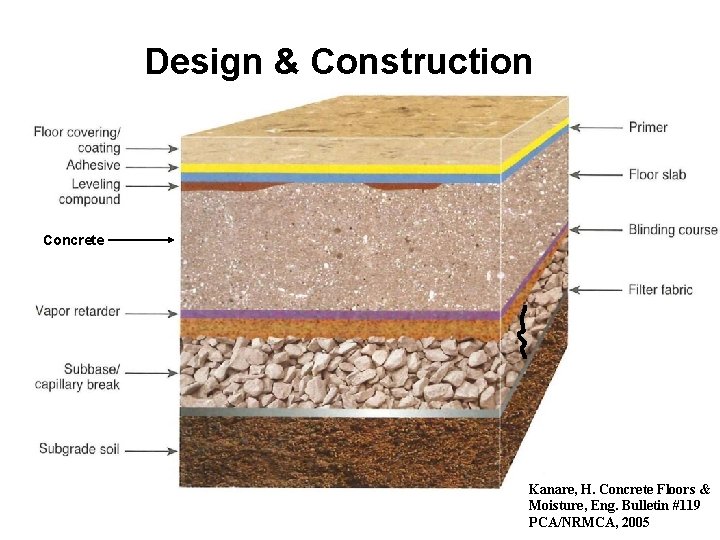
Design & Construction Concrete Kanare, H. Concrete Floors & Moisture, Eng. Bulletin #119 PCA/NRMCA, 2005
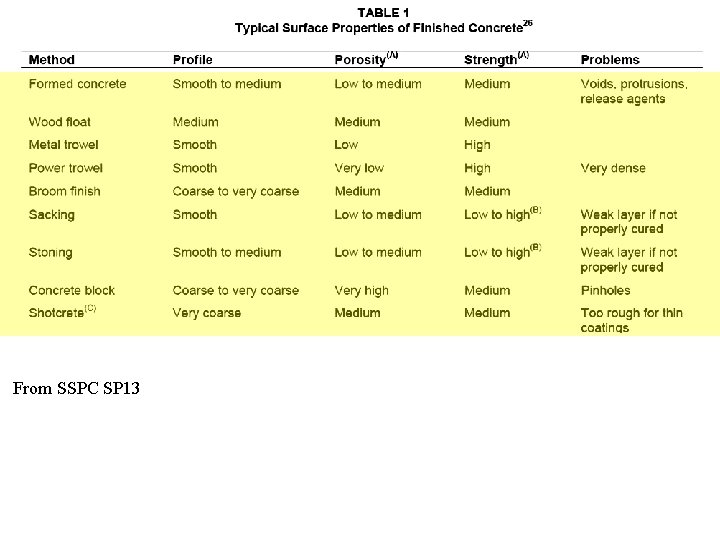
From SSPC SP 13
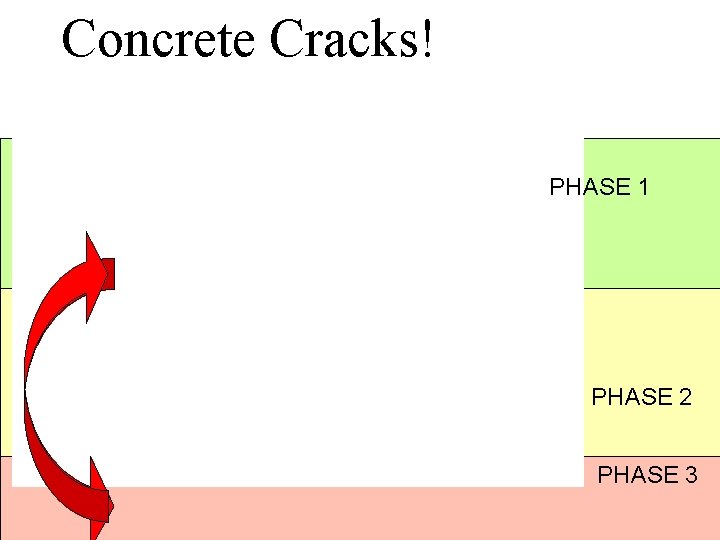
Concrete Cracks! PHASE 1 PHASE 2 PHASE 3
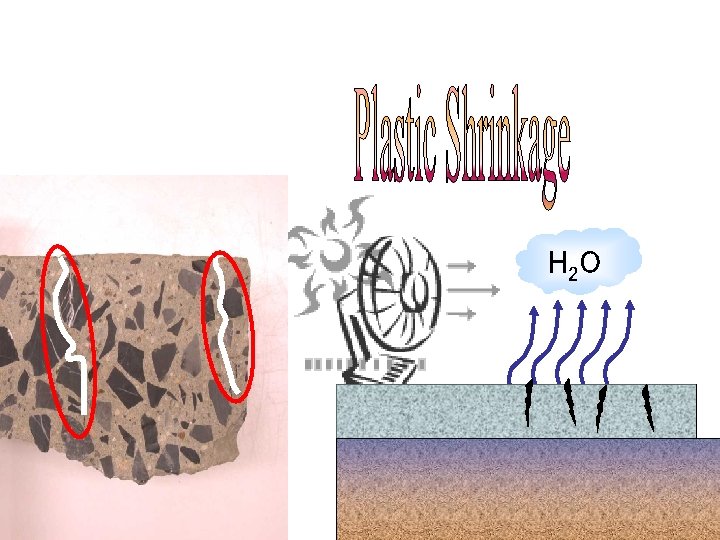
H 2 O

Thermal Cracking
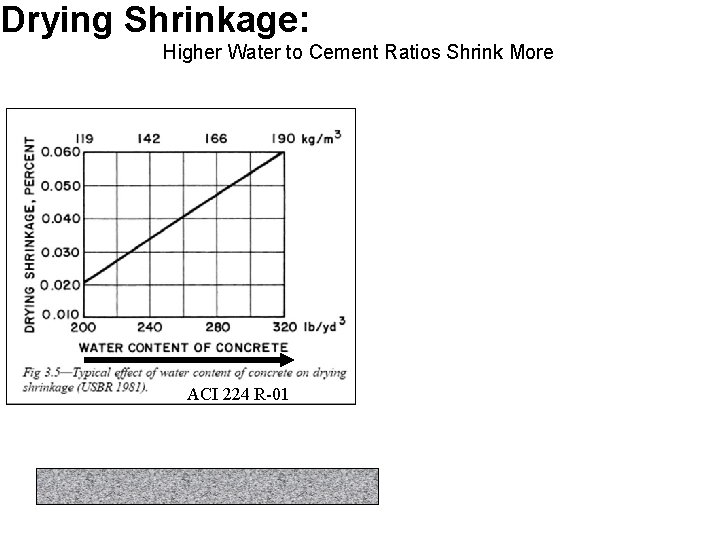
Drying Shrinkage: Higher Water to Cement Ratios Shrink More ACI 224 R-01
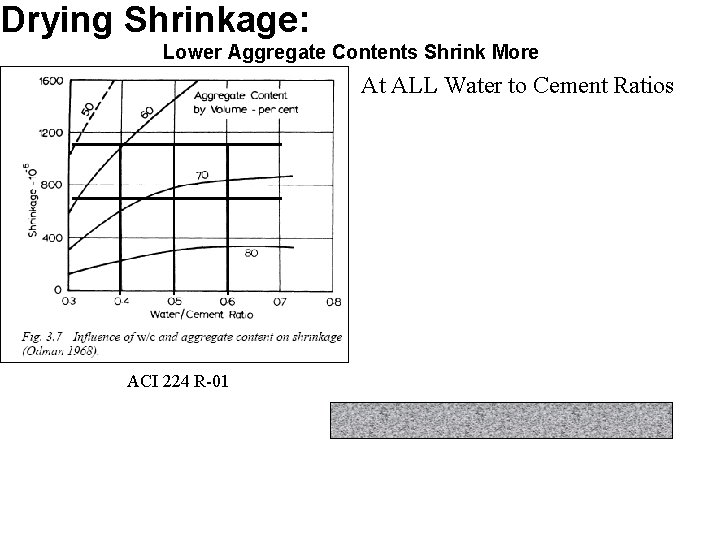
Drying Shrinkage: Lower Aggregate Contents Shrink More At ALL Water to Cement Ratios ACI 224 R-01
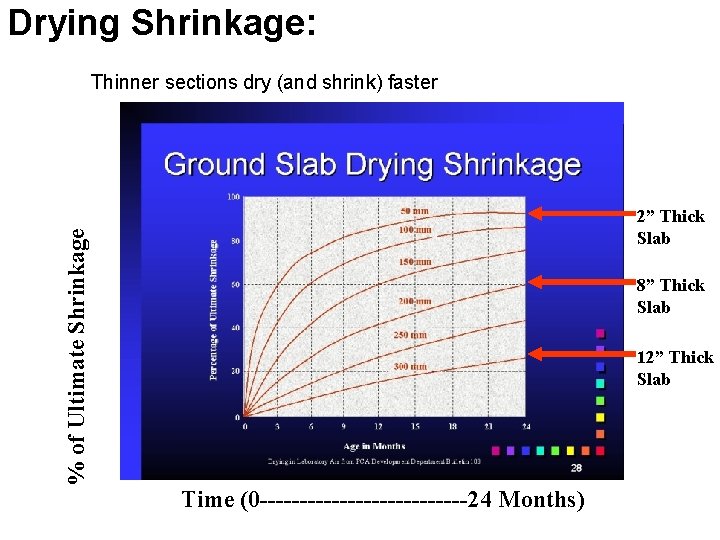
Drying Shrinkage: Thinner sections dry (and shrink) faster % of Ultimate Shrinkage 2” Thick Slab 8” Thick Slab 12” Thick Slab Time (0 -------------24 Months)
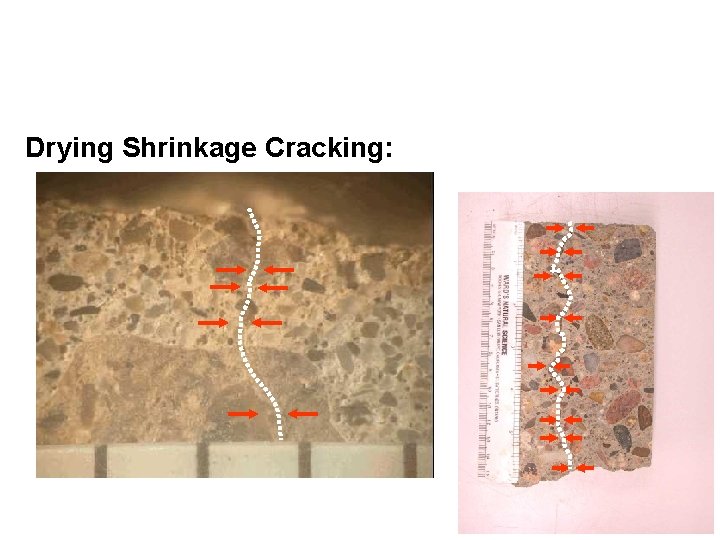
Drying Shrinkage Cracking:
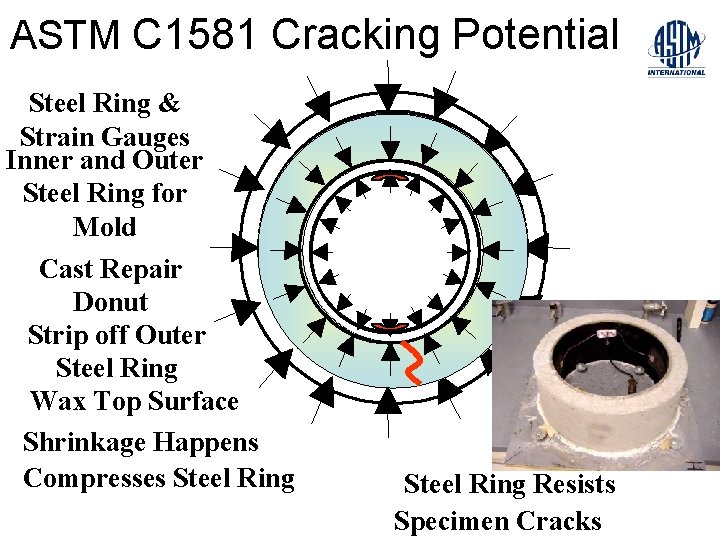
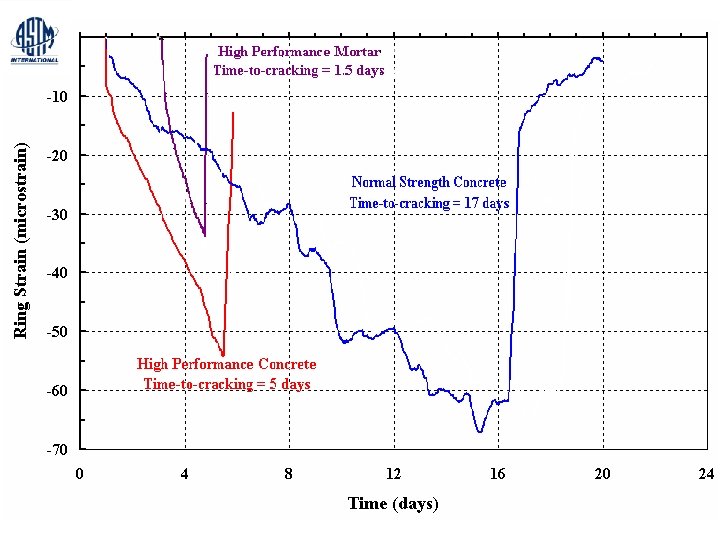
ASTM C 1581 Cracking Potential Steel Ring & Strain Gauges Inner and Outer Steel Ring for Mold Cast Repair Donut Strip off Outer Steel Ring Wax Top Surface Shrinkage Happens Compresses Steel Ring Resists Specimen Cracks
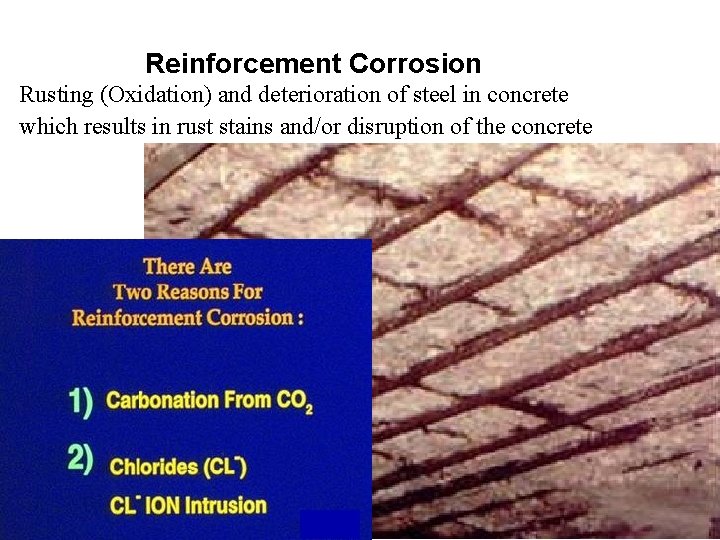
Reinforcement Corrosion Rusting (Oxidation) and deterioration of steel in concrete which results in rust stains and/or disruption of the concrete
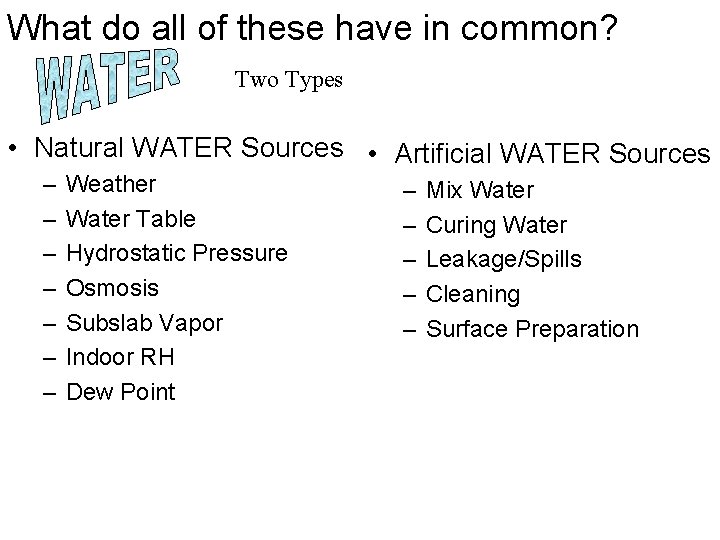
What do all of these have in common? Two Types • Natural WATER Sources • Artificial WATER Sources – – – – Weather Water Table Hydrostatic Pressure Osmosis Subslab Vapor Indoor RH Dew Point – – – Mix Water Curing Water Leakage/Spills Cleaning Surface Preparation
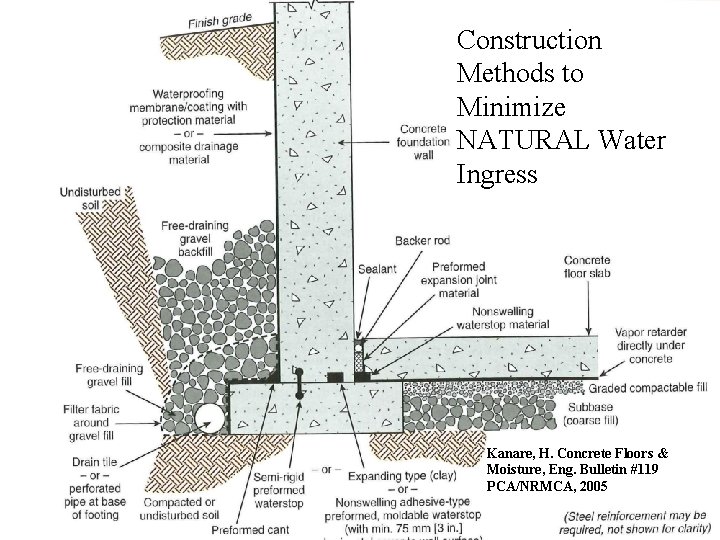
Construction Methods to Minimize NATURAL Water Ingress Kanare, H. Concrete Floors & Moisture, Eng. Bulletin #119 PCA/NRMCA, 2005
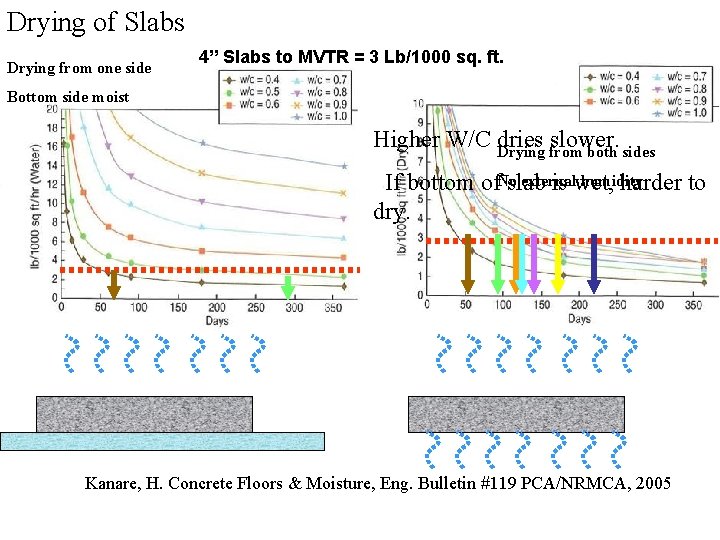
Drying of Slabs Drying from one side 4” Slabs to MVTR = 3 Lb/1000 sq. ft. Bottom side moist Higher W/C dries slower. Drying from both sides external humidity If bottom of. Noslab is wet, harder to dry. Kanare, H. Concrete Floors & Moisture, Eng. Bulletin #119 PCA/NRMCA, 2005
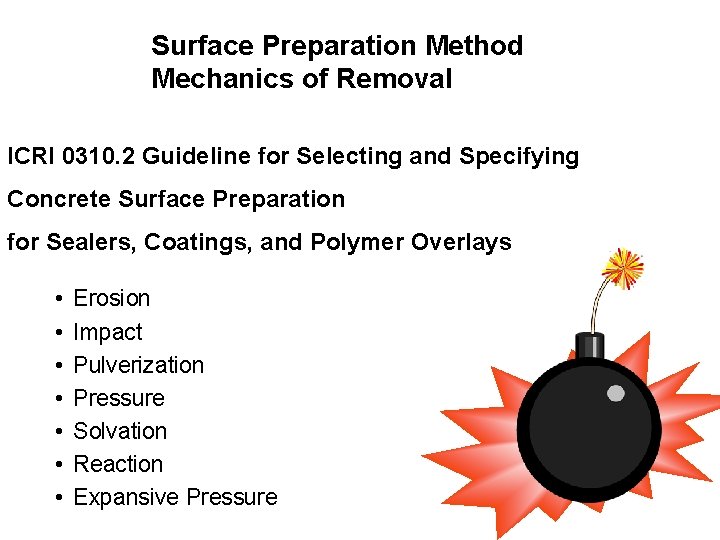
Surface Preparation Method Mechanics of Removal ICRI 0310. 2 Guideline for Selecting and Specifying Concrete Surface Preparation for Sealers, Coatings, and Polymer Overlays • • Erosion Impact Pulverization Pressure Solvation Reaction Expansive Pressure
Mechanics of Removal Objectives – Not Damage Structure – Not Damage Reinforcing Steel – Not Damage Surface To Be Coated – Achieve Satisfactory Surface
Mechanics of Removal ICRI 0310. 2 Guideline for Selecting and Specifying Concrete Surface Preparation for Sealers, Coatings, and Polymer Overlays – – – – Mechanism of Method Limits of Method Surface Texture & Pattern CSP Profiles Problems & Issues with Method Prepared Surface Result Speed of Surface Preparation Range How to QC Surface
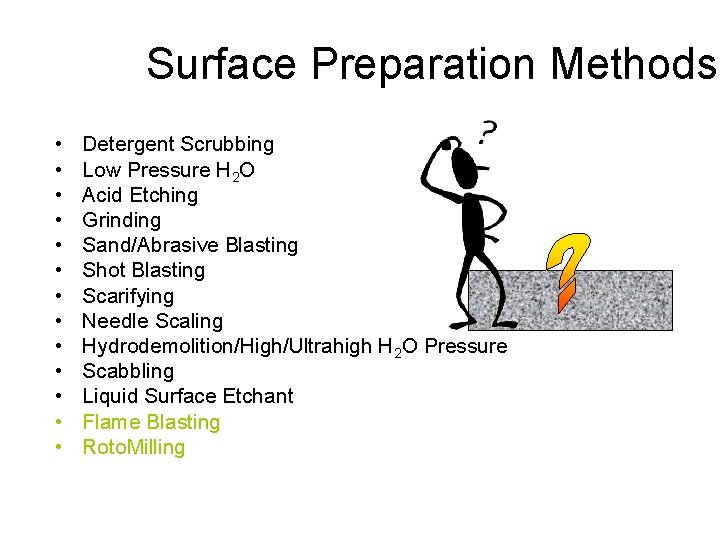
Surface Preparation Methods • • • • Detergent Scrubbing Low Pressure H 2 O Acid Etching Grinding Sand/Abrasive Blasting Shot Blasting Scarifying Needle Scaling Hydrodemolition/High/Ultrahigh H 2 O Pressure Scabbling Liquid Surface Etchant Flame Blasting Roto. Milling
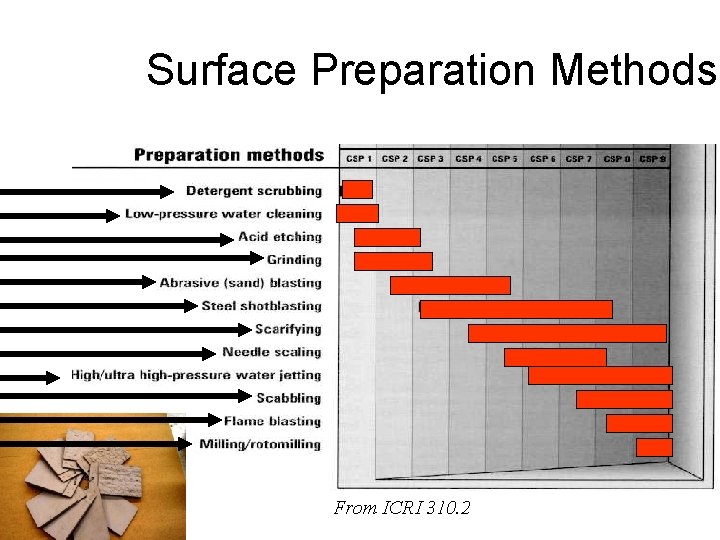
Surface Preparation Methods From ICRI 310. 2
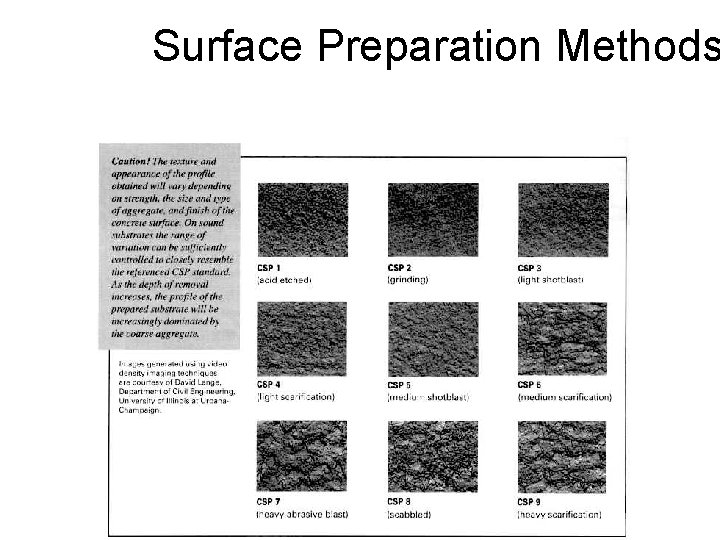
Surface Preparation Methods
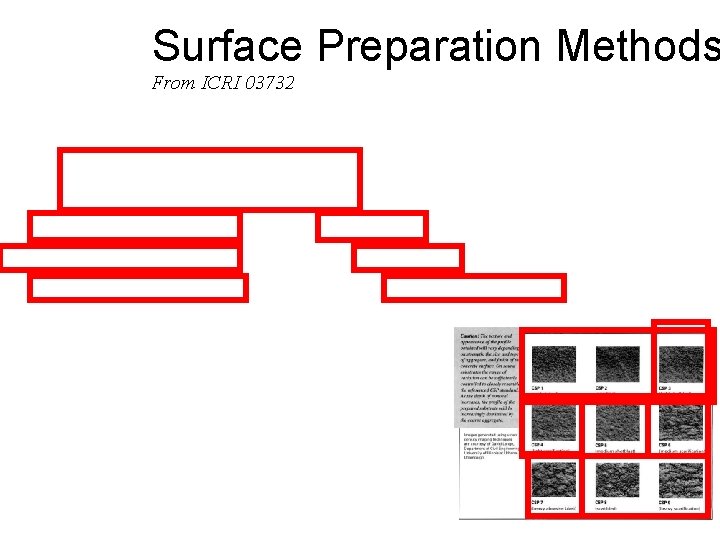
Surface Preparation Methods From ICRI 03732
Removal Methods • Detergent Scrubbing – – – – Method: Solvation, Reaction Limits: Soluble/Emulsifiable Contaminants Surface Texture: No Improvement Profile: ICRI CSP 1 Problems: Solution Disposal Result: Wet Substrate Production: 50 -5000 sq m/hr (Mop→Large Riding Scrubber) QC: Compare to Hand Scrubbed, Water Beading, Slip Tester
Surface Preparation Methods • Low Pressure Water Cleaning – – – – Method: Solvation, Erosion Limits: Soluble/Emulsifiable Contaminants and Loose Debris Surface Texture: No Sound Concrete Removal, No Profile: ICRI CSP 1 Problems: Water & Loose Debris Disposal, Noise, Mist Result: Wet Substrate Production: 25 -200 sq m/hr (hand held→quality of cleaning) QC: Water beading, no loose material
Surface Preparation Methods • Acid Etching – – – Method: Reaction, Solvation Materials: Muriatic (HCl), Sulfamic, Phosphoric, Citric Limits: <10 mils Coatings Surface Texture: Clean, Light Profile: ICRI CSP 1 -3 Problems: Corrosive Solution, Rinse Water, Neutralization Concrete >6 weeks old, Vacuum Removal – Result: Wet Substrate – Production: 150 -750 sq m/hr (hand scrubbing, vacuuming-medium scrubber) – QC: Sandpaper type surface, p. H
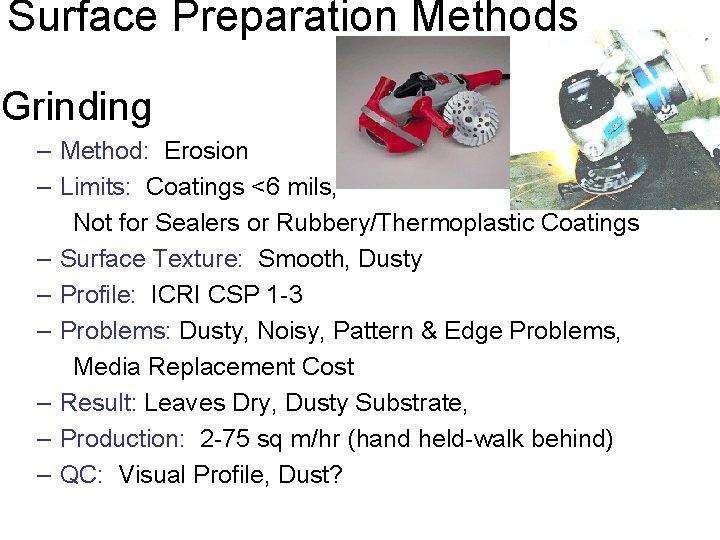
Surface Preparation Methods Grinding – Method: Erosion – Limits: Coatings <6 mils, Not for Sealers or Rubbery/Thermoplastic Coatings – Surface Texture: Smooth, Dusty – Profile: ICRI CSP 1 -3 – Problems: Dusty, Noisy, Pattern & Edge Problems, Media Replacement Cost – Result: Leaves Dry, Dusty Substrate, – Production: 2 -75 sq m/hr (hand held-walk behind) – QC: Visual Profile, Dust?
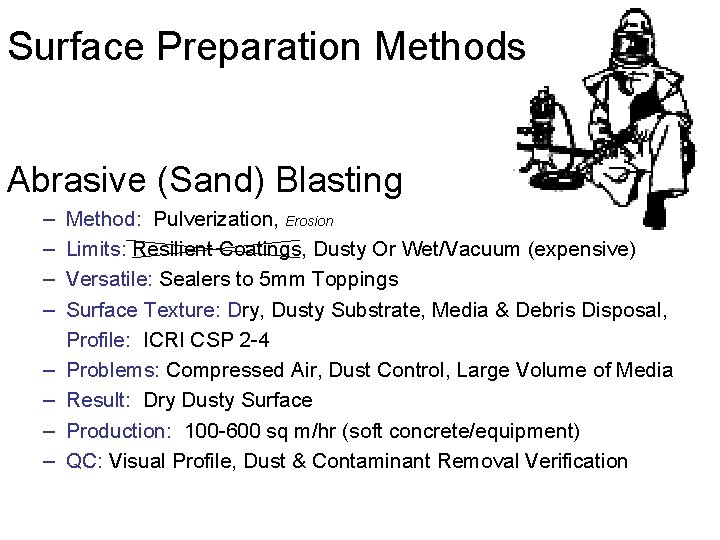
Surface Preparation Methods Abrasive (Sand) Blasting – – – – Method: Pulverization, Erosion Limits: Resilient Coatings, Dusty Or Wet/Vacuum (expensive) Versatile: Sealers to 5 mm Toppings Surface Texture: Dry, Dusty Substrate, Media & Debris Disposal, Profile: ICRI CSP 2 -4 Problems: Compressed Air, Dust Control, Large Volume of Media Result: Dry Dusty Surface Production: 100 -600 sq m/hr (soft concrete/equipment) QC: Visual Profile, Dust & Contaminant Removal Verification
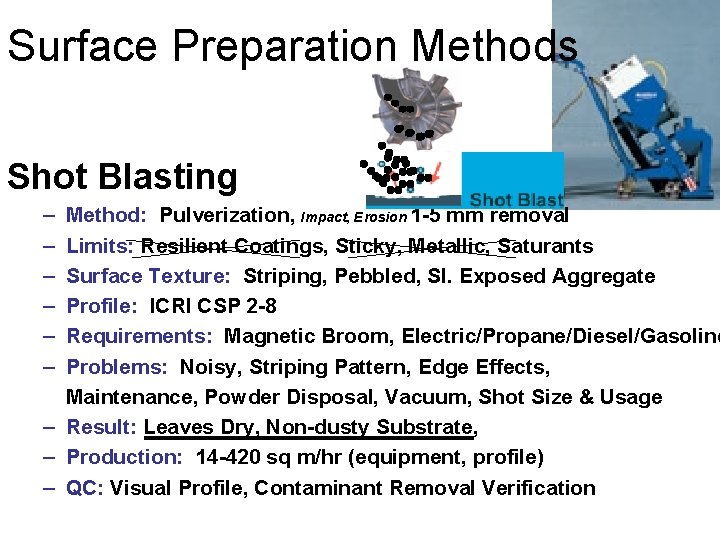
Surface Preparation Methods Shot Blasting – – – Method: Pulverization, Impact, Erosion 1 -5 mm removal Limits: Resilient Coatings, Sticky, Metallic, Saturants Surface Texture: Striping, Pebbled, Sl. Exposed Aggregate Profile: ICRI CSP 2 -8 Requirements: Magnetic Broom, Electric/Propane/Diesel/Gasoline Problems: Noisy, Striping Pattern, Edge Effects, Maintenance, Powder Disposal, Vacuum, Shot Size & Usage – Result: Leaves Dry, Non-dusty Substrate, – Production: 14 -420 sq m/hr (equipment, profile) – QC: Visual Profile, Contaminant Removal Verification
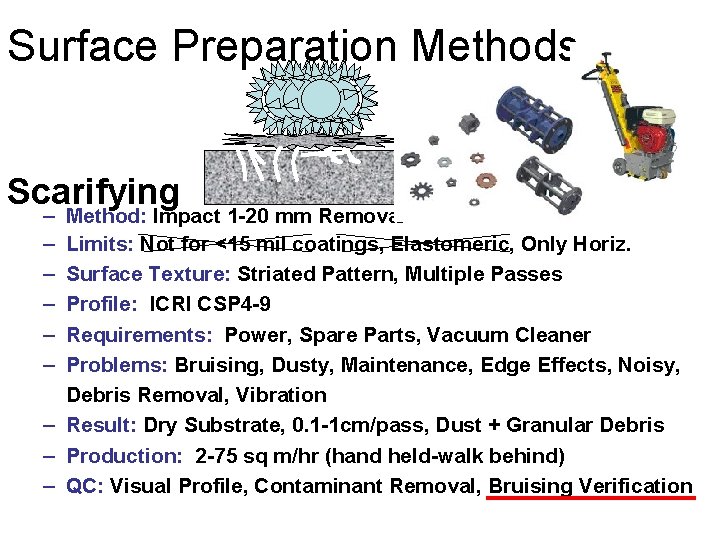
Surface Preparation Methods Scarifying – – – Method: Impact 1 -20 mm Removal Limits: Not for <15 mil coatings, Elastomeric, Only Horiz. Surface Texture: Striated Pattern, Multiple Passes Profile: ICRI CSP 4 -9 Requirements: Power, Spare Parts, Vacuum Cleaner Problems: Bruising, Dusty, Maintenance, Edge Effects, Noisy, Debris Removal, Vibration – Result: Dry Substrate, 0. 1 -1 cm/pass, Dust + Granular Debris – Production: 2 -75 sq m/hr (hand held-walk behind) – QC: Visual Profile, Contaminant Removal, Bruising Verification
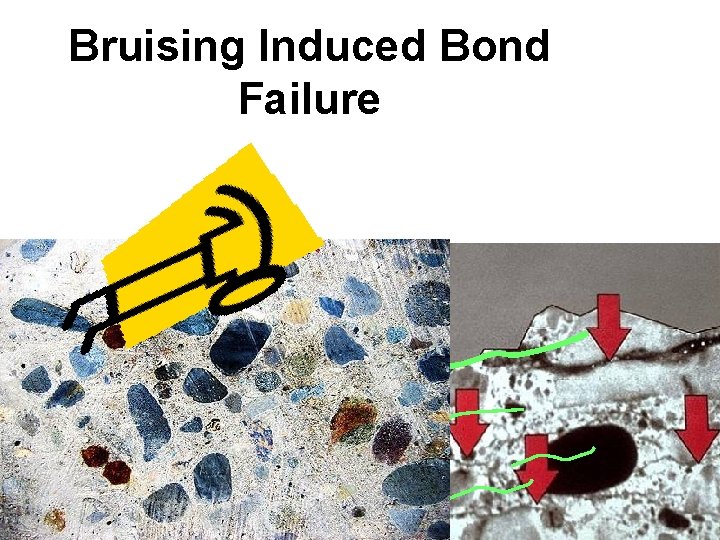
Bruising Induced Bond Failure
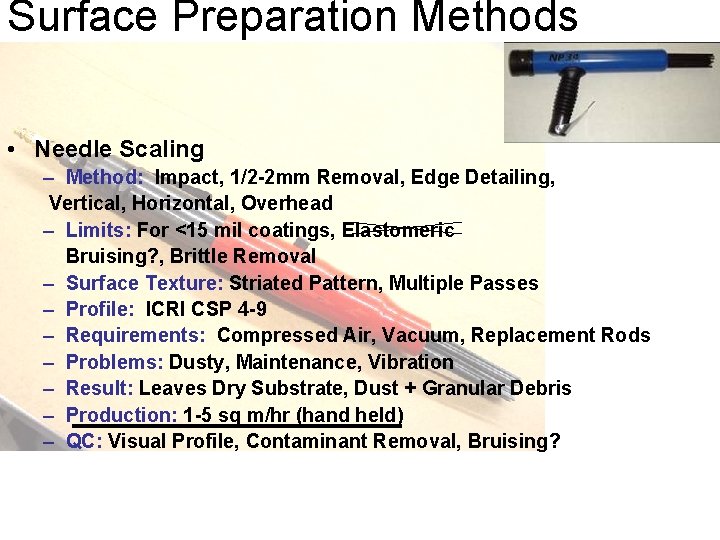
Surface Preparation Methods • Needle Scaling – Method: Impact, 1/2 -2 mm Removal, Edge Detailing, Vertical, Horizontal, Overhead – Limits: For <15 mil coatings, Elastomeric Bruising? , Brittle Removal – Surface Texture: Striated Pattern, Multiple Passes – Profile: ICRI CSP 4 -9 – Requirements: Compressed Air, Vacuum, Replacement Rods – Problems: Dusty, Maintenance, Vibration – Result: Leaves Dry Substrate, Dust + Granular Debris – Production: 1 -5 sq m/hr (hand held) – QC: Visual Profile, Contaminant Removal, Bruising?
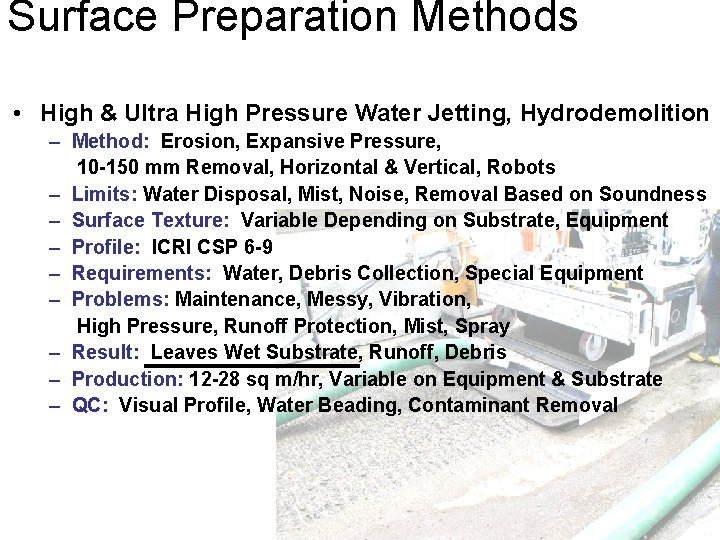
Surface Preparation Methods • High & Ultra High Pressure Water Jetting, Hydrodemolition – Method: Erosion, Expansive Pressure, 10 -150 mm Removal, Horizontal & Vertical, Robots – Limits: Water Disposal, Mist, Noise, Removal Based on Soundness – Surface Texture: Variable Depending on Substrate, Equipment – Profile: ICRI CSP 6 -9 – Requirements: Water, Debris Collection, Special Equipment – Problems: Maintenance, Messy, Vibration, High Pressure, Runoff Protection, Mist, Spray – Result: Leaves Wet Substrate, Runoff, Debris – Production: 12 -28 sq m/hr, Variable on Equipment & Substrate – QC: Visual Profile, Water Beading, Contaminant Removal
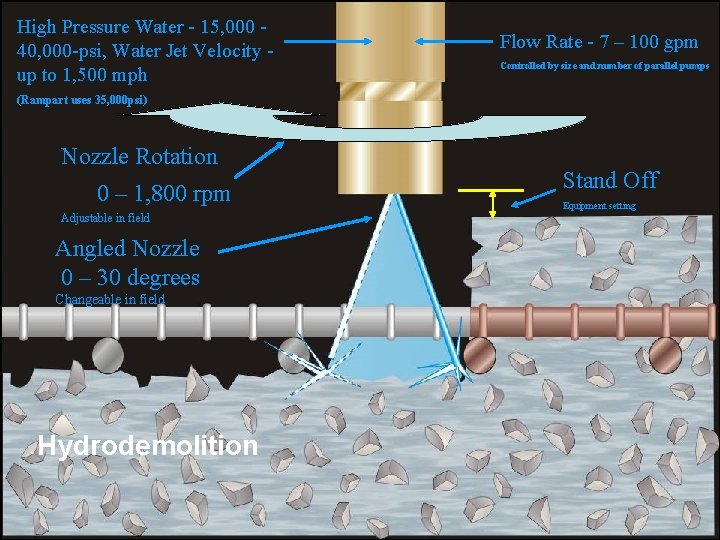
High Pressure Water - 15, 000 40, 000 -psi, Water Jet Velocity up to 1, 500 mph Flow Rate - 7 – 100 gpm Controlled by size and number of parallel pumps (Rampart uses 35, 000 psi) Nozzle Rotation 0 – 1, 800 rpm Adjustable in field Angled Nozzle 0 – 30 degrees Changeable in field Hydrodemolition Stand Off Equipment setting
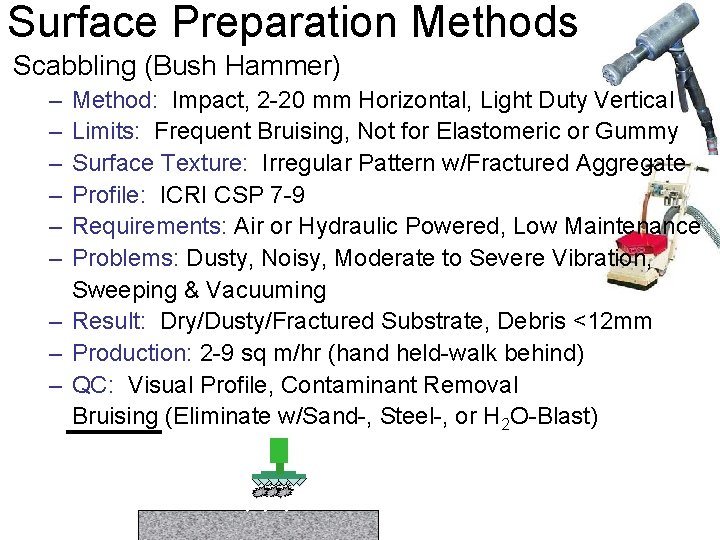
Surface Preparation Methods Scabbling (Bush Hammer) – – – Method: Impact, 2 -20 mm Horizontal, Light Duty Vertical Limits: Frequent Bruising, Not for Elastomeric or Gummy Surface Texture: Irregular Pattern w/Fractured Aggregate Profile: ICRI CSP 7 -9 Requirements: Air or Hydraulic Powered, Low Maintenance Problems: Dusty, Noisy, Moderate to Severe Vibration, Sweeping & Vacuuming – Result: Dry/Dusty/Fractured Substrate, Debris <12 mm – Production: 2 -9 sq m/hr (hand held-walk behind) – QC: Visual Profile, Contaminant Removal Bruising (Eliminate w/Sand-, Steel-, or H 2 O-Blast)
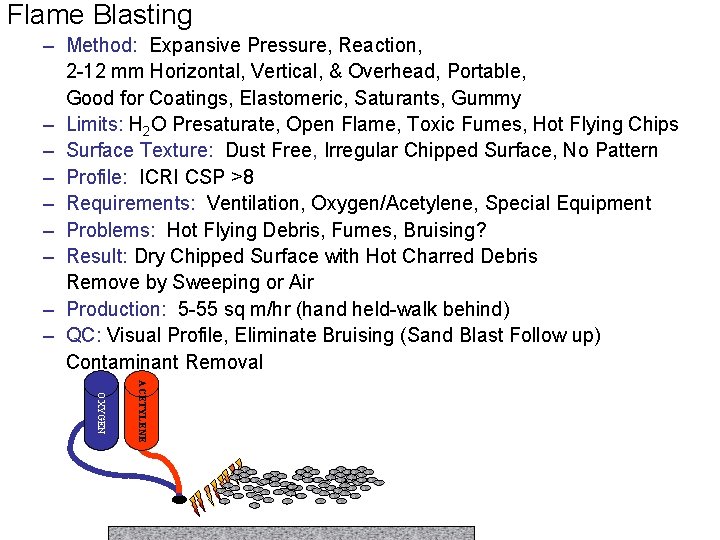
Flame Blasting – Method: Expansive Pressure, Reaction, 2 -12 mm Horizontal, Vertical, & Overhead, Portable, Good for Coatings, Elastomeric, Saturants, Gummy – Limits: H 2 O Presaturate, Open Flame, Toxic Fumes, Hot Flying Chips – Surface Texture: Dust Free, Irregular Chipped Surface, No Pattern – Profile: ICRI CSP >8 – Requirements: Ventilation, Oxygen/Acetylene, Special Equipment – Problems: Hot Flying Debris, Fumes, Bruising? – Result: Dry Chipped Surface with Hot Charred Debris Remove by Sweeping or Air – Production: 5 -55 sq m/hr (hand held-walk behind) – QC: Visual Profile, Eliminate Bruising (Sand Blast Follow up) Contaminant Removal ACETYLENE OXYGEN
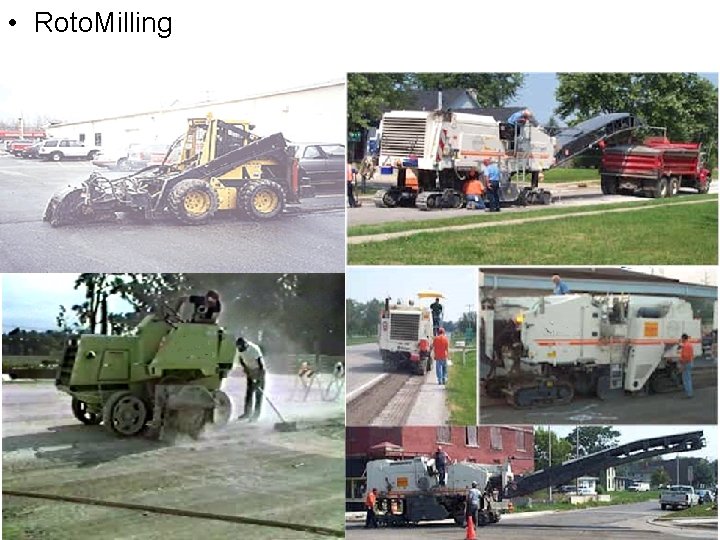
• Roto. Milling – Method: Impact, Horizontal 4 -100 mm depth, – Limits: Bruising, Edge & Corner Effects, Straight Path, Clearance, Overlapping Passes, Large Volume Debris – Surface Texture: Deep Profile, Striated or Grooved Pattern, Fractured Aggregate – ICRI CSP: 9 – Requirements: Support of Heavy Equipment, Special Equipment – Problems: Bruising, Clearance, Heavy, Large Areas, Dust, Noise, Vibration, Removal of Large Volume of Debris – Result: Very Rough, Chipped Surface, Grooves – Production: 9 -1400 sq m/hr (size of machine) – QC: Visual Profile, Contaminant Removal, Eliminate Bruising (Sand, Steel, or H 2 O Blast Follow up)
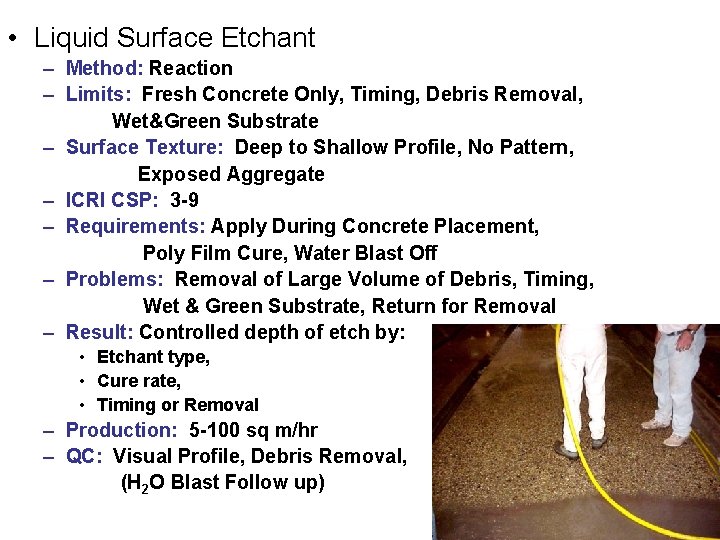
• Liquid Surface Etchant – Method: Reaction – Limits: Fresh Concrete Only, Timing, Debris Removal, Wet&Green Substrate – Surface Texture: Deep to Shallow Profile, No Pattern, Exposed Aggregate – ICRI CSP: 3 -9 – Requirements: Apply During Concrete Placement, Poly Film Cure, Water Blast Off – Problems: Removal of Large Volume of Debris, Timing, Wet & Green Substrate, Return for Removal – Result: Controlled depth of etch by: • Etchant type, • Cure rate, • Timing or Removal – Production: 5 -100 sq m/hr – QC: Visual Profile, Debris Removal, (H 2 O Blast Follow up)
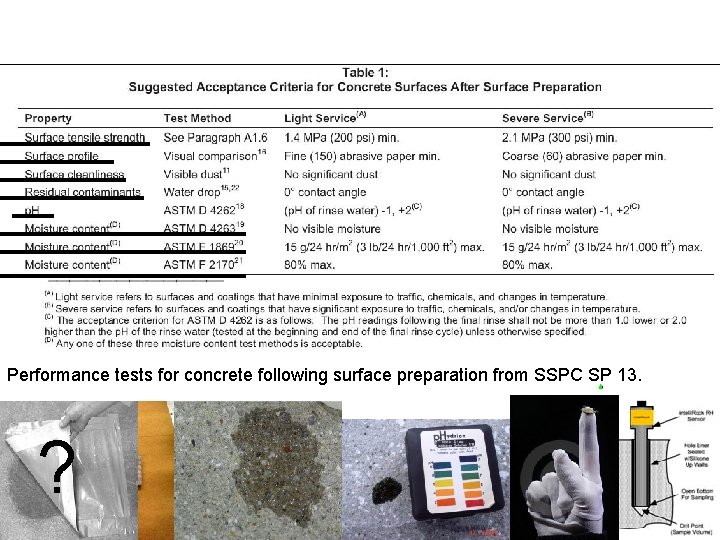
Performance tests for concrete following surface preparation from SSPC SP 13. ?
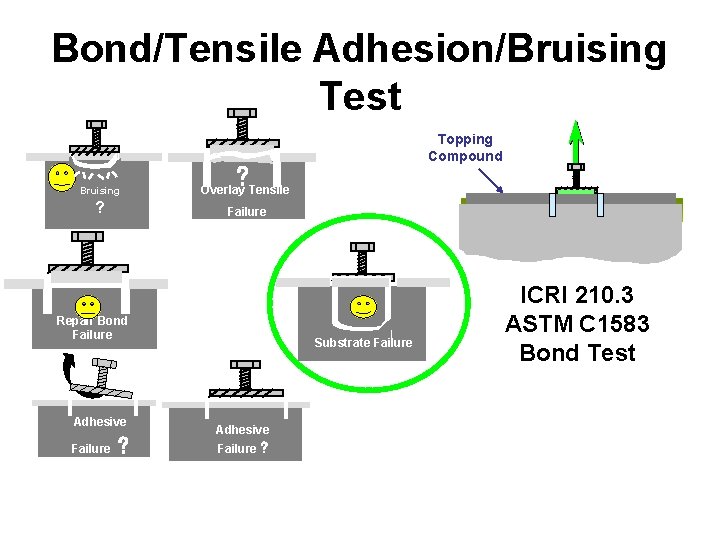
Bond/Tensile Adhesion/Bruising Test ? Bruising Overlay Tensile ? Failure Repair Bond Failure Adhesive Failure ? Topping Compound Concrete Substrate Failure Adhesive Failure ? ICRI 210. 3 ASTM C 1583 Bond Test
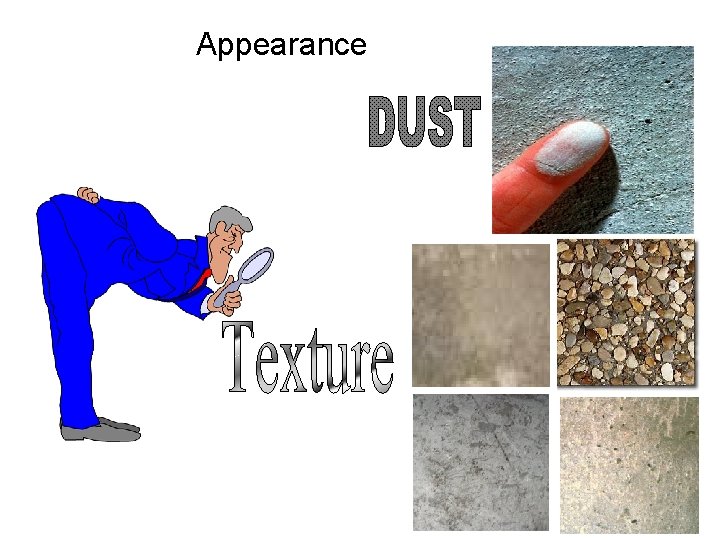
Appearance
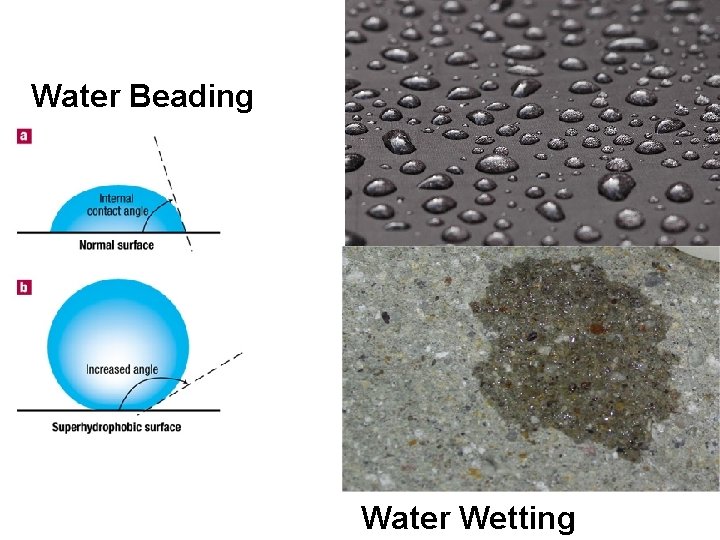
Water Beading Water Wetting
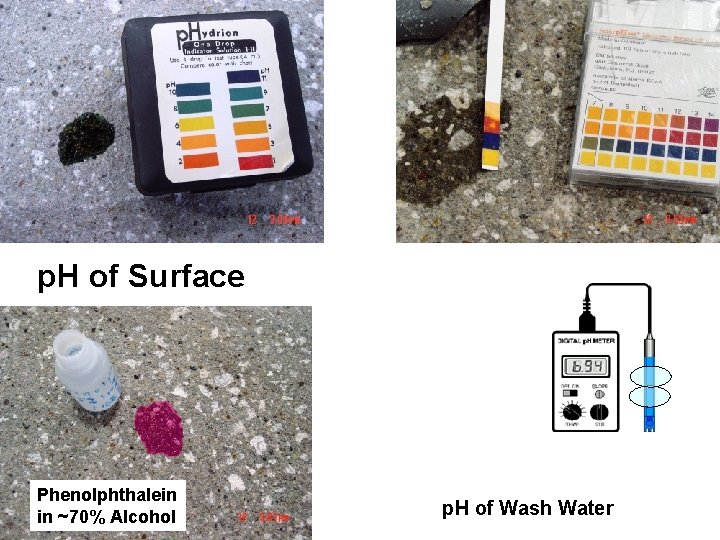
p. H of Surface Phenolphthalein in ~70% Alcohol p. H of Wash Water
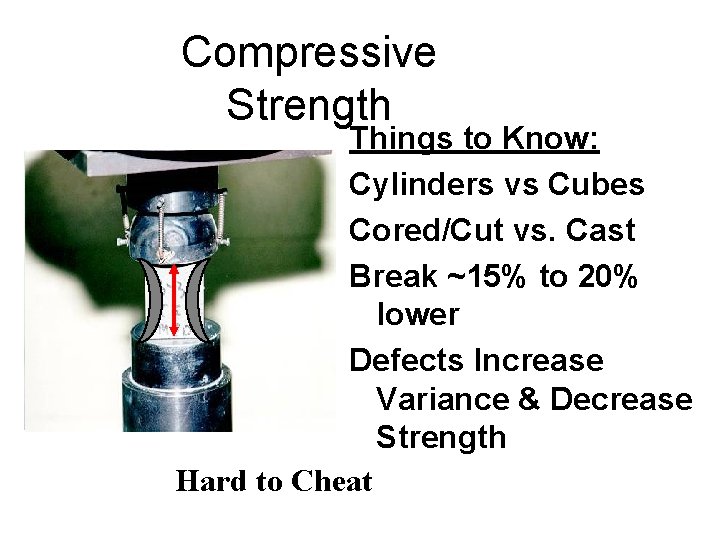
Compressive Strength Things to Know: Cylinders vs Cubes Cored/Cut vs. Cast Break ~15% to 20% lower Defects Increase Variance & Decrease Strength Hard to Cheat
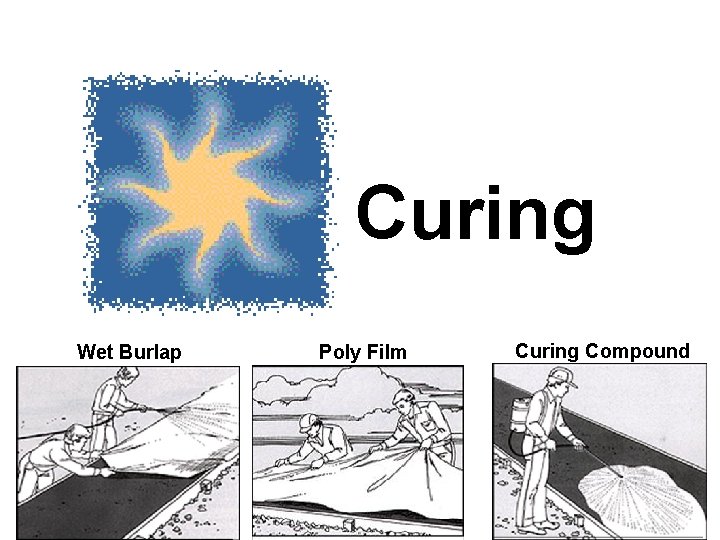
Curing Wet Burlap Poly Film Curing Compound
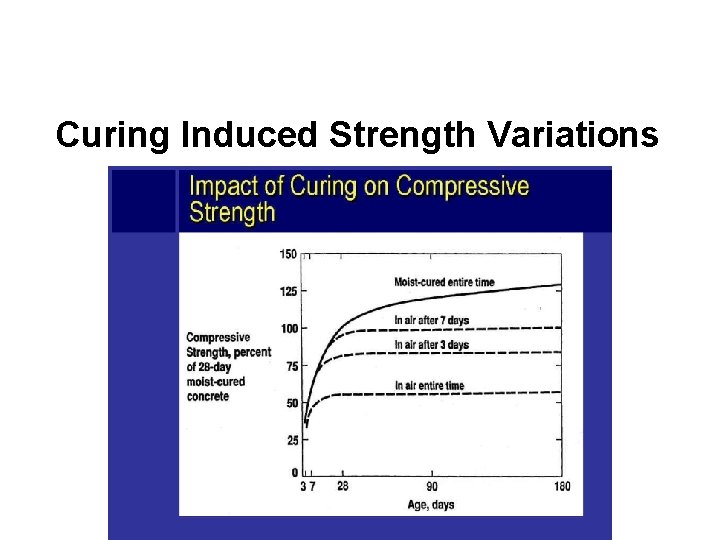
Curing Induced Strength Variations
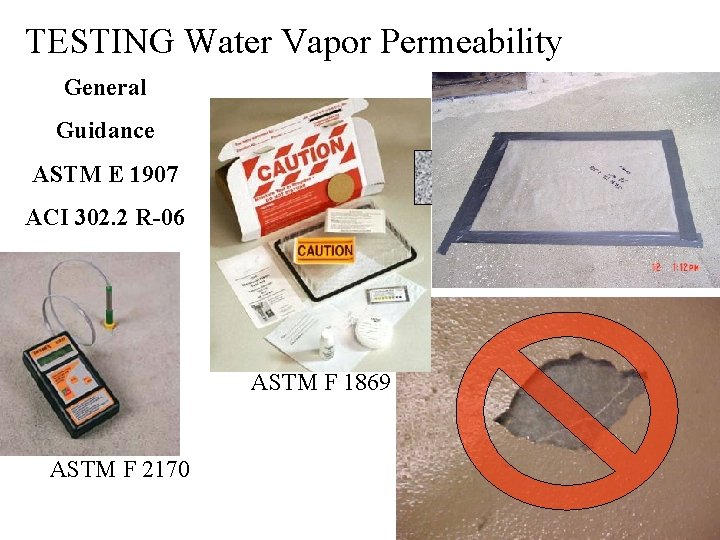
TESTING Water Vapor Permeability General Guidance ASTM E 1907 ACI 302. 2 R-06 ASTM D 4263 ASTM F 1869 ASTM F 2170
Substrate Conditions




BASF Construction Chemicals ? Fred Goodwin Fellow Scientist

- Slides: 62