
CONCRETE PAVEMENTS DIFFERENCES BETWEEN CONCRETE AND ASPHALT PAVEMENT
CONCRETE PAVEMENTS

DIFFERENCES BETWEEN CONCRETE AND ASPHALT PAVEMENT
DIFFERENCES BETWEEN CONCRETE AND ASPHALT PAVEMENT Cont… • • Asphalt pavement is flexible pavement Concrete pavement is rigid pavement In both pavement load is distributed over subgrade Major factor in rigid pavement is structural strength of concrete • In concrete pavement reinforcement, texture, colour can be provided • After 10 -15 years asphalt pavement need rehabilitation • Asphalt pavement is more susceptible to water
CONCRETE PAVEMENT FUNDAMENTALS • Concrete pavement is becoming more versatile pavement. • They may be designed for a life of 5, 10, 20, 50 years. • Each concrete pavement consist of important components: • • • Transverse joint Tie bar Dowel bar Sub base Sub grade Longitudinal joint
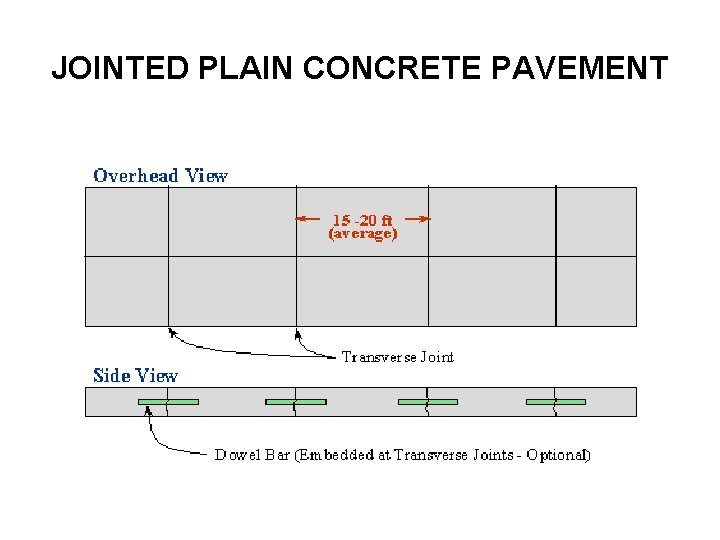
JOINTED PLAIN CONCRETE PAVEMENT • Jointed Plain Concrete Pavement contain enough joints to control natural cracks • JPCP do not contain any steel reinforcement • Smooth steel bars at transverse joints and deformed steel bars at longitudinal joints • Today majority of the U. S state agencies build jointed plain pavement
CONCRETE PAVEMENT TYPES • Concrete pavement is divided in to 3 types 1. 2. 3. Jointed plain Jointed reinforced Continuously reinforced • Each type used to control crack development • Crack development due to concrete shrinks, contracts and expands • Cracking can be controlled by use of joints and reinforcing steel
JOINTED PLAIN CONCRETE PAVEMENT
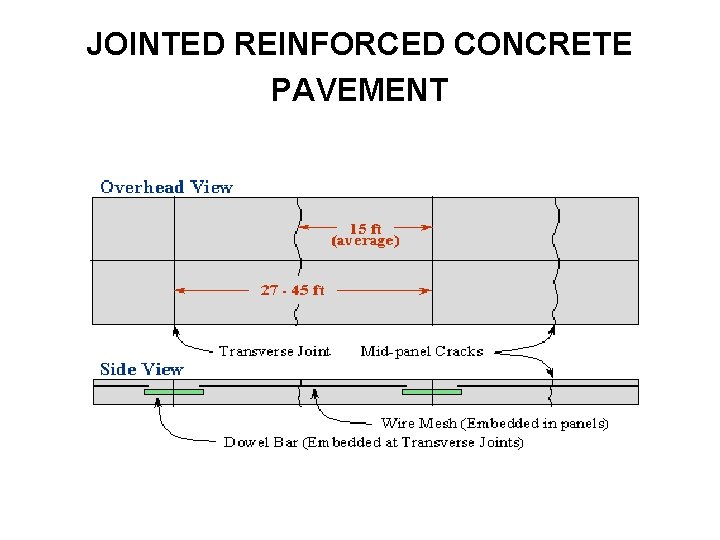
JOINTED REINFORCED CONCRETE PAVEMENT • Jointed Reinforced Concrete Pavements contain steel mesh reinforcement • In JRCP designers increase the joint spacing purposely and include reinforcing steel • The spacing between transverse joints is typically 30 feet or more • Today only a handful of agencies employ this design
JOINTED REINFORCED CONCRETE PAVEMENT
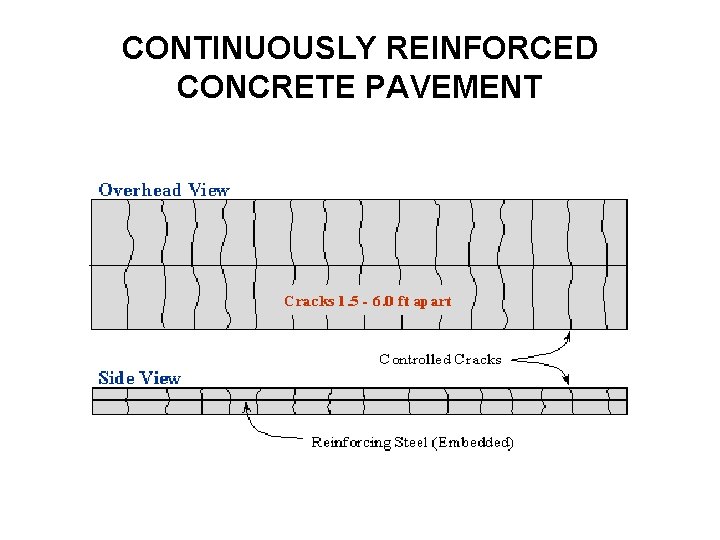
CONTINUOUSLY REINFORCED CONCRETE PAVEMENT • Continuously Reinforced Concrete Pavement does not require any transverse contraction joints • Transverse cracks are expected in the slab at intervals of 3 - 5 ft • In CRCP steel designed with 0. 6 - 0. 7 % by cross sectional area , so the cracks are together tightly
CONTINUOUSLY REINFORCED CONCRETE PAVEMENT
JOINTS • There are three basic joint types 1. 2. 3. • Contraction Construction Isolation Important factor is load transfer to sub-base
CONTRACTION JOINTS • This joints are control crack from stresses caused by concrete shrinkage, thermal contraction, moisture • Transverse contraction joints are cut at a right angle to the pavement centreline and edges

CONTRACTION JOINTS

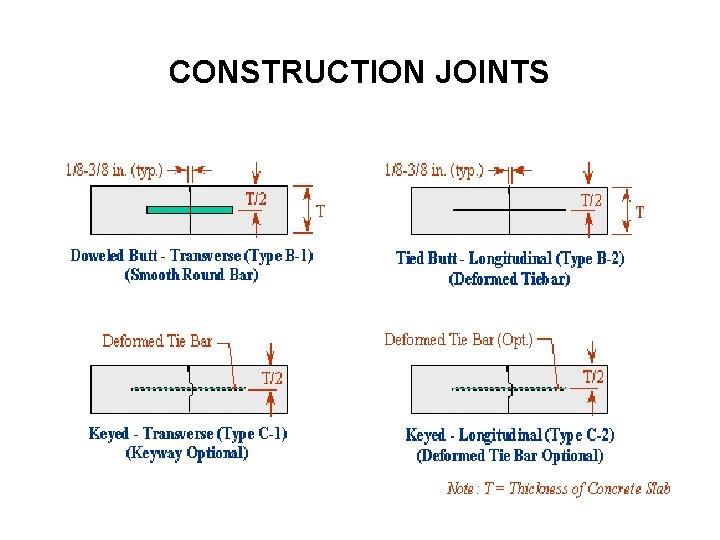
CONSTRUCTION JOINTS • Construction joints join concrete is paved at different times • Transverse construction joints are necessary at the end of a paving segment, cross road or bridge
CONSTRUCTION JOINTS
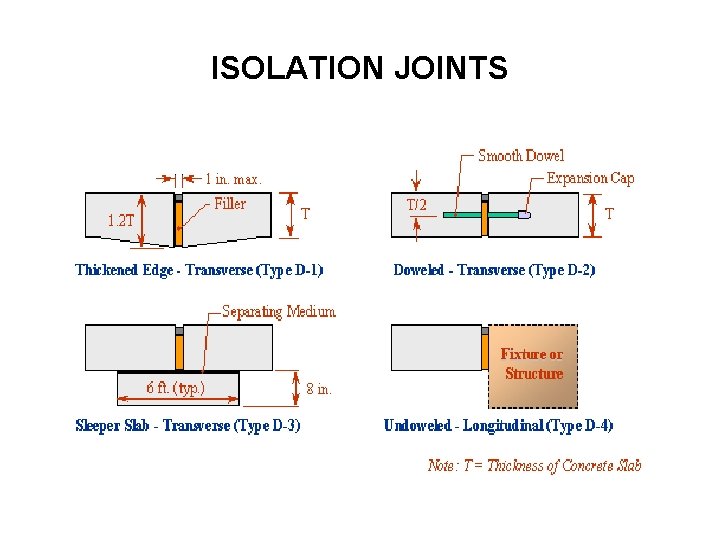
ISOLATION JOINTS • Isolation joints separate the pavement from structures or objects like manhole , drainage fixtures, sidewalks • They allow independent movement of the pavement
ISOLATION JOINTS
CONCRETE PAVING BASICS • There are two basic methods 1. 2. • • Fixed-form paving Slip-form paving Fixed-form paving requires the use wooden forms that are set up along the perimeter of the pavement before paving Slip-form paving does not require any wooden forms
CONCRETE PAVING BASICS Cont… • There a variety of different fixed form paving machines • The least complex are vibratory screeds and revolving tubes • These hand-operated machines finish the surface of the pavement between fixed forms
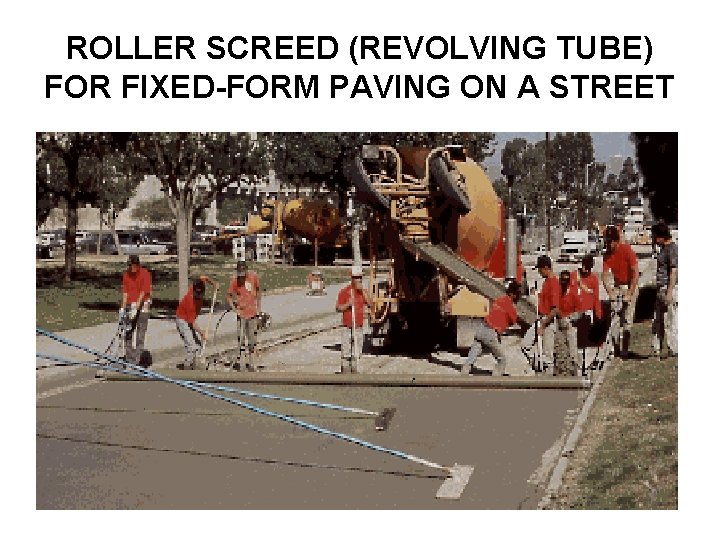
ROLLER SCREED (REVOLVING TUBE) FOR FIXED-FORM PAVING ON A STREET
SLIP-FORM • Slip-form paving is preferred by contractors for large paving areas • It can provide better productivity with less labor • Some machines are also equipped with automatic finishing equipment and equipment to automatically insert dowel bars into the pavement at transverse joints
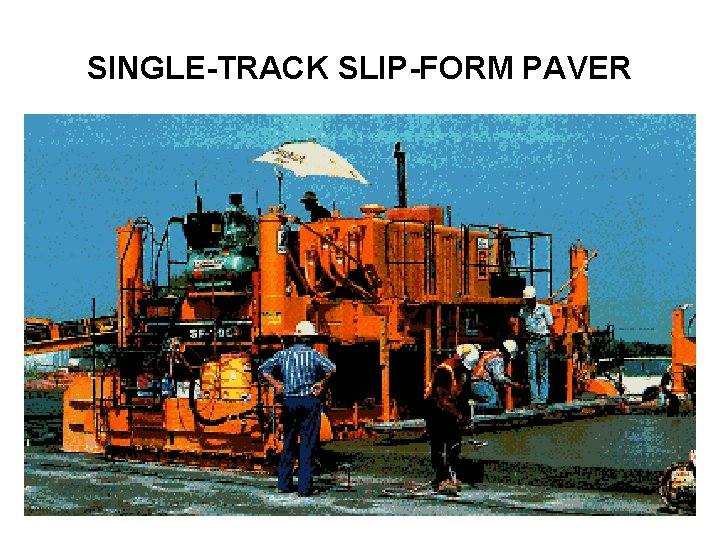
SINGLE-TRACK SLIP-FORM PAVER
SLIP-FORM Cont… • While paving, slip-form paving machines are equipped with sensors to follow string-lines that are put into position along either side of the paving area • The string-lines control the paver direction and surface elevation • Smaller paving projects may use only the slip-form machine
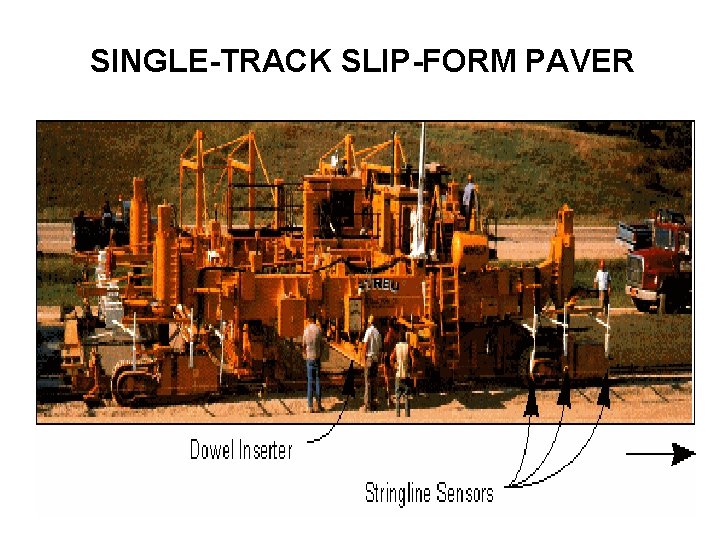
SINGLE-TRACK SLIP-FORM PAVER
FAST-TRACK CONCRETE BASICS • Fast- track concrete mixtures develop strength rapidly • They are beneficial when early opening of the pavement is necessary • Most often the concrete mixture components are specially proportioned and selected for rapid early strength
- Slides: 26