
CONCRETE AND MUD BLOCKS BMC 3 rd A
CONCRETE AND MUD BLOCKS BMC 3 rd A
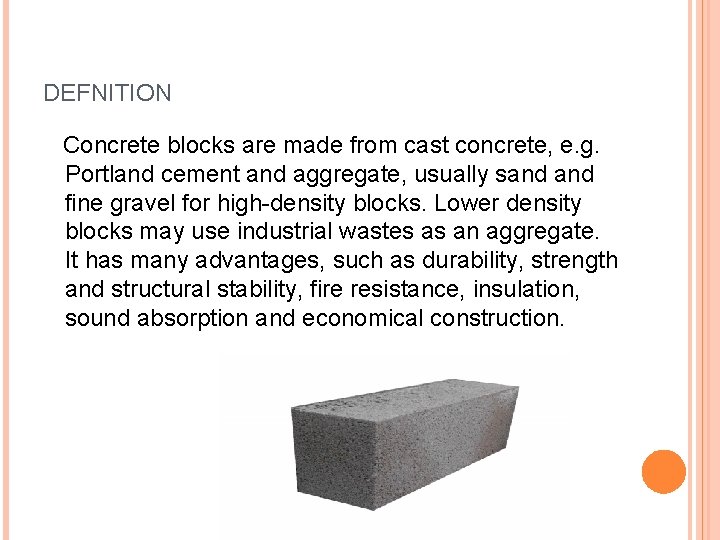
DEFNITION Concrete blocks are made from cast concrete, e. g. Portland cement and aggregate, usually sand fine gravel for high-density blocks. Lower density blocks may use industrial wastes as an aggregate. It has many advantages, such as durability, strength and structural stability, fire resistance, insulation, sound absorption and economical construction.
SIZES The nominal dimensions of concrete block shall be as follows Length: 400, 500 or 600 mm Height: 200 or 100 mm Width: 50, 75, 100, 150, 200, 250 or 300 mm
CEMENT BLOCK CAN BE CLASSIFY ACCORDING TO THEIR PHYSICAL CHARACTERISTICS AS Hollow Blocks Cellular Blocks Solid Blocks Special Blocks-
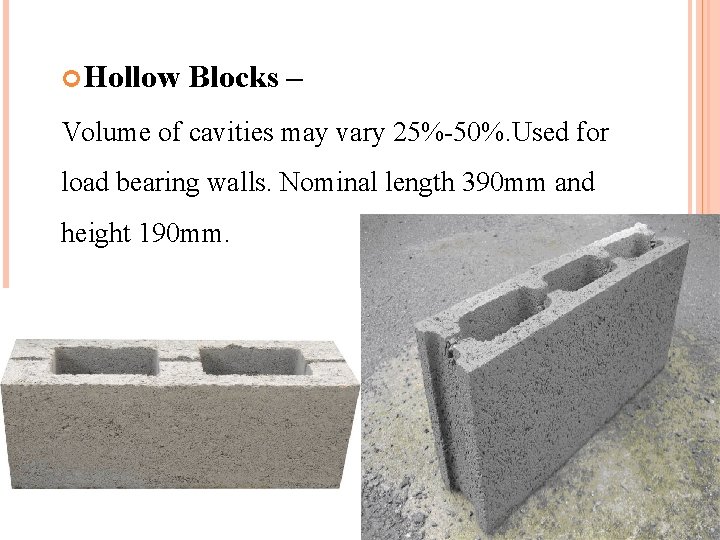
Hollow Blocks – Volume of cavities may vary 25%-50%. Used for load bearing walls. Nominal length 390 mm and height 190 mm.

• Cellular Blocksvolume of cavities which should not pass through the block between 25% to 50%. This is a highly thermally insulating concrete-based material used for both internal and external construction.
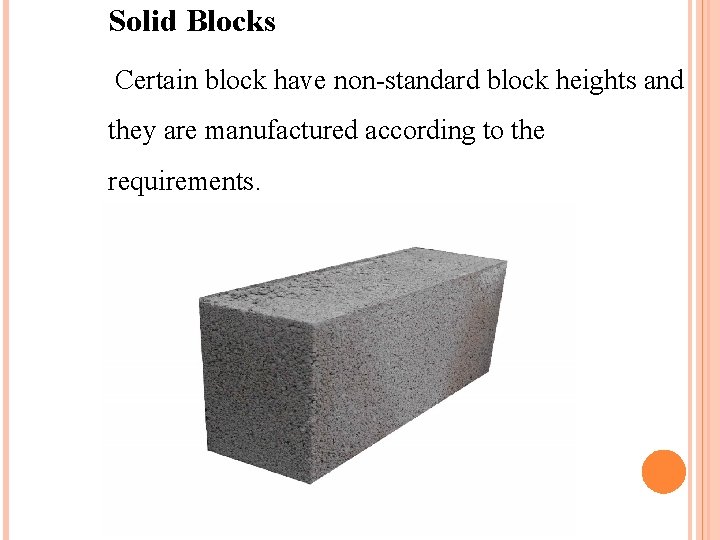
Solid Blocks Certain block have non-standard block heights and they are manufactured according to the requirements.
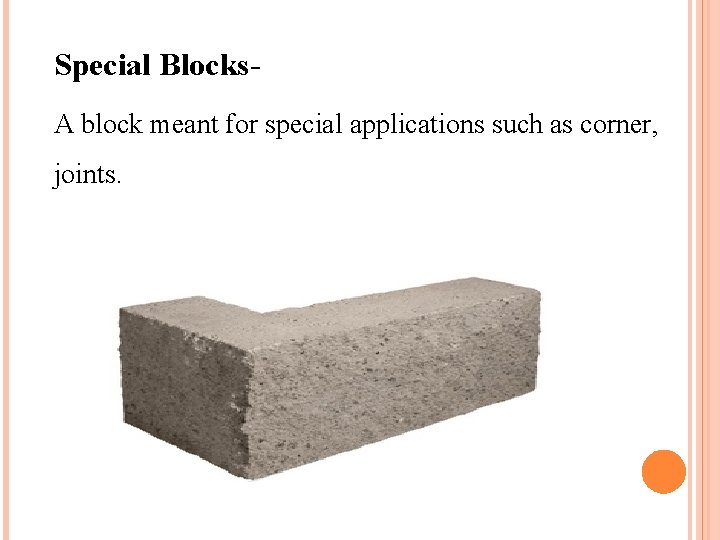
Special Blocks. A block meant for special applications such as corner, joints.
v. According to application requirements of blocks, it should be classified as follows. ü Load bearing ü Non load bearing
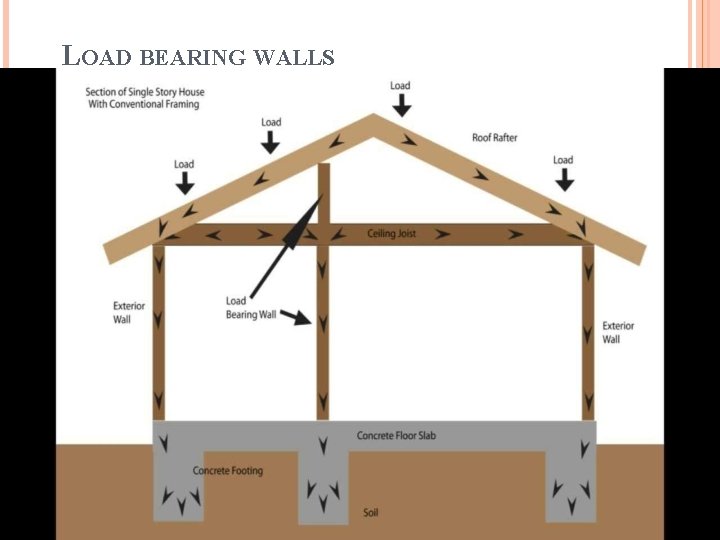
LOAD BEARING WALLS
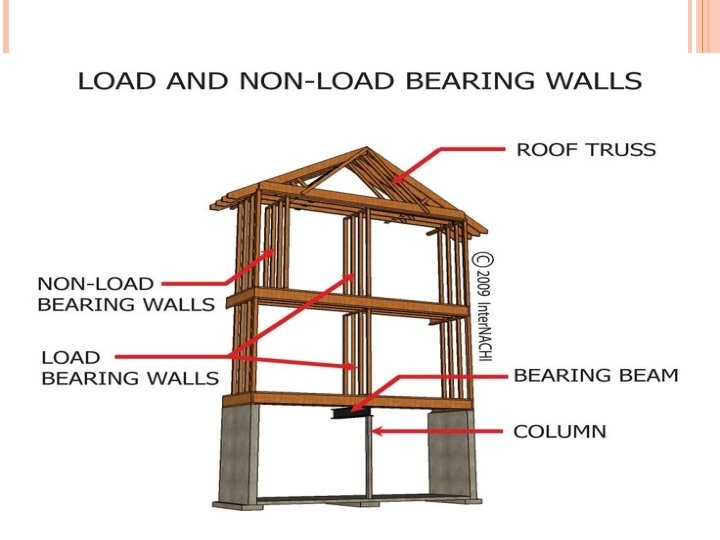
NON LOAD BEARING WALLS
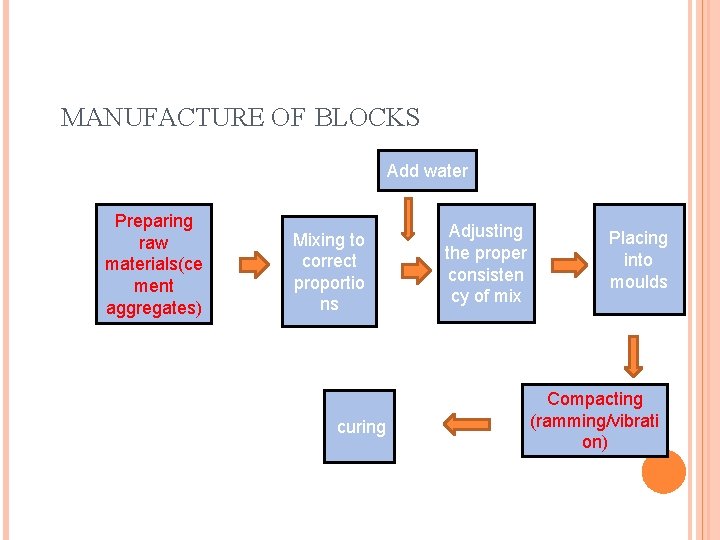
MANUFACTURE OF BLOCKS Add water Preparing raw materials(ce ment aggregates) Mixing to correct proportio ns curing Adjusting the proper consisten cy of mix Placing into moulds Compacting (ramming/vibrati on)
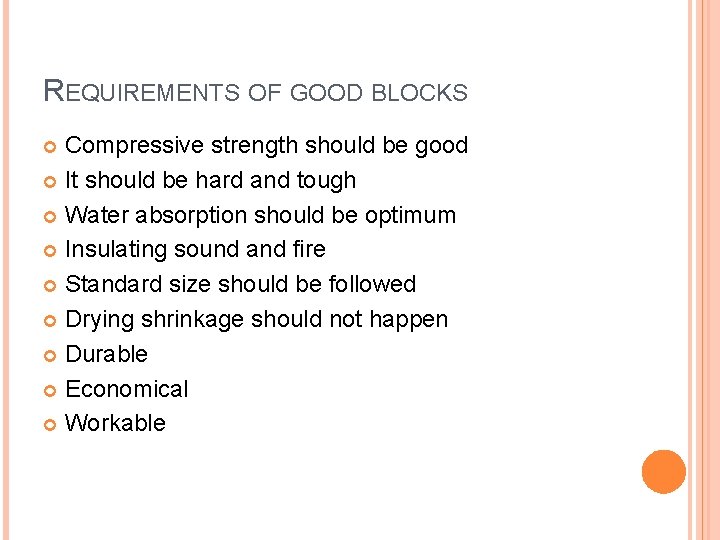
REQUIREMENTS OF GOOD BLOCKS Compressive strength should be good It should be hard and tough Water absorption should be optimum Insulating sound and fire Standard size should be followed Drying shrinkage should not happen Durable Economical Workable
ADVANTAGES One concrete block 390*190 mm can replace 8 bricks. Clay brick manufacturing requires excavation of good earth from fertile areas and also involves burning of fuel. Hence, concrete blocks are more environment friendly. Air conditioning & insulation cost come down because of air columns, hollow concrete blocks offer good thermal & acoustic insulation. In wall construction, dead load on foundations is reduce largely in concrete blocks than solid clay bricks. The strength of mortar used in block work need not be more than the strength of the blocks.
ADVANTAGES Cost effective Ease of construction- light weight, regular shape, modify like corner blocks. Appearance aspects- aesthetic pleasant compared to clay brick. Design aspects-in block work, hollows are unfilled. In applications where the loads are high, hollows can be filled with concrete, and also be reinforced. Environmental aspect- no need of utilizing fertile soil for the manufacturing the blocks. Manufacture- easy.
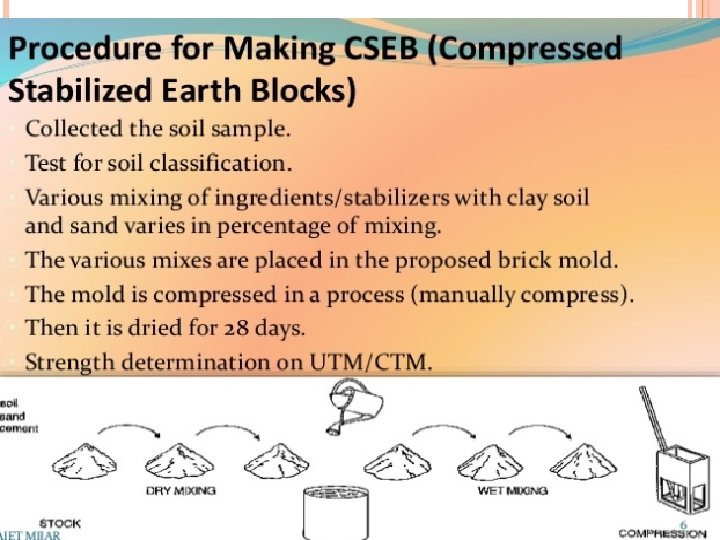
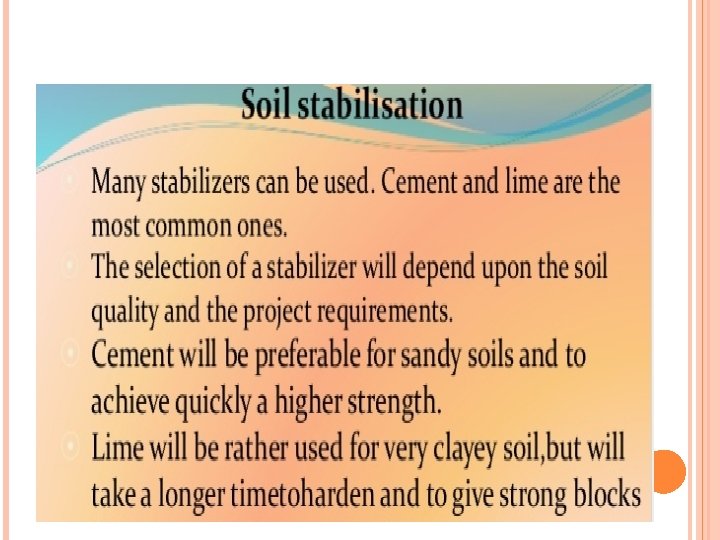
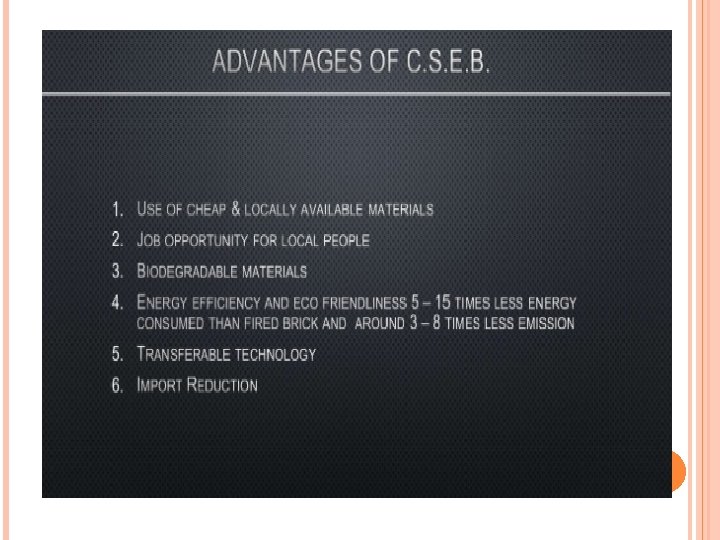
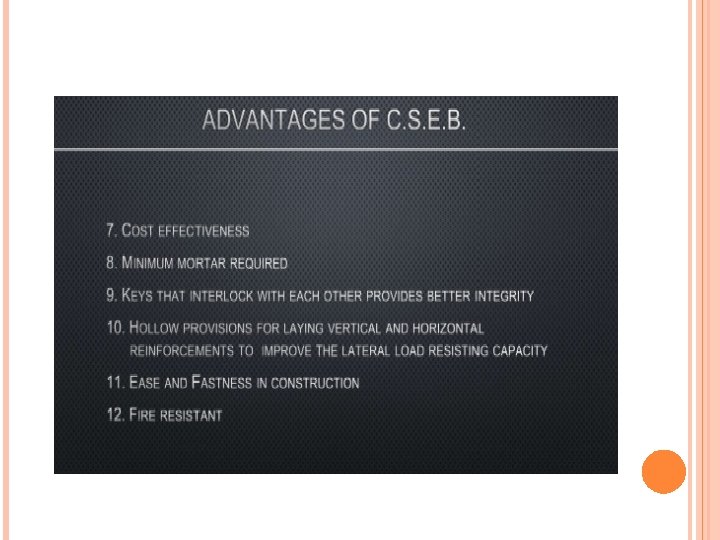
STABILIZED MUD BLOCKS A compressed earth block (CEB), also known as a pressed earth block or a compressed soil block, is a building material made primarily from damp soil compressed at high pressure to form blocks. Compressed earth blocks use a mechanical press to form blocks out of an appropriate mix of fairly dry inorganic subsoil, nonexpansive clay and aggregate. If the blocks are stabilized with a chemical binder such as Portland cement they are called compressed stabilized earth block (CSEB) or stabilized earth block (SEB).
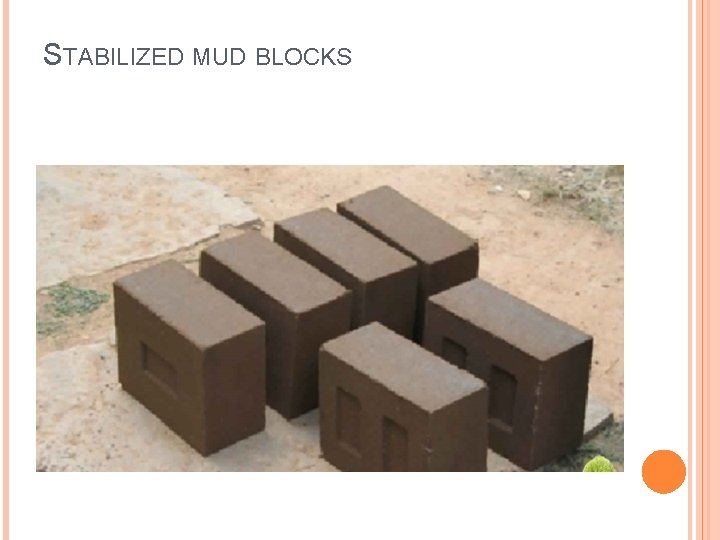
STABILIZED MUD BLOCKS
- Slides: 21