
Concrete 2003 Brisbane July 2003 Design Of Precast
Concrete 2003 Brisbane July 2003 Design Of Pre-cast Buried Structures For Internal Impact Loading
Introduction • Finite element analysis of a pre-cast arch cut and cover rail tunnel • Reasons for the study o Increased collision design loads o Increasing use of arch cut and cover tunnels o Comparatively thin section thickness o Lack of guidance in codes • Analyses Compared o Simple analysis with equivalent static loads o Nin-linear analysis with equivalent static loads o Non-linear “push-over” analysis

Rail Collision Design Loads • Current Austroads Bridge Design Code – 1992 Longitudinal: 2000 k. N Transverse: 1000 k. N • Draft Australian Standard Bridge Design Code 2000 Longitudinal: 3000 k. N Transverse: 2000 k. N • Loads applied simultaneously at a height of 2 metres above rail level – Ultimate Limit State Load
Analysis Procedure • 2 D plane strain finite element analysis • The fill was modelled as a mohr-coulomb elastoplastic material • Non-cohesive fill between pile caps • Arch modelled using beam elements including moment-curvature behaviour • Friction elements allowed slip between the arch and the soil • Varying fill properties • Material and geometric non-linearity included • Effects of fill stiffness and strength and concrete section strength and ductility assessed

Arch Cross Section
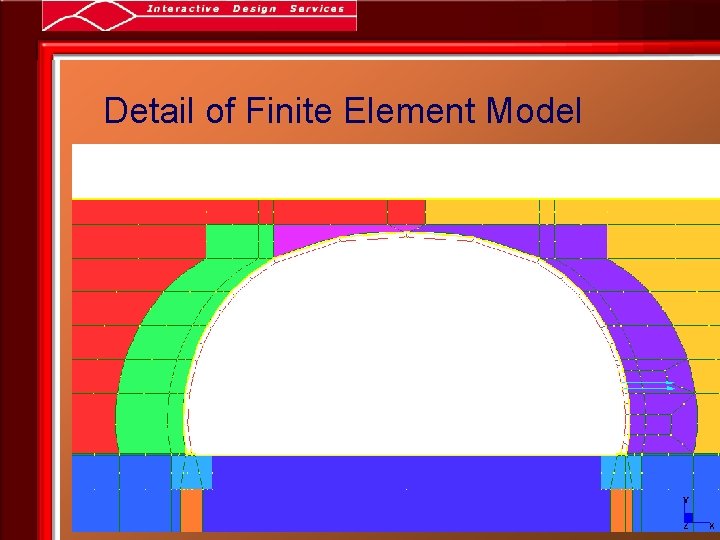
Detail of Finite Element Model
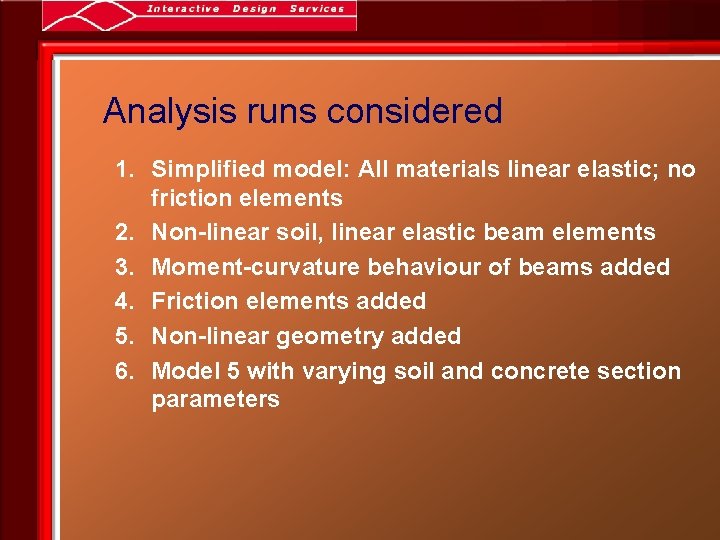
Analysis runs considered 1. Simplified model: All materials linear elastic; no friction elements 2. Non-linear soil, linear elastic beam elements 3. Moment-curvature behaviour of beams added 4. Friction elements added 5. Non-linear geometry added 6. Model 5 with varying soil and concrete section parameters
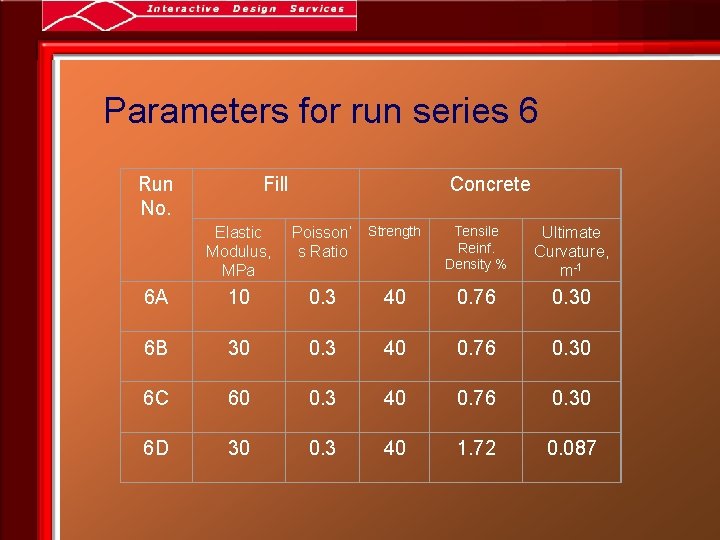
Parameters for run series 6 Run No. Fill Elastic Modulus, MPa Concrete Poisson’ Strength s Ratio Tensile Reinf. Density % Ultimate Curvature, m-1 6 A 10 0. 3 40 0. 76 0. 30 6 B 30 0. 3 40 0. 76 0. 30 6 C 60 0. 3 40 0. 76 0. 30 6 D 30 0. 3 40 1. 72 0. 087
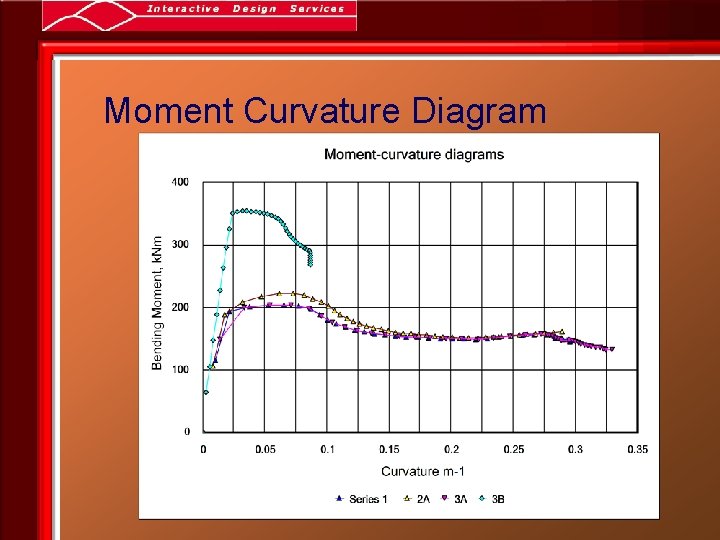
Moment Curvature Diagram
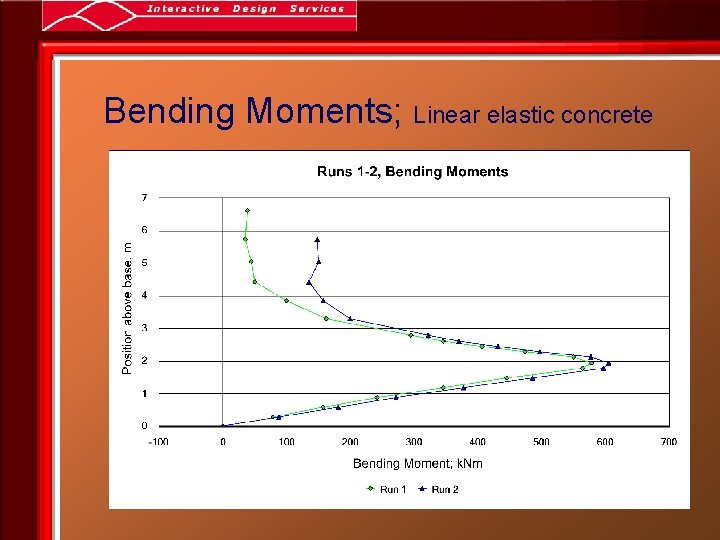
Bending Moments; Linear elastic concrete
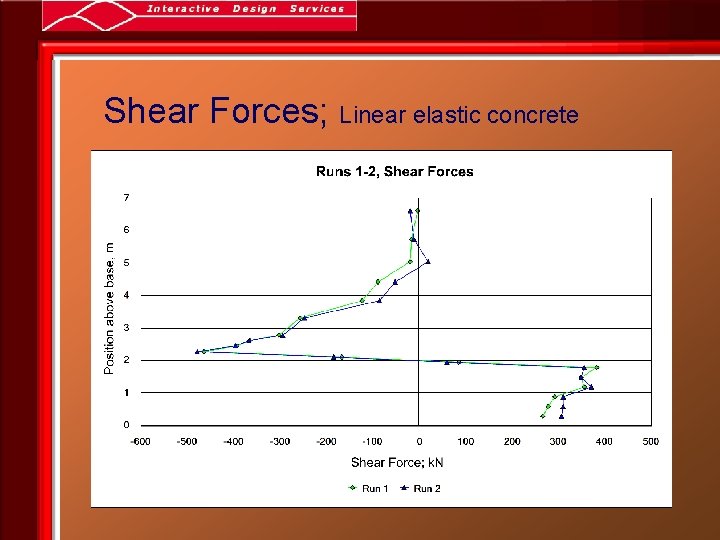
Shear Forces; Linear elastic concrete
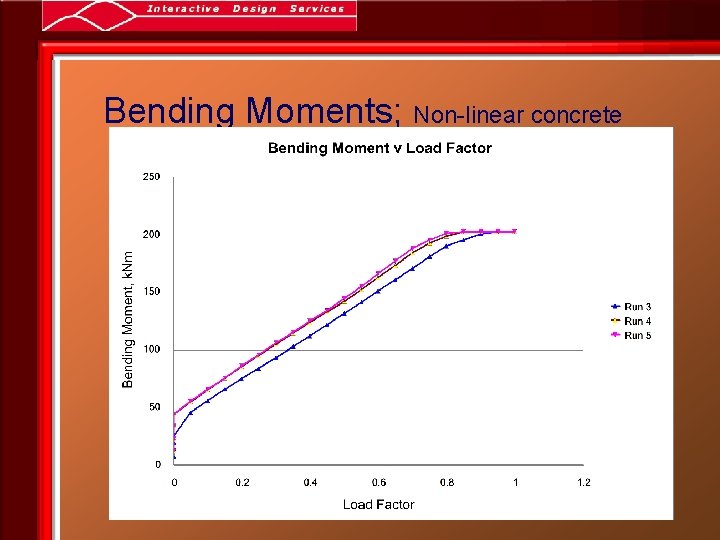
Bending Moments; Non-linear concrete
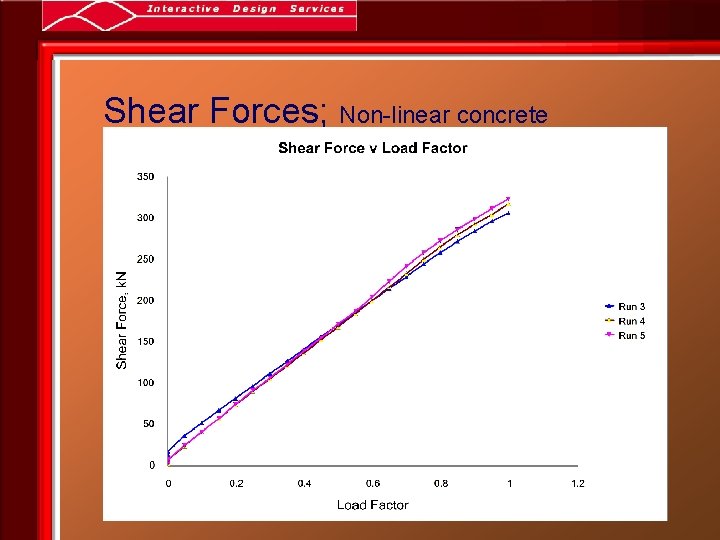
Shear Forces; Non-linear concrete
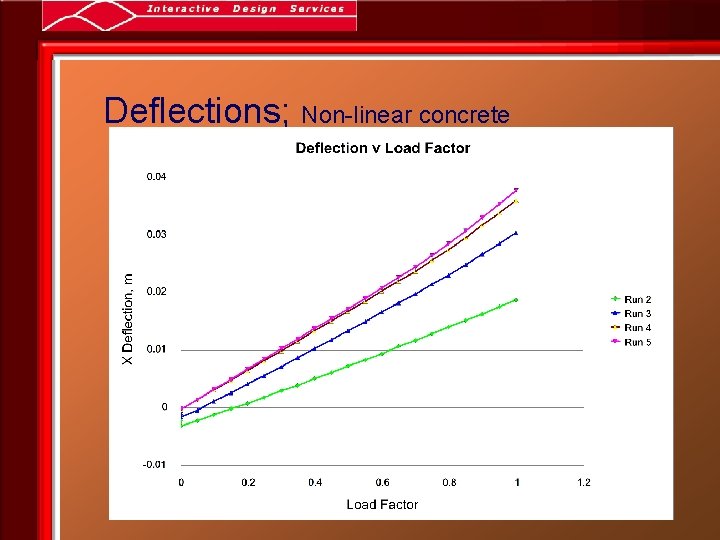
Deflections; Non-linear concrete
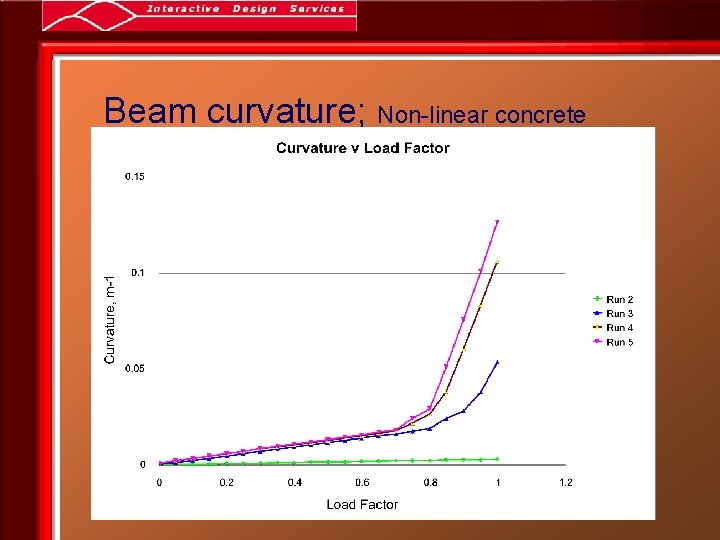
Beam curvature; Non-linear concrete
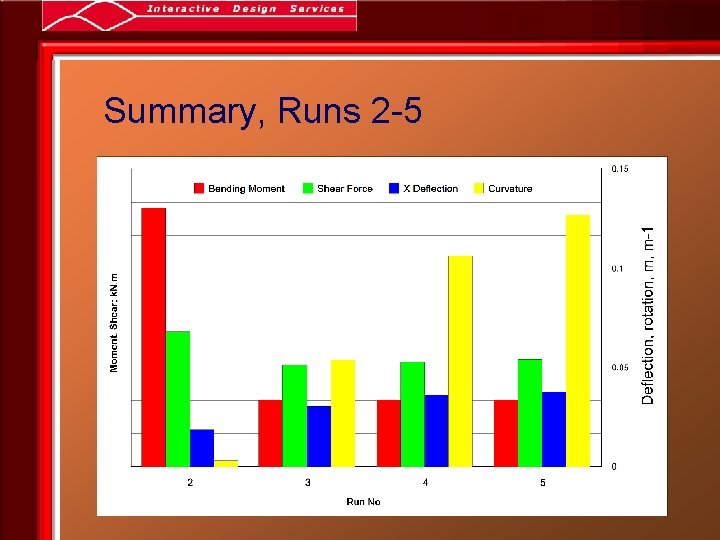
Summary, Runs 2 -5
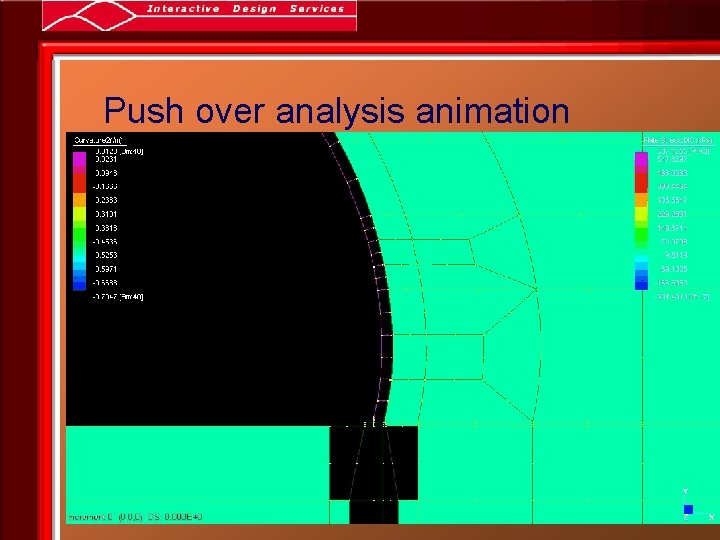
Push over analysis animation

Push over analysis animation
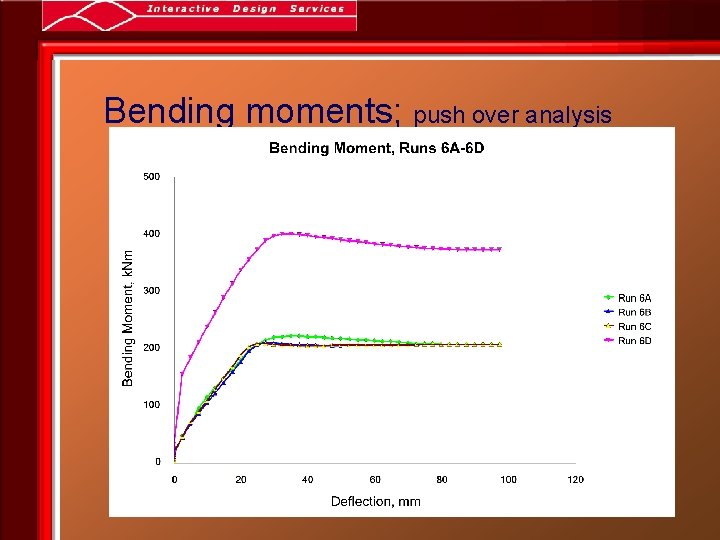
Bending moments; push over analysis
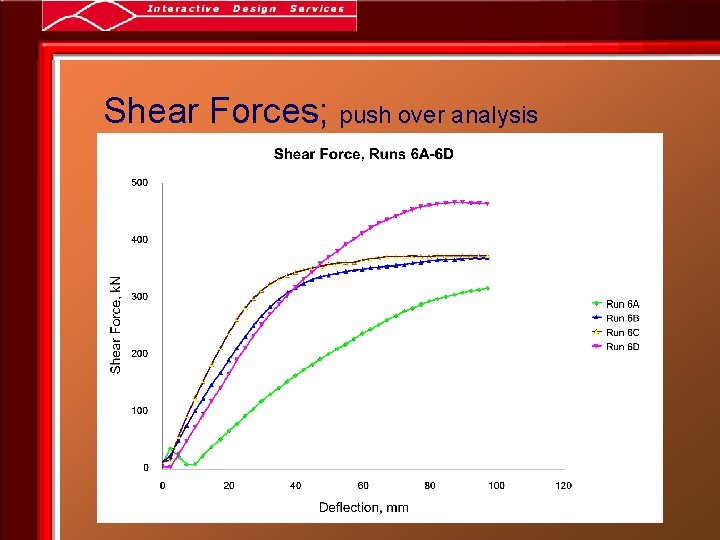
Shear Forces; push over analysis
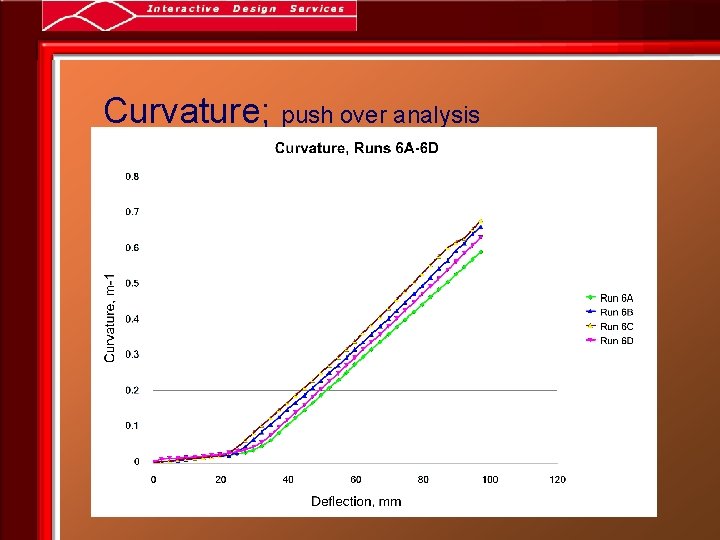
Curvature; push over analysis
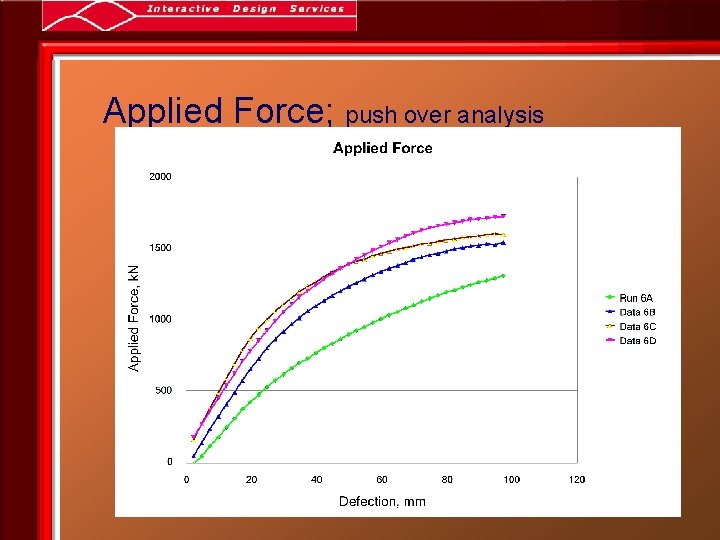
Applied Force; push over analysis
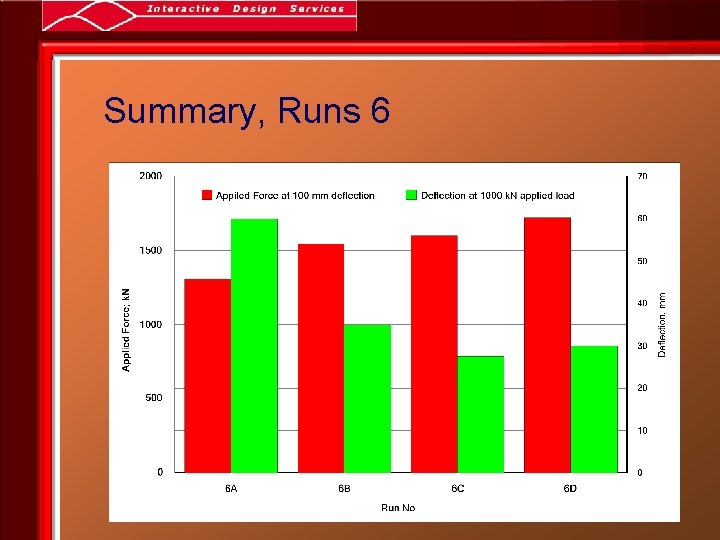
Summary, Runs 6
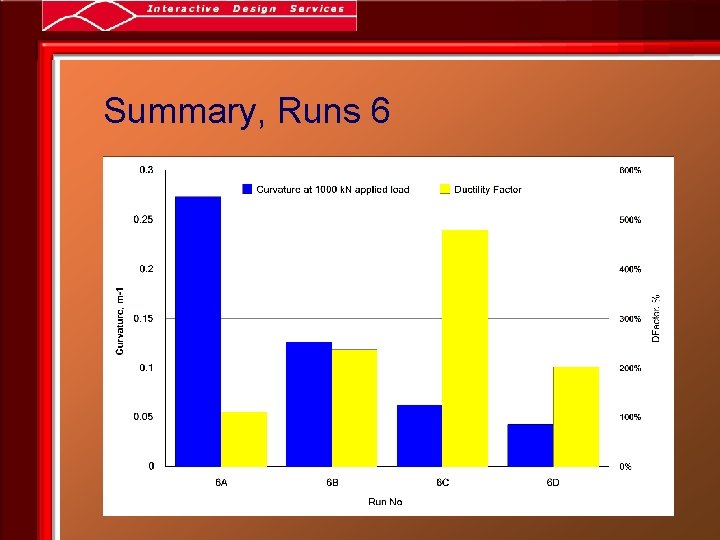
Summary, Runs 6
Conclusions • Linear elastic analysis overestimates the bending moments and shear forces in the structure • A typical arch section had adequate ductility for rail impact loading, When the moment-curvature behaviour of the arch section was included in the analysis • Slip at the soil/concrete interface, and geometric non-linearity effects have a significant effect on the arch forces and deflections • Increasing the amount of tensile reinforcement reduced the ductility of the section, and is not recommended. • The provision of confinement reinforcement had only limited effect on the section ductility.
Conclusions • The fill stiffness is important. With low stiffness (10 MPa) fill, the ductility of the section used in this paper was only just adequate. • Three dimensional distribution of the impact pressures through the fill, and the dynamic stiffness of the fill provide an additional level of safety. • Provide an alternative load path to maintain the stability of the structure, in the event of the failure of one precast panel.
Recommendations • 2 D finite element analysis of the impact load. • Distribute the load across one precast panel • Include the fill and foundations within the zone of influence of the structure • Allow for slip between the structure and the soil • Allow for both material and geometric nonlinearity • Model moment-curvature behaviour of the reinforced concrete • Include the required stiffness of the fill material in the project specification. • Provide an alternative load path to maintain the stability of the structure, in the event of the failure of one precast panel
- Slides: 27