
Conclusion Our approach game theory evolutionary dynamics ultimate
- Slides: 32
Conclusion
Our approach: game theory + evolutionary dynamics = ultimate explanation for people’s puzzling preferences and ideologies
We started by learning to analyze games…
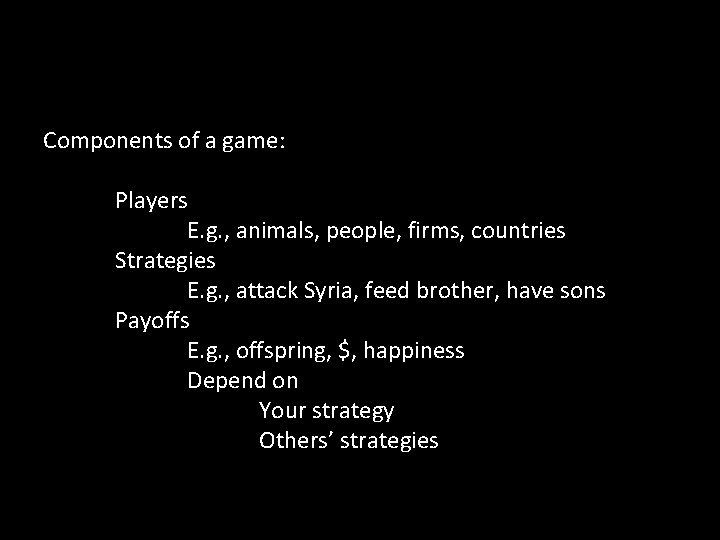
Components of a game: Players E. g. , animals, people, firms, countries Strategies E. g. , attack Syria, feed brother, have sons Payoffs E. g. , offspring, $, happiness Depend on Your strategy Others’ strategies
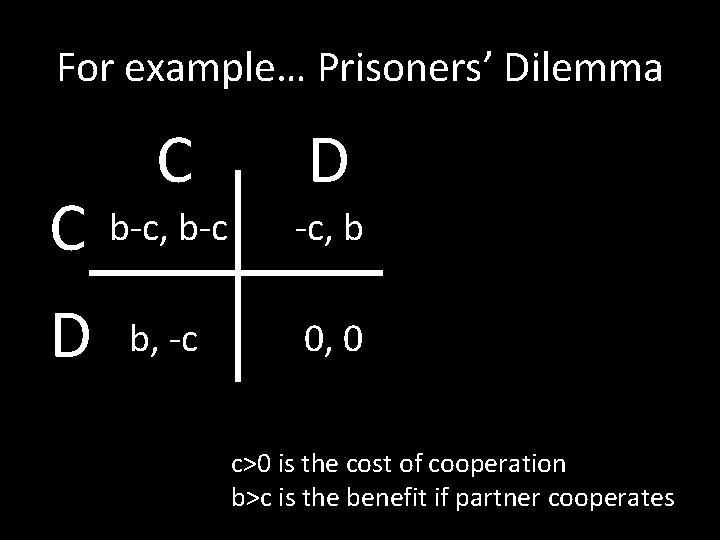
For example… Prisoners’ Dilemma C C D b-c, b-c -c, b D b, -c 0, 0 c>0 is the cost of cooperation b>c is the benefit if partner cooperates
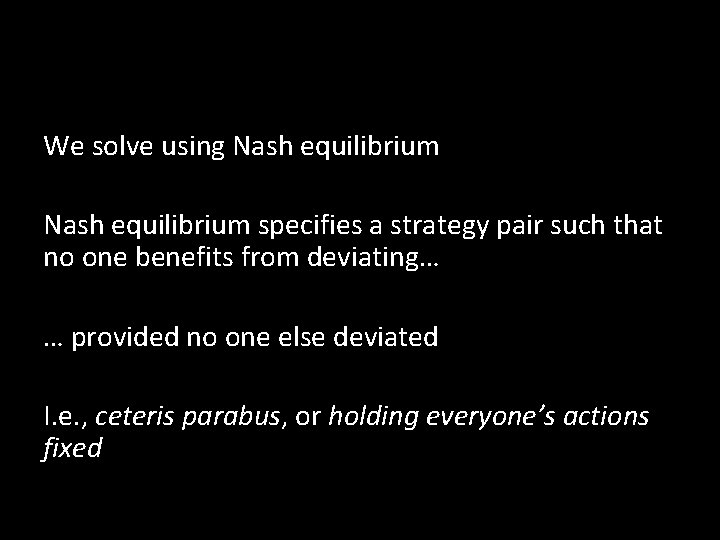
We solve using Nash equilibrium specifies a strategy pair such that no one benefits from deviating… … provided no one else deviated I. e. , ceteris parabus, or holding everyone’s actions fixed
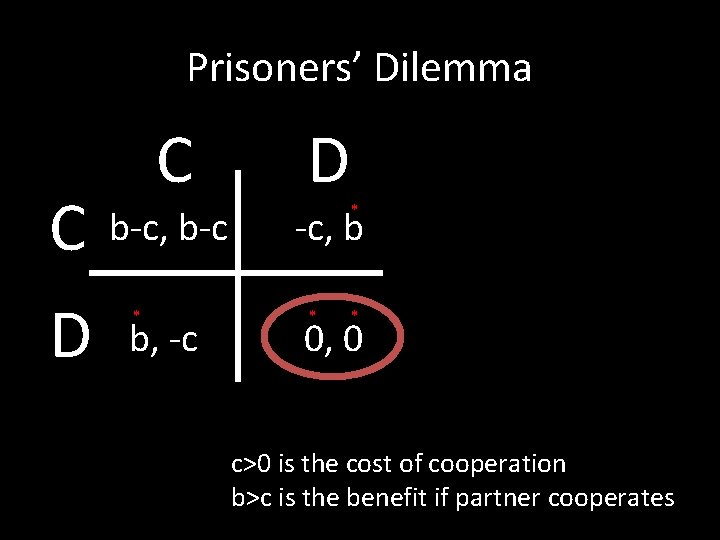
Prisoners’ Dilemma C D b-c, b-c -c, b * b, -c * * * 0, 0 c>0 is the cost of cooperation b>c is the benefit if partner cooperates
So that we could apply those games to our applications, we also learned some dynamics…
We consider a large population, , of players Each period, a player is randomly matched with another player and they play a two-player game
Each player is assigned a strategy. Players cannot choose their strategies
We can think of this in a few ways, e. g. , : Players are “born with” their mother’s strategy (ignore sexual reproduction) Players “imitate” others’ strategies Note that rationality and conscious deliberation don’t enter the picture
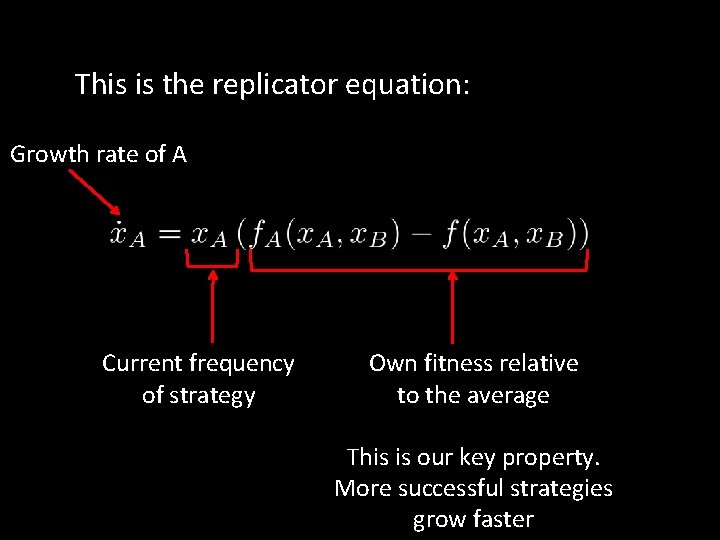
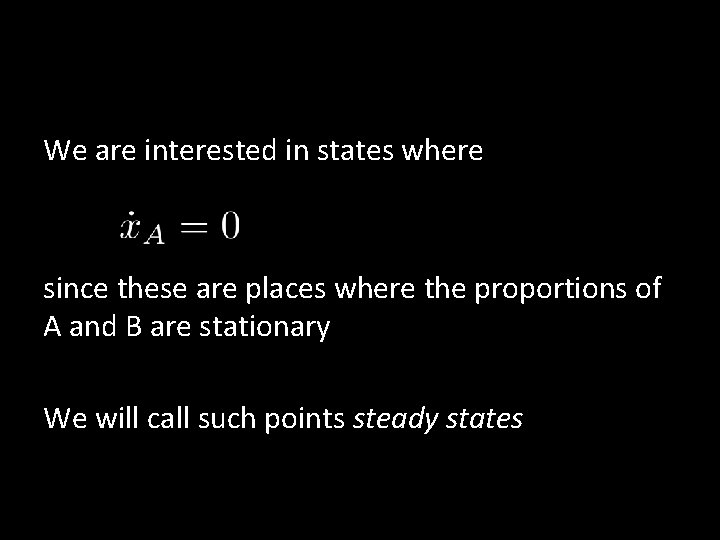
This is the replicator equation: Growth rate of A Current frequency of strategy Own fitness relative to the average This is our key property. More successful strategies grow faster
We are interested in states where since these are places where the proportions of A and B are stationary We will call such points steady states
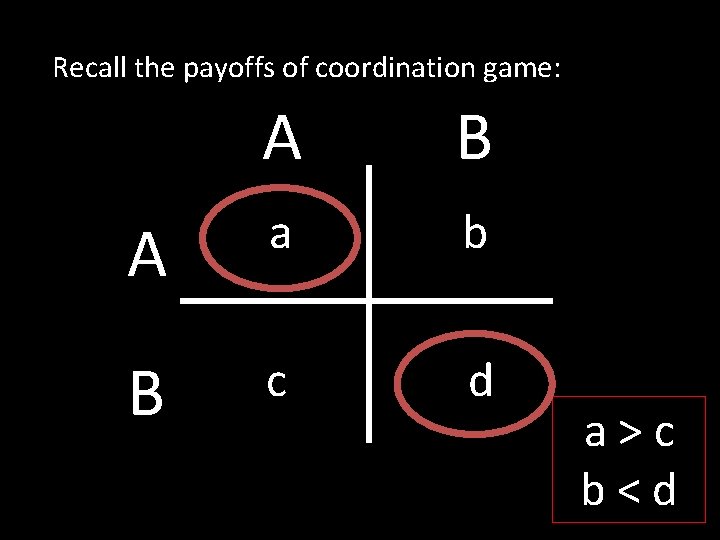
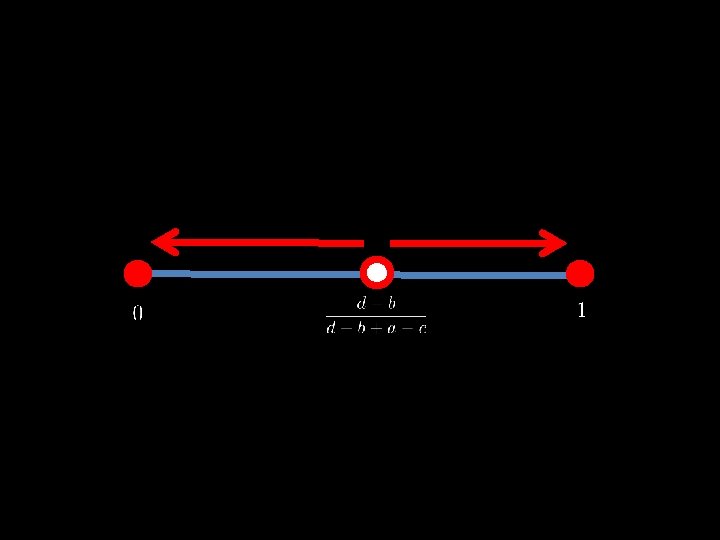
Recall the payoffs of coordination game: A B A a b B c d a>c b<d
Next, let’s do a brief overview of the models we focused on: Hawk-Dove Costly Signaling Repeated-PD CWOL Higher Order Beliefs
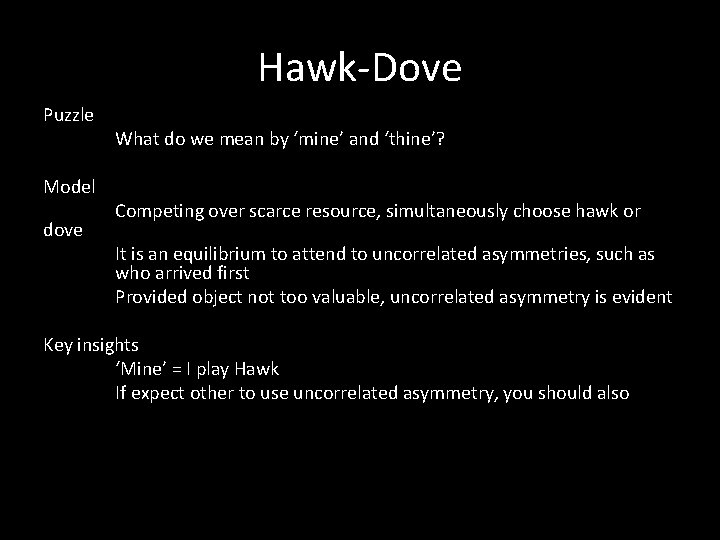
Hawk-Dove Puzzle Model dove What do we mean by ‘mine’ and ‘thine’? Competing over scarce resource, simultaneously choose hawk or It is an equilibrium to attend to uncorrelated asymmetries, such as who arrived first Provided object not too valuable, uncorrelated asymmetry is evident Key insights ‘Mine’ = I play Hawk If expect other to use uncorrelated asymmetry, you should also
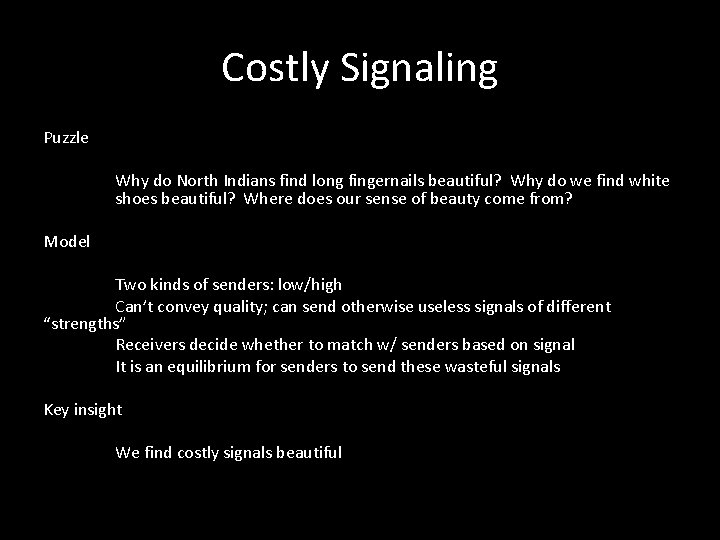
Costly Signaling Puzzle Why do North Indians find long fingernails beautiful? Why do we find white shoes beautiful? Where does our sense of beauty come from? Model Two kinds of senders: low/high Can’t convey quality; can send otherwise useless signals of different “strengths” Receivers decide whether to match w/ senders based on signal It is an equilibrium for senders to send these wasteful signals Key insight We find costly signals beautiful
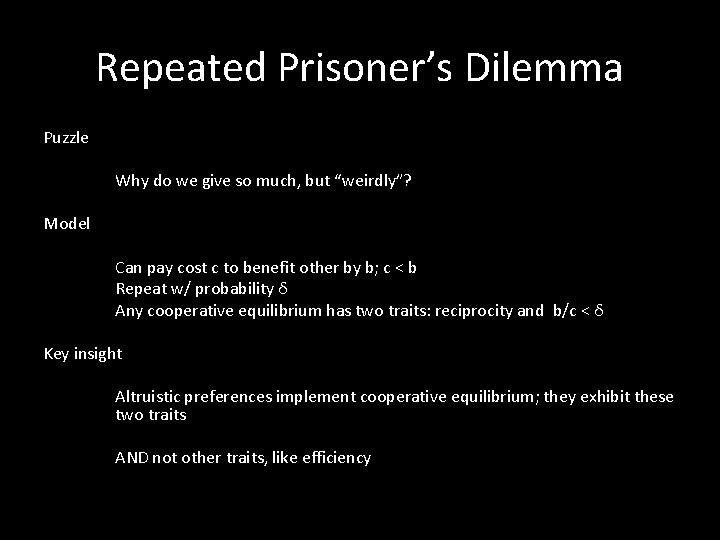
Repeated Prisoner’s Dilemma Puzzle Why do we give so much, but “weirdly”? Model Can pay cost c to benefit other by b; c < b Repeat w/ probability δ Any cooperative equilibrium has two traits: reciprocity and b/c < δ Key insight Altruistic preferences implement cooperative equilibrium; they exhibit these two traits AND not other traits, like efficiency
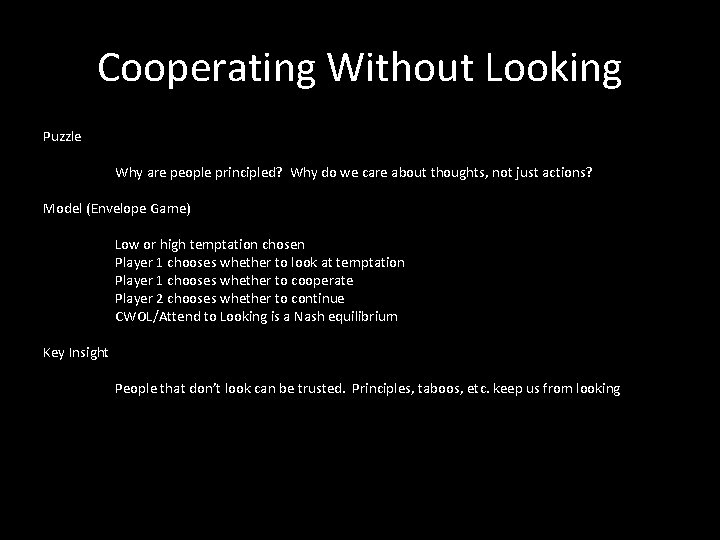
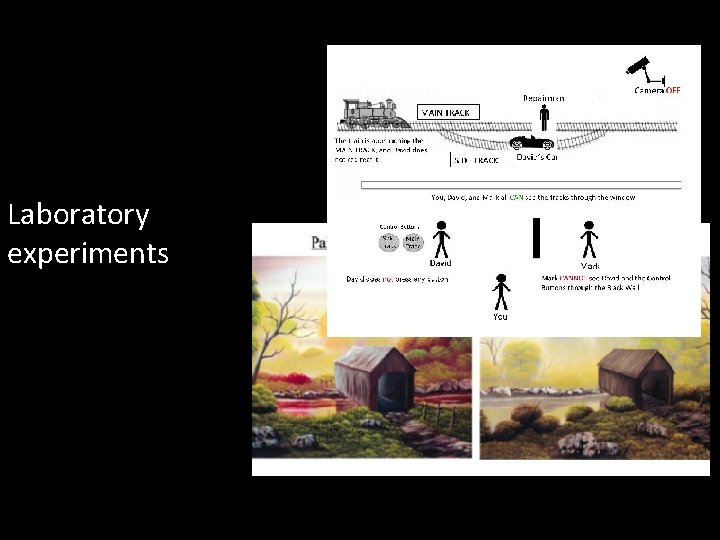
Cooperating Without Looking Puzzle Why are people principled? Why do we care about thoughts, not just actions? Model (Envelope Game) Low or high temptation chosen Player 1 chooses whether to look at temptation Player 1 chooses whether to cooperate Player 2 chooses whether to continue CWOL/Attend to Looking is a Nash equilibrium Key Insight People that don’t look can be trusted. Principles, taboos, etc. keep us from looking
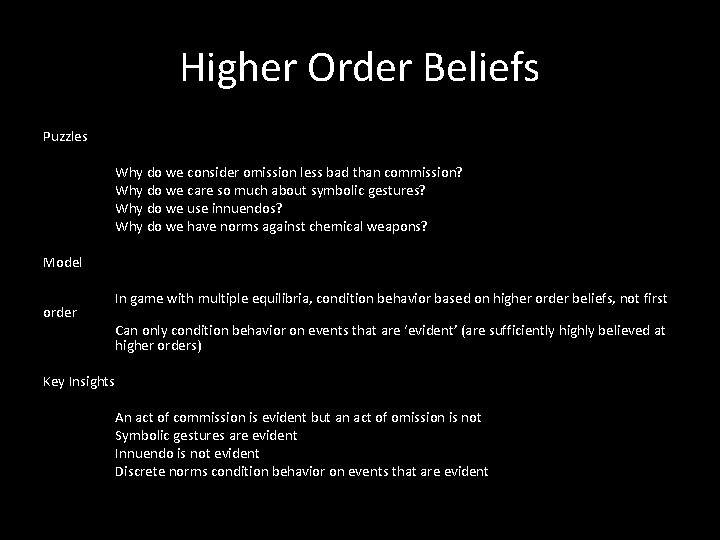
Higher Order Beliefs Puzzles Why do we consider omission less bad than commission? Why do we care so much about symbolic gestures? Why do we use innuendos? Why do we have norms against chemical weapons? Model order In game with multiple equilibria, condition behavior based on higher order beliefs, not first Can only condition behavior on events that are ‘evident’ (are sufficiently highly believed at higher orders) Key Insights An act of commission is evident but an act of omission is not Symbolic gestures are evident Innuendo is not evident Discrete norms condition behavior on events that are evident
We provided evidence for these explanations from a variety of sources For example…
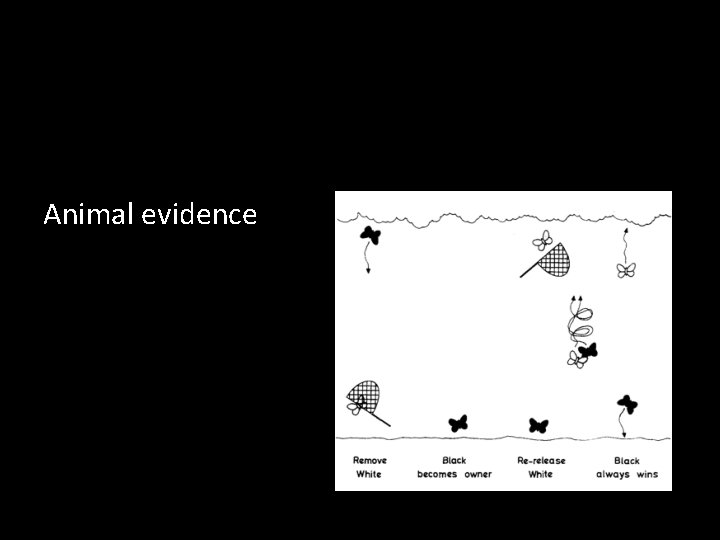
Animal evidence
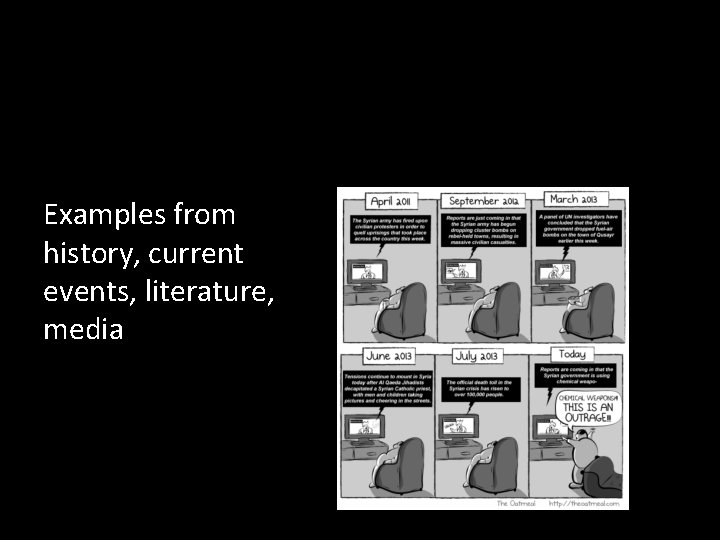
Examples from history, current events, literature, media
Laboratory experiments
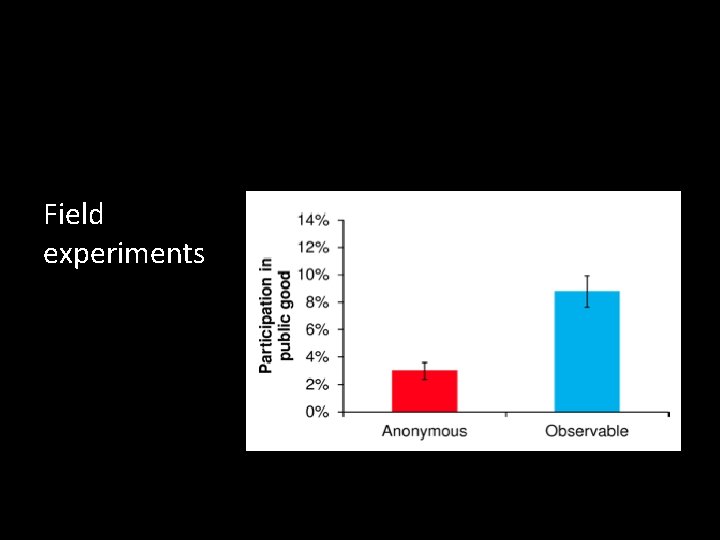
Field experiments
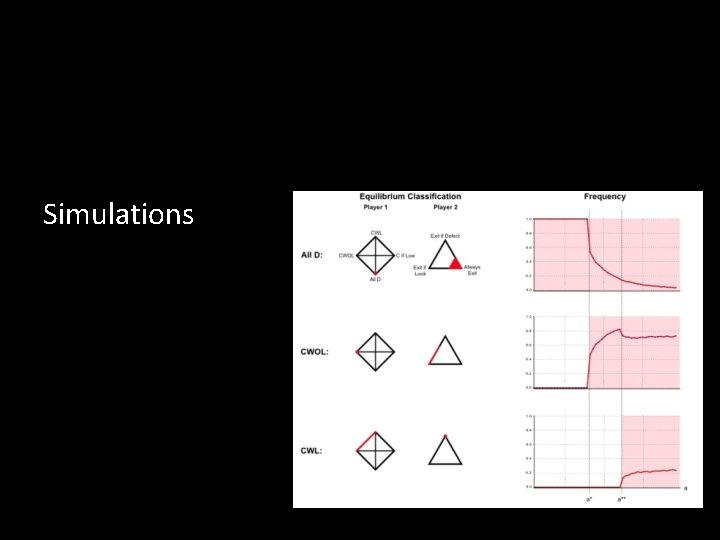
Simulations
Taught us about… -rights -emotions -beauty -altruism -symbolism -ethics -communication Not just post-hoc explanation (clarity), but also… -novel predictions -prescriptions
Examples of debates the framework clarifies: Is beauty completely culturally construed? Can altruism ever be “authentic”? Or is it always self-interested? Why do people treat rights as inalienable? Who’s right? Deontologists or utilitarians?
Examples of new predictions: The uncorrelated asymmetries we condition rights on have to be evident (e. g. , not size but who comes first) We will care if people are “principled” when temptation is rare and harmful
Examples of new policy implications: Taboos should not be respected in public policy Domestic law should ignore omission/commission
In short… game theory + evolutionary dynamics = awesome