
Conceptualizing large complex engineering systems as sociotechnical systems

- Slides: 17
Conceptualizing large complex engineering systems as sociotechnical systems Presentation Stockholm Maarten Ottens 1/11/2022 1 Department of Philosophy, Faculty of Technology, Policy and Management
I. Introduction II. Approach III. Results IV. Problems 1/11/2022 2
I Why the interest in systems • Engineers design increasingly complex systems. Increasing in amount of elements and in sorts of elements and operation possible between these elements, etcetera. • Already complex systems are coupled, leading to large -scale complex systems, like energy systems, telecommunication, transport systems. • These systems fail due to non-technical causes, organizational failure, legal failure. 1/11/2022 3
I Socio-technical? • We argue that these systems can better be understood using the concept of socio-technical systems: • A system where next to technical elements, social elements are essential for the functioning of the system as it is. 1/11/2022 4
II The research 1. understanding What are socio-technical systems? 2. modelling How can socio-technical systems be modelled? 3. designing (How) can socio-technical systems be designed? 1/11/2022 5
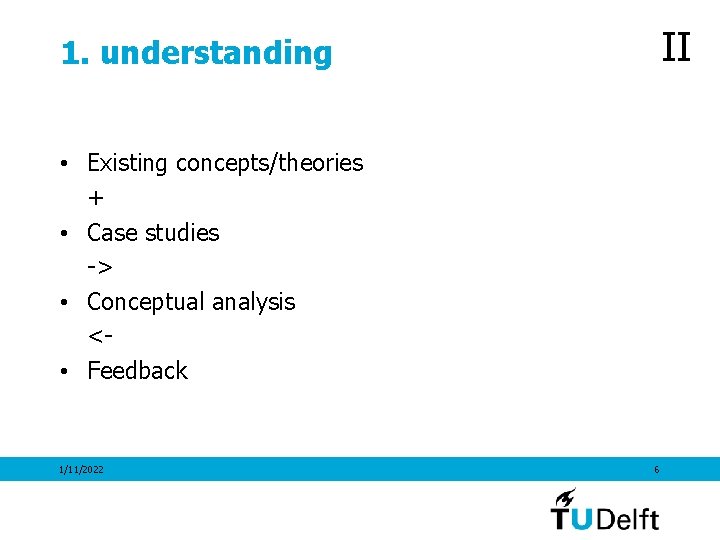
II 1. understanding • Existing concepts/theories + • Case studies -> • Conceptual analysis < • Feedback 1/11/2022 6
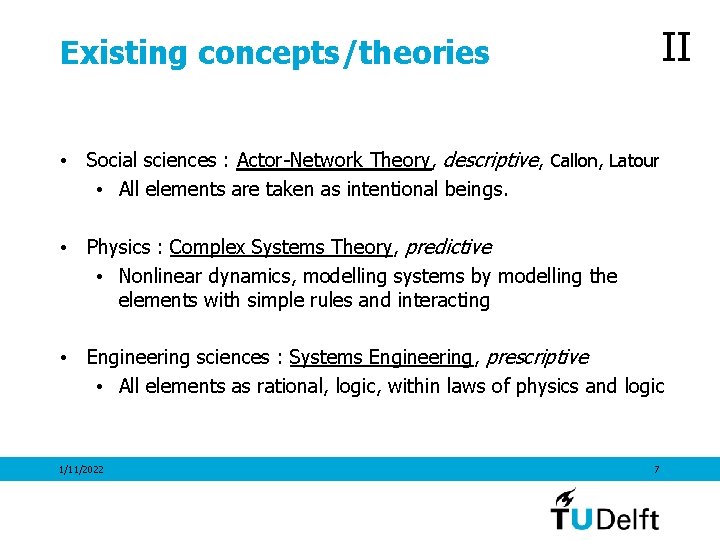
II Existing concepts/theories • Social sciences : Actor-Network Theory, descriptive, Callon, Latour • All elements are taken as intentional beings. • Physics : Complex Systems Theory, predictive • Nonlinear dynamics, modelling systems by modelling the elements with simple rules and interacting • Engineering sciences : Systems Engineering, prescriptive • All elements as rational, logic, within laws of physics and logic 1/11/2022 7
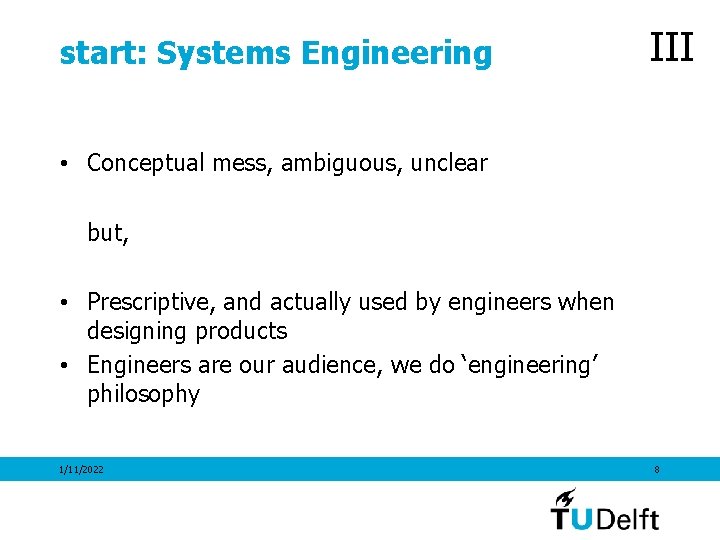
start: Systems Engineering III • Conceptual mess, ambiguous, unclear but, • Prescriptive, and actually used by engineers when designing products • Engineers are our audience, we do ‘engineering’ philosophy 1/11/2022 8
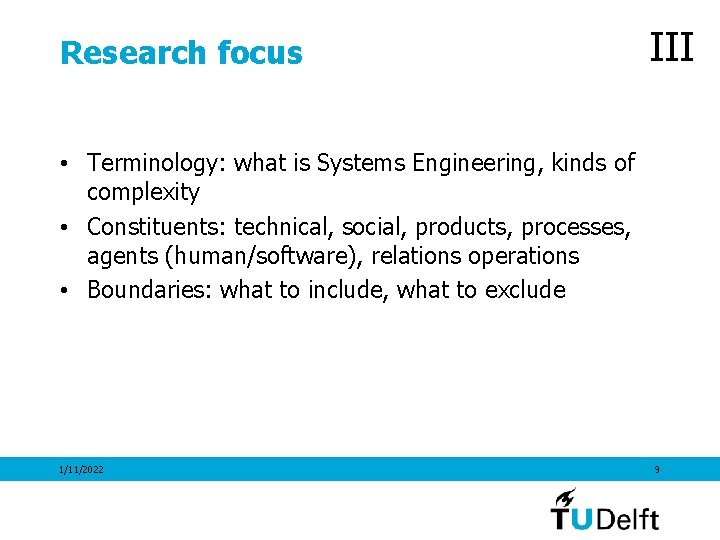
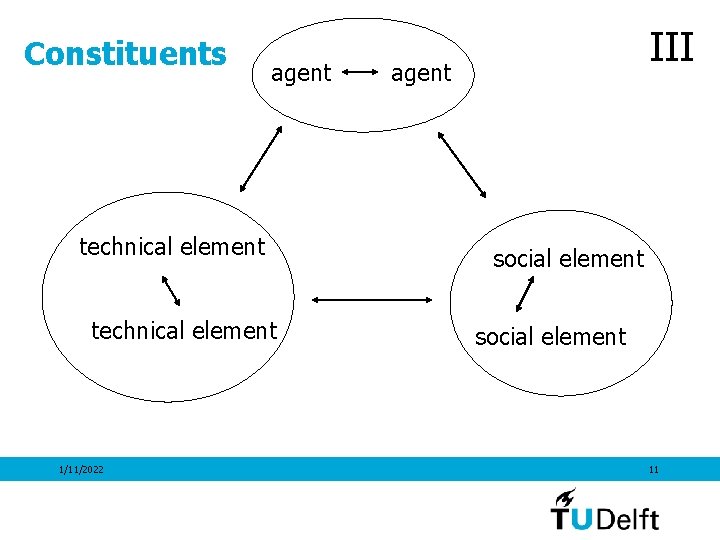
Research focus III • Terminology: what is Systems Engineering, kinds of complexity • Constituents: technical, social, products, processes, agents (human/software), relations operations • Boundaries: what to include, what to exclude 1/11/2022 9
Terminology III • Systems engineering • Synchronic system view, complexity in amount of elements, sorts of elements and relations • Diachronic system view, complexity in phases in design approach, e. g. life-cycle design 1/11/2022 10
Constituents agent technical element 1/11/2022 III agent social element 11
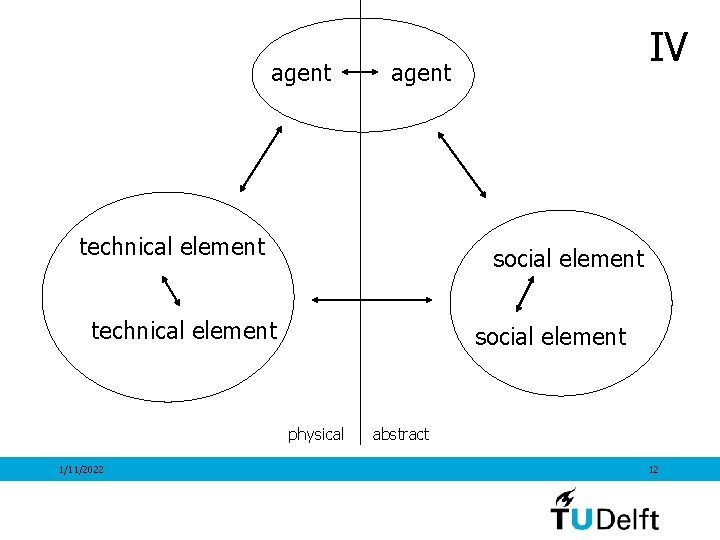
agent technical element social element physical 1/11/2022 IV abstract 12
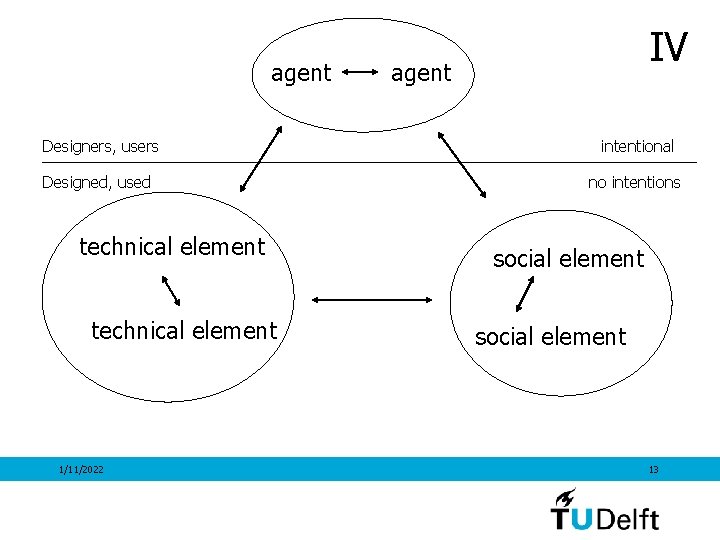
agent IV agent Designers, users intentional Designed, used no intentions technical element 1/11/2022 social element 13
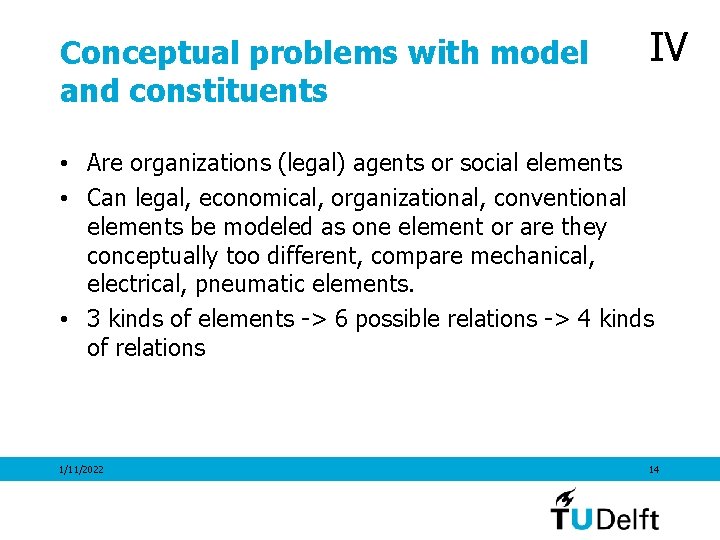
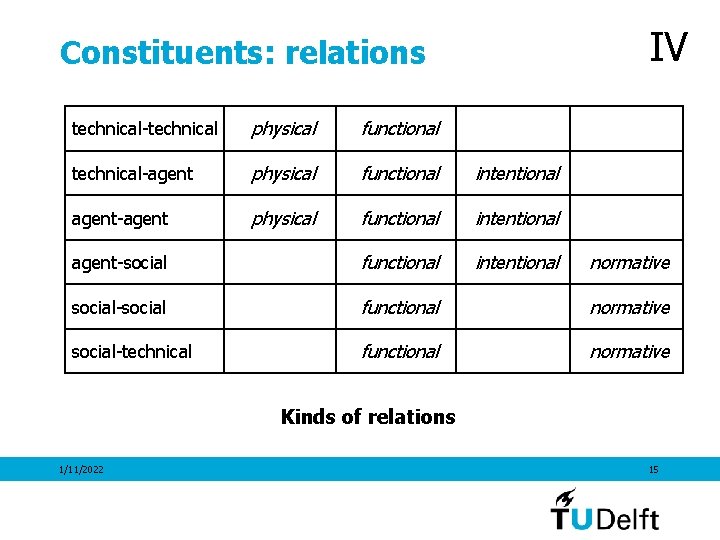
Conceptual problems with model and constituents IV • Are organizations (legal) agents or social elements • Can legal, economical, organizational, conventional elements be modeled as one element or are they conceptually too different, compare mechanical, electrical, pneumatic elements. • 3 kinds of elements -> 6 possible relations -> 4 kinds of relations 1/11/2022 14
IV Constituents: relations technical-technical physical functional technical-agent physical functional intentional agent-social functional intentional social-social functional normative social-technical functional normative Kinds of relations 1/11/2022 15
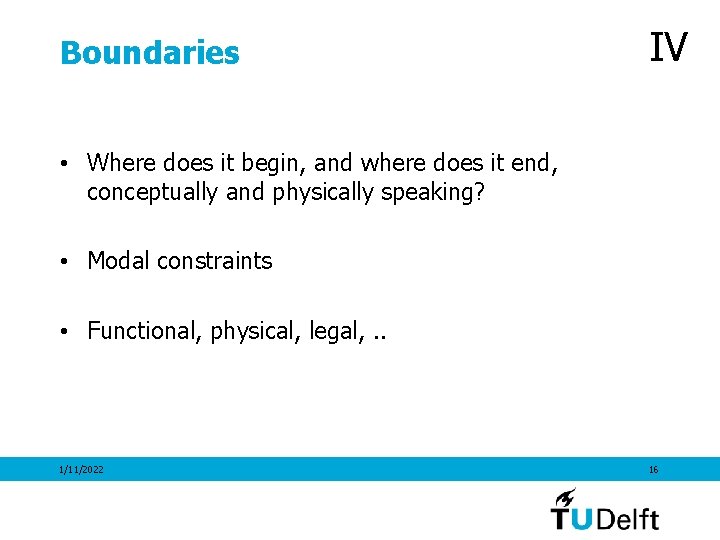
IV Boundaries • Where does it begin, and where does it end, conceptually and physically speaking? log • Modal constraints nom • Functional, physical, legal, . . 1/11/2022 leg 16
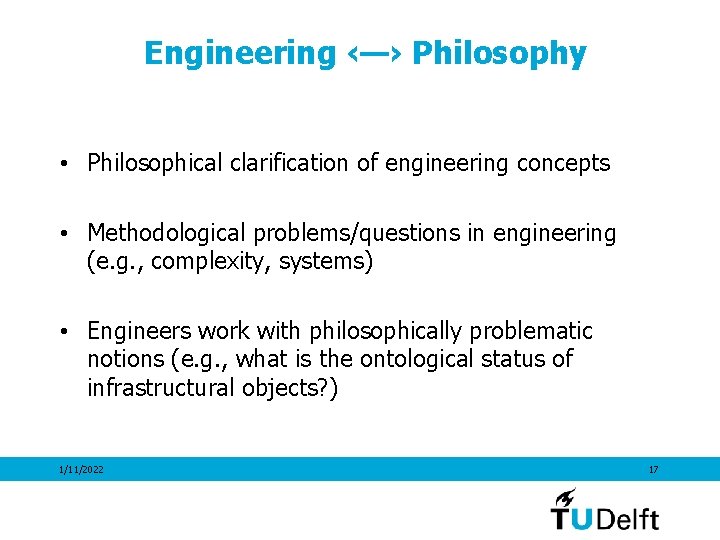
Engineering ‹—› Philosophy • Philosophical clarification of engineering concepts • Methodological problems/questions in engineering (e. g. , complexity, systems) • Engineers work with philosophically problematic notions (e. g. , what is the ontological status of infrastructural objects? ) 1/11/2022 17